DATE :
Vintage Gibson L-00 Value Guide (1932-1945)
Vintage Gibson L-00 Value Guide (1932-1945)
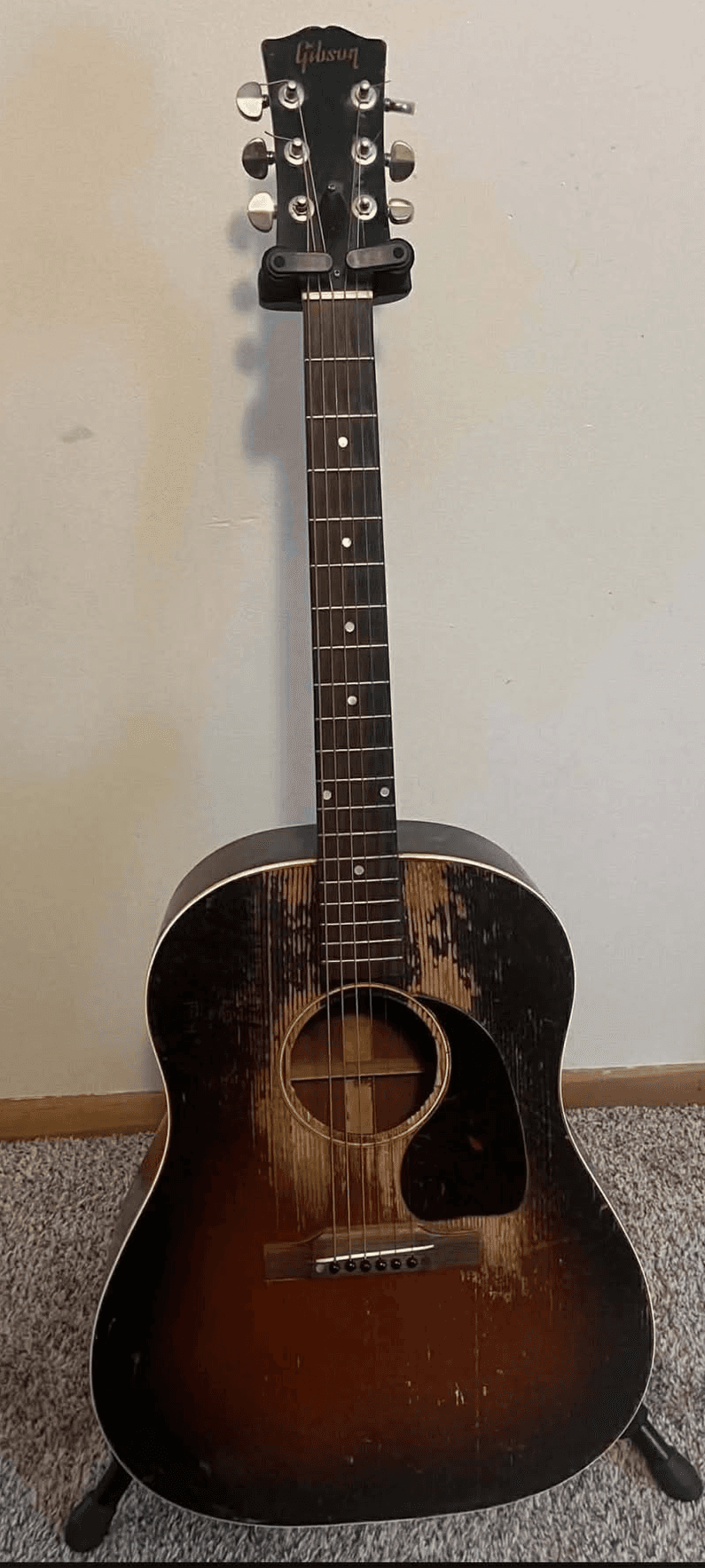
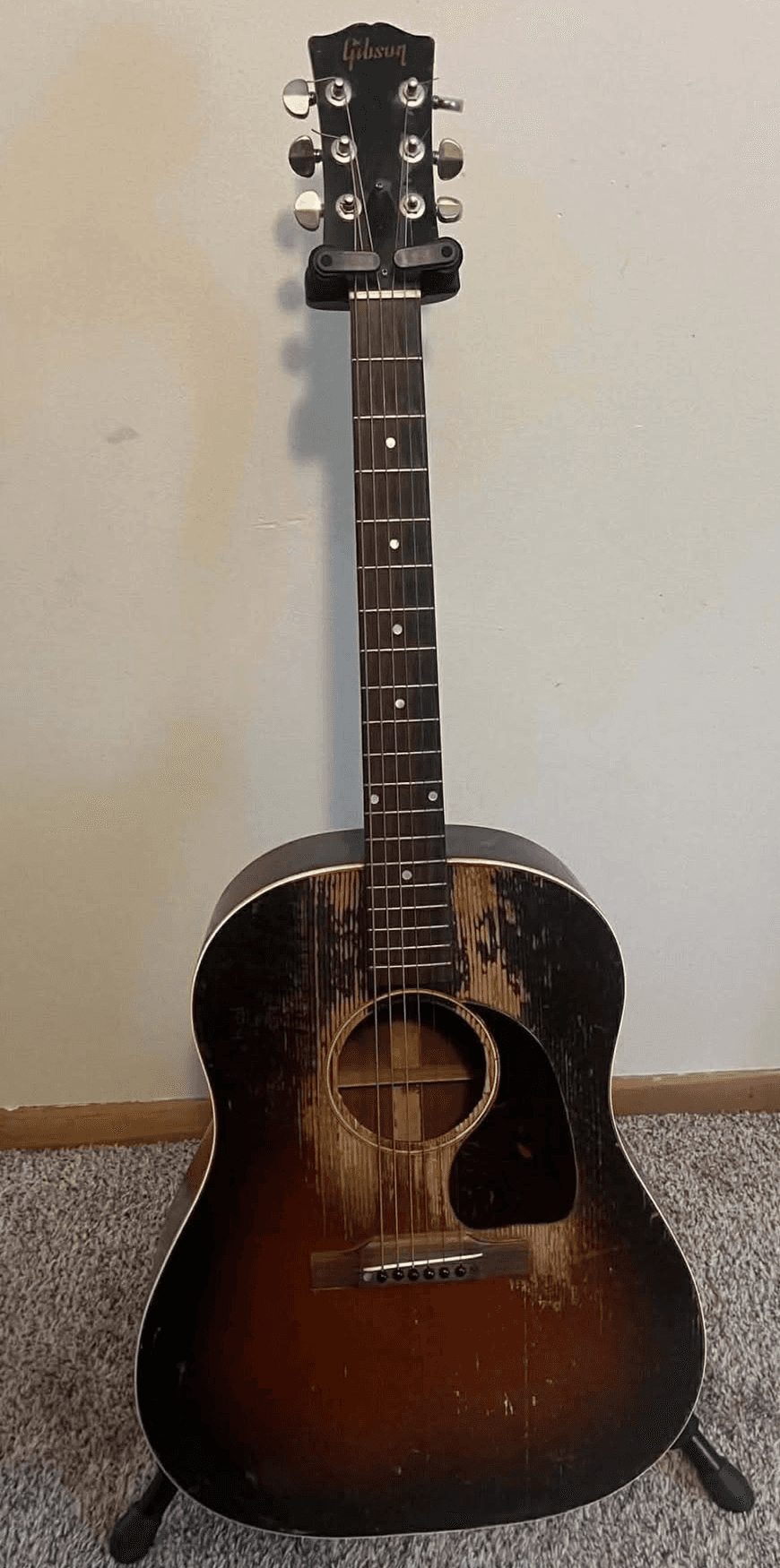
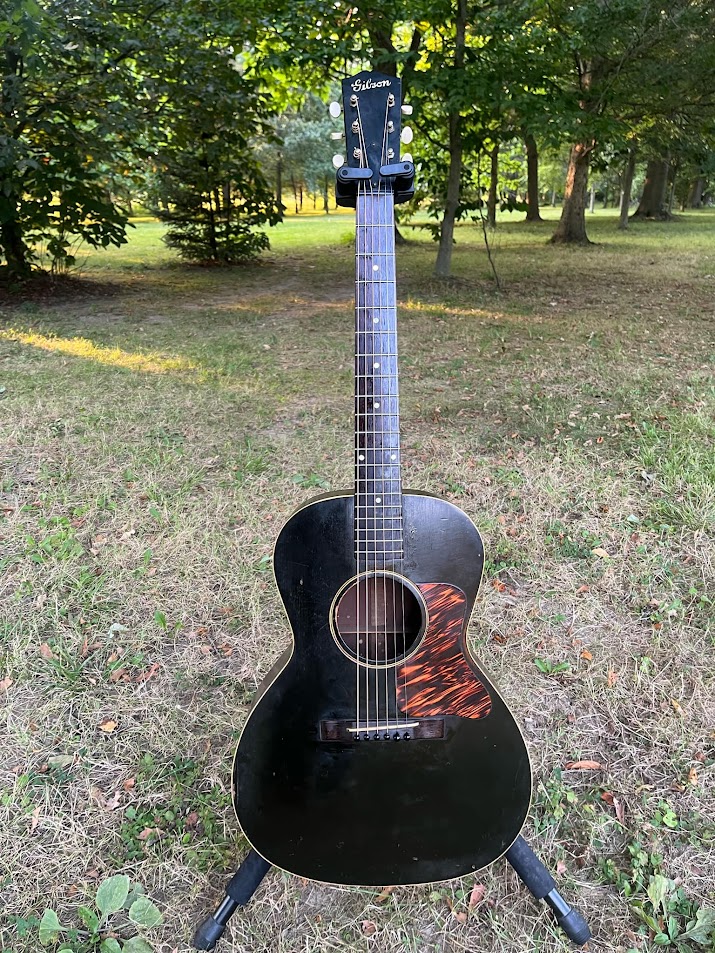
A vintage Gibson L-00 is the 1930s small-body flat-top known as the blues box, a 14-fret mahogany guitar with a punchy, focused voice prized by pre-war collectors. Clean, all-original Depression-era examples bring strong four figures. Edgewater recently paid $4,700 for a 1937 L-00. Era, originality, and condition set where any single guitar lands.
Last Updated: June 2026
What Is a Vintage Gibson L-00 Worth? (Year by Year, 2026)
The values below are reference points for clean, all-original examples. They reflect what a fair buyer like Edgewater pays, not best-case auction results. Pre-war originality and condition move any individual guitar within the range.
Year | What defines it | Reference value for a clean example |
|---|---|---|
1937 | Depression-era blues box, 14-fret mahogany | Around $4,700 |
1938 | Depression-era small-body flat-top | Around $4,400 |
1939 | Late-1930s small-body, sunburst or black | Around $4,300 |
Current market note (2026): clean pre-war L-00s are sought after by blues and fingerstyle players and have appreciated well. Cracks, refinishes, and replaced bridges trade lower. As a buyer, Edgewater prices to the honest, all-in condition of the actual guitar, not the best-case auction headline.
What Drives a Vintage Gibson L-00’s Value?
Pre-war build: a genuine 1930s L-00 with original bracing and bridge is the heart of the model’s value.
Originality: original finish, bridge, tuners, and an uncracked top matter far more than shine. A refinish or replaced bridge cuts value sharply.
Finish: original black, sunburst, or natural with honest wear is preferred.
Condition: no top cracks, a solid neck angle, and original frets all add up.
Body and voice: the small 14-fret body gives the L-00 its focused blues tone that buyers seek.
Completeness: the original case and paperwork add value.
How to Identify and Date a Vintage Gibson L-00
Three things pin down the year and the value: the serial number, the finish and logo, and the body. Here is how to read them.
Serial numbers and factory order numbers
Gibson’s 1930s numbering is not a strict year code, so treat the serial and factory order number as a guide and confirm the year with our Gibson serial number lookup.
Finish, logo, and trim
L-00s appeared in black, sunburst, and natural with simple trim, the headstock logo and the script or pre-war Gibson lettering helping place an example within the 1930s. The understated appointments are part of the model’s blues-box character.
The 14-fret small body
The L-00 is a small-body flat-top with a 14-fret neck join, mahogany back and sides, and a spruce top. The compact body and short scale give it the focused, punchy voice that defines the model.
Bridge, bracing, and condition
Original bracing and an unaltered bridge are critical to value on a pre-war Gibson. Confirm the bridge has not been replaced or shaved and that the top is free of repaired cracks before valuing the guitar.
L-00 Year Pages and Guides
Drill into a specific year or our Gibson dating guides:
Sell your vintage Gibson L-00
Edgewater Guitars buys vintage Gibson L-00s nationwide, pre-war blues boxes in black, sunburst, and natural. We give free, no-pressure estimates and pay fairly for clean, original, and even refinished examples. To sell yours, request a free estimate.
How much is a vintage Gibson L-00 worth?
A clean, all-original pre-war L-00 typically brings strong four figures; Edgewater recently paid $4,700 for a 1937. Cracked, refinished, or repaired guitars sell for less, and we still buy those.
Why is the L-00 called a blues box?
The L-00’s small 14-fret body and focused, punchy tone made it a favorite of Depression-era blues and folk players, and the nickname has stuck with collectors and players ever since.
How do I date my Gibson L-00?
Use the finish, logo, and trim to place it within the 1930s, then confirm the year with the serial and factory order number using our Gibson serial number lookup.