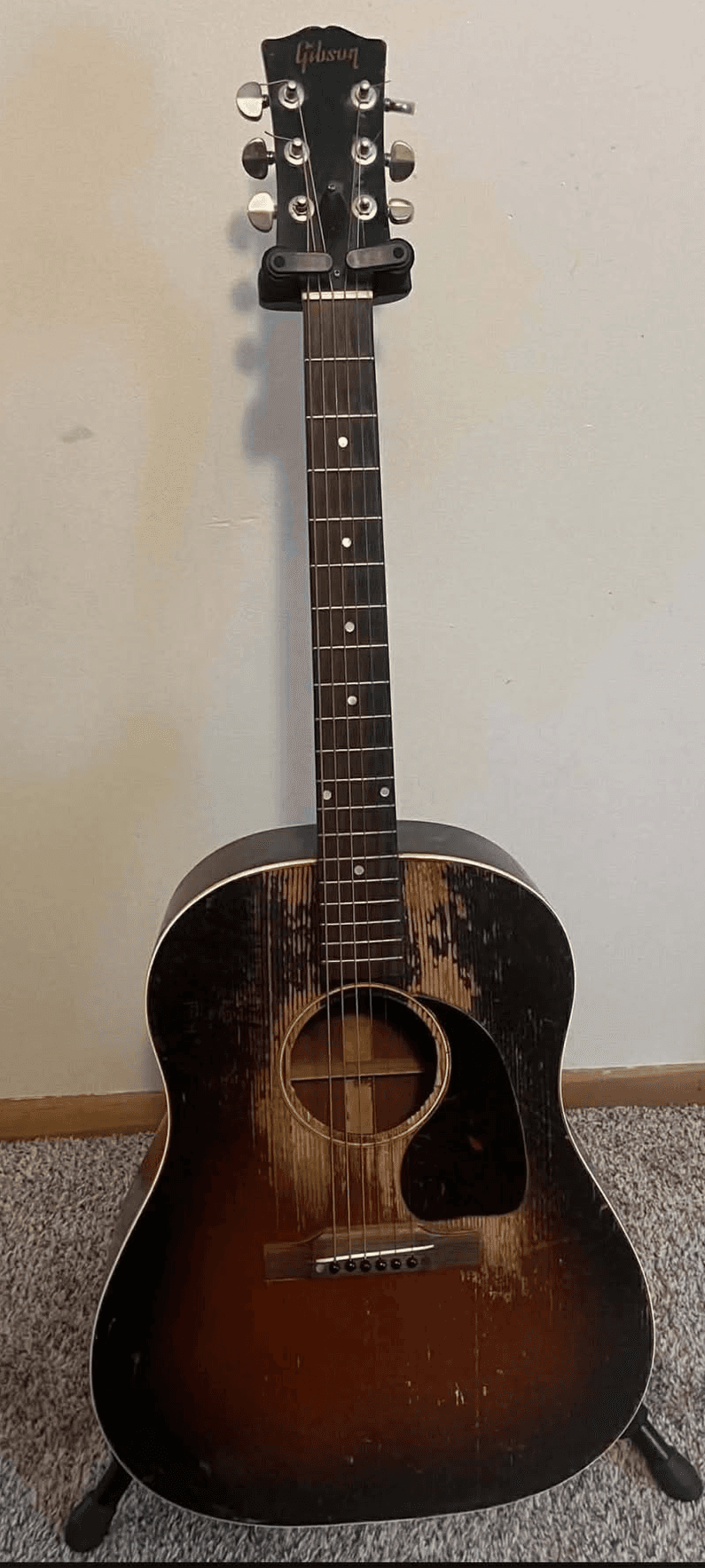
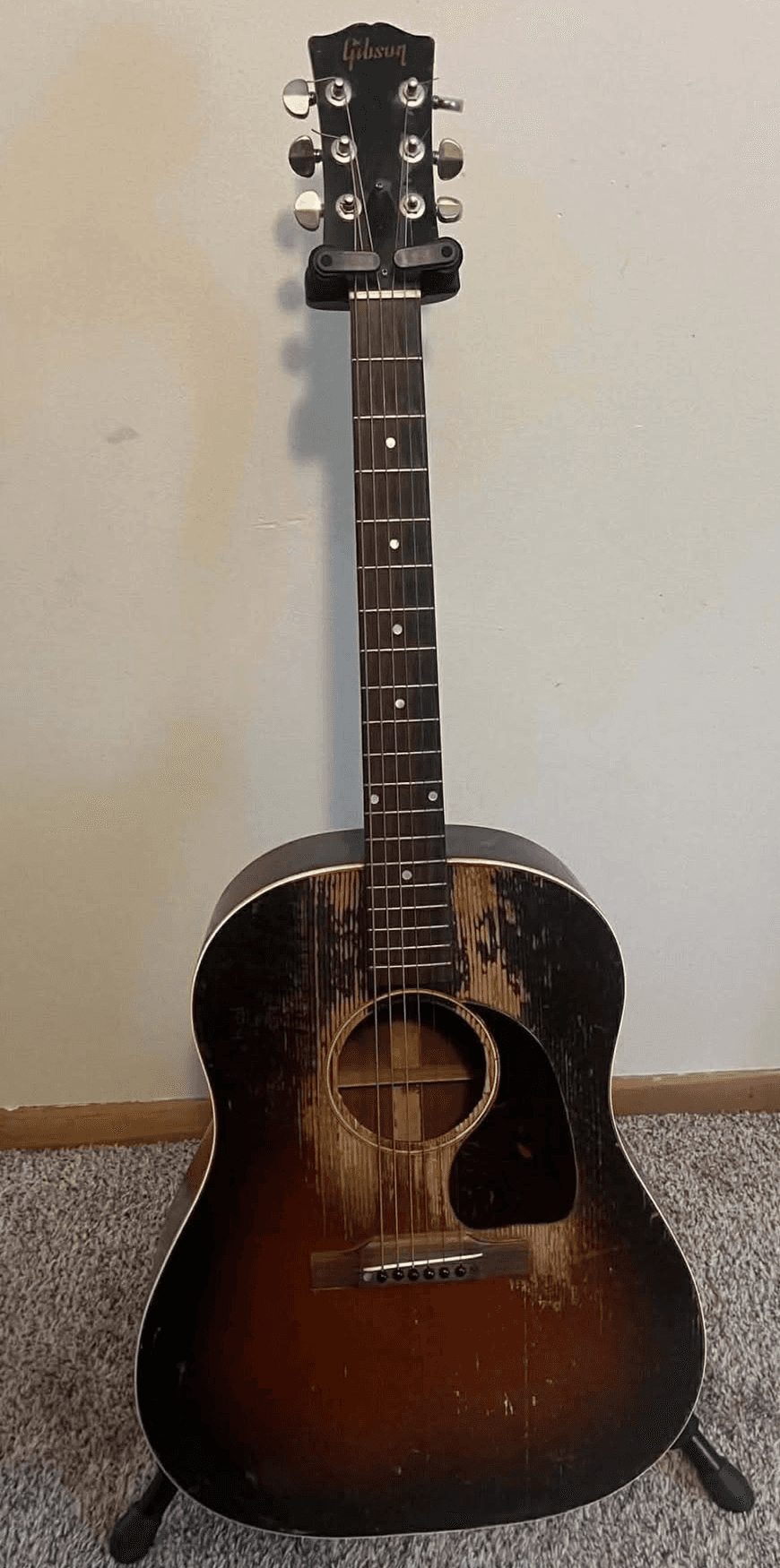
DATE :
How to Date Your Gibson L-00: Complete Vintage Authentication Guide
How to Date Your Gibson L-00: Complete Vintage Authentication Guide
Why Dating Your Gibson L-00 Matters
Learning how to date a Gibson L-00 accurately is essential for authentication, proper valuation, insurance documentation, and understanding your instrument’s place in acoustic guitar history. The Gibson L-00 represents one of the most significant small-bodied acoustic guitars ever made—an affordable, compact instrument that delivered professional tone and became a favorite of blues and folk musicians.
Whether you own a vintage L-00 from the highly collectible 1930s-1940s era or a later model, determining its exact manufacturing year affects everything from market value to restoration approaches. Certain years and specifications command premium prices, particularly pre-war examples with 12-fret necks, banner headstocks, mahogany construction, and original appointments.
This comprehensive guide teaches you how to date your Gibson L-00 using multiple authentication methods, ensuring accuracy regardless of which era your instrument represents.
Understanding the Gibson L-00 History
Before diving into dating methods, understanding the L-00’s evolution provides crucial context:
The Birth of the L-00 (1932)
Gibson introduced the L-00 in 1932 as an affordable, small-bodied acoustic guitar:
Original Design:
Small body (14 3/4” lower bout width)
All-mahogany construction (top, back, and sides)
12-fret neck (joined at 12th fret)
Slotted headstock
Simple appointments
Sunburst finish standard
Affordable pricing for working musicians
Target Market: Musicians needing a quality acoustic guitar at an accessible price point. The L-00 offered Gibson craftsmanship in a smaller, more affordable package than the company’s larger models.
Major L-00 Evolution Periods
1932-1937: 12-Fret Era
12-fret neck (joined at 12th fret)
Slotted headstock
Mahogany top, back, and sides
Small body
Most collectible period
Simple but elegant
1937-1945: 14-Fret Transition and Banner Era
14-fret neck introduced (1937-1938)
Solid headstock
“Only a Gibson Is Good Enough” banner (1943-1945)
Wartime production
Increasing rarity
1946-1946: Post-War Production
Brief post-war continuation
Discontinued 1946
Replaced by LG models
1991-Present: Reissue Era
Historic reissues with vintage specs
Various L-00 variations
Renewed appreciation
How to Date Your Gibson L-00: Serial Number Systems
Understanding Gibson’s serial number systems is the foundation for dating your L-00. However, serial numbers alone cannot definitively date these guitars—always use multiple verification methods.
Important Resource: For quick serial number reference, use our Gibson Serial Number Lookup Tool to find your guitar’s approximate year based on serial number ranges.
1932-1945: Various Early Serial Number Systems
Vintage L-00 guitars used different serial number systems throughout production:
Location: Stamped on neck block (visible through soundhole)
Format: Various formats depending on year
Batch numbers (early 1930s)
Sequential numbers
Letter prefixes (1940s)
Approximate Serial Number Ranges:
1932-1933: Various batch numbering systems
1934-1939: Sequential numbering
1940: A prefix numbers
1941: A prefix numbers (continued)
1942: A prefix numbers
1943: Banner era, A prefix
1944: Banner era, A prefix
1945: Banner era, A prefix
1946: A prefix (final year)
Critical Notes:
Serial number systems inconsistent in 1930s
Some guitars lack serial numbers
Factory Order Numbers more reliable
Pre-war documentation incomplete
How to Find Your Serial Number:
Look through soundhole
Serial number stamped on neck block
May be partially obscured by braces or label
Use flashlight for better visibility
May need to adjust viewing angle
Record complete number exactly
Pro Tip: Use our Gibson Serial Number Lookup Tool for instant reference once you’ve found your serial number.
1991-Present: Modern Serial Number Systems
Modern Reissues: Eight-digit formats or YYMMXXXX format
More reliable than vintage systems
Consistent numbering
Factory Order Numbers (FON): The Most Reliable Vintage L-00 Dating Method
For vintage L-00 guitars, Factory Order Numbers provide the most accurate dating:
What FON Tells You: Production batch and year of manufacture
Location: Inside guitar
Stamped on neck block
Visible through soundhole
Sometimes on label (when present)
Format: Letter followed by 3-4 digits (1940s)
Letter indicates year
Numbers indicate production batch
Earlier years may have different formats
FON Letter Codes (1940s L-00 Era):
A = 1947 (post L-00 discontinuation, but system reference)
Z = 1948 (post-production)
Note: L-00 production ended 1946, predating standardized FON system. Dating primarily relies on physical features and construction details.
How to Find FON (if present):
Look through soundhole
Check neck block area
FON may be stamped on wood
May appear on label
Use flashlight
Photograph for documentation
Why Physical Features Are Critical for L-00:
Pre-war serial systems less standardized
Limited factory records for some years
Physical characteristics more reliable
Construction details vary by era
Dating Vintage L-00 by Physical Features: Era-by-Era Guide
Physical characteristics provide the most reliable dating evidence for L-00 guitars:
1932-1933 L-00 (First Years)
The Original: First years of affordable small-body Gibson
Body Construction:
Small body (14 3/4” lower bout)
All-mahogany construction
Mahogany top (not spruce)
Mahogany back and sides
Flat top (no arch)
Ladder bracing (parallel braces)
Neck:
12-fret neck (joined at 12th fret)
Slotted headstock
Mahogany neck
Ebonized fingerboard (stained maple)
Dot inlays (pearl)
1 3/4” nut width
Headstock:
Slotted headstock (classic style)
“The Gibson” decal
Pearl Gibson logo (some)
Open-gear tuners visible
Bridge:
Belly bridge (rounded underside)
Pyramid shape at ends
Ebonized maple
Through-saddle pin design
Bracing:
Ladder bracing (parallel braces)
Simple internal construction
Less elaborate than X-braced guitars
Finish:
Sunburst standard
Dark edges, lighter center
Thin nitrocellulose lacquer
Natural mahogany back and sides
Hardware:
Open-gear tuners (three per side)
Nickel-plated
Simple endpin
No pickguard initially (some years)
Appointments:
Simple rosewood binding (some examples)
No pickguard or simple black pickguard
Minimal decoration
Functional design
Serial Numbers: Various batch numbering
Why 1932-1933 Is Significant:
First production years
Original specifications
Ladder bracing
12-fret neck
Slotted headstock
All-mahogany construction
1934-1936 L-00
Continuing 12-Fret Era:
Construction:
All-mahogany continues
Small body (14 3/4”)
Ladder bracing transitions to X-bracing (1934-1935)
Flat top
Bracing Change (Critical):
Ladder bracing (1932-1934)
X-bracing introduced (1935)
Scalloped X-bracing
Improved tone and projection
More valuable with X-bracing
Neck:
12-fret neck continues
Slotted headstock
Ebonized fingerboard
Dot inlays
Mahogany neck
Bridge:
Belly bridge continues (1934-1935)
Standard bridge shape appears (1936)
Pyramid ends
Finish:
Sunburst standard
Natural finish rare
Thin nitrocellulose
Serial Numbers: Sequential numbering becomes more consistent
1937-1942 L-00 (14-Fret Transition)
Major Design Change: 14-fret neck introduced
Body:
All-mahogany construction continues
Small body (14 3/4”)
X-bracing standard
Scalloped braces
Neck Transition:
14-fret neck (joined at 14th fret) introduced 1937-1938
Solid headstock replaces slotted
Improved upper fret access
Different neck angle
Headstock (14-fret models):
Solid headstock (not slotted)
“Gibson” script logo
Closed-back tuners
Different aesthetic
Bridge:
Standard bridge shape
Rectangular design
Pyramid ends
Ebonized maple or rosewood
Pickguard:
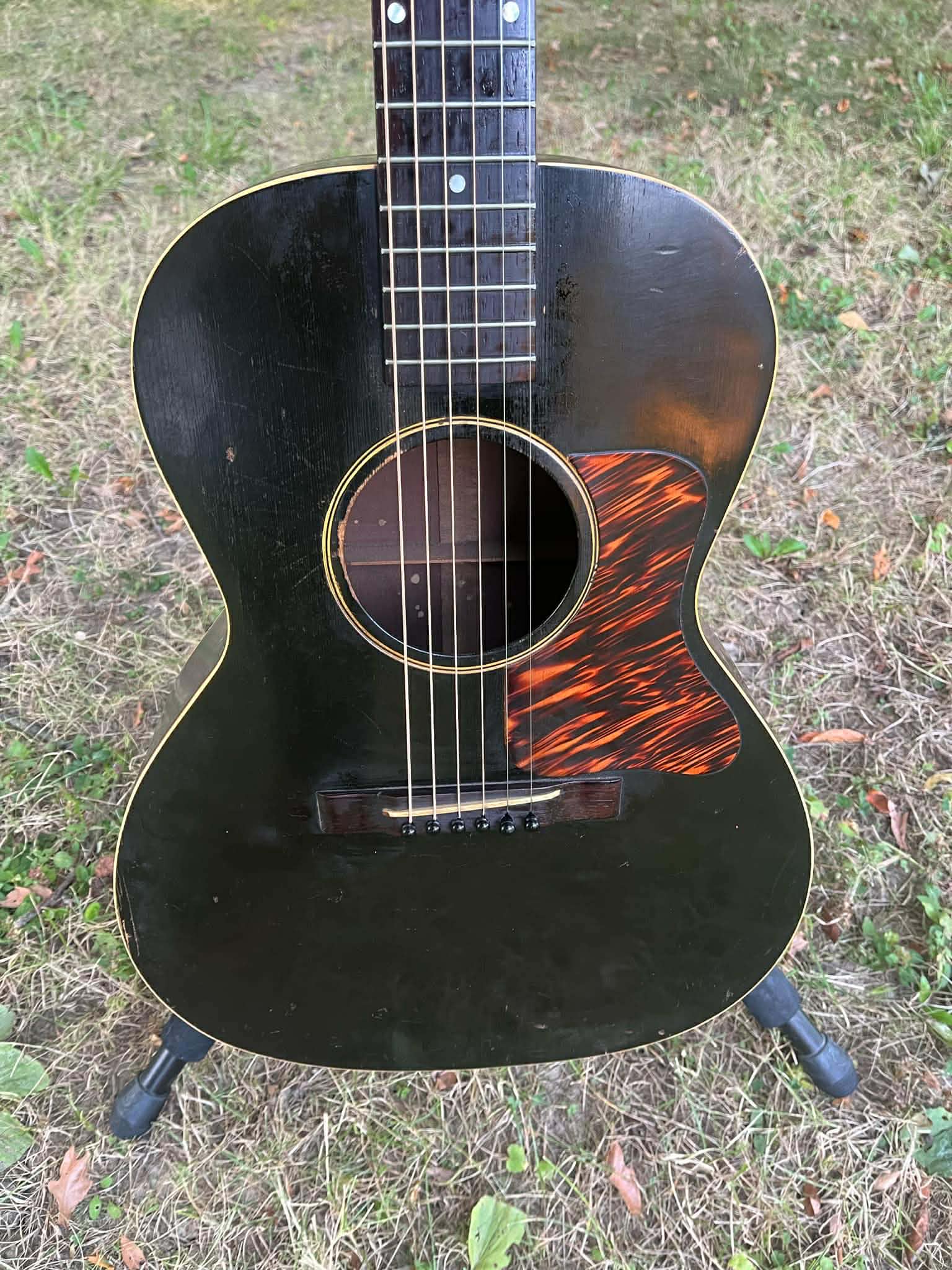
Black pickguard becomes standard (late 1930s)
Firestripe (tortoiseshell) pickguard (some)
Attached with screws or glue
Finish:
Sunburst standard
Dark burst on mahogany
Natural finish rare
Serial Numbers: A prefix begins (1940s)
Transition Significance:
12-fret examples (1937-1938) rare
14-fret becomes standard
Solid headstock modern look
Enhanced playability
1943-1945 L-00 (Banner Era - Most Collectible)
“Only a Gibson Is Good Enough” Banner:
Headstock:
“Only a Gibson Is Good Enough” banner below logo
Most distinctive L-00 feature
Wartime patriotic marketing
Highly collectible
Body:
All-mahogany construction
Small body (14 3/4”)
X-bracing
Scalloped braces
Neck:
14-fret neck standard
Solid headstock with banner
Ebonized fingerboard
Dot inlays
Mahogany neck
Wartime Characteristics:
Material scarcity affected some specs
Simplified appointments (some examples)
Quality generally maintained
Limited production
Bridge:
Standard rectangular bridge
Pyramid ends
Ebonized wood
Finish:
Sunburst standard
Wartime finish variations
Thinner finishes (material conservation)
Serial Numbers: A prefix continues
Why Banner L-00s Are Most Valuable:
Banner headstock (1943-1945 only)
Historical significance
Wartime production rarity
Highly collectible
Limited three-year period
Iconic feature
1946 L-00 (Final Year)
Last Year of Production:
Features:
Banner discontinued (post-war)
Standard Gibson logo returns
All-mahogany construction
14-fret neck
X-bracing
Small body
Post-War Changes:
Banner removed
Standard headstock
Quality construction continues
Final year before discontinuation
Serial Numbers: A prefix
Significance: Last year of original L-00 production before replacement by LG series
Identifying Key L-00 Features
Understanding specific features helps dating:
12-Fret vs. 14-Fret Neck
12-Fret Neck (1932-1937):
Neck joins body at 12th fret
Slotted headstock
Different neck angle
Longer scale length feels different
More traditional appearance
More collectible
14-Fret Neck (1937-1946):
Neck joins body at 14th fret
Solid headstock
Better upper fret access
Modern playability
Standard configuration
How to Identify:
Count frets to body joint
Check headstock (slotted or solid)
Neck angle different
Bridge placement different
Slotted vs. Solid Headstock
Slotted Headstock (12-fret models):
Open slots for tuners
Classical guitar appearance
Three-per-side open-gear tuners
More traditional aesthetic
Solid Headstock (14-fret models):
Solid wood headstock
Closed-back tuners
Modern appearance
Standard Gibson style
Ladder Bracing vs. X-Bracing
Ladder Bracing (1932-1934):
Parallel braces running perpendicular to grain
Simpler construction
Different tone
Less projection
Earlier construction method
X-Bracing (1935-1946):
Crossed braces forming X pattern
Scalloped bracing
Better tone and projection
More valuable
Gibson standard
How to Check:
Look through soundhole with flashlight
See bracing pattern
X-bracing shows crossed braces
Ladder bracing shows parallel braces
Belly Bridge vs. Standard Bridge
Belly Bridge (1932-1936):
Rounded underside (curves down)
Earlier design
Pyramid ends
Transitional feature
Standard Bridge (1936-1946):
Flat underside
Rectangular shape
Pyramid ends
Standard Gibson design
Banner Headstock (1943-1945)
Most Distinctive Feature:
“Only a Gibson Is Good Enough” banner
Below Gibson logo
Patriotic wartime feature
Three-year production only
Instantly identifies 1943-1945
Authentication:
Verify banner placement and font
Check period-correct construction
Confirm other wartime features
Cross-reference with other dating methods
All-Mahogany Construction
Understanding L-00’s unique construction:
Why All-Mahogany Matters
L-00 Standard Construction:
Mahogany top (not spruce like most acoustics)
Mahogany back
Mahogany sides
Mahogany neck
All-mahogany throughout
Tonal Characteristics:
Warm, midrange-focused tone
Less overtones than spruce-top guitars
Punchy, direct sound
Excellent for blues and folk
Recording-friendly tone
Identification:
Dark wood visible through finish
No blonde spruce appearance
Consistent wood color throughout
Distinctive grain pattern
Finish on Mahogany
Sunburst (standard):
Dark edges
Lighter center
Sunburst on mahogany different than spruce
Ages distinctively
Natural (rare):
Natural mahogany appearance
Uncommon on vintage L-00
Shows wood grain clearly
L-00 vs. LG Series
Understanding the relationship:
Transition from L-00 to LG
1946: L-00 discontinued 1947: LG series introduced as replacement
LG Series (1947+):
LG-0: Budget model
LG-1: Similar to L-00
LG-2: Upgraded features
LG-3: Premium version
Key Differences:
LG models continue L-00 philosophy
Similar body size
Various appointment levels
Different model designations
Red Flags: Identifying Non-Original or Modified L-00s
Recognizing modifications helps accurate assessment:
Refinished Vintage L-00
Indicators:
Overspray inside through soundhole
Paint on braces or neck block
Wrong finish thickness
Lack of proper checking
Overspray on banner (if present)
Modern paint types
Impact: Refinished L-00s lose 40-60% of value
Replaced Neck
Common Issue:
L-00 necks sometimes replaced
12-fret necks converted to 14-fret
Neck resets common
Indicators:
Mismatched wood
Different construction
Refinished neck heel
Modern neck profiles
Impact: Replaced necks significantly reduce value
Changed Bracing
Concerns:
Ladder bracing “upgraded” to X-bracing
Original bracing removed
Rebraced guitars
Verification:
Inspect through soundhole
Look for repair evidence
Check brace attachment
Original bracing patterns
Bridge Replacement
Common:
Original bridges often replaced
Modern bridges installed
Different materials
Original Bridge Characteristics:
Pyramid ends
Period-correct construction
Ebonized wood
Proper dimensions
Added Pickguard
Variations:
Some L-00s originally had no pickguard
Pickguards added later
Different pickguard styles by year
Authentication:
Check for screw holes
Verify period-correct style
Some wear acceptable
Original placement important
Top Cracks and Repairs
Common issues with vintage L-00s:
Typical Problems
Top Cracks:
Cracks along grain lines
Stress cracks near bridge
Dryness cracks
Impact damage
Assessment:
Professional repairs acceptable
Clean repairs minimize value impact
Multiple cracks more concerning
Stable vs. progressing cracks
Neck Issues
Common Problems:
Neck angle changes (requires reset)
Neck separation
Headstock cracks (rare on L-00)
Impact:
Professional neck resets expected
Part of vintage guitar ownership
Quality work maintains value
Dating 12-Fret vs. 14-Fret L-00s
Key differences in dating:
12-Fret Models (1932-1937)
Characteristics:
Slotted headstock
Neck joins at 12th fret
Longer distance from nut to bridge
Different neck angle
More traditional appearance
Years:
1932-1936: All 12-fret
1937-1938: Transition to 14-fret
Value: Generally more collectible than 14-fret
14-Fret Models (1937-1946)
Characteristics:
Solid headstock
Neck joins at 14th fret
Better upper fret access
Modern neck angle
Standard appearance
Years:
1937-1946: 14-fret standard
1943-1945: 14-fret with banner
Value: Banner examples most valuable
When You’re Ready to Sell Your Vintage L-00
Accurate dating affects value significantly:
How Dating Affects L-00 Value
Era-Specific Premiums:
1943-1945 banner models: Highest values
1932-1937 12-fret examples: Strong premiums
1935-1942 X-braced 12-fret: Excellent values
1937-1946 14-fret pre-banner: Good values
1946 final year: Collectible
All-original examples command highest prices
Feature-Specific Value:
Banner headstock adds substantial premium
12-fret neck more valuable than 14-fret
Slotted headstock desirable
X-bracing preferred over ladder
Original finish essential
Belly bridge indicates early production
Preparing Your L-00 for Sale
Documentation:
Serial number photographed through soundhole
Headstock photographed (banner if present)
Bracing pattern photographed
Bridge type documented
Overall condition photographed
Any repairs documented
Photography:
Front and back overall views
Headstock detail (banner crucial if present)
Through soundhole (serial number, bracing, label)
Bridge detail (belly or standard)
Neck joint (12-fret or 14-fret)
Pickguard (if present)
Any wear, cracks, or repairs
Slotted or solid headstock detail
Why Choose Edgewater Guitars
When selling your vintage L-00:
Our L-00 Expertise:
Banner headstock identification
12-fret vs. 14-fret authentication
Bracing pattern verification (ladder vs. X)
Bridge type identification
Slotted vs. solid headstock dating
Original finish verification
All-mahogany construction assessment
Premium Offers:
30-40% higher than guitar shops
Banner headstock premiums recognized
12-fret model value properly compensated
Early year (1932-1937) premiums
Understanding of L-00’s historical significance
Streamlined Process:
Expert authentication
Immediate fair offers
No fees or commissions
Professional service throughout
Frequently Asked Questions
What years did Gibson make the L-00 with banner headstock?
Gibson made banner headstock L-00s from 1943-1945. The banner reads “Only a Gibson Is Good Enough” and is one of the most collectible features on vintage Gibson guitars. Use our Gibson Serial Number Lookup Tool to check your guitar’s approximate year.
Are 12-fret L-00s more valuable than 14-fret?
Generally yes. 12-fret L-00s (1932-1937) with slotted headstocks are more collectible than 14-fret models (1937-1946), though 14-fret banner examples (1943-1945) command premium prices due to the banner feature.
What’s the difference between ladder bracing and X-bracing on L-00?
Ladder bracing (1932-1934) has parallel braces, while X-bracing (1935-1946) has crossed braces forming an X pattern. X-bracing provides better tone and projection and is more valuable. You can see the bracing pattern by looking through the soundhole with a flashlight.
Did L-00 guitars have spruce tops?
No, vintage L-00s had all-mahogany construction including mahogany tops (not spruce). This creates a distinctive warm, midrange-focused tone different from spruce-top guitars.
When did the L-00 change from 12-fret to 14-fret?
The transition occurred in 1937-1938. Early 1937 examples may still have 12-fret necks with slotted headstocks, while later 1937 and all 1938+ examples have 14-fret necks with solid headstocks.
What replaced the L-00 after 1946?
Gibson introduced the LG series in 1947 to replace the L-00. The LG-1 was most similar to the L-00, continuing the small-body, mahogany construction philosophy.
How can I tell if my L-00 has X-bracing or ladder bracing?
Look through the soundhole with a flashlight. X-bracing shows two braces crossing in an X pattern. Ladder bracing shows parallel braces running perpendicular to the grain. X-bracing (1935+) is more desirable.
Are belly bridges on L-00s more valuable?
Belly bridges indicate earlier production (1932-1936) and are desirable on 12-fret models. However, banner headstock (1943-1945) is the most valuable feature regardless of bridge type.
Contact Edgewater Guitars
For expert L-00 authentication or to sell your vintage L-00:
Phone: (440) 219-3607
Service Area: Ohio, Michigan, Pennsylvania, Indiana, West Virginia
Our Services:
Expert L-00 authentication
Banner headstock verification
12-fret vs. 14-fret identification
Bracing pattern analysis (ladder vs. X)
Bridge type identification
Original finish verification
Fair market valuations
Immediate offers
Why Sellers Choose Us
✓ L-00 Specialists: Deep knowledge of all L-00 variations
✓ Banner Era Experts: Recognition of valuable 1943-1945 models
✓ 12-Fret Authentication: Proper identification and valuation
✓ Premium Offers: 30-40% higher than guitar shops
✓ Professional Service: Transparent, respectful evaluation
✓ Zero Fees: No commissions or hidden charges
✓ Immediate Payment: No waiting periods
Additional Resources
Gibson Serial Number Lookup Tool - Quick reference for your L-00
Complete Gibson Acoustic Dating Guide
How to Date Gibson Guitars - All Models
Sell Your Gibson Guitar
Vintage Gibson Acoustic Authentication
Learning how to date your Gibson L-00 accurately requires understanding serial numbers, physical features, and construction details specific to each era. The L-00 evolved from 1932 through 1946, with the banner headstock era (1943-1945) commanding the highest values, along with early 12-fret examples with slotted headstocks and X-bracing.
Whether you own a rare banner headstock L-00 from the wartime era, an early 12-fret example with slotted headstock, or any other vintage L-00 variation, proper authentication ensures you understand your instrument’s history and value. Use our Gibson Serial Number Lookup Tool as a starting point, then verify with physical features like neck configuration, headstock type, bracing pattern, and bridge style for definitive dating.
Edgewater Guitars specializes in vintage Gibson acoustic authentication and purchasing throughout the Midwest. Our comprehensive knowledge of L-00 dating—from banner headstock identification to 12-fret vs. 14-fret authentication—ensures accurate assessments that reflect your guitar’s true age and value.
Contact us today at (440) 219-3607 for expert L-00 authentication or professional valuation.
By Stephen Pedone, co-owner of Edgewater Guitars. Edgewater is a vintage guitar shop in Valley City, Ohio that buys pre-1970 Fender, Gibson, Martin and Gretsch guitars across Ohio and nationwide. Call or text (440) 219-3607 for a free appraisal.