DATE :
Vintage Gibson Acoustic Guitar Value Guide
Vintage Gibson Acoustic Guitar Value Guide
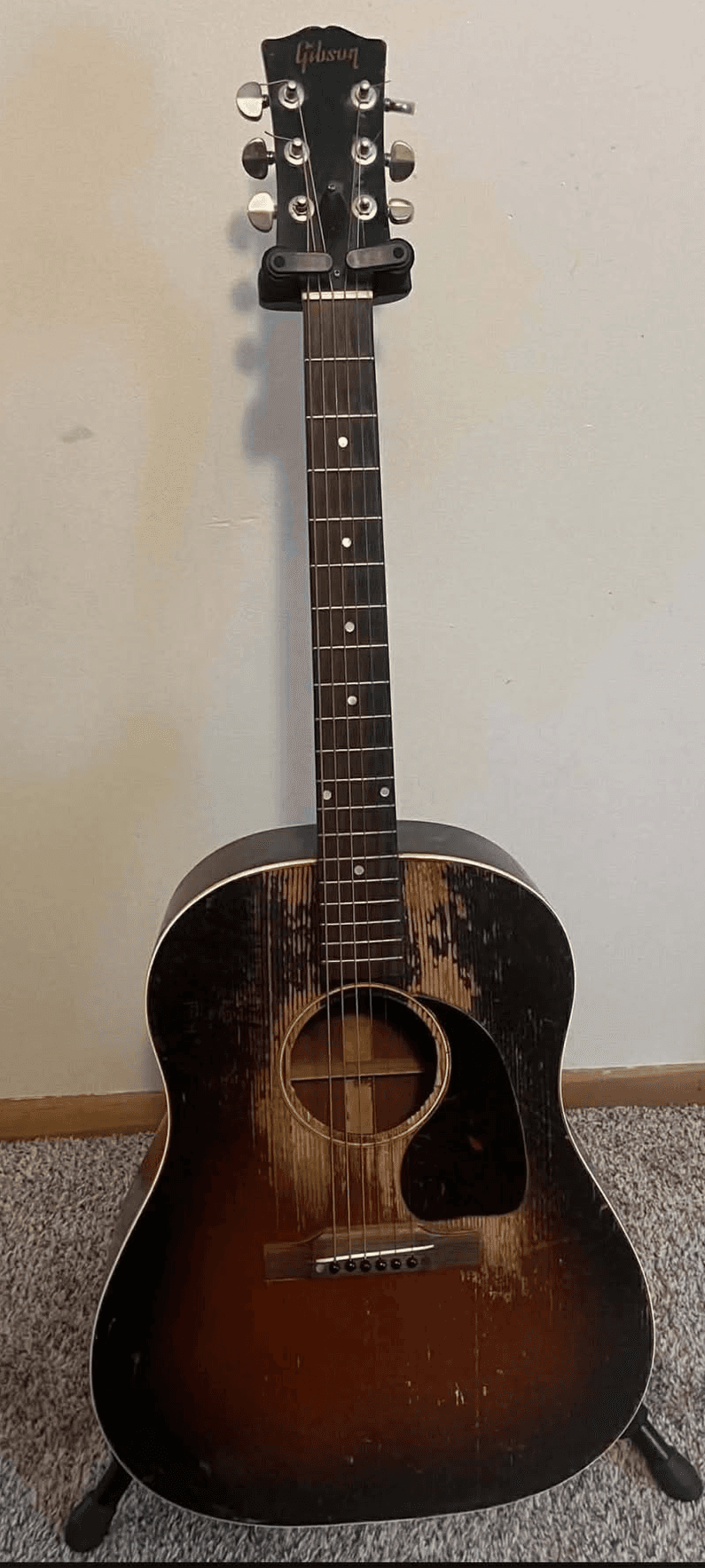
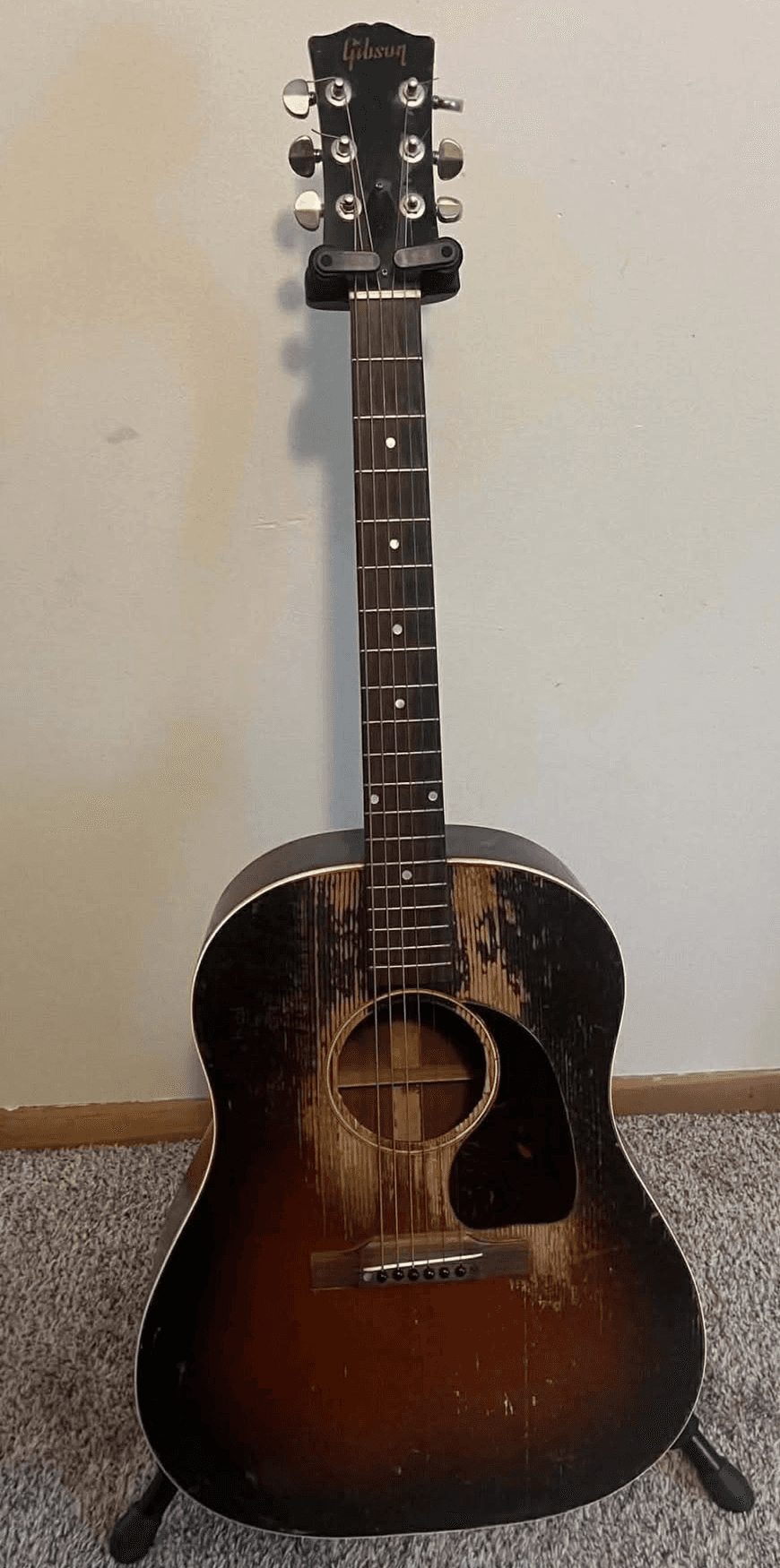
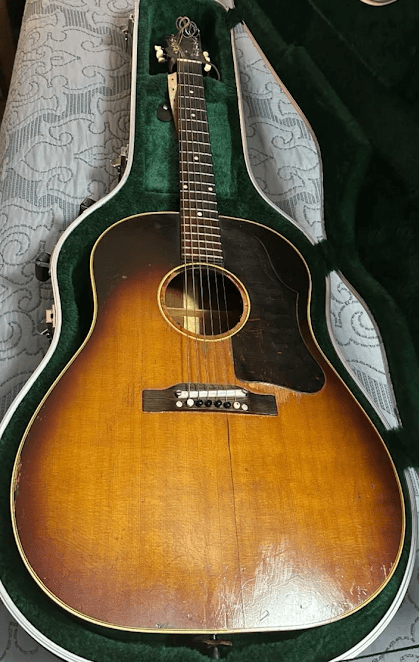
Vintage Gibson flat-tops, from the workhorse J-45 to the small-body LG-2 and L-00 and the ornate Hummingbird and Dove, are some of the most collectible American acoustics ever built. Values range from solid four figures for a clean post-war LG-2 to five figures for a pre-war rarity. Edgewater recently paid $7,100 for a 1944 Banner J-45 and $14,000 for a 1926 Nick Lucas. Model, era, body size, wood, and originality set where any single guitar lands. Use the model guides below to value yours.
Last Updated: June 2026
What Are Vintage Gibson Acoustic Guitars Worth? (By Model, 2026)
The ranges below are reference points for clean, all-original examples and reflect what a fair buyer like Edgewater pays, not best-case auction results. Pre-war and wartime Banner instruments sit at the top; post-war workhorses are more attainable.
Model | Era and body | Reference value for a clean example |
|---|---|---|
J-45 / Southern Jumbo | Round-shoulder mahogany dreadnought, 1942 to 1968 | Around $3,500 to $7,100 |
LG-2 | Small X-braced concert body, 1942 to 1963 | Around $3,400 to $3,700 |
L-00 | Depression-era small-body flat-top, 1932 to 1945 | Around $4,300 to $4,700 |
Hummingbird / Dove | Square-shoulder dreadnought, 1960s | Around $5,400 to $5,500 |
Nick Lucas | Deep-body signature model, 1920s and 1930s | Around $14,000 |
Current market note (2026): a wartime Banner J-45 or a pre-war small-body brings far more than a 1950s or 1960s example of the same model, and originality of the finish, bracing, and top is the biggest single swing. Refinished, repaired, or modified guitars trade lower. As a buyer, Edgewater prices to the honest, all-in condition of the actual guitar, not the best-case auction headline.
What Drives a Vintage Gibson Acoustic’s Value?
Era: pre-war and wartime Banner-logo instruments (1942 to 1945) carry the highest premium, followed by golden-era 1950s examples, then late-1960s guitars.
Model and body size: the small-body L-00 and LG-2, the round-shoulder J-45, and the square-shoulder Hummingbird and Dove each have their own collector base and value tier.
Wood: a maple Dove, a rosewood model, or pre-war Brazilian-influenced specs differ in value from a standard mahogany body.
Originality: original bracing, finish, tuners, and an unaltered bridge matter far more than shine. A refinish or a replaced bridge cuts value sharply.
Condition: no cracks, a solid neck angle, original frets, and no over-spray all add up.
Completeness: the original case and any paperwork add confidence and value.
How to Identify and Date a Vintage Gibson Acoustic
Four things place a Gibson flat-top in the right era and value tier: the serial number, the logo, the body shape, and the bracing. Here is how to read them.
Serial numbers and factory order numbers
Gibson used several numbering systems over the decades, and they are not always strict year codes, so treat the number as a guide and confirm the year with our Gibson serial number lookup.
The wartime Banner logo
From 1942 to 1945 many Gibson flat-tops wore a gold headstock banner reading Only a Gibson Is Good Enough. A genuine Banner instrument, often with scalloped bracing, is a major value driver, so confirm the logo and bracing before valuing a 1940s Gibson.
Round shoulder versus square shoulder
The J-45, LG-2, L-00, and early Southern Jumbo are round-shoulder or small-body designs. In 1960 Gibson introduced its first square-shoulder dreadnought, the Hummingbird, followed by the maple Dove in 1962. The J-45 itself moved to square shoulders in 1969, so a round-shoulder J-45 dates to 1968 or earlier.
Body size, bracing, and finish
Body size separates the small-body L-00 and LG-2 from the full dreadnoughts. The LG-2 is X-braced where the budget LG-1 is ladder-braced. Original sunburst or natural finish with honest wear is preferred, and an over-spray or refinish pulls value down.
Gibson Acoustic Model Value Guides
Drill into a specific model to value your guitar year by year:
How to date your Gibson acoustic: full identification guide
Sell your vintage Gibson acoustic
Edgewater Guitars buys vintage Gibson acoustics nationwide, from Banner-era J-45s and pre-war small-bodies to Hummingbirds and Doves. We give free, no-pressure estimates and pay fairly for clean, original, and even refinished guitars. To sell yours, request a free estimate.
Which vintage Gibson acoustic is most valuable?
Generally the pre-war and wartime instruments. A 1942 to 1945 Banner J-45, an early small-body like a 1926 Nick Lucas, or a clean pre-war flat-top brings the most, while post-war 1950s and 1960s models are more attainable. Within any model, originality and condition drive the final number.
How do I date my Gibson acoustic?
Use the logo and body shape to place the era, then confirm with the serial or factory order number using our Gibson serial number lookup. A headstock banner points to 1942 to 1945; square shoulders point to 1960 or later for the Hummingbird and Dove.
Does a refinish hurt a vintage Gibson acoustic’s value?
Yes. A refinish, a replaced bridge, or non-original bracing lowers the value, but a vintage Gibson acoustic is still very much worth selling. We make fair offers on original, refinished, and project guitars alike.