DATE :
Guitar Serial Number Lookup Guide: Find, Decode, and Date Your Guitar
You’re holding a guitar and wondering when it was made, where it came from, or whether it’s the real deal. That string of numbers stamped on the headstock or neck plate holds the answers—if you know how to read it.
This guide walks you through finding and decoding serial numbers for Fender, Gibson, Martin, and other major brands, plus what to do when the numbers don’t tell the whole story.
What is a guitar serial number
A guitar serial number is a unique identifier that manufacturers stamp, print, or label on instruments during production. Every major guitar maker—Fender, Gibson, Martin, and others—assigns these numbers to track when and where each instrument was built. Think of it as a production fingerprint that connects your guitar to a specific time, place, and manufacturing run.
Serial numbers encode different information depending on the brand:
Production year: Most systems reveal when the guitar left the factory
Factory location: Many numbers indicate which facility built the instrument
Model verification: Some formats confirm the specific product line
Production sequence: The number often shows where your guitar fell in the manufacturing order
Here’s where things get tricky. Serial number formats vary dramatically between manufacturers, and even within the same brand across different decades. A 1962 Fender serial looks nothing like a 2022 Fender serial. Gibson changed their numbering system multiple times. This inconsistency means you’ll want to identify your specific brand’s system before attempting to decode anything.
Where to find your guitar serial number
Serial number placement depends on the manufacturer, guitar type, and production era. If you don’t spot the number right away, check several locations—manufacturers often placed them in less obvious spots.
Headstock and peghead location
The headstock—the flat section at the top of the neck where tuning machines attach—is the most common serial number location for electric guitars. Fender typically stamps numbers on the front of the headstock for modern instruments, while Gibson usually places them on the back.
On vintage instruments, decades of handling can wear down stamped numbers. Good lighting and the right viewing angle often reveal numbers that seem invisible at first glance.
Neck plate and neck pocket location
Bolt-on neck guitars like Fender Stratocasters-complete-authentication-guide) and Telecasters frequently have serial numbers on the metal neck plate—the rectangular plate securing the neck to the body. Pre-CBS Fenders (made before 1965) almost always use this location.
Some guitars have numbers stamped in the neck pocket itself, which requires removing the neck to see. If you’re uncomfortable doing this yourself, a guitar technician can help without risking damage.
Sound hole label location
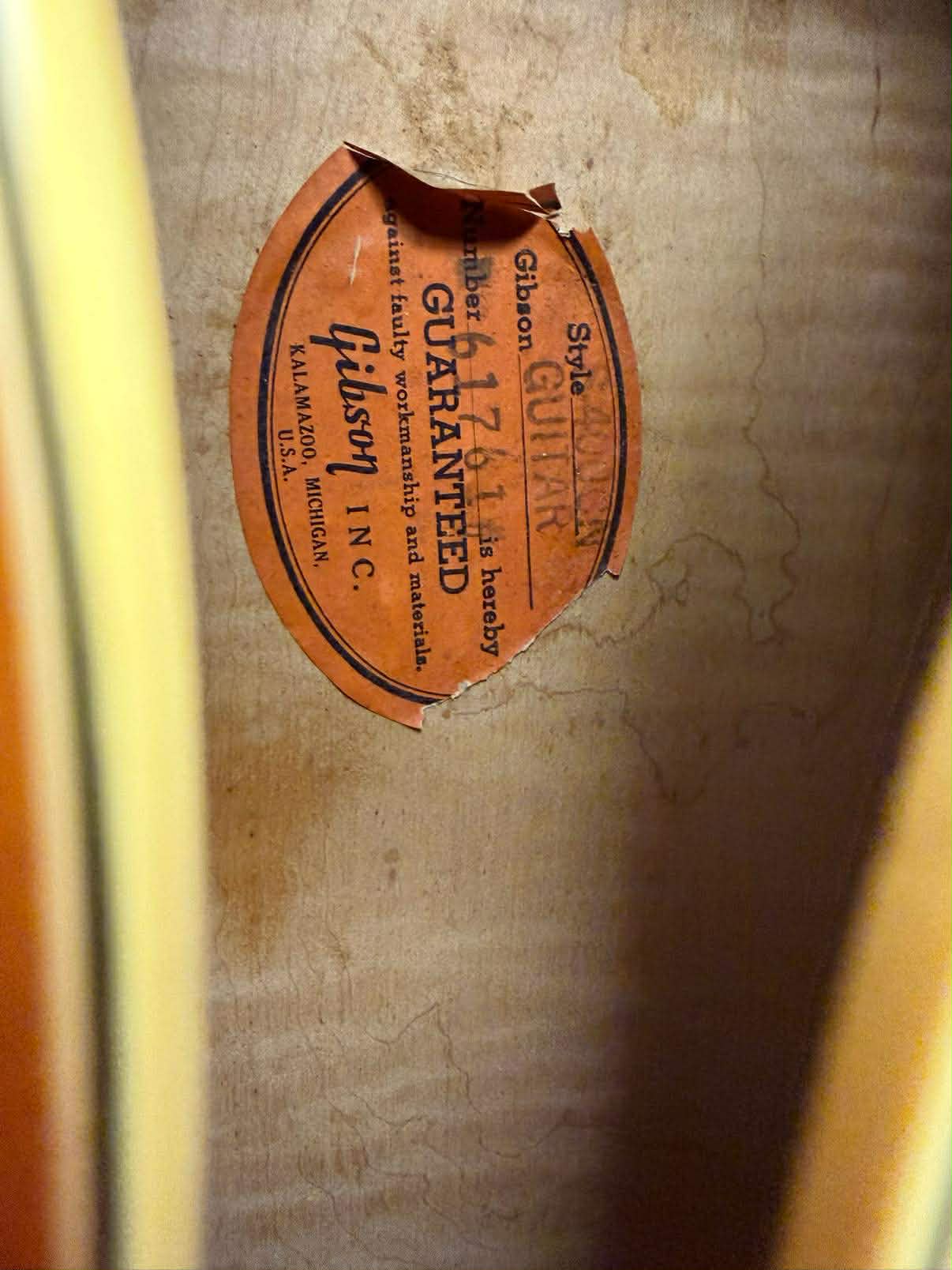
Acoustic guitars typically display serial numbers on a paper label visible through the sound hole. A flashlight helps here—look inside at the neck block (where the neck joins the body) or on the back interior.
Martin guitars consistently use neck block labels. Gibson acoustics place labels on the inside back, which can require some maneuvering to read clearly.
Inside the body and control cavity
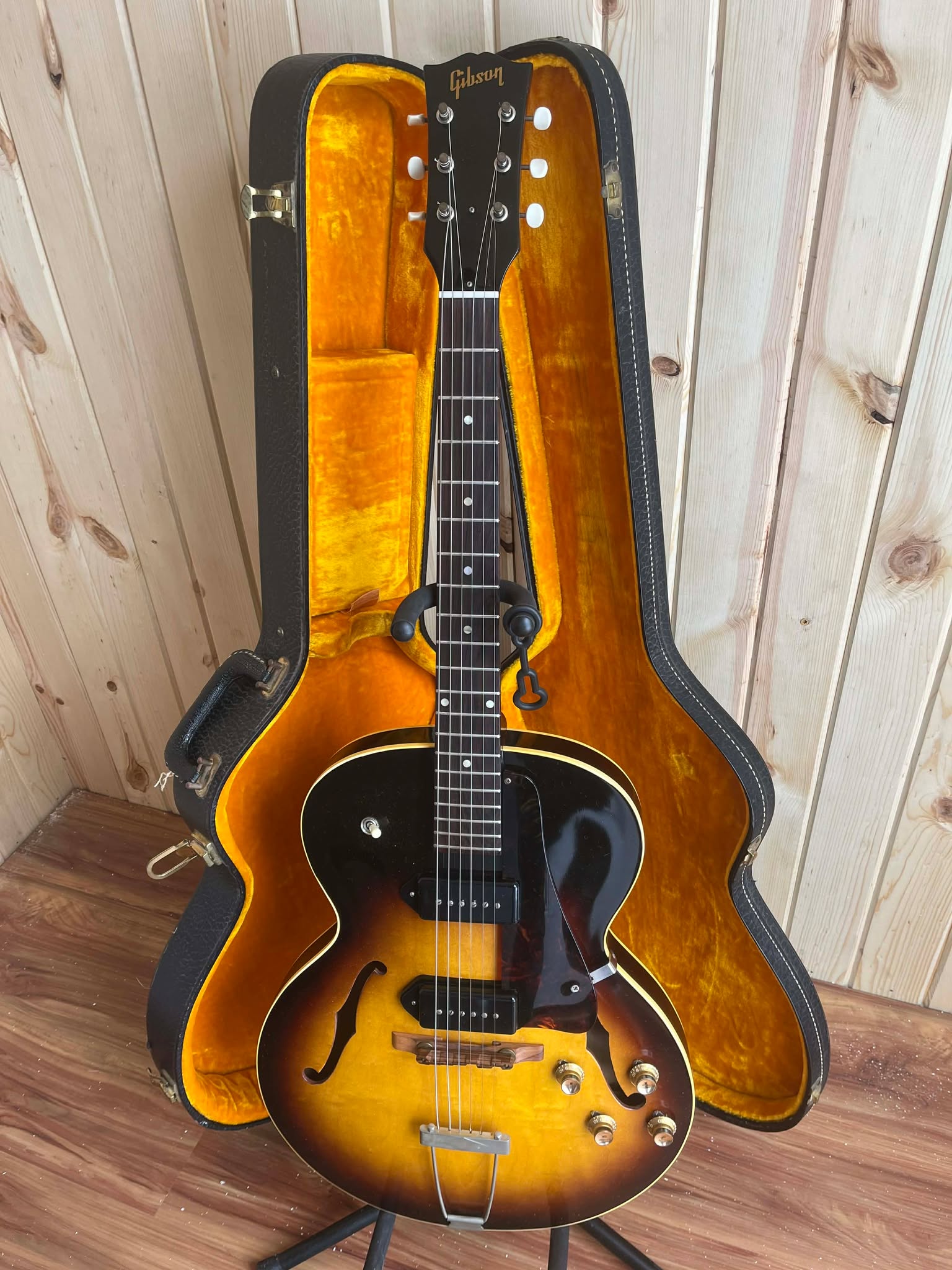
Semi-hollow guitars and some solid body instruments hide serial numbers inside the body. For guitars with f-holes (like the Gibson ES-335), peer through the opening with a light. Solid body electrics sometimes have numbers inside the control cavity—the routed section on the back where electronics live.
How to use a Fender serial number finder
Fender’s serial number system has evolved considerably since the company’s founding in 1946. Identifying which era your guitar belongs to is the first step toward accurate dating.
Fender serial number formats by era
Era | Years | Serial Format | Typical Location |
|---|---|---|---|
Pre-CBS | 1950–1964 | 4-5 digits, no prefix | Neck plate |
CBS Transition | 1965–1976 | 5-6 digits, “L” prefix possible | Neck plate |
Modern Era | 1976–present | Letter prefix + digits | Headstock |
Transition periods can be confusing. Fender didn’t always switch systems cleanly, so guitars from transitional years might use either format.
Fender USA serial numbers
American-made Fenders from the modern era typically begin with letter prefixes indicating the decade. For example, “V” prefixes generally indicate 1980s production, while “N” prefixes point to the 1990s.
Current US production happens at Fender’s Corona, California facility. These guitars use prefixes like “US” followed by a two-digit year code and a production number.
Fender Mexico and Japan serial numbers
Mexican-made Fenders use “MX” or “MN” prefixes, with following numbers indicating year and production sequence. Japanese Fenders carry “MIJ” (Made in Japan) or “CIJ” (Crafted in Japan) designations, depending on the production era.
Both Mexican and Japanese Fenders from certain periods are well-regarded by players and collectors. Country of origin alone doesn’t determine quality or value.
Using the official Fender serial number search tool
Fender offers a free self-service serial number lookup at serialnumberlookup.fender.com. Enter your serial number, and the tool returns production information when available.
One limitation worth noting: the official tool works best for guitars made after 1976. Pre-CBS and early CBS-era instruments often require cross-referencing with other features—neck dates, potentiometer codes, and body characteristics—for accurate dating.
How to use the Gibson guitar serial number database
Gibson’s serial number history is notoriously complex. Unlike Fender’s relatively straightforward evolution, Gibson changed formats multiple times, reused number sequences, and maintained inconsistent records during certain periods. Gibson serials often require additional verification through other features.
Gibson serial number formats by era
Era | Years | Format Description | Notes |
|---|---|---|---|
Pre-War | 1902–1947 | Various formats, often no serial | Many guitars unnumbered |
Post-War | 1947–1961 | 5-6 digits, ink stamped | Numbers reused in sequences |
1960s | 1961–1969 | Impressed numbers, various formats | Overlapping sequences |
Modern | 1977–present | 8 digits encoding date and factory | Most reliable system |
The 1970s represent a particularly confusing period), with Gibson using multiple systems simultaneously during ownership transitions.
Pre-war and vintage Gibson serial numbers
Vintage Gibson guitars—especially those from the 1950s and earlier—present unique identification challenges. Many pre-war instruments lack serial numbers entirely, and those that have them often use Factory Order Numbers (FON) rather than true serial numbers.
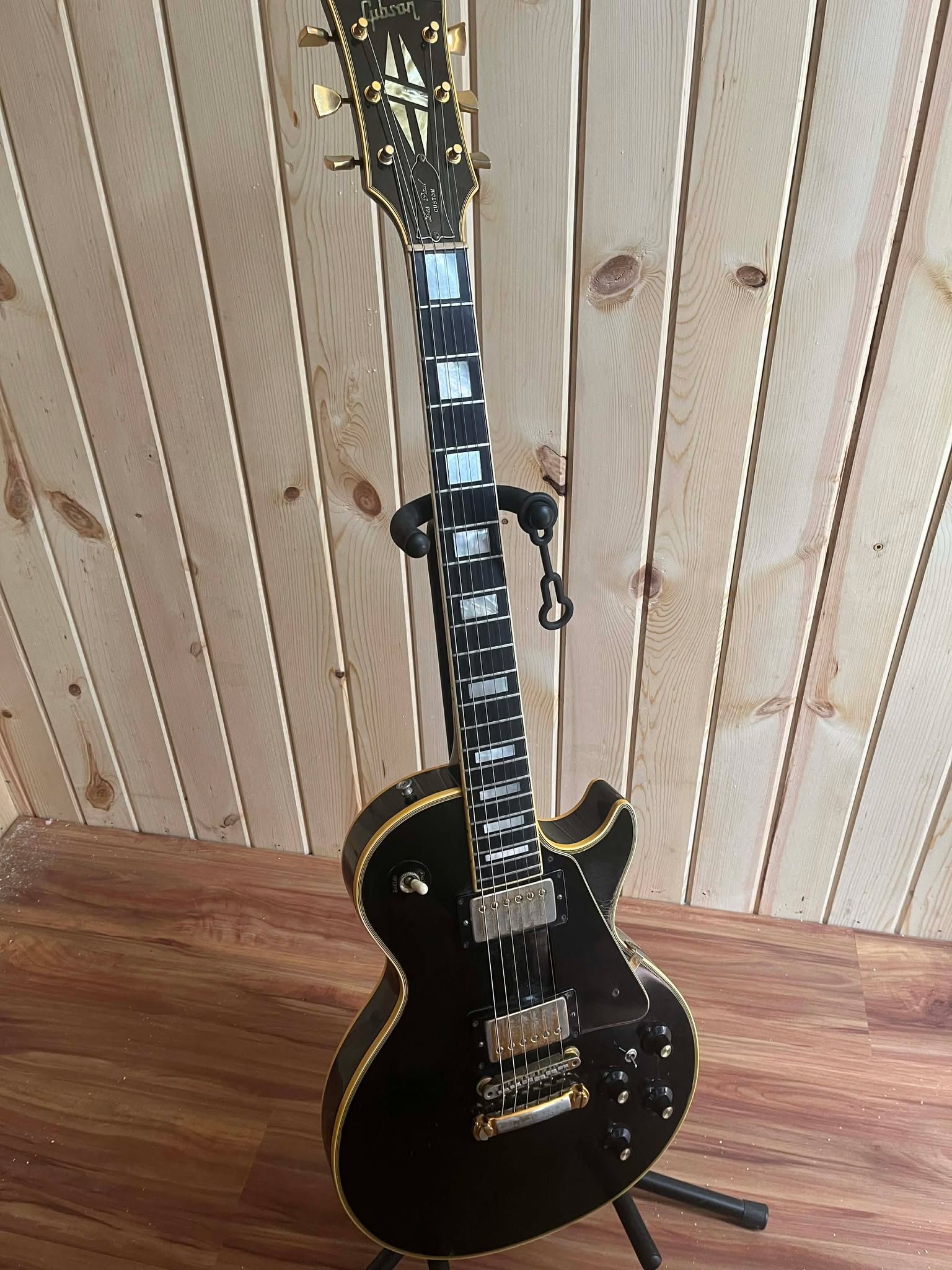
For potentially valuable vintage Gibson instruments, professional authentication becomes essential. The difference between a genuine 1959 Les Paul Standard and a later reissue can mean tens of thousands of dollars.
Modern Gibson serial number lookup
Gibson’s modern 8-digit system (used since 1977) is the most straightforward to decode:
First and fifth digits: Year of manufacture
Second, third, and fourth digits: Day of the year (001-365)
Sixth digit: Factory location
Seventh and eighth digits: Production ranking for that day
For example, a serial starting with “90245” would indicate the 24th day of a year ending in 5 (likely 1995 or 2005), with additional digits specifying factory and sequence.
Gibson Factory Order Numbers explained
Factory Order Numbers (FON) are a separate identification system Gibson used alongside serial numbers, particularly on vintage instruments. FONs appear inside the body—on the neck block for acoustics, or visible through f-holes on semi-hollow electrics.
FONs can help narrow down production year when serial numbers are ambiguous or missing. They typically include a letter indicating the year within a production cycle, followed by a batch number.
How to look up Martin guitar serial numbers
Martin maintains one of the most consistent and well-documented serial number systems in the guitar industry. Unlike Gibson’s complicated history, Martin serial numbers run sequentially with no repeated numbers—ever.
Martin serial number charts by year
Martin’s official lookup tool at martinguitar.com provides straightforward year identification. Find where your serial number falls in their published ranges, and you’ll know the production year. This system covers guitars, ukuleles, and mandolins.
Martin model number and stamp identification
Beyond the serial number, Martin stamps model information on the neck block visible through the sound hole. The model naming convention combines body size with wood type—a D-28, for instance, indicates a Dreadnought body size with Style 28 appointments.
Combining serial number dating with model identification gives you a complete picture of your Martin guitar’s specifications and production context.
Serial number lookup for other guitar brands
Many manufacturers beyond Fender, Gibson, and Martin have serial number systems worth understanding. Documentation quality varies significantly by brand.
Epiphone serial numbers
Epiphone’s ownership history complicates serial number interpretation. As a Gibson subsidiary since 1957, Epiphone has used various numbering systems depending on production era and manufacturing location. Modern Epiphone serials typically indicate country of manufacture through prefix letters.
Gretsch serial numbers
Gretsch changed ownership multiple times throughout its history, and each transition brought new serial number formats. Dating a Gretsch often requires identifying which ownership era the guitar belongs to first, then applying the appropriate numbering system.
Rickenbacker serial numbers
Rickenbacker typically places serial numbers on the jack plate—the small metal plate where you plug in your cable. Their numbering system has remained relatively consistent compared to some competitors.
PRS serial numbers
Paul Reed Smith guitars use a logical serial system that encodes year and production information clearly. PRS maintains good records, and their customer service can often provide detailed production information for specific serial numbers.
Ibanez serial numbers
Ibanez serials indicate factory location through prefix letters, revealing whether your guitar was made in Japan, Indonesia, China, or Korea. Japanese-made Ibanez guitars, particularly from the 1970s and 1980s, often command higher prices in the vintage market.
What to do if your guitar has no serial number
Not every guitar has a visible serial number, and that doesn’t automatically indicate a problem. Legitimate reasons for missing serials include:
Pre-serial era production: Many guitars made before the 1950s weren’t numbered
Factory seconds: Some manufacturers didn’t serialize instruments with cosmetic flaws
Custom shop pieces: Hand-built instruments sometimes skip standard numbering
Worn or removed numbers: Decades of use can obliterate stamped serials
When serial numbers aren’t available, alternative identification methods become essential. Body shape, hardware styles, pickup designs, wood characteristics, and neck profiles all changed over time at most manufacturers. Original cases and paperwork also provide valuable context.
Professional appraisal becomes particularly important for guitars without serial numbers. Contact Edgewater Guitarsfor a free evaluation to help identify what you have.
How to spot a fake guitar serial number
Counterfeit guitars have become increasingly sophisticated, with federal agents seizing 3,000 counterfeit Gibson guitarsat a single port in 2024. Serial number verification is one authentication tool, though not a foolproof one.
Inconsistent font or stamping
Authentic serial stamps have consistent characteristics: uniform depth, proper font for the era, and precise placement. Counterfeit guitars often show irregularities—uneven stamping depth, incorrect fonts, or placement that doesn’t match factory standards.
Serial number and model mismatch
Cross-reference your serial number’s indicated production year with the guitar’s features. A serial suggesting 1962 production on a guitar with 1970s-style pickups, wrong headstock shape, or anachronistic hardware raises immediate red flags.
Counterfeiters sometimes use legitimate serial numbers from lower-value guitars on fake high-value instruments. The number might check out in a database, but the guitar’s features don’t match what the factory was producing during that period.
Verify against known databases
Official manufacturer databases provide the most reliable verification when available. Third-party databases vary in accuracy—use them as starting points rather than definitive sources.
What your serial number cannot tell you
Serial number lookup is a valuable starting point, but it has real limitations:
Current market value: A serial number reveals production year, not what your guitar is worth today
Authenticity guarantee: Serial numbers can be forged
Complete provenance: Ownership history isn’t encoded in serial numbers
Modifications or repairs: Serial numbers don’t reveal whether parts have been replaced
Exact specifications: Factory variations existed within production runs
Get your guitar valued by vintage experts
Once you’ve identified your guitar’s year and model through serial number lookup, the natural next question is: what’s it actually worth? Production year and model provide context, but current market value depends on condition, originality, rarity, and collector demand in a vintage guitar market projected to reach $2.5 billion by 2032.
Edgewater Guitars provides free, no-obligation valuations for vintage and collectible instruments. The process is straightforward: share details and photos, receive expert assessment, and get an immediate cash offer if you decide to sell—no waiting, no fees, no pressure.
FAQs about guitar serial number lookup
Does a guitar’s serial number affect its resale value?
The serial number itself doesn’t affect value, but the production year and factory it reveals can significantly impact collectibility. A pre-CBS Fender serial indicating 1964 production makes that guitar far more valuable than an identical-looking instrument with a 1974 serial.
Can I look up a guitar serial number to check if it was stolen?
Some databases like the Guitar Registry allow stolen instrument searches, but coverage is limited considering 24% of musicians have had gear stolen. For theft verification, contact local law enforcement—they can check national stolen property databases that aren’t publicly accessible.
Why do some vintage guitars have multiple serial numbers?
Manufacturers sometimes used separate numbering systems for different components. A Gibson might have both a serial number and a Factory Order Number. Some guitars received additional numbers during factory repairs or refinishing.
How accurate are third-party guitar serial number databases?
Accuracy varies considerably. Third-party databases compile information from multiple sources with varying reliability. Verify against official manufacturer resources when possible—especially for valuable instruments.
What if my guitar serial number doesn’t match any known database?
Unmatched serials might indicate a less-documented production run, a model made for foreign markets, or potentially a counterfeit instrument. Professional appraisal can determine authenticity and origin when databases come up empty.
Do acoustic and electric guitars from the same brand use the same serial number systems?
Usually not. Most major manufacturers maintain separate serial number systems for acoustic and electric lines. Lookup resources and dating charts are typically specific to instrument type.