DATE :
Fender Neck Date Stamps: The Complete Guide to Dating Your Vintage Fender Guitar
Fender Neck Date Stamps: The Complete Guide to Dating Your Vintage Fender Guitar
When you’re trying to determine the age and authenticity of your vintage Fender guitar, the neck date stamp is often your most reliable piece of evidence. While serial numbers can be confusing or even misleading, the pencil-written date on your Fender’s neck heel provides a direct window into when that specific neck was crafted in the Fender factory.
If you own a vintage Fender and are considering selling, understanding these date stamps is crucial for establishing your instrument’s value. At Edgewater Guitars, we’ve evaluated thousands of vintage Fenders throughout Ohio and the surrounding region, and we know exactly what to look for when authenticating these instruments.
What Are Fender Neck Date Stamps?
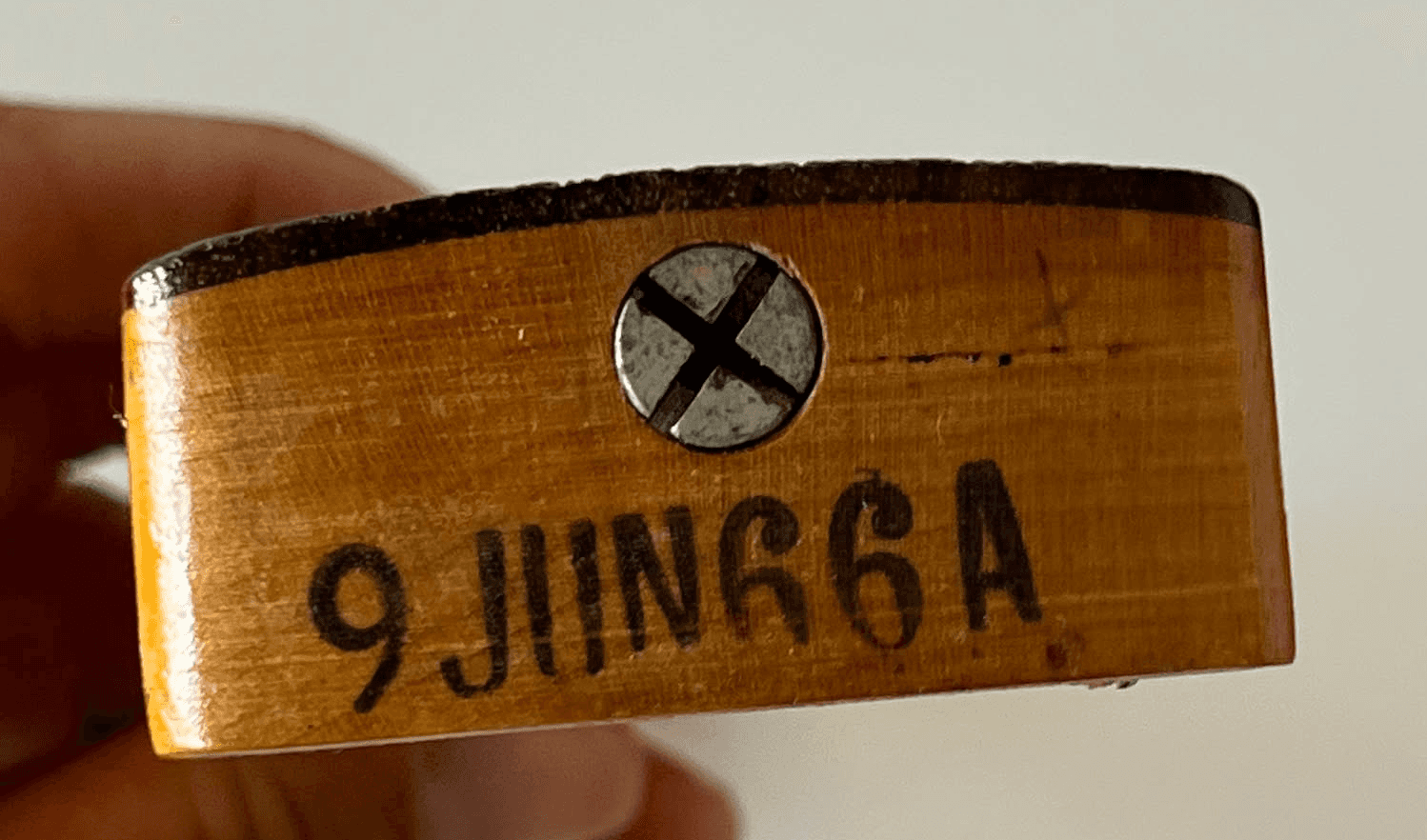
Fender neck date stamps are handwritten notations—typically in pencil or crayon—found on the butt end of the neck (the part that fits into the neck pocket of the body). These dates were written by factory workers during the neck construction process and indicate when that particular neck was completed.
Where to Find Them:
Remove the neck from the body by unscrewing the four neck screws
Look at the heel (butt end) of the neck
The date is typically written perpendicular to the fingerboard
May also appear inside the neck pocket of the body
Important Note: The neck date represents when the neck was finished, not necessarily when the complete guitar was assembled. Bodies and necks were often “married” weeks or even months after individual components were completed.
Understanding Fender Date Stamp Formats
Early Format (1950-1962): Simple Month-Year
The earliest Fender neck dates used a straightforward format:
Format: “Month-Year” Examples:
“3-54” = March 1954
“10-59” = October 1959
“7-61” = July 1961
These dates were typically written in pencil by the neck department worker who completed the neck. The handwriting varies significantly depending on which worker inscribed the date, and some are more legible than others.
Authentication Tips:
Pencil markings should show age-appropriate fading
The graphite should be embedded in the wood grain
Fresh, dark pencil marks on supposedly vintage necks are red flags
Look for consistent aging across all markings
Transition Period (1962-1973): Adding the Model Code
Starting around 1962, Fender began including model designations alongside the date:
Format: “Model Code-Date” Examples:
“3APR65B” = Telecaster, April 1965
“5SEP66B” = Stratocaster, September 1966
“2FEB68B” = Precision Bass, February 1968
Understanding Model Codes
Fender used specific numeric codes to identify which model the neck was intended for:
Stratocaster Codes:
“5” or “05” = Stratocaster neck
Telecaster Codes:
“3” or “03” = Telecaster neck
Precision Bass Codes:
“2” or “02” = Precision Bass neck
Jazz Bass Codes:
“7” or “07” = Jazz Bass neck
Other Common Codes:
“1” = Esquire/Broadcaster (early 1950s)
“4” = Jazzmaster
“8” = Jaguar
“9” = Mustang
CBS Era Format (1965-1981)
After CBS acquired Fender in 1965, the dating system evolved further:
Typical Format: “Model Code + Month/Year Code + B” Examples:
“5MAR66B” = Stratocaster, March 1966
“3JUL68B” = Telecaster, July 1968
“2OCT70B” = Precision Bass, October 1970
The “B” Suffix: The letter “B” at the end commonly appeared during the CBS era and likely indicated the neck had been inspected or approved (“B” for “inspected By” a worker, though this is debated among collectors).
1970s Variations
By the 1970s, Fender’s dating stamps became less consistent:
Variations Include:
Ink stamps instead of pencil
Date stamps with full model names (“STRAT,” “TELE”)
Multi-digit codes that included production run information
Less legible handwriting as quality control declined
Cross-Referencing: Neck Dates vs. Body Dates vs. Serial Numbers
A complete authentication requires examining multiple dating methods:
Body Dates
Fender also penciled dates inside the body cavities:
Locations:
Tremolo cavity (Stratocasters)
Neck pocket
Control cavity
Important: Body dates and neck dates frequently don’t match. A neck from April might be paired with a body from June—this is completely normal and doesn’t indicate a “Franken-guitar.”
Serial Numbers
Fender’s serial number system has significant overlap and inconsistencies:
Pre-CBS Serial Numbers (1950-1965):
Located on bridge plate (Telecasters) or neck plate (Stratocasters)
Overlap between years is common
Serial numbers alone cannot definitively date an instrument
CBS Era Serial Numbers (1965-1976):
“F” prefix indicates CBS era (though used inconsistently)
Massive overlap and non-sequential numbering
Serial numbers became less reliable for dating
Why Neck Dates Are More Reliable: Neck dates were internal factory notations never intended for consumer use, making them far less likely to be forged or manipulated than serial numbers.
Authentication: Real vs. Fake Neck Date Stamps
With vintage Fender values soaring, fake neck stamps have become increasingly common. Here’s how to spot authentic markings:
Authentic Neck Stamp Characteristics
Age-Appropriate Wear:
Pencil graphite should show fading consistent with 40-70 years of age
The marking should be embedded in the wood grain
Natural darkening from handling and oxidation
Some smudging or partial fading is normal
Correct Location:
Stamped on the heel of the neck (butt end)
Oriented perpendicular to the fingerboard
Sometimes appears inside the neck pocket of the body
Period-Correct Format:
Must match the format used during the supposed year of production
Handwriting style should match factory workers’ typical markings
Month abbreviations consistent with Fender’s system
Consistent Aging:
All pencil markings (date, inspection marks, worker initials) should show similar aging
Wood discoloration around markings should be natural and gradual
Red Flags for Fake Stamps
Warning Signs:
Dark, crisp pencil marks on supposedly old necks
Wrong format for the claimed year
Too-perfect handwriting (factory marks were quick and informal)
Dates that don’t align with other features (pickups, pots, serial numbers)
Stamped over obvious refinishing or wood replacement
Located in unusual positions
Modern Forgery Techniques: Counterfeiters have become sophisticated, using:
Aged graphite mixed with solvents to penetrate wood
Period-correct pencils
Artificial aging techniques
Professional Authentication: If you own a potentially valuable vintage Fender (especially pre-CBS), professional authentication is essential. At Edgewater Guitars, we examine every detail—not just the neck stamp—to verify authenticity before making an offer.
Decoding Common Neck Date Examples
Let’s walk through some real-world examples:
Example 1: “5-58”
Model: Stratocaster (neck code 5)
Date: 1958
Value Insight: Pre-CBS with maple neck, highly desirable
What to Check: Should have single-layer pickguard, two-tone sunburst finish
Example 2: “3JUL64B”
Model: Telecaster (neck code 3)
Date: July 1964
Value Insight: Last year before CBS acquisition—premium value
What to Check: Should have clay dots (pre-CBS), slab rosewood board
Example 3: “2SEP66B”
Model: Precision Bass (neck code 2)
Date: September 1966
Value Insight: Early CBS era, still quality construction
What to Check: Transitional features between pre-CBS and full CBS production
Example 4: “5NOV59B”
Model: Stratocaster
Date: November 1959
Value Insight: Highly collectible slab-board rosewood era
What to Check: Thick rosewood fretboard, clay dots, three-tone sunburst
Using Neck Dates to Determine Value
Neck dates directly impact your Fender’s market value:
Premium Years (Higher Values)
Pre-CBS Stratocasters (1954-1965):
1954-1956: Two-tone sunburst, maple necks
1959-1962: Slab rosewood fingerboards
1963-1964: Final pre-CBS years
Pre-CBS Telecasters (1950-1965):
1950-1951: Broadcaster/“Nocaster” era
1952-1954: Early Telecaster production
1960-1965: Rosewood fingerboard era
Pre-CBS Basses (1951-1965):
1951-1957: Original Precision Bass design
1957-1962: Split-coil Precision Bass
1960-1965: Jazz Bass introduction and early years
Transitional Years (Significant Interest)
1965: The CBS acquisition year—instruments from early 1965 show pre-CBS features, later 1965 shows CBS changes
1962-1963: Transition from slab to veneer rosewood fingerboards (mid-1962)
CBS Era Considerations
While CBS-era Fenders (1965-1981) don’t command pre-CBS prices, certain years remain collectible:
1965-1967: Early CBS with transitional features
1968-1971: Introduction of maple cap necks (1967) and various finish options
1972-1976: “F” stamped tuners, three-bolt necks on some models
What to Do If Your Neck Date Doesn’t Match
Don’t panic if your neck date and body date don’t align perfectly—this is normal:
Acceptable Date Discrepancies:
2-6 months difference is common and expected
Bodies and necks were completed separately, then paired during final assembly
Inventory sat in different departments at different rates
Concerning Discrepancies:
Year or more of difference may indicate neck replacement
Dates that conflict with other features (serial numbers, pot codes, pickup types)
Mixing of pre-CBS and CBS-era components
Neck Swaps and Value: If your guitar has a replacement neck from a different year:
Value typically drops 30-50% depending on originality of replacement
“Period-correct” replacement necks (from the same era) are more acceptable
Collector-grade instruments require original necks
Potentiometer Codes: Supporting Evidence
Always cross-reference neck dates with potentiometer (pot) date codes:
Reading Pot Codes:
Format: XXXYYYZZ
XXX = Manufacturer code (137=CTS, 134=Centralab, 304=Stackpole)
YY = Year (last two digits)
ZZ = Week of manufacture
Example: “1376428” = CTS manufacturer, 1964, 28th week
What to Expect: Pot dates should be within a few months of the neck date. Pre-CBS Fenders typically used:
CTS (137): Common on Telecasters and basses
Centralab (134): Common on Stratocasters
Stackpole (304): Found on various models
Regional Variations and Special Cases
Custom Color Instruments
Custom color Fenders often have additional markings:
Look For:
Color codes written in the body cavities
Masking tape with color names or numbers
Multiple dates indicating body finishing stages
Factory Seconds and Prototypes
Occasionally, neck dates appear with additional notations:
“X” marks: May indicate factory seconds
Unusual codes: Could indicate prototype or special order
Multiple dates: Might show rework or modification
Export Models
Fenders built for specific markets sometimes have variations:
Different serial number formats
Additional stamps or codes
Market-specific features that affect dating
Selling Your Vintage Fender: Why Authentication Matters
If you’re considering selling your vintage Fender, proper authentication—including accurate neck date verification—directly impacts your offer:
What Edgewater Guitars Evaluates
Complete Authentication Process:
Neck date stamp verification
Body date confirmation
Serial number cross-reference
Potentiometer code examination
Hardware assessment (tuners, bridge, pickups)
Finish analysis and originality check
Structural integrity evaluation
Why This Matters: We’ve seen countless cases where sellers received lowball offers from local shops that either:
Missed authentic features and undervalued the instrument
Incorrectly identified modifications and drastically reduced offers
Failed to recognize rare transitional features
The Edgewater Advantage
Expert Authentication: Our team has evaluated thousands of vintage Fenders. We understand the nuances of factory dating systems and can spot authentic details that others miss.
Premium Valuations: Because we recognize genuine vintage features and can properly authenticate instruments, we consistently pay 30-40% more than typical guitar shops.
Immediate Offers: Once authentication is complete, we make immediate cash offers—no consignment waiting, no seller fees, no uncertainty.
White-Glove Service: For high-value pre-CBS Fenders, we travel throughout Ohio, Michigan, Pennsylvania, Indiana, and West Virginia for in-person evaluations.
Need Help Dating Your Fender?
Whether you’re curious about your guitar’s age or considering selling, we can help:
Free Resources:
Complete Fender Serial Number Lookup Tool
Fender Potentiometer Dating Guide
How to Photograph Your Guitar for Authentication
Get Your Free Valuation:
If you own a vintage Fender and are considering selling, contact Edgewater Guitars for a free, no-obligation valuation:
📞 Call: (440) 219-3607
📧 Email: [Contact form on website]
📍 Service Area: Ohio, Michigan, Pennsylvania, Indiana, West Virginia
Final Thoughts: Knowledge Is Value
Understanding Fender neck date stamps isn’t just academic—it directly impacts your instrument’s value and authenticity. Whether you’re:
Evaluating a guitar you own
Considering a purchase
Preparing to sell
Researching family heirlooms
This knowledge helps you make informed decisions.
Ready to learn what your vintage Fender is truly worth? Contact Edgewater Guitars today. We combine decades of expertise with fair, transparent valuations that consistently exceed local shop offers.
Edgewater Guitars specializes in purchasing vintage and used guitars throughout the Midwest. Our authentication expertise and premium valuations have made us the preferred choice for guitar sellers throughout Ohio and surrounding states. Contact us today for your free, expert evaluation.
From Our Bench
To find the neck date you have to remove the neck and inspect the heel, where Fender stamped or handwrote it. If it is faint, a black light often brings up the remnants of the original stamp. Sometimes it is simply worn away, and then you date the guitar from the rest of its features.
When the neck date disagrees with the body or pot dates, we read it in context, because Fender made parts in batches and pulled them from bins out of order, so dates are not always sequential. If a neck reads 1962 and another stamp reads 1963 and the guitar appears all original, we go with the later date. When there is more than a year gap between the neck and the serial, the guitar was likely parted together, and then you date it by judging how much of it comes from each year.
We recently had a player-grade Stratocaster with changed pickups whose serial dated it to 1964, but once we pulled the neck the date read October 1965. We believe the neck is original to it, and that kind of gap is common in 1964 and 1965, so we sell it as an October 1965, since that is the latest-produced part on the guitar.
This reflects the firsthand experience of the Edgewater Guitars buying team, who buy and authenticate vintage guitars from sellers nationwide and hold a 5.0 star rating across 137 Google reviews.