DATE :
How to Date a Guitar: Complete 2025 Authentication Guide for All Brands
How to Date a Guitar: Complete 2025 Authentication Guide for All Brands
Why Dating Your Guitar Matters
Learning how to date a guitar accurately is essential for authentication, valuation, insurance documentation, and understanding your instrument’s history. Whether you own a vintage Gibson, Fender, Martin, or any other guitar, determining its exact manufacturing year affects everything from market value to proper restoration approaches.
Guitar dating isn’t always straightforward. Unlike items with clear manufacture dates stamped on obvious locations, guitars often require detective work combining serial numbers, construction features, component date codes, and historical knowledge. Different manufacturers used various dating systems that changed over time, creating complexity for guitar owners trying to determine their instrument’s age.
This comprehensive guide teaches you how to date a guitar from any major manufacturer, using multiple verification methods to ensure accuracy.
Understanding Why Guitar Dating Can Be Challenging
Before diving into specific dating methods, understanding why guitar dating presents challenges helps you approach the process systematically:
Inconsistent Serial Number Systems: Many manufacturers changed serial number formats multiple times, used overlapping number ranges, or applied numbers inconsistently. Gibson’s serial number system, for instance, had duplicates across different years.
Missing Serial Numbers: Some guitars lack serial numbers entirely, particularly older instruments or certain model lines where serial numbers weren’t standard practice.
Component Dating: Manufacturers assembled guitars from parts produced at different times. A guitar’s neck might be dated several months before its body, or electronics might predate final assembly by weeks or months.
Modifications and Repairs: Replaced parts, refinishing, or modifications can obscure or alter original dating evidence, making authentication more complex.
Factory Variations: Special orders, prototypes, transitional models, or factory experiments don’t always follow standard dating patterns.
Documentation Gaps: Incomplete manufacturer records, particularly from smaller companies or older eras, create uncertainties in dating systems.
General Guitar Dating Methods: Universal Principles
Regardless of brand, several core dating methods apply across most guitars:
Serial Number Analysis
What Serial Numbers Tell You: Serial numbers represent manufacturers’ tracking systems for production. Quality and reliability of serial number dating varies significantly by brand and era.
Where to Find Serial Numbers:
Back of headstock (most common location on electric guitars)
Neck plate (bolt-on neck guitars, particularly Fender)
Inside body (visible through soundhole on acoustics, or f-holes on semi-hollows)
Control cavity (inside electronics compartment)
Neck heel (where neck joins body, sometimes visible without disassembly)
Label inside body (common on acoustic guitars)
Recording Serial Numbers:
Write down complete serial number exactly as it appears
Note location of serial number
Document whether stamped, impressed, or printed
Record any prefix or suffix letters
Photograph serial number clearly
Serial Number Limitations: Never rely exclusively on serial numbers for guitar dating. Always use multiple verification methods because:
Manufacturers reused numbers
Numbering systems had gaps and overlaps
Numbers sometimes applied inconsistently
Fake serial numbers appear on counterfeit guitars
Component Date Codes
Electronic components, particularly potentiometers (volume and tone controls), carry manufacturer date codes providing reliable dating evidence:
Potentiometer (Pot) Code Format: XXYYZZ
XX = Manufacturer code (137 = CTS, 134 = Centralab, 304 = Stackpole, etc.)
YY = Year (last two digits)
ZZ = Week of manufacture
Example: Code “137 6428” indicates:
137 = CTS manufacturer
64 = 1964
28 = 28th week of 1964 (approximately July)
How to Check Pot Codes:
Remove control plate cover (solid-body) or access through f-holes (hollow-body)
Locate potentiometers (cylindrical components with wiring)
Look for stamped codes on pot casing
Record codes from all pots
Use flashlight and magnifying glass for difficult-to-read codes
Interpreting Pot Dates:
Pot dates establish “not before” timeline (guitar can’t be older than newest pot)
Pots typically date within months of guitar assembly
All pots usually from same approximate period
Significantly different pot dates suggest replacements
Original pot codes help authenticate vintage guitars
Other Component Codes:
Pickup date codes (various formats by manufacturer)
Capacitor codes (particularly “bumble bee” capacitors in vintage Gibsons)
Switch manufacturer codes
Transformer date codes (on amplifiers)
Construction Methods and Features
Physical characteristics changed over time, providing dating clues:
Neck Attachment Methods:
Bolt-on neck (visible screws or bolts)
Set neck (glued, no visible attachment)
Neck-through construction (neck and body center section are one piece)
Headstock Designs:
Logo styles and fonts changed over years
Headstock shapes evolved
Inlay patterns varied by era
Size changes (Fender went to large headstock mid-1965)
Hardware Evolution:
Tuner styles and manufacturers changed
Bridge designs evolved
Tailpiece types varied by era
Pickup types and mounting methods changed
Finish Types:
Nitrocellulose lacquer (vintage guitars typically)
Polyurethane/polyester (1970s onward for many brands)
Application methods and thickness changed
Color options varied by era
Body Construction:
Wood types and availability changed
Routing patterns evolved
Bracing patterns (acoustic guitars) changed over time
Weight relief and chambering introduced in different years
Factory Stamps and Markings
Hidden stamps, pencil marks, and factory notations provide authentication evidence:
Common Locations:
Inside neck pocket (where neck fits into body)
Neck heel (bottom of neck)
Inside control cavities
Inside acoustic bodies (visible through soundhole)
Under pickguards
On neck blocks (acoustic guitars)
What to Look For:
Pencil dates (often month/year format)
Inspector stamps or initials
Model codes
Finish codes or color designations
Factory order numbers
Wood type notations
How to Date a Gibson Guitar
Gibson guitars require specific dating knowledge due to complex serial number systems:
Gibson Serial Number Systems
1952-1961: Ink-Stamped Numbers
Location: Inside guitar (control cavity or visible through f-holes)
Format: 5-6 digits
Approximate ranges:
1952: 0xxx-2xxx
1953: 2xxx-4xxx
1954: 4xxx-5xxx
1955: 5xxx-6xxx
1956: 6xxx-7xxx
1957: 7xxx-8xxx
1958: 8xxx-9xxx
1959: 9xxx-0xxx (restarted)
1960: 0xxx-1xxx
1961: 1xxx-2xxx
Critical Note: Significant overlap exists between years
1961-1970: Impressed Headstock Numbers
Location: Back of headstock (stamped into wood)
Format: 5-6 digits
Extensive overlap and duplication issues
Same numbers used across multiple years
Unreliable as sole dating method
1970-1975: Six-Digit Numbers
First digit indicates year (0 = 1970, 1 = 1971, etc.)
More reliable than previous systems
“MADE IN USA” stamp appears
1977-Present: Modern Systems
Various formats with improved reliability
Letter prefixes indicate factory and year
Current format (2014+): YYMMXXXX (year-month-sequence)
Gibson Factory Order Numbers (FON)
Most Reliable Gibson Dating Method: Factory Order Numbers provide more accurate dates than serial numbers.
Location: Inside guitar on label or stamped on wood
Visible through f-holes (hollow/semi-hollow guitars)
Inside control cavity (solid-body guitars)
Format: Letter + 3-4 digits
Letter indicates year
Numbers indicate production batch
1952-1961 FON Letter Codes:
Z = 1952
Y = 1953
X = 1954
W = 1955
V = 1956
U = 1957
T = 1958
S = 1959
R = 1960
Q = 1961
Example: FON “T 4782” = 1958, batch 4782
How to Find Gibson FON:
Solid-body: Remove control plate, inspect cavity
Hollow/semi-hollow: Look through f-holes for label
May require flashlight
Orange labels = late 1950s-early 1960s
White labels = 1960s onward
Gibson Physical Dating Features
Pickup Types:
P-90 pickups (1946-1957 on most models)
PAF humbuckers (1957-1962, “Patent Applied For”)
Patent number pickups (1962-1975, patent number visible)
T-Top pickups (late 1960s-1970s, distinctive double-line patent number)
Tuner Types:
Kluson Deluxe (1950s-1960s)
Grover tuners (late 1960s+)
Schaller (1970s)
Logo Variations:
“Only a Gibson Is Good Enough” banner (1943-1947)
Various script logo styles by decade
“Made in USA” addition (1970+)
Neck Construction:
Volute on back of headstock (1970-1972 primarily)
Long tenon vs. short tenon neck joints
Neck profile changes over years
How to Date a Fender Guitar
Fender guitars have unique dating considerations:
Fender Serial Number Systems
1950-1954: Bridge Serial Numbers
Location: Bridge plate
Format: 4 digits
Range: 0001-7000+
Less common, transitioned to neck plates
1954-1976: Neck Plate Serial Numbers
Location: Metal neck plate (4 bolts attaching neck)
Format: 4-6 digits
Approximate ranges:
1954-1963: Up to 99,999
1963-1965: L prefix (L10,000-L99,999)
1965-1976: Six digits (100,000-700,000+)
Critical Date: Mid-1965 CBS acquisition
1976-Present: Headstock Serial Numbers
Location: Front or back of headstock
Various letter prefixes indicating decade
More reliable than earlier systems
Fender Neck and Body Dating
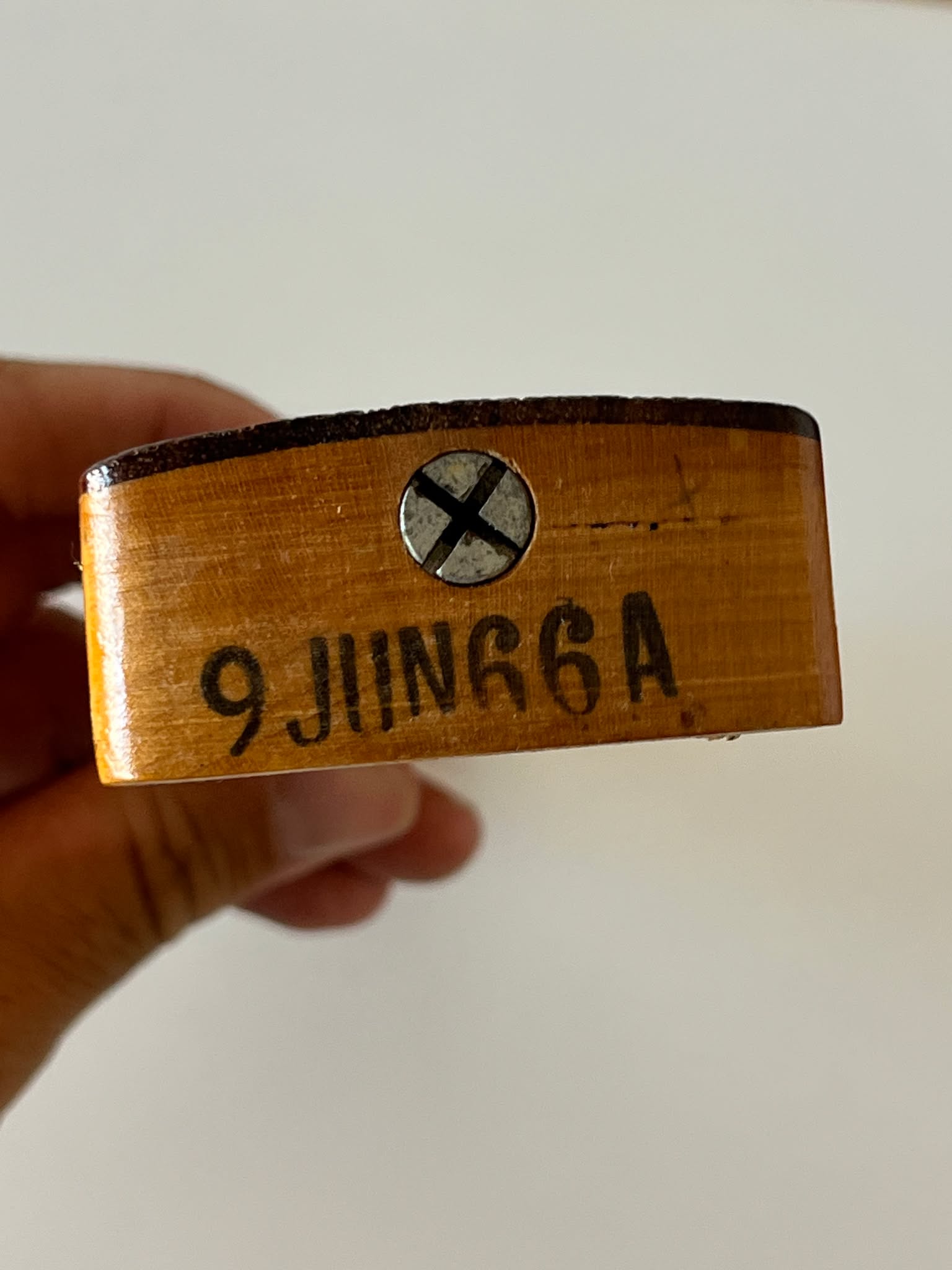
Neck Date Stamps:
Location: Neck heel (bottom of neck, visible when removed)
Format: Pencil marking with month/year
Example: “3-64” = March 1964
Most reliable Fender dating method
Body Date Stamps:
Location: Tremolo cavity, neck pocket, or control cavity
Pencil markings with dates
Often includes inspector initials
Body dates should align with neck dates (within months)
How to Access Neck Dates (without full neck removal):
Loosen strings completely
Remove neck plate screws
Gently pull neck back slightly (don’t remove completely)
Look at neck heel with flashlight
Record any visible markings
Carefully reassemble
Fender Pot Codes
Follow standard pot code format (manufacturer-year-week):
Pre-CBS Fenders typically used Stackpole (304) pots
CBS-era guitars transitioned to CTS (137) pots
Pot codes crucial for verifying vintage Fenders
All pots should date consistently (within weeks/months)
Fender Physical Features
Pre-CBS vs. CBS Identification (critical distinction):
Pre-CBS Features (before mid-1965):
Small headstock
“Spaghetti” script logo
Thinner nitrocellulose finishes
Hand-wound pickups
Original Kluson tuners
No “F” stamp on tuners or neck plate
Clay dot inlays (if rosewood board)
CBS Features (mid-1965 onward):
Large headstock (introduced mid-1965)
Thicker polyurethane finishes
“F” stamped tuners and neck plates
Pearl dot inlays
Black or “transition” logos
Three-bolt neck (some 1970s models)
Custom Color Authentication:
Check neck pocket and cavities for masking tape with color codes
Desert sand or yellow primer under custom colors
Specific color/primer combinations by era
Matching headstock on custom colors (not all years)
How to Date a Martin Guitar
Martin acoustic guitars have distinct dating methods:
Martin Serial Number System
Location: Stamped on neck block (visible through soundhole)
Pre-1898: No serial numbers
1898-Present: Sequential numbering system
Relatively straightforward chronological system
Published serial number ranges by year
More reliable than Gibson or Fender systems
Martin maintains comprehensive records
How to Use Martin Serial Numbers:
Locate serial number on neck block through soundhole
Reference official Martin serial number charts
Cross-reference with other features
Model stamp also appears on neck block
Martin Dating by Construction Features
Pre-War Martin Indicators (before 1946):
Brazilian rosewood back and sides (standard on premium models)
Adirondack spruce tops
Herringbone trim on D-28 models (discontinued 1946)
Forward-shifted X-bracing (1938+)
12-fret vs. 14-fret neck (transition varied by model)
T-bar reinforcement (1934-1946)
Belly bridge (1930s)
Post-War Changes:
Herringbone discontinued 1946 (D-28)
Sitka spruce replaces Adirondack (1946+)
Indian rosewood replaces Brazilian (1970)
Non-adjustable truss rod (1967-1984)
Adjustable truss rod (1985+)
Bracing Patterns:
Different X-bracing scalloping by era
Bracing visible through soundhole
Changed multiple times over decades
Martin Model Stamps
Inside Guitar:
Model designation on neck block
Size stamp
Manufacturing information
Signatures or initials (some models)
How to Date Other Major Guitar Brands
Gretsch Guitars
Serial Number Systems:
1939-1945: Sequential numbering
1945-1972: Various systems with prefixes
Complex dating requires reference charts
Dating Features:
DeArmond pickups (1950s)
Filter’Tron pickups (1957+)
Bigsby vibrato types
Thumbnail vs. hump-block inlays
Label colors inside f-holes
Rickenbacker Guitars
Serial Number Location:
Varies by model (jackplate, label, or stamped)
Dating Methods:
Letter prefixes on serial numbers indicate years
Complex system requiring reference
Construction features vary by decade
Pickup types changed over years
Guild Guitars
Serial Numbers:
Early guitars: sequential inside body
Later guitars: various locations and formats
Pre-1960s Guild particularly complex
Dating Features:
Label designs changed by era
Headstock shapes evolved
Pickup types and brands varied
Bracing patterns changed
Epiphone Guitars
Pre-Gibson Era (before 1957):
Own serial number system
Label designs distinctive
Premium construction features
Gibson Era (1957+):
Gibson serial numbers
“Union Made” labels (certain years)
Varying construction quality by era
Japanese Guitars (Ibanez, Greco, Tokai, etc.)
Dating Challenges:
Multiple factories used
Limited documentation
Serial systems vary by brand
Often require expert assessment
Dating Methods:
Serial number formats (when decipherable)
Construction features and hardware
Logo styles
Model designations
Known production periods
Step-by-Step Process: How to Date Your Guitar
Follow this systematic approach for accurate dating:
Step 1: Identify the Brand and Model
Determine:
Manufacturer (Gibson, Fender, Martin, etc.)
Model name/number
Basic type (solid-body electric, acoustic, hollow-body, etc.)
Where to Look:
Headstock logo and markings
Labels inside body
Distinctive body shapes
Hardware characteristics
Step 2: Locate and Record Serial Number
Check Multiple Locations:
Back of headstock
Neck plate
Inside body (soundhole, f-holes)
Control cavity
Neck heel
Record:
Complete serial number (exact characters)
Serial number location
Format (stamped, impressed, printed)
Any prefix or suffix letters
Step 3: Find Factory Numbers or Date Stamps
Look For:
Factory Order Numbers (Gibson)
Neck date stamps (Fender pencil dates)
Body date stamps
Model stamps
Inspector marks
Document:
Complete markings
Location of markings
Format and legibility
Step 4: Check Potentiometer Codes
Process:
Access electronics (remove control plate or reach through f-holes)
Locate potentiometers
Read date codes on pot casings
Record all pot codes
Decode using manufacturer-year-week format
Interpretation:
All pots should date similarly (within months)
Pots predate final assembly by weeks/months
Different pot dates suggest replacements
Earliest pot provides “not before” date
Step 5: Examine Physical Features
Inspect:
Pickup types and styles
Tuner types and brands
Bridge and tailpiece designs
Neck profile and construction
Finish type and characteristics
Logo styles
Binding styles and materials
Inlay types and patterns
Compare features to known specifications by era
Step 6: Cross-Reference All Information
Compile:
Serial number indicated date range
Factory numbers or stamps
Pot code dates
Physical feature era
Any documentation
Verify all dating methods point to same approximate period
Red Flags:
Serial number doesn’t match physical features
Pot codes significantly differ from serial number era
Mismatched components from different periods
Features inconsistent with claimed year
Step 7: Consult Expert Resources
References:
Official manufacturer dating guides
Vintage guitar reference books
Online dating tools and databases
Expert forums and communities
Professional authentication services
When to Seek Professional Help:
High-value instruments
Conflicting dating information
Authentication concerns
Insurance or estate documentation needs
Pre-purchase verification
Advanced Dating Techniques
Finish Analysis
Nitrocellulose Lacquer (vintage guitars):
Develops fine checking (cracking pattern)
Ambers with age
Thin application
Reacts to UV light
Ages in distinctive patterns
Polyurethane/Polyester (modern guitars):
Thicker application
Doesn’t check the same way
Doesn’t amber naturally
More durable
Different wear patterns
Dating Through Finish:
Finish type indicates era
Checking patterns authenticate age
Refinishing affects dating ability
UV examination reveals characteristics
Wood Identification
Brazilian Rosewood:
Used pre-1970 (pre-CITES restrictions)
Distinctive grain and color
Higher density
Presence indicates pre-1970 guitar
Adirondack Spruce:
Used primarily pre-1946 on acoustics
Indicates vintage instrument
Different grain patterns than Sitka
Old-Growth Mahogany:
Different characteristics than modern mahogany
Grain patterns differ
Weight differences
Hardware Dating
Tuner Evolution:
Kluson types by era
Grover introduction dates
Schaller import periods
Modern sealed tuners timing
Bridge Types:
Specific designs by year
Vintage vs. modern construction
Material changes over time
Pickup Dating:
Magnet types by era
Wire types and colors
Bottom plate construction
Resistance readings
Common Dating Mistakes to Avoid
Mistake 1: Relying Solely on Serial Numbers
Problem: Serial numbers alone often insufficient or misleading
Solution: Always use multiple dating methods including pot codes, physical features, and factory stamps
Mistake 2: Ignoring Pot Codes
Problem: Pot codes provide reliable dating but often overlooked
Solution: Always check pot codes as primary verification method
Mistake 3: Misidentifying Refinished Guitars
Problem: Refinished guitars may have altered or hidden dating evidence
Solution: Check for finish overspray on dates/stamps, examine finish characteristics, look for hidden areas with original finish
Mistake 4: Accepting Convenient Dates
Problem: Wanting guitar to be from specific valuable year clouds objective analysis
Solution: Follow evidence objectively, even if results differ from hopes
Mistake 5: Missing Transitional Features
Problem: Guitars from transitional years mix features from multiple periods
Solution: Understand transitional periods (like CBS-era Fender transition) where features vary
Mistake 6: Overlooking Replacement Parts
Problem: Replaced components can mislead dating efforts
Solution: Verify all components date consistently; identify replacements
Special Dating Situations
Refinished Guitars
Challenges:
Original dates may be obscured
Finish characteristics can’t verify age
Hidden stamps might be covered
Dating Methods:
Focus on electronics dating (pot codes)
Hardware examination
Neck stamps (often intact)
Construction methods
Serial numbers (if not altered)
Modified Guitars
Complications:
Replaced parts from different eras
Mixed components
Added routes or modifications
Refinishing with modifications
Approach:
Date core components (body, neck)
Identify which parts are original
Document modifications separately
Focus on unmodified areas
Parts Guitars
Problem: Assembled from components of different years
Indicators:
Neck date doesn’t match body date significantly
Pot codes from wrong era
Mixed vintage components
Inconsistent wear patterns
Impact: Assembled guitars have reduced value compared to all-original instruments
Counterfeit Guitars
Concerns: Fake vintage guitars with fabricated dates
Red Flags:
Inconsistent aging patterns
Wrong specifications for claimed year
Anachronistic features
Poor quality “vintage” details
Serial numbers that don’t match known ranges
Protection: Use multiple verification methods, seek expert authentication for valuable guitars
When You’re Ready to Sell Your Dated Guitar
Accurate dating significantly affects value when you sell your guitar:
How Dating Affects Value
Impact on Pricing:
Documented vintage guitars command premium prices
Certain years bring significant premiums over others
Transitional year models recognized for special value
Proper authentication reduces buyer skepticism
Accurate dating enables fair market valuation
Examples of Year-Specific Value:
1959 Les Paul vs. 1960 (substantial difference)
Pre-CBS Fender vs. early CBS (significant premium)
Pre-war Martin vs. post-war (major difference)
Banner headstock Gibson vs. standard logo (premium)
Documentation for Selling
Prepare:
Serial numbers photographed clearly
Factory Order Numbers documented
Pot codes recorded from all potentiometers
Physical feature photos
Any factory stamps or markings
Original case and accessories
Repair or modification history
Why Documentation Matters:
Builds buyer confidence
Supports asking price
Facilitates authentication
Demonstrates provenance
Increases perceived value
Expert Buyers Recognize Accurate Dating
When you sell your guitar to specialized buyers like Edgewater Guitars:
Advantages:
Expert verification of dating
Recognition of valuable transitional features
Fair valuation based on accurate age
Understanding of year-specific premiums
Proper authentication documentation
Example Scenarios We Recognize:
1961 Gibson SG/Les Paul transitional models
Pre-CBS Fender guitars with proper authentication
Rare year-specific features that affect value
Transitional specifications general buyers miss
Factory variations worth premiums
Edgewater Guitars: Expert Dating and Authentication
When you need professional guitar dating assistance or are considering selling your instrument, Edgewater Guitars provides specialized expertise.
Our Dating Expertise
Comprehensive Knowledge:
Gibson dating systems (all eras)
Fender authentication (Pre-CBS specialists)
Martin serial numbers and features
Other major brands
Pot code interpretation
Factory marking identification
Authentication Services:
Multi-method verification
Component dating analysis
Physical feature assessment
Original finish verification
Transitional model identification
Why Accurate Dating Matters for Selling
Value Recognition:
Proper dating ensures fair valuations
Year-specific premiums properly compensated
Transitional features recognized
Rare specifications identified
All value factors considered
Edgewater Advantage:
Expert dating knowledge
Recognition of subtle features
Fair market valuations
Premium offers (30-40% above guitar shops)
Immediate assessment and payment
Contact Information
Get Expert Dating Help:
Phone: (440) 219-3607
Service Area: Ohio, Michigan, Pennsylvania, Indiana, West Virginia
Free preliminary assessments
Professional authentication for valuable instruments
Additional Resources
Gibson Guitar Dating Complete Guide
Fender Serial Number Lookup
Martin Guitar Dating Reference
Guitar Pot Code Decoder
Sell Your Vintage Guitar
Learning how to date a guitar accurately requires understanding multiple authentication methods and cross-referencing results. Serial numbers alone rarely provide definitive dates—combining serial numbers with Factory Order Numbers, pot codes, physical features, and factory markings creates reliable authentication.
Whether you own a Gibson, Fender, Martin, or any other guitar, proper dating affects both understanding your instrument’s history and maximizing its value when selling. Different manufacturers require different approaches, but the fundamental principle remains: use multiple verification methods and seek expert guidance for valuable instruments.
Edgewater Guitars specializes in guitar dating, authentication, and purchasing throughout the Midwest. Our comprehensive knowledge of dating systems—from Gibson Factory Order Numbers to Fender neck dates and Martin serial numbers—ensures accurate assessments that reflect your guitar’s true age and value.
Contact us today at (440) 219-3607 for expert guitar dating assistance or to receive a professional valuation for your instrument.
By Stephen Pedone, co-owner of Edgewater Guitars. Edgewater is a vintage guitar shop in Valley City, Ohio that buys pre-1970 Fender, Gibson, Martin and Gretsch guitars across Ohio and nationwide. Call or text (440) 219-3607 for a free appraisal.