DATE :
Tuesday, December 30, 2025
I Inherited a Guitar: Complete Identification and Value Guide for Estate Heirs
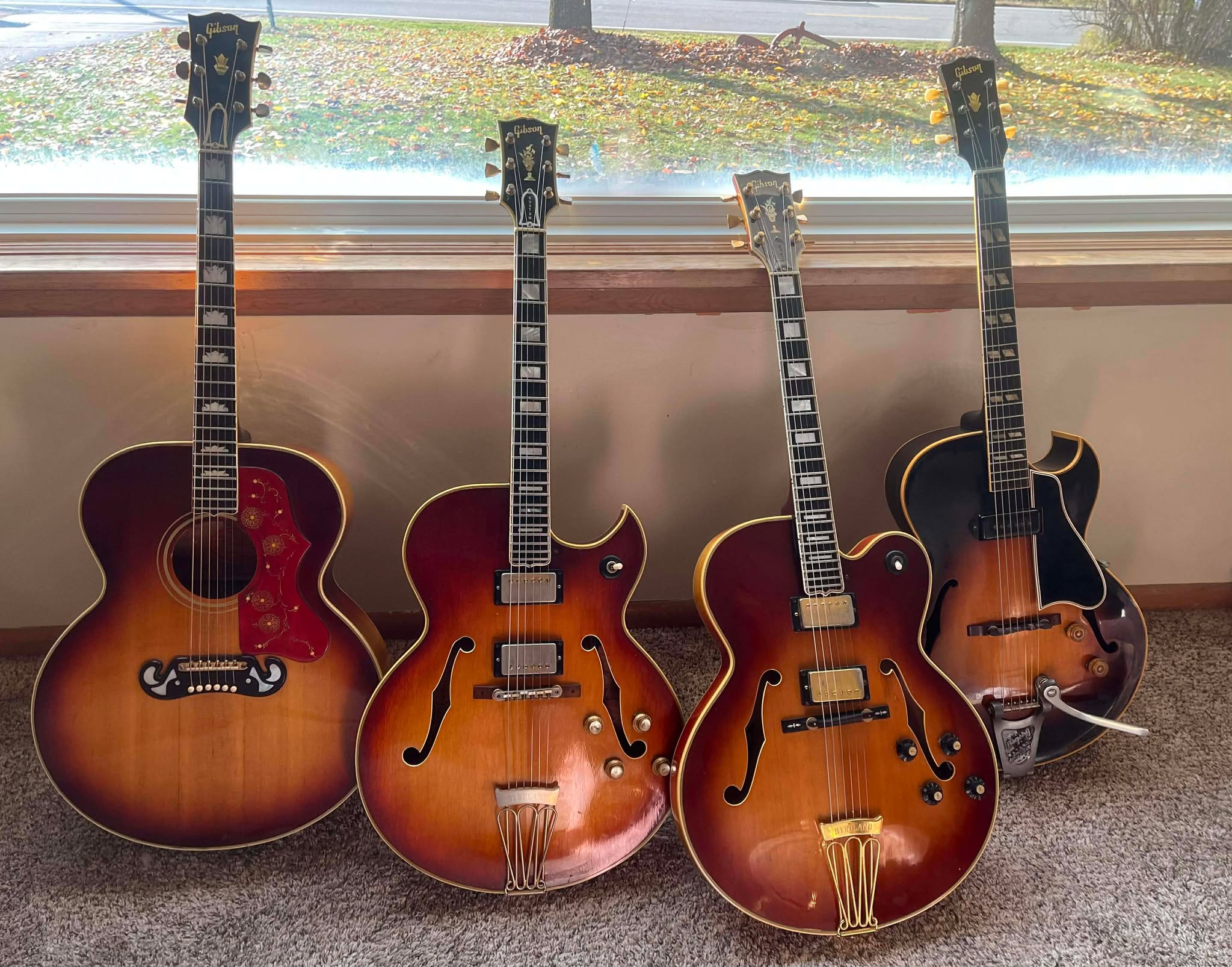
When a Guitar Becomes Part of Your Inheritance
Finding yourself the new owner of a guitar through inheritance brings a unique mix of emotions and questions. Whether you're settling a parent's estate, received your grandfather's prized instrument, or discovered guitars while cleaning out a family home, you're likely wondering: What exactly do I have, and what should I do with it?
This situation is more common than you might think. Every week, families across Ohio, Michigan, Pennsylvania, and neighboring states discover vintage guitars in estates—sometimes a single cherished instrument, other times an entire collection. These guitars represent decades of memories, and for many heirs, the decision about what to do with them carries both financial and emotional weight.
The good news: if you've inherited a guitar made before 1970—particularly a Fender, Gibson, or Martin—there's a strong possibility it holds significant value. Guitars from this era, especially if they're in good condition with original parts, have become highly collectible. Some inherited guitars that families assumed were "just old" turn out to be worth considerably more than expected.
The challenge: if you're not a guitar player or collector yourself, figuring out what you have, understanding its potential value, and deciding what to do next can feel overwhelming. Serial numbers, model names, condition factors, and market values represent unfamiliar territory when you're already managing an estate or dealing with the loss of a family member.
This comprehensive guide walks you through everything you need to know, from your first steps after inheriting a guitar to understanding value factors, exploring your options, and making informed decisions. Whether you ultimately decide to sell, keep, or gift the instrument, you'll have the knowledge to move forward with confidence.
Your First Steps: What to Do in the First 24-48 Hours
When you first come into possession of an inherited guitar, taking a few immediate actions protects both the instrument and your interests:
Secure the Guitar Properly
Move It to a Safe Location: If the guitar is still in the deceased's home and the property will be vacant, move the guitar to a secure location. Vintage guitars can be valuable, and estate sales, open houses, or unsecured properties create theft opportunities.
Keep It in Its Case: If the guitar has a case—especially an original vintage case—keep the instrument stored in it. The case provides protection and often adds to the guitar's value. Original cases from the 1950s and 1960s are collectible items themselves.
Avoid Extreme Environments: Don't store the guitar in attics, basements, garages, or car trunks. Extreme temperatures and humidity fluctuations can damage vintage instruments. A climate-controlled indoor space is ideal—a bedroom closet, office, or living area works well.
Don't Make Quick Decisions or Changes
Don't Clean or Restore It Yet: Your first instinct might be to clean the guitar or have it restored to "like new" condition. Don't do this without expert consultation first. Original finish and patina often add value to vintage guitars. Well-intentioned cleaning can reduce a guitar's collectibility significantly.
Don't Remove Rust or Tarnish from Hardware: Aged hardware patina is desirable to collectors. Polishing chrome or nickel-plated parts can actually reduce value.
Don't Change Strings or Adjust Anything: Leave the guitar exactly as you found it until you've had it evaluated. Original strings, even if old and rusty, tell authentication experts important information.
Don't Accept Quick Offers: In the first days after inheriting a guitar, you may receive unsolicited offers from people who heard about the estate or saw the instrument. Don't accept offers until you understand what you have and its true market value.
Document What You Have
Take Photographs: Before anything else, photograph the guitar thoroughly:
Full front and back views
Headstock (the top of the neck) showing any brand names or logos
Close-up of any labels visible through the soundhole (acoustic guitars)
Serial numbers or markings
Any damage, wear, or unique characteristics
The case (inside and outside) if one exists
Any paperwork, receipts, or documentation found with the guitar
Look for Documentation: Search for any paperwork related to the guitar:
Original purchase receipts
Appraisal documents
Insurance records
Repair receipts
Certificates of authenticity
Photos of the deceased playing the guitar
Family stories or notes about the guitar's history
Check Estate Documents: Review the estate inventory and any appraisals conducted for estate purposes. Sometimes guitars are listed with preliminary valuations that provide starting points.
Assess the Immediate Situation
Is This Part of an Active Estate?: If you're an executor or administrator settling an estate, the guitar may need to be included in estate inventory and valuation for tax and distribution purposes. This may require professional appraisal sooner rather than later.
Are There Multiple Heirs?: If the estate will be divided among several people, establishing the guitar's value early prevents disputes and ensures fair distribution.
Are There Time Pressures?: Some estate situations involve time constraints—property sales, estate closure deadlines, or financial needs. Understanding your timeline helps determine how quickly you need to move.
Make Initial Contact with Experts
Even before you've fully identified what you have, reaching out to specialists begins the process:
Free Initial Consultation: Contact vintage guitar specialists like Edgewater Guitars for a preliminary discussion. We can guide you through initial identification and help you understand next steps. There's no obligation—we're happy to provide direction even if you're not ready to sell. Call us at (440) 219-3607 or submit photos through our website contact form.
Don't Rush to Local Music Stores: While local music shops might seem like a natural first stop, most general music stores lack expertise in vintage guitar valuation. They often make low offers based on limited knowledge. Get expert evaluation first.
Identifying What You Have: Brand, Model, and Age
Before you can understand value or make decisions, you need to know exactly what guitar you've inherited. Here's how to identify the key information:
Step 1: Identify the Brand
The brand is your starting point. Look in these locations:
On the Headstock (the top of the neck where tuning pegs attach):
Most electric guitars have the brand name prominently displayed on the headstock front
Common brands to look for: Fender, Gibson, Gretsch, Rickenbacker, Martin (though Martin guitars sometimes don't have headstock logos)
The logo style and design provide clues about age
Inside the Soundhole (acoustic guitars):
Look through the soundhole with a flashlight
Paper labels on the inside back or sides show brand and often model information
Martin guitars have labels on the neck block (visible through soundhole)
Gibson acoustics have labels on the back inside
On the Headstock Back:
Some guitars have brand stamps or markings on the back of the headstock
Serial numbers often appear here as well
Step 2: Find the Model Name or Number
Once you know the brand, identifying the specific model matters significantly. Value differences between models can be substantial.
Electric Guitars:
Model names often appear on the headstock (Stratocaster, Telecaster, Les Paul, SG, ES-335, etc.)
Sometimes models are identified by body shape rather than written names
Pickup configuration (number and type of pickups) helps identify models
Acoustic Guitars:
Model information typically appears on the label inside
Martin guitars use letter-number combinations (D-28, 000-18, OM-45, etc.)
Gibson acoustics have model names on labels (J-45, Hummingbird, Dove, etc.)
Look for stamping on the neck block visible through the soundhole
Common Valuable Models:
Fender: Stratocaster, Telecaster, Jazzmaster, Jaguar, Precision Bass, Jazz Bass
Gibson: Les Paul, SG, ES-335, ES-175, Flying V, Explorer, Firebird
Martin: D-28, D-45, 000-28, OM-45, D-18 (especially pre-war)
Step 3: Determine the Age
Age is critical for value—guitars from certain eras are far more collectible than others.
Finding Serial Numbers:
Fender Guitars:
1950-1976: Serial number on neck plate (metal plate where neck attaches to body)
1976+: Serial number on headstock front or back
Also check neck heel (remove neck to see stamped date)
Body date often penciled in tremolo cavity or pickup cavity
Gibson Guitars:
Serial number stamped or impressed on back of headstock
Also look inside body for Factory Order Number (FON)
Label inside acoustic guitars includes model and date information
Martin Guitars:
Serial number stamped on neck block (visible through soundhole)
Number location and format changed over the years
Model stamp also appears on neck block
Use Our Free Serial Number Lookup Tools: Edgewater Guitars maintains comprehensive serial number databases for major vintage guitar brands:
These tools help you date your guitar and understand its production era.
When Serial Numbers Are Missing or Unclear: Not all guitars have visible serial numbers:
Some very early guitars weren't numbered
Serial numbers can wear off over decades
Some manufacturers used inconsistent numbering
Other dating methods include:
Potentiometer date codes (electronic component dates)
Pencil or ink dates written inside the guitar
Neck date stamps
Hardware characteristics
Construction details specific to certain years
Why Age Matters So Much:
Certain eras command premium collector interest:
Pre-CBS Fender (before 1965): Guitars made before CBS bought Fender are significantly more collectible
1950s Gibson: The golden era for Gibson Les Pauls, ES models, and other classics
Pre-War Martin (before 1946): Extraordinary collectibility and value
Early 1960s guitars: Peak production quality across all major brands
A 1962 Fender Stratocaster and a 1972 Fender Stratocaster look similar to non-experts but occupy completely different collector categories. The 1962 is far more collectible and valuable.
Step 4: Assess the Finish and Color
For Electric Guitars: The color affects collectibility significantly:
Sunburst finishes: Standard catalog color (most common)
Custom colors: Special-order colors command premium interest
Fender custom colors: Lake Placid Blue, Candy Apple Red, Sonic Blue, Olympic White, Surf Green, etc.
Gibson custom colors: Less common but highly collectible
Custom color guitars with matching painted headstocks indicate special-order instruments that are more collectible.
For Acoustic Guitars:
Natural finish: Most common
Sunburst: Standard on many models
Special finishes: Less common, can affect collectibility
Step 5: Evaluate Originality
Original, unmodified guitars are significantly more collectible than modified examples:
Check for Modifications:
Replaced pickups (electronics under the pickguard)
Replaced tuning machines (tuners on headstock)
Refinished body or neck
Added or changed hardware
Neck repairs or replacements
Routing or drilling not original to the guitar
How to Spot Refinishing:
Paint overspray on binding, hardware, or in crevices
Modern paint texture (too smooth or plasticky)
Lack of natural wear and aging
Color that doesn't match known factory colors
Paint in screw holes or neck pocket
Originality Impact: All-original guitars in good condition represent the most collectible category. Each modification typically reduces collectibility, with refinishing having the most significant negative impact.
What If You're Still Unsure?
Guitar identification can be complex, especially with:
Rare or unusual models
Very old guitars with missing labels or serial numbers
Guitars that have been modified
Less common brands
Get Expert Help: Edgewater Guitars offers free identification services. Send us clear photos of your inherited guitar, and our vintage guitar specialists will help you identify exactly what you have. Call (440) 219-3607 or use our website contact form to submit photos and information.
Understanding Value Factors: What Makes Inherited Guitars Valuable
Once you know what you have, understanding what drives value helps you make informed decisions.
Primary Value Factors
1. Age and Era
Certain production periods are far more collectible:
High-Value Eras:
Pre-War (before 1946): Especially Martin guitars
1950s: Gibson's golden era
1950s-early 1960s: Peak Fender production
Pre-CBS (before 1965): Fender guitars before corporate acquisition
Lower-Value Eras:
1970s: Generally considered declining quality across brands
1980s: Lower collectibility for most models
Modern production: Current guitars have retail value, not collector premiums
2. Brand and Model Significance
Some brands and models are inherently more collectible:
Premium Collectibility:
Gibson Les Paul Standards (especially 1958-1960 "Bursts")
Pre-CBS Fender Stratocasters and Telecasters
Pre-War Martin D-28, D-45, and similar models
Gibson ES-335 and other ES models from 1950s-1960s
Fender Precision and Jazz Basses from 1950s-1960s
Good Collectibility:
Later Gibson Les Pauls and SG models
Gibson J-45 and other classic acoustics
Post-war Martin guitars
Fender Jaguars and Jazzmasters
Gretsch hollow-body electrics
Modest Collectibility:
Student models (Fender Musicmaster, Gibson Melody Maker, etc.)
Budget lines from major manufacturers
Common 1970s-1980s models
Mass-produced recent guitars
3. Condition
Condition dramatically impacts value:
Excellent Condition:
All original parts and finish
Minimal wear and playing marks
No structural damage
Proper function of all components
Original case present
Good Condition:
Original parts with age-appropriate wear
Minor finish checking or light scratches
Fully functional
May have had professional setup or maintenance
Possible replaced case
Fair Condition:
Some replaced parts
Moderate wear or finish issues
May need repair work or setup
Structural integrity intact
Missing case
Poor Condition:
Significant damage or repairs needed
Multiple replaced parts or modifications
Heavy wear or refinishing
Structural issues
Major functionality problems
4. Originality
Original, unmodified guitars command premium interest:
Completely Original (highest value):
Factory finish intact
All original parts and hardware
No modifications or repairs
Original electronics and pickups
Period-correct everything
Mostly Original (strong value):
Original finish
Minor replaced consumable parts (strings, picks, strap)
Professional maintenance (refret, nut replacement) using appropriate materials
Original major components
Modified (reduced value):
Replaced pickups or electronics
Changed tuners or bridge
Added or removed parts
Non-reversible alterations
Refinished (significantly reduced value):
Body or neck refinishing
Even professional refinishing reduces collectibility substantially
Color changes from original
5. Special Features
Certain features increase collectibility:
Custom Colors: Special-order colors on Fender guitars (Lake Placid Blue, Candy Apple Red, Sonic Blue, etc.) command premium interest over standard sunburst.
Rare Options: Left-handed versions, unusual pickup configurations, special order features, limited editions.
Original Cases: Vintage guitars with original cases are more collectible. The cases themselves have value, especially pre-CBS Fender cases and vintage Gibson cases.
Matching Headstocks: Custom color Fenders with painted headstocks matching the body color indicate special orders.
Documentation: Original receipts, photos of original owner with guitar, provenance connecting to notable musicians.
What Doesn't Add Much Value
Common Misconceptions:
"It's really old so it must be valuable": Age alone doesn't determine value. A 1975 guitar might be 50 years old but far less collectible than a 1962 guitar that's only 13 years older.
"It looks cool": Aesthetic appeal to non-collectors doesn't determine collector market value. Plain sunburst guitars from the right era vastly outvalue flashy newer guitars.
"It plays great after restoration": Restoration that makes a guitar play better often reduces collector value by compromising originality.
"The music store said it's worth a lot": Music stores often lack vintage expertise and may undervalue or overvalue based on limited knowledge.
Serial number alone: While serial numbers help date guitars, the number itself doesn't determine value—it's what the number tells you about era, model, and originality.
Hidden Value Indicators
Some guitars surprise heirs with unexpected value:
Plain-Looking Vintage Martins: A simple, unadorned mahogany Martin from the 1930s might look basic but could be exceptionally valuable due to pre-war construction and materials.
Beat-Up Pre-CBS Fenders: Even heavily played Fender guitars from the 1950s-early 1960s retain strong collectibility. Don't assume wear equals low value.
Unusual Colors: A faded, strange-looking color might be a rare custom color that has aged and faded over 60 years. Lake Placid Blue Fenders that appear almost white, or Fiesta Red that has faded to pink, are highly collectible.
Rare Models: Some models that weren't popular when new (Fender Jaguars, Jazzmasters in the 1960s) are now highly collectible.
Getting Accurate Valuation
What You Can Do Yourself:
Research recently sold examples online (completed listings, not asking prices)
Consult vintage guitar price guides
Compare to dealer inventory listings
Use online forums and communities
What Requires Professional Assessment:
Determining if finish is original or refinished
Authenticating rare or valuable guitars
Assessing structural condition and repair history
Understanding how specific condition factors affect value
Accurate market positioning
Free Professional Valuation from Edgewater Guitars:
We provide complimentary expert appraisals for inherited guitars:
Comprehensive authentication and condition assessment
Current market valuation
Explanation of value factors specific to your guitar
Guidance on best options for your situation
No obligation or pressure
Call (440) 219-3607 or submit photos through our website for your free evaluation.
Special Considerations for Inherited Guitars
Guitars acquired through inheritance present unique considerations beyond normal vintage guitar situations:
Legal and Estate Issues
Estate Inventory and Valuation: If you're settling an estate, the guitar may need to be included in official estate inventory:
Executors typically must inventory all estate assets
Professional appraisal may be required for estate tax purposes
Accurate valuation ensures fair distribution among heirs
Documentation protects executors from liability
Tax Implications: Disclaimer: This is general information, not tax advice. Consult a qualified tax professional for your specific situation.
Estate taxes may apply to high-value guitars (part of total estate value)
Inherited property receives "stepped-up basis" (value at date of death becomes your cost basis)
Future sale may trigger capital gains if value has increased since inheritance
Proper appraisal documentation protects against tax issues
Multiple Heirs: When estates are divided among several heirs:
Guitar value must be established for equitable distribution
One heir may buy out others' interests
Guitar may be sold with proceeds divided
Professional valuation prevents family disputes
Timeline Pressures: Estate situations often involve time constraints:
Property sales requiring home clearance
Estate closure deadlines
Financial needs of heirs
Probate timelines
These pressures can lead to rushed decisions and low-value sales. Get quick professional evaluation to protect your interests while meeting deadlines.
Emotional Considerations
Inherited guitars carry emotional weight beyond financial value:
Memories and Sentiment: The guitar may represent:
Connection to deceased family member
Memories of them playing
Symbol of their interests and personality
Family history and stories
Decision Difficulty: Heirs often struggle with:
Guilt about selling something the deceased valued
Uncertainty about honoring their memory
Pressure from other family members
Balancing sentiment with practical needs
No Wrong Decision: Whether you keep, sell, or gift the guitar, the decision is personal:
Selling doesn't dishonor memory—it allows someone who will use and appreciate the instrument to own it
Keeping an instrument you won't play preserves family connection but means the guitar sits unused
Gifting to someone who will play it shares the deceased's legacy
Take time to process emotions separate from practical decisions.
Common Inherited Guitar Scenarios
The Single Cherished Instrument: One beloved guitar the deceased played for decades:
Often well-maintained and cared for
Strong emotional attachment
May or may not be valuable depending on what it is
Heirs often want to honor its significance
The Forgotten Attic Find: Guitars discovered during estate clearance:
Sometimes surprisingly valuable
May need evaluation for condition
Often original and unmodified due to storage
Condition varies based on storage environment
The Collector's Accumulation: Multiple guitars from someone who collected:
Requires evaluation of entire collection
May include very valuable examples
Some guitars more significant than others
Bulk handling may be appropriate
The Played-Hard Workhorse: Heavily used professional instruments:
Significant wear but authentic history
May have been modified for player preferences
Real-world playing history
Condition affects value but history adds interest
Your Options: What to Do With an Inherited Guitar
Once you understand what you have, you face several options:
Option 1: Sell the Guitar
When Selling Makes Sense:
You don't play guitar and won't use it
The guitar has significant value you need or prefer to realize
Proper care and storage aren't feasible for you
Multiple heirs need proceeds divided
Estate needs to be liquidated
You'd rather see it go to someone who will use it
Selling Methods Comparison:
Private Sale (Online Marketplaces):
Potential advantages: Highest possible price if you find the right buyer
Significant challenges:
Requires extensive market knowledge
Time-consuming (listing, answering questions, negotiating)
Shipping valuable vintage guitars involves risk
Fraud and scam concerns (fake payment, dishonest buyers)
No recourse if transaction goes wrong
May take months to find the right buyer
Requires accurate description and grading (easy to get wrong)
Consignment Through Music Store:
Potential advantages: Store handles the sale process
Substantial challenges:
Very high commission fees (typically 20-40%)
Extended timeframes (often many months)
Guitar tied up during entire consignment period
No guarantee of sale
Risk of damage while on display
Store may lack vintage expertise
You remain owner until sold (insurance, liability concerns)
Local Music Store Purchase:
Potential advantages: Quick and local
Major challenges:
Typically very low offers (stores need large margins)
Most local stores lack vintage guitar expertise
May not recognize true value
Quick offers often pressure heirs
Usually 40-60% below true market value
Auction (Heritage, Christie's, etc.):
Potential advantages: Broad buyer exposure, competitive bidding
Significant challenges:
High combined fees (buyer premium + seller commission = 25-35%+)
No minimum price guarantee
Rigid auction schedules (may be months out)
Shipping and handling requirements
Best only for exceptional, rare guitars
Fees paid regardless of sale price
Direct Sale to Specialized Buyer (like Edgewater Guitars):
Major advantages:
Expert valuation from vintage specialists
Immediate cash payment (no waiting)
No commissions or fees (offer is your payment)
Simplified process (we handle everything)
No shipping concerns (we travel to you for significant guitars)
Professional authentication included
Fair market value (typically 30-40% more than music stores)
Estate-friendly approach understanding your situation
Trade-off:
Slightly lower than theoretical maximum private sale price
Best for:
Anyone prioritizing convenience, speed, and certainty
Estate situations requiring timely settlement
Heirs without vintage guitar knowledge
Anyone wanting expert authentication and fair value
Option 2: Keep the Guitar
When Keeping Makes Sense:
Strong sentimental attachment you want to preserve
You play guitar or might want to learn
Family member wants to learn using this instrument
The guitar isn't particularly valuable
You have space and can provide proper storage
You enjoy having the connection to the deceased
If You Keep It:
Learn proper storage (climate control, humidity)
Get it professionally set up if you'll play it
Obtain insurance if it's valuable
Document its history and provenance
Have it appraised for insurance purposes
Understand you're committing to its care
Option 3: Gift the Guitar
When Gifting Makes Sense:
Another family member plays and would cherish it
Friend of the deceased who would appreciate it
Music program, school, or charity aligned with deceased's values
Younger family member learning guitar
Gifting Considerations:
Recipient should understand and appreciate the gift
Consider value implications (high-value gifts have tax considerations)
Get professional valuation for tax documentation if valuable
Ensure recipient can provide proper care
Document the gift for estate records
Why Edgewater Guitars Is the Right Choice for Inherited Guitars
Edgewater Guitars specializes in helping families navigate inherited guitar situations throughout Ohio, Michigan, Pennsylvania, Indiana, and West Virginia. Here's why hundreds of estate heirs trust us:
Specialized Expertise in Vintage Guitars
Deep Knowledge of Valuable Vintage Instruments: Our team includes vintage guitar specialists with over 20 years of combined experience specifically in pre-CBS Fender, vintage Gibson, and pre-war Martin guitars. We recognize:
Original finishes vs. refinishes
Factory specifications vs. modifications
Rare features and special-order options
Period-correct parts and hardware
Subtle details that determine authenticity
True market positioning and value
Why This Matters for You: General music stores employ salespeople who know modern guitars. We employ specialists who have examined thousands of vintage guitars and understand the specific factors that make 1960s Fenders, 1950s Gibsons, and pre-war Martins valuable.
Fair Market Valuations
Premium Offers Above Music Store Quotes: We consistently pay 30-40% more than local music stores because:
We have established relationships with serious collectors
We understand true collector market value
We don't need retail markup margins
We recognize value that generalist stores miss
We're buying for our specialized inventory, not reselling through retail
Transparent Valuation Process: We explain exactly how we arrived at our offer:
Market comparables and recent sales
Specific features affecting value
Condition assessment details
Rarity and collectibility factors
Current market trends
You'll understand not just what we're offering, but why.
Estate-Focused Service Approach
We Understand Your Situation: Working with inherited guitars is different from normal transactions:
Emotional complexity of estate situations
Time pressures executors face
Need for proper documentation
Multiple heir scenarios
Tax and legal considerations
Flexible Timeline:
Quick evaluation when you need it
Immediate offers without pressure to decide
Ability to move fast for estate deadlines
Patient approach if you need time
Estate Documentation:
Professional written appraisals for estate purposes
Documentation suitable for tax filings
Proper valuation paperwork for executors
Support for multiple-heir situations
Simplified, Stress-Free Process
How Working with Edgewater Works:
Step 1: Initial Contact
Call us at (440) 219-3607 or submit photos via our website
Provide basic information about the guitar(s)
Brief discussion about the situation
Preliminary guidance and next steps
Step 2: Professional Evaluation
For valuable guitars, we travel to you (throughout OH, MI, PA, IN, WV)
Comprehensive examination and authentication
Condition assessment
Explanation of what you have and why it matters
Answer all your questions
Step 3: Written Offer
Fair market offer based on current collector market
Detailed explanation of valuation
Comparison to other selling methods
No obligation or pressure
Time to consider and discuss with family
Step 4: Transaction (If You Accept)
Immediate payment (cash or bank transfer, your choice)
We handle all logistics and paperwork
Professional packing and transportation
You're paid before the guitar leaves
Transaction typically completes within 24-48 hours
What You Don't Deal With:
Shipping or packing concerns
Online listings and negotiations
Meeting strangers for transactions
Payment fraud or scams
Waiting months for sales
Commission fees
Complicated paperwork
Geographic Convenience
We Come to You: For valuable inherited guitars, we travel throughout our service area:
Ohio (Cleveland, Columbus, Cincinnati, Toledo, Akron, Dayton, and surrounding areas)
Michigan (Detroit, Grand Rapids, Ann Arbor, Lansing, and throughout the state)
Pennsylvania (Pittsburgh, Erie, and western PA)
Indiana (Fort Wayne, South Bend, Indianapolis area)
West Virginia (northern regions)
In-Home Evaluation Benefits:
No need to transport valuable guitars
We examine the instrument in your space
Face-to-face professional service
Opportunity to show us any documentation
Immediate answers to questions
Security and safety of home transaction
No-Obligation Free Services
Even if you're not ready to sell, we provide:
Free Identification Help:
Brand and model identification
Age and production year determination
Serial number interpretation
Feature and specification confirmation
Free Authentication:
Original vs. refinished determination
Modification assessment
Parts originality verification
Condition evaluation
Free Market Valuation:
Current collector market value
Comparison to similar examples
Condition-specific pricing
Range based on selling method
Free Consultation:
Guidance on your options
Selling method comparison
Estate considerations
No pressure or obligation
Proven Track Record
Hundreds of Satisfied Estate Clients: Families throughout the Midwest have trusted Edgewater with their inherited guitars:
Professional, respectful service during difficult times
Fair valuations they can verify through research
Quick, efficient transactions meeting estate timelines
Clear communication throughout the process
Educational approach explaining what they have
References Available: We're happy to provide references from previous estate clients who have sold guitars to us.
Frequently Asked Questions
"How quickly can I get an idea of what my inherited guitar is worth?"
Contact us today, and we can often provide preliminary information within hours based on photos and description. For comprehensive authentication and firm offers, in-person evaluation is best, which we can typically schedule within days.
"I'm not sure if I want to sell yet. Will you still help me identify what I have?"
Absolutely. We're happy to help you identify and understand your inherited guitar with no obligation. Many people need time to make decisions about estate items, and we respect that. Our free identification and valuation services help you make informed decisions on your timeline.
"The guitar is in rough shape. Is it still worth anything?"
Potentially, yes. Even guitars with significant wear, damage, or missing parts can be valuable if they're the right model and era. A worn 1958 Gibson Les Paul or 1962 Fender Stratocaster retains strong value despite condition issues. Contact us—we evaluate guitars in all conditions.
"What if I have multiple guitars to evaluate?"
We regularly work with entire collections. Whether you have two guitars or twenty, we can evaluate and make offers on multiple instruments. Estate collections often include a mix of valuable and modest guitars, and we help you understand each one.
"How do I know your offer is fair?"
We encourage you to research and verify:
Look up similar guitars sold recently online
Compare our offer to other quotes you receive
Consult vintage guitar price guides
Research dealer listings for comparison
Our offers are based on current collector market values. We provide detailed explanations so you can verify we're being fair. Our reputation depends on honest, fair dealing.
"Will selling affect estate taxes or my personal taxes?"
This is general information, not tax advice. Consult your tax professional for your specific situation.
Generally, inherited property receives stepped-up basis (value at death becomes your basis). If you sell shortly after inheritance near the appraised value, there's typically minimal or no capital gain. Estate taxes depend on total estate value and are paid by the estate, not individual heirs. We provide proper documentation for your tax professional.
"Other family members want to keep the guitar, but I need the money. What can I do?"
This is a common situation. Options include:
One heir buys out others' interests (requires agreed-upon valuation)
Guitar sold with proceeds divided based on estate plan
Appraisal helps establish fair buyout price
Professional mediation through estate attorney
We can provide the valuation documentation needed for these discussions.
"What if the guitar was promised to me verbally but isn't in the will?"
This is a legal question requiring an estate attorney's guidance. We can provide valuation information that may be helpful in resolving the situation, but can't provide legal advice.
"Should I get the guitar cleaned up or repaired before selling?"
Generally no. Original condition, even with wear and dirt, is preferable to cleaned or restored condition for collector guitars. Cleaning can actually reduce value. Have it evaluated in current condition first. We'll advise if any service would be beneficial.
"How long do I have to decide what to do?"
There's no universal timeline, but consider:
Estate closing deadlines if you're an executor
Property sale timelines if the estate home is selling
Family agreements about timing
Storage and insurance considerations
We can accommodate various timelines—quick decisions when needed, or patient approach if you need time to consider.
"What happens if the guitar turns out to be really valuable?"
We handle guitars at all value levels with appropriate care and security. For exceptionally valuable guitars:
We provide comprehensive authentication
We can arrange secure transaction methods
We explain exactly what makes it valuable
We ensure you understand market positioning
We can connect you with additional expert opinions if you want verification
"I live several hours away from you. Can you still help?"
Yes. We travel throughout Ohio, Michigan, Pennsylvania, Indiana, and West Virginia for valuable guitars. Distance within our service area isn't a barrier. We'll come to you.
Take Your Next Step
If you've inherited a guitar and need help understanding what you have, determining its value, or deciding what to do with it, Edgewater Guitars is here to help.
Contact Us Today
Phone: (440) 219-3607
Speak directly with vintage guitar specialists
Get immediate preliminary guidance
Schedule in-person evaluation
Ask questions without obligation
Website: [Submit Photos and Information]
Upload photos of your inherited guitar
Provide details you know
Receive expert response
Begin identification process
Email: [Contact Email]
Detailed written inquiries
Send documentation or photos
Get comprehensive written responses
What to Have Ready
When you contact us, having this information helps (but don't worry if you don't have all of it):
Photos of the guitar (front, back, headstock, any labels or serial numbers)
Any documentation found with the guitar
What you know about its history
Your location (for potential in-person evaluation)
Your general timeline and situation
Any specific questions or concerns
Our Commitment to You
When you work with Edgewater Guitars on an inherited guitar:
You Can Expect:
Professional, respectful service understanding your situation
Expert knowledge applied to your specific guitar
Honest, transparent information about value and options
Fair market offers if you decide to sell
No pressure or obligation regardless of value
Clear communication throughout the process
Support for estate situations and timelines
You Won't Experience:
High-pressure sales tactics
Lowball offers exploiting your lack of knowledge
Hidden fees or surprises
Disrespect for the emotional aspects of inheritance
Rushed decisions or forced timelines
Geographic Service Area
We provide in-person evaluation services throughout:
Ohio: Cleveland, Columbus, Cincinnati, Toledo, Akron, Dayton, Youngstown, Canton, and all surrounding areas
Michigan: Detroit, Grand Rapids, Ann Arbor, Lansing, Flint, Kalamazoo, and throughout the state
Pennsylvania: Pittsburgh, Erie, and western Pennsylvania regions
Indiana: Fort Wayne, South Bend, Indianapolis area, and northern regions
West Virginia: Northern West Virginia including Wheeling, Morgantown, and surrounding areas
Even if you're at the edge of our service area or slightly beyond, contact us—we often travel for valuable guitars.
About Edgewater Guitars
Edgewater Guitars specializes in purchasing vintage guitars throughout the Midwest, with particular expertise in pre-CBS Fender, vintage Gibson, and pre-war Martin guitars. We work extensively with estate situations, understanding the unique challenges and emotional complexity families face when inheriting valuable instruments.
Our team includes specialists with decades of combined experience in vintage guitar authentication, appraisal, and market valuation. We've helped hundreds of families navigate inherited guitar situations, providing expert guidance, fair valuations, and professional service during difficult times.
Whether you're an executor settling an estate, an heir who has inherited a guitar, or a family member helping with estate matters, we're here to provide the expertise and support you need.
About Our Specialist: John Thompson
John Thompson serves as Senior Vintage Guitar Specialist at Edgewater Guitars, with over 20 years of experience in vintage guitar authentication and appraisal. His expertise focuses on pre-1970 American guitars, with specialized knowledge of:
Pre-CBS Fender guitars (1950s-1965)
Vintage Gibson guitars (1950s-1960s)
Pre-war and vintage Martin guitars
Custom color identification and authentication
Original finish vs. refinish determination
Estate guitar valuation and consultation
John has worked with countless families throughout Ohio, Michigan, Pennsylvania, Indiana, and West Virginia, helping them understand and make informed decisions about inherited guitars.
Final Thoughts: Moving Forward with Confidence
Inheriting a guitar—whether a single cherished instrument or an entire collection—brings both opportunity and responsibility. You may have received something of significant value, a piece of music history, and a connection to someone you cared about.
Whatever you decide to do with your inherited guitar, make that decision from a position of knowledge and understanding:
If you sell: Know that you're getting fair value and that the guitar will go to someone who appreciates its significance.
If you keep: Understand what you have, how to care for it, and what it represents.
If you gift: Ensure the recipient appreciates the instrument and will provide proper care.
The worst outcome is making uninformed decisions—selling a valuable guitar for a fraction of its worth, or failing to recognize what you have.
Edgewater Guitars exists to ensure you have the information, expertise, and fair options you need. We're here to help whether you're ready to sell today, need time to decide, or simply want to understand what you've inherited.
Call us at (440) 219-3607 or reach out through our website. Let's start the conversation about your inherited guitar and help you move forward with confidence.
This guide provides general information about inherited guitars and estate situations. It does not constitute legal or tax advice. Consult qualified professionals for legal and tax guidance specific to your situation. Information about guitar values, collectibility, and market trends reflects general market conditions as of 2025 and individual guitars vary significantly based on specific features and condition.