DATE :
Guitar Authenticity Check: Complete Verification Guide
That vintage Gibson you found at an estate sale might be worth $50,000—or it might be a $500 counterfeit built last year in a factory overseas. The difference comes down to details that most people miss without knowing exactly where to look.
This guide walks you through the complete verification process: finding and decoding serial numbers, using manufacturer databases, physically inspecting hardware and finishes, and recognizing the red flags that separate authentic instruments from convincing fakes.
Why guitar authenticity matters
You've found a vintage Gibson at an estate sale, or you're about to spend serious money on a pre-CBS Fender listed online. Before you commit, one question matters more than any other: is this guitar real?
A guitar authenticity check confirms whether an instrument is a genuine product from its claimed manufacturer, built with the specifications and construction methods used during its stated production year. Counterfeit guitars exist at every price point—from obvious knockoffs to sophisticated fakes that fool experienced players. The vintage market, where a single instrument can sell for tens of thousands of dollars, attracts counterfeiters who profit from buyers who skip verification.
Resale value: Authentic vintage guitars appreciate 18% to 35% annually, while counterfeits hold little to no resale value
Collectibility: Serious collectors avoid instruments with questionable provenance
Investment protection: A thorough authenticity check protects your purchase from becoming an expensive mistake
Even if you're not buying—perhaps you inherited a guitar or found one in storage—verification tells you exactly what you're holding and whether professional appraisal makes sense.
How to find your guitar's serial number
Every authenticity check starts with the serial number. This unique identifier, assigned during manufacturing, connects your guitar to production records that reveal when and where it was made. Serial numbers appear in different locations depending on the manufacturer and era.
Headstock and neck plate locations
The headstock—the flat section at the top of the neck where tuning machines attach—is the most common serial number location for electric guitars. Gibson guitars typically have the number stamped or impressed on the back of the headstock. Fender guitars made after 1976 display the number on the front or back of the headstock, while Fenders made between 1950 and 1976 have the serial number on the metal neck plate where the neck bolts to the body.
Sound hole and body interior locations
Acoustic guitars often hide serial numbers inside the body. A flashlight and a look through the sound hole reveals most of them.
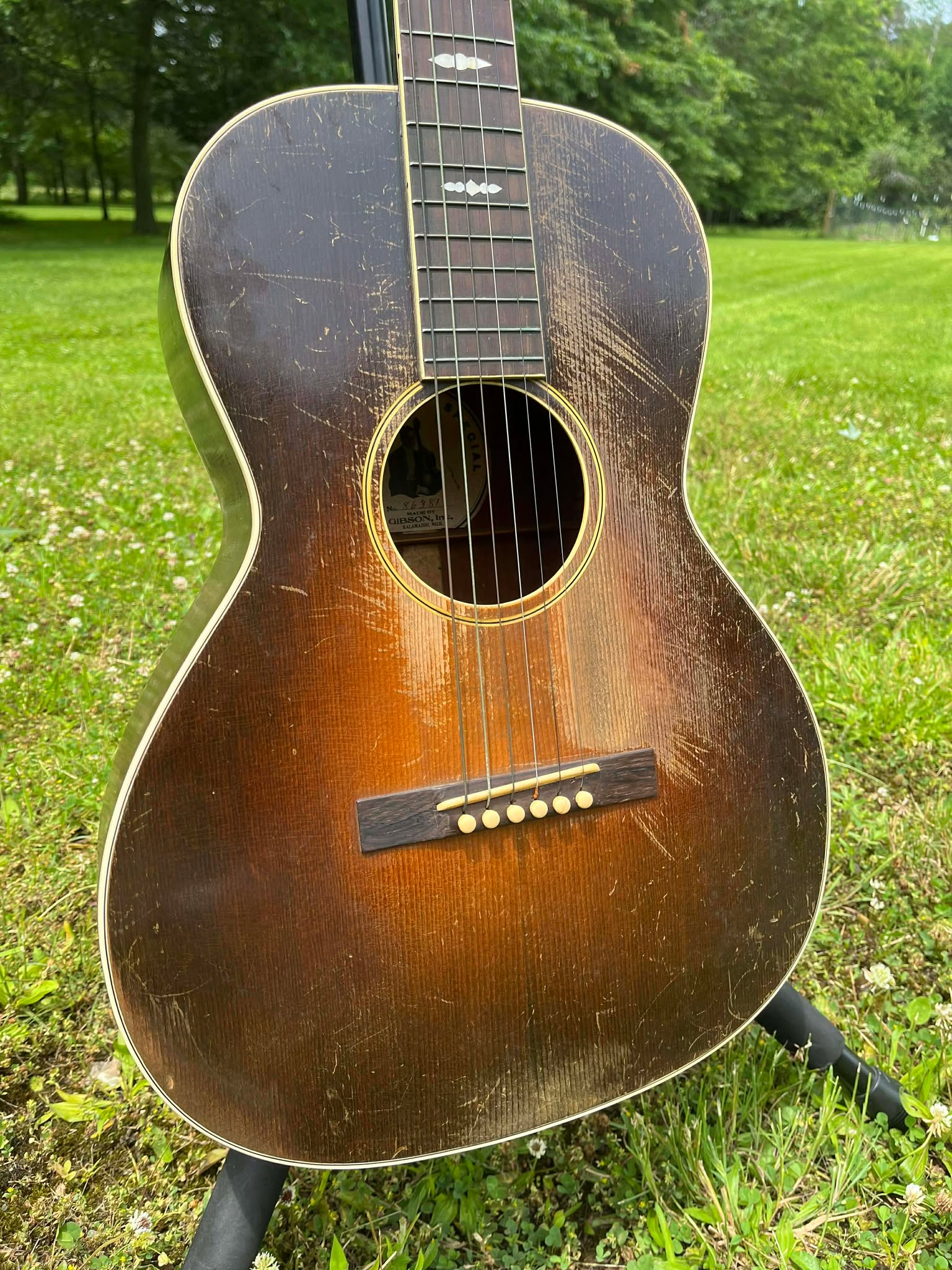
Martin guitars stamp serial numbers on the neck block—the internal wooden piece where the neck joins the body. You can see it by looking straight through the sound hole toward the neck. Gibson acoustics typically have paper labels glued to the inside back, visible through the sound hole at an angle. Martin guitars similarly feature paper labels that should never be removed as they're crucial for authentication.
Tip: Use your phone's camera with the flash on to photograph interior labels and stamps. The camera often reveals details invisible to the naked eye.
Less common serial number locations
Some guitars require detective work. Bridge plates, control cavity covers (the plastic plate on the back of electric guitars), and pickup cavities sometimes contain stamped numbers or handwritten dates. Vintage instruments occasionally have numbers in unexpected places due to era-specific manufacturing practices—a 1950s Fender might have a penciled date in the neck pocket that only becomes visible when you remove the neck.
How to look up a guitar serial number
Once you've located the serial number, decoding it reveals manufacturing details that form the foundation of your authenticity check.
Understanding serial number formats
Serial number formats vary dramatically between manufacturers and even between different eras from the same company. Recognizing patterns helps you spot inconsistencies.
Letter prefixes: Often indicate decade, country of origin, or factory location
Numeric sequences: May encode the production year, sequential production number, or factory identifier
Stamped vs. ink: The method of application can indicate era—older guitars often have impressed stamps while newer ones use ink or decals
A serial number that doesn't match the expected format for a guitar's claimed year raises an immediate red flag.
Using manufacturer databases
Several major manufacturers maintain official serial number lookup tools. Fender's database at serialnumberlookup.fender.com covers most production eras and reveals year, country of origin, and model verification. Martin's official chart at martinguitar.com correlates serial number ranges to production years going back to the 1800s. Gibson offers limited lookup for certain eras, while Jackson maintains a database at serialnumberlookup.jacksonguitars.com.
Official databases provide the most reliable starting point, though they have limitations. Some eras have incomplete records, and certain vintage guitars predate systematic numbering.
Interpreting year and factory information
Database results tell you when and where a guitar was manufactured—but this information alone doesn't confirm authenticity. For comprehensive guitar serial number lookup across all major brands, additional verification resources can strengthen your authentication.
Guitar serial lookup by brand
Each manufacturer uses distinct serial number systems that evolved over decades.
Gibson serial number lookup
Gibson's serial number history is notoriously complex. The company changed numbering systems multiple times, and some eras used formats that repeated numbers across different years. Guitars made between 1952 and 1961 have five or six digit numbers, often with no clear year indicator. The 1961-1969 era features impressed numbers, with the first digit sometimes indicating year. From 1977 to present, Gibson uses an eight-digit format with the first two digits indicating year.
Gibson Les Paul Standards, ES-335s, and other high-value models are among the most frequently counterfeited guitars, with U.S. Customs seizing $18 million in fake Gibsons in November 2024.
Fender serial number lookup
Fender maintains an official Serial Number Lookup tool that covers most production eras. Pre-1976 guitars have serial numbers on the neck plate, with formats that varied by era. From 1976 to present, Fender uses a letter prefix followed by numbers, with the letter indicating decade (S=1970s, E=1980s, N=1990s, Z=2000s).
Pre-CBS Fenders—manufactured before 1965, when CBS purchased the company—command significant premiums and attract counterfeiters. Guitars from this era require careful physical inspection beyond serial number verification.
Martin serial number lookup
Martin uses a sequential numbering system that makes dating straightforward. The company's official chart correlates serial number ranges to production years. For example, serial numbers 187385-195081 indicate 1960 production. This simple system makes Martin guitars relatively easy to date, though physical inspection still confirms whether the guitar matches its claimed era.
PRS and Epiphone serial number lookup
PRS guitars use a prefix system where the first digits typically indicate the production year. A serial number starting with "94" indicates 1994 production. Epiphone serial numbers vary based on manufacturing location—guitars made in different countries (Japan, Korea, China, Indonesia) use distinct formats. The first digits often indicate year and factory, but decoding requires knowing which factory codes correspond to which locations.
Other major guitar brands
For Gretsch, Rickenbacker, Guild, and Ibanez, serial number formats changed multiple times over the decades. Manufacturer customer service or brand-specific collector forums often provide the most reliable dating information for less common brands.
How to physically inspect a guitar for authenticity
Serial number verification establishes whether a guitar's claimed age is plausible. Physical inspection determines whether the instrument actually matches that era's construction methods, materials, and specifications.
Examining hardware and tuning machines
Hardware styles evolved over decades. Counterfeiters often use modern components on guitars claimed to be vintage—a mistake that trained eyes catch immediately. Tuner style, branding, and button shape changed over time. Kluson tuners on a 1950s Gibson look distinctly different from modern reproductions. Bridge and tailpiece designs evolved as well—a tune-o-matic bridge from 1959 differs from one made in 1969.
Slot-head screws were standard on early Fenders, while Phillips-head screws came later. Counterfeiters frequently overlook small details like screw types.
Checking pickups and electronics
Potentiometers—the electronic components connected to volume and tone knobs—often have date codes stamped on them. A pot code reading "137 6520" indicates a CTS potentiometer made in the 20th week of 1965. If the guitar is claimed to be from 1962, something doesn't add up.
Pickup covers, pole piece spacing, and wiring style all provide authentication clues. Original vintage pickups have characteristics that differ from modern reproductions.
Inspecting wood grain and finish
Finish type reveals era. Nitrocellulose lacquer—the standard finish on vintage American guitars—ages differently than modern polyurethane. Nitro finishes develop fine cracks called "checking" over decades, while polyurethane remains smooth. A guitar claimed to be from 1960 with a perfectly smooth, plastic-feeling finish warrants skepticism.
Wood grain consistency matters too. Quality vintage instruments used carefully selected wood. Counterfeit guitars sometimes show inconsistent grain patterns or wood that doesn't match the species used during the claimed era.
Verifying internal labels and stamps
Factory stamps, inspector marks, and internal labels provide authentication evidence that counterfeiters frequently get wrong. Label fonts and printing quality appropriate to the era, paper type and aging consistent with claimed age, and stamp placement matching known factory practices all matter. A label that looks too crisp and new inside a guitar claimed to be 60 years old raises questions.
Common signs of a counterfeit guitar
Recognizing red flags helps you avoid costly mistakes.
Logo and headstock inconsistencies
The headstock is the most commonly botched element on counterfeit guitars. Counterfeiters struggle to replicate exact logo fonts, spacing, and positioning. Compare the headstock to verified examples from the same era—incorrect letter spacing, logo positioned too high or off-center, and inlay quality that doesn't match factory standards all indicate problems.
Poor quality control indicators
Major manufacturers maintained quality standards that counterfeiters rarely match. Sloppy fretwork with uneven frets or rough fret ends, uneven binding that doesn't sit flush, and inconsistent finish with drips or runs all suggest something's wrong. Authentic vintage guitars from Gibson, Fender, and Martin rarely show obvious quality problems.
Specifications that do not match the claimed model
Every guitar model has documented specifications: scale length, pickup configurations, control layouts, body dimensions, and hardware choices. Counterfeiters sometimes get details wrong. A "1959 Les Paul Standard" with the wrong pickup spacing, incorrect control knob placement, or improper body thickness isn't what it claims to be.
Pricing that seems too good to be true
Counterfeiters rely on attractive pricing to close sales quickly before buyers investigate thoroughly. A vintage guitar priced far below market value deserves extra scrutiny. If someone offers you a "1964 Stratocaster" for $3,000 when comparable examples sell for $30,000, ask yourself why.
What to do after your authenticity check
Your verification results determine your next steps.
If your guitar passes verification
Document everything. Photograph the serial number, headstock, hardware details, and any internal labels or stamps. Save your serial number lookup results and any research you conducted. Documentation supports future resale valueand provides evidence of authenticity for potential buyers or insurers.
If your guitar shows warning signs
Don't jump to conclusions. Some warning signs indicate legitimate modifications rather than counterfeiting. A replaced pickup or refinished body doesn't necessarily mean the guitar is fake—it means the guitar has been altered. Professional authentication distinguishes between modified authentic guitars and outright counterfeits.
Documenting authenticity for sale or insurance
Buyers and insurers expect documentation: clear photographs of identifying features, written description of the guitar's specifications and condition, serial number lookup results, and professional appraisal if the guitar has significant value.
When to seek professional guitar authentication
Some situations call for expert evaluation beyond what you can accomplish yourself. Pre-purchase inspection before committing thousands of dollars to a vintage instrument, estate and inheritance situations when provenance is unknown, insurance documentation when coverage requires professional appraisal, and selling a valuable guitar when buyers expect third-party verification all warrant professional help.
High-value vintage guitars—pre-CBS Fenders, 1950s Gibsons valued at $2.1 billion market, pre-war Martins—warrant professional evaluation. The cost of authentication is minimal compared to the risk of buying or selling a misrepresented instrument.
Get expert authentication and a free guitar valuation
If you're holding a guitar and wondering whether it's authentic—or what it might be worth—Edgewater Guitars provides free, no-obligation evaluations for vintage instruments throughout Ohio and neighboring states. Our team has decades of experience authenticating vintage Gibson, Fender, and Martin guitars, examining the details that matter: original finishes versus refinishes, period-correct hardware, and the subtle characteristics that separate genuine vintage instruments from counterfeits.
Get Your Free Valuation — Call us at (440) 219-3607 or submit photos through our website.
Frequently asked questions about guitar authenticity checks
Can a guitar be authentic if the serial number is missing?
Yes, though authentication becomes more difficult. Some vintage instruments lost serial numbers through refinishing, heavy wear, or manufacturing inconsistencies. Guitars without serial numbers require extensive physical inspection by someone familiar with era-specific construction details.
How do I verify a guitar brand that does not have an online database?
Contact the manufacturer directly—many maintain records accessible through customer service. Brand-specific forums and collector communities often have members with deep knowledge of obscure serial number formats.
Which guitar models are counterfeited most often?
High-value vintage models attract the most counterfeiting attention. Gibson Les Paul Standards (especially 1958-1960), ES-335s, and vintage Fender Stratocasters and Telecasters top the list.
Does replacing parts affect a guitar's authenticity?
A guitar with replaced parts remains authentic if the core instrument—body and neck—is original. However, modifications typically reduce collector value and complicate verification.
How much does professional guitar authentication cost?
Costs vary based on the instrument's complexity and the appraiser's expertise. Basic assessments might run $50-100, while detailed written documentation for high-value instruments can cost several hundred dollars. Many vintage guitar specialists, including Edgewater Guitars, offer free preliminary evaluations.
Can I get a certificate of authenticity for a vintage guitar?
Reputable appraisers and some dealers provide written authentication letters documenting their findings. However, there's no universal "certificate" system for vintage guitars—no single authority issues official authenticity certificates.
What if I unknowingly bought a counterfeit guitar?
Document everything immediately. Contact the seller to request a refund, presenting your evidence. If you purchased through a platform like Reverb or eBay, file a claim through their buyer protection program.
How do I verify guitar authenticity when buying online?
Request detailed photos of the serial number, headstock (front and back), all hardware, and internal labels. Ask the seller to provide serial number lookup results. For high-value purchases, consider using an escrow service that holds payment until you've inspected the guitar in person.