DATE :
Sell Old Guitar: Complete 2026 Guide to Getting Maximum Value
Sell Old Guitar: Complete 2026 Guide to Getting Maximum Value
Last Updated: May 2026
Understanding the Value of Your Old Guitar
When you decide to sell an old guitar, understanding its potential value ensures you receive fair compensation rather than accepting lowball offers from buyers who recognize value you might miss. Old guitars—whether vintage classics, family heirlooms, or simply used instruments—often hold more value than owners realize.
The term “old guitar” encompasses a broad spectrum: a 1959 Gibson Les Paul Standard worth six figures, a 1970s Fender Stratocaster commanding strong prices, a 1940s Martin acoustic with exceptional tone, or even a 1980s guitar entering collectible status. Each requires different evaluation approaches, but all deserve proper assessment before selling.
Why Old Guitars Hold Value
Understanding why old guitars maintain or increase in value helps you recognize what makes your instrument desirable:
Historical Significance: Guitars manufactured during certain eras represent peak craftsmanship periods. Pre-CBS Fender guitars (before 1965), 1950s Gibson instruments, pre-war Martin acoustics, and other vintage pieces command premium prices due to manufacturing excellence and historical importance.
Material Quality: Many old guitars were constructed with materials now restricted or unavailable. Brazilian rosewood, old-growth mahogany, Adirondack spruce, and other premium tonewoods used decades ago cannot be replicated in modern production guitars.
Craftsmanship: Vintage instruments often feature hand-craftsmanship and individual attention impossible in modern mass production. Hand-wound pickups, individually shaped necks, and meticulous assembly create unique characteristics.
Tonal Maturity: Wood resonance develops over decades. An old guitar that’s been played regularly develops tonal characteristics that new instruments lack—a quality professional musicians and collectors actively seek.
Collectibility: Certain years, models, and specifications have become highly collectible. A 1959 Les Paul, 1954 Stratocaster, or 1937 Martin D-28 represents not just a playable instrument but a piece of music history.
Scarcity: As time passes, all-original vintage guitars become increasingly rare. Instruments get modified, refinished, or damaged, making pristine examples more valuable each year.
What Makes Your Old Guitar Valuable?
Before you sell your old guitar, understanding specific value factors helps you accurately represent your instrument and secure the best price.
Age and Era
Vintage Designation: Generally, guitars over 30 years old qualify as “vintage,” though true collector interest typically focuses on instruments from specific eras:
Premium Vintage Periods:
1930s-1940s: Pre-war instruments command exceptional prices
1950s-early 1960s: Golden era of American guitar manufacturing
Pre-CBS Fender (before 1965): Highly sought after
Gibson’s golden era (1952-1965): Peak craftsmanship period
1960s-1970s: Growing collector interest, particularly early years
Emerging Vintage:
1980s instruments: Now entering collectible status
Early Japanese guitars: Growing recognition and appreciation
Specific limited editions: Regardless of exact age
Brand and Model
Not all old guitars hold equal value. Brand reputation and specific models significantly affect pricing:
Premium American Brands:
Gibson: Les Paul, SG, ES-335, Flying V, Explorer models
Fender: Stratocaster, Telecaster, Precision Bass, Jazz Bass
Martin: Dreadnought, OM, 000 models
Gretsch: White Falcon, 6120, Duo Jet
Other Valuable Brands:
Rickenbacker: 4001 bass, 360/12, 325
Guild: Starfire, F-series acoustics
National/Dobro: Resonator guitars
Epiphone: Vintage models (pre-Gibson acquisition)
Japanese guitars: Ibanez, Greco, Tokai vintage models
Regional and Boutique Builders: Custom instruments by respected luthiers often hold strong values regardless of age.
Originality
Originality represents the single most important factor when you sell an old guitar:
All-Original Instruments: Command the highest prices across all vintage categories. This includes:
Original finish (even with wear)
Original hardware (tuners, bridges, tailpieces)
Original electronics (pickups, potentiometers, wiring)
Original case and accessories
No modifications or alterations
Impact of Modifications:
Refinishing: Reduces value 40-60% in most cases
Replaced pickups: Reduces value 20-40% on electric guitars
Hardware changes: Reduces value 10-30% depending on components
Structural repairs: Impact varies based on repair quality and visibility
Added routes or holes: Significant value reduction (often irreversible)
Acceptable Modifications:
Professional refrets (expected on played instruments)
Proper setup adjustments
Nut and saddle replacements
Reversible modifications if original parts are included
Condition
Physical condition affects value, though pristine condition isn’t always necessary for strong prices:
Condition Categories:
Excellent/Near Mint: Minor play wear only, all original, fully functional
Very Good: Moderate play wear, some finish wear, all original parts, no structural issues
Good: Noticeable wear, possible minor repairs, original parts, fully playable
Fair: Heavy wear, repairs present, possibly some replacement parts, playable condition
Poor: Significant damage, major repairs needed, structural issues
Important Note: A well-worn all-original vintage guitar typically commands higher prices than a refinished guitar in better cosmetic condition. Collectors value authenticity over appearance.
Provenance and Documentation
Documented history adds value when you sell your old guitar:
Valuable Documentation:
Original purchase receipts
Previous appraisals or certificates of authenticity
Repair receipts from reputable luthiers
Historical photographs showing the guitar
Celebrity ownership (if verifiable)
Original case and “case candy” (manuals, warranty cards, wrenches)
How Provenance Increases Value:
Builds buyer confidence
Verifies authenticity
Establishes ownership history
Supports claimed specifications
Can add 10-20% to value for premium instruments
How to Determine Your Old Guitar’s Value
Accurate valuation requires research and often expert assessment:
Initial Research Steps
Online Price Guides:
Reverb.com completed listings
eBay sold items (actual sale prices, not asking prices)
Vintage guitar dealer websites
Official vintage guitar price guide publications
Auction results from Heritage Auctions, Christie’s
Important Considerations:
Compare truly similar instruments (year, condition, originality)
Recent sales more relevant than old listings
Regional market variations exist
Condition significantly affects pricing
Asking prices differ from selling prices
Professional Appraisal
For potentially valuable instruments, professional appraisal provides accurate valuations:
When to Seek Professional Appraisal:
Suspected high-value vintage instruments
Insurance documentation needs
Estate settlement situations
Uncertainty about authenticity
Pre-sale valuation for significant instruments
Appraisal Sources:
Certified vintage guitar dealers
Professional appraisal services
Specialized vintage guitar buyers like Edgewater Guitars
Guitar show experts
Auction house evaluations
Authentication Concerns
Old guitars sometimes face authenticity questions:
Authentication Methods:
Serial number verification
Construction method examination
Hardware and component dating
Finish analysis
Wood identification
Comparison to documented examples
Red Flags Indicating Issues:
Serial numbers that don’t match specifications
Anachronistic parts or features
Refinished guitars represented as original
Mismatched components from different eras
Suspiciously low prices for claimed models
Your Options When You Sell Your Old Guitar
Understanding available selling methods helps you choose the best approach for your situation:
Option 1: Local Guitar Shops
How It Works: Bring your guitar to local music stores for evaluation and offers.
Advantages:
Immediate, in-person evaluation
Quick transaction possible
No shipping required
Local, convenient access
Disadvantages:
Lowest offers (typically 40-50% of market value)
Limited expertise in vintage guitars
High retail markup requirements
Small customer base restricts what they can pay
May not recognize valuable features or rare specifications
Best For: Common, lower-value guitars where convenience outweighs maximum price.
Typical Experience: Guitar shops need substantial margins for resale. They also may lack specialized knowledge of vintage instruments, potentially missing valuable features that affect pricing. An old Fender with rare custom color might be valued the same as a common sunburst finish.
Option 2: Online Marketplaces (Reverb, eBay, Craigslist)
How It Works: List your guitar online and manage the entire selling process yourself.
Advantages:
Direct access to buyers
Potential for retail prices
Wide audience reach
Control over pricing and terms
Disadvantages:
Lengthy process (often weeks or months)
Platform fees (10-15% or more)
Shipping logistics and insurance costs
Scam and fraud exposure
Buyer return possibilities
Time investment (photos, descriptions, communication)
Authentication challenges for buyers
Payment processing delays
Best For: Sellers with time, patience, and ability to handle logistics; guitars in middle value range.
Typical Experience: Selling an old guitar online requires extensive work: professional photographs, detailed descriptions, serial number research, responding to questions, arranging shipping, and managing potential buyer concerns. For valuable vintage guitars, shipping involves significant insurance costs and damage risks.
Option 3: Consignment Sales
How It Works: Vintage guitar dealers sell your guitar on your behalf for a commission.
Advantages:
Professional selling expertise
Access to serious buyers
Better pricing than direct shop sales
Professional photography and marketing
Disadvantages:
Commission fees (15-30% typically)
Extended timelines (often months)
Guitar not in your possession during sale period
No guaranteed sale
May require minimum value thresholds
Best For: High-value vintage guitars where maximizing price justifies commission fees and waiting periods.
Option 4: Auction Houses
How It Works: Consign your guitar to auction for competitive bidding.
Advantages:
Access to serious collectors and museums
Professional authentication
High-end market exposure
Good for extremely rare or valuable pieces
Disadvantages:
High fees (15-25% buyer’s premium, plus seller’s commission)
Extended timelines (3-6 months typically)
Minimum value requirements
No guaranteed minimum sale price
Reserve price complications
Best For: Exceptionally valuable or historically significant instruments where auction exposure justifies fees and timeline.
Option 5: Specialized Vintage Guitar Buyers (Like Edgewater Guitars)
How It Works: Expert vintage guitar buyers evaluate and purchase your instrument directly.
Advantages:
Expert authentication and valuation
Premium offers (typically 30-40% higher than guitar shops)
Immediate payment
No fees, commissions, or hidden charges
Streamlined, fast process
Security for valuable transactions
Recognition of subtle features affecting value
Professional handling throughout
Disadvantages:
Offers below retail pricing (though significantly above guitar shop offers)
Best For: Most sellers wanting fair value, quick transactions, and professional service; particularly good for vintage instruments requiring expert evaluation.
Typical Experience: Specialized buyers like Edgewater Guitars understand vintage guitar specifications, authentication methods, and current market values. This expertise means recognition of valuable features (custom colors, transitional specifications, rare variations) that general buyers might miss, resulting in higher offers.
How to Prepare to Sell Your Old Guitar
Proper preparation maximizes value and facilitates smoother transactions:
Documentation Gathering
Collect all available information and materials:
Essential Documentation:
Original purchase receipts or invoices
Previous appraisals or authentication certificates
Repair receipts from qualified luthiers
Historical photographs showing the guitar
Original case (crucial for vintage instruments)
Original accessories (“case candy”—manuals, warranty cards, wrenches, etc.)
Serial number records
Any correspondence about the guitar
Why Documentation Matters: Supporting materials build buyer confidence, verify authenticity, and can increase value by 10-20% for significant instruments.
Condition Documentation
Create comprehensive photographic documentation:
Required Photographs:
Overall front view in good lighting
Overall back view
Headstock (front and back, showing logo and serial number)
Neck joint and heel area
Close-ups of any wear, damage, or repairs
Hardware details (tuners, bridge, pickups)
Interior (through f-holes or soundhole)
Control cavity showing electronics
Case interior and exterior
Any unique features or identifying marks
Photography Tips:
Natural lighting or diffused artificial light
Multiple angles of important features
Close-ups clear enough to read serial numbers
Show any issues honestly (hidden problems create transaction difficulties)
Creating Accurate Descriptions
Honest, detailed descriptions facilitate better offers:
Information to Include:
Brand, model, and year (if known)
Serial number and any other identifying numbers
Physical specifications (scale length, body dimensions, etc.)
Condition assessment (be honest)
Any modifications or repairs (with details)
Known history and ownership timeline
Original parts status
Case and accessories included
Playing condition and setup status
Honesty Is Essential: Accurate representation prevents transaction problems and builds trust. Discovered undisclosed issues can void sales or damage your reputation.
Basic Cleaning
Appropriate cleaning improves presentation without risking damage:
Safe Cleaning Steps:
Wipe down with dry microfiber cloth
Remove dust and debris
Clean fingerboard (if appropriate for finish type)
Polish hardware if tarnished (carefully)
Clean case interior and exterior
What NOT to Do:
Deep cleaning that might damage original finish
Polishing that removes patina or original finish characteristics
Any modifications or “improvements”
Aggressive cleaning products
Attempting repairs without expertise
When to Stop: For valuable vintage guitars, minimal cleaning is better than aggressive cleaning that might affect originality. Professional buyers appreciate original condition, even if dusty.
Understanding Market Values by Guitar Type
Different guitar categories follow different valuation patterns when you sell an old guitar:
Vintage Electric Guitars
High-Value Categories:
Pre-CBS Fender instruments (1950s-1964)
1950s Gibson solid-bodies (Les Paul, ES series)
Rare Gibson modernistic models (Flying V, Explorer)
Custom color examples from any premium brand
Transitional year models with unique features
Moderate Value:
1960s-1970s American guitars in good condition
Japanese vintage guitars (1970s-1980s)
Rare specifications or limited editions
Valuation Factors:
Originality most critical
Custom colors can double or triple value
All-original electronics crucial
Condition affects but doesn’t eliminate value
Player-grade vintage still valuable
Vintage Acoustic Guitars
High-Value Categories:
Pre-war Martin guitars (before 1946)
1950s Gibson acoustics (J-45, J-50, LG series)
Vintage Guild acoustics
Pre-1970s instruments with all-original specifications
Moderate Value:
1960s-1970s American acoustic guitars
Quality Japanese acoustics from vintage era
Regional builder instruments
Valuation Factors:
Herringbone Martin models command premiums
Brazilian rosewood backs/sides increase value significantly
Adirondack spruce tops (pre-1946 primarily) add value
Crack repairs acceptable if professionally done
Original bridges and bracing important
Bass Guitars
High-Value Categories:
Pre-CBS Fender Precision and Jazz basses
1960s Fender basses with custom colors
Vintage Rickenbacker 4001 models
Early Gibson EB series
Valuation Factors:
Original pickups crucial for vintage Fenders
Stack-knob Jazz basses (1960-1961) especially valuable
Refinishing significantly reduces bass values
Original cases and accessories important
Special Categories
Archtop Jazz Guitars:
Gibson L-5, Super 400 models command premium prices
Vintage D’Angelico, D’Aquisto extremely valuable
Gretsch archtops from 1950s-1960s
Guild archtops growing in recognition
12-String Guitars:
Vintage electric 12-strings relatively rare
Rickenbacker 360/12 highly collectible
Vintage acoustic 12-strings moderate demand
Resonator Guitars:
Pre-war National guitars extremely valuable
Vintage Dobro instruments collectible
Wood-body resonators command premiums over metal
Common Mistakes When Selling Old Guitars
Avoiding these errors helps maximize value when you sell your old guitar:
Mistake 1: Accepting the First Offer
The Problem: Many sellers accept initial offers without comparison shopping or understanding true value.
Solution: Get multiple evaluations before selling. Compare offers from guitar shops, online research, and specialized buyers. For potentially valuable instruments, invest time in proper assessment.
Impact: First offers are often lowest. Competition for your guitar can increase prices 30-50% or more.
Mistake 2: Making “Improvements” Before Selling
The Problem: Sellers sometimes refinish, modify, or “upgrade” guitars thinking improvements increase value.
The Reality: Original condition commands premiums. Even professional refinishing reduces vintage guitar values 40-60%. Modern replacement pickups reduce electric guitar values 20-40%.
Solution: Sell guitars in current condition. Let buyers decide on any modifications. Keep all original parts even if currently using replacements.
Mistake 3: Hiding Known Issues
The Problem: Some sellers conceal damage, repairs, or modifications hoping buyers won’t notice.
The Reality: Discovered hidden issues create disputes, return demands, negative reviews, and potential legal problems. Professional buyers thoroughly examine guitars.
Solution: Full disclosure of all issues, repairs, and modifications. Honesty builds trust and often maintains strong prices (especially if repairs are professional).
Mistake 4: Unrealistic Price Expectations
The Problem: Sellers sometimes overvalue guitars based on sentimental attachment or misunderstanding of market values.
The Reality: Market conditions, condition, and originality determine value—not purchase price, sentimental value, or optimistic online asking prices.
Solution: Research actual selling prices (not asking prices). Consider professional appraisal. Accept that dealer offers will be below retail but should be fair wholesale prices.
Mistake 5: Choosing Based Solely on Highest Offer
The Problem: Highest offers sometimes come from illegitimate buyers or involve hidden complications.
Reality: Consider total transaction—speed, security, professionalism, payment reliability, and legitimacy.
Solution: Evaluate reputation, payment security, and transaction professionalism alongside offer amount. Slightly lower offers from established, reputable buyers often result in better overall experiences.
Mistake 6: Inadequate Shipping Protection
The Problem: Sellers using insufficient packaging for valuable old guitars shipped to buyers.
Reality: Shipping damage creates disputes, return demands, and insurance claims. Old guitars require special handling.
Solution: Use professional guitar shipping services. Adequate insurance essential. Consider whether selling to local buyers or buyers who travel to you eliminates shipping risks.
Special Considerations for Inherited Guitars
Many people sell old guitars inherited from family members, requiring special considerations:
Emotional Challenges
Sentimental Value vs. Market Value: Family guitars carry emotional significance beyond market value. Give yourself time for decision-making.
Family Dynamics: Multiple heirs or family opinions can complicate decisions. Establish clear ownership and decision-making authority before selling.
Honoring Memory: Some families want to ensure instruments go to appreciative buyers. Specialized buyers often provide this assurance better than anonymous online sales.
Estate Settlement Context
Appraisal Needs: Estate valuations require professional appraisals for tax and settlement purposes.
Timeline Pressures: Estate settlements sometimes require quick sales. Specialized buyers offer faster transactions than online marketplaces.
Documentation: Estate guitars may lack provenance. Professional buyers can often work with limited documentation.
Getting Fair Value
Avoid Quick Liquidation Traps: Estate situations sometimes pressure quick sales at reduced prices.
Seek Multiple Opinions: Get several valuations before accepting offers, especially for potentially valuable vintage instruments.
Professional Guidance: Work with reputable vintage guitar buyers who understand estate situations and provide fair valuations without pressure tactics.
Red Flags: Recognizing Lowball Offers and Unfair Buyers
Protect yourself from unethical buyers when you sell your old guitar:
Warning Signs
Pressure Tactics: Buyers insisting on immediate decisions without allowing time for consideration or additional opinions.
Extreme Low Offers: Offers substantially below reasonable market values (research typical prices beforehand).
Avoiding Documentation: Buyers reluctant to provide identification, business information, or written agreements.
Cash-Only Insistence: Legitimate dealers offer various payment methods. Cash-only demands may indicate problems.
Questioning Your Knowledge: Buyers suggesting you don’t understand your guitar’s value while offering well below market rates.
Incomplete Evaluations: Buyers making quick offers without thorough examination of the instrument.
Protecting Yourself
Research First: Understand your guitar’s approximate value before meeting buyers.
Get Multiple Offers: Never accept first offers without comparison.
Request Business Information: Legitimate buyers provide business details, references, and credentials.
Written Agreements: All transactions should include written terms.
Trust Instincts: If something feels wrong, walk away.
Why Sell Your Old Guitar to Edgewater Guitars
When you’re ready to sell your old guitar, Edgewater Guitars offers expert evaluation and fair pricing throughout the Midwest.
Our Expertise Across All Guitar Types
Comprehensive Knowledge:
Vintage Gibson guitars (Les Paul, SG, ES-335, acoustics)
Pre-CBS and vintage Fender instruments (Stratocaster, Telecaster, basses)
Martin acoustic guitars (all eras and models)
Gretsch, Guild, Rickenbacker, and other premium brands
Japanese vintage guitars (Ibanez, Greco, Tokai)
Regional and boutique builder instruments
Authentication Capabilities:
Serial number and date code interpretation
Original finish vs. refinish detection
Electronics dating and authentication
Hardware verification
Transitional model identification
Rare specification recognition
Premium Valuations
Why We Pay More Than Guitar Shops:
Specialized vintage guitar knowledge
Direct collector relationships eliminate middlemen
Understanding of subtle features affecting value
Efficient business model without retail storefront overhead
Recognition of original condition value
Fair assessment of rare specifications
Typical Results: Our offers consistently run 30-40% higher than local guitar shop offers because we recognize and compensate for valuable features general buyers might miss.
Streamlined, Professional Process
How It Works:
Initial Contact: Call (440) 219-3607 or submit information through our website
Preliminary Assessment: Provide basic information and photos
Expert Evaluation: We review your guitar’s specifications and condition
Fair Offer: Receive transparent, detailed offer explanation
Immediate Payment: Accept offer and receive immediate payment
Complete Transaction: We handle all logistics
Timeline: Most transactions complete within 3-5 days from initial contact to payment.
Security and Professionalism
For Valuable Instruments:
In-person evaluations for high-value guitars
We travel throughout Ohio, Michigan, Pennsylvania, Indiana, and West Virginia
Secure, professional transaction handling
Confidential service
Proper documentation
Payment Methods:
Immediate payment upon agreement
Various payment options available
No waiting periods or payment holds
Respectful Service
Understanding Your Situation:
Estate sales handled sensitively
No pressure tactics
Respect for sentimental value
Clear, honest communication
Educational approach (we explain our evaluation)
No-Obligation Assessments: We provide free preliminary valuations even if you’re not ready to sell immediately.
Recent Old Guitar Purchases
1963 Fender Stratocaster - Cleveland, Ohio
We recently purchased this vintage Pre-CBS Stratocaster from a seller who had received disappointing offers from several local guitar shops. The shops hadn’t recognized the significance of the guitar’s all-original condition and three-tone sunburst finish.
Our expertise in Pre-CBS Fender specifications allowed us to immediately identify valuable features: original finish, correct period electronics with proper pot codes, and unmodified condition. Our offer substantially exceeded local shop quotes, and the seller appreciated our transparent explanation of what made his guitar valuable.
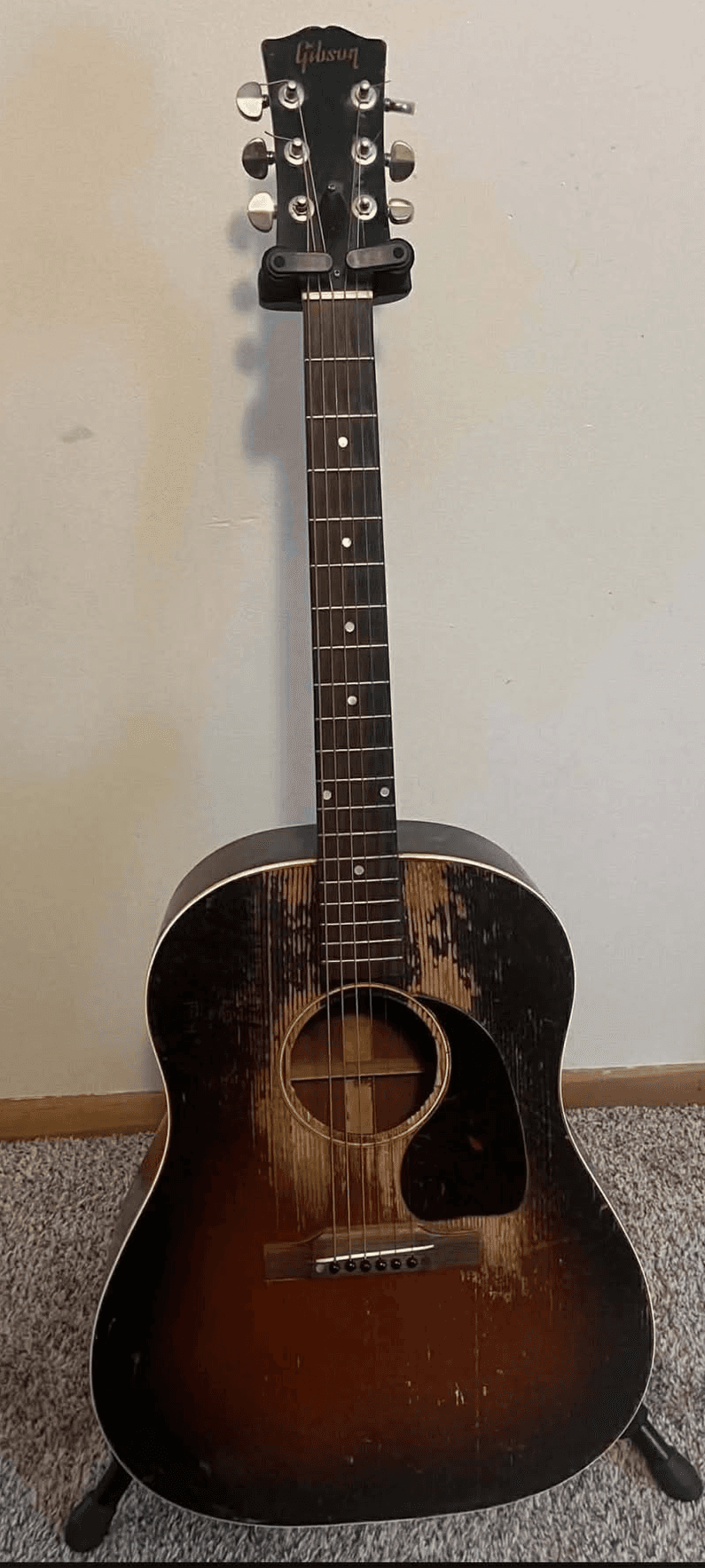
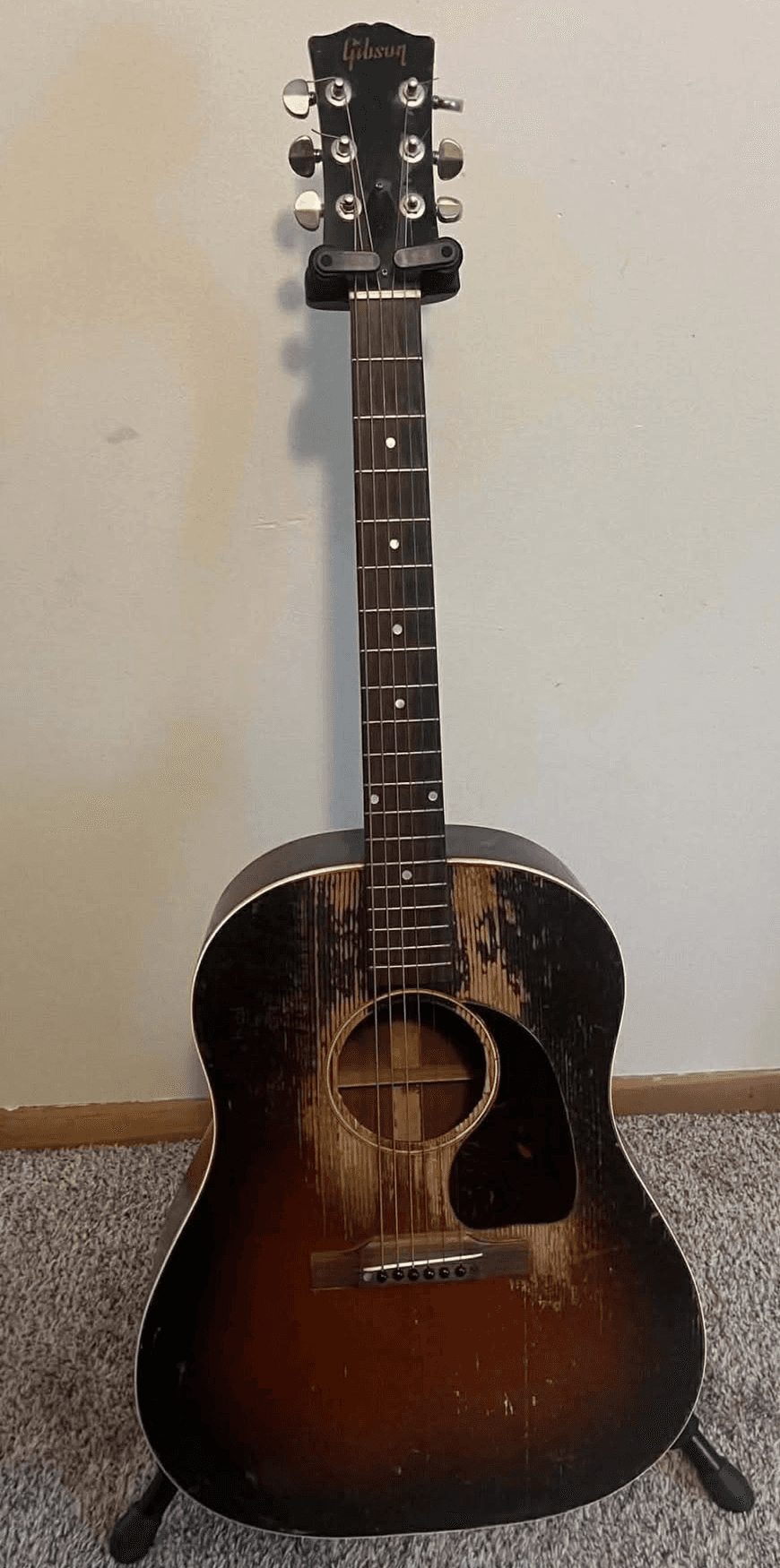
1956 Gibson J-45 - Toledo, Ohio
This vintage Gibson acoustic came to us from an estate situation. The family discovered the guitar in a closet and initially thought it was “just an old guitar.” Local shops offered minimal amounts, not recognizing the guitar’s true significance.
Our knowledge of 1950s Gibson acoustics revealed this guitar’s value: all-original condition including bridge and tuners, excellent playability despite age, and desirable specifications from Gibson’s golden era. We provided a fair valuation that properly reflected the instrument’s worth, making the transaction professional and respectful during a difficult family time.
1970s Ibanez Lawsuit-Era Les Paul - Pittsburgh, Pennsylvania
The seller contacted us about an “old Japanese copy” guitar that guitar shops dismissed as relatively worthless. However, our expertise in vintage Japanese guitars revealed this was a high-quality Ibanez from the “lawsuit era”—guitars that replicated American designs so accurately that Gibson took legal action.
These guitars now command strong collector interest. We recognized the guitar’s quality, all-original condition, and growing market demand. Our offer reflected the instrument’s actual value rather than outdated perceptions of “Japanese copies.”
Frequently Asked Questions About Selling Old Guitars
How do I know if my old guitar is valuable?
Research your guitar’s brand, model, and approximate age. Check serial numbers and compare to similar guitars sold recently (not asking prices—actual sale prices). For potentially valuable instruments, get professional appraisal. Age alone doesn’t guarantee value, but certain brands, models, and years command premium prices.
Should I have my old guitar appraised before selling?
For potentially high-value instruments (vintage Fender, Gibson, Martin from 1950s-1960s, unusual models, custom colors), professional appraisal provides accurate valuations. For common guitars or recent instruments, online research may suffice. When in doubt, free preliminary assessments from reputable buyers like Edgewater Guitars provide guidance.
What if my old guitar has damage or repairs?
Damage and repairs affect value but don’t eliminate it. Professional repairs on vintage guitars are often acceptable and expected. Be transparent about all issues. Reputable buyers evaluate total package—playability, tone, originality of core components—not just cosmetic condition. Well-repaired vintage guitars often maintain strong values.
Is a refinished old guitar still worth anything?
Yes, though refinishing significantly reduces value (typically 40-60%). A refinished vintage guitar still possesses original construction, hardware, electronics, and playability. Players value tone and feel; collectors prioritize originality. Refinished guitars maintain player value while commanding reduced collector prices.
How long does it take to sell an old guitar?
Timeline varies by method:
Specialized buyers: 3-5 days typically
Guitar shops: Same day (but lowest prices)
Online marketplaces: Weeks to months
Auction houses: 3-6 months
Consignment: Varies, often months
Choose method balancing timeline needs with desired pricing.
What if I don’t know anything about my old guitar?
Reputable buyers help identify and evaluate guitars even with limited information. Provide clear photos (front, back, headstock with serial number, overall condition), and expert buyers can identify model, approximate age, and value. No expertise required from sellers—that’s why professional buyers exist.
Should I clean or repair my old guitar before selling?
Basic cleaning acceptable (dust removal, wipe-down). Avoid aggressive cleaning, polishing that removes patina, or any repairs/modifications. Professional buyers prefer evaluating original condition. For valuable vintage guitars, “as-is” often better than attempts at improvement.
Can I sell an old guitar without the case?
Yes. Original cases add value (typically 10-15%) but aren’t required for sale. Many old guitars have lost original cases over decades. Disclose case absence, and expect slightly reduced offers, but quality instruments sell regardless of case presence.
What geographic areas does Edgewater Guitars serve?
We actively purchase old guitars throughout:
Ohio (all regions)
Michigan (all regions)
Pennsylvania (all regions)
Indiana (all regions)
West Virginia (all regions)
For valuable instruments, we travel for in-person evaluations. We also work with sellers nationwide through carefully arranged transactions.
What payment methods do you offer?
We provide immediate payment upon transaction completion through various methods:
Bank transfer
Cashier’s check
Cash (for in-person transactions)
Other methods as appropriate
Payment is immediate—no waiting periods.
Ready to Sell Your Old Guitar?
If you own an old guitar and you’re ready to sell, Edgewater Guitars provides expert evaluation, fair pricing, and professional service.
Get Your Free Valuation
Contact Information:
Phone: (440) 219-3607
Service Area: Ohio, Michigan, Pennsylvania, Indiana, West Virginia
What to Prepare:
Basic information (brand, model, approximate age)
Serial number if visible
Photos (front, back, headstock, condition details)
Known history
Condition notes
Why Choose Edgewater Guitars When You Sell Your Old Guitar
✓ Expert Knowledge: Comprehensive understanding of vintage and used guitars across all brands
✓ Premium Offers: Consistently 30-40% higher than guitar shop offers
✓ Fast Process: Days, not weeks or months
✓ All Guitar Types: Electric, acoustic, bass—all brands and eras
✓ Secure Transactions: Professional handling of valuable instruments
✓ Zero Fees: No commissions or hidden charges
✓ Immediate Payment: No waiting periods
✓ Honest Evaluation: Transparent explanations of value factors
✓ Respectful Service: Understanding of sentimental value and estate situations
Additional Resources
Learn more about selling your specific guitar type:
Sell Gibson Guitar - Complete Guide
Sell Fender Guitar - Expert Buyers
Sell Martin Guitar - Acoustic Specialists
How to Date Gibson Guitars
Vintage Guitar Identification Guide
Guitar Serial Number Lookup Tools
Selling your old guitar requires understanding its value, choosing the right selling method, and working with buyers who recognize what makes your instrument special. Whether you own a legendary 1959 Les Paul, a Pre-CBS Stratocaster, a vintage Martin acoustic, or simply an old guitar that’s been in the family for decades, proper evaluation ensures you receive fair compensation.
Edgewater Guitars specializes in purchasing old guitars of all types throughout the Midwest. Our comprehensive knowledge—from 1950s Gibson and Fender instruments to 1970s Japanese guitars entering vintage status—ensures accurate valuations that reflect your guitar’s true worth.
When you’re ready to sell your old guitar, contact us for a free, no-obligation assessment. We provide transparent evaluations, fair offers, and professional service that respects both the monetary and sentimental value of your instrument.
Contact Edgewater Guitars today at (440) 219-3607 to sell your old guitar and receive the fair price you deserve.
Gavin Coe, Vintage Guitar Specialist
Edgewater Guitars - Ohio’s Premier Guitar Buyer