DATE :
1961 Gibson ES-125TD Value Guide: The Underrated Double-Pickup Thinline
A 1961 Gibson ES-125TD is a thinline hollowbody electric with two P-90 pickups and no cutaway, one of just 118 ES-125TDs Gibson shipped that year. Clean, original examples trade with dealers for several thousand dollars. Edgewater Guitars in Valley City, Ohio buys 1961 ES-125TDs nationwide with free expert appraisals and same-day cash offers. Call or text (440) 219-3607.
The 1961 ES-125TD: where it fits in the family
Gibson's ES-125 family used a simple letter code that is easy to misread if you only glance at it. T means thinline, with rims built about 1 3/4 inches deep instead of the original ES-125's full 3 1/4 to 3 1/2 inches. D means dual, or two pickups instead of one. C means cutaway, a pointed Florentine cutaway for upper-fret access. A 1961 ES-125TD is the thinline, two-pickup, no-cutaway configuration: two dog-ear P-90s, a full non-cutaway lower bout, and nothing else added. It is not the same guitar as the single-pickup ES-125T, the single-pickup cutaway ES-125TC, or the two-pickup cutaway ES-125TDC, which you will also see cataloged as ES-125TCD in this same window; Gibson's own paperwork was not fully consistent about that name between 1960 and 1961. All four share the same thinline body and P-90 pickups. The letters after the T are the entire difference.
Two other Edgewater year guides share the ES-125 name but cover different guitars. Our 1960 ES-125 guide covers the full-depth, single-pickup, non-thinline ES-125. Our 1959 ES-125 3/4 guide covers a separate short-scale (3/4) student model. If yours is thin front to back with two pickups, you are in the right place.
Model | Pickups | Cutaway | Produced | 1961 units shipped |
|---|---|---|---|---|
ES-125T | 1 P-90 | No | 1956 to 1969 | 1,086 |
ES-125TD (this guitar) | 2 P-90s | No | 1957 to 1963 | 118 |
ES-125TC | 1 P-90 | Florentine | 1960 to 1970 | 999 |
ES-125TDC / TCD | 2 P-90s | Florentine | 1960 to 1970 | 512 |
That last column is the identification point most general guides miss: the ES-125TD was already the rarest of the thinline variants by 1961, and shipments were sliding, from 302 in 1959 to 190 in 1960 to 118 in 1961, and fewer than 100 a year after that (shipping figures as compiled by Vintage Guitar and Bass). Some general references give 1964 as the ES-125TD's final year; Gibson's own shipping figures, as compiled by Vintage Guitar and Bass, show the model effectively gone from the line by 1963. Either way, a genuine 1961 example is a real find, not a common flea-market guitar.
Construction is consistent across the whole thinline family. It is a laminated maple top, back and sides, 16 1/4 inches wide at the lower bout, 20 1/4 inches long, and 1 3/4 inches deep, with single-ply binding on top and back. The neck is one-piece mahogany joining the body at the 14th fret, 24 3/4 inch scale, 20 frets, and a rosewood fingerboard with dot inlays, not the parallelogram markers Gibson reserved for its higher-end archtops. Hardware is a floating, height-adjustable bridge that rests on the top and a nickel-plated trapeze tailpiece. References differ on the saddle: dealer descriptions of period examples show a wooden floating bridge, while Vintage Guitar and Bass lists a Tune-O-Matic on a floating base, which is what later 1960s examples carry. Either way nothing is drilled into the top, because a fully hollow thinline has no center block to take bridge posts. Tuners are Kluson strip tuners, three on a plate per side. Finish is sunburst; cherry sunburst shows up more often on the cutaway TC and TDC models later in the run than on the plain TD. Gibson's November 1959 price list had the ES-125TD at $195.
What a 1961 ES-125TD is worth
Stephen Pedone, Edgewater's co-owner, calls the ES-125TD one of the most underrated and undervalued vintage Gibsons on the market right now, and says Edgewater loves buying them. Independent sources agree: GuitarPlayer magazine has asked whether the cutaway ES-125TDC is the most underrated guitar on the vintage market, and at least one gear writer has made the same case for the plain ES-125TD, built in the same Kalamazoo factory in the same years with the same P-90 pickups as period Les Pauls, at a fraction of the price.
Real dealer asking prices back that up. Imperial Vintage Guitars currently lists a 1961 ES-125TD in sunburst, all original, at $4,195. Mahar's Vintage Guitars sold a 1961 ES-125TDC with a rare factory Bigsby, one of only 512 TDCs Gibson shipped that year, with original pickups, bridge, tuners and switch and a reproduction nut and pickguard, at $4,749.95 after a markdown from $5,500. Gary's Classic Guitars currently lists a 1965 ES-125TDC in tobacco sunburst, excellent condition, at $3,995. Clean, original examples of this family are asking in roughly the $4,000 to $4,750 range right now, and only one of those three has actually sold, at the discounted price.
What Edgewater offers. Read those figures as the top of the market, not the middle of it. A dealer's asking price carries the shop's margin, the months a guitar can sit before the right buyer walks in, and any setup or repair work, and asking is not selling. A cash offer from any buyer, Edgewater included, lands meaningfully under dealer asking prices, and lower again for modified or refinished examples. When we make an offer we show you the comparable listings and sales we are working from, so you can judge the number for yourself. Condition, originality and finish move it more than anything else, so the accurate answer for yours is a free appraisal: call or text (440) 219-3607.
What we saw on the bench
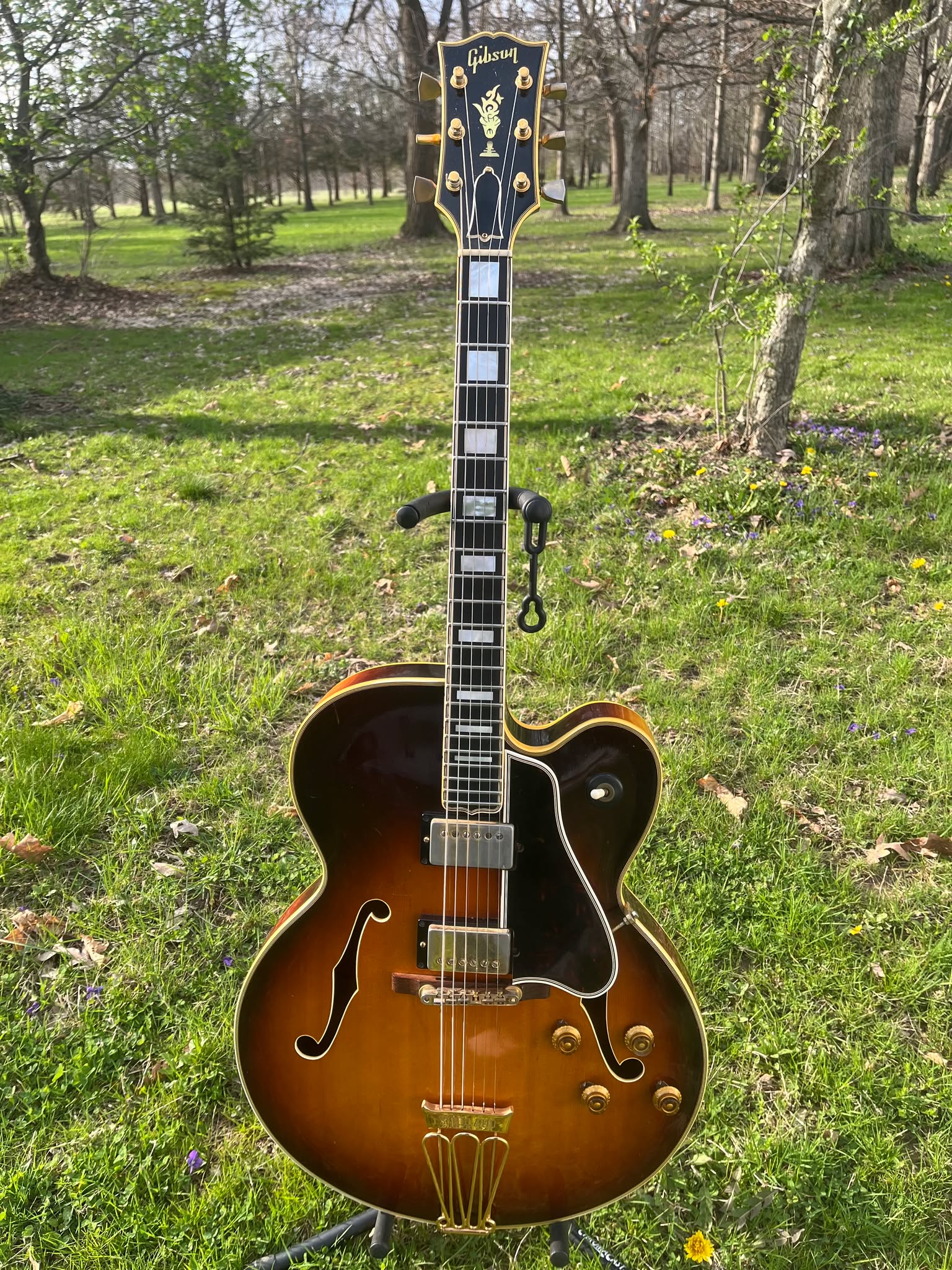
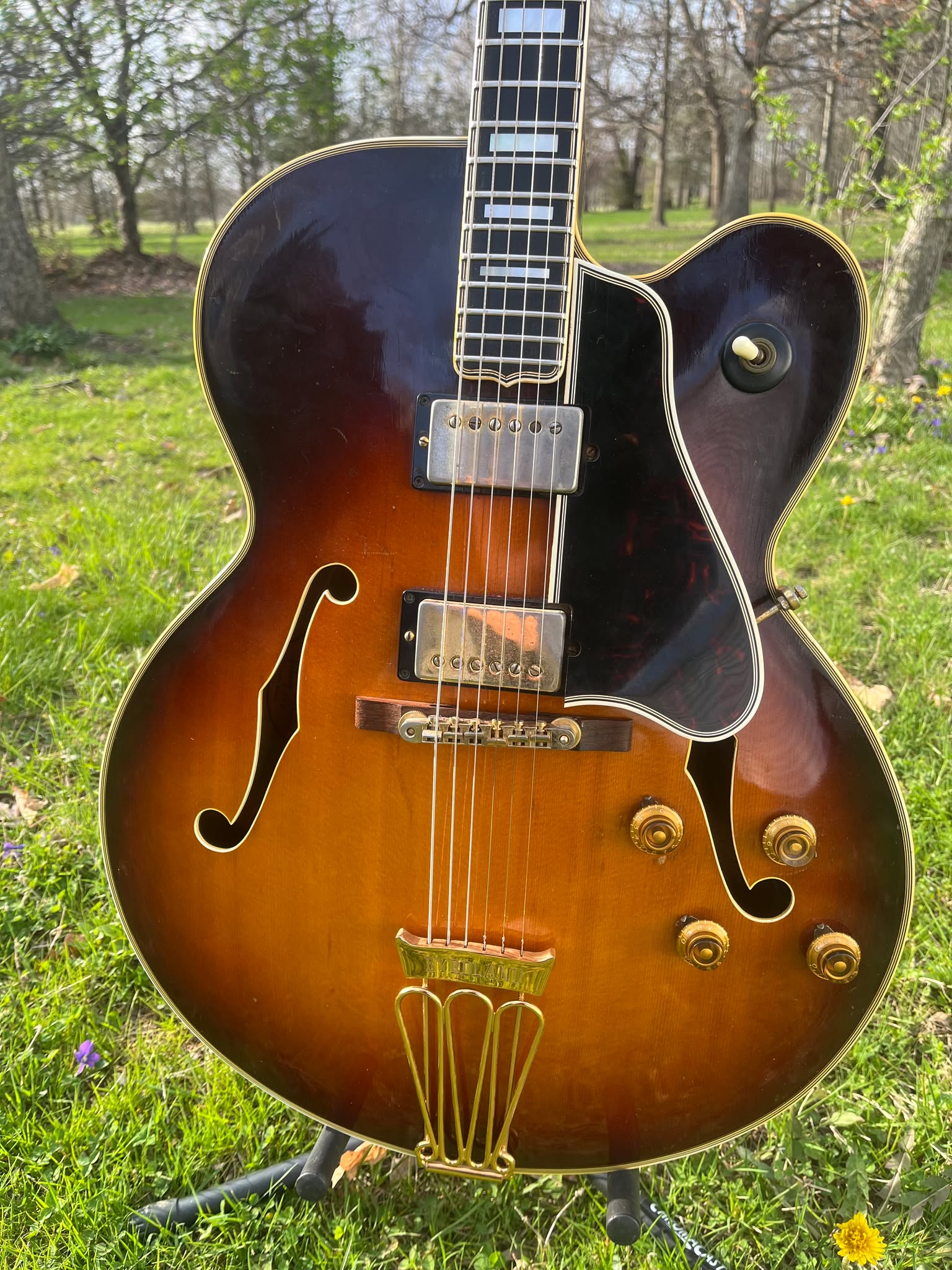
Edgewater bought and sold a 1961 ES-125TD in 2026. It came to us all original, including its original case, a genuine double-pickup thinline with both P-90s intact, the exact factory specification described above rather than a guitar that had picked up parts or lost them over 65 years.
On any ES-125TD, confirming "all original" means checking a short, specific list: both pickups should be dog-ear P-90s with their factory covers and mounting screws, not soapbar P-90s or a later humbucker conversion; the bridge should be the original floating bridge resting on the top, not a replacement on drilled posts; the tuners should be period Klusons rather than modern Grovers or Schallers; and the case should be Gibson's own, not a later replacement. A guitar that checks every one of those boxes, the way this one did, does not turn up often.
Dating a 1961 Gibson ES-125TD
1961 sits right at a changeover in how Gibson tracked its own instruments, which makes it one of the trickier single years to date with full confidence. Cross-check the three clues below together rather than leaning on just one.
Clue | What to look for |
|---|---|
Serial number | A 5 or 6 digit number impressed (stamped into the wood) on the back of the headstock, with no "Made in USA" stamp beneath it; that stamp did not appear until 1970. Numbers roughly in the 100 to 42440 range point to 1961, but the ranges overlap with 1962 to 1964, so treat the serial number as a starting point, not a verdict on its own. |
Factory Order Number | Look inside the body, visible through the f-hole, for a number preceded by the letter Q. Gibson's FON letters ran backward through the alphabet in this era (S for 1959, R for 1960, Q for 1961), and 1961 was the final year Gibson used the FON system before retiring it in favor of the new impressed serial numbers. A Q-prefix FON is genuinely uncommon to find. |
Potentiometer codes | Pots are stamped with a manufacturer code, then year, then week. Centralab used 134; CTS used 137. A code reading 134-61-03 is a Centralab pot made in the third week of 1961. A pot only proves the guitar was assembled no earlier than that week, since replacement pots exist, so weigh it alongside the serial and FON rather than instead of them. |
Our Gibson serial number lookup will run a specific number against Gibson's charts for you, and our ES-125 dating guide covers the rest of the model's 1941 to 1970 run in more depth than a single year can.
Original or modified: what to check
Before anyone quotes a number on a 1961 ES-125TD, these are the points that matter most:
Pickups. Two dog-ear P-90s, both original to the guitar. A single replaced pickup, or a swap to soapbar P-90s or humbuckers, cuts value hard.
Cutaway or none. This model has no cutaway. A guitar with a Florentine cutaway is a TC or TDC, not a TD, regardless of what a seller calls it.
Bridge and tailpiece. A floating bridge that rests on the top and a trapeze tailpiece are correct for 1961. Bridge posts drilled into the top, a stop tailpiece, or an added vibrato point to modification.
Neck and fingerboard. One-piece mahogany neck, rosewood board, dot inlays. A clean refret is common and acceptable to collectors; a replaced neck is not.
Finish. Factory sunburst finish. Look for finish checking consistent with age, and for overspray or color mismatch in the neck pocket and control cavity that would point to a refinish.
Tuners. Period Kluson strip tuners. Modern replacement tuners are a common, low-impact mod; original tuners add to the value.
Case. An original Gibson case from the era supports the guitar's story and adds value on its own; a modern case does not.
Serial, FON and pot codes agree. When the three dating clues above land within a year of each other, you likely have an honest, unmolested 1961 example. When they conflict, something has probably been changed.
Sell your 1961 Gibson ES-125TD
Edgewater Guitars buys 1961 ES-125TDs and the rest of the ES-125 thinline family nationwide, whether yours is all original or has been modified along the way. We travel for the right guitar, pay by check or cash the same day, and show you the comps behind our offer. Get a free estimate or call or text (440) 219-3607. Our sell your Gibson page explains how the process works.
From a recent Google review: "Gavin ... provided speedy responses and a very honest and fair assessment of my 1963 Gibson SG Special. I highly recommend them!" (George Watts, August 2025)
Frequently asked questions
Is a 1961 Gibson ES-125TD worth anything?
Yes. Clean, original examples from this era are currently asking in the $4,000 to $4,750 range at specialist dealers, and Edgewater bought an all-original 1961 with its original case in 2026. Condition, originality and finish drive the number more than age alone, and a cash offer sits under dealer asking prices. Call or text (440) 219-3607 for a free appraisal.
What is the difference between an ES-125T, ES-125TD and ES-125TDC?
The letters describe body depth, pickups and cutaway, not separate model families. T means the thinline body common to all of them. A plain ES-125T has one P-90 and no cutaway. The ES-125TD, this guitar, has two P-90s and no cutaway. The ES-125TDC adds a Florentine cutaway to the two-pickup version. All three share the same body and hardware otherwise.
How rare is a 1961 Gibson ES-125TD?
Genuinely rare. Gibson shipped only 118 ES-125TDs in 1961, down from 302 in 1959, and the model was gone from the line within a few years. That is fewer than half the 1961 shipments of the single-pickup ES-125T or the cutaway ES-125TDC, which makes a documented, all-original 1961 example one of the scarcer entry points into vintage Gibson ownership.
How do I date my 1961 Gibson ES-125TD?
Check three things together: the serial number impressed on the back of the headstock, the Factory Order Number visible through the f-hole (a 1961 FON starts with the letter Q), and the potentiometer codes on the back of the volume and tone pots. Our Gibson serial number lookup will run a specific number for you.
Where can I sell a 1961 Gibson ES-125TD?
Edgewater Guitars buys 1961 ES-125TDs and the rest of the ES-125 family nationwide, in any condition from all original to modified. We are based in Valley City, Ohio, travel for the right guitar, and pay the same day. Get a free estimate online or call or text (440) 219-3607 to start.
Sources
ES-125T, ES-125TD and ES-125T 3/4 specifications and shipping totals, Vintage Guitar and Bass: vintageguitarandbass.com/gibson/ES125T.php
ES-125TDC specifications and production totals, Vintage Guitar and Bass: vintageguitarandbass.com/gibson/ES125TDC.php
ES-125TC and ES-125TDC catalog appearances and shipping statistics, Vintage Guitar and Bass: vintageguitarandbass.com/gibson/ES125TC_catalogue.php
1960 Gibson catalog, page 9 (ES-125TC, ES-125TDC, ES-125T, ES-140T), Vintage Guitar and Bass: vintageguitarandbass.com/gibson/catalogues/1960_9.php
"What's the Most Underrated Guitar on the Vintage Market? It Could be the Gibson ES-125TDC," GuitarPlayer: guitarplayer.com
Gibson ES-125 complete guide, Joe's Vintage Guitars: joesvintageguitarsaz.com
Gibson serial number lookup guide, Joe's Vintage Guitars: joesvintageguitarsaz.com/how-to-read-gibson-serial-numbers
Gibson serial number lookup and FON chart, True Vintage Guitar: truevintageguitar.com
Potentiometer code dating (Centralab, CTS), Fly Guitars: flyguitars.com
Potentiometer code dating, True Vintage Guitar: truevintageguitar.com/blogs/tvg-blog
Gibson ES-125 thinline history and specifications, The Unique Guitar Blog: uniqueguitar.blogspot.com
"The Gibson ES-125: Sleeper Guitar Alert," Warehouse Guitar Speakers: wgsusa.com
1961 Gibson ES-125TD listing, $4,195, Imperial Vintage Guitars via GBase: gbase.com
1961 Gibson ES-125TDC with factory Bigsby, sold at $4,749.95, Mahar's Vintage Guitars: maharsvintageguitars.com
1965 Gibson ES-125TDC listing, $3,995, Gary's Classic Guitars: garysguitars.com
1959 Gibson ES-125T listing (bridge and hardware reference), Vintage Electric via GBase: gbase.com
1968 Gibson ES-125TDC listing (bridge hardware evolution reference), RetroFret: retrofret.com
Written by Stephen Pedone, co-owner of Edgewater Guitars, a vintage guitar buyer based in Valley City, Ohio with more than 140 Google reviews at a 5.0-star average. The purchase described in this article is Edgewater's own; market figures are from the dealer listings cited above. Last updated: September 18, 2026.
Article