DATE :
Gibson ES-125: Complete Guide to the Affordable Archtop (ES-125, ES-125T, ES-125TD, ES-125TDC)
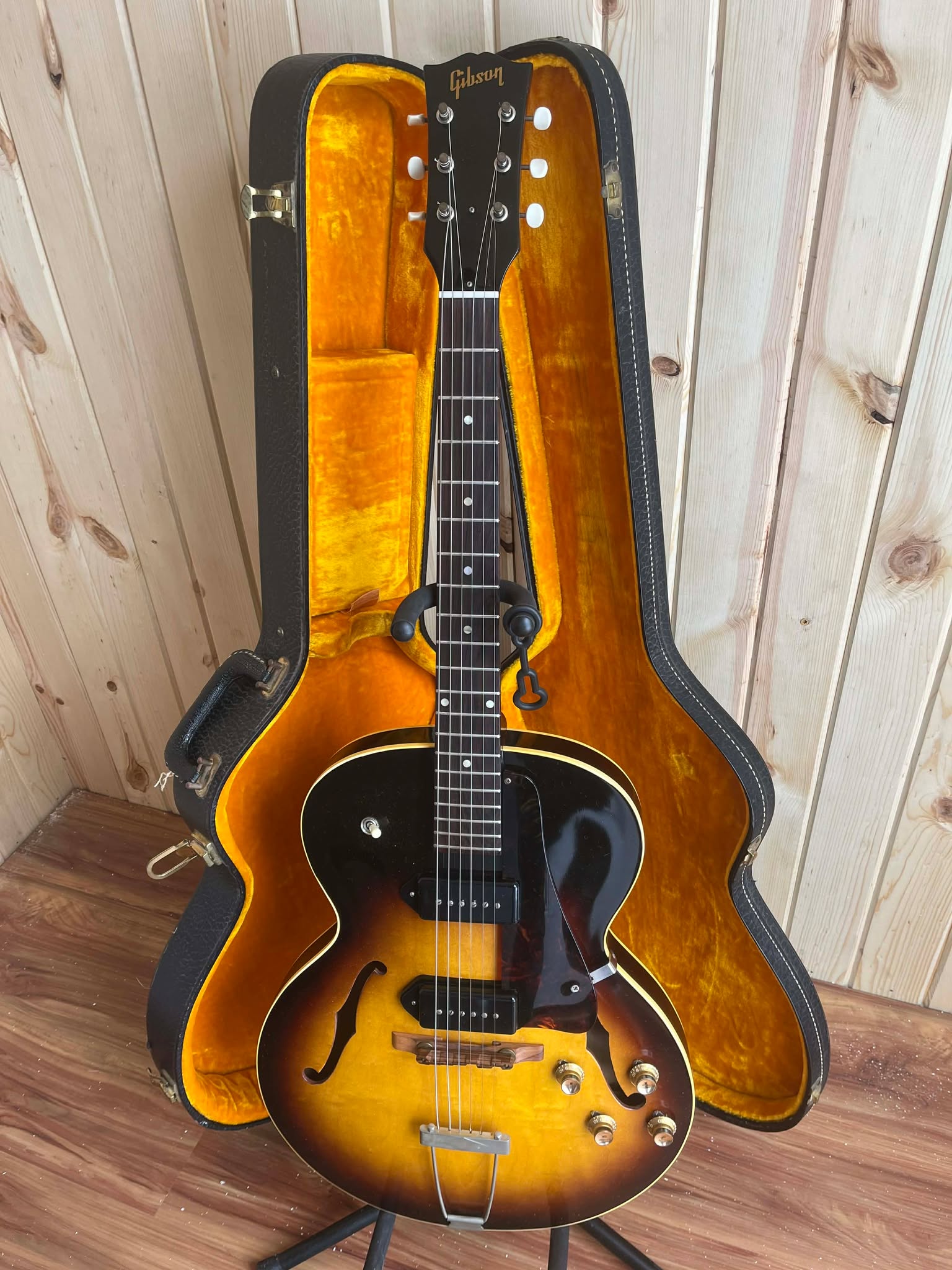
What is a Gibson ES-125 Guitar?
The Gibson ES-125 is a thinline archtop electric guitar that served as Gibson’s entry-level electric archtop from 1941 through 1970. While positioned as an affordable alternative to Gibson’s premium models like the ES-175 and L-5, the ES-125 series became legendary in its own right, beloved by blues, jazz, and rock players for its warm tone and comfortable playability.
Quick Identification: Gibson ES-125 guitars feature a single-cutaway (or double-cutaway on later models) thinline archtop body, laminated maple construction, single P-90 pickup (ES-125) or two pickups (ES-125T), sunburst or natural finish, and simplified appointments compared to higher-end Gibson archtops. The various model designations (ES-125, ES-125T, ES-125TD, and ES-125TDC) indicate different configurations produced over the model’s 30-year history.
If you’re trying to identify your ES-125: Understanding which variant you have and from what year is essential for proper authentication and evaluation. This guide will help you identify your specific model and year.
Understanding the ES-125 Model Variations
ES-125 (Standard Single-Pickup Model)
Production Years: 1941-1942, 1946-1970
The original ES-125 featured a single P-90 pickup in the neck position, making it Gibson’s most affordable electric archtop. This configuration remained available throughout the model’s production run.
Key Features:
Single P-90 pickup (neck position)
Single-cutaway body (most years)
Simplified trapeze tailpiece
Dot inlays (early) or parallelogram inlays (later)
Sunburst finish standard
Laminated maple construction
Common Years to Identify:
1941-1942: Pre-war production, extremely rare
1946-1949: Post-war restart, single cutaway
1950s: Peak production, various cosmetic changes
1960s: Continued production with modernized features
1970: Final year of production
ES-125T (Two-Pickup Model)
Production Years: 1956-1968
The “T” designation indicated “Two pickups,” with dual P-90s providing more tonal versatility than the single-pickup model.
Key Features:
Two P-90 pickups
Single-cutaway body
Four-knob control layout (two volumes, two tones)
Parallelogram inlays standard
Sunburst or natural finish options
Same laminated maple construction
Why It Matters: The ES-125T offered players the tonal flexibility of neck and bridge pickup selection at a lower price point than the ES-175 or ES-335 models. Many blues and jazz players preferred the ES-125T for its warmer, less aggressive tone compared to solid-body guitars.
ES-125TD (Thinline Double-Cutaway)
Production Years: 1957-1963
The “TD” stood for “Thinline Double-cutaway,” representing Gibson’s response to modernizing player preferences for better upper fret access.
Key Features:
Double-cutaway body design (sharp Florentine cutaways)
Two P-90 pickups
Thinline depth (approximately 1 5/8” at rim)
Four-knob control layout
Parallelogram inlays
Sunburst or natural finish
Improved upper fret access
Historical Context: The double-cutaway ES-125TD was introduced during Gibson’s exploration of modern designs in the late 1950s. While less common than the single-cutaway models, the TD variant is highly sought by players who value upper fret accessibility.
ES-125TDC (Three-Quarter Size Double-Cutaway)
Production Years: 1960-1968
The “TDC” indicated “Three-quarter Double-Cutaway,” a smaller-bodied version designed for players who wanted a more compact instrument.
Key Features:
Smaller three-quarter size body
Double-cutaway design
Single P-90 pickup (typically)
Shorter scale length
Dot inlays
Sunburst finish standard
Marketed toward students and smaller players
Target Market: Gibson marketed the ES-125TDC as a student model and for players with smaller frames. Despite its intended entry-level positioning, these guitars have developed their own collector following due to their unique size and playability.
Complete Year-by-Year Identification Guide
1941-1942 ES-125 (Pre-War Production)
Serial Numbers: Check Gibson’s pre-war serial number system Rarity: Extremely rare due to limited production before WWII halted civilian guitar manufacturing
Distinctive Features:
Bound f-holes
Dot inlays
Single-bound body
Natural or sunburst finish
Single P-90 pickup
Trapeze tailpiece
Wartime material restrictions not yet in effect
Authentication Challenges: Pre-war ES-125s are so rare that any claimed example requires expert authentication. Many later models are sometimes misidentified as pre-war guitars.
1946-1949 ES-125 (Post-War Early Production)
Serial Numbers: Approximately A-prefix numbers (use our Gibson Serial Number Lookup Tool)
Post-War Features:
Production resumed after WWII
Single-cutaway body reintroduced
Single P-90 pickup in neck position
Dot inlays standard
Simplified appointments to keep costs down
Trapeze tailpiece
Sunburst finish standard
Identifying 1946-1949 Models:
Check for single-bound body (no elaborate binding)
Dot position markers
Single P-90 with simple mounting
Post-war construction methods visible
Serial numbers in early A-prefix range
1950-1955 ES-125
Serial Numbers: A-prefix continuing (check serial number guide)
Evolution in the Early 1950s:
1950-1952: Continued dot inlay production
1953-1955: Transition to parallelogram inlays begins
Single-cutaway body remains standard
P-90 pickup in neck position
Trapeze tailpiece standard
Some cosmetic refinements
1954-1955 Specific Changes:
Parallelogram inlays become more common
Tuner upgrades (Kluson Deluxe more standard)
Slight body shape refinements
Finish quality improvements
How to Date 1950-1955 Models:
Check inlay pattern (dots = earlier, parallelograms = later)
Examine serial number and cross-reference
Look for Factory Order Number (FON) inside body
Check tuner styles and hardware
1956-1959 ES-125 and ES-125T
Serial Numbers: A-prefix transitioning to no prefix in 1961 (see Gibson dating guide)
Major Development: 1956: ES-125T introduced with two P-90 pickups
1956-1959 Standard ES-125 Features:
Single P-90 in neck position
Parallelogram inlays standard
Single-cutaway body
Trapeze tailpiece
Sunburst finish standard, natural available
Laminated maple back and sides
1956-1959 ES-125T Features:
Two P-90 pickups (neck and bridge)
Four-knob control layout
Three-way toggle switch
Parallelogram inlays
Single-cutaway body
More tonal versatility than single-pickup model
Identifying Late 1950s Models:
Check pickup configuration (one vs. two pickups)
Examine control layout
Verify parallelogram inlays present
Check serial number format and range
1957-1963 ES-125TD (Double-Cutaway)
Serial Numbers: Late A-prefix through early 1960s system
ES-125TD Distinctive Features:
Double Florentine (sharp) cutaways
Two P-90 pickups standard
Thinline body depth
Four-knob controls
Parallelogram inlays
Enhanced upper fret access (22 frets accessible)
Sunburst or natural finish
Year-Specific Details:
1957-1958:
Introduction of double-cutaway design
Sharp Florentine cutaways
Early production examples highly collectible
Some transitional features
1959-1960:
Refinement of double-cutaway design
Consistent hardware and appointments
Peak of thinline archtop popularity
1961-1963:
Later production examples
Some minor specification changes
Natural finish becomes more common
Cherry finish offered on some examples
How to Date ES-125TD Models:
Body style confirms TD designation
Serial number provides year range (use lookup tool)
Check hardware for year-specific features
Examine finish options and colors
1960-1968 ES-125TDC (Three-Quarter Size)
Serial Numbers: 1960s Gibson numbering system
ES-125TDC Specific Features:
Smaller three-quarter size body
Double-cutaway design
Single P-90 pickup (most common)
Shorter scale length (approximately 23.5”)
Dot inlays
Simplified appointments
Sunburst finish standard
Target Buyers:
Students and beginners
Players preferring smaller instruments
Jazz players wanting compact archtop
Women and younger players (original marketing)
Dating 1960s TDC Models:
Three-quarter body size immediate identifier
Serial numbers place in 1960s
Simplified hardware confirms entry-level positioning
Check scale length (shorter than standard ES-125)
1960-1970 ES-125 and ES-125T (Final Years)
Serial Numbers: 1960s six-digit system (consult serial number database)
Late Production Features:
1960-1965:
Continuation of single and dual-pickup models
Single-cutaway body remains available
Some finish options expand
Hardware modernization continues
1966-1970:
Final years of production
Some cost-cutting measures appear
Cherry finish more common
Slight construction changes
1970 Final Year:
ES-125 production ends
Later examples sometimes have simplified features
End of an era for Gibson’s entry-level archtop
Changes During Final Decade:
1961: Serial number system changes
1965: Some specification updates
1968: ES-125TDC discontinued
1970: All ES-125 production ends
Serial Number Dating for ES-125 Guitars
How to Find Your ES-125 Serial Number
Serial Number Location: Gibson ES-125 guitars have serial numbers in different locations depending on production era:
1947-1960s:
Stamped inside body
Visible through f-hole
Located on neck block or back brace
Sometimes difficult to read without mirror and flashlight
1960s-1970:
Continued inside stamping
Six-digit numbers become standard
May require removal of pickups to see clearly
Using Our Serial Number Lookup Tool
For accurate dating of your ES-125, use our comprehensive Gibson Serial Number Lookup Tool. This tool helps you:
Identify production year from serial number
Cross-reference with model specifications
Understand Gibson’s numbering systems across eras
Verify authenticity of claimed year
Steps to Use the Tool:
Locate serial number inside your guitar
Enter number into lookup tool
Review results showing likely production year
Cross-reference with physical features described in this guide
Verify model variant matches year specifications
Factory Order Numbers (FON)
In addition to serial numbers, Gibson used Factory Order Numbers (FON) stamped inside the body. These can provide more specific dating information:
FON Format and Location:
Stamped on neck block or back brace
Letter-number combination
More reliable for precise dating than serial numbers
Requires internal inspection
How FON Helps:
Confirms production batch
Can narrow dating to specific months
Helps verify originality when cross-referenced with serial
Essential for pre-1960s models
Physical Specifications by Model
Standard ES-125 Specifications
Specification | Detail |
|---|---|
Body Construction | Laminated maple back and sides |
Top | Laminated spruce |
Depth | Approximately 3.25” (full depth archtop) |
Scale Length | 24.75” (standard Gibson) |
Neck | Mahogany, set neck |
Fingerboard | Rosewood |
Inlays | Dot (early) or parallelogram (later) |
Frets | 20 frets (single-cutaway access) |
Pickups | Single P-90 (neck position) |
Controls | Volume and tone |
Bridge | Rosewood with adjustable compensating saddle |
Tailpiece | Trapeze (most years) |
Tuners | Kluson or Grover (year-dependent) |
Binding | Single-ply body binding |
Finishes | Sunburst standard, natural available |
ES-125T Specifications (Two-Pickup Model)
Specification | ES-125T Detail |
|---|---|
Pickups | Two P-90s (neck and bridge) |
Controls | Four knobs (two volume, two tone) |
Selector | Three-way toggle switch |
Inlays | Parallelogram standard |
Frets | 20 frets |
Body Depth | Same as standard ES-125 |
Scale | 24.75” standard |
Other Features | Otherwise identical to ES-125 |
ES-125TD Specifications (Double-Cutaway)
Specification | ES-125TD Detail |
|---|---|
Body Style | Double Florentine cutaway |
Depth | Thinline (approximately 1 5/8” at rim) |
Pickups | Two P-90s standard |
Fret Access | 22 frets accessible |
Upper Fret Access | Significantly improved vs single-cut |
Controls | Four knobs, three-way switch |
Inlays | Parallelogram |
Scale | 24.75” standard |
ES-125TDC Specifications (Three-Quarter Size)
Specification | ES-125TDC Detail |
|---|---|
Body Size | Three-quarter (smaller than standard) |
Scale Length | Approximately 23.5” (shorter scale) |
Cutaway | Double cutaway |
Pickups | Single P-90 (typically) |
Inlays | Dot markers |
Target Market | Students, smaller players |
Controls | Simplified (volume, tone) |
Finish | Sunburst standard |
Tonal Characteristics of ES-125 Models
The Classic ES-125 Sound
Single P-90 ES-125:
Warm, woody tone from laminated maple construction
P-90 in neck position produces mellow, jazz-friendly voice
Less aggressive than bridge-position pickups
Rounded treble without harshness
Full midrange presence
Subdued bass response
Excellent for rhythm playing and chord melody
Two-Pickup ES-125T:
Versatile tonal palette from dual P-90s
Neck pickup: warm jazz tones
Bridge pickup: brighter, more cutting voice
Middle position: balanced, slightly scooped tone
Suitable for blues, jazz, and early rock styles
More output and aggression than single-pickup model
ES-125TD Double-Cutaway:
Similar tonal characteristics to ES-125T
Thinline construction slightly brighter than full-depth
Enhanced sustain from body design
Midrange clarity excellent for lead playing
Acoustic resonance slightly different from full-depth models
Why ES-125s Sound Different from ES-175s
Many players wonder about the tonal difference between the ES-125 and the higher-end ES-175:
ES-125 Characteristics:
Laminated maple (plywood) construction
Warmer, less resonant than carved top guitars
More controlled feedback (advantage in loud situations)
Slightly compressed dynamic range
More forgiving for beginners
ES-175 Characteristics:
Carved spruce top (solid wood)
More acoustic resonance and projection
Greater dynamic range and touch sensitivity
More prone to feedback at high volumes
Brighter, more complex overtones
Player Preference: Many professional players actually prefer the ES-125’s controlled tone and feedback resistance for certain applications, particularly blues and amplified jazz settings.
Common Modifications and Issues
Typical Modifications Found on ES-125 Guitars
Pickup Replacements:
Original P-90s often replaced with humbuckers
Some players add neck pickups to single-pickup models
Aftermarket P-90 replacements common
Original P-90s significantly enhance authenticity
Hardware Upgrades:
Tailpiece replacements (trapeze to stop tail or Bigsby)
Tuner upgrades (Grover or modern replacements)
Bridge modifications for better intonation
Nut replacements (bone, brass, or synthetic)
Finish and Cosmetic Changes:
Refinishing common (sunburst to natural or solid colors)
Binding repairs or replacements
Pickguard changes or additions
Headstock logo restoration
Condition Issues to Check
Structural Concerns:
Neck angle and reset needs (common on older archtops)
Top cracks or separation
Binding deterioration (celluloid shrinks and cracks)
Loose bracing inside body
Headstock cracks or repairs
Fretboard separation
Electrical Issues:
Deteriorated wiring and capacitors
Oxidized potentiometers (scratchy controls)
Output jack problems
Pickup magnets weakened with age
Corroded solder joints
Cosmetic Wear:
Finish checking and crazing (normal aging)
Buckle rash on back
Arm wear through finish
Fret wear requiring leveling or replacement
Missing or replaced knobs and hardware
Modifications That Affect Collectibility
Value-Preserving Modifications:
Professional refret with period-appropriate wire
Nut replacement with proper materials
Electronic component replacement (caps, pots) with correct values
Reversible hardware upgrades
Value-Reducing Modifications:
Refinishing (even professional refinish reduces value)
Route modifications for humbuckers
Headstock repairs
Replaced neck (severe value impact)
Non-reversible hardware changes
Why ES-125 Guitars Are Valued
Historical Significance
Entry Point for Legendary Players: Many famous guitarists started on ES-125 guitars before moving to more expensive models:
Affordable price made electric archtops accessible
Learning instruments for countless jazz and blues players
Gigging guitars for working musicians
Some professionals continued using ES-125s by choice
Working Musician’s Guitar: The ES-125 represented Gibson’s commitment to providing quality instruments at accessible prices:
Professional construction quality
Genuine Gibson tone and playability
Durable enough for constant gigging
Serviceable and repairable
Player Appeal Today
Modern Players Choose ES-125s Because:
Affordable entry into vintage Gibson archtops
Excellent tone for blues, jazz, and roots music
Comfortable playability and neck profiles
Lighter weight than many solid-body guitars
Vintage mojo and aesthetic appeal
Less feedback-prone than carved-top archtops
Genre Suitability:
Jazz: Warm neck pickup tone perfect for chord melody
Blues: Gritty P-90 character cuts through mix
Rockabilly: Vintage tone with modern playability
Indie/Alternative: Cool factor and unique voice
Recording: Controlled feedback, excellent mic response
Collectibility Factors
What Makes ES-125s Collectible:
30-year production run creates variety
Different models suit different collectors
1950s examples increasingly sought
Double-cutaway TD models have strong following
All-original examples becoming scarcer
Historical connection to Gibson’s heritage
Collector Interest by Model:
Pre-war (1941-1942): Extremely rare, museum pieces
1940s Post-war: Early electric archtops, collectible
1950s Single-cutaway: Peak vintage appeal
ES-125TD: Modern design, player favorite
ES-125TDC: Niche collector interest
Condition Impact:
All-original examples command premiums
Player-grade guitars accessible to working musicians
Refinished examples lose significant collectibility
Structural soundness more important than cosmetic perfection
Selling Your Gibson ES-125
Why Choose Edgewater Guitars
At Edgewater Guitars, we specialize in evaluating and purchasing vintage Gibson guitars, including all ES-125 variants from every production year.
Our ES-125 Expertise:
Deep knowledge of all model variants (125, 125T, 125TD, 125TDC)
Understanding of year-specific features across 30-year production
Experience with authentication and dating
Recognition of appropriate modifications vs. value-reducing changes
Familiarity with condition issues specific to laminated archtops
Our Value Proposition:
Premium Purchase Offers: We consistently pay 30-40% more than typical guitar shops
Expert Authentication: Free evaluation of model variant, year, and originality
Immediate Cash Payment: No consignment delays or uncertain waiting
Fair Assessment: We understand the difference between player-grade and collector-grade
Honest Evaluation: Clear communication about condition issues and their impact
Why Edgewater vs. Other Options
Compared to Local Guitar Shops:
Most shops undervalue ES-125s as “student guitars” despite collectibility
Retail margin requirements force low wholesale offers
Limited expertise in year-specific ES-125 variations
We recognize premium early examples and rare variants
Immediate cash vs. months of consignment
Compared to Online Marketplaces:
No listing fees, final value fees, or payment processing charges (15-20% total)
Eliminate shipping risks for vintage archtop guitars
No dealing with buyers who don’t understand vintage specifications
Professional evaluation prevents undervaluing rare features
Avoid fraud, scams, and payment disputes
Private transaction if discretion matters
Compared to Auction Houses:
No seller’s commission (typically 15-25%)
Immediate payment instead of 60-90 day wait
Personal service vs. catalog listing
No reserve price uncertainties
Direct negotiation
Contact Information:
Phone: (440) 219-3607
Request Free Evaluation: request a free estimate
Email: edgewatergearvault@gmail.com
Geographic Service Area:
Ohio
Michigan
Pennsylvania
Indiana
West Virginia
For significant instruments (pre-1950s ES-125, rare ES-125TD models, all-original examples), we provide in-person evaluation at your location.
Authentication and Dating Resources
Free Identification Tools from Edgewater
Comprehensive Gibson Resources:
Gibson Archtop Identification Guide
Related Model Guides:
Gibson ES-175 Complete Guide
Gibson ES-335 Identification
Gibson L-5 Authentication
Gibson ES-150 History and Dating
Physical Verification Checklist
When authenticating and dating your ES-125, systematically verify:
Model Identification:
[ ] Count pickups (one = ES-125, two = ES-125T or TD)
[ ] Check cutaway style (single = ES-125/125T, double = ES-125TD/TDC)
[ ] Measure body size (three-quarter = ES-125TDC)
[ ] Verify body depth (full depth or thinline)
[ ] Confirm “ES-125” label inside guitar
Year Dating:
[ ] Locate serial number inside body (use lookup tool)
[ ] Find Factory Order Number if present
[ ] Check inlay pattern (dots = earlier, parallelograms = later)
[ ] Examine hardware styles and tuner brands
[ ] Verify pickup type and mounting style
[ ] Check tailpiece design
Originality Assessment:
[ ] Examine finish for refinishing evidence
[ ] Check all hardware for replacements
[ ] Verify pickup originality (P-90s vs. replacements)
[ ] Inspect wiring and electronics for modifications
[ ] Look for additional routing or holes
[ ] Check neck for repairs or replacement
Condition Evaluation:
[ ] Assess neck angle and playability
[ ] Check for cracks in top, back, or sides
[ ] Examine binding condition
[ ] Verify fret condition
[ ] Test all electronics
[ ] Document any repairs or issues
Frequently Asked Questions
Q: What’s the difference between ES-125, ES-125T, ES-125TD, and ES-125TDC?
A: The ES-125 is the single-pickup model with one P-90 in the neck position. The ES-125T has two pickups (“T” = Two). The ES-125TD is a thinline double-cutaway version with two pickups (“TD” = Thinline Double-cutaway). The ES-125TDC is a smaller three-quarter size double-cutaway model (“TDC” = Three-quarter Double-Cutaway), typically with one pickup. All share similar construction but differ in configuration and size.
Q: How do I find the serial number on my ES-125?
A: Gibson ES-125 serial numbers are stamped inside the body, visible through the f-holes. You’ll need a flashlight and possibly a small mirror to see the number stamped on the neck block or back brace. Use our Gibson Serial Number Lookup Tool to determine the production year once you locate the number.
Q: What years is my ES-125 from based on its features?
A: Key identifiers include: Dot inlays typically indicate pre-1953 models, parallelogram inlays suggest 1953 and later. Single-cutaway with one pickup is standard ES-125 (1941-1970). Single-cutaway with two pickups is ES-125T (1956-1968). Double-cutaway is ES-125TD (1957-1963) or ES-125TDC (1960-1968). Use the serial number combined with these features for accurate dating.
Q: Is my ES-125 worth restoring or should I sell it as-is?
A: This depends on the guitar’s condition, originality, and your goals. If it’s mostly original with minor issues, professional setup and light restoration may be worthwhile. Major repairs (neck reset, refinishing, extensive work) often cost more than the resulting increase in value for ES-125 models. Consult with a vintage guitar expert before authorizing expensive work. Many buyers prefer all-original condition even with wear rather than restored instruments.
Q: Are ES-125 guitars valuable or just student guitars?
A: While ES-125s were Gibson’s entry-level electric archtops, they’re far from “just student guitars.” Early examples (1940s-1950s), rare variants (ES-125TD), and all-original specimens are genuinely collectible. Even later player-grade examples have real value to working musicians who appreciate their tone and playability. The designation as “entry-level” reflects original pricing, not quality or collectibility.
Q: What pickups came in ES-125 guitars?
A: All ES-125 variants came equipped with Gibson P-90 single-coil pickups. The standard ES-125 had one P-90 in the neck position. The ES-125T and ES-125TD had two P-90s (neck and bridge). Many ES-125s have had pickups replaced over the years, so finding one with original P-90s significantly enhances authenticity and value.
Q: How can I tell if my ES-125 has been refinished?
A: Check inside the f-holes for overspray or finish where it shouldn’t be. Remove pickups to examine the wood underneath: original finish shows lighter color if aged. Look for finish in screw holes (indicates refinish). Original sunburst finishes show natural checking and wear patterns. Check the neck heel and binding for evidence of stripping or respraying. UV light can reveal some refinishes. Professional appraisal recommended for valuable examples.
Q: What’s better, an ES-125 or an ES-175?
A: They serve different purposes. The ES-175 has a carved spruce top (more resonant, complex tone, higher-end) while the ES-125 has laminated construction (warmer, more feedback-resistant, more affordable). For loud blues or rock settings, many players prefer the ES-125’s controlled feedback. For acoustic jazz or nuanced playing, the ES-175’s carved top offers more dynamic range. Both are legitimate professional instruments, so choose based on playing style and budget.
Q: Can I install a Bigsby vibrato on my ES-125?
A: Yes, Bigsby vibratos can be installed on ES-125 guitars, and many period players made this modification. However, installation requires drilling mounting holes, which is irreversible and affects collectibility. If your ES-125 is all-original and from the 1940s-1950s, a Bigsby installation would reduce collector value significantly. For player-grade later examples, a properly installed Bigsby is an accepted modification. Consider using a Vibramate adapter which requires no drilling for reversible installation.
Q: How much does an ES-125 weigh?
A: ES-125 guitars typically weigh between 6-8 pounds, lighter than many solid-body guitars due to their hollow construction. The laminated maple body contributes to moderate weight without the heft of solid carved-top archtops like the L-5 or Super 400. Weight varies based on specific model, year, and wood density. The ES-125TDC three-quarter size models are notably lighter due to smaller body dimensions.
Take the Next Step with Your ES-125
Edgewater’s Evaluation Process
Initial Consultation:
Phone: (440) 219-3607 for immediate discussion
Online Form: Submit evaluation request with photos
Email: edgewatergearvault@gmail.com
No obligation: Free consultation regardless of decision
Information We’ll Request:
Model variant (125, 125T, 125TD, or 125TDC)
Serial number (use our lookup tool first if you’d like)
Overall condition and known issues
Pickup configuration and originality
Finish type and condition
Any modifications or repairs
Original case availability
Preliminary Assessment:
Model identification and dating verification
Originality assessment (original vs. modified)
Condition evaluation based on photos
Discussion of market position for your specific variant
Recommendation for next steps
In-Person Evaluation: For significant examples (pre-1950s, rare ES-125TD, all-original specimens):
We travel to your location within service area
Comprehensive hands-on authentication
Detailed condition documentation
Complete originality verification
Immediate cash offer if purchase agreed
On-site transaction with full payment
Why Timing Matters
Current Market Conditions: The vintage guitar market shows strong interest in affordable vintage Gibson archtops like the ES-125. Players and collectors increasingly recognize these guitars’ quality and historical significance beyond their entry-level designation.
ES-125 Market Segments:
Early examples (1940s-1950s) attracting serious collectors
ES-125TD models have devoted following among players
All-original examples becoming scarcer as modifications accumulate
Player-grade instruments stable demand from working musicians
Preservation Considerations: If you own an ES-125 but aren’t playing it, professional sale ensures the instrument reaches someone who will appreciate and preserve it. Proper storage (climate control, appropriate case) is essential if keeping long-term.
Contact Edgewater Guitars Today
Ready for Professional Evaluation?
Contact Methods:
Call: (440) 219-3607
Email: edgewatergearvault@gmail.com
Online Form: request a free estimate
What to Prepare:
Note your ES-125 model variant (125, 125T, 125TD, or 125TDC)
Locate serial number (use lookup tool)
Take clear photos (entire guitar, headstock, serial number, any issues)
Document any known modifications or repairs
Note overall condition
Service Coverage: Ohio • Michigan • Pennsylvania • Indiana • West Virginia
For Premium Examples: We provide in-person evaluation at your location for significant ES-125 guitars including pre-1950s models, rare ES-125TD variants, and exceptional all-original specimens.
About the authors
Edgewater Guitars is owned by Stephen Pedone and Gavin Coe. Stephen handles appraisal and authentication and is best known for authenticating pre-CBS Fender guitars and original custom-color finishes. Gavin has bought, sold and appraised vintage guitars for 16 years and does the in-person buying across Ohio and the surrounding states. Together they have bought and appraised more than 1,250 vintage guitars since 2015. Every value question on this site routes to a free appraisal: call or text (440) 219-3607.
Related: 1961 Gibson ES-125TD value guide: the double-pickup thinline.