DATE :
Vintage Rickenbacker 330 Value Guide (1958-1975)
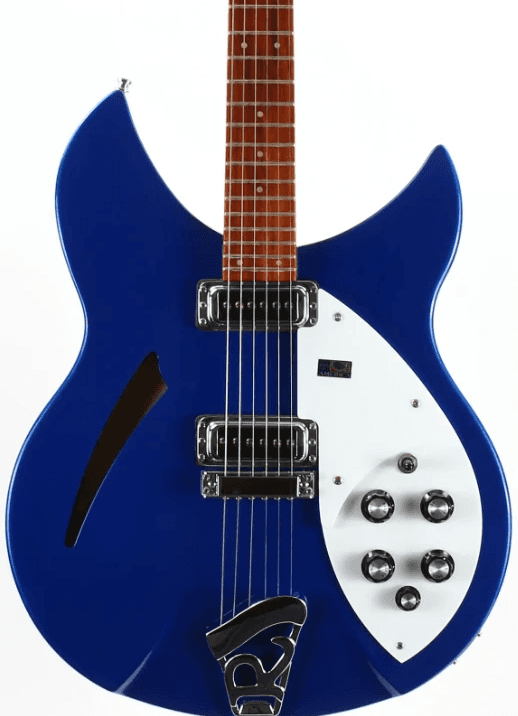
Vintage Rickenbacker 330 Value Guide (1958-1975)
A vintage Rickenbacker 330 is typically worth around $1,800 to $8,000, with 1958-1960 Capri-era examples at the top of that range, 1960s toaster-pickup models in the middle, and 1970s examples below them. Edgewater Guitars, based in Valley City, Ohio and buying nationally, pays fair top dollar. Call or text (440) 219-3607 for a free offer.
Last Updated: July 2026
What Is a Vintage Rickenbacker 330 Worth? (2026)
The 330 grew out of Rickenbacker’s 1958 Capri series, the thin semi-hollow line designed by Roger Rossmeisl, and it became the workhorse of the whole range: the slash soundhole, chiming single coils and fast neck that defined the Rickenbacker sound. The figures below reflect what a fair, honest buyer typically pays for a clean, mostly original example, once you strip out the inflated asking prices you will see in listings.
Era | What Defines It | Reference Value |
|---|---|---|
1958-1960 Capri era | First-generation thinline: toaster pickups, brown cooker knobs, earliest slash soundholes | $4,500-$8,000 |
1961-1969 | Classic 1960s spec: toaster pickups, 21 frets, R tailpiece from 1965 | $2,500-$6,500 |
1970-1975 | Hi-gain pickups, 24 frets phased in, the most common vintage 330s | $1,800-$3,500 |
These ranges track real market activity: a 1958-1960 Capri-era 330 in Fireglo was recently offered at about $6,000 by a dealer, clean 1967 examples have listed around $3,000, and a 1966 330/12 twelve-string carried a $6,250 dealer ask. Exceptionally clean early examples and the twelve-string 330/12 can go beyond the ranges above. Send photos for a specific read on your guitar.
What Drives a 330’s Value?
Toaster pickups, original and unmodified. The chrome toaster-top single coils used through 1969 are the sound collectors want, and they are worth a clear premium over the Hi-gain units that followed.
Original finish. Fireglo, Mapleglo and Jetglo are the classic colors; a refinish is one of the biggest single discounts on any vintage Rickenbacker.
Complete original hardware. The R tailpiece, correct knobs and untouched pickguard all matter; knob styles in particular changed several times and mismatched sets are easy to spot.
Neck and binding condition. The three-piece maple neck with its walnut center stripe should be straight and uncracked.
Twelve-string premium. The 330/12 consistently brings more than the six-string, riding demand for the classic Rickenbacker jangle.
How to Identify and Date a Vintage 330
The 330’s features changed steadily, which makes dating by spec surprisingly reliable. Toaster pickups indicate 1969 or earlier, while Hi-gain pickups with exposed pole pieces mean roughly 1970 onward. A 21-fret neck points to 1970 or earlier; 24 frets were phased in around 1970-1971. Brown cooker knobs suggest the earliest years, black knobs the early 1960s, and silver-top knobs 1965 onward, the same year the R trapeze tailpiece became standard. Confirm everything against the serial number stamped on the jack plate using our Rickenbacker serial number and dating guide.
The Capri Story
The earliest 330s were sold as part of the Capri series, thin hollowbodies carved from a solid block of wood with a separate back, a construction unlike anything else on the market in 1958. The slash soundhole itself went through several size changes in the first year alone, so genuinely early examples have their own small identification quirks. Capri-era guitars are the rarest 330s and the most valuable, and they deserve a careful, example-by-example appraisal rather than a range off a chart.
Related Rickenbacker Guides
Sell Your Vintage Rickenbacker 330
Edgewater Guitars buys vintage Rickenbacker 330s nationwide, from Capri-era rarities to played 1970s examples, with a free expert appraisal and a same-day cash offer for the right guitar. Request a free estimate to get started, or see our Rickenbacker selling guide for more.
How much is a vintage Rickenbacker 330 worth?
Most vintage 330s are worth roughly $1,800 to $8,000 to a fair buyer. Capri-era examples from 1958-1960 sit at the top of that range, 1960s toaster-pickup guitars in the middle, and 1970s Hi-gain examples below them. Originality of pickups, finish and hardware moves any example up or down significantly.
How can I tell what year my Rickenbacker 330 is?
Check the serial number on the jack plate first, then confirm with features. Toaster pickups mean 1969 or earlier, Hi-gain pickups mean roughly 1970 onward, a 21-fret neck points before 1970, and the knob style narrows things further. Our Rickenbacker dating guide walks through the full serial breakdown.
Are toaster-pickup 330s worth more than Hi-gain models?
Yes, consistently. The toaster-equipped guitars built through 1969 carry the brighter, chimier voice associated with the classic Rickenbacker records, and the market prices that history in. A comparable-condition 1960s toaster 330 typically brings meaningfully more than a 1970s Hi-gain example.
Is a Rickenbacker 330/12 worth more than a six-string?
Usually. The twelve-string version rides the enduring demand for Rickenbacker’s signature jangle, and clean 1960s examples regularly out-price their six-string siblings; a 1966 330/12 recently carried a $6,250 dealer ask. Condition and originality still decide any individual example.
Related: Vintage Rickenbacker 360 and 360/12 value guide, the bound deluxe sibling of the 330.