DATE :
Rickenbacker Guitar Serial Number Lookup: Complete Dating & Authentication Guide
Rickenbacker Guitar Serial Number Lookup: Complete Dating & Authentication Guide
Last Updated: May 2026
Rickenbacker has produced guitars and basses continuously from its Santa Ana, California factory since the 1950s, and unlike most major guitar manufacturers, the company has never outsourced production to Japan, Korea, or China. Every Rickenbacker is USA-made. The brand also uses one of the most decodable serial number systems in vintage guitars: the famous two-letter prefix system used from 1961 through 1986, which encodes both the year and month of manufacture directly into the serial number.
This guide explains every Rickenbacker serial number system, how to decode the two-letter prefix, where to find your serial number, and which vintage Rickenbacker models, from the 325 Lennon to the 360/12 Byrds to the 4001 McCartney bass, are most worth professional appraisal.
For a definitive answer on your specific Rickenbacker, Edgewater Guitars provides free identification and valuation: (440) 219-3607 or edgewaterguitars.com.
Quick Answer: How to Date a Rickenbacker Guitar by Serial Number
Rickenbacker dating depends on which era your guitar comes from:
Pre-1961: Sequential numbering without date encoding. Dating requires cross-referencing features.
1961–1986: Two-letter prefix system. First letter = year, second letter = month. A serial starting with "FG" means June 1966 (F=1966, G=July)... actually let me restate that clearly below.
1987–1996: Transitional numbering systems following the end of the alphabet cycle.
1996–present: Modern numbering, decodable with manufacturer reference.
The two-letter prefix system (1961–1986) is the most useful single fact about Rickenbacker dating: if your guitar's serial number starts with two letters, you can determine the exact month and year of manufacture from the table further down this page.
What Makes Rickenbacker Serial Numbers Unique
Three things set Rickenbacker apart from other vintage guitar brands:
100% USA production. Rickenbacker has never licensed offshore production. There is no "Made in Japan" or "Made in Korea" Rickenbacker. This means country of origin is never a value variable: every authentic Rickenbacker is American-built in Santa Ana, California.
The two-letter prefix system. From 1961 to 1986, Rickenbacker used a serial number system that directly encodes the month and year of manufacture into the first two characters. No other major guitar manufacturer adopted a system this transparent.
Continuous family ownership. Rickenbacker has not changed hands through corporate acquisitions in the way Fender (CBS), Gretsch (Baldwin), or Gibson (multiple owners) have. This continuity has kept production quality and serial number documentation relatively stable.
In Edgewater's experience evaluating vintage Rickenbackers across Ohio, Michigan, Pennsylvania, Indiana, and West Virginia, accurate dating is rarely the obstacle: authentication of originality (pickups, tailpieces, finish) is where most professional verification effort focuses.
Rickenbacker Serial Number Systems by Era
Pre-1961: Early Sequential Numbering
Rickenbacker serial numbers before 1961 used various sequential systems without embedded date codes. These early numbers are typically four to five digits and are difficult to date precisely from the serial alone. Cross-referencing construction features (pickup type, headstock logo style, hardware specifications, and body construction) is the most reliable dating method for pre-1961 examples.
Vintage Rickenbackers from the late 1950s, particularly the early 325s associated with John Lennon's pre-Beatles years, are exceptionally rare and highly collectible. Professional authentication is essential for any pre-1961 Rickenbacker.
1961–1986: The Two-Letter Prefix System (Most Decodable Era)
Beginning in 1961, Rickenbacker introduced a serial number format with two letter prefixes followed by digits. The first letter encodes the year; the second letter encodes the month. The digits that follow indicate the production sequence within that month.
Year code (first letter):
Letter | Year |
|---|---|
A | 1961 |
B | 1962 |
C | 1963 |
D | 1964 |
E | 1965 |
F | 1966 |
G | 1967 |
H | 1968 |
I | 1969 |
J | 1970 |
K | 1971 |
L | 1972 |
M | 1973 |
N | 1974 |
O | 1975 |
P | 1976 |
Q | 1977 |
R | 1978 |
S | 1979 |
T | 1980 |
U | 1981 |
V | 1982 |
W | 1983 |
X | 1984 |
Y | 1985 |
Z | 1986 |
Month code (second letter):
Letter | Month |
|---|---|
A | January |
B | February |
C | March |
D | April |
E | May |
F | June |
G | July |
H | August |
I | September |
J | October |
K | November |
L | December |
Example decodings:
Serial DA1234 = January 1964
Serial FG567 = July 1966
Serial MC890 = March 1973
Serial JL234 = December 1970
A 1964 Rickenbacker 360/12 would carry a "D"-prefix serial. A 1966 Rickenbacker 4001 bass would carry an "F"-prefix serial. This system makes initial dating straightforward: the real authentication work is verifying that the construction features, hardware, and finish all match the decoded date.
1987–1996: Post-Alphabet Transition
When the alphabet cycle ended in 1986 (Z), Rickenbacker introduced different numbering systems for the late 1980s and early 1990s. These serials don't follow the clean letter-decode pattern and require manufacturer reference or hands-on evaluation for accurate dating.
1996–Present: Modern Numbering
Rickenbacker's modern serial number system, used from approximately 1996 onward, uses different encoding methods that can be cross-referenced with the manufacturer's documentation. Modern Rickenbackers are still 100% USA-made in Santa Ana, and modern build quality remains high.
Where to Find Your Rickenbacker Serial Number
The serial number location depends on the model and era:
Most Electric Models (300 Series, 600 Series)
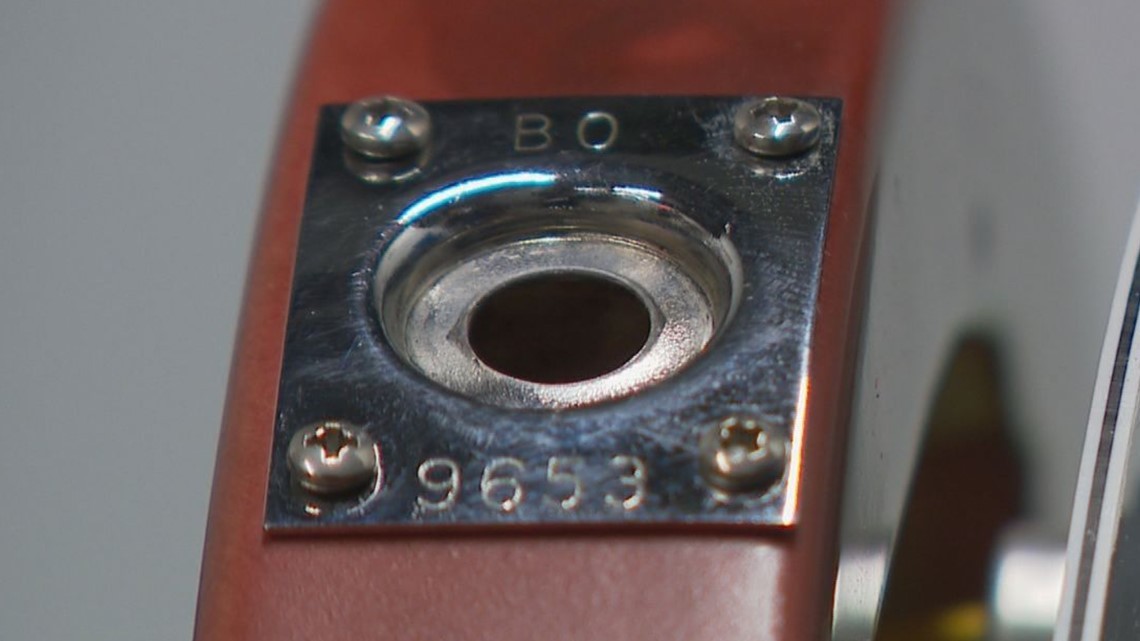
Jack plate: the metal plate surrounding the output jack on the side or top of the guitar. This is the most common location for vintage Rickenbacker serial numbers.
Some models also have the serial stamped on the bridge plate.
Basses (4001, 4003, 4000 Series)
Jack plate: primary location for most vintage basses.
Bridge plate: some examples carry the serial here.
Modern Rickenbackers
Jack plate continues to be the standard location.
Some modern models include additional serial documentation on the truss rod cover or interior.
If your jack plate has been replaced, the serial number may be missing or mismatched. This is a significant authentication issue that affects value.
Most Collectible Vintage Rickenbacker Models
In Edgewater's experience buying vintage instruments throughout the Midwest, these are the Rickenbacker models most worth professional appraisal:
Electric guitars:
Rickenbacker 325 (1958–1969): The John Lennon model. Short-scale (approximately 21 inches), 3/4-size semi-hollow body, toaster pickups, Jetglo finish on most early examples. The earliest 325s (pre-1964) command top-tier collector valuations. Lennon's own 1958 325 effectively defined the model's mystique.
Rickenbacker 360/12 (1964–1969): The 12-string that defined the jangle sound of the 1960s. Used by George Harrison on Beatles recordings and Roger McGuinn on Byrds recordings. Semi-hollow body, double-bound, triangle inlays, toaster pickups on early examples. Top-tier collector demand.
Rickenbacker 360 (1958–1969): The deluxe semi-hollow six-string with triangle inlays, checkerboard binding (some examples), stereo Rick-O-Sound output. Premium tier valuations for clean toaster-pickup examples.
Rickenbacker 330 (1958–1969): The simpler semi-hollow with dot inlays, mono output, and less ornate appointments than the 360. Highly collectible, with George Harrison and Pete Townshend associations.
Rickenbacker 381 (1958 onward): The premium carved-top semi-hollow. Less common than the 360, with collector interest growing.
Bass guitars:
Rickenbacker 4001 (1961–1986): The Paul McCartney / Chris Squire / Geddy Lee bass. Neck-through construction, distinctive cresting wave body, horseshoe pickup on early examples, Rick-O-Sound stereo output. Top-tier collector demand for Fireglo and Mapleglo examples from the 1960s and early 1970s.
Rickenbacker 4001S (export version): Slightly different appointments for the European/UK market. Increasingly collectible.
Why "Made in USA" Is Always the Answer for Rickenbacker
Every authentic Rickenbacker has been made in Santa Ana, California. There are no Japan-made, Korea-made, or China-made Rickenbacker guitars or basses. If you encounter a "Rickenbacker" with non-USA origin markings, the instrument is either counterfeit or a different manufacturer entirely.
This simplifies authentication compared to brands like Yamaha or Gretsch, where country of origin significantly affects value. With Rickenbacker, the questions that matter are originality, model, era, condition, and finish, not where it was built.
Red Flags: How to Spot Refinishes, Fakes, and Misrepresented Rickenbackers
Authentication concerns we encounter regularly on vintage Rickenbackers:
Refinished Fireglo. Fireglo is Rickenbacker's signature red-to-amber sunburst finish, and original Fireglo on a 1960s instrument fades unevenly with light exposure, typically lighter in the center and richer at the edges, with characteristic checking patterns in aged nitrocellulose lacquer. A uniformly vivid Fireglo on a vintage 360 or 4001 is a refinish red flag, not evidence of preservation. Faded, naturally aged Fireglo is correct and desirable.
Replaced toaster pickups. Toaster-top pickups (used on most 1960s Rickenbackers) were replaced by Hi-Gain pickups in production around 1969–1970. Original toaster pickups command premium valuations on vintage instruments. Swaps in either direction reduce originality value.
Replaced jack plates. Because the serial number is on the jack plate, a replaced jack plate creates a guitar with no original serial number. This is a significant value reduction.
Modified electronics. The stereo Rick-O-Sound circuit and the "fifth knob" mix control on some models are commonly modified or bypassed by players. Original wiring schemes command premium pricing.
Headstock repairs. Like most set-neck guitars, Rickenbacker headstocks are vulnerable to break damage. Inspect for repair lines, finish touch-up, and grain disruption behind the headstock.
Aftermarket bridges. Original Rickenbacker bridges and tailpieces have specific designs and stampings. Replacements reduce originality value.
Counterfeit instruments. Counterfeit Rickenbackers occasionally appear in online marketplaces, typically poorly executed copies of the 360/12 or 4001. Authentic Rickenbackers carry consistent quality cues: neck-through construction on basses, specific pickup designs, and the cresting wave body shape with precise proportions.
"Rickenbacker copies" being misrepresented as originals. Several other brands produced Rickenbacker-inspired guitars in the 1970s and 1980s. These are not authentic Rickenbackers and should never command Rickenbacker pricing.
What Affects Your Vintage Rickenbacker's Value
Era and model: 1960s 325s, 360/12s, 360s, 330s, and 4001 basses sit at the top tier. Early 1970s examples with toaster pickups follow closely. Mid-to-late 1970s instruments with Hi-Gain pickups occupy the upper-mid tier. 1980s examples vary based on model and condition.
Originality: All-original examples command significant premiums. Original toaster pickups (where appropriate to the era), original jack plate with intact serial, original tailpiece, and original finish all contribute to upper-tier valuations.
Finish and finish condition: Fireglo is the signature Rickenbacker color and commands strong demand. Mapleglo (natural) and Jetglo (black) are also classic choices. Less common finishes like Burgundyglo and Autumnglo can command premium pricing for clean examples. Faded, aged finishes are correct and desirable: they reflect the guitar's authentic history. Refinishes reduce value significantly.
Pickup configuration: Original toaster pickups on 1960s examples command premium valuations. Hi-Gain pickups on later examples are correct for the era but generally less coveted by collectors specifically seeking the classic 1960s jangle sound.
Hardware originality: Original tailpieces ("R" tailpiece on most models), original tuners, original truss rod covers, and original pickguards all contribute to value.
Documentation and case: Original Rickenbacker hardshell cases, paperwork, and provenance documentation increase collector confidence and value.
Famous ownership: Verified provenance from notable musicians can produce significant value multipliers, particularly for 325s with Lennon association, 360/12s with Harrison or McGuinn association, and 4001 basses with McCartney association. Documentation chain is essential.
Selling Your Vintage Rickenbacker: Your Options Compared
Option | Typical Offer | Timeline | Fees/Risk | Best For |
|---|---|---|---|---|
Edgewater Guitars | 30–40% above shop offers | Immediate cash | None | Owners wanting fair value without hassle |
Local Guitar Shop | Lowest wholesale tier | Same day | None direct, lowest offer | Convenience over value |
Online Marketplace | Variable | Weeks to months | 5–15% fees, scam risk, shipping issues | Experienced sellers comfortable with risk |
Auction House | Variable | Months | 15–25% seller premium | Exceptionally rare instruments |
Private Sale | Variable | Unpredictable | Authentication burden on you | Sellers with existing buyer network |
Edgewater Guitars consistently pays 30–40% more than typical guitar shops for vintage Rickenbackers. We provide free authentication, immediate cash payment, and travel to evaluate high-value instruments throughout Ohio, Michigan, Pennsylvania, Indiana, and West Virginia.
The process: Contact us at (440) 219-3607 or through edgewaterguitars.com. Send a description, serial number, and clear photos of the headstock, body, pickups, and jack plate. Receive a preliminary valuation. Schedule an in-person evaluation for premium instruments. Receive a no-obligation offer with immediate cash payment if accepted.
Frequently Asked Questions About Rickenbacker Serial Numbers
How do I tell what year my Rickenbacker guitar was made? For Rickenbackers built between 1961 and 1986, look at the first two letters of the serial number on the jack plate. The first letter encodes the year (A=1961, B=1962, and so on through Z=1986). The second letter encodes the month (A=January through L=December). A serial starting with "FG" means July 1966. Pre-1961 and post-1986 Rickenbackers require different dating methods.
Are old Rickenbacker guitars valuable? Yes, particularly 1960s examples with original toaster pickups. The most valuable vintage Rickenbackers include 1958–1969 model 325s (Lennon), 1964–1969 model 360/12s (Harrison and McGuinn), 360s and 330s from the same era, and 1961–1973 4001 basses (McCartney, Squire, Lee). Original-condition examples in Fireglo, Mapleglo, or Jetglo command top-tier collector valuations.
Where is the serial number on a Rickenbacker? On most Rickenbacker guitars and basses, the serial number is stamped on the metal jack plate that surrounds the output jack. Some models also have the serial stamped on the bridge plate. If the jack plate has been replaced, the original serial number is lost: this is a significant authentication and value issue.
Are all Rickenbackers made in the USA? Yes. Every authentic Rickenbacker has been made in Santa Ana, California. Rickenbacker has never outsourced production to Japan, Korea, China, or any other country. If you encounter a "Rickenbacker" with non-USA origin markings, the instrument is either counterfeit or a different manufacturer entirely.
What's the difference between toaster and Hi-Gain Rickenbacker pickups? Toaster pickups, used on most 1960s Rickenbackers through approximately 1969–1970, have a distinctive flat top with two parallel slot openings that resemble a toaster slot. Hi-Gain pickups, which replaced toasters in production, have a different appearance with adjustable pole pieces and higher output. Original toaster pickups command premium valuations on vintage Rickenbackers, particularly 1960s 325s, 360/12s, 360s, and 330s.
Where can I sell my vintage Rickenbacker guitar? For premium vintage Rickenbackers, particularly 1960s 325s, 360/12s, 360s, 330s, and 4001 basses, Edgewater Guitars typically pays 30-40% more than local guitar shops while providing free authentication and immediate cash payment. Edgewater serves Ohio, Michigan, Pennsylvania, Indiana, and West Virginia, traveling for high-value instruments. Contact (440) 219-3607 or edgewaterguitars.com for a free valuation.
Related Resources
Get Your Rickenbacker Appraised by Edgewater
Edgewater Guitars specializes in purchasing premium vintage guitars throughout Ohio, Michigan, Pennsylvania, Indiana, and West Virginia. We provide free authentication and valuation for vintage Rickenbacker guitars and basses, with particular expertise in 1960s 325s, 360/12s, 360s, 330s, and 4001 basses with original toaster pickups.
Whether you're settling an estate, downsizing a collection, or simply curious what your vintage Rickenbacker is worth, contact us for a no-obligation valuation:
(440) 219-3607 | edgewaterguitars.com