DATE :
Vintage Rickenbacker 4001 Bass Value Guide (1961-1981)
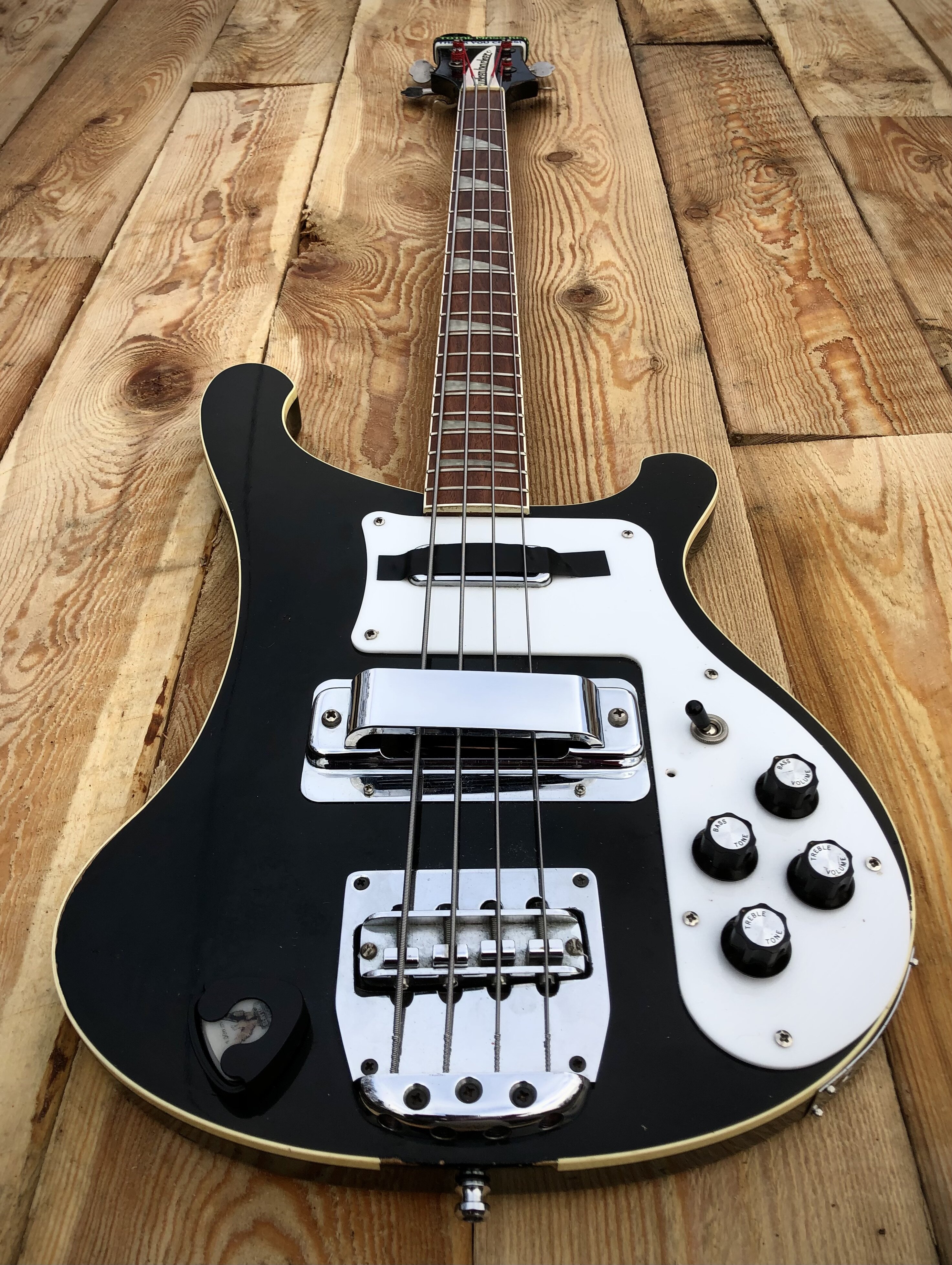
Vintage Rickenbacker 4001 Bass Value Guide (1961-1981)
A vintage Rickenbacker 4001 bass is typically worth around $2,500 to $20,000, with 1960s horseshoe-pickup examples at the top of that range and later 1970s models below them. Edgewater Guitars, based in Valley City, Ohio and buying nationally, pays fair top dollar for original examples. Call or text (440) 219-3607 for a free offer.
Last Updated: July 2026
What Is a Vintage Rickenbacker 4001 Worth? (2026)
The 4001 was Rickenbacker’s deluxe two-pickup bass, introduced in 1961 with maple and walnut neck-through construction, triangle inlays and the checkered body binding that became its signature. Its value today splits cleanly by era. The figures below reflect what a fair, honest buyer typically pays for a clean, mostly original example, once you strip out the inflated asking prices you will see in listings.
Era | What Defines It | Reference Value |
|---|---|---|
1961-1964 | Earliest production: horseshoe bridge pickup, checkered binding, genuinely scarce | $9,000-$20,000+ |
1965-1969 | Classic 1960s spec: toaster neck pickup, horseshoe bridge pickup, checkered binding | $5,500-$11,000 |
1970-1973 | Hi-gain bridge pickup era; checkered binding remained through 1973 | $4,000-$7,500 |
1974-1981 | Plain white binding, Hi-gain pickups, the most common vintage 4001s | $2,500-$5,000 |
These ranges are anchored to real market activity, not wishful thinking: a 1964 4001 with checkerboard binding and original pickups was recently offered at nearly $22,000 by a specialist vintage dealer, while clean early 1970s examples typically trade between $4,000 and $6,000. Exceptional early basses and rare factory colors can go beyond the ranges above. Send photos for a specific read on your bass.
What Drives a 4001’s Value?
The bridge pickup. The original horseshoe-style bridge pickup gave way to Hi-gain units between roughly 1968 and 1971, and collectors pay a clear premium for basses that still carry the earlier unit unmodified.
Checkered binding intact. The black-and-white checkerboard binding, replaced by plain white binding in 1973, is the single most recognizable 4001 feature and a key originality check.
Original finish. Fireglo, Mapleglo and Jetglo are the classic finishes; unusual factory colors bring a premium, while refinishes cut value substantially.
Neck condition. The 4001’s neck-through construction cannot be swapped like a bolt-on, so truss rod problems, breaks or heavy fretboard work weigh heavily on value.
Unmodified electronics. Many 4001s were rewired or had pickups swapped over the years; untouched wiring, including the Rick-O-Sound stereo output found on many examples, is worth real money.
The 4001 vs the 4001S
Rickenbacker also built an export version, the 4001S, from 1964 onward. It shares the same neck-through construction but comes unbound with dot inlays instead of triangles. Paul McCartney’s famous Rickenbacker bass was a left-handed 4001S, which keeps collector demand for the S version strong even though it was the plainer instrument. John Entwistle and Chris Squire also made the 4001 family a defining rock bass of the 1960s and 1970s.
How to Identify and Date a Vintage 4001
Rickenbacker stamped the serial number on the jack plate, and the letter-and-digit format encodes the production year and month. Cross-check the serial against the features above: horseshoe-style bridge pickup and checkered binding point to the 1960s, a Hi-gain bridge pickup with checkered binding suggests roughly 1970-1973, and plain white binding means 1974 or later. For the full serial breakdown, use our Rickenbacker serial number and dating guide.
Common Issues That Affect Value
Truss rod trouble. Vintage 4001s use twin truss rods of an older design, and necks that were forced rather than adjusted properly often show damage. Have the neck checked before assuming full value.
Bridge and tailpiece swaps. Replacement bridges are common player modifications; the original hardware, even if worn, should stay with the bass.
Finish checking and binding wear. Light checking is normal and acceptable on a bass this age; missing binding sections are a bigger discount.
Related Rickenbacker Guides
Sell Your Vintage Rickenbacker 4001
Edgewater Guitars buys vintage Rickenbacker basses nationwide, from all-original 1960s examples to played and modified 1970s basses, with a free expert appraisal and a same-day cash offer for the right instrument. Request a free estimate to get started, or see our Rickenbacker selling guide for more.
How much is a vintage Rickenbacker 4001 worth?
Most vintage 4001s are worth roughly $2,500 to $20,000 to a fair buyer. Early 1960s horseshoe-pickup examples sit at the top of that range, later 1960s basses in the middle, and 1970s Hi-gain models below them. Originality of the pickups, binding and finish moves any example up or down significantly.
How can I tell what year my Rickenbacker 4001 is?
Start with the serial number stamped on the jack plate, which encodes the production year and month. Then confirm with features: a horseshoe-style bridge pickup and checkered binding indicate the 1960s, checkered binding with a Hi-gain pickup suggests 1970-1973, and plain white binding means 1974 or later.
What is the difference between a Rickenbacker 4001 and a 4003?
The 4003 replaced the 4001 in the early 1980s with an updated truss rod system built to handle modern roundwound strings, plus other refinements. For collectors, the 4001 is the vintage instrument; a 4003 is a fine player’s bass but trades at modern-production prices rather than vintage ones.
Are 1970s Rickenbacker 4001 basses collectible?
Yes. They are the most affordable way into a vintage 4001, typically $2,500 to $7,500 depending on year and condition, and examples from 1973 or earlier still carry the checkered binding collectors love. Clean, unmodified 1970s basses have been climbing steadily as 1960s examples move out of reach.