DATE :
Vintage Fender Jazzmaster Value Guide (1958-1966)
Vintage Fender Jazzmaster Value Guide (1958-1966)
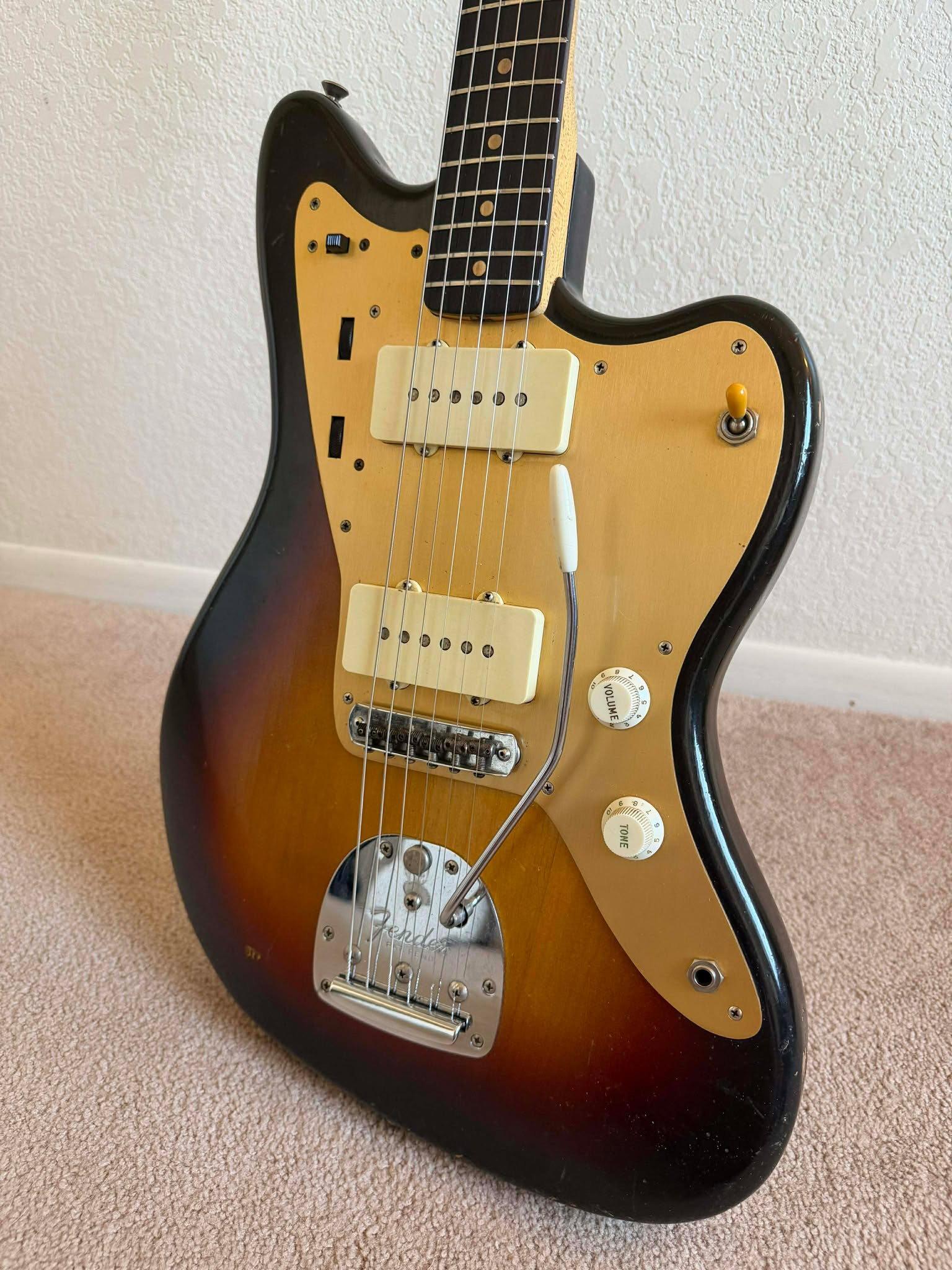
A vintage Fender Jazzmaster from 1958 to 1966 is the offset that launched Fender’s high-end line, built around a floating tremolo, a dual rhythm and lead circuit, and wide single-coil pickups. A clean, all-original pre-CBS Jazzmaster in standard sunburst typically brings strong four figures, while rare factory custom colors like Blonde and Sonic Blue command a large premium. Edgewater recently paid $7,100 for a clean 1963 Jazzmaster and $11,300 for a 1964 in Blonde. Originality, finish, and condition set where any single guitar lands.
Last Updated: June 2026
What Is a Vintage Fender Jazzmaster Worth? (Year by Year, 2026)
The values below are reference points for clean, all-original examples. They reflect what a fair buyer like Edgewater pays, not best-case auction results. A genuine factory custom color is worth far more than standard sunburst, so the most accurate number for your guitar is a free appraisal.
Year | What defines it | Reference value for a clean example |
|---|---|---|
1959 | First full production year, slab rosewood board, sunburst | Around $6,500 |
1960 | Slab rosewood board, pre-CBS sunburst | Around $6,000 |
1961 | Tortoiseshell guard era begins, slab board | Around $6,000 |
1962 | Pre-CBS surf peak, transition to curved board | Around $6,000 |
1963 | Pre-CBS, rosewood veneer board | Around $7,100 |
1964 | Blonde factory custom color, pre-CBS | Around $11,300 |
1965 | Final pre-CBS year, sunburst | Around $5,500 |
1965 | Blonde factory custom color, last pre-CBS | Around $9,000 |
1966 | Sonic Blue factory custom color, CBS transition | Around $7,000 |
Current market note (2026): the spread between a standard sunburst Jazzmaster and a documented factory custom color is large, and originality of that finish is the single biggest swing. Refinished, repaired, or modified examples trade well below original ones. As a buyer, Edgewater prices to the honest, all-in condition of the actual guitar, not the best-case auction headline.
What Drives a Vintage Fender Jazzmaster’s Value?
Finish: a documented factory custom color like Blonde, Sonic Blue, or Olympic White can multiply the value of an otherwise standard sunburst Jazzmaster.
Originality: original pickups, tremolo, neck, and solder joints matter far more than shine. A refinish or replaced parts cut value sharply.
Pre-CBS versus CBS: 1958 to 1965 pre-CBS examples are the most sought after; the late-1965 and 1966 CBS-transition guitars trade a bit lower unless they wear a custom color.
Board and pickups: the slab rosewood board (1959 to mid-1962) and the wide, flat single-coils are key dating and originality checkpoints.
Condition: no headstock breaks or neck repairs, a straight neck, original frets, and a working tremolo all add up.
Completeness: the original case, hang tags, and paperwork add confidence and value.
How to Identify and Date a Vintage Fender Jazzmaster
Four things pin down the year and the value: the serial number, the fingerboard, the pickguard, and the finish. Here is how to read them.
Serial numbers and neck dates
Fender stamped a serial number on the neck plate and often penciled a date on the heel of the neck. The ranges overlap year to year, so treat the serial as a guide and confirm the year with our Fender serial number lookup.
Slab board versus veneer board
The 1959 to mid-1962 Jazzmasters use a thick slab rosewood fingerboard glued flat to the maple neck. From about mid-1962 Fender switched to a thinner curved veneer board, sometimes called a round-lam board. The board type is one of the fastest ways to place a Jazzmaster in the right era.
Pickguard and the dual circuit
Early 1958 to 1959 Jazzmasters wore a gold anodized aluminum guard, replaced by tortoiseshell celluloid around 1959 to 1960. Every Jazzmaster has the dual-circuit layout: a lead circuit with the familiar controls plus a separate rhythm circuit with a slide switch and two roller wheels on the upper bout. Confirm both circuits are intact and original.
Pickups, finish, and hardware
The Jazzmaster’s wide, flat single-coils look like P-90s but are a distinct, broader design unique to the model. Standard finish was sunburst; a genuine factory custom color such as Blonde or Sonic Blue is a major value driver, so confirm the finish is original before valuing the guitar.
Jazzmaster Year Pages and Guides
Drill into a specific year and finish or our Fender Jazzmaster dating guides:
1960 Fender Jazzmaster: the slab-board offset at full stride
1965 Fender Jazzmaster: the final year of pre-CBS excellence
1965 Fender Jazzmaster in Blonde: the last pre-CBS custom color
Blonde and Olympic White Jazzmaster custom-color authentication guide
Sell your vintage Fender Jazzmaster
Edgewater Guitars buys vintage Fender Jazzmasters nationwide, from standard sunburst pre-CBS examples to rare Blonde and Sonic Blue custom colors. We give free, no-pressure estimates and pay fairly for clean, original, and even refinished guitars. To sell yours, request a free estimate.
How much is a vintage Fender Jazzmaster worth?
It depends heavily on the finish and originality. A clean standard sunburst pre-CBS Jazzmaster typically brings strong four figures; Edgewater recently paid $7,100 for an original 1963. A documented factory custom color brings far more, such as the $11,300 we paid for a 1964 in Blonde. Refinished or modified guitars sell for less, and we still buy those.
How do I date my Fender Jazzmaster?
Start with the fingerboard and pickguard to place the era, then cross-check the neck-plate serial number and any penciled neck date with our Fender serial number lookup. The slab versus veneer board and the dual-circuit wiring confirm a pre-CBS Jazzmaster.
Are custom-color Jazzmasters worth more?
Yes, significantly. A genuine factory custom color such as Blonde, Sonic Blue, or Olympic White can be worth far more than the same guitar in standard sunburst, as long as the finish is original and documented. A refinish, even a high-quality one, does not carry the same premium.