DATE :
1966 Fender Jazzmaster in Sonic Blue: The Ultimate Surf Guitar at the CBS Crossroads
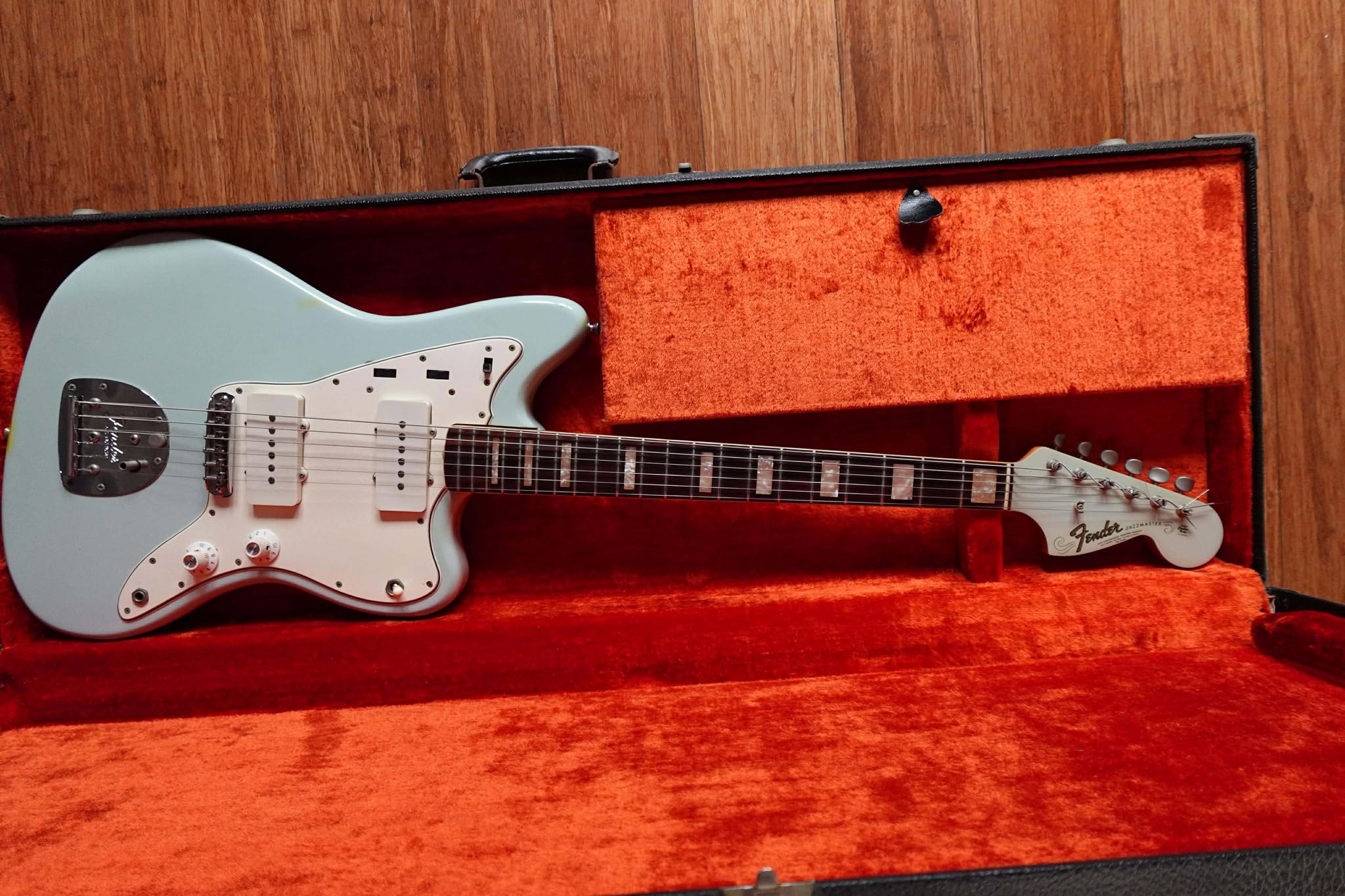
1966 Fender Jazzmaster in Sonic Blue: The Ultimate Surf Guitar at the CBS Crossroads
The 1966 Fender Jazzmaster in Sonic Blue arrived at the CBS crossroads, combining the offset surf icon’s lush rhythm circuit and floating tremolo with a rare and sought-after custom color finish. Edgewater Guitars buys vintage Fender Jazzmasters nationwide with free expert appraisals and same-day cash offers. Call or text (440) 219-3607.
Why the 1966 Sonic Blue Jazzmaster Matters
The 1966 Fender Jazzmaster in Sonic Blue represents one of the most visually stunning and tonally distinctive guitars ever produced—a convergence of Fender’s most sophisticated offset design with one of its most iconic custom colors, captured at a pivotal moment in the company’s history. This combination has made Sonic Blue Jazzmasters among the most sought-after vintage Fender instruments by collectors and players alike.
What makes the 1966 Sonic Blue Jazzmaster particularly significant:
Transitional CBS Era: Built during Fender’s first full year under CBS ownership, these guitars retain much of the pre-CBS quality while showing early signs of the changes to come
Peak Surf Culture: 1966 represents the height of surf music’s influence, and the Jazzmaster—especially in Sonic Blue—was the quintessential surf guitar
Custom Color Rarity: Sonic Blue was a premium upcharge option, making these instruments significantly rarer than standard sunburst models
Slab Rosewood Fingerboards: Many early 1966 examples still featured the desirable thick slab rosewood boards before transitioning to bound boards with block inlays
Pre-CBS Hardware Carryover: Early 1966 production retained many pre-CBS components and construction methods
Iconic Aesthetic: The combination of Sonic Blue finish with gold anodized pickguard creates one of vintage Fender’s most striking visual presentations
The Jazzmaster itself was Fender’s top-of-the-line model when introduced in 1958, featuring innovative electronics, a floating tremolo system, and a sophisticated switching arrangement that set it apart from the Stratocaster and Telecaster. By 1966, the model had become synonymous with surf music and the California sound, despite Fender’s original intention to market it to jazz players.
Historical Context: The Jazzmaster and CBS Transition
The Jazzmaster’s Evolution (1958-1966)
When Leo Fender introduced the Jazzmaster in 1958, it represented his vision of the ultimate electric guitar for discerning jazz players. The model featured:
Revolutionary offset waist body design for playing comfort
Wide, flat single-coil pickups with warm, mellow tone
Separate rhythm and lead circuits with dedicated controls
Floating tremolo with locking mechanism for tuning stability
Premium appointments including binding and block inlays (on some models)
The Surf Music Connection:
Despite being marketed to jazz guitarists, the Jazzmaster found its true home in the hands of surf music pioneers:
Dick Dale adopted the Jazzmaster, becoming its most famous early advocate
The Ventures used Jazzmasters extensively throughout their surf instrumental hits
Beach Boys recordings featured Jazzmaster prominently
The model became visually associated with California surf culture
By 1966, the Jazzmaster’s identity was firmly established as the surf guitar, though surf music’s commercial peak had passed. This makes 1966 Jazzmasters particularly interesting—they represent the end of an era.
The CBS Acquisition (1965)
In January 1965, CBS purchased Fender from Leo Fender for $13 million. This corporate acquisition would eventually become one of the most significant events in guitar history, marking a clear divide between “pre-CBS” and “CBS era” Fender guitars.
1966 as a Transition Year:
The 1966 model year is fascinating because it represents Fender in transition:
Pre-CBS Characteristics Still Present:
Many components from pre-CBS inventory continued to be used
Manufacturing processes hadn’t yet been significantly altered
The Fullerton factory team remained largely intact
Quality control standards maintained from the pre-CBS era
Traditional nitrocellulose finishes still in use
Original tooling and specifications still followed
CBS Changes Beginning to Appear:
Larger “CBS” headstock introduced late in 1965, becoming more common in 1966
Transition from clay dots to pearloid position markers
Some production efficiency changes being implemented
Bound fingerboards with block inlays becoming standard on Jazzmasters
F-stamped tuners beginning to appear
The Sonic Blue Color:
Custom colors were a Fender hallmark since their introduction in the late 1950s. Sonic Blue, introduced around 1963, was one of Fender’s most popular custom colors:
Light, vibrant blue derived from DuPont Duco automotive paint
More commonly ordered than darker blues like Lake Placid Blue
Perfect complement to gold anodized pickguards
Associated with surf culture and California aesthetics
Required upcharge over standard sunburst finish
The combination of Jazzmaster specification with Sonic Blue finish in 1966 creates a highly desirable instrument that captures multiple collecting themes: transitional CBS era, custom color rarity, surf music heritage, and peak Jazzmaster aesthetics.
Detailed Identification Guide
Authenticating a 1966 Sonic Blue Jazzmaster requires examining multiple features across different parts of the instrument.
Serial Numbers
1966 Fender guitars transitioned through different serial number formats:
Neck Plate Serial Numbers:
Early 1966 guitars continued the five-digit serial numbers from the pre-CBS era:
Range: Approximately 100000-140000
Stamped on four-bolt neck plate
Sometimes with “F” prefix appearing late in year
“L” Series Serial Numbers:
Later 1966 production began transitioning to the “L” prefix system:
Format: L + five digits (L10000-L99999)
The “L” prefix was used from late 1963 through 1965, continuing into early 1966
Overlap and inconsistency common during transitional period
Serial Number Limitations:
Fender’s serial number system during this era had significant inconsistencies:
Parts were not always assembled chronologically
Serial numbers were stamped on neck plates before assembly
Overlap between numbering systems creates confusion
Serial numbers alone cannot definitively date a 1966 guitar
Cross-Reference Required:
Always verify the serial number against:
Neck date (most reliable)
Potentiometer codes
Body stamps or markings
Hardware characteristics
Neck Dating
The most reliable method for dating a 1966 Jazzmaster is the pencil or ink date stamp on the neck heel (visible when neck is removed).
1966 Neck Date Format:
Fender used several formats during 1966:
“MM YY” format (e.g., “3 66” = March 1966)
“MM-YY” format (e.g., “8-66” = August 1966)
Sometimes abbreviated (e.g., “6 6” = June 1966)
Location:
Stamped on the heel (end) of the neck
Visible in the neck pocket when neck is removed
Sometimes accompanied by inspector marks or other codes
Reading Neck Dates:
The neck date indicates when the neck was completed, not necessarily when the guitar was assembled. Necks could sit in inventory for weeks or months, so:
A neck dated “2-66” might be on a guitar assembled in April or May 1966
Generally, assembly occurred within 1-4 months of neck dating
Cross-reference with pot codes for more accurate dating
Potentiometer Codes
Potentiometers provide crucial dating information and can verify originality.
1966 Pot Code Format:
Fender used Stackpole potentiometers during this period:
Format: 304 YY WW
304 = Stackpole manufacturer code
YY = Year (65 or 66 for 1966 guitars)
WW = Week of manufacture (01-52)
Example:
304 6608 = Stackpole pot, 1966, 8th week (late February 1966)
Important Considerations:
Pots dated late 1965 may appear in early 1966 guitars (parts inventory)
All three pots (two volume, one tone) should have similar date codes
Rhythm circuit controls have separate pots (should also be checked)
Mismatched pot codes indicate replacement or modification
Location:
Control cavity on back of guitar
Codes stamped on pot casings
May require loosening pickguard to read clearly
Body Markings and Stamps
Inside the control cavities and under the pickguard, authentic 1966 Jazzmasters may have:
Body Date Stamps:
Pencil dates in tremolo cavity
Date may precede assembly by several months
Format varies (sometimes just month/year)
Routing Stamps:
Shape codes indicating body routing pattern
Pickup cavity codes
Quality control marks
Custom Color Codes:
Masking tape remnants in cavities
Written color codes (for Sonic Blue: might see “Sonic Blue” or abbreviation)
Painter’s marks or numbers
Wood Stamps:
Species stamps (alder for sunburst/colors)
Batch numbers
Factory processing codes
Finish Identification
Authenticating the Sonic Blue finish is critical, as refinished guitars are common.
Authentic Sonic Blue Characteristics:
Color Properties:
Light, bright blue with slight greenish cast
More vibrant than Lake Placid Blue
Translucent quality over sealer coats
Subtle color variation in different lighting
Primer/Undercoat:
Desert Sand (yellowish-tan) sealer coat underneath
Visible in chips, neck pocket, or cavity edges
Multiple thin coats rather than one thick application
Nitrocellulose lacquer (not polyurethane)
Aging Patterns (After 59 Years):
Yellowing of clear coat creating slightly greener appearance
Fine checking (spider-web cracks) in finish
Wear patterns on edges, back of neck, forearm area
Authentic patina that can’t be easily faked
Matching Headstock:
Custom color Jazzmasters typically had matching painted headstocks
Color should match body (allowing for different aging patterns)
Same checking and wear patterns
Overspray visible in logo area under magnification
Hardware Authentication
Tuning Machines:
1966 Jazzmasters used Kluson Deluxe tuners:
Kluson Deluxe single-line stamp on back
“Pat. Pending” or patent number stamps
Nickel plating (not chrome)
Oval buttons (plastic)
Some late 1966 guitars may have F-stamped tuners (early CBS change)
Bridge and Tremolo:
Bridge:
Floating bridge with adjustable intonation screws
Rocking bridge saddles
Chrome plating
Should show appropriate aging (not bright and shiny)
Tremolo Unit:
Chrome-plated floating tremolo
Lock button for locking tremolo in position
Tremolo arm with white plastic tip
Spring tension adjustable from back cavity
Pickguard:
The pickguard is one of the most distinctive features:
Gold anodized aluminum (not painted)
Aged gold color with darkening/oxidation patterns
13 mounting screws
May show pitting or corrosion (normal aging)
Reproduction guards are common—look for authentic aging patterns
Other Hardware:
Chrome control knobs (should show aging)
Chrome pickup covers (flat top design)
Chrome switch tip
Strap buttons (chrome)
All hardware should show consistent aging
Pickup Identification
1966 Jazzmaster Pickup Specifications:
Physical Characteristics:
Large rectangular single-coil pickups
Flat chrome covers
Wide, flat pole pieces
Foam or felt surrounding the pickup under cover
Winding Specs:
Hand-wound with approximately 8,000-8,500 turns
Formvar-coated wire
Alnico V magnet bar underneath coil
DC resistance typically 7.5k-8.5k ohms
Dating Pickups:
Fender occasionally dated pickups during this era:
Ink stamps on pickup bobbin (visible when cover removed)
Date format similar to neck dates
Not all pickups were dated
Removing covers reduces collector value unless documentation needed
Authentic Characteristics:
Cloth-covered output wires
Hand-wound irregular coil appearance
Period-correct solder joints
Appropriate corrosion/aging on covers
Electronics and Wiring
1966 Jazzmaster Wiring Characteristics:
Circuit Board:
Jazzmaster uses a unique circuit board for rhythm/lead switching
Brown fiber or Masonite board
Period-correct components soldered to board
Cloth-covered wiring throughout
Components:
.05 mfd capacitors (orange or brown)
Carbon composition resistors
Switchcraft output jack (1/4”)
CTS or Stackpole potentiometers
Three-way pickup selector (lead circuit)
Rhythm circuit on/off switch on upper horn
Rhythm Circuit:
Separate bass-cut tone circuit
Dedicated volume and tone wheels on upper horn
When engaged, neck pickup only
Creates darker, mellower jazz tone
Wiring Verification:
All cloth-covered wire (not plastic)
Period-correct solder (not modern rosin-core)
Original grounding scheme
Shield paint in cavities
Detailed Physical Specifications
Body Specifications
Construction:
Solid alder body (for colored finishes)
Offset waist design
Comfort contours on back
Thickness: Approximately 1.75 inches at rim
Weight:
Typical range: 8.0-9.5 lbs
Alder is lighter than ash
Variation due to wood density differences
Finish:
Sonic Blue nitrocellulose lacquer
Desert Sand sealer coat
Multiple thin color coats
Clear coat topcoat
Matching headstock
Pickguard:
Gold anodized aluminum
13 screw mounting pattern
Covers entire upper bout and control area
Rhythm circuit controls mounted on upper horn
Body Measurements:
Body length: Approximately 15.75 inches
Body width (upper bout): Approximately 13.5 inches
Body width (lower bout): Approximately 13.25 inches
Neck Specifications
Construction:
One-piece maple neck
Rosewood fingerboard
Fingerboard Variations in 1966:
Early 1966 (Slab Board):
Thick slab rosewood (approximately 1/4 inch thick)
Flat bottom glued to flat neck
Clay dot position markers
Highly desirable “pre-CBS” feature
Late 1966 (Bound Board with Blocks):
Curved rosewood veneer
Binding on fingerboard edges
Pearloid block inlays
More common CBS-era feature
Neck Profile:
C-shape profile
Comfortable medium thickness
1.65” nut width (wider than Stratocaster)
7.25” fingerboard radius
Fret Specifications:
21 frets (not 22 like Stratocaster)
Vintage-style small fret wire
Frets extend to edge of fingerboard (no binding on slab boards)
Scale Length:
25.5 inches (Fender standard)
Headstock:
Transition in 1966:
Small Headstock (Early 1966):
Pre-CBS dimensions
More refined proportions
“Spaghetti” logo
Patent numbers below logo
Matching Sonic Blue finish
Large Headstock (Late 1966):
CBS “larger” headstock
10% larger surface area
More mass at headstock
Transition logo styles
Matching Sonic Blue finish
Neck Attachment:
Four-bolt neck plate
Micro-tilt adjustment (not present in 1966)
Serial number stamped on neck plate
Electronic Specifications
Pickup Configuration:
Two wide single-coil Jazzmaster pickups
Neck and bridge positions
Individual pickup selector (lead circuit)
Control Layout:
Lead Circuit (Lower Horn):
Volume knob (neck pickup)
Volume knob (bridge pickup)
Master tone knob
Three-way pickup selector switch
Rhythm Circuit (Upper Horn):
Rhythm volume wheel
Rhythm tone wheel
Slide switch to engage rhythm circuit
When engaged: neck pickup only, bypasses lead controls
Output:
Single 1/4” output jack
Located on lower edge of body
Chrome jack plate
Hardware Specifications
Tremolo System:
Fender floating tremolo (Jazzmaster-specific design)
Chrome-plated brass components
Tremolo lock button
Tremolo arm with white plastic tip
String anchors at bridge (not through-body)
Bridge:
Floating rocking bridge
Individual saddle adjustment
Chrome finish
Height adjustable via thumbwheels
Separate from tremolo unit
Tuning Machines:
Kluson Deluxe tuners
6-in-line configuration
Nickel-plated
Oval plastic buttons
Single-line “Kluson Deluxe” stamp
Other Hardware:
Chrome knobs (lead circuit)
Chrome wheels (rhythm circuit)
Chrome pickup covers
Strap buttons
Screws and springs
Tonal Characteristics
The 1966 Sonic Blue Jazzmaster offers a distinctive voice that set it apart from Fender’s other models.
The Jazzmaster Sound
Fundamental Tone:
The Jazzmaster’s wide, flat pickups create a unique tonal signature:
Warmth: Fuller, warmer tone than Stratocaster single-coils
Clarity: Clear, articulate response without harsh highs
Depth: More low-end presence than Telecaster or Stratocaster
Smoothness: Rounded top-end without brittleness
Frequency Response:
Low Frequencies:
Enhanced bass response compared to Strat pickups
Full but not boomy
Excellent for chord work
Provides foundation for surf music rhythm parts
Midrange:
Scooped midrange character
Less midrange punch than Telecaster
Smooth, vocal quality
Excellent for clean tones
High Frequencies:
Softer high-end than typical single-coils
Clear but not piercing
Retains presence without harshness
Sparkle without ice-pick treble
Position-Specific Tones
Neck Pickup:
Warm, full jazz-like tones
Excellent for rhythm guitar
Smooth lead tones
Vintage surf music sound
Rich chord voicings
Bridge Pickup:
Brighter but still warm
More presence and attack
Excellent twang for surf music
Clear, articulate lead tones
Retains warmth despite brighter position
Rhythm Circuit:
Neck pickup with bass rolloff
Darker, mellower jazz tones
Reduced output for rhythm work
Unique tonal option
Switches instantly between lead and rhythm sounds
Tremolo Character
The Jazzmaster’s floating tremolo system offers unique characteristics:
Vibrato Effect:
Smooth, subtle vibrato
Less dramatic than Stratocaster tremolo
More stable tuning
Lock button allows completely stable tuning when desired
Playing Characteristics:
Light touch required
Responsive to playing dynamics
Can create shimmering effects
Excellent for surf music techniques
Sonic Blue’s Acoustic Impact
While finish doesn’t directly affect tone, the Sonic Blue 1966 Jazzmaster has characteristics worth noting:
Nitrocellulose Finish:
Thin finish allows wood resonance
59 years of aging has allowed finish to cure and thin
More resonant than thick polyurethane finishes
Wood breathes and ages naturally
Alder Body:
Balanced, even tone across frequencies
Lighter than ash
Warm but clear
Standard Fender tonewood for colors
Amplifier Interaction
The Jazzmaster excels with certain amplifier combinations:
Clean Tones:
Fender amps (Deluxe Reverb, Twin Reverb)
Sparkle and clarity
Natural compression
Responds to playing touch
Overdrive:
Takes pedals exceptionally well
Smooth, creamy overdrive
Less harsh than Stratocaster when overdriven
Vintage fuzz pedals complement the tone perfectly
Surf Music Tones:
Spring reverb essential
Light tremolo effects
Clean to edge-of-breakup
Dick Dale achieved legendary tones with similar setups
Comparison to Other Fender Models
Vs. Stratocaster:
Warmer, fuller tone
Less aggressive high end
More bass response
Different neck feel (wider at nut)
Vs. Telecaster:
Smoother, less twangy
More complex switching options
Floating tremolo vs. fixed bridge
Different aesthetic and playing feel
Vs. Later Jazzmasters:
1966 represents peak of original design
Earlier pickups have unique character
Pre-bound fingerboard models (early ‘66) more resonant
Transitional features create interesting variations
Common Issues and Modifications
Typical Age-Related Issues
After nearly 60 years, 1966 Jazzmasters commonly exhibit certain issues:
Finish Checking:
Fine cracks throughout finish (especially Sonic Blue)
More pronounced in stress areas
Normal for nitrocellulose finishes
Actually desirable to collectors
Color Fading/Changing:
Sonic Blue develops greenish cast from clear coat yellowing
Some UV fading lightens the color
Varies by storage conditions
Original color visible in protected areas (under pickguard)
Pickguard Oxidation:
Gold anodizing darkens and pits
Edge corrosion common
Some examples show more dramatic aging
Replacement guards common but detract from originality
Hardware Tarnishing:
Chrome plating dulls or shows pitting
Tuner mechanisms may feel stiff
Bridge saddles show wear grooves
Normal aging—avoid replating
Fret Wear:
Grooves in first five frets
Flattening of fret crowns
Some instruments have been refretted
Original frets preferred but not critical if refret done professionally
Tremolo Issues:
Springs weaken over time
Lock button mechanism may be worn
Bridge rocking motion may cause tuning instability
Many players upgrade to Mastery bridge (reduces value)
Electronic Problems:
Scratchy potentiometers
Weak output from aged pickups
Switch crackling or failure
Corroded solder joints
Cloth wiring may be brittle
Common Modifications
Many 1966 Jazzmasters have been modified over the decades:
Bridge Replacement:
The most common modification:
Original floating bridge replaced with Mastery or Mustang bridge
Done to improve tuning stability and reduce buzz
Significantly reduces collector value
Original bridge should be retained if possible
Pickup Replacements:
Modern high-output pickups installed
Seymour Duncan, DiMarzio, Lindy Fralin replacements common
Changes original tone character
Original pickups should be retained
Electronics Modifications:
Rhythm circuit disabled or removed
Modern wiring harness installed
Shielding added to cavities
Modern capacitors and pots
Tuner Replacements:
Modern locking tuners
Grover or Gotoh tuners
Improves tuning stability
Original Klusons should be retained
Tremolo Lock/Block:
Tremolo blocked with wood or foam
Lock mechanisms added
Done for tuning stability
Easily reversible
Refinishing:
Complete refinishes extremely common
Sonic Blue often refinished when worn
Dramatically reduces collector value
Very difficult to detect on some instruments
Authentication Red Flags
When examining a purported 1966 Sonic Blue Jazzmaster:
Finish Concerns:
Too-perfect finish (no checking on 59-year-old guitar)
Wrong color shade (Sonic Blue specific)
Thick, plasticky feel (polyurethane vs. nitrocellulose)
No Desert Sand undercoat visible in chips
Overspray in wrong places
No appropriate wear patterns
Hardware Inconsistencies:
Bright, new-looking chrome (should show aging)
Wrong tuner types
Modern bridge or tremolo
Incorrect screws
Metric measurements
Electronics Issues:
Plastic-covered wiring (should be cloth)
Modern capacitors
Wrong pot codes
Missing rhythm circuit
Modern pickup wire
Serial Number Problems:
Numbers don’t match period format
Obvious re-stamping
Missing serial number
Number doesn’t correlate with neck date or pot codes
Structural Issues:
Routed for humbuckers
Neck pocket modifications
Filled screw holes
Non-original neck
Wrong body wood (should be alder for colors)
Production Variations Within 1966
The transitional nature of 1966 production created interesting variations:
Early 1966 (January-April)
Pre-CBS Characteristics:
Slab rosewood fingerboards with clay dots
Small pre-CBS headstock
Pre-CBS serial numbers (no “F” stamp)
More likely to have late-1965 dated pots
Gold anodized pickguard standard
Original Fender logo styles
These early examples are particularly desirable as they retain more pre-CBS features.
Mid-1966 (May-August)
Transition Features:
Mix of slab and bound fingerboards
Headstock size variations
“F” stamps beginning on some tuners
Serial number format transitions
Pearl dots beginning to appear
Mixture of old and new components
This period shows the most variation as CBS changes were gradually implemented.
Late 1966 (September-December)
CBS Features Becoming Standard:
Bound fingerboards with block inlays more common
Larger CBS headstock more prevalent
F-stamped tuners
Pearloid dots standard
Some production efficiency changes
Quality still high but transitioning
Late 1966 examples begin to look more like 1967-1968 models.
Custom Color Considerations
Sonic Blue Ordering Process:
Custom colors required special order:
Dealer would order specifically
Additional cost over sunburst
Longer wait times
Special attention in factory
Production Numbers:
While exact figures aren’t available:
Sonic Blue was more common than some custom colors
Still represents small percentage of total production
Most Jazzmasters were sunburst
Custom color survival rate lower (more likely to be refinished)
The Surf Music Legacy
The Jazzmaster in 1966 Music
By 1966, the Jazzmaster had established its place in music:
Surf Music:
Dick Dale’s legendary performances
The Ventures’ instrumental hits
Beach Boys sessions
Countless surf bands used Jazzmasters
Garage Rock:
Early punk and garage bands adopted Jazzmasters
Aggressive playing styles
Raw, energetic tones
Studio Work:
Session players valued the versatility
Unique tones for specific parts
Rhythm circuit useful in mix situations
Visual Impact
The Sonic Blue Jazzmaster became iconic:
California Aesthetic:
Bright blue finish evoked ocean and sky
Gold pickguard represented sun and sand
Perfect visual for surf music
Associated with beach culture
Stage Presence:
Distinctive offset body shape
Eye-catching color combination
Gold pickguard reflected stage lights
Memorable visual in band photos
Later Rediscovery
The Jazzmaster experienced several waves of rediscovery:
1980s Alternative/Indie:
Sonic Youth championed the Jazzmaster
Cheaper vintage prices made them accessible
Unique tones appealed to experimental players
1990s Grunge/Alternative:
J Mascis (Dinosaur Jr.)
Elvis Costello
Blur and other Britpop bands
2000s-Present Revival:
Vintage Jazzmaster prices increased dramatically
Custom color examples became highly sought
Sonic Blue among most desirable colors
Reissue models introduced
Why Collectors Value 1966 Sonic Blue Jazzmasters
Multiple Collecting Themes Converge
Transitional CBS Era:
Historical significance of ownership change
Last gasp of pre-CBS features
Beginning of CBS changes
Documents important period in Fender history
Custom Color Rarity:
Special order instruments
More valuable than sunburst
Sonic Blue particularly desirable
Beautiful aesthetic appeal
Surf Music Heritage:
Associated with legendary players
Peak of surf music influence
California cultural significance
Iconic 1960s instrument
Offset Model Collectibility:
Jazzmaster, Jaguar gaining respect
No longer “budget” guitars in collector market
Unique features and tones
Distinct from Strat/Tele collecting
Investment Perspective
Several factors support continued appreciation:
Increasing Scarcity:
59 years of attrition
Many refinished or modified
All-original examples increasingly rare
Sonic Blue examples rarer than sunburst
Growing Recognition:
Market finally recognizing Jazzmaster significance
Custom colors commanding appropriate premiums
Transitional CBS period gaining respect
Younger collectors entering market
Playing Desirability:
Not just collectors seeking these
Professional players want authentic vintage tones
Studio use driving demand
Modern music using vintage Jazzmaster sounds
Sonic Blue Specific:
One of most visually striking custom colors
Strong association with surf culture
Photographs beautifully
Gold guard creates stunning contrast
Preservation and Care
Storage Recommendations
Climate Control:
45-55% relative humidity critical
65-75°F temperature range
Avoid rapid changes
Use hygrometer to monitor
Case Storage:
Store in original case when possible
Keep case latched
Check case condition regularly
Replace deteriorating foam
Display Considerations:
Avoid direct sunlight (fades Sonic Blue)
UV-protective glass if framing
Quality wall hangers
Maintain climate control
Finish Care
Cleaning Sonic Blue Finish:
Gentle cleaning only
No abrasive polishes
Avoid silicone-based products
Microfiber cloths
Preserve checking and patina
Protecting the Color:
Minimize UV exposure
Keep away from heat sources
Don’t over-clean
Accept natural aging
Hardware Maintenance
Pickguard Care:
Clean gently
Don’t attempt to polish gold
Oxidation is normal aging
Replacement guards available but detract from originality
Chrome Hardware:
Light cleaning only
Don’t use harsh chemicals
Some tarnish is desirable
Avoid replating
Tremolo System:
Keep mechanism lubricated
Check spring tension
Ensure smooth operation
Professional setup recommended
Electronics Maintenance
Potentiometers:
Clean with quality contact cleaner
Test for scratchiness
Replace only if necessary
Keep original pots even if replaced
Switches:
Clean contacts
Test functionality
Original switches preferred
Keep original parts
Pickups:
Avoid removing covers unless necessary
Test output and resistance
Document any work
Original pickups essential for value
Selling Your 1966 Sonic Blue Jazzmaster
Understanding Value Factors
Critical Elements:
Originality: All-original condition commands significant premiums
Finish Condition: Original Sonic Blue finish essential
Slab vs. Bound Board: Early slab board examples more desirable
Matching Headstock: Should have matching Sonic Blue headstock
Original Hardware: Gold pickguard, original bridge, tremolo, tuners
Documentation: Original case adds value
Provenance: History and documentation enhance value
Condition Grading:
Excellent: Light play wear, all original, minor checking, fully functional
Very Good: Moderate wear, all original parts, normal 59-year aging
Good: Heavy play wear, possible minor modifications
Fair: Significant wear, modifications, repairs needed
What Significantly Impacts Value:
Major Value Reducers:
Refinishing (most serious issue)
Non-original neck
Routed for humbuckers
Missing rhythm circuit
Modern bridge replacement
Wrong pickguard
Headstock repairs
Acceptable Modifications (minimal impact if reversible):
Professional refret
Replaced pots (if period correct)
Setup adjustments
Replaced nut or saddles
The Edgewater Guitars Advantage
Expert Evaluation:
We specialize in vintage Fender instruments and understand the nuances of transitional CBS-era guitars. Our evaluation includes:
Finish authentication (Sonic Blue specific)
Dating verification (neck dates, pot codes, serial numbers)
Originality assessment
Slab vs. bound fingerboard identification
Custom color verification
Hardware authenticity
Overall condition assessment
Why Choose Edgewater:
Premium Valuations: We understand the collector market for custom color Jazzmasters and offer valuations that reflect true market value—typically exceeding local guitar shop offers by substantial margins.
Streamlined Process:
Free authentication and evaluation
Immediate offers for qualified instruments
We travel to you for valuable instruments
Cash or bank transfer payment
Professional, discrete service
Vintage Fender Expertise:
Over 20 years specializing in vintage Fender guitars
Deep knowledge of custom colors and Jazzmaster variations
Understanding of transitional CBS period
Connections with serious collectors
Geographic Service: Edgewater Guitars serves collectors throughout Ohio, Michigan, Pennsylvania, Indiana, and West Virginia. For exceptional instruments like Sonic Blue Jazzmasters, we travel regionally for in-person evaluation.
Preparing for Sale
Documentation to Gather:
Original case (brown tolex with orange interior typical)
Any paperwork or receipts
Photos showing the guitar’s history
Service records if any
Provenance information
Information to Have Ready:
Serial number and location
Neck date (if known/accessible)
Fingerboard type (slab or bound)
Headstock size (small or large)
Any modifications or repairs
Detailed photos from multiple angles
Photography Tips:
Overall guitar from front and back
Headstock showing logo and serial number
Close-up of pickguard
Finish details showing checking and wear
Any unique characteristics
Control cavity showing pot codes
Case and accessories
Common Seller Questions
Q: Will refinishing to restore the Sonic Blue finish increase value? A: No—even a professional refinish dramatically reduces collector value. Original finish, even with significant wear, is far more valuable than a refinish.
Q: Should I have the gold pickguard re-anodized? A: No—original pickguard with natural aging is preferred. Replacement guards are available but reduce authenticity and value.
Q: Is a slab board 1966 worth significantly more than a bound board? A: Yes—early 1966 examples with slab rosewood fingerboards and clay dots command premiums as they retain more pre-CBS characteristics.
Q: Does a Mastery bridge replacement hurt value? A: Yes—while it may improve playability, it’s a non-original modification. If you still have the original bridge, that’s important.
Q: How important is the original case? A: Very important—original brown tolex case with orange interior adds to authenticity and value, especially if serial numbers can be correlated.
Related Resources
Useful next reads and tools for this guitar:
Contact Edgewater Guitars
Ready to discuss your 1966 Sonic Blue Jazzmaster or any vintage Fender instrument?
Free Evaluation Services:
Expert authentication of finish and originality
Detailed condition assessment
Custom color verification
Transitional CBS feature identification
Current market analysis
Immediate purchase offers for qualified instruments
How to Reach Us:
Phone: (440) 219-3607 (call or text)
Service Area: Ohio, Michigan, Pennsylvania, Indiana, West Virginia
Specialty: Premium vintage Fender guitars, especially custom colors and transitional period instruments
What to Have Ready:
Serial number and location
Neck date if accessible
Fingerboard type (slab or bound)
Photos of the entire instrument
Original case if available
Any documentation or history
Description of condition and modifications
In-Person Evaluations:
For exceptional instruments like Sonic Blue Jazzmasters, we provide in-person evaluation services throughout our region. We’ll travel to you to examine the instrument, verify authenticity, and provide immediate offers.
Conclusion: The Ultimate Surf Guitar
The 1966 Fender Jazzmaster in Sonic Blue represents the perfect convergence of design, aesthetics, and cultural significance. These guitars capture a unique moment in Fender’s history—the transition from Leo Fender’s original company to CBS ownership—while displaying one of Fender’s most iconic custom colors on its most sophisticated offset model.
The combination of Sonic Blue finish with gold anodized pickguard creates one of vintage Fender’s most visually striking presentations. When you add the Jazzmaster’s unique tone, innovative features, and association with surf music, you have an instrument that transcends being simply a “vintage guitar” and becomes a piece of California cultural history.
Whether you’re a player seeking the authentic surf music tone, a collector building a comprehensive Fender collection, or an owner considering selling, the 1966 Sonic Blue Jazzmaster deserves recognition as one of Fender’s most significant instruments. The transitional nature of 1966 production—with early examples retaining pre-CBS slab fingerboards and late examples showing CBS features—adds another layer of collecting interest.
At Edgewater Guitars, we understand the unique position these instruments occupy in the vintage Fender market. With over 20 years of experience authenticating and evaluating collectible Fender guitars, particularly custom colors and offset models, we provide expert service throughout Ohio and the surrounding region. If you own a 1966 Sonic Blue Jazzmaster—or any vintage Fender instrument—we’d welcome the opportunity to discuss its history, authenticity, condition, and current market position.
Contact Edgewater Guitars today at (440) 219-3607 to discuss your 1966 Sonic Blue Jazzmaster or any vintage Fender guitar.
Edgewater Guitars specializes in purchasing premium vintage Fender guitars throughout Ohio, Michigan, Pennsylvania, Indiana, and West Virginia. Our deep expertise in Fender’s custom colors, offset models, and transitional CBS-era instruments allows us to provide accurate authentication and fair valuations that consistently exceed local guitar shop offers. We travel to you for high-value instruments and provide immediate purchase decisions backed by decades of experience in the vintage guitar market.
Sell your 1966 Fender Jazzmaster
Edgewater Guitars buys vintage Fender Jazzmasters and other vintage Fenders nationwide. We give free, honest appraisals and fair same-day cash offers, with local pickup or insured nationwide shipping. Call or text (440) 219-3607 or request a free estimate.
How much is a 1966 Fender Jazzmaster worth?
Value depends on originality, condition, finish, and whether the pickups and hardware are original. The most accurate way to find out is a free appraisal. Send a few photos and the serial number and we will give you an honest market assessment.
Where can I sell a 1966 Fender Jazzmaster?
Edgewater Guitars buys them directly, nationwide, with same-day cash offers and no obligation. You can also date yours with our Fender serial number lookup.