DATE :
Guitar Market Value: How to Price Your Instrument in 2026
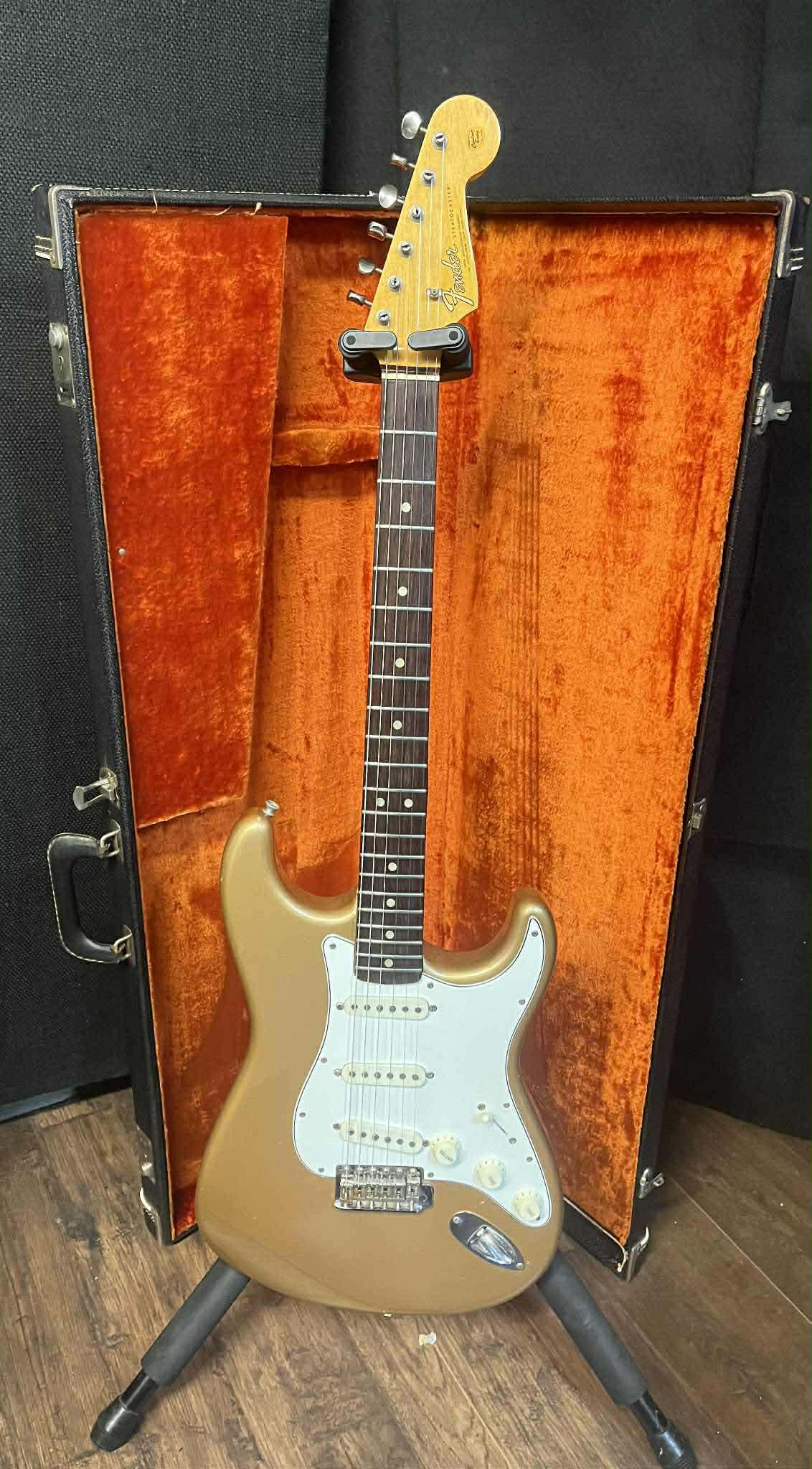
You're holding a guitar and wondering what it's actually worth—not what someone's asking for a similar one online, but what a buyer would realistically pay. That number depends on factors most owners never consider: production era, originality, condition details that only matter to collectors, and market trends that shift faster than you'd expect.
This guide walks you through how to identify your instrument, research comparable sales, recognize when online tools fall short, and decide whether professional appraisal makes sense for your situation.
What Determines Guitar Market Value
A guitar's market value is the price a willing buyer would pay a willing seller in a fair transaction based on current demand and comparable sales. This figure shifts with collector trends, economic conditions, and the specific characteristics of your instrument. Five primary factors drive what any guitar is worth.
Brand, model, and era: Fender, Gibson, and Martin command premium prices because of their historical significance. Within these brands, specific production periods matter enormously—a "pre-CBS" Fender (made before CBS purchased the company in 1965) is worth dramatically more than an identical-looking model from 1975.
Condition and originality: Collectors prize instruments that retain their factory finish, original parts, and period-correct hardware. Even minor modifications—a replaced tuner-identification-and-authentication) or a refret—can reduce value significantly.
Rarity and market demand: Limited production runs, discontinued models, and instruments with unusual features attract collector interest. However, demand shifts quickly, so a model that's hot today might cool off in two years.
Provenance: Documented ownership history occasionally adds substantial value. Most guitars don't have notable histories, but an instrument connected to a famous musician can be worth exponentially more than an identical example without that story.
How to Find Out How Much Your Guitar Is Worth
You're holding an old guitar and wondering what it might be worth. Maybe you inherited it, found it in a closet, or you're simply curious about an instrument you've owned for decades. Combining multiple research methods typically yields the most accurate picture of your guitar's value.
1. Identify your guitar using the serial number
Before you can research value, you need to know exactly what you have. The serial number is your starting point—it typically reveals the year of manufacture and sometimes the specific factory or production run.
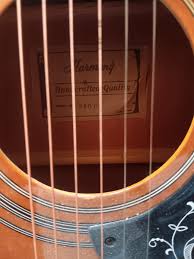
Fender guitars usually have serial numbers on the neck plate (1950–1976) or headstock (1976 onward). Gibson guitarsdisplay serial numbers on the back of the headstock. Martin guitars stamp serial numbers on the neck block, visible through the soundhole.
Once you locate the number, use a serial number lookup tool to decode it. Edgewater Guitars maintains free lookup resources for major brands that can help you pinpoint your guitar's age and specifications. This step is essential because a 1962 Stratocaster and a 1982 Stratocaster look similar to untrained eyes but occupy completely different value categories.
2. Research actual sold prices online
Here's where many people go wrong: they search for their guitar model and see listings at $15,000, then assume that's what theirs is worth. Asking prices are not market values. Guitars can sit unsold for months or years at inflated prices.
Instead, focus on completed sales data. eBay's "sold items" filter shows what buyers actually paid. The Reverb Price Guide tracks transaction data for specific models. When comparing, match your guitar's condition as closely as possible—a mint-condition example will sell for significantly more than one with heavy wear.
3. Check the Blue Book of Guitar Values
The Blue Book of Guitar Values is a reference database that provides baseline value ranges for thousands of guitar models. It's useful for establishing a starting point, particularly for common instruments from major manufacturers.
However, the Blue Book has limitations. It relies on averages and may not reflect rapid market shifts, regional demand variations, or the specific condition of your instrument. Think of it as one data point among several rather than a definitive answer.
4. Request a free professional valuation
Sometimes DIY research isn't enough. If your guitar is vintage, potentially rare, or you're uncertain about its authenticity, an expert evaluation can save you from costly mistakes.
Professional appraisers consider factors that databases miss: subtle signs of refinishing, replaced parts that look original, transitional-year specifications, and current collector sentiment. At Edgewater Guitars, we offer free, no-obligation valuations—call us at (440) 219-3607 or submit photos through our website to get started.
Why Guitar Prices Vary So Much Across Platforms
You've probably noticed the same guitar listed at wildly different prices depending on where you look. A 1965 Telecaster might be $8,000 on one site and $14,000 on another. This isn't necessarily deception—it reflects different selling contexts.
Dealer markup vs. private sale prices: Dealers carry overhead costs and often provide warranties or return policies, so their prices run higher. Private sales between individuals typically land lower but carry more risk for buyers.
Asking prices vs. actual sold data: That $14,000 listing might sit unsold for a year before the seller drops the price. Always verify value through completed transactions, not wishful asking prices.
Inconsistent condition descriptions: One seller's "excellent condition" is another's "good with wear." When researching comparables, look for listings with detailed photos and specific condition notes.
Guitar Value Guides and the Blue Book
Several resources exist to help you estimate your guitar's worth. Knowing what each offers—and where each falls short—helps you use them effectively.
What the Blue Book of Guitar Values covers
The Blue Book provides manufacturer data, model specifications, and value ranges organized by condition grade. It's particularly useful for common models from major brands where plenty of sales data exists. The service requires a paid subscription, but it offers a structured starting point for research.
Limitations of online guitar valuation tools
Tools like the Reverb Price Guide or various online calculators can't capture every nuance affecting value. Regional demand differences mean a guitar might sell faster in Nashville than in rural areas, with North America accounting for 40% of vintage guitar volume. Subtle condition issues visible only in person don't appear in database averages. Authenticity concerns require hands-on inspection. Rapid market shifts may not yet appear in averaged data.
When price guides miss the mark
Guides work best for standard examples of common models. They often struggle with rare variants like unusual pickup configurations or limited runs. Transitional-year models—guitars made when manufacturers were changing specifications—also present challenges. Undocumented modifications that aren't obvious without expert inspection can throw off any automated estimate.
Resource | Best For | Limitations |
|---|---|---|
Blue Book of Guitar Values | Common models, baseline ranges | Subscription required, averages only |
Reverb Price Guide | Recent market trends, specific models | Based on listings, not all sales verified |
eBay Sold Listings | Real transaction data | Condition varies widely, requires filtering |
Professional Appraisal | Vintage, rare, or high-value instruments | May involve cost (though Edgewater offers free valuations) |
When to Get a Professional Guitar Appraisal
Not every guitar requires expert evaluation. A recent production instrument from a major brand can usually be valued through online research alone. But certain situations call for professional eyes.
Signs you might benefit from expert valuation
Vintage or pre-1980 guitars have more variables affecting their worth. If you can't identify the exact model or year, an expert can often identify an instrument from photos and key features alone. Instruments that may have been modified benefit from professional assessment to determine what's original and what's been changed.
Insurance or estate purposes often require formal written appraisals. And when online research shows wildly conflicting values, an expert can cut through the noise and provide a realistic figure.
What a professional appraisal includes
A thorough appraisal from a vintage guitar specialist typically covers authenticity verification, confirming the guitar is what it appears to be. Detailed condition assessment documents wear, damage, and originality. Comparable sales analysis reviews recent transactions for similar instruments. Written documentation provides records suitable for insurance, estate, or sale purposes.
How appraisals protect you from lowball offers
Knowledge is leverage. When you understand your guitar's true market value, you can recognize—and reject—unfair offers. Dealers and buyers sometimes take advantage of sellers who don't know what they have. A professional appraisal removes that vulnerability.
Tip: If you're unsure whether your guitar warrants professional evaluation, send photos to a specialist first. At Edgewater Guitars, we can often tell you within minutes whether your instrument is likely valuable enough to merit in-depth assessment.
How to Sell Your Guitar for Fair Market Value
Once you know what your guitar is worth, the next question is how to turn that knowledge into cash. Each selling method has trade-offs between convenience, speed, and final price.
Selling to a vintage guitar specialist
Working with a specialist buyer like Edgewater Guitars offers expert valuation included in the process, quick and secure transactions often completed within days, no listing fees or commissions, and no shipping hassles—for valuable instruments, specialists often travel to you.
The trade-off is that you might receive slightly less than the theoretical maximum you could achieve through a private sale. However, you eliminate the time, risk, and effort that private sales require.
Consignment and online marketplaces
With consignment, a dealer sells the guitar on your behalf and takes a percentage (typically 15–25%) of the final price. Online marketplaces like Reverb and eBay offer wide exposure but require you to handle listing, communication, packing, and shipping in a channel growing at 10.1% CAGR.
The broad audience creates potential for higher sale prices. On the other hand, seller fees, time investment, risk of returns or disputes, and no guaranteed timeline are real considerations.
Private sale pros and cons
Selling directly to another player can potentially yield the highest return, but it requires finding a qualified buyer, handling payment securely, and assuming all transaction risk. No commission fees and full price control are appealing. The downsides include sales that can take months, security concerns with payment and shipping, and dealing with non-serious inquiries.
Used Guitar Values for Popular Brands
Values vary significantly by model, era, and condition. Here's what drives value for some of the most collectible brands.
Fender guitar values
Pre-CBS Stratocasters and Telecasters (made before 1965) command the highest premiums, often reaching five or six figures for exceptional examples. American-made models from later decades hold value reasonably well, while guitars manufactured in Mexico or Asia typically depreciate more over time.
Custom colors—Lake Placid Blue, Candy Apple Red, Sonic Blue—add significant value to vintage Fenders. A custom-color Stratocaster from 1963 might be worth double or triple a sunburst example from the same year.
Gibson guitar values
Gibson Les Paul Standards from 1958–1960 (the famous "Bursts") rank among the most valuable electric guitars in existence. Vintage ES-335s appreciating at 8.3% annually, SGs, and acoustic models like the J-45 also attract strong collector interest.
Martin guitar values
Pre-war Martin acoustics—particularly models like the D-28 and D-45 made before 1946—are extraordinarily collectible. Instruments built with Brazilian rosewood (restricted since 1969) command substantial premiums over otherwise identical guitars made with Indian rosewood.
For acoustic guitars, condition and originality matter even more than with electrics. Cracks, repairs, and replaced parts affect value dramatically.
Get Your Free Guitar Valuation from Edgewater Guitars
Edgewater Guitars is Ohio's premier vintage guitar specialist, and we've been providing fair valuations and honest offers since 2002. Our process is straightforward:
Share your guitar's details: Brand, model, year, and photos
Receive expert valuation: Based on current market data and decades of experience
Get a fair cash offer: With no obligation to sell and no hidden fees
Get paid immediately: If you choose to sell, payment happens right away
We specialize in vintage Fender, Gibson, and Martin instruments, but we evaluate guitars from all major brands. Whether you have a single instrument or an entire collection, we're equipped to help.
Frequently Asked Questions About Guitar Market Value
Do guitars gain value with age?
Not automatically. Only certain vintage instruments from desirable eras and brands tend to appreciate. Most modern, mass-produced guitars depreciate over time, similar to other consumer goods. Age alone doesn't create value—the combination of age, brand, model, condition, and originality determines whether a guitar appreciates.
How accurate is the Blue Book of Guitar Values?
It provides reasonable baseline estimates for common models but may not reflect current market conditions, regional demand, or your guitar's specific originality and condition. Use it as a starting point, not a final answer.
Can I get a guitar valuation for free?
Yes. You can research sold prices on eBay and Reverb at no cost. Specialists like Edgewater Guitars also offer free, no-obligation appraisals from experts who can evaluate factors that online research might miss.
How do I find out what my guitar is worth without a serial number?
You can still identify most guitars by their brand logo, body shape, headstock design, features, and construction details. Sending photos to an expert can help identify the model and approximate era even when the serial number is missing or illegible.
Does refinishing or modifying a guitar hurt its value?
Generally, yes. Collectors prize originality above almost everything else. Non-factory modifications or a refinish can significantly reduce value, especially on vintage instruments. Even well-intentioned "improvements" often decrease what collectors are willing to pay.
What types of guitars are increasing in value right now?
Pre-CBS Fenders, 1950s–1960s Gibsons, and pre-war Martin acoustics remain strong. However, market trends shift, and professional guidance is the best way to identify what's in high demand at any given moment.
How long does a professional guitar appraisal take?
Most appraisals from Edgewater Guitars are completed within one to three business days after we receive photos and details about your instrument. For straightforward identifications, we can often provide preliminary information within hours.