DATE :
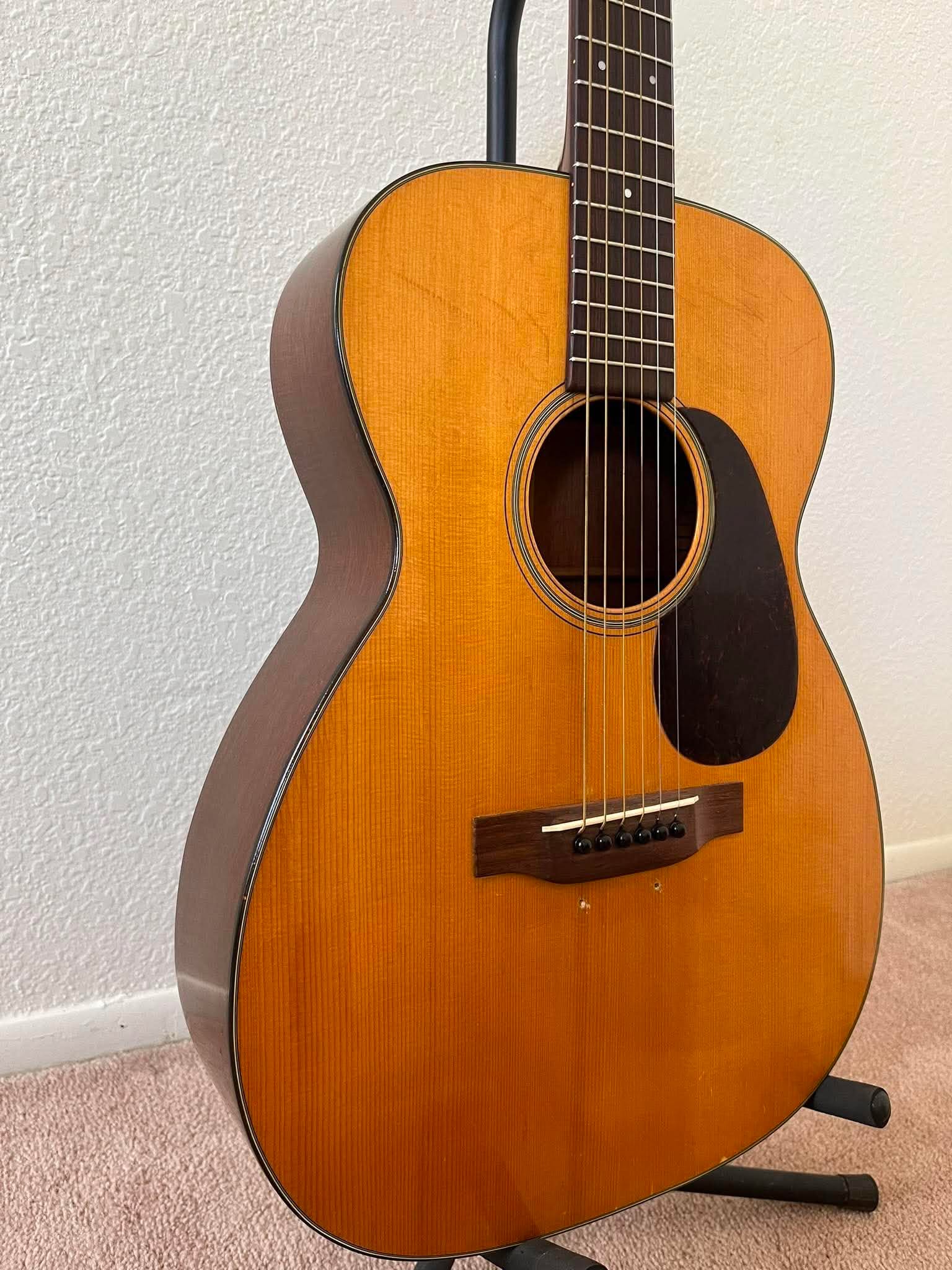
1942 Martin 000-18: The Pre-War Acoustic We Couldn’t Let Go

1942 Martin 000-18: The Pre-War Acoustic We Couldn’t Let Go
Last Updated: June 2026
A Pre-War Martin in Phoenix
We got a call up in the Phoenix area about a 1942 Martin 000-18 — a pre-war triple-O that had been handed down to the grandson of the original owner. Pre-war Martins are some of the most sought-after acoustic guitars in the world, so a 1942 000-18 that had stayed in one family since new is exactly the kind of call we drop everything for.
When we saw it, the guitar was beautiful — but it raised a couple of questions we needed answered before we could make a fair offer.
Was the Finish Original?
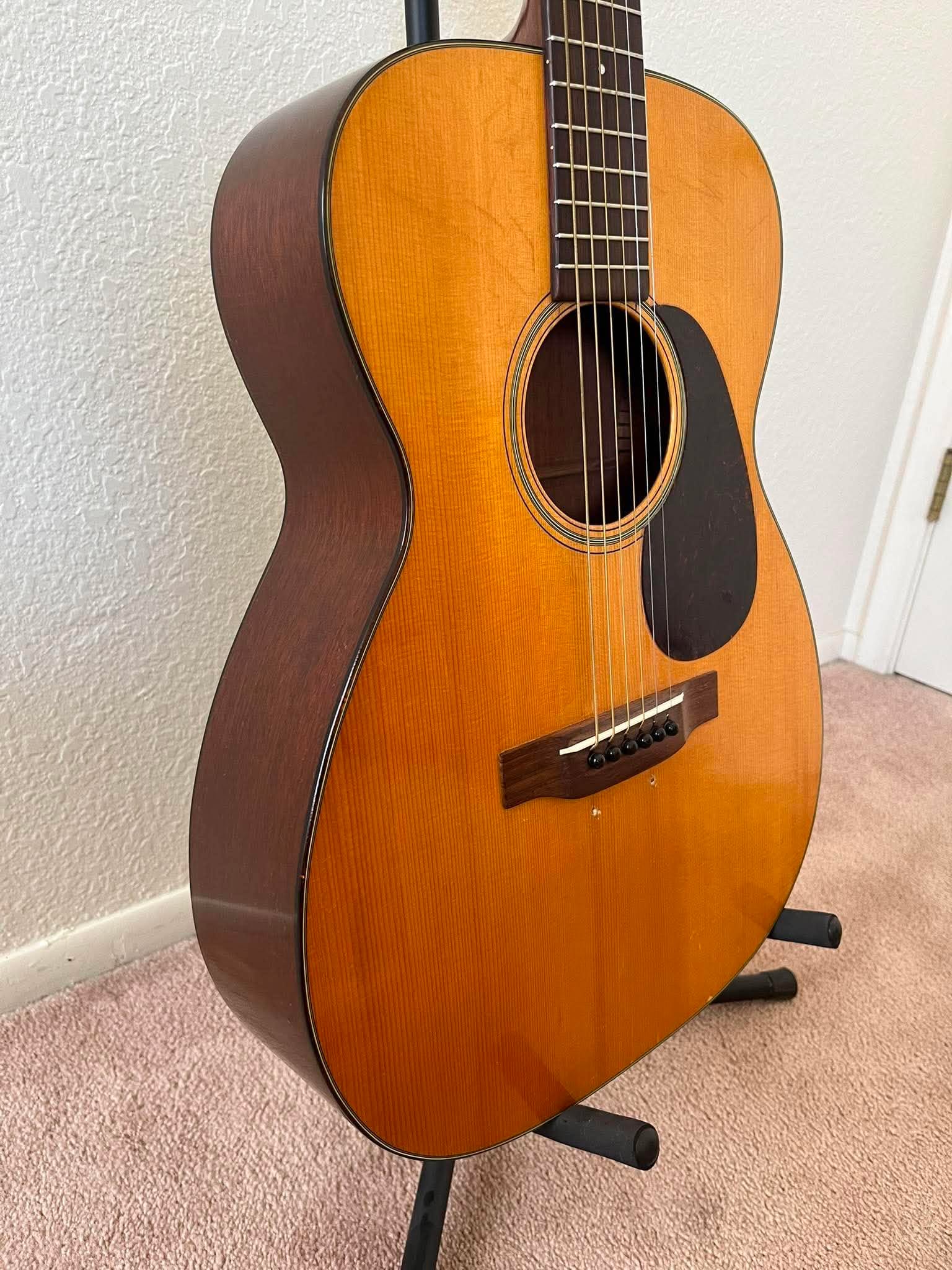
The first thing that caught our eye was how clean and glossy the finish was. On an 80-year-old guitar, a finish that nice can mean one of two things: either it’s an exceptionally well-preserved original, or it’s been refinished at some point. With pre-war Martins, that distinction is enormous — an original-finish example is worth dramatically more than a refinished one. We also weren’t certain whether the bridge plate inside the guitar was the correct original.
These aren’t questions you want to answer with a hunch. So we called in someone who has handled more pre-war Martins than just about anyone we know.
Bringing in Joe
Joe Dampt of Joe’s Vintage Guitars met us in Phoenix to evaluate the guitar in person. Joe has spent over twelve years buying vintage guitars full-time and has personally appraised more than 10,000 instruments, with a particular specialty in pre-war Martins — the herringbone and scalloped-braced era that pre-war collectors prize. If anyone could settle the originality questions on this 000-18, it was Joe.
The Black Light Test
Joe started with the finish. Using an ultraviolet (black) light, he confirmed that the finish was, in fact, original. Original pre-war Martin nitrocellulose lacquer reacts to UV light in a characteristic way that a modern refinish simply can’t fake. Beyond the black light, Joe walked us through the tells he looks for on an original Martin finish: the thinness of the lacquer, and the particular way the gloss sits on the back and sides of an untouched pre-war instrument. Once you’ve seen it on enough originals, a refinish stands out — and this one was the real thing.
Inside the Guitar: The Original Bridge Plate
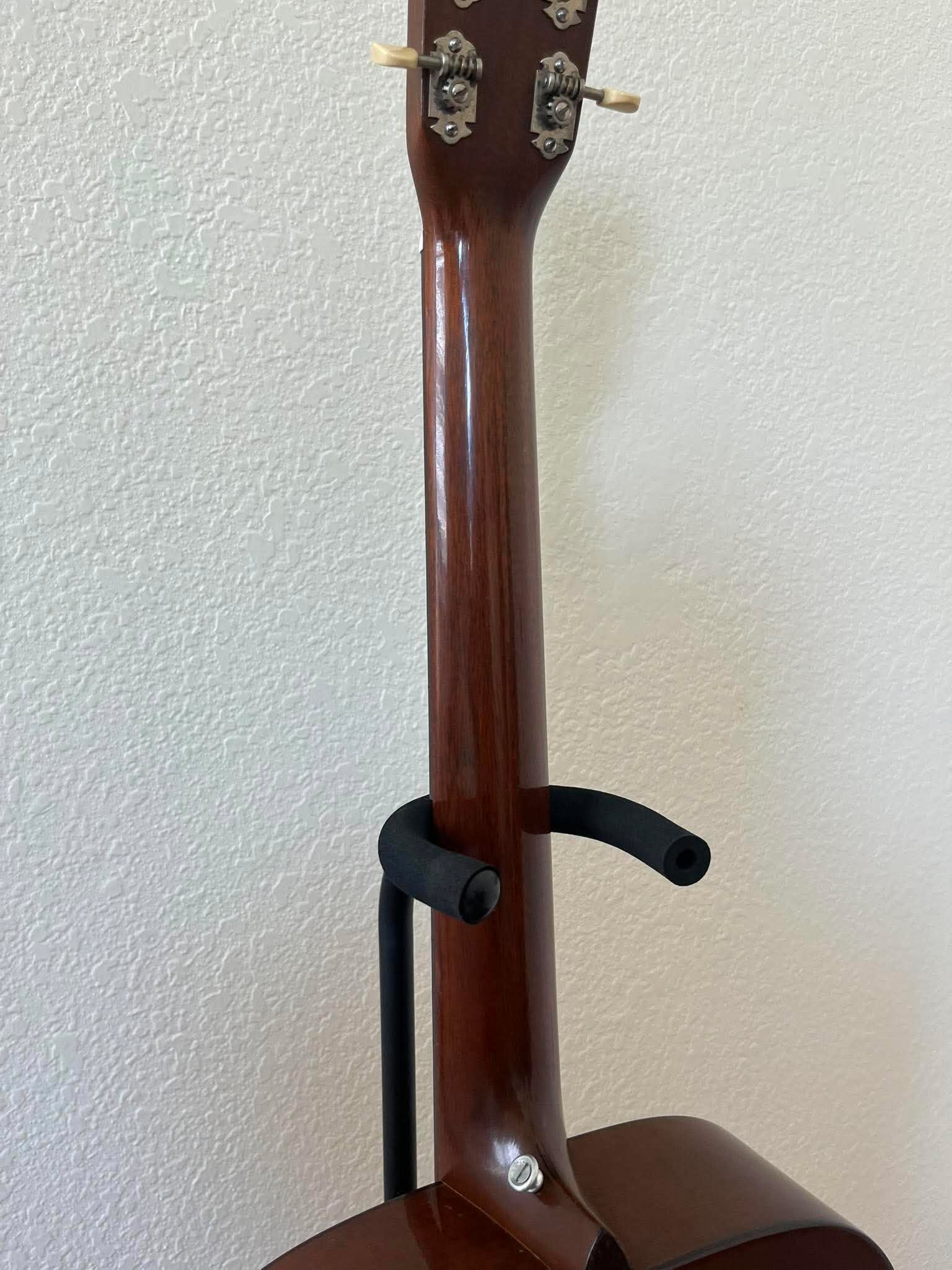
Next, Joe looked inside through the soundhole and examined the bridge plate. He identified it as the correct, thin original maple bridge plate — exactly what you want to see on a pre-war 000-18. Many vintage Martins have had their bridge plates replaced or capped over the decades, often to address string wear, so finding an original, untouched plate is a meaningful confirmation of an honest, all-original instrument.
A Guitar Too Nice to Sell
Between the confirmed original finish and the original bridge plate, this turned out to be an exceptional, all-original pre-war Martin. Joe’s authentication let us pay the seller top dollar — exactly what a guitar like this deserves. And in this case, the instrument was so special that we ended up keeping it in our own personal collection. It doesn’t happen often, but every once in a while a guitar comes through that you simply can’t part with. This 1942 000-18 was one of them.
If You Have a Vintage Martin
Pre-war Martins are exactly the kind of instrument where expertise pays for itself. The difference between an original and a refinished example — or an original versus a replaced bridge plate — can mean thousands of dollars, and it takes a trained eye to tell them apart. Joe specializes in this era, from D-18s and D-28s to the 000 and OM models. If you’re thinking about selling a vintage Martin, he’s the specialist we’d point you to for an honest, expert appraisal.
Thinking About Selling a Vintage Guitar?
Whether you’ve got a pre-war Martin, a vintage Fender, or a Gibson in the closet, the smartest first step is getting it evaluated by someone who truly knows it. At Edgewater Guitars, we buy vintage guitars nationwide, pay 30–40% more than most local shops, and offer free, no-obligation appraisals. Call (440) 219-3607 or visit edgewaterguitars.com to learn what your guitar is worth.
Frequently Asked Questions
How can you tell if a vintage Martin has its original finish?
One of the most reliable methods is examining the guitar under ultraviolet (black) light, since original pre-war nitrocellulose lacquer fluoresces differently than a modern refinish. Experts also look at the thickness of the finish and the way the gloss sits on the back and sides. A trained eye can usually distinguish an original finish from even a well-done refinish.
Why does the bridge plate matter on a pre-war Martin?
The bridge plate is a small piece of wood inside the body beneath the bridge. Pre-war Martins used a thin maple plate, and many have been replaced or capped over the years due to wear. An original, untouched bridge plate is an important sign of an all-original instrument and supports a higher valuation.
Does Edgewater Guitars buy pre-war Martin guitars?
Yes. We buy pre-war and vintage Martins of all models, original or repaired. For specialist pre-war Martin authentication we often work with Joe Dampt of Joe’s Vintage Guitars. Call (440) 219-3607 for a free, no-pressure appraisal.
Read the serial number stamped on the neck block inside the body and confirm the year with our Martin serial number lookup. Considering selling your own vintage Martin? Request a free estimate.
See also: Vintage Martin 0-18, 00-18 & 000-18 Value Guide and our Martin 0-18, 00-18 and 000-18 dating guide.