DATE :
Vintage Gibson Les Paul Junior Value Guide (1957-1960)
Vintage Gibson Les Paul Junior Value Guide (1957-1960)
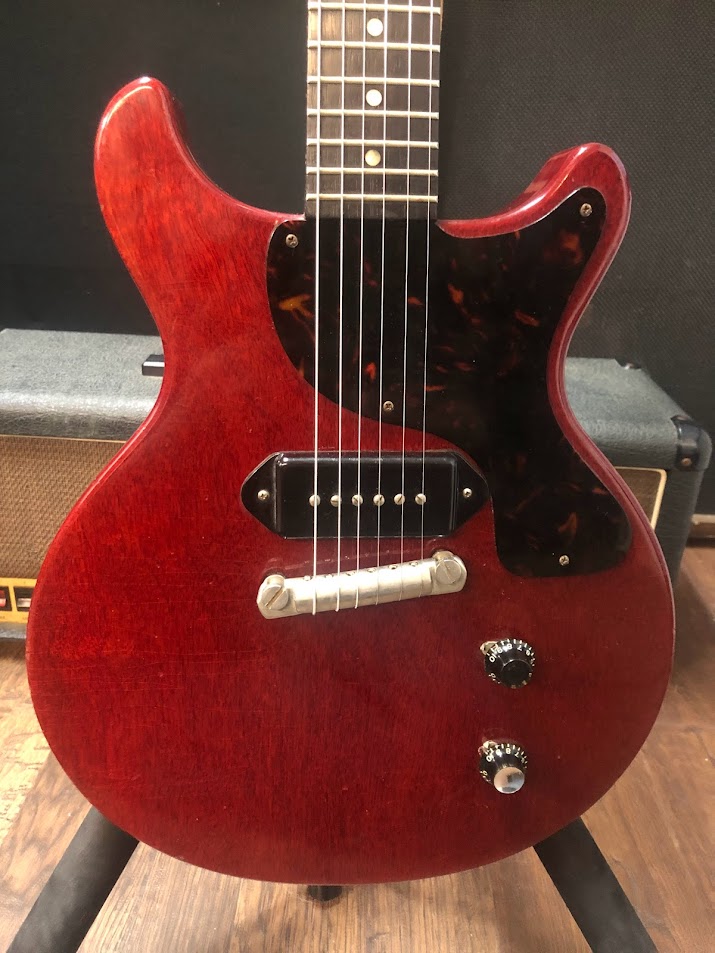
A vintage Gibson Les Paul Junior from 1957 to 1960 is the simple, single-pickup working musician’s Les Paul, and a clean original is a genuine vintage bargain next to a Standard or Custom. The body changed from a single cutaway to a double cutaway in mid-1958, a key dating and value detail. Edgewater recently paid $7,200 for a clean, all-original 1960 Junior. Originality, the single P-90, and an unbroken neck set where any guitar lands.
Last Updated: June 2026
What Is a Vintage Gibson Les Paul Junior Worth? (Year by Year, 2026)
The values below are reference points for clean, all-original examples. They reflect what a fair buyer like Edgewater pays, not best-case auction results. Condition, originality, and the cutaway type move any individual guitar within these ranges.
Year | What defines it | Reference value for a clean example |
|---|---|---|
1957 | Single cutaway, one P-90, raw simplicity | Strong vintage value |
1958 | Body changes to double cutaway mid-year, one P-90 | Strong vintage value |
1959 | Double cutaway, one P-90, cherry finish | Strong vintage value |
1960 | Double cutaway, one P-90, final year before the SG body | Around $7,200 |
Current market note (2026): double-cut Juniors from 1958 to 1960 are prized by players for their simple, resonant build, and clean originals have climbed steadily. Refinished or repaired examples trade lower. As a buyer, Edgewater prices to the honest, all-in condition of the actual guitar, not the best-case auction headline.
What Drives a Vintage Les Paul Junior’s Value?
Cutaway type: single-cut Juniors (1954 to mid-1958) and the later double-cut Juniors (mid-1958 to 1960) appeal to different buyers; both are collectible.
Originality: the original single P-90, wraparound bridge, finish, and tuners matter more than cosmetic shine.
Finish: original cherry or sunburst with honest wear is preferred; a refinish cuts value.
Condition: the thin neck and headstock are the weak point, so no breaks or repairs is a major plus.
Completeness: the original case and any paperwork add confidence and value.
Player demand: Juniors are bought to be played, so a great-sounding, easy-playing example holds value well.
How to Identify and Date a Vintage Gibson Les Paul Junior
Three things pin down the year and the value: the serial number, the cutaway, and the single P-90. Here is how to read them.
Serial numbers and factory order numbers
Gibson stamped or inked a serial number on the back of the headstock and a factory order number inside the body. Late-1950s numbers are not strict year codes, so treat them as a range and confirm the year with our Gibson serial number lookup.
Single cutaway versus double cutaway
The Junior launched in 1954 with a single cutaway. In the middle of 1958 Gibson switched to a rounded double cutaway for better upper-fret access, and that double-cut body ran through 1960 before the SG shape arrived in 1961. The cutaway is the fastest way to place a Junior in the right era, so a 1959 or 1960 Junior is a double cutaway, not a single cutaway.
The single P-90 and wraparound bridge
Every Les Paul Junior uses one P-90 single-coil pickup at the bridge and a simple wraparound bridge and tailpiece. That stripped-down setup is the model’s signature; confirm the pickup is an original P-90 and the bridge is unmodified when valuing the guitar.
Finish and hardware
Juniors came in sunburst and, increasingly, cherry red. Original nickel hardware, an unbroken headstock, and an untouched finish all support the value, while extra holes or a refinish pull it down.
Les Paul Junior Year Pages and Guides
Drill into a specific year or our Gibson Les Paul Junior dating guides:
Sell your vintage Gibson Les Paul Junior
Edgewater Guitars buys vintage Gibson Les Paul Juniors nationwide, both single-cut and double-cut examples from the 1950s and early 1960s. We give free, no-pressure estimates and pay fairly for clean, original, and even refinished guitars. To sell yours, request a free estimate.
How much is a vintage Gibson Les Paul Junior worth?
Juniors are the most attainable vintage Les Pauls. A clean, all-original example typically brings solid four figures; Edgewater recently paid $7,200 for an original 1960 Junior. Refinished or modified guitars sell for less, and we still buy those.
Is my 1960 Les Paul Junior single-cut or double-cut?
A 1960 Les Paul Junior is a double cutaway. Gibson switched the Junior from a single cutaway to a double cutaway in mid-1958, so 1959 and 1960 Juniors are double-cut. Only 1954 to early-1958 Juniors are single-cut.
How do I date my Les Paul Junior?
Use the cutaway to place the era, then cross-check the headstock serial number and the factory order number with our Gibson serial number lookup. The single P-90 and wraparound bridge confirm it is a Junior rather than a Special or Standard.