DATE :
Vintage Fender Esquire Value Guide (1950-1969)
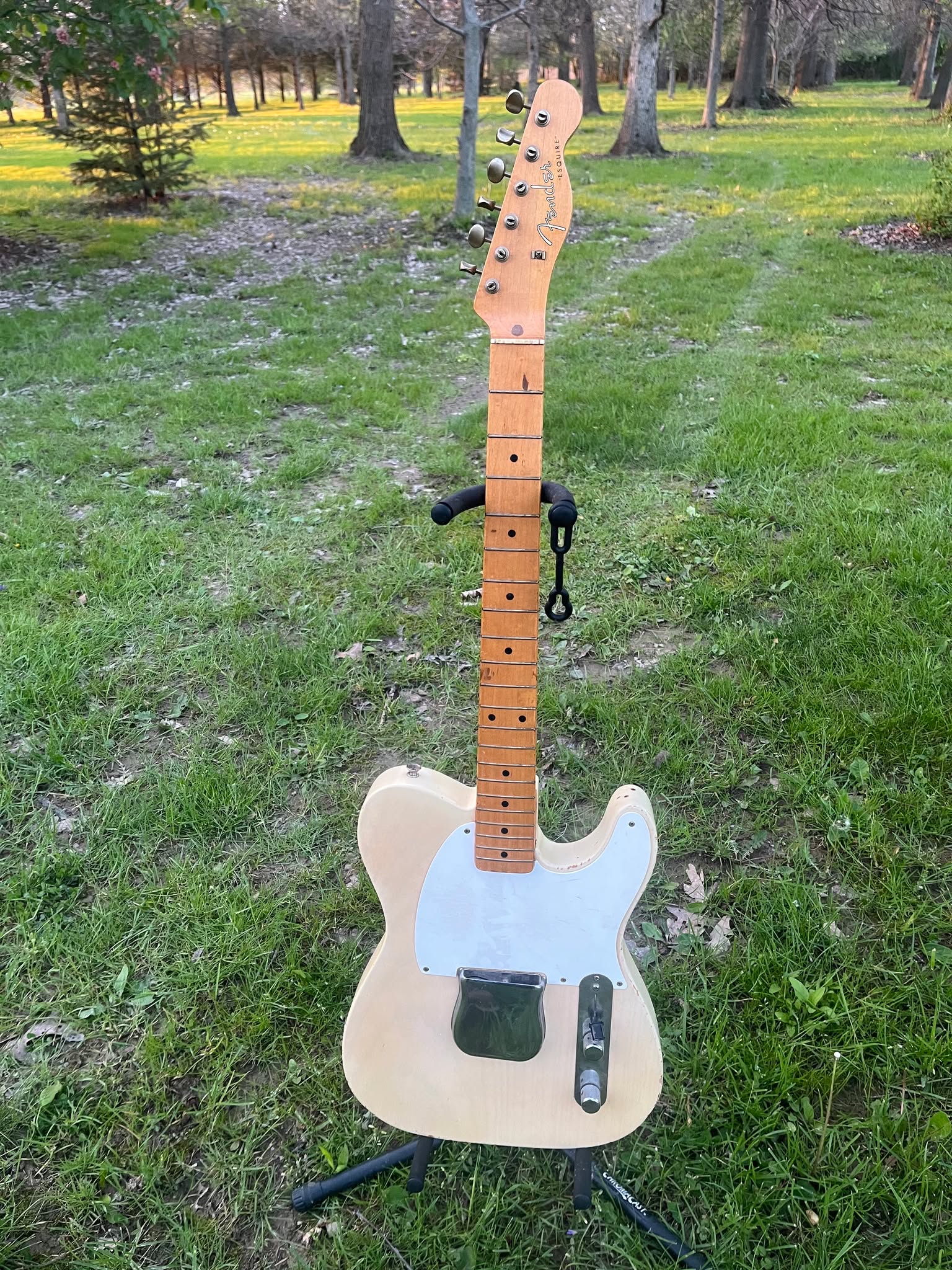
Vintage Fender Esquire Value Guide (1950-1969)
A vintage Fender Esquire from 1950 to 1969 is the single-pickup sibling of the Telecaster, built on the same ash body and bolt-on maple neck but with one bridge pickup and a distinctive three-way switch that pulls three voices from that single pickup. The most valuable Esquires are the 1950 to 1954 blackguard examples, with their black pickguard and butterscotch blonde finish; the later whiteguard, V-neck, and rosewood slab-board years are more attainable but still sought-after pre-CBS instruments. Originality, the finish, the neck profile, and condition decide where any single Esquire lands, so the most accurate number is a free appraisal.
Last Updated: June 2026
What Is a Vintage Fender Esquire Worth? (Year by Year, 2026)
The notes below describe how each era sits in the market for clean, all-original examples. The Esquire has no single book value: a 1952 blackguard and a 1960 rosewood-board Esquire are worlds apart. For a real number on your specific guitar, a free appraisal is the most accurate path.
Year | What defines it | Where it sits in the market |
|---|---|---|
1950-1954 | Blackguard era: black pickguard, butterscotch blonde, single pickup, three-way tone switch | Top tier, the rarest and most collectible Esquires |
1955 | Whiteguard transition, V-neck profile begins, all-maple neck | Strong pre-CBS collectible |
1956 | Hard V-neck, white pickguard, one-piece maple neck | Strong pre-CBS collectible |
1957 | Definitive hard V-neck, peak pre-CBS maple-neck year | Highly sought pre-CBS example |
1958 | Final maple-only year before the rosewood option | Sought-after late maple-neck Esquire |
1959 | Rosewood slab-board debut (maple or slab), clay dot inlays | Pre-CBS; original slab-board examples carry a premium |
1960-1965 | Rosewood-board pre-CBS, single pickup | Solid pre-CBS collectible, below the blackguard and V-neck years |
Current market note (2026): the spread between an early blackguard Esquire and a later whiteguard or rosewood-board example is large, and originality is the single biggest swing. A body that has been routed for a second pickup, a refinish, or replaced parts pulls value down sharply. As a buyer, Edgewater prices to the honest, all-in condition of the actual guitar, not the best-case auction headline.
What Drives a Vintage Fender Esquire’s Value?
Blackguard versus whiteguard era: the 1950 to 1954 black-pickguard Esquires are the most collectible; the whiteguard years from about 1954 to 1955 onward are more attainable.
Single-pickup originality: the Esquire has one bridge pickup by design. A body routed for a neck pickup, or a replaced pickup, cuts value significantly.
Neck profile: the hard V neck of the mid-1950s, peaking in 1957, is prized by players and collectors and is a key value driver.
Maple versus slab board: one-piece maple necks run through 1958; the rosewood slab board arrives mid-1959, and original slab-board examples carry a premium.
Condition: no headstock breaks or neck repairs, a straight neck, original frets, and original hardware all add up.
Completeness: the original case, hang tags, and paperwork add confidence and value.
How to Identify and Date a Vintage Fender Esquire
Four things pin down the year and the value: the serial number, the single-pickup wiring, the pickguard, and the neck. Here is how to read them.
Serial numbers and neck dates
Fender stamped a serial number on the neck plate or bridge and often penciled a date on the heel of the neck. The ranges overlap year to year, so treat the serial as a guide and confirm the year with our Fender serial number lookup. The Esquire shares its dating points with the Telecaster.
Single pickup and the three-way switch
The Esquire has one bridge-position single-coil, but its three-way switch is not a pickup selector. It offers three preset voices from that one pickup: a dark bass preset, a normal setting with the tone control, and a treble-bypass setting for maximum brightness. Confirm the body has only one pickup route and that the wiring is original, because a second route or a swapped pickup is a major value driver.
Blackguard versus whiteguard
The earliest Esquires from 1950 to 1954 wear a black phenolic pickguard, the so-called blackguard, usually over a butterscotch blonde ash body. Fender moved to a white pickguard around 1954 to 1955. The pickguard color and material are among the fastest ways to place an Esquire in its era.
Maple neck versus slab rosewood board
Through 1958 the Esquire used a one-piece maple neck with a walnut skunk stripe. In mid-1959 Fender introduced a thick slab rosewood fingerboard, so 1959 is the only year both all-maple and slab-board Esquires left the factory. Rosewood examples wear clay dot inlays, a key pre-CBS authentication point.
Esquire Year Pages and Guides
Drill into a specific year or our Fender Esquire and Telecaster dating guides:
1955 Fender Esquire: the original single-pickup pre-CBS Telecaster
1956 Fender Esquire: the V-neck pre-CBS single-pickup classic
1958 Fender Esquire: the final maple-only pre-CBS single-pickup
1959 Fender Esquire: the rosewood debut year, maple or slab board
The complete guide to dating and identifying vintage Fender Esquires
How to date a Fender Telecaster (the Esquire shares Tele dating)
Vintage Fender Telecaster value guide (the two-pickup sibling)
Sell your vintage Fender Esquire
Edgewater Guitars buys vintage Fender Esquires nationwide, from rare blackguard examples to whiteguard V-neck and rosewood-board pre-CBS guitars. We give free, no-pressure estimates and pay fairly for clean, original, and even refinished guitars. To sell yours, request a free estimate.
What is the difference between an Esquire and a Telecaster?
They are the same guitar with one key difference: the Esquire has a single bridge pickup, while the Telecaster has two, a bridge and a neck pickup. Both share the ash body, bolt-on maple neck, and pre-CBS construction. The Esquire’s three-way switch gives three tones from its one pickup rather than selecting between pickups. Because it is rarer, a clean original Esquire often holds its own against a comparable Telecaster.
How much is a vintage Fender Esquire worth?
It depends heavily on the era and originality. The 1950 to 1954 blackguard Esquires are the most valuable and collectible; the later whiteguard, V-neck, and rosewood slab-board years are more attainable but still command strong pre-CBS interest. A refinish, a second-pickup route, or replaced parts lower the value. For an accurate figure on your specific guitar, request a free estimate.
How do I date my Fender Esquire?
Start with the pickguard and the fingerboard to place the era, then cross-check the neck-plate serial number and any penciled neck date with our Fender serial number lookup. Because the Esquire shares its construction with the Telecaster, the same dating points apply: the blackguard-to-whiteguard change, the V-neck profile, and the 1959 maple-to-rosewood transition.