DATE :
The Complete Guide to Dating and Identifying Vintage Fender Esquires (1950-1970)
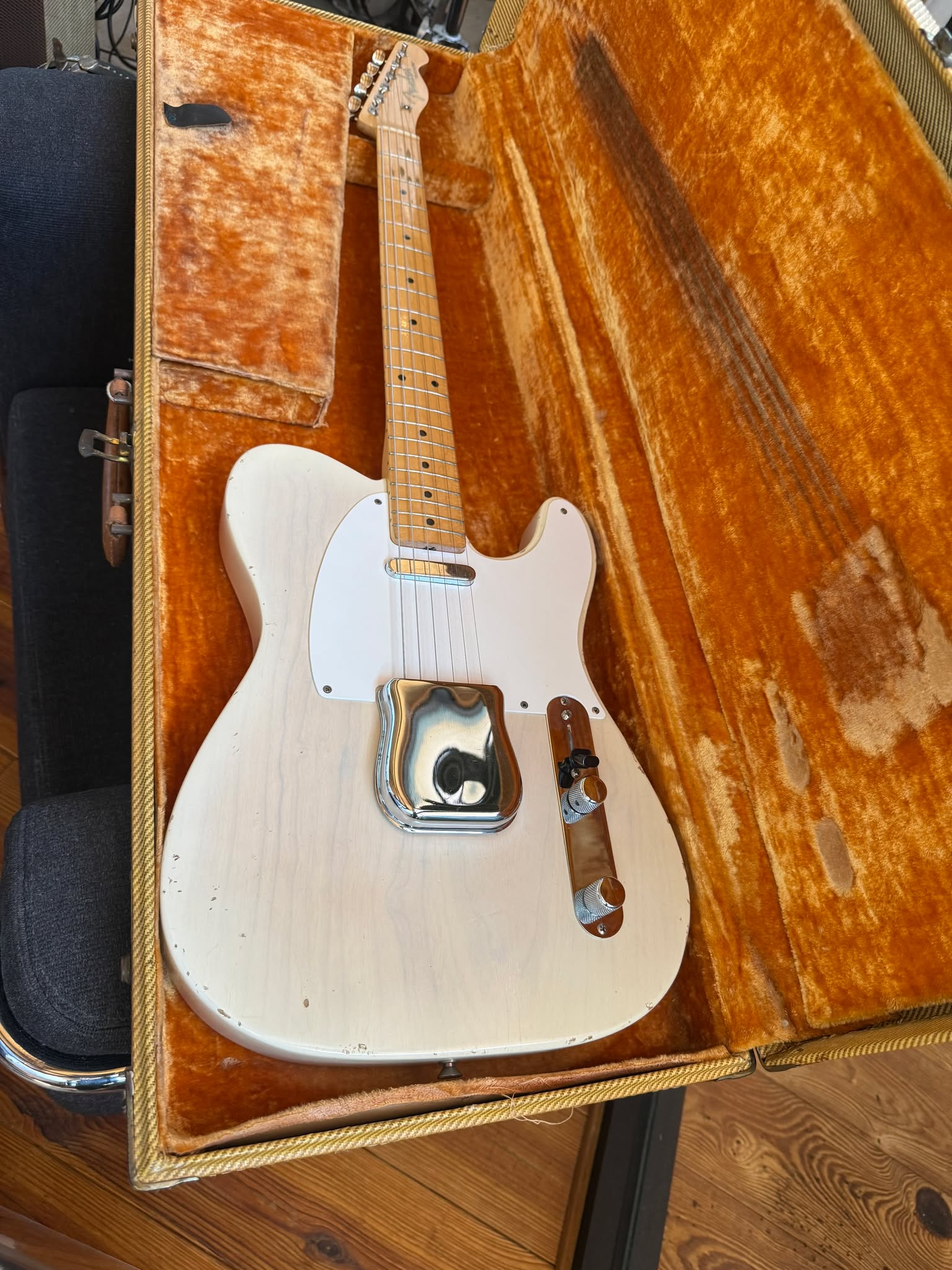
The Complete Guide to Dating and Identifying Vintage Fender Esquires (1950-1970)
What is a Fender Esquire?
The Fender Esquire is the original single-pickup solidbody electric guitar that predates even the legendary Telecaster. Introduced in 1950, the Esquire was Leo Fender's first production solidbody electric guitar, making it one of the most historically significant instruments in guitar history. Unlike its two-pickup sibling the Telecaster, the Esquire features only a single bridge pickup, giving it a distinctive, focused tone that has made it a favorite among country, rockabilly, and blues players for over seven decades.
How to Date a Fender Esquire: Serial Number Guide
Dating a vintage Fender Esquire requires examining multiple identification points, as Fender's serial number systems changed several times during the Esquire's production run.
1950-1954: No Serial Numbers or Body-Only Numbers
The earliest Fender Esquires (1950-1954) typically have no serial numbers at all, or may have a number stamped in the bridge cavity or on the bridge plate. These numbers are not consistent and don't follow a standardized system. To date these early Esquires, you must rely on construction features and component details.
Early 1950 Esquire Features:
Single-ply black pickguard with five mounting screws
No truss rod (introduced mid-1951)
Flat-topped "slab" body design
Single string guide (later models have two)
"Fender Electric Instrument Co." headstock decal
1951-1954 Features:
Truss rod added at neck heel (mid-1951 forward)
Blackguard Esquire designation (black pickguard with chrome control plate)
Round string guide (1951-early 1952)
Transition to butterfly string guide (late 1952-1954)
"Fender Electric Instrument Co." decal continues
1954-1963: Neck Plate Serial Numbers
Starting in 1954, Fender began stamping serial numbers on the neck plate (the metal plate on the back where the neck attaches to the body).
Serial Number Ranges:
1954-1956: Four-digit numbers (approximately 0400 to 9999)
1956-1957: Five-digit numbers starting with 1 (10000-19999)
1957-1958: Five-digit numbers starting with 2 (20000-29999)
1959: Five-digit numbers starting with 3 (30000-39999)
1960: Five-digit numbers starting with 4 (40000-49999)
1961-1962: Five-digit numbers starting with 5 (50000-59999)
1962-1963: Five-digit numbers starting with 6 (60000-69999)
1963: Five-digit numbers starting with L (L00001-L99999)
Important Note: These ranges overlap significantly, and Fender used plates randomly from available stock, so a guitar could have a neck plate from a year or two before it was actually assembled.
1963-1970: Transition to Headstock Serial Numbers
In 1963, Fender began transitioning to stamping serial numbers on the front of the headstock at the top, just below the Fender logo.
Serial Number Prefixes:
L Series (1963-1964): L + 5 digits
F Series (1965-1976): F + 6 digits
1963-1965 Transition Period: During this period, you may find Esquires with both neck plate numbers AND headstock serial numbers, or guitars with only neck plate numbers despite being made after the transition.
Beyond 1970
Esquire production became increasingly limited in the late 1960s, with the model being officially discontinued in 1970. Reissue and Custom Shop Esquires from later years have modern serial number systems and will state "Made in USA" or similar markings.
How to Identify a Fender Esquire by Features
Body Shape and Construction
1950-1959: Ash Body Standard
Single-cutaway slab body (1950-1959)
Typically swamp ash wood with visible grain
No body contours (flat on both sides)
Rounded body edges
1959-1970: Contoured Body
Belly cut and forearm contour added (late 1959)
Makes the guitar more comfortable
Bodies can be ash or alder
Sunburst finishes more common on alder bodies
Pickguard Evolution
The pickguard is one of the most reliable dating features on a Fender Esquire:
1950-1954: Blackguard Era
Single-ply black pickguard
Five screws mounting (early models)
Eight screws mounting (most blackguard models)
Black phenolic material
Chrome control plate covering controls
1954-1959: White Pickguard Transition
Single-ply white pickguard introduced mid-1954
Eight screw mounting continues
Some overlap with blackguard production
1959-1964: Three-Ply White Pickguard
White-black-white three-ply pickguard
Eight screw mounting
More rigid than single-ply
1965-1970: Later Three-Ply
Continues three-ply white configuration
Screw placement may vary slightly
Neck Characteristics
1950-1951: No Truss Rod
One-piece maple neck
No truss rod (very rare)
"Fender Electric Instrument Co." decal
"Kluson Deluxe" tuners
1951-1959: Single-String Truss Rod Adjustment
Truss rod adjusted at body end of neck
Requires neck removal to adjust
One-piece maple neck standard
Curved "boat" neck profile (early models)
Transitioning to slightly slimmer profile (late 1950s)
1959-1962: Rosewood Fingerboard Introduction
Optional rosewood fingerboard (late 1959)
Three-piece construction (maple neck, rosewood board, maple cap on headstock)
Clay dot inlays on rosewood board
Slab rosewood (flat bottom) 1959-1962
1962-1970: Curved Rosewood Board
Rosewood board with curved bottom edge
Maple necks still available by special order
"Transition" logo on headstock (1964-1968)
CBS-era "larger" headstock (1965-1970)
Pickup and Electronics
The Single Pickup Configuration: The defining feature of an Esquire is its single bridge pickup. However, the wiring is unique:
Original Esquire Three-Way Switch:
Position 1 (neck position): Full bass response, direct to jack
Position 2 (middle): Standard tone - pickup through volume and tone controls
Position 3 (bridge/rhythm position): Tone capacitor engaged, darker "bass" sound
This unusual switching provides three distinct tones from a single pickup, making the Esquire surprisingly versatile.
Pickup Evolution:
1950-1954: Black fiber bobbin pickups with rough-cast alnico magnets
1954-1964: Staggered pole piece pickups with smooth alnico magnets
1964-1970: Later versions may have slightly different wire and magnets
Bridge Hardware
1950-1951: Original Three-Saddle Bridge
Steel bridge plate with three brass barrel saddles
String-through-body design
No markings or stamps on early examples
1951-1958: "Ashtray" Bridge Cover
Chrome bridge cover included
"FENDER PAT PEND" or "FENDER PAT NO" stamped on cover
Bridge plate may have "FENDER MADE IN USA" stamp
1958-1970: Continued Three-Saddle Design
Bridge design remains consistent
Materials and manufacturing may vary slightly
Tuning Machines
1950-1967: Kluson Deluxe
Single-line "Kluson Deluxe" engraving
Metal buttons (early models)
Plastic buttons (most models)
1967-1970: Fender "F" Tuners
Fender's own tuners with "F" logo
Larger housings than Kluson
Fender Esquire vs Telecaster: Key Differences
Pickup Configuration
Esquire: Single bridge pickup only Telecaster: Two pickups (bridge and neck)
Switching System
Esquire: Three-way switch providing three tones from one pickup Telecaster: Three-way switch selecting between pickups
Tone Characteristics
Esquire: More focused, punchy midrange; known for its "in your face" directness Telecaster: More versatile with distinct neck pickup warmth and bridge pickup bite
Historical Significance
Esquire: The very first - Leo Fender's original solidbody production guitar (1950) Telecaster: Followed shortly after as the two-pickup deluxe version (originally Broadcaster, renamed Telecaster in 1951)
Rarity and Collectibility
Esquire: Significantly rarer than Telecasters; typically more sought-after by collectors, especially blackguard models Telecaster: More common production numbers; wider availability in vintage market
What Years Were Fender Esquires Made?
Original Production Run: 1950-1970
Most Collectible Periods:
1950-1954 (Blackguard Era): The most desirable and valuable Esquires, featuring black pickguards and pre-CBS construction
1954-1959 (White Guard Era): Transitional period with classic features and excellent tone
1959-1964 (Pre-CBS Late Era): Contoured bodies and rosewood fingerboards; last years before CBS acquisition
1965-1970 (CBS Early Era): Larger headstocks and changes in production; still quality instruments but generally less collectible
Discontinuation: The Esquire was officially discontinued in 1970 as Fender streamlined its product line under CBS ownership.
Modern Reissues: Fender has produced various Esquire reissues and Custom Shop models from the 1980s to present, but these are clearly marked with modern serial numbers and "Made in USA" designations.
How to Authenticate a Vintage Fender Esquire
Red Flags for Fake or Modified Esquires
1. Pickguard Conversion The most common "fake" Esquire is a Telecaster with the neck pickup removed and pickup cavity filled. Look for:
Routing under the pickguard where a neck pickup would have been
Filled pickup cavity visible in finish checking or through pickguard screw holes
Mismatched wood grain in the filled area
Authentic Esquires: Have no neck pickup routing whatsoever - just solid wood where a Telecaster would have a cavity.
2. Incorrect Wiring Many Esquires have been rewired over the years. Original Esquire wiring is unique:
Three-way switch should provide three distinct tones from the single pickup
Check for evidence of removed or filled holes where a second pickup would have wires
3. Serial Number Inconsistencies
Serial numbers that don't match the features of the guitar
Modern serial numbers on supposedly vintage instruments
Serial numbers that have been re-stamped or altered
4. Non-Period Correct Parts
Wrong tuner style for the era
Incorrect bridge hardware
Aftermarket pickguard with wrong screw holes
Modern frets that are too wide for vintage specs
5. Refinished Bodies Check for:
Overspray in neck pocket, bridge cavity, or control cavity
Sanded-down logo or loss of detail in wood grain
Suspiciously perfect finish on a "60+ year old" guitar
Authentication Checklist
✓ Verify serial number range matches features (neck profile, pickguard type, hardware) ✓ Check neck pocket date stamps (often penciled or stamped) ✓ Examine pot codes (should match production era - format: 137XXYY where XX is manufacturer, YY is year) ✓ Inspect pickup routing (should be ONLY bridge pickup cavity, no neck cavity) ✓ Verify pickup authenticity (correct bobbin style, wire type, and magnets for era) ✓ Check bridge plate stamps (should match period) ✓ Examine tuner markings (Kluson should have appropriate era markings) ✓ Look at finish aging (should show natural wear patterns, not artificial aging)
Collectibility Factors for Vintage Fender Esquires
What Makes an Esquire More Collectible?
Era and Production Period:
Pre-1955 blackguard models are the most sought-after
Pre-CBS examples (1950-1964) are generally more collectible than CBS-era
No-truss-rod 1950-1951 models are extremely rare and highly prized
Originality:
All-original finish, parts, and electronics
Original pickguard, knobs, and hardware
Unmodified wiring with original Esquire switching
Original case and case candy
Condition:
Clean, unmolested examples
Original finish showing natural age appropriate wear
Functional electronics
Straight neck with good action
Rarity Factors:
Custom color finishes (especially on blackguards)
Rare features or transitional specs
Early serial numbers
Factory anomalies or special orders
Provenance:
Documentation of ownership history
Famous player provenance
Original purchase receipts or paperwork
Period photographs showing the guitar
Modifications That Affect Collectibility
High Impact Modifications:
Refinished body or neck
Removed or filled neck pickup routing (converted Telecaster)
Non-original pickups
Replaced neck
Headstock repairs
Moderate Impact Modifications:
Refretted fingerboard
Replaced tuners
Changed electronics or pots
Removed or changed bridge
Replaced pickguard
Minor Impact Modifications:
Replaced knobs
Changed nut material
Setup adjustments
Replaced screws or minor hardware
Why Sell Your Vintage Esquire to Edgewater Guitars?
Expert Knowledge
At Edgewater Guitars, we specialize in vintage Fender instruments with particular expertise in rare models like the Esquire. We understand the subtle differences between production years and can accurately assess your guitar's authenticity and fair market value.
Immediate Cash Offers
Unlike consignment shops or online marketplaces where you wait for the right buyer, we provide immediate cash offers for vintage Esquires. No listing fees, no waiting periods, no dealing with tire-kickers or scammers.
Fair Market Assessment
We stay current with vintage guitar market trends and auction results. Our offers reflect true market value, and we recognize the premium nature of all-original blackguard Esquires and rare examples.
Simple Process
Contact us with photos and serial number information
Receive a preliminary assessment within 24 hours
In-person evaluation (we travel throughout Ohio, Michigan, Pennsylvania, Indiana, and West Virginia)
Get paid immediately - cash or bank transfer same day
We Buy All Conditions
All-original museum pieces
Player-grade instruments with modifications
Project guitars needing restoration
Parts guitars
Even if your Esquire has been modified, refinished, or has missing parts, we're interested. We have the expertise to restore these guitars and find them appropriate homes.
Regional Service Area
We serve vintage guitar sellers throughout:
Ohio
Michigan
Pennsylvania
Indiana
West Virginia
We make house calls for significant instruments and handle all aspects of the transaction professionally and discreetly.
Contact Edgewater Guitars
Ready to sell your vintage Fender Esquire?
We make the process simple, fast, and fair. Contact us today for a free evaluation:
📞 [Your Phone Number] 📧 [Your Email] 🌐 www.edgewaterguitars.com
Based in Valley City, Ohio, Edgewater Guitars has been buying vintage guitars for [X] years. We're serious buyers with immediate funds available for the right instruments.
Common Fender Esquire Questions
Q: How can I tell if my Esquire is real or a converted Telecaster? A: Remove the pickguard and examine the body. An authentic Esquire will have ONLY the bridge pickup routing - just solid wood where the neck pickup would be on a Telecaster. A converted Tele will show a filled neck pickup cavity.
Q: What makes an Esquire more collectible than a Telecaster? A: Esquires are significantly rarer than Telecasters, as far fewer were produced. The single-pickup configuration was less popular than the two-pickup Telecaster, making surviving examples more collectible today. Blackguard-era Esquires especially are highly sought-after by collectors.
Q: Can I add a neck pickup to my Esquire? A: You can, but doing so will destroy its collectibility as a vintage Esquire. The guitar would then be a modified Esquire rather than an authentic vintage instrument. If you need two pickups, consider buying a Telecaster instead.
Q: Why do some Esquires have different switching than others? A: Many Esquires have been rewired over the years, losing their original unique three-position wiring. Original Esquire wiring provides three tones from the single pickup: full bass (bypass), standard (through tone circuit), and dark/rhythm (tone capacitor engaged).
Q: What's the difference between a 50s and 60s Esquire? A: 1950s Esquires have slab (non-contoured) bodies, typically one-piece maple necks, and most have blackguard or single-ply white pickguards. 1960s Esquires feature contoured bodies (from late 1959), often have rosewood fingerboards, and three-ply pickguards. Pre-CBS 60s models (1960-1964) are generally more collectible than CBS-era (1965-1970).
Q: Are Mexican or Asian-made Esquires collectible? A: Modern Esquire reissues from Mexico, Japan, or other facilities are excellent playing instruments but are not vintage collectibles in the same category. Only U.S.-made Fender Esquires from the original 1950-1970 production run are considered vintage collectibles.
Q: What's the rarest type of Esquire? A: The rarest Esquires are typically 1950-1951 examples with no truss rod, especially in custom colors. Blackguard Esquires in exceptional original condition are extremely rare, as are factory custom color examples from any era.
Q: How do I know what year my Esquire was made? A: Check the serial number location and format (neck plate vs. headstock), examine the pickguard type (black, single-ply white, or three-ply), look at body contours (slab vs. contoured), check the neck features (maple vs. rosewood), and inspect pot date codes inside the control cavity. Cross-referencing these features will give you an accurate production date range.
Q: Should I restore my vintage Esquire? A: Original finish and parts are typically more desirable to collectors than restored examples, even if the original shows significant wear. Consult with vintage guitar experts before making any restoration decisions, as some work can enhance an instrument while other modifications may reduce its collectibility.
Final Thoughts: The Esquire's Place in Guitar History
The Fender Esquire represents the birth of the modern solidbody electric guitar. While the Telecaster ultimately became more popular and famous, the Esquire was Leo Fender's first successful production solidbody design, making it historically significant beyond its relatively simple single-pickup configuration.
Today, vintage Esquires are among the most sought-after Fender guitars, particularly blackguard examples from the early 1950s. Their rarity, historical importance, and distinctive tone make them prized by collectors and professional players alike.
Whether you own a vintage Esquire you're considering selling or you're researching one you've inherited, understanding these identification points and collectibility factors is crucial. If you have questions about your Esquire or would like a professional evaluation, Edgewater Guitars is here to help.
Contact us today for a free evaluation of your vintage Fender Esquire.
Last Updated: January 2025 Edgewater Guitars - Valley City, Ohio Serving vintage guitar sellers throughout Ohio, Michigan, Pennsylvania, Indiana, and West Virginia