DATE :
The Complete Guitar Setup Guide: Step-by-Step Instructions for Any Player
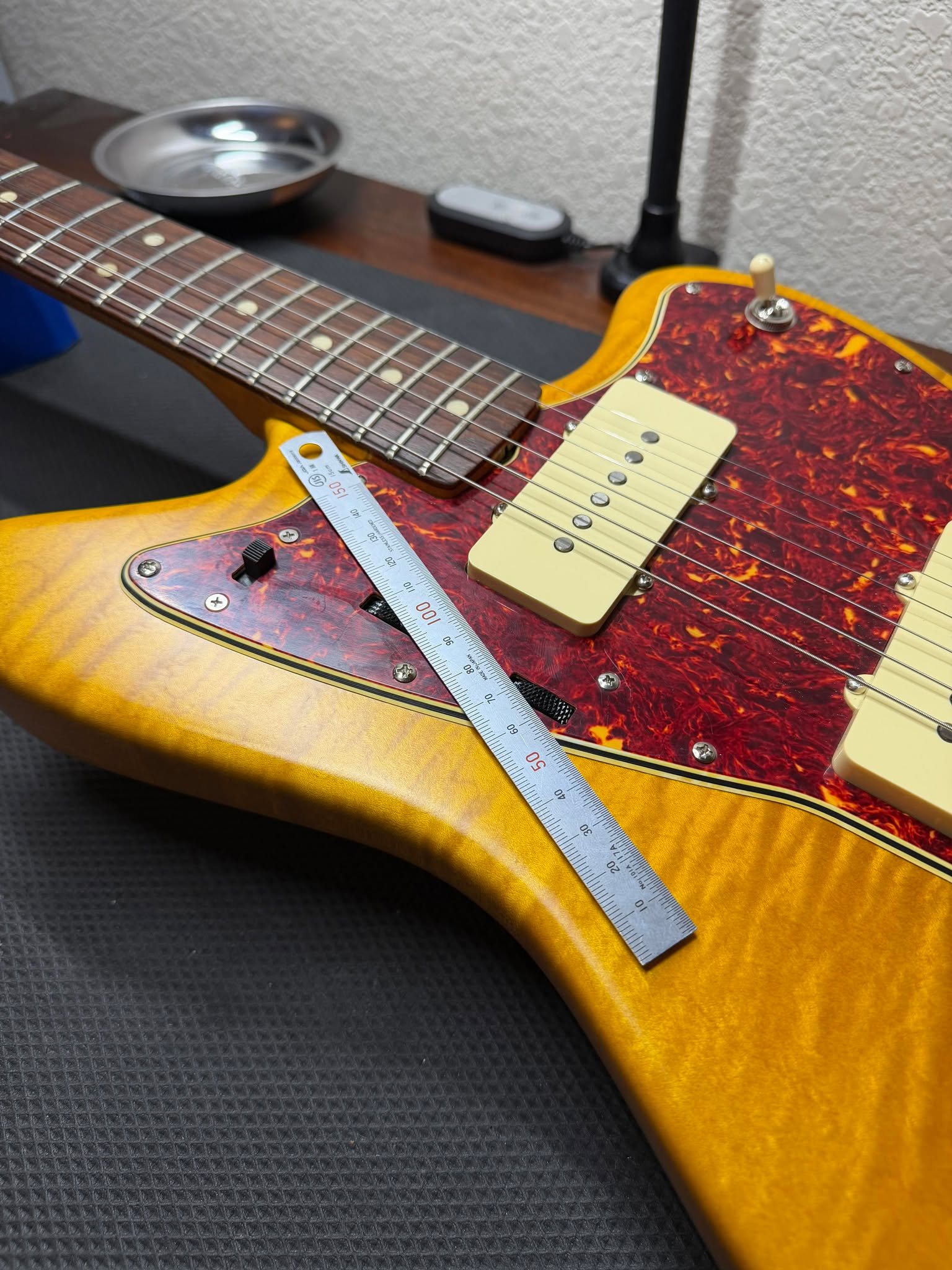
A guitar that fights you on every chord or buzzes through your amp isn't broken—it's just out of adjustment. The difference between an instrument that feels like work and one that practically plays itself often comes down to a few millimeters of string height and a quarter-turn of a truss rod.
This guide walks you through the complete setup process from start to finish, covering the tools you'll need, the exact sequence of adjustments, and how to tailor your setup to different playing styles and guitar types.
What is a guitar setup
A guitar setup involves adjusting the neck relief, string height (called action), and intonation using the truss rod, bridge or saddle, and nut. The process typically follows a specific sequence: installing new strings, cleaning the instrument, tightening loose hardware, then making adjustments in order. When done correctly, a setup optimizes both playability and sound.
Three core elements work together in any setup. Neck relief refers to the slight forward bow in the neck, controlled by an internal metal rod called the truss rod. Action describes how high the strings sit above the frets, adjusted primarily at the bridge and sometimes at the nut. Intonation ensures your guitar plays in tune across the entire fretboard, not just on open strings.
These three elements interact with each other constantly. Changing one often affects the others, which is why setup follows a specific sequence rather than random adjustments.
Why every guitar benefits from a proper setup
Wood expands and contracts with humidity and temperature changes throughout the year—a piece of spruce can shrink almost 1/8 inch when room humidity drops from 45% to 30%. Strings wear out and lose their tension characteristics. Factory settings rarely match an individual player's preferences or playing style.
A proper setup affects several aspects of your playing experience:
Easier playability: Less effort to fret notes cleanly, especially helpful for beginners
Better tone: Strings vibrate properly without buzz or dead spots
Tuning stability: The guitar stays in tune longer during playing sessions
Many players don't realize how much easier their instrument could feel until they've experienced a well-set-up guitar. Even expensive instruments benefit from adjustments tailored to how you actually play.
Signs your guitar is ready for a setup
Several common symptoms point toward setup issues:
Fret buzz: Strings rattle against frets when you play, especially in certain positions
High action: Strings feel difficult to press down, particularly as you move up the neck
Intonation problems: Chords sound out of tune even when open strings are perfectly tuned
Difficulty at certain frets: Notes choke out or sound muted in specific areas
Visible neck bow: The neck appears warped when you sight down from the headstock
If you've recently changed string gauges requiring tension adjustment, moved to a different climate, or pulled a guitar out of long-term storage, a setup check is especially worthwhile.
Tools you'll want for a guitar setup
Before starting, gathering the right tools makes the process smoother and safer for your instrument.
Measuring tools
A string action gauge or small ruler marked in 64ths of an inch works for measuring string height at specific frets. Feeler gauges are thin metal strips useful for checking precise gaps like neck relief. A capo helps with the neck relief measurement method described below.
Adjustment tools
Hex or Allen wrenches in various sizes handle truss rod and saddle adjustments. Many guitars include the correct size in the case or shipping materials. Screwdrivers in both Phillips and flathead styles work for pickup height and bridge saddle screws. Nut files allow for careful nut slot adjustments, though beginners may want to leave nut work to professionals.
Cleaning and maintenance supplies
Fretboard cleaner and conditioner works well while strings are off. Soft cloths handle wiping down the body and hardware. Graphite or nut lubricant helps with smoother tuning at nut slots. A string winder speeds up string changes considerably.
DIY guitar setup versus professional setup
Not every adjustment belongs in the DIY category. Understanding which tasks you can handle yourself protects both your guitar and your confidence.
When you can set up your guitar yourself
Basic truss rod adjustments, action changes at the bridge, intonation, and pickup height are all learnable skills. This guide covers these DIY-friendly adjustments. Starting with an inexpensive instrument to practice on builds confidence before working on anything valuable.
When to take your guitar to a professional
Nut slot filing, fret leveling and dressing, and structural repairs require specialized tools and experience. Consider professional help for worn or uneven frets that cause buzzing after setup adjustments, cracked or damaged nuts that require proper fitting and shaping, neck issues beyond truss rod range like twisted necks or severe bowing, and situations where you feel uncertain about your instrument.
Setup considerations for vintage and collectible guitars
Vintage instruments require extra caution. Aggressive adjustments can damage irreplaceable parts or reduce collector value. Older truss rods may be more fragile than modern ones, and some vintage guitars have different adjustment mechanisms entirely. Identifying your guitar's exact year through Fender serial numbers helps determine which adjustment methods are appropriate.
For valuable vintage guitars, professional luthier work is highly recommended. Verifying your instrument's authenticity and year through Gibson serial numbers ensures appropriate setup techniques for your specific model. If you're unsure about a vintage guitar's value before investing in setup work, getting a professional appraisal first helps prioritize which instruments deserve the investment. Get your free valuation
How to set up your guitar step by step
The sequence matters here: new strings, then tighten hardware, then truss rod, then action, then nut, then pickup height, then intonation. Each step builds on the previous one. Tune your guitar frequently between adjustments since all measurements assume the guitar is at playing tension.
Step 1. Inspect your guitar and install fresh strings
This preparation phase sets the foundation for everything that follows. Remove old strings and take the opportunity to clean the fretboard and body while you have clear access. Check and tighten loose hardware including tuners, strap buttons, output jacks, and screws.
Install new strings using your preferred gauge and stretch them to stabilize tuning. Apply a graphite-based lubricant to nut slots for smoother tuning. Even pencil lead works for this purpose. Finally, tune to pitch since all subsequent adjustments require the guitar to be at playing tension.
Step 2. Measure and adjust neck relief with the truss rod
Neck relief is the slight forward bow that allows strings to vibrate freely without hitting frets. Too much relief makes action feel high in the middle of the neck. Too little causes buzz.
To check relief using the capo method, place a capo on the 1st fret and fret the low E string at the fret where the neck joins the body, usually around the 17th fret. Look at the gap between the string and the frets in the middle of the neck, around the 7th-9th fret. The gap at the 8th fret typically measures roughly the thickness of a business card.
To adjust, turning the truss rod clockwise tightens it and reduces relief, flattening the neck. Turning counter-clockwiseloosens it and adds relief, creating more forward bow. Make quarter-turn adjustments at most, then retune and remeasure. Overtightening can crack the neck, so patience here prevents expensive repairs.
Step 3. Set bridge and saddle height for optimal action
String height at the 12th fret is where most playability preferences get dialed in. This measurement is what most players notice when they describe a guitar as "easy to play" or "fighting them."
To measure, use a string action gauge at the 12th fret without pressing the strings down. Measure from the top of the fret to the bottom of the string.
Guitar Type | Bass Side (Low E) | Treble Side (High E) |
|---|---|---|
Electric (typical) | 4/64" - 6/64" | 3/64" - 5/64" |
Acoustic (typical) | 5/64" - 7/64" | 4/64" - 6/64" |
For electric guitars, adjust the individual saddle height screws with a small Allen wrench or screwdriver. For acoustic guitars, the saddle may require sanding down, which is irreversible, or adding shims underneath. Many acoustic players seek professional help for saddle work.
After adjusting, play every fret on every string. If buzzing occurs, raise the action slightly until it clears.
Step 4. Check and file the nut slots if appropriate
High nut slots make first-position chords unnecessarily difficult. This check is optional but often overlooked.
To check, place a capo on the 3rd fret and observe the height of the strings above the 1st fret. A tiny gap is normal, just enough clearance that the string doesn't touch the fret. An excessive gap combined with difficult open-position chords indicates a high nut. Open strings that buzz even with proper neck relief and action indicate a low nut.
Filing nut slots requires specialized nut files and careful technique. Filing too deep ruins the nut and creates buzz that's difficult to fix. For beginners, nut work often warrants professional help.
Step 5. Adjust pickup height for best tone
This step applies to electric guitars only, with different considerations for each model—Telecaster pickups require unique adjustments due to their bridge pickup design. Pickups set too close to the strings can cause warbling sounds or magnetic pull that affects sustain. Pickups set too far away yield a weak signal. Humbucker pickups are particularly sensitive to height adjustments due to their stronger magnetic fields.
Adjust each pickup so output is relatively even when switching between them. Lower pickups produce cleaner fingerstyle tone while higher pickups deliver more output for strumming. Use a screwdriver on the mounting screws, playing and listening as you adjust. For specific models, Stratocaster pickup heights require different measurements than other guitars—start with the manufacturer's recommended heights, then adjust to taste.
Step 6. Set intonation for accurate tuning across the fretboard
This final adjustment ensures that the note played at the 12th fret matches the 12th-fret harmonic. Poor intonation means your guitar sounds out of tune even when open strings are perfectly tuned.
First, tune the open string perfectly using a tuner. Then play the 12th-fret harmonic by lightly touching the string directly over the 12th fret and plucking. Compare this to the fretted note at the 12th fret.
If the fretted note is sharp, move the saddle back, away from the neck. If the fretted note is flat, move the saddle forward, toward the neck. Repeat for each string. This step takes time but dramatically improves how chords sound across the neck.
Step 7. Final playability check and fine tuning
After all adjustments, play the guitar extensively. Check for any remaining buzz, test tuning stability across different positions, and play your typical chord shapes and scales. You may find yourself making minor tweaks over the following days as the neck settles and you notice subtle issues during actual playing.
Electric guitar setup versus acoustic guitar setup
While the principles remain similar, the procedures differ between electric and acoustic instruments.
Key differences in acoustic guitar adjustment
Saddle adjustments on acoustics are often permanent since sanding removes material that can't be replaced. There's no pickup height adjustment unless the guitar has under-saddle or soundhole pickups. Bridge pins and saddle fit affect tone and sustain significantly. Acoustics often benefit from slightly more relief than electrics.
Considerations for electric guitar setup
Individually adjustable saddles allow more precise action and intonation control. Pickup height has significant impact on tone and output. Tremolo systems like floating bridges require additional balancing steps. Most adjustments on electrics are easily reversible.
Setup notes for classical and nylon string guitars
Classical guitars have different construction including wider necks, slotted headstocks, and tied bridges. Many lack truss rods entirely. Their action is typically set higher than steel-string guitars, and the setup approach differs accordingly.
Common guitar setup mistakes to avoid
Over-adjusting the truss rod causes problems. Small turns only, and give the neck time to settle. Not tuning between adjustments throws off all your measurements since everything assumes the guitar is at pitch.
Lowering action too aggressively creates buzz that can be hard to diagnose. Filing nut slots too deep is irreversible since it's easier to file more than to add material back. Ignoring string gauge changes leads to problems because different gauges require complete setup readjustment. Skipping the final playtest means missing issues that only show up during actual playing.
How often to set up your guitar
Seasonal humidity and temperature changes affect the wood in your guitar. A new set of strings with a different gauge also requires setup adjustment.
As a general guide, check your setup with each string change and perform a full setup seasonally or whenever you notice playability changes. Guitars that travel frequently or experience climate variations typically require more attention.
How to know your guitar is properly set up
A well-set-up guitar exhibits comfortable action where strings press down easily without excessive effort. Notes ring clean across the entire fretboard at normal playing intensity without fret buzz. Chords sound in tune in all positions, indicating accurate intonation. The guitar stays in tune during normal playing sessions. There are no dead spots or inconsistent string volume.
Get expert help with your vintage guitar
Vintage and collectible guitars deserve special care. An improper setup can diminish their value or damage irreplaceable components. Understanding a guitar's true market value helps owners make informed decisions about setup investments.
If you own a vintage Fender, Gibson, Martin, or other collectible instrument, knowing its worth before investing in setup work makes sense. Edgewater Guitars offers free, no-obligation appraisals to help you understand your instrument's value.
Frequently asked questions about guitar setup
Does Guitar Center do guitar setups?
Yes, Guitar Center and similar large retailers offer setup services. Quality varies by location and technician experience. For valuable or vintage instruments, a specialist luthier may provide more careful, knowledgeable service.
What is the train method for guitar setup?
The train method refers to a systematic sequence where each adjustment follows the previous one in a specific order, like cars on a train. The typical order is neck relief first, then action, nut, pickups, and finally intonation. This sequence ensures earlier adjustments don't undo later ones.
How much does a professional guitar setup cost?
Professional setup costs vary by location and guitar type. Additional services like fret work or electronics repair cost extra. Getting quotes from multiple shops helps establish fair pricing in your area.
Can a bad setup damage my guitar?
Most setup adjustments are reversible and won't cause permanent damage if done carefully. However, over-tightening a truss rod can crack a neck, and filing nut slots too deep ruins the nut. When uncertain, professional help is the safer choice.
Do new guitars require a setup out of the box?
Factory setups are designed for average preferences and may not suit your playing style, preferred string gauge, or local climate—most guitar factories maintain 47% relative humidity which may differ significantly from your environment. Most players benefit from at least checking and adjusting a new guitar's setup.
How long does a guitar setup take?
A basic setup can be completed in under an hour once you're familiar with the process. Taking your time and rechecking after adjustments have settled produces the best results.