DATE :
Guitar Price Guide 2026: How to Value Any Guitar
You’ve got a guitar sitting in front of you—maybe inherited, maybe pulled from a closet after years of storage—and you’re wondering what it’s actually worth. The answer depends on factors that aren’t always obvious: production year, originality, condition grade, and where the current market stands for that specific model.
This guide walks you through the complete valuation process, from decoding serial numbers and using price guide resources to understanding why two seemingly identical guitars can have vastly different values.
What is a guitar price guide
A guitar price guide is a reference tool that compiles market data—recent sales, auction results, and dealer pricing—to help owners figure out what their instrument is worth. Guitar prices vary widely based on condition, brand, and rarity. Beginner models typically start around $100–$400, intermediate instruments run $300–$800, and professional-grade guitars often cost $1,000–$2,000 or more. Vintage and collectible instruments can reach into the tens of thousands depending on originality, era, and provenance.
These guides come in several formats, and each serves a different purpose:
Blue Book of Guitar Values: The industry-standard print and digital database, offering detailed valuations organized by condition grade across thousands of acoustic and electric models
Reverb Price Guide: A free online tool that pulls from actual marketplace transactions, showing what instruments are actually selling for in real time
Vintage Guitar Magazine Price Guide: An annual publication focused specifically on collectible instruments, compiled with input from leading vintage dealers
The key distinction between these resources comes down to what they track. Some follow current used-market transactions (like Reverb), while others focus on established collector values for vintage instruments (like the Vintage Guitar guide). Knowing which resource fits your situation makes the difference between an accurate valuation and a misleading one.
How to find out what your guitar is worth
You’re holding a guitar and wondering what it might be worth. Maybe you inherited it, found it in a closet, or you’re simply curious whether that old instrument has appreciated over the years. The process of determining value follows a logical sequence, and you can complete most of it yourself before ever consulting an expert.
1. Gather basic details about your instrument
Start by collecting the fundamental information visible on the guitar itself. Look at the headstock—the top of the neck where the tuning pegs attach—for the brand name and any model designation. Check the pickguard, body, and neck heel for additional markings.
For acoustic guitars, shine a flashlight through the soundhole and look for paper labels on the inside back or neck block. Write down everything you find, even markings that seem insignificant. Small details often help with identification.
2. Locate and record the serial number
Serial numbers are essential for accurate dating and pricing. The location varies by brand and era:
Electric guitars: Back of the headstock, neck plate (where the neck bolts to the body), or inside the neck pocket
Acoustic guitars: Soundhole label, neck block (visible through the soundhole), or back of the headstock
Fender instruments: Neck plate (1950s–1976), headstock (1976 onward), or stamped on the neck heel
Gibson instruments: Back of the headstock or on the orange label inside acoustics
Photograph the serial number clearly. Even partial or worn numbers can help specialists narrow down production dates.
3. Research the model and production year
Once you have the serial number, use manufacturer-specific databases to decode it into a production year. Fender, Gibson, and Martin all have well-documented serial number systems, though each brand’s numbering changed across different eras.
The year matters significantly for vintage guitar values. A 1962 Fender Stratocaster and a 1972 Stratocaster look similar to non-experts, yet they occupy completely different collector categories. The earlier instrument commands substantially higher prices due to the pre-CBS era designation.
4. Check current market prices online
Check completed (sold) listings on Reverb, eBay, and auction sites for your specific model and year, noting that market prices have settled 10% below pandemic peaks. The critical distinction here: look at actual sale prices, not asking prices. What sellers hope to get and what buyers actually pay are often quite different.
When comparing, match as closely as possible—same model and year, similar condition, comparable originality, and same finish color when relevant. The guitar blue book provides baseline values, but real transaction data shows you what the current market will actually bear.
5. Assess the condition honestly
Condition dramatically affects value—sometimes by 50% or more between grades. The standard condition terminology used across the vintage market includes:
Condition Grade | Description | Value Impact |
|---|---|---|
Mint/Near Mint | No visible wear, all original parts, like new | Highest premium |
Excellent | Light play wear only, fully functional, original parts intact | Strong value |
Very Good | Normal wear consistent with regular use, minor cosmetic issues | Moderate value |
Good | Noticeable wear, possible minor repairs, fully playable | Below average |
Fair/Poor | Significant wear, damage, or non-original parts | Substantially reduced |
Be honest with yourself during this assessment. Overestimating condition leads to disappointment when you receive actual offers or fail to sell at your asking price.
Guitar value by serial number
Serial numbers function as identification tools that unlock accurate dating and, by extension, accurate valuation. Each major manufacturer uses different numbering systems that changed across decades—sometimes multiple times within a single era.
Fender serial number lookup
Fender serial number locations shifted over the company’s history. Pre-1976 instruments typically have numbers on the neck plate (the metal plate where the neck attaches to the body), while later guitars moved the number to the headstock.
Fender guitar values vary significantly by period. Pre-CBS instruments (before 1965) command the highest collector premiums. CBS-era guitars (1965–1985) generally bring lower values, though early CBS instruments retain interest. Modern-era Fenders (1985–present) carry retail used values rather than collector premiums.
Beyond the serial number, check the neck heel for penciled dates and the body cavities for additional dating information.
Gibson serial number lookup
Gibson’s serial number history is notoriously complex, with multiple overlapping systems used across different eras. Numbers appear on the back of the headstock for most electric guitars, while acoustics often have information on the orange label inside the body.
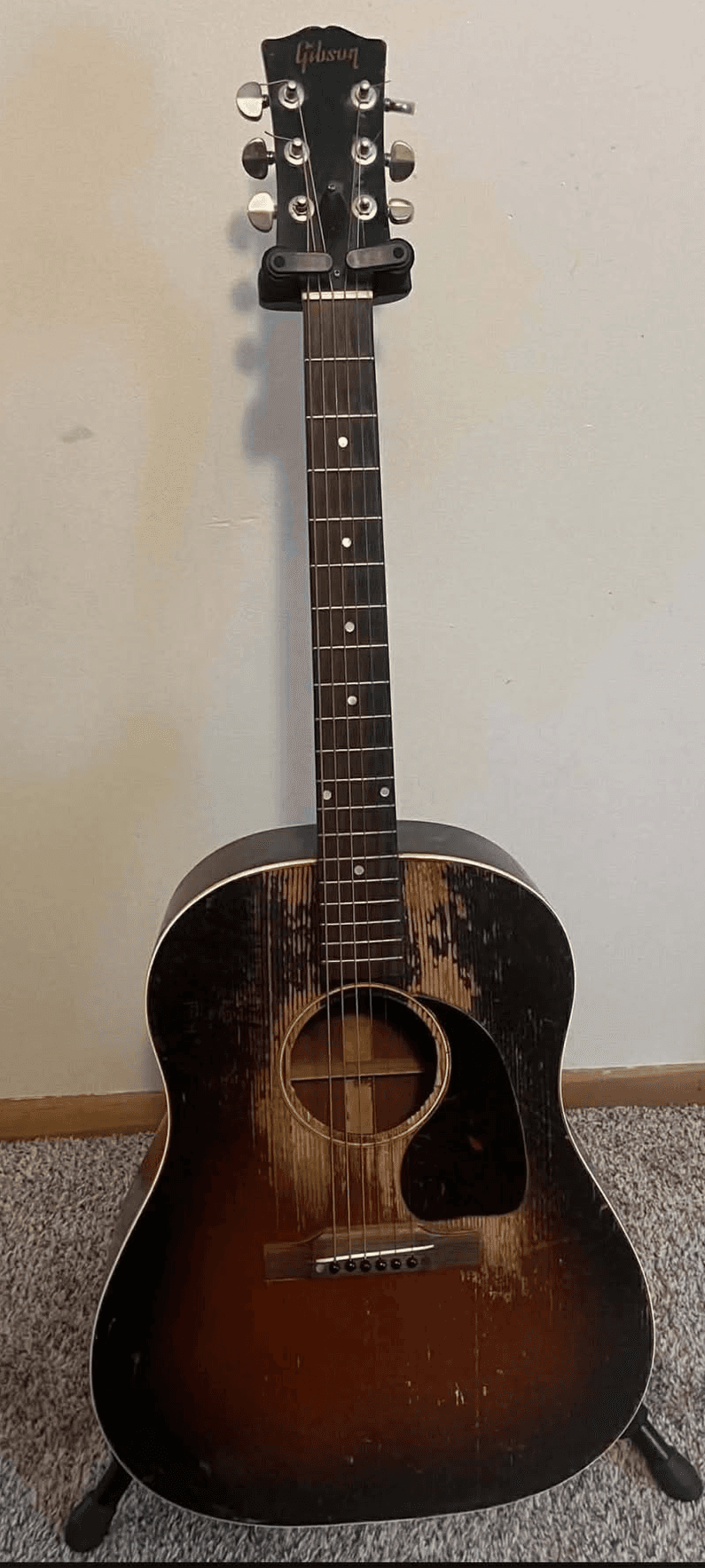
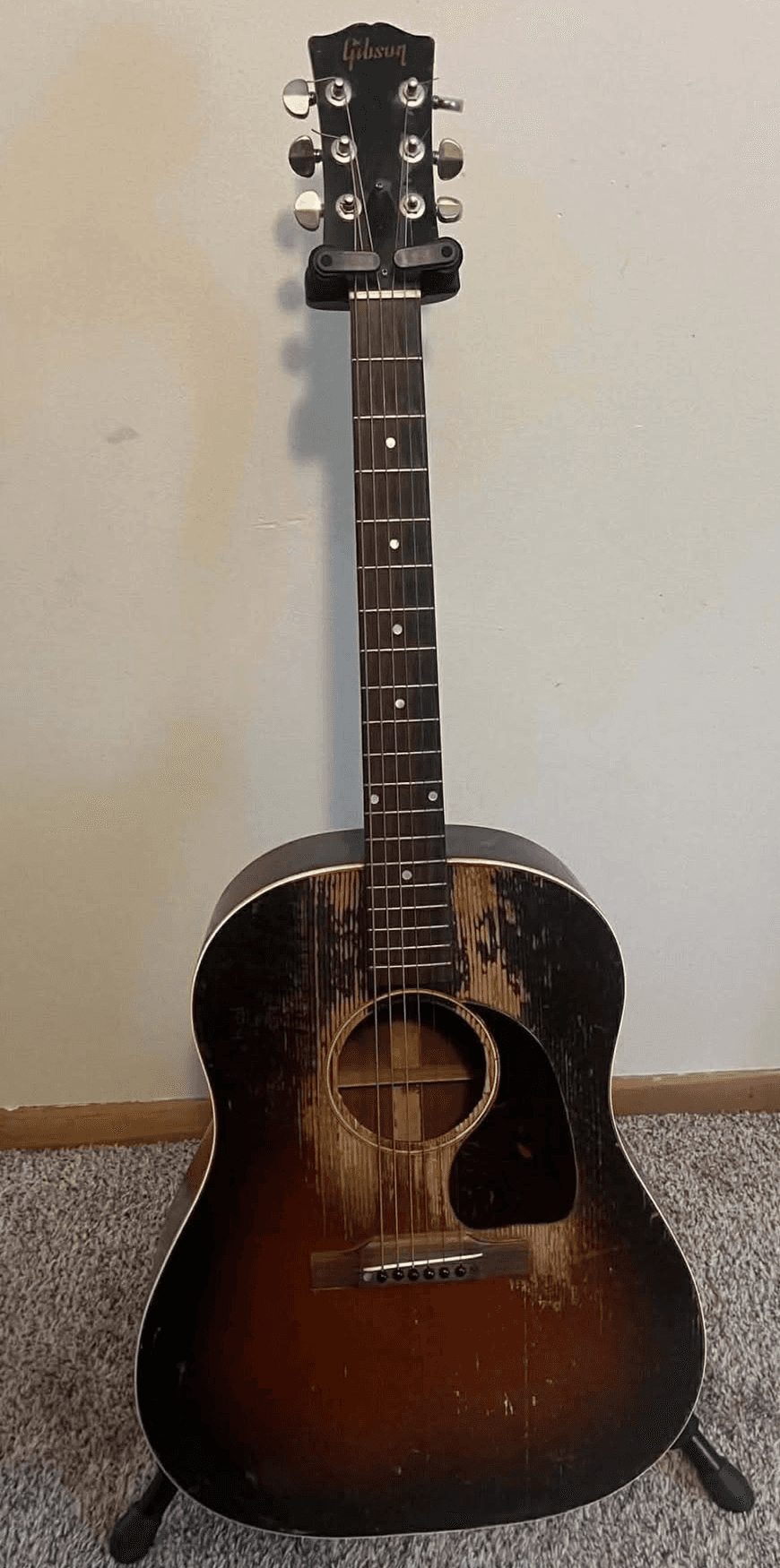
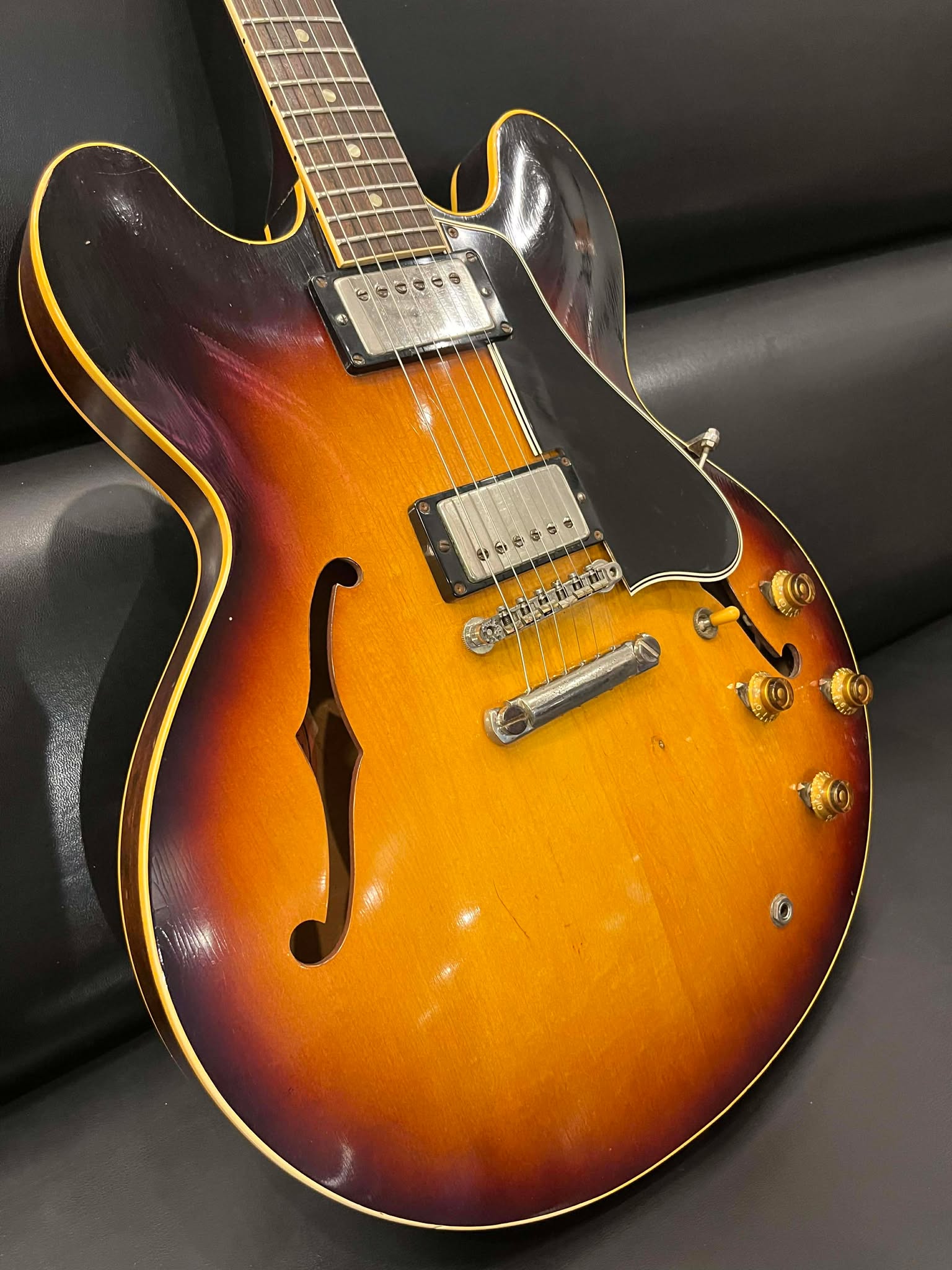
Gibson vintage values rank among the highest in the market, particularly for 1950s Les Paul Standards (the famous “Bursts”), ES-335 models, and classic acoustics like the J-45. However, Gibson’s inconsistent numbering means that professional verification often proves valuable for high-end instruments.
Martin serial number lookup
Martin uses a straightforward sequential numbering system, making their guitars among the easiest to date accurately. The serial number appears stamped on the neck block, visible through the soundhole.
Martin’s detailed historical records—maintained since the company’s founding in 1833—mean that dating is relatively simple compared to other brands. Pre-war Martin guitars (before 1946) command extraordinary collector interest, with certain models reaching six-figure values.
Other brand serial number resources
Resources exist for Gretsch, Rickenbacker, Guild, Epiphone, and other collectible brands, though documentation quality varies. Some manufacturers kept meticulous records while others did not.
For less-documented brands, professional appraisal becomes more valuable since online resources may be incomplete or inaccurate. Construction details, hardware characteristics, and era-specific features often provide dating clues when serial number information proves unreliable.
Factors that affect guitar value
Two seemingly identical guitars can have vastly different values. The key variables explain why expert assessment matters for significant instruments.
Condition and playability
Physical condition directly impacts value across every category: finish wear, fret condition, neck straightness, and electronic functionality all factor into the equation. A guitar with a warped neck or worn-through frets requires repair investment that reduces its market value accordingly.
However, condition assessment for vintage guitars differs from modern instruments. Honest play wear consistent with age—what collectors call “mojo”—doesn’t necessarily hurt value the way damage or neglect does.
Originality versus modifications
All-original instruments command premium prices in the collector market. Modifications—even upgrades that improve playability—typically reduce collectible value because they compromise the guitar’s historical integrity.
Collector grade: All-original examples with original finish, parts, and electronics
Player grade: Modified but playable instruments, often with replaced pickups, tuners, or refinished bodies
A player-grade 1960s Stratocaster might be a fantastic instrument to own and play, yet it won’t command the same price as an equivalent all-original example.
Rarity and production numbers
Limited production runs, discontinued models, and unusual specifications increase desirability. Yet rarity alone doesn’t guarantee value—the model also needs collector demand.
Interestingly, some common models from certain years are more valuable than rare models from other years, with 65% of high-value purchases driven by collectors focused on investment potential rather than rarity alone. A standard sunburst 1959 Les Paul Standard vastly outvalues a rare 1970s Gibson model because collector demand concentrates on specific eras and specifications.
Brand and model reputation
Certain brands and specific models consistently hold or increase value. Fender Stratocasters, Telecasters, Precision Basses, and Jazz Basses all have strong collector followings. Gibson Les Paul Standards, ES-335s, J-45s, and Hummingbirds command similar attention. Martin D-28s, D-45s, 000-28s, and OM-45s round out the most sought-after acoustics.
Market trends affect which instruments are currently in demand. What’s hot today may cool tomorrow, though the blue-chip vintage models have maintained strong values for decades.
Provenance and documentation
Provenance—the ownership history of an instrument—can significantly affect antique guitar prices and vintage values. Original cases, purchase receipts, hang tags, and especially celebrity ownership all add to an instrument’s story and, potentially, its price.
Documentation proving a guitar’s history provides authentication that buyers value. Even family photos showing the original owner playing the instrument add provenance that supports value claims.
Vintage guitar values by brand
Fender guitar values
The most collectible Fender models—Stratocaster, Telecaster, Precision Bass, and Jazz Bass—command their highest premiums in pre-CBS configuration (before 1965). The CBS corporate acquisition marked a transition point that collectors recognize, with earlier instruments consistently valued higher.
Custom colors add significant premiums over standard sunburst finishes. Lake Placid Blue, Candy Apple Red, Sonic Blue, Olympic White, and Surf Green examples from the early 1960s attract intense collector interest. Matching painted headstocks indicate special-order instruments that command additional premiums.
Gibson guitar values
Gibson’s most valuable models include the Les Paul Standard (especially 1958–1960 “Bursts”), ES-335, and classic acoustics like the J-45 and Hummingbird. The 1950s represent Gibson’s golden era for electric guitars, with values reflecting that historical significance.
Different eras carry different weight. A 1959 Les Paul Standard ranks among the most valuable production guitars ever made, while a 1979 Les Paul—though a fine instrument—occupies a completely different value category.
Martin guitar values
Martin’s most collectible models include the D-28, D-18, 000-18, and OM series. Pre-war instruments (before 1945) hold particular significance due to construction methods and materials that changed after World War II.
Martin acoustic values depend heavily on era and specifications. A pre-war D-28 with its scalloped bracing and Adirondack spruce top represents a different instrument—and a different value proposition—than a post-war example of the same model.
Other collectible guitar brands
Valuable instruments from Gretsch, Rickenbacker, Guild, and Epiphone attract dedicated collectors who focus on specific models and eras. Gretsch hollow-bodies from the 1950s and 1960s, Rickenbacker 12-strings, and certain Guild acoustics all have established collector markets.
Guitar blue book and other valuation resources
Several professional resources exist for guitar valuation, each with different strengths and appropriate use cases.
Blue Book of Guitar Values
The Blue Book of Guitar Values functions as the industry-standard reference, available through subscription-based online access or in print editions. Valuations are structured by condition grade, allowing you to find baseline values for instruments across the condition spectrum.
The Blue Book works best for establishing general value ranges. However, it can’t account for every variable in your specific instrument.
Reverb Price Guide
Reverb’s free online price guide pulls from actual transaction data on their marketplace. Its strength lies in researching current market values—what instruments are actually selling for right now, not what price guides suggest they’re worth.
This resource proves particularly useful for recent and modern instruments where active transaction volume provides reliable data. For rare vintage pieces with few sales, the data may be limited.
Vintage Guitar Magazine Price Guide
This annual publication focuses specifically on collectible and vintage instruments, compiled with input from leading vintage dealers. The methodology emphasizes collector-market values rather than general used-instrument pricing.
For vintage guitar price guide information on pre-1980 instruments, this resource provides context that general-purpose guides may lack.
Auction records and sold listings
Beyond dedicated price guides, completed sales on eBay, Reverb, and major auction houses (Heritage, Julien’s) provide real-world market data. The key: focus on sold prices, not asking prices.
Auction results for exceptional instruments—celebrity-owned guitars, museum-quality examples, or extremely rare models—establish ceiling prices that inform the broader market, with major auction houses reporting a 35% average price increase in recent years.
When to get a professional guitar valuation
Online research provides a solid foundation, yet certain scenarios call for professional expertise. Knowing when to seek expert help protects you from costly mistakes.
High-value vintage instruments: When your research suggests significant value, professional verification protects you from undervaluing or overestimating based on incomplete information
Estate or inherited guitars: When you’re unsure what you have or can’t identify the instrument, expert eyes catch details that online research misses
Pre-sale preparation: When you need documentation for insurance, estate planning, or serious buyers who expect authentication
Unusual or rare models: When limited sales data makes online research unreliable, specialists with hands-on experience fill the knowledge gap
Authentication concerns: When you need verification that an instrument is genuine rather than a counterfeit or misrepresented example
Tip: Many professional appraisers, including Edgewater Guitars, provide free initial valuations. There’s no reason to guess when expert assessment costs nothing.
Get a free professional guitar appraisal
If you’ve worked through the steps above and want expert verification—or if you’d prefer to skip the research and get professional guidance from the start—Edgewater Guitars offers free, no-obligation valuations for vintage and collectible instruments.
The process is straightforward. First, submit details and photos through our contact form, by text, or via email. Then, receive expert assessment from specialists with decades of experience in vintage Fender, Gibson, and Martin instruments. Finally, get a cash offer if you’re interested in selling—with no pressure if you’re not.
We serve guitar owners throughout Ohio and the Midwest, and we’re happy to help even if you’re just trying to understand what you have.
Not sure what you have? Upload a few photos to Edgewater's free What's My Guitar Worth tool. It identifies the make, model and approximate year and gives a realistic value range. It is a starting point, not a binding appraisal.
FAQs about guitar valuation
Do guitars gain value with age?
Not automatically. Only well-maintained instruments from desirable brands, models, and eras tend to appreciate, with collectible guitars generating 13.6% annualized returns over the past decade. Most guitars depreciate like other used goods—a 2015 mid-range instrument is worth less today than when it was new. The guitars that gain value represent a small percentage of total production: specific vintage models in good original condition.
What types of guitars are worth the most money?
Vintage American-made instruments from Fender, Gibson, and Martin generally command the highest prices, particularly models from the 1950s and 1960s in original condition. Pre-CBS Fender Stratocasters, 1959 Gibson Les Paul Standards, and pre-war Martin D-45s represent the upper tier of the market.
How accurate are online guitar price guides?
Online guides provide useful baseline ranges but can’t account for your specific instrument’s condition, originality, or local market factors. Actual value may vary significantly from guide prices—sometimes higher, sometimes lower.
What is the difference between trade-in value and private sale value?
Trade-in value is what a dealer will pay (typically lower, to allow for resale margin), while private sale value reflects what an end buyer might pay directly. The gap between these figures can be substantial.
Can I determine guitar value without a serial number?
Yes, through other identifying features like construction details, hardware specifications, and design elements. Experienced appraisers can often date instruments accurately using pickup styles, logo fonts, tuner designs, and other era-specific characteristics. However, having the serial number makes accurate dating and valuation considerably easier.
How do repairs or modifications affect guitar value?
Most modifications reduce collectible value even if they improve playability. Professional repairs using correct techniques and period-appropriate parts have less negative impact than amateur work or inappropriate modifications. Refinishing typically causes the most significant value reduction.
Can I clean or restore my guitar before selling?
Light cleaning with appropriate products is fine, but avoid aggressive polishing, amateur repairs, or restoration attempts. Buyers of valuable guitars often prefer original condition with honest wear over cleaned-up instruments where originality has been compromised.
How quickly can I get a professional guitar appraisal?
Many professional appraisers, including Edgewater Guitars, provide initial valuations within one to three business days after receiving photos and instrument details. For complex collections or high-value instruments requiring in-person examination, scheduling typically takes only a few additional days.
From the Edgewater Buying Desk
When we appraise a guitar, the three things that move price the most are a refinish, replaced electronics, and a break or repair such as a headstock repair. Most price guides ignore all three, yet about 80 percent of the guitars we take in have at least one of them.
We were recently offered a 1958 ES-175 with a book value around $12,000. In hand, the PAF pickups had been removed and the headstock had been repaired, so we bought it for $3,500 and sold it for $4,500, which is typical once these guitars are missing key parts.
The condition issue that costs more than people expect is any flaw on a high-value guitar. On a 1954 Stratocaster, a 1959 Les Paul Burst, or a Les Paul Custom in the $50,000-plus range, a single replaced pot, a hard-to-source replaced part, or a repair can drop the value dramatically, because those buyers want premium, all-original examples. We pay very strong money for clean, all-original guitars, but the price falls off fast when something is wrong.
This reflects the firsthand experience of the Edgewater Guitars buying team, who buy and authenticate vintage guitars from sellers nationwide and hold a 5.0 star rating across 137 Google reviews.