DATE :
Guitar Model Identification Guide and Lookup Tool
You've got a guitar in your hands—maybe inherited, maybe a garage sale find—and you're staring at it wondering what exactly it is. The brand name might be faded, the serial number could be hiding somewhere unexpected, and the body shape only tells you so much.
This guide walks you through every method for identifying a guitar model, from reading headstock markings and decoding serial numbers to using physical features when other clues are missing.
How to Identify Your Guitar Model
To identify a guitar model, start by checking the headstock and inside the soundhole for brand names, model designations, or serial numbers. From there, you can search online databases or contact the manufacturer directly. For vintage or unmarked guitars, noting unique features like pickups, inlays, and body shape helps pinpoint the specific type and production year.
Guitar model identification combines three approaches: visual inspection, serial number decoding, and physical feature analysis. The process works whether you've inherited an instrument, found one at an estate sale, or pulled an old guitar out of storage.
Check the Headstock for Brand and Model Names
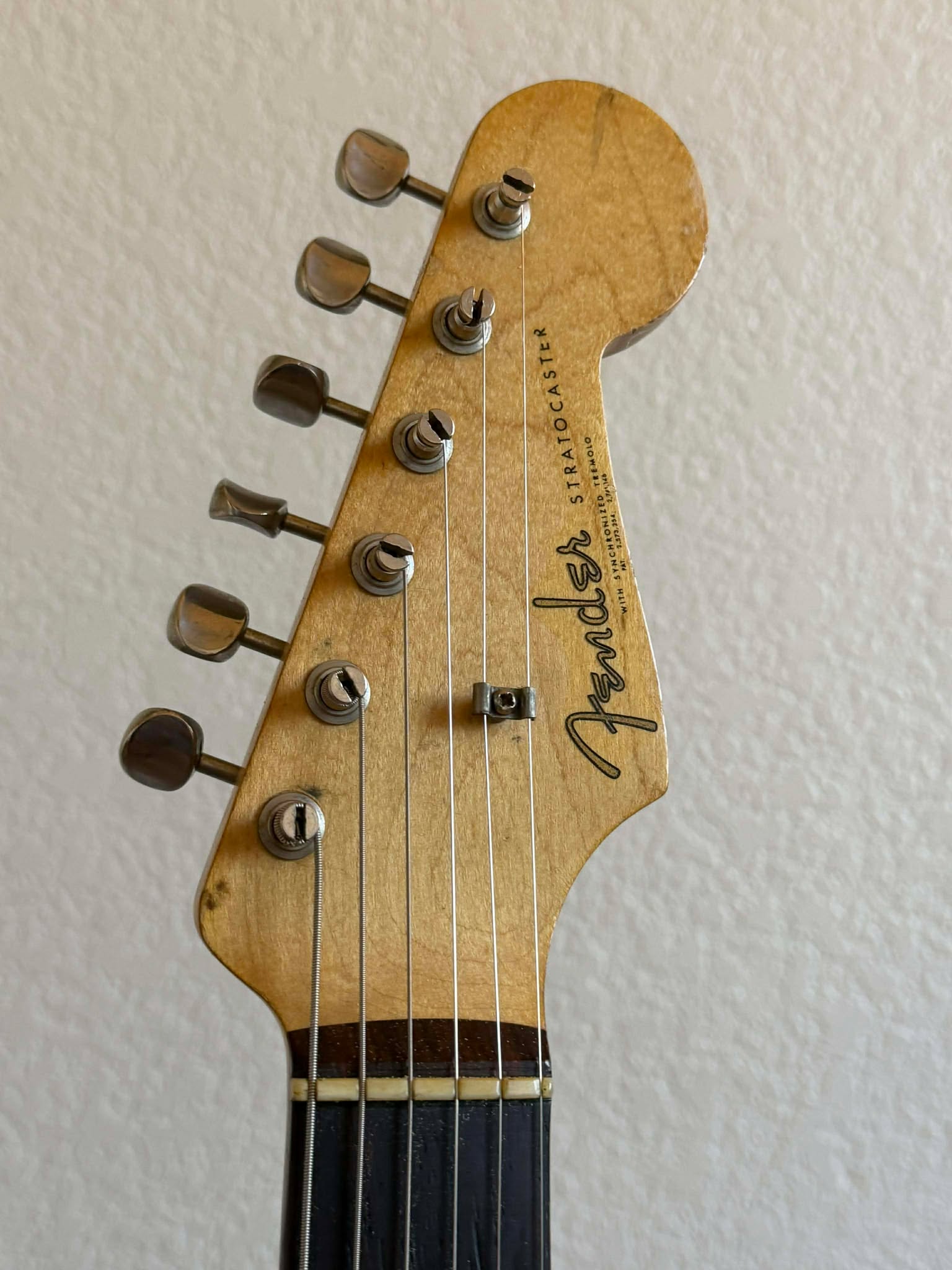
The headstock—the flat section at the top of the neck where the tuning pegs attach—is your first stop. Most guitars display the brand logo prominently on the front face, and many also print the model name directly below it.
Look for names like Fender, Gibson, Martin, Gretsch, or Epiphone. On some vintage instruments, the decal may have worn away or faded, so examine the area carefully under good lighting. You might see a faint outline where a logo once was.
Locate the Serial Number
A serial number is a unique identifier stamped during manufacturing that reveals production date, factory location, and sometimes the specific model. This number unlocks detailed information about the guitar's history.
Serial numbers appear in different locations depending on the brand and era. Finding this number dramatically simplifies the identification process, and the next section covers exactly where to look.
Examine Body Shape and Physical Features
Body shape serves as a major identifier, especially when other markings are missing. A Stratocaster looks nothing like a Les Paul, and a dreadnought acoustic differs visibly from a parlor guitar.
Pay attention to distinguishing characteristics:
Body contours: Single cutaway, double cutaway, or no cutaway
Wood grain and finish: Visible wood type or painted solid colors
Binding and inlays: Decorative details along the body edges and fretboard that indicate model tier
Look for Labels Inside the Sound Hole
For acoustic guitars, a paper label inside the sound hole often contains the brand, model, and serial number all in one place. Use a flashlight or your phone's light to peer through the opening.
The label typically sits on the back interior wall or on the neck block—the wooden piece where the neck joins the body. Martin guitars, for example, stamp model and serial information directly on the neck block.
Identify Pickup and Hardware Configurations
On electric guitars, the pickup configuration helps narrow down the exact model. Pickups are the magnetic components under the strings that capture sound, and different models use different arrangements.
Single-coil: Bright, clear tone found on Stratocasters and Telecasters
Humbucker: Warmer, thicker sound standard on Les Pauls and SGs
P90: A single-coil with a fatter tone appearing on various Gibson models
Bridge style, tuner design, and control knob layout also provide identification clues.
Where to Find Your Guitar Serial Number
Serial number placement varies by manufacturer, guitar type, and production era. Knowing where to look saves time and frustration.
Headstock and Neck Plate
Fender-style guitars often place serial numbers on the front or back of the headstock, or on the metal neck plate—the rectangular plate where the neck bolts to the body. Gibson typically stamps numbers on the back of the headstock.
Check both surfaces. Some numbers are impressed into the wood, while others are printed with ink that may have faded.
Sound Hole and Body Cavity
Acoustic guitars commonly display serial numbers on the label inside the sound hole. Electric guitars sometimes hide them inside the control cavity or in the neck pocket, which requires removing the neck to see.
Neck Heel and Neck Pocket
Vintage instruments often have date stamps or serial numbers on the neck heel—the rounded end of the neck that fits into the body. On Fender guitars from certain eras, you'll find penciled dates in the neck pocket or body cavity.
Back of the Headstock
Many brands—Gibson, Epiphone, PRS—stamp serial numbers on the rear of the headstock. Some are impressed directly into the wood, while others use ink printing that can wear over time.
Brand | Common Serial Number Location |
|---|---|
Fender | Headstock, neck plate, or neck heel |
Gibson | Back of headstock |
Martin | Interior label or neck block |
Yamaha | Headstock or sound hole label |
Taylor | Neck block inside body |
How to Look Up Guitar Serial Numbers by Brand
Each manufacturer uses different serial number formats and maintains different resources for decoding them.
Fender Model Number Lookup
Fender's official serial number lookup tool at serialnumberlookup.fender.com provides production year and country of origin for most instruments. The serial format changed across eras—pre-CBS guitars (before 1965) use different numbering than CBS-era or modern instruments.
Letters in the serial often indicate the factory. "M" typically means Mexico, while "US" indicates American production. Numbers following the letter code reveal the production year—Fender serial formats vary significantly by era.
How to Look Up Your Gibson Serial Number
Gibson serial numbers can be tricky because the company used various systems across different eras and even reused some number sequences. Pre-war, post-war, and modern 8-digit formats all follow different patterns.
Cross-reference the serial with physical features to confirm dating, since numbers alone don't always tell the complete story.
Martin Guitar Serial Number Lookup
Martin uses a straightforward consecutive numbering system. The company's official website provides a chart correlating serial number ranges to production years, making Martin guitars among the easiest to date accurately.
Check Serial Number on Yamaha Guitar
Yamaha serial numbers typically start with a letter indicating production location, followed by numbers encoding the date. Common location codes include "H" for Taiwan and "Q" for Indonesia.
Dean Guitar Serial Number Search
Dean guitars use various serial formats depending on production era and factory location. Older USA-made models follow different patterns than import models from Korea or Indonesia.
Takamine Serial Numbers Lookup
Takamine encodes production date information in the first digits of the serial number. Japanese-made instruments use different systems than import models. For Japanese Takamines, the first two digits typically represent the year of manufacture.
Serial Number Lookup for Other Brands
Ibanez: Production codes vary by factory; Japanese models often start with a letter indicating the year
Epiphone: Similar format to Gibson but with different prefix codes
PRS: Year encoded in first digits
Gretsch: Various formats across different ownership eras
How to Identify a Guitar Model Without a Serial Number
Many older or budget guitars have missing, worn, or unreadable serial numbers. When the number isn't available, visual identification methods become essential.
Match Headstock Shape to Known Brands
Headstock shapes are often trademarked and highly distinctive. Fender's swooping asymmetrical design looks nothing like Gibson's open-book shape or the pointed designs used by Jackson and ESP.
Comparing the headstock profile to reference images online can confirm the brand even when logos have worn away.
Compare Body Contours to Model Catalogs
Vintage guitar catalogs—many available online through collector sites—show original specifications and photographs. Matching body dimensions, cutaway style, and overall shape to catalog images helps identify the model.
Identify Pickups and Bridge Styles
Specific pickup configurations define certain models. A Les Paul Standard has two humbuckers, while a Telecaster has two single-coils in specific positions. Bridge design also narrows identification—tune-o-matic bridges appear on Gibson-style guitars, while Fender typically uses tremolo or hardtail bridges.
Research Tuning Machines and Hardware
Original tuning machines, knobs, and pickguards are era-specific. Kluson-style tuners dominated the 1950s and early 1960s, while Grover tuners became more common later. However, replacement parts complicate this approach.
Look for Era-Specific Manufacturing Details
Nitrocellulose lacquer finishes develop fine cracks called "checking" over time, indicating older production. Thick polyurethane finishes suggest 1970s or later manufacture.
What to Do When Guitar Serial Number Lookup Fails
Sometimes the standard lookup process hits roadblocks.
Missing or Unreadable Serial Numbers
Serial numbers wear off, get sanded away during refinishing, or were never applied to some budget models. In these cases, physical feature analysis becomes the primary identification method.
Guitars with Replacement Parts
Replaced necks, refinished bodies, or swapped hardware can create mismatched information. A guitar might have a 1970s body with a replacement 1990s neck, making serial number dating misleading.
Reused or Duplicate Serial Number Sequences
Some manufacturers—notably Gibson—reused serial number sequences across different eras. Cross-reference the serial with physical features to confirm which era applies.
Suspected Counterfeit or Replica Guitars
Counterfeit guitars often have serial numbers that don't match official records. Red flags include inconsistent logos, serial numbers with wrong formats for the claimed era, and build quality that doesn't match the purported brand. In 2021, Fender discovered nearly 32,000 online listings of its products that could potentially violate trademark laws, with about 70% believed to be counterfeit.
Free Guitar Serial Number Lookup Resources
Online Guitar Serial Lookup Tools
Free databases allow you to enter a serial number and receive production information. Results depend on the database's coverage and accuracy—cross-reference results from multiple sources when possible.
Manufacturer Databases and Archives
Fender: serialnumberlookup.fender.com
Gibson: Contact customer service (no public database)
Martin: martinguitar.com serial lookup chart
Guitar Forums and Collector Communities
Forums like The Gear Page and Les Paul Forum have knowledgeable members who can help identify obscure models from photos. Post clear photos showing the headstock, body, and any distinctive features.
When to Get Professional Guitar Identification Help
Vintage and Rare Instruments
Pre-1970 guitars, limited editions, and rare models require expert authentication. Subtle details—pot codes, pickup windings, finish type—affect both identification and value significantly.
Estate Collections and Inherited Guitars
When inheriting multiple instruments, professional appraisal ensures nothing valuable gets overlooked. What looks like "just an old guitar" might be a collectible worth thousands.
Pre-Sale Authentication
Before selling, professional identification confirms authenticity and establishes fair market value. Professional appraisals cost $89-$300 but can prevent losses exceeding $10,000 on high-value instruments. Edgewater Guitars offers free appraisals for anyone considering selling.
Get Your Free Guitar Identification and Valuation
Once you've identified your guitar, the natural next question is: what's it worth? Edgewater Guitars provides free, no-obligation valuations for vintage, rare, and quality used instruments.
Call (440) 219-3607 or submit photos through our website.
Frequently Asked Questions About Guitar Model Identification
How accurate are free online guitar serial lookup tools?
Free online tools provide a starting point but vary in accuracy. Cross-reference results with physical features and official manufacturer resources for confirmation.
Can I identify a guitar model from photos alone?
Yes, experienced appraisers can often identify guitar models from clear photos showing the headstock, body shape, pickups, and any visible serial numbers.
What does it mean if my guitar serial number returns multiple possible models?
Some manufacturers used serial number ranges that overlap across models. Examine body style, pickups, and hardware to narrow down the exact model.
How do I tell the difference between a vintage guitar and a modern reissue?
Vintage originals have era-specific construction details including pot codes, finish type, and hardware. Modern reissues use contemporary components even when styled to look vintage.
Are serial number formats different on acoustic and electric guitars?
Yes, even within the same brand, acoustic and electric guitar lines often use completely different serial number systems and placement locations.
What information helps when contacting a guitar appraiser?
Gather the brand name, any visible model markings, serial number, overall condition notes, and clear photos of the front, back, headstock, and any labels.
How do I identify a guitar if the brand name is unfamiliar or obscure?
Search for the brand name online along with "guitar history" or post photos to guitar forums. Many budget brands from past decades have dedicated collector communities.
Can replacement parts affect my guitar's identification or value?
Yes, non-original parts can complicate identification and typically reduce collector value. Original, matching components are highly prized in the vintage market.