DATE :
Does Tonewood Affect Vintage Guitar Value? What Rosewood, Mahogany, Spruce, Maple and Ash Mean for Your Offer
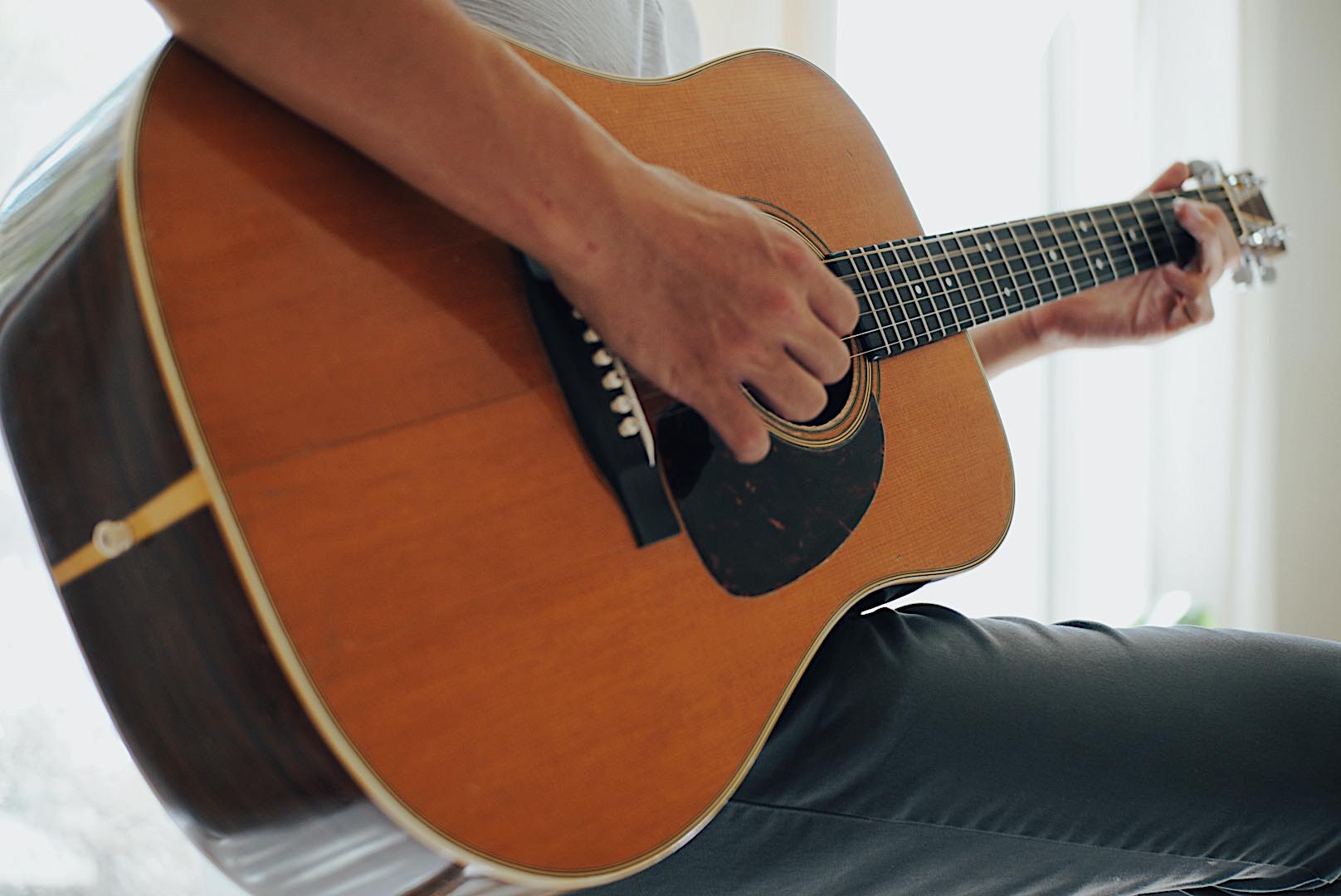
Tonewood affects vintage guitar value, though originality and condition matter more. Brazilian rosewood can double what a Martin brings, mahogany and maple mark the model, and a refinish costs more than any wood premium adds. Edgewater Guitars in Valley City, Ohio buys vintage guitars nationwide with free expert appraisals and same-day cash offers. Call or text (440) 219-3607.
Why tonewood matters to a seller, and where it stops mattering
Every offer Edgewater makes starts with three questions: what is it, is it original, and what condition is it in. Wood answers the first question. A Martin D-28 is a rosewood guitar, a D-18 is a mahogany guitar, and a Les Paul Standard is a mahogany body with a maple cap, so the species is built into the model and its price. Where wood moves the number on its own is a short list: Brazilian versus Indian rosewood, Adirondack versus Sitka spruce, and figured versus plain maple. Everywhere else, the wood is a way to confirm what the guitar is rather than a premium by itself.
The supply side of that story is worth knowing too, because it explains why some woods left production and became vintage-only features. The best writing we have found on it is The Nature of Music, Richard Hobbs's project on guitars and the materials they are made from, which we link throughout this guide.
Brazilian rosewood: the one wood that changes the offer by itself
Brazilian rosewood (Dalbergia nigra) is the back-and-sides wood on Martin's style 21, 28, 35 and 45 guitars through the 1960s, and the fingerboard and bridge wood on many Martins, Gibsons and Fenders of the 1950s and 1960s. Brazil restricted exports in the late 1960s, Martin used up its stock during 1969, and by January 1970 East Indian rosewood was the standard replacement. A few late-1969 guitars carry Indian rosewood and a few 1970 guitars carry leftover Brazilian, so a 1969 or 1970 Martin needs a physical look rather than a serial number alone. Our Brazilian vs East Indian rosewood identification guide walks through the grain, color and serial tells.
For sellers, two rules matter. First, the premium is real: Brazilian rosewood Martins bring roughly double what the same model in Indian rosewood brings, and more for pre-war examples. Second, the paperwork is real too. Brazilian rosewood has been on CITES Appendix I since 1992, the strictest tier of the international wildlife trade treaty, which means a guitar containing it cannot cross a border commercially without permits and proof the wood predates the listing. The 2019 CITES change that exempted finished musical instruments from permits covers every other rosewood species but not Brazilian. That is one reason Edgewater buys these guitars domestically and in person: a sale inside the United States needs no CITES permit, and the seller never has to prove the wood's age to a customs officer.
The conservation side is grim. By Richard Hobbs's account, less than 10% of Brazil's Atlantic Forest, the wood's only native range, is left. His piece The Cadillac of woods: Brazilian rosewood tells that story from a retired ecology professor's point of view, including his own experience importing a 1953 Gibson with a Brazilian rosewood fingerboard under a CITES permit, and it is the most balanced treatment of the subject we have read.
Mahogany: the workhorse wood, and why "mahogany" is a category, not a species
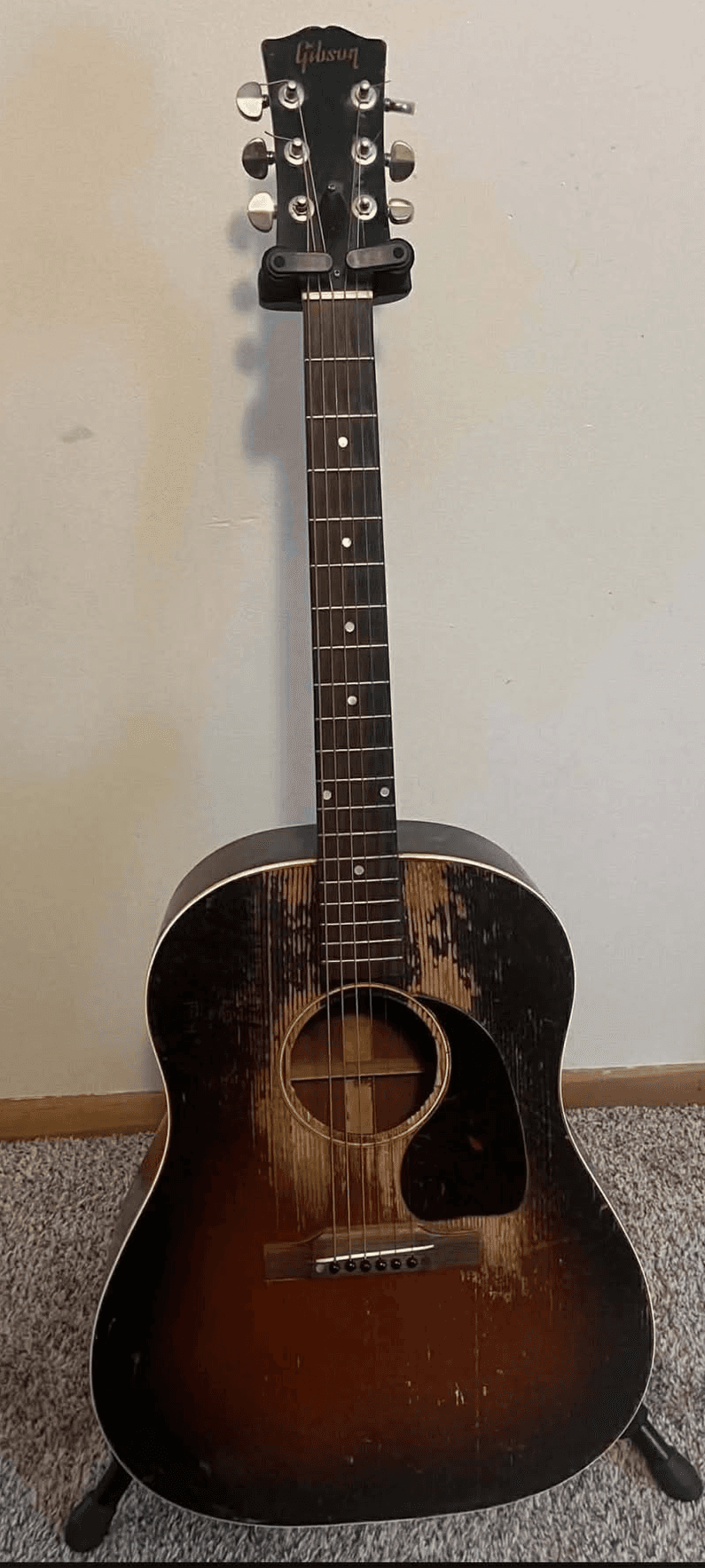
Mahogany is the back, sides and neck of the Gibson J-45, LG-2 and Southern Jumbo, the body and neck of the Les Paul Standard, Special and Junior, the SG and the Firebird, and the back and sides of every Martin style 17 and 18. Genuine mahogany means the Swietenia genus from the Caribbean and Central America. Honduran mahogany (Swietenia macrophylla) is the wood in nearly every vintage American guitar, and Cuban mahogany the wood in some of the oldest. Both are now endangered, and Honduran mahogany trades under CITES Appendix II, which is why modern production leans on plantation-grown stock or African woods sold under the same name.
For a seller, mahogany rarely moves the offer on its own. What moves it is originality: an unbroken mahogany neck with no headstock repair on a Gibson, or a mahogany body under an original finish rather than a refinish. A mahogany-topped Banner-era J-45 is a wartime variant with its own following, but that is a model question, not a wood premium. Richard's Magnificent mahogany: a complex tale explains how eighteen species across eleven genera came to share one trade name, and why a new "mahogany" guitar may be nothing like a 1950s one. Our vintage Gibson J-45 value guide covers what the mahogany workhorse brings year by year.
Spruce tops: Adirondack versus Sitka
The top is most of the sound, and on vintage flat-tops the top species is a dating clue with a price attached. Martin used Adirondack red spruce through World War II, tried Sitka in 1945 on lower models, and had switched to Sitka across the line by early 1946, using up the last red spruce on small-body guitars. A pre-war Adirondack-topped D-28 or D-18 carries the biggest spruce premium in the vintage market, and it stacks with Brazilian rosewood and scalloped bracing on the same guitar. From 1946 on, a Sitka top is simply correct, not a deduction.
Sitka has its own conservation argument. It is the standard top wood today because it grows big and straight, and that demand runs straight into old-growth logging fights in the Pacific Northwest and Alaska's Tongass National Forest. Sitka spruce: conflicts over old growth and plantations lays out that conflict, including the odd chapter of Sitka planted on Scottish peatland. For identification on our end, the Martin D-28 and D-18 value guide and the Martin dating guide cover the bracing and top changes by year.
Maple: figure is cosmetic grading, and it pays anyway
Maple is the carved cap on a 1958 to 1960 Les Paul Standard, the laminated body of every ES-335, ES-345 and ES-355, the neck on most Fenders, and the back and sides of Gibson's archtops and the J-200. On the Les Paul Standard, the sunburst finish arrived in 1958 to show off the figure in that quarter-inch cap, and the market has graded Bursts by flame ever since. A heavily flamed 1959 brings a large premium over a plain top of the same year with the same parts. That premium is aesthetic, not structural, and it applies only where the finish is original: a refinished top loses the premium and then some, because nobody can be sure what was under the old finish.
On an ES-335 the maple is a three-ply laminate around a solid maple center block, which is what Ted McCarty designed in 1958 to get solid-body sustain from a hollow-body shape. Nobody pays extra for figure on a laminate; what they pay for is the year, the neck profile and the PAF pickups. Richard's Beautiful, blonde and bright: maple hits the sweet spot makes the case for maple as the unsung tonewood and the most sustainable one in the catalog, which matters for new guitars and changes nothing about a 1959. Our Les Paul Standard value guide and ES-335 value guide put numbers on both.
Ash and alder: Fender bodies and a beetle
Fender built Telecaster and Esquire bodies from ash from 1950, moved most Stratocaster production to alder around 1956, and kept ash for blonde and natural finishes where the grain shows. On a vintage Fender, ash versus alder is an identification detail that should match the finish and the year. It carries no premium on its own, and a light swamp ash Telecaster body is valued for its weight, not its species. What sellers should know is that ash is becoming a vintage-only wood. In April 2020 Fender announced it was dropping ash from its production models, citing the emerald ash borer, an invasive beetle killing North American ash trees, plus repeated flooding in the Mississippi Delta bottomlands where swamp ash is harvested. Richard's short piece Guitars, bugs and climate change: Fender and the emerald ash borer connects the beetle, the floods and the guitars. Our vintage Stratocaster value guide covers the years where body wood is a dating tell.
Ebony and rosewood fingerboards
Ebony is the fingerboard on Gibson's Les Paul Custom, the ES-355, the Super 400 and the L-5, and on most pre-1940 Martins. Brazilian rosewood is the board on the Les Paul Standard, the ES-335 and most 1959 to 1965 Fenders. The species is a model feature, so on a vintage guitar it confirms the model rather than adding value, with the CITES caveat above applying to any Brazilian board that crosses a border. Ebony's own supply story is the subject of Ebony and ivory: elephants, trees and trade, which explains why the old preference for jet-black ebony wasted most of each tree and how Taylor's Crelicam mill in Cameroon changed that.
Tonewood and the offer, at a glance
Wood | Where you find it on a vintage guitar | What it does to Edgewater's offer |
|---|---|---|
Brazilian rosewood | Martin style 21, 28, 35 and 45 back and sides through 1969; many 1950s and 1960s fingerboards and bridges | The one true wood premium: roughly double the same Martin in Indian rosewood; CITES Appendix I, so sell domestically |
East Indian rosewood | Martin back and sides from 1970; many later fingerboards | Correct for its years, no premium, no CITES permit needed on a finished instrument since 2019 |
Mahogany (Honduran) | Gibson J-45, LG-2, Les Paul and SG bodies and necks; Martin style 17 and 18 | Neutral; originality of neck and finish moves the number |
Adirondack spruce | Martin tops through 1945 | Real premium on pre-war flat-tops, stacks with rosewood and scalloped bracing |
Sitka spruce | Tops from 1946 onward | Correct, neutral |
Maple (figured) | 1958 to 1960 Les Paul Standard caps; archtop backs | Large premium for strong flame under an original finish; nothing on a refinish |
Maple (laminate) | ES-335 family bodies | Neutral; year and pickups set the price |
Ash and alder | Fender bodies (ash from 1950; alder on most Strats from about 1956) | Neutral; must match the finish and year; light weight helps |
Ebony | Les Paul Custom, ES-355, Gibson archtops, pre-1940 Martins | Neutral; confirms the model |
What the rosewood premium looks like in dollars
The clearest example is the D-28 across its 1969 to 1970 wood change. Our Martin D-28 and D-18 value guide puts a clean, original 1964 Brazilian rosewood D-28 at around $8,500 and a 1965 at around $8,000, and our 1964 D-28 page explains why that year sits where it does. On the Indian rosewood side, Greg Boyd's House of Fine Instruments sold a 1974 D-28, uncracked, original top, with a professional neck reset, for $3,550. Same model, same shape, same bracing pattern, and the wood change accounts for most of the gap.
What Edgewater offers. Our cash offer on a clean, original vintage guitar typically lands around 20% under documented market figures like those, and meaningfully less for refinished or modified examples, because we resell into the same market those figures come from. Wood is one input; originality, structural condition and finish are the bigger ones. The accurate number for your guitar is a free appraisal: call or text (440) 219-3607.
Where to read more: The Nature of Music
The Nature of Music is written by Richard Hobbs, a retired ecology professor based in Western Australia, under the tagline "making guitars in a changing world." Most guitar sites cover models, players and prices. This one covers the trees: where each wood comes from, what happened to the forests, and how makers from Martin and Gibson to small luthiers are adapting. We found it while reading about tonewood supply and kept reading. If you own a vintage guitar and have ever wondered why the wood in it can no longer be bought new, start with the Brazilian rosewood and mahogany pieces, then browse the resources page, which also lists our serial number lookup.
Sell your vintage guitar
Edgewater Guitars buys vintage Martin, Gibson, Fender and Gretsch guitars nationwide, in person across Ohio and the Midwest and by insured shipment everywhere else. We tell you which comps we are using, we do not consign, and a clean guitar gets a same-day cash offer. Get a free estimate or call or text (440) 219-3607. Martin owners can start at our sell your Martin page.
Isaac Dailey, Google review, March 2025: "Sold my old Martin guitar to Gavin at Edgewater ... Really knowledgable guy and overall great experience!!"
Frequently asked questions
Does Brazilian rosewood make my guitar worth more?
Yes, if it is original to the guitar. A Brazilian rosewood Martin from the 1960s brings roughly twice what the same model in Indian rosewood brings, and pre-war examples more. The premium shrinks on a refinished or heavily repaired guitar, and a Brazilian fingerboard alone on a Gibson or Fender adds little. Use our Martin serial number lookup to place yours before or after the 1969 change.
Can I sell a Brazilian rosewood guitar legally?
Yes. Within the United States no CITES permit is needed. The Appendix I listing restricts international commercial trade, so shipping one abroad requires permits and proof the wood predates 1992. Selling to a domestic buyer like Edgewater avoids all of it.
Is a mahogany guitar worth less than a rosewood one?
Only in the sense that a D-18 lists below a D-28 and a J-45 below a J-200. Within a model, mahogany is neutral. Originality, a repair-free neck and an original finish decide the number. Our Gibson serial number lookup is the first step for a mahogany Gibson.
How much does flame maple add to a Les Paul?
On a 1958 to 1960 Standard with an original finish, strong flame adds a large premium over a plain top, and collectors grade it. On a refinished top, or on any laminated-maple ES-335, figure adds nothing. The condition of the finish matters more than the figure under it.
Written by Stephen Pedone, co-owner of Edgewater Guitars, Valley City, Ohio. Last updated: September 2026.
Sources: CITES species listing for Dalbergia nigra (cites.org); NAMM, "CITES Adopts Exemption for Musical Instruments from Rosewood Restrictions" (2019); Taylor Guitars, "Rosewood Musical Instruments Exempted from Requiring CITES Permits"; The Unofficial Martin Guitar Forum, "1969 vs. 1970 D-28"; The Twelfth Fret, 1969 Martin D-28 listing (last Brazilian style 28 serial); vintagemartin.com, "Knock on Wood"; The Unofficial Martin Guitar Forum, "Martin's switch from Red Spruce to Sitka"; Premier Guitar and MusicRadar on Fender's April 2020 ash announcement; insounder.org, "Woods used on Fender guitars"; guitarhq.com, Gibson J-45 reference; Vintage Guitar magazine, "Gibson 1958-'60 Les Paul Standard"; guitar.com, "An oral history of the Gibson ES-335"; The Wood Database, "Brazilian Rosewood" and "Are Rosewoods really banned by CITES?"; Greg Boyd's House of Fine Instruments, 1974 Martin D-28 sold listing; The Nature of Music articles linked above.