DATE :
Monday, April 28, 2025
1957 Gibson Les Paul Special: The Last Single-Cutaway P-90 Workhorse
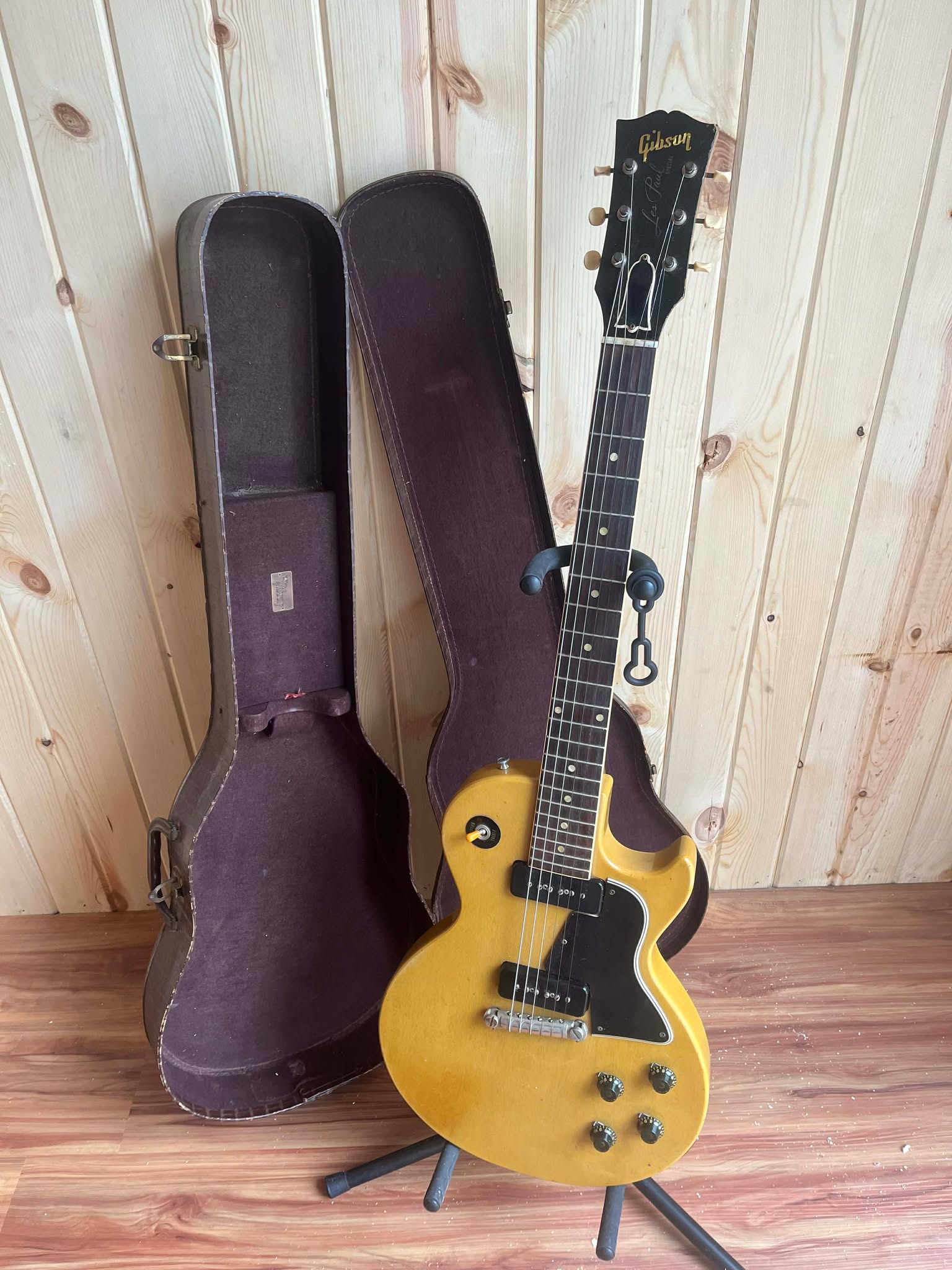
1957 Gibson Les Paul Special: The Last Single-Cutaway P-90 Workhorse
Last Updated: February 2025
1957 Gibson Les Paul Special: Pre-Humbucker Power Meets Classic Design
Last Updated: February 2025
What Makes the 1957 Gibson Les Paul Special Significant?
The 1957 Gibson Les Paul Special represents a pivotal moment in Les Paul history—the final year of the single-cutaway design before the radical double-cutaway redesign of 1958. This makes 1957 Special models the last to feature the classic Les Paul silhouette in the affordable P-90-equipped format, and significantly, the final full production year before PAF humbuckers began appearing on higher-end models.
What makes 1957 particularly special:
Last Single-Cutaway Year: 1957 represents the final full year of single-cutaway Les Paul Specials before the double-cutaway "TV model" redesign in 1958-1959, making these the last of the classic Les Paul shape in the Special line
Pre-Humbucker P-90 Tone: 1957 Specials feature Gibson's mature P-90 single-coil pickups at their peak development—one year before PAF humbuckers revolutionized Gibson's pickup designs
Bridge Transition: 1957 is a transitional year for bridge hardware—some examples have wraparound bridges, others have the new Tune-o-matic system, creating interesting variations within the same model year
Slab Mahogany Purity: All-mahogany construction (no maple cap) delivers pure mahogany resonance that players prize for blues and rock
TV Yellow Availability: The distinctive TV Yellow finish (limed mahogany) remains available alongside cherry red, offering the iconic color associated with vintage Les Paul Specials
Peak Pre-CBS Gibson Quality: Seven years before quality concerns emerged, representing Leo Fender's contemporary competitor at peak manufacturing standards
Working Musician's Instrument: Designed as an affordable professional guitar, many saw heavy stage use and survived decades of gigging
Historical Context: Built during rock and roll's explosive growth when the electric guitar was becoming central to popular music
In Edgewater's experience buying vintage Gibson Les Pauls across Ohio and the Midwest, 1957 Les Paul Specials frequently surface from estates of blues and rock musicians who appreciated their straightforward design and aggressive P-90 tone. Many owners inherited these instruments from musicians who purchased them new in the late 1950s and played them throughout their careers. The single-cutaway design from 1957 is particularly desirable compared to the later double-cutaway models.
If you own a 1957 Les Paul Special, you have the last single-cutaway example of this classic working musician's Les Paul. Edgewater Guitars provides free, no-obligation valuations for all vintage Gibson instruments. Call (440) 219-3607 or visit our website for your free appraisal.
What Is a 1957 Gibson Les Paul Special Worth? (2025 Market Values)
Value by Condition and Configuration
Condition | TV Yellow (Original) | Cherry (Original) | Tune-o-matic Bridge | Refinished |
|---|---|---|---|---|
Excellent (8-9/10) | Premium tier | Upper-mid tier | Additional premium | Mid-tier |
Very Good (7/10) | Upper-mid tier | Mid-tier | Modest increase | Lower-mid tier |
Good (6/10) | Mid-tier | Lower-mid tier | Small increase | Entry-mid tier |
Player Grade (5/10) | Lower-mid tier | Entry-mid tier | Minimal impact | Entry tier |
Current Market Note (February 2025): Single-cutaway Les Paul Specials have appreciated 30-40% over the past five years as collectors increasingly value pre-double-cutaway examples. The 1957 model benefits from being the last single-cutaway year, creating 15-25% premiums over 1958-1959 double-cutaway equivalents. TV Yellow examples command additional premiums due to distinctive appearance and collector appeal.
What Affects the Value of a 1957 Les Paul Special?
Single-Cutaway Design: The classic Les Paul silhouette creates 15-25% premiums over equivalent double-cutaway 1958-1959 models. Many collectors prefer the traditional single-cutaway shape, making 1957 particularly desirable.
Finish Type and Condition: TV Yellow examples command 10-20% premiums over cherry due to distinctive appearance and association with the model. Original finish in any color—even heavily worn—dramatically outvalues refinishing. Refinishing reduces value by 50-70%.
Bridge Configuration: Tune-o-matic bridge examples may command slight premiums (5-10%) over wraparound bridge models as they're considered more versatile and "modern." Both are correct for 1957 depending on production timing.
P-90 Pickup Originality: Original P-90 pickups with correct construction are essential. Replaced pickups reduce value by 30-40%. Rewound original P-90s are acceptable but reduce value by 15-25%.
Originality: All-original examples with untouched electronics, hardware, and finish command substantial premiums—often 50-80% more than modified examples.
Neck Integrity: Headstock repairs reduce value by 40-60%. Original unrepaired neck is essential for maximum value.
Binding Condition (if equipped): Some 1957 Specials have bound necks—original binding in good condition is important. Deteriorated or replaced binding reduces value by 10-20%.
Factory Order Number (FON) and Serial Matching: Consistent dating codes verify authenticity. Mismatched numbers suggesting parts guitar assembly reduce value by 25-45%.
Structural Integrity: Body cracks, neck issues, or routing modifications reduce value by 30-60% depending on severity.
How 1957 Compares to Other Years
Year | Key Difference | Relative Value | Why |
|---|---|---|---|
1955-1956 | Earlier single-cut, similar specs | Similar | Equivalent desirability |
1957 | Last single-cut year, bridge transition | Baseline (premium tier) | Final classic design year |
1958 | Double-cutaway redesign begins | 15-25% lower | Body shape preferences vary |
1959 | Double-cutaway standard | 15-25% lower | Further from classic design |
1960 | SG-style body introduced | 30-40% lower | Completely different instrument |
Recent Sales and Auction Results
Market observations from recent transactions:
January 2025: 1957 Les Paul Special in TV Yellow with Tune-o-matic bridge, all-original, achieved premium pricing at major auction
December 2024: 1957 Special in cherry finish with wraparound bridge commanded strong pricing as last single-cutaway example
November 2024: Player-grade 1957 Special, refinished with replaced pickups, sold in entry-mid tier range
October 2024: Near-mint 1957 TV Yellow example with all original components and documentation achieved top-tier pricing for the model
Edgewater consistently pays 30-40% more than typical guitar shops for vintage Gibson Les Pauls. We specialize in single-cutaway Les Paul Specials and understand the premiums that 1957 examples command. Get your free valuation by calling (440) 219-3607 or submitting photos through our website.
How to Identify an Authentic 1957 Gibson Les Paul Special
Serial Numbers
Range for 1957: 7xxxx range (5 digits)
Location: Stamped on back of headstock in gold ink
Format: Five digits beginning with "7" (typically 70000-79999)
Important caveat: Gibson serial numbers from this era overlapped between years and were not perfectly sequential. Serial numbers alone cannot definitively date a Les Paul Special—you must cross-reference with Factory Order Number (FON), pot codes, and physical features.
Factory Order Number (FON)
Location: Stamped inside body cavity, visible through pickup cavities when pickups are removed or through neck pocket
Format: Typically 8 digits—first letter indicates year
1957 FON codes: Begin with "R" or "S"
R = 1956-1957 (carries into early '57)
S = 1957-1958
Example: S 4821 would indicate 1957 production
How to find: Remove pickup mounting rings and shine light into pickup cavities, or check neck pocket stamp
Potentiometer Codes
Manufacturer: Centralab (code 134) or CTS (code 137) most common in 1957
How to decode:
First three digits: Manufacturer code (134 = Centralab, 137 = CTS)
Next two digits: Year (57 = 1957)
Last two digits: Week of manufacture (01-52)
Expected codes for 1957:
134-5701 through 134-5752 (Centralab)
137-5701 through 137-5752 (CTS)
Where to find: Inside control cavity, stamped on four potentiometers (two volume, two tone)
Important: Pot dates should be consistent with or slightly earlier than assembly date. Mixed pot codes from late 1956 through 1957 are normal.
Key Visual Identifiers
Body Construction: Single-cutaway slab mahogany body (no maple cap, no carved top)
Body Shape: Classic Les Paul single-cutaway silhouette
Finish: TV Yellow (limed mahogany) or cherry red, nitrocellulose lacquer
Top: Flat slab top (not carved like Standard or Custom models)
Binding: Single-ply white binding on body only (neck typically unbound on early '57, some late '57 have bound necks)
Pickups: Two P-90 "soapbar" single-coil pickups with cream or white covers
Pickup Mounting Rings: Cream or white plastic, flat (not curved)
Bridge Options: Wraparound compensated bridge OR Tune-o-matic with separate stop tailpiece (both correct for 1957)
Neck Profile: Chunky rounded profile, substantial feel (typically .90"+ at 1st fret)
Fingerboard: Rosewood with dot inlays (pearl or celluloid)
Binding: Body binding only on early models, some late 1957 have bound necks
Headstock: "Les Paul" script logo in gold, no "Special" designation on headstock
Truss Rod Cover: "Les Paul" in script on bell-shaped truss rod cover
Tuners: Kluson Deluxe single-line, single-ring tuners with plastic buttons
Knobs: Black "speed" knobs or "top hat" knobs with metal insert
Switch Tip: Amber or black toggle switch tip
Nut Width: 1-11/16" (1.6875")
Factory Markings and Stamps
FON stamp:
Inside body cavity (pickup or neck pocket)
Format: Letter followed by 4-5 digits
Should match approximate serial number era
Neck stamp:
Pencil date marking occasionally present on neck heel
Inspector marks sometimes visible
Profile notes occasionally marked
Pickup cavity markings:
Routing marks showing period-appropriate tools
Body wood grain visible in cavities
Shielding paint (if present) should be period-appropriate
Control cavity:
Pot codes on all four potentiometers
Wiring should be cloth-covered (not plastic)
Capacitors should be "bumblebee" style .022mfd
P-90 Pickup Identification (Critical for 1957 Value)
Authentic P-90 characteristics:
Construction:
"Soapbar" design with rectangular shape
Two bar magnets underneath pole pieces
Single coil of wire wrapped around bobbin
Cream or white plastic covers (may yellow with age)
Six adjustable pole pieces (slot-head screws)
Specifications:
DC Resistance: Approximately 7.5-8.5k ohms per pickup (varies)
Magnets: Alnico V bar magnets (typically)
Wire: Enamel-coated copper wire
Covers: Cream-colored plastic (may show aging to darker cream/beige)
How to Verify P-90 Authenticity:
Check DC resistance (should fall in 7.0k-9.0k range)
Examine cover material and aging patterns
Verify two-wire construction (not four-conductor)
Check pole piece screw style (slot-head correct)
Look for appropriate aging on covers
1957 P-90 Specifics:
Mature P-90 design representing seven years of refinement
Hand-wound with slight variations between individual pickups
May have cream or slightly darker aged covers
Potted or unpotted (both appear)
Red Flags: How to Spot Fakes and Refinishes
Refinish indicators:
Overspray on binding edges: Original finish stops cleanly at binding
Paint in screw holes: Original finish doesn't pool in screw holes
Thick finish feel: Polyurethane refinishes feel thick versus thin nitro
No age checking: 65+ year old nitrocellulose should show fine checking
Wrong color tone: TV Yellow has specific hue—incorrect yellows indicate refinish
Paint in cavities: Control and pickup cavities should be bare wood
Uniform aging: Original finish shows specific wear patterns in contact areas
Parts replacement indicators:
Humbucker routing: Any routing for humbuckers destroys collector value
Modern tuners: Grover, Schaller, or locking tuners indicate replacement
Wrong pickups: Replacement P-90s or other pickup types
Modern potentiometers: Date codes showing 1970s+ manufacture
Plastic-covered wire: Should be cloth-covered
Modern bridge: Wrong bridge style indicates modification
Added binding: Some Specials had binding added later (attempting to simulate Custom)
Neck authenticity concerns:
Mismatched dates: Neck characteristics and pot codes should correlate
Headstock repairs: Look for finish discontinuities, grain misalignment
Wrong logo style: Reproduction decals have subtle differences
Refinished neck: Stripped and refinished necks lose significant value
Bound neck anomalies: Binding should show appropriate aging if present
Common conversions and fakes:
Junior models with added neck pickup (second pickup routing)
Later models with replaced necks dated to 1957
Refinished guitars passed as original TV Yellow or cherry
"Partscasters" assembled from 1957-era components
Double-cutaway Specials represented as earlier single-cutaway
In Edgewater's experience evaluating vintage Les Paul Specials, the most common issue we encounter is humbucker routing from the 1970s-80s when P-90s were considered outdated. This is important because routing for humbuckers permanently damages these instruments and dramatically reduces value—an all-original P-90-equipped Special is worth substantially more than a routed example, even with quality humbuckers installed. The pure P-90 tone is essential to the Special's character and value.
Not sure if your 1957 Les Paul Special is all original? Edgewater offers free authentication—our team has evaluated hundreds of vintage Gibson Les Pauls and can verify originality, identify modifications, and assess condition accurately. Call (440) 219-3607 or contact us through our website.
1957 Gibson Les Paul Special Specifications
Specification | Detail |
|---|---|
Body Wood | Solid mahogany, slab construction (no maple cap) |
Body Style | Single cutaway, flat top (not carved) |
Neck Wood | One-piece mahogany |
Fingerboard | Rosewood with pearl or celluloid dot inlays |
Fingerboard Radius | 12" radius |
Neck Profile | Chunky rounded profile, substantial (.90"+ at 1st fret typical) |
Neck Joint | Set neck, long tenon (deep body joint) |
Scale Length | 24.75" (Gibson standard) |
Nut Width | 1-11/16" (1.6875") |
Frets | Medium wire, 22 frets |
Pickups | Two P-90 single-coil "soapbar" pickups |
Pickup Output | Approximately 7.5-8.5k ohms DC resistance per pickup |
Magnets | Alnico V bar magnets (typical) |
Pickup Covers | Cream or white plastic (may show aging) |
Bridge | Wraparound compensated bridge (early '57) OR Tune-o-matic with stop tailpiece (late '57) |
Tailpiece | Integral with bridge (wraparound) OR separate stop tailpiece (Tune-o-matic) |
Tuners | Kluson Deluxe single-line, single-ring, plastic buttons |
Truss Rod | Non-adjustable (adjustable truss rods introduced 1961) |
Truss Rod Cover | Bell-shaped, "Les Paul" script |
Controls | Two volume, two tone, three-way toggle switch |
Knobs | Black "speed" knobs or "top hat" style with metal insert |
Switch Tip | Amber or black plastic tip |
Capacitors | "Bumblebee" .022mfd paper-in-oil capacitors |
Wiring | Cloth-covered wire |
Binding | Single-ply white binding on body only (early '57), some late '57 have bound necks |
Finish | Nitrocellulose lacquer |
Available Colors | TV Yellow (limed mahogany), cherry red |
Weight Range | 7.5-9 lbs (typically 8-8.5 lbs, lighter than Standards/Customs) |
Case | Brown hardshell case with pink interior (when included) |
Original Retail Price | Entry to mid-tier pricing in Gibson's Les Paul lineup |
What Does a 1957 Gibson Les Paul Special Sound Like?
Pickup Specifications and Tonal Profile
P-90 Pickup Characteristics:
Pickup type: Single-coil P-90 "soapbar" design
DC Resistance: Approximately 7.5-8.5k ohms per pickup (varies by individual unit)
Magnet type: Alnico V bar magnets (two bars under pole pieces)
Construction: Single coil wrapped around rectangular bobbin with six adjustable pole pieces
Covers: Cream or white plastic (may show yellowing with age)
Tonal character: The 1957 P-90 pickups deliver aggressive, punchy midrange with clarity and bite that cuts through any mix. These pickups represent P-90 design at peak development—seven years of refinement since introduction. The bridge pickup produces cutting, snarling lead tones with excellent note definition and harmonic complexity. When overdriven, P-90s create a distinctive growl with less compression than humbuckers—raw, dynamic, and responsive to playing touch. The neck pickup provides warm, vocal-quality rhythm tones perfect for blues and jazz, with rounded highs and full midrange. P-90 output is higher than Fender single-coils but lower than humbuckers, providing excellent dynamic range. The tone cleans up beautifully with lighter touch and adds grit when played aggressively. The famous P-90 "bark" comes from strong midrange emphasis combined with clear, articulate highs.
How Construction Details Affect Tone
All-Mahogany Construction: The slab mahogany body (no maple cap) provides pure mahogany resonance—warm, focused midrange with less overtone complexity than maple-capped Les Pauls. Mahogany's relatively soft, porous nature emphasizes fundamental tones, creating a punchy, direct sound. This all-mahogany construction is distinctly different from Standards and Customs, offering more focused, less complex tone that many players prefer for rock and blues.
Slab Body (No Carve): The flat-top slab construction creates maximum acoustic resonance without the carved top's interference. More wood mass vibrating as a single unit contributes to sustain and fundamental tone emphasis.
Set Neck Construction: The glued-in set neck with long tenon creates excellent coupling between neck and body for resonance transfer and sustain. The set neck design contributes to the singing sustain Les Pauls are famous for.
24.75-Inch Scale Length: Shorter scale than Fender's 25.5" creates lower string tension, making bends easier and contributing to warmer tone with less high-end bite. The shorter scale emphasizes fundamental notes over overtones.
Rosewood Fingerboard: Rosewood adds warmth and complexity compared to maple fingerboards, absorbing some of the brightest overtones for a more complex tonal palette.
Chunky Neck Profile: The substantial neck adds mass contributing to sustain and resonance. The thick profile provides excellent coupling and tonal authority.
Bridge Configuration Impact:
Wraparound bridge: Provides excellent string coupling and sustain with simple, direct energy transfer
Tune-o-matic bridge: Offers improved intonation with slightly different harmonic characteristics
Single-Ply Binding: Minimal binding compared to Custom models means maximum wood exposure and resonance—the simpler construction contributes to direct, punchy tone.
Nitrocellulose Lacquer: The thin nitrocellulose finish allows wood to resonate freely. After 65+ years, the finish has cured and aged, contributing to harmonic complexity.
Lighter Weight: Les Paul Specials typically weigh 7.5-9 lbs—lighter than Standards or Customs due to slab construction and simpler appointments. The lighter weight contributes to slightly more midrange focus and less low-end depth.
Aged Tonewood: Sixty-five-plus years of aging has allowed wood cells to crystallize and stabilize, improving resonance and harmonic complexity significantly.
Notable Recordings
While specific 1957 Les Paul Special recordings are difficult to document precisely, the Les Paul Special became associated with legendary players:
Leslie West (Mountain): Famous for using Les Paul Juniors and Specials for massive, overdriven P-90 tones (though his primary guitar was a Junior)
Billie Joe Armstrong (Green Day): Famous "Blue" guitar is Les Paul Special-derived, showcasing P-90 aggression in punk rock (though modified over years)
Mick Jones (The Clash): Used Les Paul Specials for punk and rock recordings
Blues Players: Chicago and regional blues artists favored Les Paul Specials and Juniors for raw P-90 tone throughout the late 1950s-60s
Early Rock and Roll: P-90-equipped Les Pauls appeared across countless late-'50s rock and roll and rockabilly recordings as affordable professional instruments
The P-90 sound from late-'50s Les Paul Specials represents aggressive, dynamic tone that influenced punk, garage rock, and blues-rock for decades. The combination of pure mahogany resonance and mature P-90 design creates one of the most distinctive tones in electric guitar history.
Common Issues and Modifications That Affect Value
Humbucker routing: The most common and value-destroying modification. Routing for humbuckers (attempting to "upgrade" from P-90s) reduces value by 60-80%. This modification is irreversible and destroys collector value even with quality humbuckers installed.
Refinishing: Original finish removal and refinishing reduces value by 50-70%. Even heavily worn original TV Yellow or cherry finish dramatically outvalues refinishing. Original finish integrity is critical to value.
Replaced P-90 pickups: Original P-90s are essential. Replacement P-90s reduce value by 30-40%. Rewound original P-90s are acceptable but reduce value by 15-25%. Any other pickup type significantly impacts value.
Headstock repairs: Even expert repairs reduce value by 40-60%. Poor repairs reduce value by 60-80%. Original unrepaired neck is essential for maximum value.
Bridge modifications: Changing from wraparound to Tune-o-matic (or vice versa) requires drilling and reduces value by 20-30%. Added Bigsby vibrato requires routing and reduces value by 25-40%.
Replaced tuners: Original Kluson tuners are correct. Modern replacements reduce value by 10-15%. Tuner replacement requiring enlarged holes significantly reduces value.
Refrets: Professional refrets with period-correct wire are acceptable for playability—minimal value impact (5-10%) if done properly. Modern jumbo frets reduce value by 15-25%.
Electronics replacement: Original potentiometers, capacitors, and wiring command premiums. Period-appropriate replacements acceptable but reduce value by 15-25%. Modern generic electronics reduce value by 25-35%.
Binding deterioration: Single-ply binding can shrink or deteriorate. Severely deteriorated binding reduces value by 10-20%. Binding replacement reduces value by 15-25%.
Added binding: Some owners added neck binding attempting to make Specials look like Customs. This modification reduces value by 20-30% as it's not original.
Missing parts: Missing original pickup covers, mounting rings, knobs, switch tip, or truss rod cover each reduce value by 5-15% per component.
Neck reset: Professional neck resets are acceptable for playability—reduce value by 10-20%. Poor neck work significantly impacts value.
Body cracks or structural damage: Cracks near neck pocket, tailpiece, or strap button reduce value by 25-50% depending on severity and quality of repair.
In Edgewater's experience evaluating 1950s Les Pauls across the Midwest, the most common issue we encounter with 1957 Les Paul Specials is humbucker routing combined with refinishing from the 1970s-80s. This is important because when P-90s were considered "outdated," many owners simultaneously routed for humbuckers and refinished worn finishes, creating double value impact—two of the most significant modifications possible. An all-original P-90-equipped Special with original finish is worth substantially more than a routed, refinished example.
Selling Your 1957 Gibson Les Paul Special: Your Options Compared
Selling Option | Typical Offer | Timeline | Fees/Costs | Risk Level | Best For |
|---|---|---|---|---|---|
Edgewater Guitars | 30-40% above shop offers | Immediate cash | None | Low—expert authentication included | Owners wanting fair value without hassle |
Local Guitar Shop | Wholesale pricing (lowest) | Same day | None direct, but lowest price | Low | Convenience over value |
Online Marketplace (Reverb, eBay) | Variable—potentially highest | Weeks to months | 5-15% platform fees + shipping costs | High—scams, disputes, damage, authentication challenges | Experienced sellers comfortable with risk |
Auction House | Variable—can be high for exceptional examples | 3-6 months | 15-25% buyer's premium | Medium | Museum-quality all-original TV Yellow examples |
Vintage Guitar Dealer | Upper-mid to premium pricing | Days to weeks | None if direct sale | Medium | Established dealers with Gibson expertise |
Private Sale | Highly variable | Unpredictable | None | Very High—authentication burden, scams, disputes | Sellers with established networks |
Why Choose Edgewater Guitars
Edgewater Guitars specializes in purchasing vintage Gibson Les Pauls and offers distinct advantages for 1957 Les Paul Special owners:
Single-Cutaway Expertise: We understand the premium that single-cutaway design commands over later double-cutaway models. We properly value 1957 as the last single-cutaway year.
P-90 Authentication: We verify original P-90 pickups and identify replacements, rewinds, or humbucker conversions. We pay appropriate premiums for all-original P-90-equipped instruments.
Premium valuations: We consistently offer 30-40% more than local guitar shops because we understand the collector market for pre-double-cutaway Les Paul Specials and the premiums that TV Yellow finish and original P-90s command.
Authentication expertise: Free evaluation of finish authenticity, P-90 originality, bridge configuration verification, and complete dating confirmation using serial numbers, FON codes, and pot codes.
Immediate payment: No consignment periods, no waiting months for the "right buyer." Cash payment or immediate bank transfer when we purchase your instrument.
Honest assessment of modifications: We assess modification impact fairly. A refinished or modified 1957 Special is still valuable—we simply price it accurately based on current condition and market realities.
Geographic coverage: Based in Ohio, we serve Michigan, Pennsylvania, Indiana, and West Virginia. For higher-value Les Pauls and complete collections, we'll travel to you for in-person evaluation.
The Edgewater Process
Initial Contact: Call (440) 219-3607 or submit photos through our website. Include serial number, FON (if accessible), pot codes, and clear photos of overall condition, bridge type (wraparound or Tune-o-matic), finish color (TV Yellow or cherry), P-90 pickups, and any modifications or repairs.
Preliminary Valuation: We provide an initial value range based on photos and information supplied. We'll identify finish type, bridge configuration, and production timing within 1957.
Detailed Evaluation: We verify all dating codes for consistency, examine finish for authenticity, assess P-90 originality, check for humbucker routing or modifications, and evaluate all components.
Formal Offer: Clear, written offer with detailed explanation of valuation factors. We explain single-cutaway premium, finish type impact, bridge configuration, and how we arrived at our number based on all originality factors.
Transaction: Immediate payment upon acceptance—cash, certified check, or bank transfer. We handle all logistics for safe transport if needed.
Recent transaction example: In January 2025, Edgewater purchased a 1957 Les Paul Special in TV Yellow from a private seller in Youngstown, Ohio. The owner inherited the guitar from his uncle, who purchased it new in 1957 and played it in local rock and country bands throughout the 1960s-70s.
After examining photos of the serial number (73,248), distinctive TV Yellow finish, and two P-90 pickups, we identified this as a potentially exceptional 1957 single-cutaway Special. The critical evaluation points were finish authenticity, P-90 originality, and whether any humbucker routing had occurred.
Detailed photos confirmed our assessment: the TV Yellow finish showed authentic aging—the distinctive limed mahogany color with appropriate yellowing and checking patterns. No overspray on binding, no evidence of refinishing. Both P-90 pickups were original with aged cream covers and correct construction. DC resistance measurements (8.1k and 8.3k ohms) fell perfectly within normal P-90 ranges.
The FON stamp "S 6127" confirmed 1957 production, and pot codes (134-5714, 134-5715, 137-5718, 137-5719) dated consistently to 1957. The guitar featured a wraparound bridge—correct for early 1957 production. All hardware including Kluson tuners and original knobs was correct and original.
Most importantly, the body cavities showed zero evidence of humbucker routing or modifications—the pickup routes were original P-90 size with no additional routing, filled holes, or alterations. This confirmed the guitar had never been modified for humbuckers, a common value-destroying modification.
The guitar had been professionally refretted in the 1980s with period-appropriate wire. The binding showed minor shrinkage but was original. Original brown hardshell case with pink interior was included.
Outcome: Our offer significantly exceeded quotes from three guitar dealers and one vintage specialist. We explained in detail why this particular 1957 Les Paul Special commanded premium pricing:
Single-cutaway design: Last year before double-cutaway redesign, creating 15-25% premiums over 1958-1959 models
TV Yellow finish: Authentic limed mahogany with correct aging—most desirable color
All-original P-90s: Both pickups original with correct construction and measurements
No humbucker routing: Zero modifications—body cavities completely original
Consistent dating: Serial, FON, and pot codes all aligned perfectly for 1957
Wraparound bridge: Original early-1957 bridge configuration
Original finish: Authentic TV Yellow despite wear—vastly more valuable than refinishing
We contrasted this with dealer quotes that had offered generic "Les Paul Special" pricing without recognizing: (1) the single-cutaway premium over later double-cutaway models, (2) the TV Yellow finish premium over cherry, or (3) the exceptional originality with zero routing modifications.
Seller testimonial: "My uncle bought this guitar new in 1957 and played it his whole life. I knew it was old and probably worth something, but I had no idea the single-cutaway shape made it more valuable than the later double-cutaway ones, or that the TV Yellow color was special. The dealers I talked to just said 'Les Paul Special' and gave me quotes. Edgewater explained that 1957 was the last year before they changed the body shape, making it more desirable. They also checked carefully to make sure nobody had routed it for humbuckers—apparently that's really common and kills the value. They explained that having the original P-90 pickups in an unmodified body with the original yellow finish made it worth a lot more than I'd been told. Their offer was substantially higher because they understood what made this specific guitar valuable."
Ready to find out what your 1957 Les Paul Special is worth? Get your free, no-obligation valuation: Call (440) 219-3607 or visit edgewaterguitars.com.
Frequently Asked Questions About the 1957 Gibson Les Paul Special
Q: What is a 1957 Gibson Les Paul Special worth in 2025?
A: Value depends heavily on originality and finish type. All-original examples in TV Yellow with original P-90 pickups command premium collector pricing. Cherry finish examples bring strong but slightly lower pricing (10-20% less than TV Yellow). Refinished examples or those with replaced pickups/humbucker routing bring mid-tier to entry pricing. Headstock repairs reduce value by 40-60%. The single-cutaway design commands 15-25% premiums over equivalent 1958-1959 double-cutaway models.
Q: How can I tell if my 1957 Les Paul Special is all original?
A: Check pot codes for 134-57XX or 137-57XX. Verify FON begins with R or S. Serial should be 7XXXX range. Examine pickup cavities for evidence of humbucker routing (enlarged routes, filled holes, additional routing). Original P-90s have cream covers with correct construction and 7.5-8.5k resistance. Check finish for overspray on binding or hardware. Verify single-cutaway body shape (double-cutaway indicates 1958+).
Q: Why is the single-cutaway design more valuable than double-cutaway?
A: The 1957 single-cutaway design represents the classic Les Paul shape, while 1958-1959 introduced the radical double-cutaway "TV model" redesign. Many collectors prefer the traditional single-cutaway silhouette, creating 15-25% premiums for 1957 over later double-cutaway models. The single-cutaway design is also the last year before the SG-style body arrived in 1960.
Q: Are 1957 Les Paul Specials a good investment?
A: Yes, particularly single-cutaway examples in TV Yellow with original P-90s. Pre-double-cutaway Les Paul Specials have appreciated 30-40% over five years. The 1957 model benefits from being the last single-cutaway year, creating growing premiums over later double-cutaway models. All-original examples show steady appreciation. Modified examples (humbucker routing, refinishing) appreciate much more slowly.
Q: Does Edgewater Guitars buy 1957 Gibson Les Paul Specials?
A: Yes, Edgewater actively purchases vintage Gibson Les Pauls, particularly single-cutaway Les Paul Specials. We provide free authentication and offer premium pricing for all-original P-90-equipped instruments. We also purchase modified examples, pricing them accurately based on current condition. We serve Ohio, Michigan, Pennsylvania, Indiana, and West Virginia, and will travel for high-value instruments.
Q: How much does humbucker routing affect the value?
A: Humbucker routing (enlarging pickup cavities for humbuckers) reduces value by 60-80%. This is one of the most value-destroying modifications possible because it's irreversible and fundamentally changes the instrument. An all-original P-90-equipped Special is worth substantially more than a routed example even with quality humbuckers installed. The pure P-90 tone is essential to the Special's character and value.
Q: What's the difference between TV Yellow and cherry finish on value?
A: TV Yellow examples generally command 10-20% premiums over cherry finish in equivalent condition. TV Yellow (limed mahogany) is visually distinctive, has strong association with the Les Paul Special model, and shows unique aging characteristics. However, condition and originality matter more than color—an all-original cherry Special is worth more than a refinished TV Yellow example.
Q: Should a 1957 Les Paul Special have a wraparound bridge or Tune-o-matic?
A: Both are correct for 1957—it was a transitional year. Early 1957 examples typically have wraparound bridges, while later 1957 examples have Tune-o-matic bridges with separate stop tailpieces. Tune-o-matic examples may command slight premiums (5-10%) as they're considered more versatile. The key is originality—either bridge type is valuable if original to the guitar.
Q: How can I verify my Les Paul Special hasn't been routed for humbuckers?
A: Remove pickup mounting rings and examine the pickup cavities. Original P-90 routing should be rectangular with specific dimensions for P-90 size. Look for evidence of: enlarged routes, filled holes around the perimeter, wood filler or patches, finish overspray in cavities, or routing marks inconsistent with factory work. Original P-90 routes are clean with hand-routing tool marks appropriate for the 1950s.
Q: Can a 1957 Les Paul Special be dated by serial number alone?
A: No—Gibson serial numbers from the 1950s overlapped between years and models. You must cross-reference serial number with FON code, pot codes, and physical features (especially single-cutaway body confirming pre-1958). The FON is the most reliable indicator (R or S prefix for 1957), but comprehensive authentication requires examining all dating methods plus body shape verification.
Q: What's the difference between a Les Paul Special and a Les Paul Junior?
A: The Special has two P-90 pickups versus the Junior's single pickup. The Special has two volume and two tone controls versus the Junior's single volume and tone. Both share slab mahogany body construction. The Special offers more tonal versatility. Both were offered in TV Yellow and cherry finishes. The Special was positioned as mid-tier between Junior (entry-level) and Standard/Custom (premium).
Q: Are Les Paul Specials with bound necks more valuable?
A: Some late 1957 Specials have bound necks—this is correct for late production and neither increases nor decreases value significantly compared to unbound examples. Both are authentic 1957 variations. The bound neck is simply a running production change. Condition of the binding matters more than its presence or absence.
Related Resources
Gibson Serial Number Lookup Tool — Decode your Gibson's serial number
Gibson Potentiometer Dating Guide — Learn to read pot codes and FON stamps
P-90 Pickup Identification Guide — Authenticate vintage P-90 pickups
How to Spot Humbucker Routing on Les Paul Specials — Identify modifications
Sell Your Vintage Guitar to Edgewater — Get your free valuation
Related posts: [1956 Les Paul Special], [1958 Les Paul Special], [1957 Les Paul Junior]
Edgewater Guitars specializes in purchasing premium vintage guitars throughout Ohio, Michigan, Pennsylvania, Indiana, and West Virginia. We travel to you for high-value instruments. Contact us today for your free, no-obligation valuation: [link] | (440) 219-3607.
Article