DATE :
How to Date Your Vintage Gibson Super 400: Complete 1934-1969 Authentication Guide
How to Date Your Vintage Gibson Super 400: Complete 1934-1969 Authentication Guide
Why Dating Your Vintage Gibson Super 400 Matters
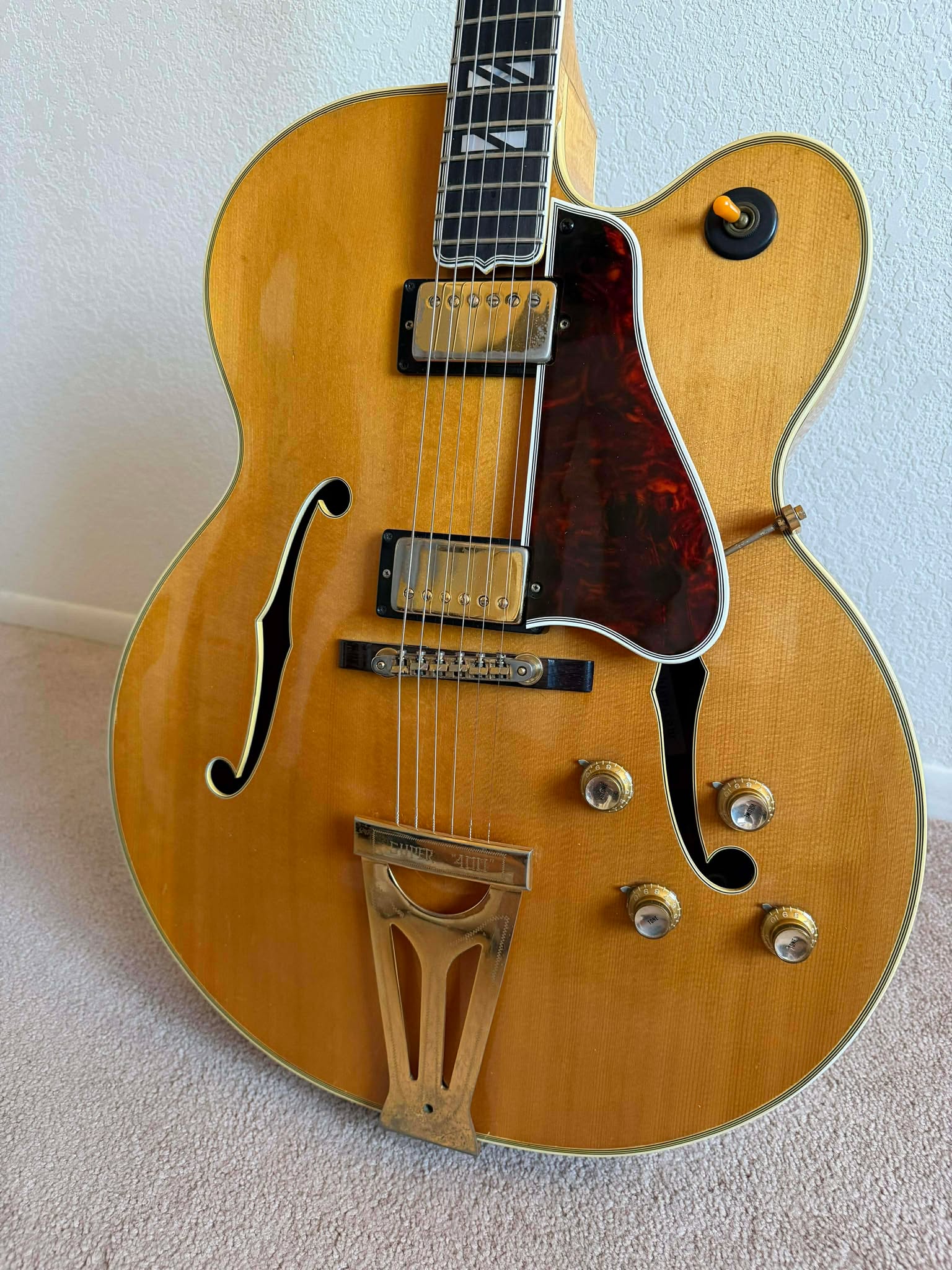
Learning how to date a vintage Gibson Super 400 accurately is essential for authentication, proper valuation, insurance documentation, and understanding your instrument's place in jazz guitar history. The Gibson Super 400 represents the absolute pinnacle of American arch-top guitar craftsmanship—an 18-inch hand-carved masterpiece with premium appointments and unparalleled build quality that established the standard for luxury jazz guitars.
Whether you own a rare pre-war acoustic Super 400 with f-holes, a 1950s Super 400CES with PAF pickups, a mid-1960s cutaway model, or any vintage Super 400 from the pre-1969 era, determining its exact manufacturing year affects everything from market value to restoration approaches. Certain years and specifications command premium prices, particularly early examples with specific features and original appointments.
This comprehensive guide teaches you how to date your vintage Gibson Super 400 using multiple authentication methods, ensuring accuracy for guitars made between 1934 and 1969.
Understanding the Gibson Super 400 History
Before diving into dating methods, understanding the Super 400's evolution provides crucial context:
The Birth of the Super 400 (1934)
Gibson introduced the Super 400 in 1934 as the ultimate arch-top guitar:
Revolutionary Design Features:
18-inch body width (largest production guitar)
Hand-carved spruce top
Hand-carved maple back
Premium figured maple
Elaborate inlays and binding
Gold-plated hardware throughout
$400 price ($7,000+ in today's money)
Custom shop craftsmanship
Top of all guitar lines
Strategic Purpose:
Establish Gibson's dominance in premium guitars
Create ultimate jazz guitar
Demonstrate master luthier skills
Command highest prices
Status symbol instrument
The "Super 400" Designation Explained
"Super" = Top Tier:
Highest grade Gibson guitar
Ultimate craftsmanship
Premium materials throughout
No expense spared
"400" = Original Price:
$400 retail price (1934)
Astronomical sum during Depression
More than many automobiles
Luxury instrument status
Musical Significance
Famous Players:
Wes Montgomery (jazz legend)
Kenny Burrell (jazz master)
Scotty Moore (Elvis Presley guitarist)
Various jazz and country artists
Studio session elite
Sophisticated professionals
Sonic Character:
Warm, rich, complex tone
Powerful volume and projection
Excellent for jazz chords
Clear note separation
Studio-quality sound
Premium acoustic voice
Major 1934-1969 Evolution Periods
1934-1939: Pre-War Acoustic
Super 400 introduced
Acoustic-only
Non-cutaway initially
Premier model
Pre-war craftsmanship
1939-1941: Cutaway Introduced
Cutaway option available
Premier cutaway acoustic
Pre-war peak quality
Limited production
1942-1945: WWII Production
Wartime restrictions
Limited materials
Reduced production
Banner headstock era
1946-1950: Post-War Acoustic
Production resumes
Acoustic continues
Quality returns
Traditional appointments
1951-1956: Super 400CES Introduction
Electric version introduced (1951)
"CES" = Cutaway Electric Spanish
Alnico V pickups (early)
P-90 pickups initially
Revolutionary electric arch-top
1957-1960: PAF Era
PAF humbucker pickups
Most collectible electric era
Peak craftsmanship
Investment grade
1961-1969: Patent Number Era
Patent number humbuckers
Continued excellence
Premium appointments
Pre-1970 collectibility
How to Date Your Vintage Gibson Super 400: Serial Number Systems
Understanding Gibson's serial number systems is foundational for dating:
Important Resource: For quick serial number reference, use our Gibson Serial Number Lookup Tool to find your guitar's approximate year based on serial number ranges.
Serial Number Location
Where to Find Serial Number:
Inside guitar through f-hole (acoustic and electric)
Stamped on label (orange or white)
Back of headstock (some later examples)
Internal bracing (some early examples)
Use flashlight and mirror for visibility
Format: Various formats depending on year
1934-1947 Serial Number System
Format: Sequential numbering, often with batch numbers
Approximate Ranges:
1934: 90000-92000 range (first year)
1935: 92000-94000 range
1936: 94000-96000 range
1937: 96000-99000 range
1938: 99000-99999 range
1939: 100000-103000 range
1940: 103000-105000 range
1941: 105000-107000 range
1942-1945: Limited production (WWII)
1946-1947: 107000-110000 range
Location: Inside guitar on label or bracing
Note: Extremely limited Super 400 production means very few serial numbers
Pro Tip: Use our Gibson Serial Number Lookup Tool for instant reference.
1947-1961 Serial Number System
Format: Letter prefix (A) followed by numbers
Approximate Ranges:
1947-1950: A-1000 to A-7000 range
1951: A-7000 to A-9000 range
1952: A-9000 to A-11000 range
1953: A-11000 to A-13000 range
1954: A-13000 to A-15000 range
1955: A-15000 to A-17000 range
1956: A-17000 to A-19000 range
1957: A-19000 to A-22000 range
1958: A-22000 to A-24000 range
1959: A-24000 to A-27000 range
1960: A-27000 to A-30000 range
1961: A-30000 to A-33000 range
Location: Inside guitar on label
1961-1969 Serial Number System
Format: 5-6 digits with varying overlap
Approximate Ranges:
1961: 1xxxx-2xxxx range
1962: 2xxxx-3xxxx range
1963: 3xxxx-4xxxx range
1964: 4xxxx-7xxxx range
1965: 7xxxx-9xxxx range
1966: 0xxxx-1xxxx range (restarted)
1967: 1xxxx-8xxxx range
1968: 8xxxx-0xxxx range (restarted again)
1969: 0xxxx-9xxxx range
Critical Challenge: Overlap between years makes serial numbers less reliable
Location: Inside guitar on label
Why Serial Numbers Are Problematic:
Significant overlap in 1960s
Numbering restarted multiple times
Must use Factory Order Numbers and physical features
Factory Order Numbers (FON): The Most Reliable Dating Method
For vintage Super 400s, Factory Order Numbers provide the most accurate dating:
What FON Tells You: Production batch and year of manufacture
Location: Inside guitar
Stamped on internal bracing or blocking
Visible through f-hole
Orange label (1950s-early 1960s)
White label (mid-1960s onward)
May require mirror and flashlight
Format: Letter followed by 3-4 digits
Letter indicates year
Numbers indicate production batch
FON Letter Codes (1934-1969):
1934-1947: Various systems
U = 1948
T = 1949
S = 1950
R = 1951
Q = 1952
P = 1953
O = 1954
N = 1955
M = 1956
L = 1957
K = 1958
J = 1959
I = 1960
H = 1961
G = 1962
F = 1963
E = 1964
D = 1965
C = 1966
B = 1967
A = 1968-1969
Example: FON "L 2847" = 1957 production, batch 2847
How to Find FON:
Look through f-hole with flashlight
Check orange or white label
FON stamped on internal wood
Use mirror for difficult angles
Photograph for documentation
Why FON Is Critical:
Most reliable Gibson dating method
Minimal overlap between years
Essential for accurate dating
Industry standard
Dating Vintage Super 400 by Physical Features: Era-by-Era Guide
Physical characteristics provide crucial dating evidence:
1934-1939 Super 400 (Pre-War Acoustic - Most Valuable)
The Original Ultimate Guitar:
Body Construction:
18-inch body width (lower bout)
Hand-carved spruce top
Hand-carved figured maple back
Figured maple sides
21-inch body length
3.75-inch body depth (early)
Non-cutaway (1934-1938)
Cutaway option (1939)
Top:
Hand-carved Adirondack spruce
Graduated thickness
Premium selection
Hand-fitting
Back and Sides:
Figured maple (premium grade)
Hand-carved back (arched)
Highly figured wood
Bookmatched back
Neck:
Mahogany neck
Ebony fingerboard
Split-block inlays (pearl)
Multi-ply binding
Bound fingerboard
25.5" scale length
Headstock:
Gibson script logo
"Super 400" designation
Split-diamond inlay
Multi-ply binding
Premium appointments
Engraved tailpiece cover
F-Holes:
Hand-carved f-holes
Bound f-holes (multi-ply)
Precise placement
Premium craftsmanship
Bridge:
Adjustable ebony bridge
Floating bridge
Height-adjustable saddle
Premium design
Tailpiece:
Engraved tailpiece
"Super 400" engraving
Gold-plated
Elaborate design
Raised tailpiece
Hardware:
Gold-plated throughout
Grover Imperial tuners
Premium quality
Top-tier appointments
Binding:
Multi-ply binding on body (5-ply or 7-ply)
White/black/white layers
Bound f-holes
Bound fingerboard
Bound headstock
Elaborate binding everywhere
Inlays:
Split-block fingerboard inlays (pearl)
Split-diamond headstock inlay
Ornate position markers
Premium mother-of-pearl
Finish:
Natural finish (blonde)
Sunburst finish option
Hand-rubbed nitrocellulose lacquer
Premium finish quality
Label:
Orange label inside (later 1930s)
Gibson logo
"Super 400" designation
Kalamazoo, Michigan
Serial Numbers: 90000-103000 range (approximate)
Why Pre-War Super 400 Is Ultimate:
Hand-crafted during Depression
Finest materials (Adirondack spruce)
Master luthier construction
Extremely limited production
Historical significance
Six-figure values standard
1939-1941 Super 400 Premier (Cutaway Pre-War)
Cutaway Super 400 Introduced:
Body Construction:
18-inch body width
Hand-carved spruce top (Adirondack)
Hand-carved figured maple back
Single Florentine cutaway (pointed)
Revolutionary cutaway design
Premium craftsmanship
All Premium Features Continue:
Split-block inlays
Multi-ply binding throughout
Gold hardware
Engraved tailpiece
Hand-carved construction
Finish:
Natural finish
Sunburst finish option
Premium lacquer
Serial Numbers: 103000-107000 range
Significance: Cutaway option on ultimate guitar, pre-war craftsmanship
1942-1945 Super 400 (WWII Banner Era)
Wartime Production:
Banner Headstock:
"C.F. Martin & Co. Est. 1833" style banner
Wait, that's Martin - Gibson used:
"Only a Gibson is Good Enough" banner
Patriotic wartime logo
1942-1945 only
Limited Production:
Wartime material restrictions
Reduced output
Premium features continue where possible
Some substitutions necessary
All Other Features:
18-inch body
Hand-carved construction
Premium appointments
Gold hardware
Serial Numbers: Limited production during war years
Significance: Banner era adds historical significance and collectibility
1946-1950 Super 400 (Post-War Acoustic)
Production Resumes:
Body Construction:
18-inch body width
Hand-carved spruce top
Sitka spruce replaces Adirondack
Hand-carved figured maple back
Cutaway and non-cutaway options
Features:
Split-block inlays
Multi-ply binding
Gold hardware
Engraved tailpiece
Premium appointments continue
Changes:
Sitka spruce tops more common
Some material substitutions
Quality returns to pre-war levels
Finish:
Natural or sunburst
Nitrocellulose lacquer
Serial Numbers: 107000-A-7000 range
Significance: Post-war transition, quality restored
1951-1956 Super 400CES (Electric Introduction - Revolutionary)
The Electric Super 400 Debuts:
"CES" Designation:
C = Cutaway
E = Electric
S = Spanish (standard guitar, not lap steel)
Body Construction:
18-inch body width
Hand-carved spruce top
Hand-carved figured maple back
Single Florentine cutaway
Semi-hollow construction (center block)
Pickups - Early Electric:
P-90 pickups initially (1951-1954)
Alnico V pickups (1954-1956)
Two pickups
Black or gold covers
Electronics:
Two volume controls
Two tone controls
3-way selector switch
Premium wiring
Neck:
Mahogany neck
Ebony fingerboard
Split-block inlays
Multi-ply binding
Headstock:
Gibson script logo
"Super 400CES" designation
Split-diamond inlay
Multi-ply binding
Gold tuners
Bridge and Tailpiece:
Tune-o-matic bridge (introduced)
Separate tailpiece
Gold-plated hardware
Hardware:
Gold-plated throughout
Grover Imperial tuners
Premium appointments
Binding:
Multi-ply binding throughout
Bound f-holes
Premium appointments
Finish:
Natural finish (blonde)
Sunburst finish option
Nitrocellulose lacquer
Label:
Orange label inside
Serial Numbers: A-7000 to A-19000 range
Significance: Electric Super 400 established, revolutionary design
1957-1960 Super 400CES (PAF Era - Holy Grail)
The Ultimate PAF Guitar:
Body Construction:
18-inch body width
Hand-carved spruce top
Hand-carved figured maple back
Single Florentine cutaway
Semi-hollow with center block
Pickups - Critical Feature:
PAF humbucker pickups (1957-1960)
Patent Applied For
Revolutionary humbucking design
Sticker on pickup (early)
No sticker (later)
Gold covers standard
Most collectible pickup era
All Premium Features:
Split-block inlays
Multi-ply binding throughout
Gold hardware
Ebony fingerboard
Premium appointments
Electronics:
Two volume controls
Two tone controls
3-way selector switch
Premium components
Bridge and Tailpiece:
Tune-o-matic bridge (ABR-1)
Separate tailpiece
Gold-plated
Hardware:
Gold-plated throughout
Grover Imperial tuners
Premium quality
Finish:
Natural finish most common
Sunburst finish option
Nitrocellulose lacquer
Label:
Orange label inside
Serial Numbers:
1957: A-19000 to A-22000, FON "L"
1958: A-22000 to A-24000, FON "K"
1959: A-24000 to A-27000, FON "J"
1960: A-27000 to A-30000, FON "I"
Why PAF Super 400CES Is Holy Grail:
Original PAF humbuckers
18-inch ultimate jazz guitar
Peak Gibson quality
Hand-carved construction
Investment grade
Six-figure values standard
1961-1965 Super 400CES (Patent Number Era)
Classic 1960s Specifications:
Body Construction:
18-inch body width
Hand-carved spruce top
Hand-carved figured maple back
Single Florentine cutaway
Pickups:
Patent number humbucker pickups
Replace PAF pickups (1961+)
"Patent No." embossed on cover
Gold covers
Excellent tone
All Features Continue:
Split-block inlays
Multi-ply binding
Gold hardware
Premium appointments
Electronics:
Two volume controls
Two tone controls
3-way selector switch
Bridge and Tailpiece:
Tune-o-matic bridge
Separate tailpiece
Gold-plated
Hardware:
Gold-plated throughout
Grover Imperial tuners
Finish:
Natural or sunburst
Nitrocellulose lacquer
Label:
Orange label (early 1960s)
White label (mid-1960s onward)
Serial Numbers:
1961: A-30000 or 1xxxx, FON "H"
1962: 2xxxx, FON "G"
1963: 3xxxx, FON "F"
1964: 4xxxx, FON "E"
1965: 7xxxx, FON "D"
Significance: Classic 1960s era, patent number pickups, excellent quality
1966-1969 Super 400CES (Late 1960s)
Late 1960s Specifications:
Body Construction:
18-inch body width
Hand-carved tops continue
Hand-carved figured maple back
Single Florentine cutaway
Pickups:
Patent number humbuckers
Gold covers
Features:
Split-block inlays
Multi-ply binding
Gold hardware
Premium appointments
Finish:
Natural or sunburst
Nitrocellulose lacquer
Label:
White label standard
Serial Numbers:
1966: 0xxxx, FON "C"
1967: 1xxxx, FON "B"
1968: 8xxxx, FON "A"
1969: 0xxxx, FON "A"
Significance: Pre-1970 collectibility, continued quality
Potentiometer Date Codes: Essential Verification
Potentiometer codes provide crucial verification for electric Super 400CES models:
Understanding Pot Codes
Standard Format: XXYYZZ
XX = Manufacturer code
YY = Year of manufacture
ZZ = Week of manufacture
Common Manufacturers:
137 = CTS
134 = Centralab
How to Check Pot Codes on Super 400CES
Access Challenge: Hollow-body construction
Process:
Look through f-hole with mirror
Remove control plate cover (some models)
Locate four potentiometers
Look for stamped codes
Use flashlight and mirror
Photograph codes
Pot Count: Four pots (two volume, two tone)
Example Codes:
137 5728 = CTS pot, 1957, 28th week
134 6015 = Centralab pot, 1960, 15th week
When You're Ready to Sell Your Vintage Gibson Super 400
How Dating Affects Super 400 Value
Era-Specific Premiums:
1934-1941 pre-war acoustic: Highest values (six figures)
1942-1945 banner acoustic: Historical significance
1951-1956 early electric: Excellent values
1957-1960 PAF era: Investment grade (six figures)
1961-1965 patent number: Strong values
1966-1969 late 1960s: Good values
Feature-Specific Value:
PAF humbuckers (1957-1960): Major premium
Pre-war acoustic: Extreme premiums
Cutaway (pre-war): Additional premium
Natural finish: Preferred
All-original: Essential
Gold hardware intact: Critical
Why Choose Edgewater Guitars
Our Gibson Super 400 Expertise:
Vintage Gibson hollow-body specialists
PAF pickup authentication
Pre-war Super 400 identification
Hand-carved construction verification
FON analysis for accurate dating
Comprehensive authentication
Premium Offers: 30-40% higher than guitar shops
Contact: (440) 219-3607
Service Area: Ohio, Michigan, Pennsylvania, Indiana, West Virginia
Frequently Asked Questions
What makes the Super 400 special compared to other Gibson guitars?
The Super 400 features an 18-inch body width (largest production guitar), hand-carved spruce top and maple back, premium figured maple, elaborate multi-ply binding, split-block inlays, gold-plated hardware throughout, and represents Gibson's ultimate craftsmanship. It was the most expensive guitar Gibson made.
Are PAF Super 400CES guitars valuable?
Yes, extremely. Super 400CES guitars with PAF humbuckers (1957-1960) are investment-grade instruments commanding six-figure values. They combine Gibson's ultimate jazz guitar with the most collectible pickup era.
What's the difference between Super 400 and Super 400CES?
Super 400 is the acoustic version (1934-present). Super 400CES is the electric cutaway version introduced in 1951 (CES = Cutaway Electric Spanish). The acoustic continued alongside the electric.
Are pre-war Super 400 guitars valuable?
Extremely valuable. Pre-war Super 400 guitars (1934-1941) feature hand-carved Adirondack spruce tops, Depression-era master craftsmanship, and extremely limited production. These command six-figure prices in excellent condition.
When did the Super 400 get PAF pickups?
The Super 400CES received PAF humbucker pickups in 1957, continuing through 1960. These are the most collectible electric Super 400 guitars. Use our Gibson Serial Number Lookup Tool to check your serial range.
What is the split-block inlay?
Split-block inlays are the distinctive pearl position markers on Super 400 fingerboards. They feature a split design creating two blocks at each position, representing premium Gibson appointments.
How rare are Super 400 guitars?
Very rare. The Super 400 was always low-production due to its $400 price (Depression era) and hand-carved construction. Pre-war examples are especially rare. Limited production continued through all eras, making all Super 400s collectible.
Learning how to date your vintage Gibson Super 400 accurately requires understanding serial numbers, Factory Order Numbers, and physical features specific to each era. The Super 400 evolved from 1934 through 1969, with pre-war acoustic examples and PAF-era Super 400CES guitars commanding the highest values as ultimate examples of American guitar craftsmanship.
Use our Gibson Serial Number Lookup Tool as a starting point, then verify with FON, pickup type, construction details, and appointments.
Edgewater Guitars specializes in vintage Gibson Super 400 authentication and purchasing throughout the Midwest.
Contact us today at (440) 219-3607 for expert Super 400 authentication or professional valuation.
Gavin Coe, Vintage Guitar Specialist
Edgewater Guitars - Ohio's Premier Guitar Buyer