DATE :
How to Determine Your Guitar Worth: Complete 2026 Guide
That old guitar leaning in the corner of your closet—or the one you just inherited from a relative—could be worth a few hundred dollars or a few thousand. The difference often comes down to details most owners overlook: a serial number that places it in a collectible era, original parts that collectors prize, or a finish color that's rarer than you realized.
This guide walks through how to decode serial numbers, use price guides like the Blue Book of Guitar Values, assess condition accurately, and recognize when professional appraisal makes sense for your instrument.
How much is your guitar actually worth
You've pulled an old guitar out of a closet, inherited one from a relative, or you're finally curious about that instrument you've owned for decades. The question on your mind: what is this thing actually worth?
Guitar worth depends on five factors working together: brand, year of production, physical condition, originality of parts, and current collector demand. A 1965 Fender Stratocaster and a 2015 Fender Stratocaster look similar to most people, but they occupy completely different value categories. The older one might be worth twenty times more—or it might not, depending on condition and originality.
This guide walks through the practical steps to figure out your guitar's value. You'll learn how to decode serial numbers, use price guides effectively, assess condition honestly, and recognize when professional appraisal makes sense.
How to find guitar value by serial number
Serial numbers offer the fastest route to identifying a guitar's year, model, and potential value. Every major manufacturer uses a different numbering system, and understanding yours unlocks critical information about what you have.
Step 1. Locate your guitar's serial number
Serial numbers hide in different places depending on who made the guitar:
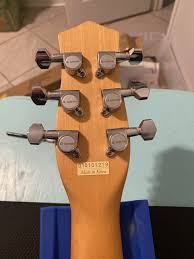
Fender guitars: Check the neck plate (the metal plate where the neck meets the body), the headstock front or back, or the body heel where the neck attaches
Gibson guitars: Look on the back of the headstock or inside the body cavity
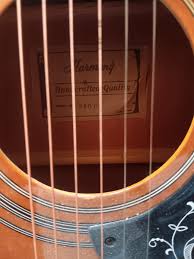
Martin guitars: Find it on the interior label visible through the soundhole or stamped on the neck block
Some very old guitars—particularly those made before the 1950s—may have no serial number at all. If you can't find one, other identification methods exist, so don't worry yet.
Step 2. Decode the year and model from your serial number
Each manufacturer's serial number format changed over the decades, which actually helps with dating. A Fender serial number starting with "L" indicates 1963-1965 production, while one starting with "S" points to the 1970s. Gibson used different systems across different eras, and Martin's numbers run sequentially from the company's founding.
Cross-reference your serial number findings with physical features on the guitar. Serial numbers occasionally got reused or applied inconsistently, so the headstock shape, pickup configuration, and hardware style help confirm what the number suggests.
Step 3. Use Fender, Gibson, and Martin serial number resources
Free online serial number lookup tools exist for all major brands. Manufacturer websites, vintage guitar databases, and collector forums maintain searchable records that can pinpoint your guitar's production year and factory location.
Keep in mind that serial numbers alone don't determine value—they only help identify what you have. A serial number tells you the year, but condition, originality, and market demand determine the price.
Best guitar valuation tools and price guides
Once you know what guitar you have, price guides help establish a baseline value. Each tool has different strengths and blind spots worth understanding.
Blue Book of Guitar Values
The Blue Book of Guitar Values is the industry-standard reference that dealers and collectors have relied on for decades. It offers detailed pricing organized by make, model, year, and condition grade.
The Blue Book requires a subscription, but it provides the most comprehensive database available. For a vintage instrument potentially worth significant money, the subscription cost pays for itself in accurate information.
Reverb Price Guide
The Reverb Price Guide tracks actual transaction data from their online marketplace, showing what guitars actually sold for—not just what sellers asked. It's free to search and displays price trends over time.
Reverb works best for guitars that trade frequently online. For rare or unusual instruments with limited sales history, the data may be thin or nonexistent.
eBay sold listings and completed sales
eBay's "sold" filter reveals real transaction prices rather than wishful asking prices. Search for your guitar's make and model, then filter to show only completed sales.
Be cautious with eBay data. Condition varies wildly, and many listings lack accurate descriptions. A "1962 Stratocaster" that sold for $3,000 might have been refinished, while an all-original example commands ten times that amount.
Vintage guitar price guide publications
Print publications like Vintage Guitar magazine's annual price guide remain useful references, particularly for older instruments. However, print guides may lag behind current market conditions by six months to a year, so treat them as starting points rather than definitive answers.
Price Guide | Cost | Best For | Limitations |
|---|---|---|---|
Blue Book of Guitar Values | Subscription | Comprehensive vintage data | Requires payment |
Reverb Price Guide | Free | Recent market trends | Limited rare guitar data |
eBay Sold Listings | Free | Real transaction prices | Inconsistent condition info |
Print Publications | One-time purchase | Historical reference | May be outdated |
What determines guitar value
Guitar values emerge from five main factors working together. Understanding each one helps you assess your instrument realistically.
Brand and manufacturer reputation
Certain brands command premium prices based on build quality, historical significance, and collector demand. Fender, Gibson, and Martin sit at the top of most collectors' lists, though Gretsch, Rickenbacker, and Guild also hold strong value in their respective niches.
Lesser-known brands can still surprise you. Some Japanese manufacturers from the 1970s and 1980s built exceptional instruments that have gained collector appreciation over time.
Year and era of production
The production era often matters more than the brand alone. Collectors prize specific periods for quality and historical significance:
Pre-CBS Fender (before 1965): Guitars made before CBS bought Fender command significantly higher prices
1950s Gibson: The golden era for Les Pauls, ES models, and other classics
Pre-war Martin (before 1946): Extraordinary collectibility and premium pricing
Early 1960s across brands: Peak production quality before corporate ownership changes
A 1964 Fender Telecaster and a 1974 Fender Telecaster look nearly identical, yet the 1964 commands dramatically higher prices because of its pre-CBS status.
Condition and playability
Condition dramatically impacts value—sometimes by 50% or more between grades. A guitar in excellent condition with minimal wear retains far more value than the same model showing heavy use.
Playability matters too. A guitar that plays beautifully may be worth more than one that looks pristine but has neck issues or dead frets. However, professional setup work doesn't change the underlying condition grade.
Originality vs. modifications
Collectors typically pay substantial premiums for all-original instruments. Common modifications that reduce value include:
Refrets: Replacement frets, even when professionally done
Refinishing: Repainted or relacquered body or neck
Hardware swaps: Replaced tuners, pickups, bridges, or tailpieces
Electronics changes: Rewiring, new potentiometers, or switch replacements
Some modifications are acceptable or even desirable in specific contexts—a professionally installed Bigsby vibrato on certain Gibson models, for instance. But generally, original equals more valuable.
Rarity and collector demand
Limited production runs, unusual colors, and special features increase value when collector demand exists. A Fender Stratocaster in Lake Placid Blue from 1963 commands a significant premium over the same guitar in standard sunburst.
Demand fluctuates over time, though collectible guitars have shown 13.6% annualized returns over the past decade. What's highly sought-after today may cool off in five years, while currently overlooked models may gain appreciation. Provenance—documented ownership history—can add substantial value for celebrity-owned or historically significant instruments.
Which guitars are worth the most money
Certain categories consistently command high prices in the vintage market. If your guitar falls into one of these groups, you may have something special.
Vintage Fender guitar values
The most valuable Fender guitars come from the pre-CBS era (before 1965):
Pre-CBS Stratocasters and Telecasters: Especially those from 1954-1964, with 1950s models ranging from $15,000 to over $150,000 depending on condition and originality
Custom colors: Original factory finishes in rare colors like Lake Placid Blue, Sonic Blue, or Fiesta Red
Transitional models: Guitars from ownership change periods that show mixed features
Even heavily played pre-CBS Fenders retain strong value. Wear doesn't automatically mean low worth when the underlying guitar is from the right era.
Vintage Gibson guitar values
Gibson's most sought-after instruments include:
1958-1960 Les Paul Standards: The legendary "Burst" models, among the most valuable production guitars ever made
ES-335 and ES-175: Semi-hollow body guitars from the 1950s and 1960s
Pre-war acoustics: J-45, J-200, and other flat-tops from before 1946
Vintage Martin acoustic values
Martin's most collectible guitars include:
Pre-war Dreadnoughts: D-28, D-18, and especially D-45 models from the 1930s and 1940s
OM and 000 models: Orchestra Models from early production years
Brazilian rosewood instruments: Guitars using this now-restricted tonewood
Martin's consistent quality means most eras hold some collectibility, though pre-war examples occupy a special category.
Other brands that hold significant value
Don't overlook other manufacturers:
Gretsch: Hollow-body electrics from the 1950s and 1960s
Rickenbacker: Models connected to the British Invasion era
Guild: Acoustic and electric models from the company's early decades
Epiphone: Pre-Gibson-ownership instruments from before 1957
How to assess your guitar's condition for accurate valuation
Condition grading follows industry-standard categories used in price guides and professional appraisals. Honest self-assessment is essential—overestimating condition leads to disappointment and wasted time.
Condition Grade | Description | Typical Value Impact |
|---|---|---|
Excellent | Minimal wear, all original parts, fully functional | Highest value |
Good | Normal playing wear, original parts, works properly | Moderate reduction |
Fair | Noticeable wear, possible minor repairs or part replacements | Significant reduction |
Poor | Heavy wear, major repairs needed, multiple modifications | Substantial reduction |
Excellent condition
Excellent condition means minimal fret wear, original finish with only minor checking or light scratches, all original parts intact, and electronics that function perfectly. No repairs or modifications have been made.
Good condition
Good condition shows moderate fret wear from regular playing, finish wear consistent with normal use, and all original parts with possible minor replacements like strap buttons. The guitar is fully functional with some cosmetic issues.
Fair condition
Fair condition indicates significant fret wear that may require professional attention, noticeable finish damage, some non-original parts, and playability that may benefit from repair or setup work.
Poor or project condition
Poor condition means heavy wear, structural issues like cracks or warping, significant modifications, and functionality problems that require major work. Even poor condition guitars can retain value if they're the right model and era—a beat-up 1959 Les Paul is still a 1959 Les Paul.
Vintage guitar values vs. used guitar prices
Understanding the distinction between "vintage" and simply "used" helps set realistic expectations.
Vintage guitars—typically instruments from specific collectible eras—follow collector market dynamics where rarity, originality, and historical significance drive prices. A 1962 Gibson ES-335 appreciates over time because collectors compete for limited supply.
Used guitars from recent decades follow standard depreciation patterns, typically losing 20-30% immediately after purchase. A 2015 American Standard Stratocaster is a quality instrument, but it's not yet collectible in the vintage sense. Its value reflects the used market for modern guitars, not collector premiums.
Not every old guitar qualifies as "vintage" in collector terms. A 1978 guitar is technically older than many people, but the 1970s represent a lower-value era for most major brands. Age alone doesn't create collectibility—the specific era, model, and condition matter far more.
How to get a free guitar valuation from an expert
Online tools provide useful estimates, but professional appraisal offers more accurate results for potentially valuable instruments. Experts catch nuances that databases miss.
When to seek professional guitar appraisal
Consider professional valuation when:
Potential high value: Your research suggests the instrument may be worth significant money
Insurance purposes: You require documentation for coverage
Estate settlement: Fair market value is required for legal purposes
Conflicting information: Online research yields inconsistent results
Rare or unusual instruments: Limited comparable sales data exists
What information to gather before your valuation
Prepare the following for a professional appraisal:
Clear photos: Front, back, headstock, serial number, and any damage or wear
Known history: How the guitar was acquired, previous owners if known, any documentation
Condition notes: Modifications, repairs, or replaced parts you're aware of
Basic identification: Brand, model, and year if you've determined them from serial number research
How Edgewater Guitars provides free expert valuations
Edgewater Guitars offers complimentary guitar valuation. Submit photos and details through our form, text, or email, and our specialists assess your instrument based on condition, originality, rarity, and current market demand.
The valuation includes a cash offer with no obligation. This service works particularly well for vintage Fender, Gibson, Martin, and other quality instruments where expert knowledge makes a meaningful difference in accurate pricing.
Ready to find out what your guitar is worth? Contact Edgewater Guitars for a free, no-obligation valuation from vintage guitar specialists.
Get your free guitar valuation today
Determining your guitar's worth comes down to a clear process: identify the instrument through serial number research, establish baseline values using price guides, assess condition honestly, and consider professional appraisal for potentially valuable pieces.
You don't have to become a vintage guitar expert overnight. Working with specialists who handle vintage instruments daily gives you accurate information without the learning curve.
Edgewater Guitars provides free, no-obligation valuations with fast response times and decades of expertise in vintage guitar values. Whether you're ready to sell or simply want to know what you have, we're here to help.
Get Your Free Valuation — Call (440) 219-3607 or submit your guitar details online.
Frequently asked questions about guitar worth
How accurate are online guitar price guides?
Price guides provide estimates based on available data, but actual value depends on specific condition, originality, and current buyer demand. Think of them as starting points rather than definitive answers—a professional appraisal offers more precision for valuable instruments.
Can I determine my guitar's value without a serial number?
Yes. Physical features, construction details, and expert identification can establish value even when serial numbers are missing or illegible. Headstock shape, pickup configuration, hardware style, and body construction all provide dating clues.
Does refinishing or repainting decrease guitar value?
Refinished guitars typically lose significant value compared to original-finish instruments because collectors prize originality. Quality professional refinishes have less impact than amateur work, but the reduction is still notable.
Are guitars from the 1980s and 1990s considered vintage?
"Vintage" traditionally refers to earlier eras, but certain 1980s and 1990s models have become collectible as those decades gain historical distance. Specific models that proved their quality—like early Fender reissues or certain Gibson Custom Shop instruments—now attract collector interest.
How much does a cracked neck affect guitar value?
Neck cracks significantly reduce value, though repairability and location matter. A properly repaired headstock crack affects value less than an unrepaired or poorly repaired one. Structural neck cracks that compromise playability have the most severe impact.
What is the difference between appraisal value and actual selling price?
An appraisal represents fair market value—what a knowledgeable buyer would pay a knowledgeable seller. Actual selling price depends on how and where you sell, buyer motivation, and market timing. Private sales to collectors may exceed appraisal value, while quick sales to dealers typically fall below it.
Can I clean or repair my guitar before getting it valued?
Basic cleaning with a soft cloth is fine, but avoid repairs, modifications, or aggressive cleaning before professional valuation. Experts prefer to see instruments in their current state to assess them accurately. Well-intentioned restoration sometimes reduces value by compromising originality.