DATE :
How to Date Your Vintage Gibson SG Special: Complete 1959-1970 Authentication Guide
How to Date Your Vintage Gibson SG Special: Complete 1959-1970 Authentication Guide
Why Dating Your Vintage Gibson SG Special Matters
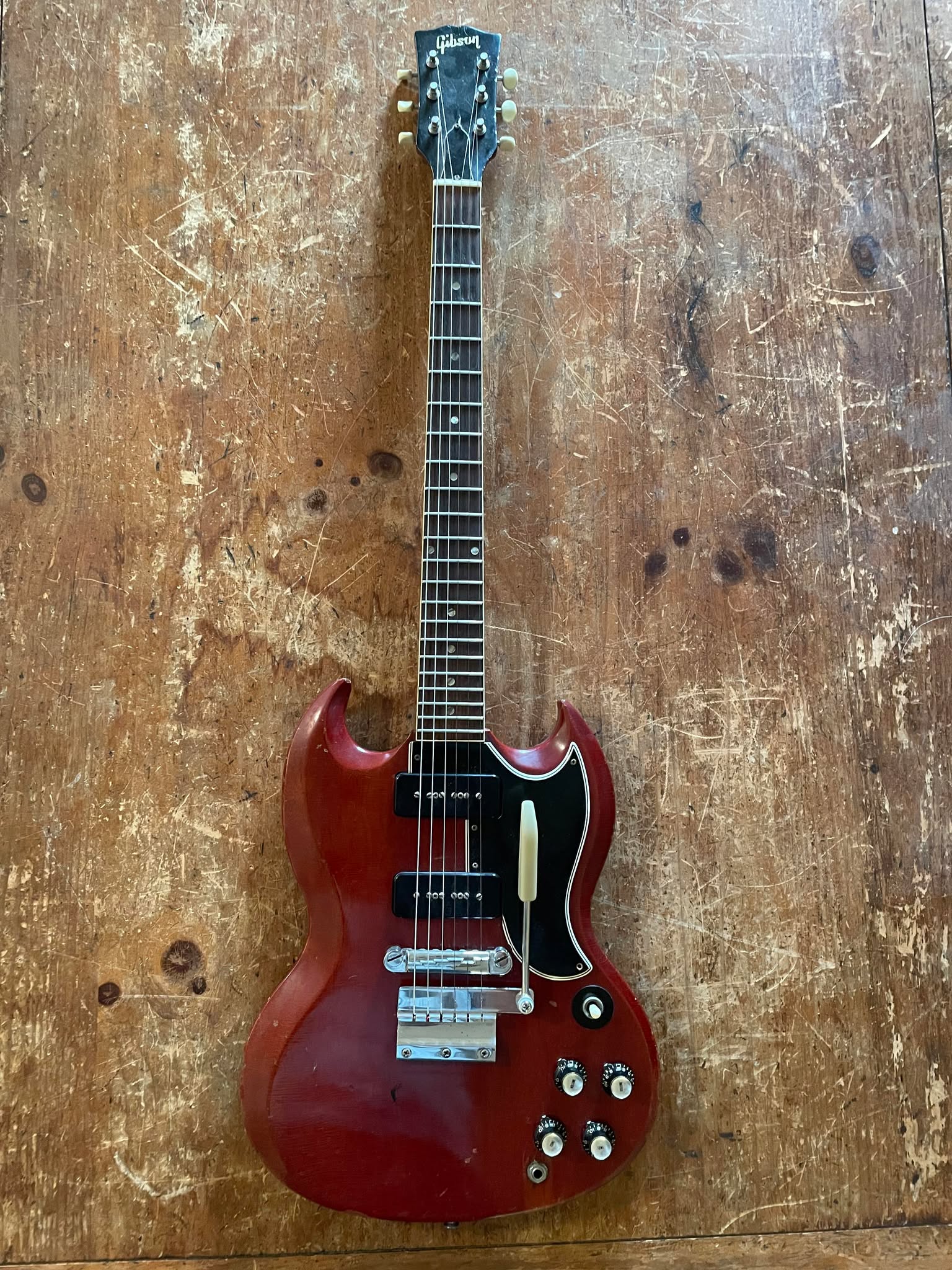
Learning how to date a vintage Gibson SG Special accurately is essential for authentication, proper valuation, insurance documentation, and understanding your instrument's place in rock history. The Gibson SG Special represents one of the most iconic and player-friendly solid-body guitars ever made—an affordable, stripped-down rock machine with dual P-90 pickups and a double-cutaway slab body that influenced generations of rock guitarists.
Whether you own a rare 1959 Les Paul Special that transitioned into the SG body style, an early 1960s slab body SG Special, a mid-1960s example with beveled edges, or any vintage SG Special from the pre-1970 era, determining its exact manufacturing year affects everything from market value to restoration approaches. Certain years and specifications command premium prices, particularly early examples with specific features and original appointments.
This comprehensive guide teaches you how to date your vintage Gibson SG Special using multiple authentication methods, ensuring accuracy for guitars made between 1959 and 1970.
Understanding the Gibson SG Special History
Before diving into dating methods, understanding the SG Special's evolution provides crucial context:
The Transition from Les Paul Special to SG Special (1959-1963)
Gibson's shift from Les Paul to SG design:
1959-1960: Les Paul Special with New Body:
Les Paul Special name continues
New double-cutaway body design
Thinner, lighter construction
Still says "Les Paul" on headstock
Transitional models
1961-1963: Les Paul/SG Special:
Body evolves to SG shape
Still marketed as "Les Paul Special"
"Les Paul" on truss rod cover
Transitional period
1963 Onward: SG Special:
"Les Paul" removed from headstock
Renamed "SG Special"
Modern designation established
The "SG Special" Designation Explained
"SG" = Solid Guitar:
Gibson's designation for new body style
Replaced Les Paul body shape
Lighter, thinner design
Double-cutaway access
"Special" = Model Grade:
Two P-90 single-coil pickups
Slab mahogany body (no carved top)
Dot inlays
Simple appointments
Affordable entry-level model
Cherry finish standard
Why the SG Special Is Legendary
Musical Significance:
Pete Townshend (The Who) - smashed numerous SG Specials
Frank Zappa - early career guitar
Robby Krieger (The Doors)
Carlos Santana (early)
Countless punk and rock bands
Raw, aggressive tone
Working musician's guitar
Sonic Character:
Dual P-90 single-coil pickups
Raw, biting tone
High output for era
Excellent sustain
Light weight for playability
Aggressive rock sound
Major 1959-1970 Evolution Periods
1959-1960: Les Paul Special (Double-Cutaway)
Les Paul name continues
New double-cutaway body
Slab body design
TV Yellow or Cherry finish
P-90 pickups
"Les Paul Special" designation
1961-1962: Les Paul/SG Special Transition
SG body shape established
Still "Les Paul" on headstock
Slab body (no bevels)
Cherry or TV Yellow finish
P-90 pickups
Transitional models
1963-1965: Early SG Special
"Les Paul" removed
"SG Special" designation
Slab body continues
Cherry or TV White finish
P-90 pickups
Classic specifications
1966-1968: Beveled Edge SG Special
Beveled body edges introduced
Larger bevels
Cherry finish standard
P-90 pickups
"Batwing" pickguard (some)
1969-1970: Late 1960s SG Special
Beveled edges continue
Various specification changes
Cherry finish standard
P-90 pickups
How to Date Your Vintage Gibson SG Special: Serial Number Systems
Understanding Gibson's serial number systems is foundational for dating:
Important Resource: For quick serial number reference, use our Gibson Serial Number Lookup Tool to find your guitar's approximate year based on serial number ranges.
Serial Number Location
Where to Find Serial Number:
Back of headstock (impressed into wood)
Serial number stamped/impressed
May be faint or worn
Use angled light for visibility
Record complete number
Format: 5-6 digits with varying formats
1959-1961 Serial Number System
Format: Sequential numbers
Approximate Ranges:
1959: 9xxxx-0xxxx range (numbering restarted)
1960: 0xxxx-1xxxx range
1961: 1xxxx-2xxxx range (some with A prefix)
Location: Back of headstock, impressed into wood
Pro Tip: Use our Gibson Serial Number Lookup Tool for instant reference.
1961-1970 Serial Number System
Format: 5-6 digits with extreme overlap
Approximate Ranges:
1961: 1xxxx-2xxxx range
1962: 2xxxx-3xxxx range
1963: 3xxxx-4xxxx range
1964: 4xxxx-7xxxx range
1965: 7xxxx-9xxxx range
1966: 0xxxx-1xxxx range (restarted)
1967: 1xxxx-8xxxx range
1968: 8xxxx-0xxxx range (restarted again)
1969: 0xxxx-9xxxx range
1970: 0xxxxx range (six digits begin)
Critical Challenge: Massive overlap makes serial numbers extremely unreliable
Why Serial Numbers Are Problematic:
Same numbers appear across multiple years
Numbering restarted multiple times
Extreme overlap throughout 1960s
Must use Factory Order Numbers and physical features
Factory Order Numbers (FON): The Most Reliable Dating Method
For vintage SG Specials, Factory Order Numbers provide the most accurate dating:
What FON Tells You: Production batch and year of manufacture
Location: Inside control cavity
Stamped on wood routing
Visible when removing control plate cover
Back of guitar
Format: Letter followed by 3-4 digits
Letter indicates year
Numbers indicate production batch
FON Letter Codes (1959-1970):
S = 1959
R = 1960
Q = 1961
P = 1962
O = 1963
N = 1964
M = 1965
L = 1966
K = 1967
J = 1968
I = 1969
H = 1970
Example: FON "P 2847" = 1962 production, batch 2847
How to Find FON:
Remove control plate cover (back of guitar)
Look inside control cavity
FON stamped on routed wood
May be partially obscured by wiring
Use flashlight
Photograph for documentation
Why FON Is Critical:
Most reliable Gibson dating method
Minimal overlap between years
Essential for 1960s guitar dating
Industry standard
Dating Vintage SG Special by Physical Features: Era-by-Era Guide
Physical characteristics provide crucial dating evidence:
1959-1960 Les Paul Special (Double-Cutaway Body)
The Transitional Double-Cutaway Les Paul:
Body Construction:
Double-cutaway design (new for 1959)
Slab mahogany body (no carved top)
Thinner than single-cut Les Paul
Lighter weight
More player-friendly access
Headstock - Critical Feature:
"Les Paul" on truss rod cover
Crown inlay
Gibson script logo
Still marketed as Les Paul Special
Pickups:
Two P-90 single-coil pickups
Soap bar style
Alnico V magnets
Black or cream covers
High output for era
Body Shape:
Early double-cutaway design
Transitioning to SG shape
Slab body (no bevels)
Simple construction
Neck:
Mahogany neck
Rosewood fingerboard
Dot inlays
Bound or unbound (varies)
Standard Gibson scale (24.75")
Hardware:
Wraparound bridge/tailpiece combination
Simple hardware
Tune-o-matic (some)
Nickel hardware
Finish:
Cherry finish standard
TV Yellow available
Nitrocellulose lacquer
Pickguard:
White or black pickguard
Simple design
Bakelite or plastic
Tuners:
Kluson Deluxe tuners
Single-ring
Nickel hardware
Serial Numbers/FON: 9xxxx-1xxxx range, FON "S" or "R"
Why 1959-1960 Is Significant:
Transitional models
Still "Les Paul" designation
New double-cutaway design
Collectible transition period
1961-1962 Les Paul/SG Special (Slab Body)
The True SG Body Emerges - Still Called "Les Paul":
Body Construction:
SG body shape established
Slab mahogany body (no bevels)
Double-cutaway
Devil horns design
Thin, lightweight
Easy upper fret access
Headstock - Critical Dating Feature:
"Les Paul" still on truss rod cover
Crown inlay
Gibson script logo
Transitional "Les Paul/SG" period
Most collectible SG Special era
Pickups:
Two P-90 single-coil pickups
Soap bar style
Black or cream covers
Original P-90 tone
Neck:
Mahogany neck
Rosewood fingerboard
Dot inlays
Unbound fingerboard (typically)
Slim taper neck profile
Hardware:
Wraparound bridge/tailpiece (most common)
Tune-o-matic and stop bar (some)
Sideways vibrato (some 1961)
Maestro vibrato (some)
Nickel hardware
Finish:
Cherry finish standard
TV Yellow available
TV White (rare)
Nitrocellulose lacquer
Pickguard:
White pickguard
Simple design
Small guards initially
Single-ply
Body Edges:
NO bevels (slab body)
Flat edges
Square profile
Simple construction
Tuners:
Kluson Deluxe tuners
Single-ring
Nickel hardware
Serial Numbers/FON: 1xxxx-3xxxx range, FON "Q" or "P"
Why 1961-1962 Is Most Collectible:
True SG body shape
Still says "Les Paul"
Transitional models
Slab body (no bevels)
Most desirable SG Special era
Premium pricing
1963-1965 SG Special (Early SG, Slab Body)
"Les Paul" Removed - True SG Special Era Begins:
Body Construction:
SG body shape
Slab mahogany body (no bevels through 1965)
Double-cutaway
Thin, lightweight
Headstock - Critical Change:
"Les Paul" removed (1963)
Plain truss rod cover or "SG Special" engraved
Crown inlay
Gibson script logo
Modern SG designation
Pickups:
Two P-90 single-coil pickups
Soap bar style
Black or cream covers
Original P-90 tone
Neck:
Mahogany neck
Rosewood fingerboard
Dot inlays
Unbound fingerboard
Slim profile
Hardware:
Wraparound bridge/tailpiece (most common)
Tune-o-matic (some)
Maestro vibrato (some)
Nickel hardware
Finish:
Cherry finish standard
TV White available
Pelham Blue (rare custom color)
Nitrocellulose lacquer
Pickguard:
White pickguard
Simple design
Single-ply
Body Edges:
NO bevels (slab body continues through 1965)
Flat edges
Square profile
Tuners:
Kluson Deluxe tuners
Nickel hardware
Serial Numbers/FON: 3xxxx-9xxxx range, FON "O", "N", "M"
Significance: Early SG Special designation, slab body, classic specifications
1966-1968 SG Special (Beveled Edge Era)
Major Change - Beveled Edges Introduced:
Body Construction:
SG body shape
Mahogany body
Double-cutaway
BEVELED EDGES (new for 1966)
Larger bevels on body edges
More comfortable
Different appearance
Headstock:
"SG Special" or plain truss rod cover
Crown inlay
Gibson script logo
Pickups:
Two P-90 single-coil pickups
Soap bar style
Black or cream covers
Neck:
Mahogany neck
Rosewood fingerboard
Dot inlays
Unbound fingerboard
Hardware:
Wraparound bridge/tailpiece
Tune-o-matic (some)
Maestro vibrato (some)
Nickel hardware
Finish:
Cherry finish standard
Various options
Nitrocellulose lacquer
Pickguard:
White pickguard
"Batwing" pickguard (some years)
Larger guards
Single-ply
Body Edges - Critical Dating Feature:
BEVELED edges (1966 onward)
Larger, wider bevels
Comfortable playing
Different from slab body
Tuners:
Kluson Deluxe tuners
Nickel hardware
Serial Numbers/FON: 0xxxx-0xxxx range (restarted), FON "L", "K", "J"
Why 1966+ Different:
Beveled edges introduced
Different feel and appearance
Less collectible than slab body
Still excellent guitars
1969-1970 SG Special (Late 1960s)
Late 1960s Specifications:
Body Construction:
SG body shape
Mahogany body
Beveled edges continue
Double-cutaway
Headstock:
"SG Special" or plain truss rod cover
Crown inlay (early)
Gibson script logo
Pickups:
Two P-90 single-coil pickups
Soap bar style
Black or cream covers
Neck:
Mahogany neck
Rosewood fingerboard
Dot inlays
Unbound fingerboard
Hardware:
Wraparound bridge/tailpiece
Tune-o-matic (some)
Nickel hardware
Finish:
Cherry finish standard
Various options
Nitrocellulose lacquer
Pickguard:
White pickguard
Batwing style (some)
Various designs
Body Edges:
Beveled edges standard
Tuners:
Various tuners
Kluson or replacements
Serial Numbers/FON: 0xxxxx range (six digits), FON "I", "H"
Significance: Late 1960s production, various changes
Potentiometer Date Codes: Essential Verification
Potentiometer codes provide crucial verification:
Understanding Pot Codes
Standard Format: XXYYZZ
XX = Manufacturer code
YY = Year of manufacture
ZZ = Week of manufacture
Common Manufacturers:
137 = CTS
134 = Centralab
140 = Clarostat
How to Check Pot Codes on SG Special
Process:
Remove control plate cover (back)
Locate four potentiometers (2 volume, 2 tone)
Look for stamped codes on pot casings
May require tilting guitar
Use flashlight and mirror
Record codes from all four pots
Pot Count: Four pots (two volume, two tone)
Example Codes:
137 6128 = CTS pot, 1961, 28th week
134 6415 = Centralab pot, 1964, 15th week
Interpreting Pot Dates
Dating Rules:
Pots date component manufacture
Guitar assembled weeks/months after pots made
All four pots should date similarly
1963 guitar might have late 1962 or early 1963 pots
Red Flags:
Pots dated after supposed guitar year
Mixed pot dates from different years
Modern pots on supposedly vintage guitar
Identifying Key SG Special Features
Understanding distinctive characteristics:
Slab Body vs. Beveled Body
Slab Body (1959-1965):
Flat edges, no bevels
Square profile
Simple construction
More angular appearance
Most collectible
Beveled Body (1966-1970):
Beveled edges introduced
Larger, comfortable bevels
Rounded edges
More refined appearance
Less collectible than slab
Dating Significance:
Slab body = 1965 or earlier
Beveled body = 1966 or later
Critical visual identifier
Value Impact: Slab body examples more valuable than beveled
"Les Paul" on Headstock
"Les Paul Special" (1959-1962):
"Les Paul" on truss rod cover
Transitional models
Most collectible SG Specials
Premium pricing
"SG Special" (1963-1970):
"Les Paul" removed
"SG Special" or plain cover
Modern designation
Standard SG Special
Dating Significance:
"Les Paul" = 1962 or earlier
No "Les Paul" = 1963 or later
Value Impact: "Les Paul" designation adds 30-50% premium
P-90 Pickups
Distinctive Feature:
Dual P-90 single-coil pickups
Soap bar style
Black or cream covers
High output for single-coils
Raw, biting tone
What P-90s Indicate:
Standard SG Special pickup
Never humbuckers on vintage Special
Essential to SG Special identity
Replacement Common: Original P-90s essential for value
Dot Inlays
Standard SG Special Inlays:
Simple dot position markers
Pearloid dots
Unbound fingerboard typically
Entry-level appointments
Not Blocks: SG Standards have block inlays; Specials have dots
Cherry Finish
Standard SG Special Finish:
Cherry red finish
Nitrocellulose lacquer
Ages beautifully
Fades to lighter red/pink
TV Yellow (1959-early 1960s):
Yellowish-tan finish
Distinctive appearance
Less common than cherry
Collectible
TV White (rare):
White/cream finish
Uncommon
Valuable when found
Wraparound Bridge
Most Common SG Special Hardware:
Combination bridge/tailpiece
Wraparound design
Simple, effective
Standard on Special
Tune-o-Matic (less common):
Separate bridge and stop bar
More adjustment
Some SG Specials
Upgraded hardware
Red Flags: Identifying Non-Original or Modified SG Specials
Recognizing modifications:
Refinished Vintage SG Special
Indicators:
Overspray in control cavity
Paint on routed wood
Wrong finish thickness
Modern lacquer types
Loss of age checking
Impact: Refinishing reduces value 50-70%
Replaced Pickups
Common Modification:
P-90s replaced with humbuckers
Modern pickups installed
Routing modified
Original Features:
Dual P-90 soap bar pickups
Original routing
Period-correct covers
Value Impact: Replaced pickups reduce value 30-50%
Neck Repairs
Common Issues:
Headstock breaks (SG necks vulnerable)
Neck resets
Structural repairs
Assessment:
Professional headstock repairs acceptable but reduce value 30-50%
Clean repairs minimize impact
Multiple repairs concerning
Body Modifications
Common Changes:
Added pickup routes
Modified control cavity
Vibrato holes filled
Impact: Body modifications significantly reduce value
When You're Ready to Sell Your Vintage Gibson SG Special
How Dating Affects SG Special Value
Era-Specific Premiums:
1959-1960 (Les Paul Special): Strong premiums
1961-1962 (Les Paul/SG, slab body): Highest values
1963-1965 (SG Special, slab body): Excellent values
1966-1970 (beveled body): Moderate values
Feature-Specific Value:
"Les Paul" on headstock (1959-1962): 30-50% premium
Slab body (pre-1966): Premium over beveled
Original P-90 pickups: Essential
TV Yellow finish: Premium over cherry (early years)
All-original condition: Highest prices
Condition Factors:
All-original: Highest prices
Original pickups essential
Professional repairs acceptable
Refinishing severely reduces value
Headstock repairs reduce value 30-50%
Why Choose Edgewater Guitars
Our Gibson SG Special Expertise:
Vintage Gibson solid-body specialists
Les Paul/SG transition identification
Slab vs. beveled body authentication
FON analysis for accurate dating
P-90 pickup verification
Body edge evaluation
Serial number interpretation
Comprehensive authentication
Premium Offers: 30-40% higher than guitar shops
Streamlined Process:
Expert authentication
Immediate fair offers
No fees or commissions
Professional service
Contact: (440) 219-3607
Service Area: Ohio, Michigan, Pennsylvania, Indiana, West Virginia
Frequently Asked Questions
What's the difference between a slab body and beveled body SG Special?
Slab body SG Specials (1959-1965) have flat, square edges with no bevels. Beveled body SG Specials (1966-1970) have rounded, beveled edges for comfort. Slab body examples are more collectible and valuable due to historical significance and cleaner lines.
Are SG Specials with "Les Paul" on the headstock more valuable?
Yes, significantly. SG Specials (or Les Paul Specials) with "Les Paul" on the truss rod cover (1959-1962) are 30-50% more valuable than later examples. These represent the transitional period and are highly collectible. Use our Gibson Serial Number Lookup Tool to check your serial range.
What pickups should a vintage SG Special have?
All vintage SG Specials should have dual P-90 single-coil "soap bar" pickups. Humbuckers are incorrect for vintage Specials—that's the SG Standard. Original P-90s are essential to authenticity and value.
When did Gibson add beveled edges to the SG Special?
Gibson introduced beveled edges on the SG Special in 1966. Pre-1966 guitars have slab bodies with flat edges; 1966+ have beveled, rounded edges. This is a critical dating feature easily identified visually.
Are 1961-1962 SG Specials the most valuable?
Yes, 1961-1962 examples with "Les Paul" on the headstock and slab bodies are the most collectible SG Specials. They represent the peak transitional period with true SG body shape while still carrying the Les Paul name.
What is TV Yellow finish?
TV Yellow (or TV finish) is a yellowish-tan finish used on early Les Paul/SG Specials. The name comes from appearing better on black-and-white television. It was available primarily from 1959 through the early 1960s and is more collectible than cherry.
Can I date my SG Special just by serial number?
Not reliably for 1960s production. Gibson serial numbers have extreme overlap and restarted multiple times. Use our Gibson Serial Number Lookup Tool for approximate range, then verify with FON, body style (slab vs. beveled), and headstock markings.
How much does a headstock repair affect value?
Professional headstock repairs on vintage SG Specials reduce value by approximately 30-50% compared to unrepaired examples. SG necks are vulnerable to breaks due to headstock angle and neck joint design. Clean, professional repairs minimize the impact.
Additional Resources
Gibson Serial Number Lookup Tool - Quick reference for your SG Special
Complete Gibson SG Dating Guide
How to Date Gibson Guitars - All Models
Sell Your Gibson Guitar
Vintage Gibson Authentication Guide
Learning how to date your vintage Gibson SG Special accurately requires understanding serial numbers, Factory Order Numbers, and physical features specific to each era. The SG Special evolved from 1959 through 1970, with transitional "Les Paul" examples (1959-1962) and slab body guitars (through 1965) commanding the highest values due to historical significance and classic specifications.
Whether you own a rare transitional Les Paul Special with SG body, an early 1960s slab body SG Special, or any vintage SG Special, proper authentication ensures you understand your instrument's history and value. Use our Gibson Serial Number Lookup Tool as a starting point, then verify with Factory Order Numbers, body edge style, headstock markings, and pickup configuration for definitive dating.
Edgewater Guitars specializes in vintage Gibson SG Special authentication and purchasing throughout the Midwest. Our comprehensive knowledge of SG Special dating—from Les Paul transitional identification to slab vs. beveled body assessment—ensures accurate assessments that reflect your guitar's true age and value.
Contact us today at (440) 219-3607 for expert Gibson SG Special authentication or professional valuation.
By Stephen Pedone, co-owner of Edgewater Guitars. Edgewater is a vintage guitar shop in Valley City, Ohio that buys pre-1970 Fender, Gibson, Martin and Gretsch guitars across Ohio and nationwide. Call or text (440) 219-3607 for a free appraisal.
Related: 1968 Gibson SG Special value guide: original vs hot-rodded.