DATE :
How to Date Your Vintage Gibson Hummingbird: Complete 1960-1970 Authentication Guide
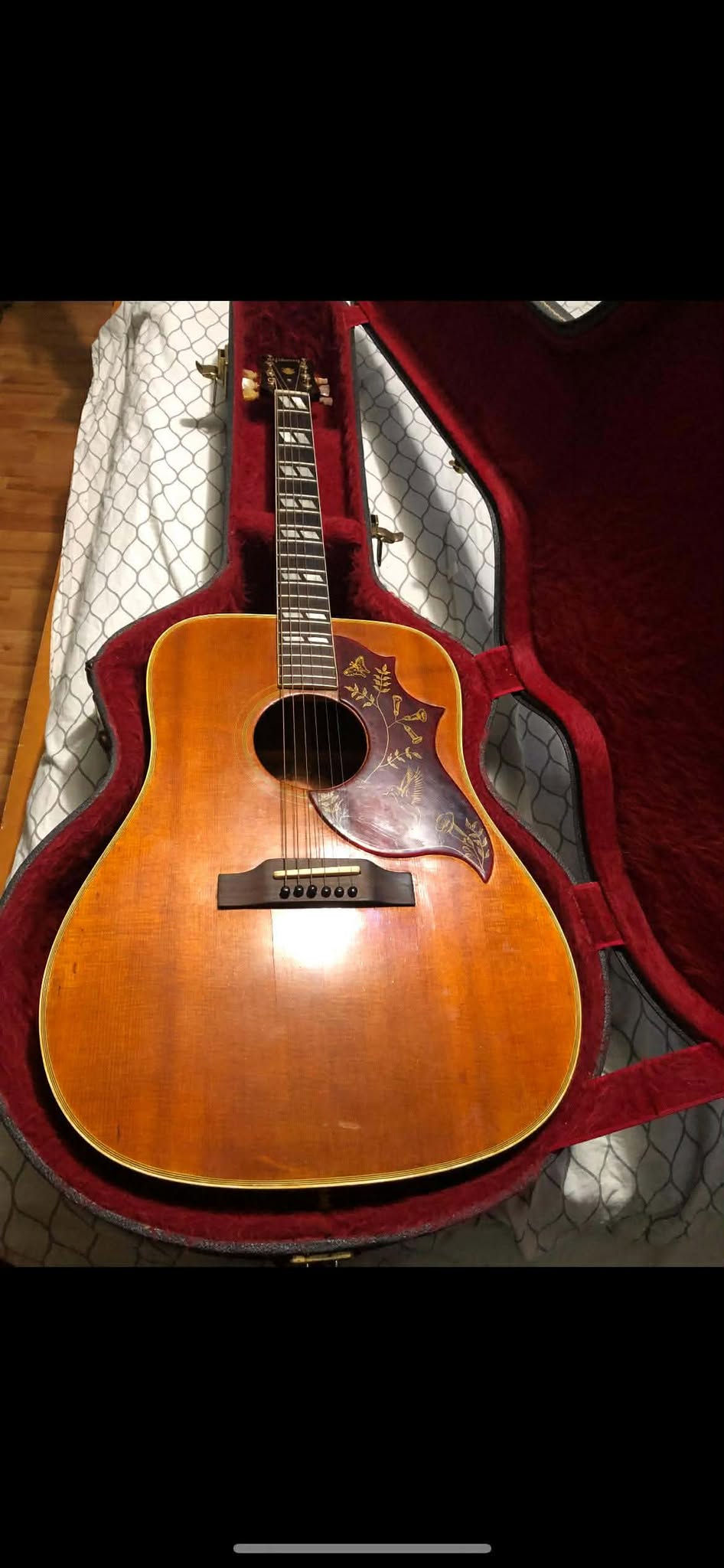
How to Date Your Vintage Gibson Hummingbird: Complete 1960-1970 Authentication Guide
Why Dating Your Vintage Gibson Hummingbird Matters
Learning how to date a vintage Gibson Hummingbird accurately is essential for authentication, proper valuation, insurance documentation, and understanding your instrument's place in acoustic guitar history. The Gibson Hummingbird represents one of the most visually stunning and tonally distinctive acoustic guitars ever created—a square-shouldered dreadnought with elaborate floral inlays and a powerful, balanced voice that has made it a favorite of recording artists for over six decades.
Whether you own a rare first-year 1960 Hummingbird with original specifications, a mid-1960s example with cherry sunburst finish, or any vintage Hummingbird from the pre-1970 era, determining its exact manufacturing year affects everything from market value to restoration approaches. Early 1960s examples with specific features command premium prices, particularly those with original appointments and finish.
This comprehensive guide teaches you how to date your vintage Gibson Hummingbird using multiple authentication methods, ensuring accuracy for guitars made between 1960 and 1970.
Understanding the Gibson Hummingbird History
Before diving into dating methods, understanding the Hummingbird's evolution provides crucial context:
The Birth of the Hummingbird (1960)
Gibson introduced the Hummingbird in 1960 as their premium square-shouldered dreadnought:
Revolutionary Design Features:
Square-shouldered dreadnought body
Elaborate pickguard with hummingbird and flowers
Mahogany back and sides
Sitka spruce top
Adjustable saddle bridge
Cherry sunburst finish standard
Premium appointments throughout
Strategic Purpose:
Compete with Martin dreadnoughts
Offer distinctive Gibson dreadnought design
Appeal to country and folk musicians
Establish Gibson acoustic flagship
Premium pricing and appointments
Historical Context: Introduced same year as Gibson J-45, positioned as premium model
The "Hummingbird" Name and Design
Iconic Pickguard:
Hand-painted hummingbird design
Elaborate floral patterns
Engraved tortoiseshell pickguard
Multi-colored artwork
Signature visual feature
Most recognizable acoustic guitar pickguard
Why "Hummingbird": Named after the bird depicted on the distinctive pickguard design
Musical Significance
Famous Players:
Keith Richards (Rolling Stones)
Jimmy Page (Led Zeppelin)
Sheryl Crow
Emmylou Harris
Gillian Welch
Countless country and rock artists
Sonic Character:
Powerful, balanced tone
Strong bass response
Clear treble
Excellent for strumming
Recording favorite
Distinctive Gibson sound
Major 1960-1970 Evolution Periods
1960-1961: First Generation
Original specifications
All first-year features
Cherry sunburst standard
Natural finish option (rare)
Most valuable Hummingbirds
1962-1964: Early 1960s Peak
Refined specifications
Cherry sunburst standard
Excellent construction quality
Pre-Gibson-transition quality
Highly collectible
1965-1967: Mid-1960s Era
Continued quality production
Cherry sunburst standard
Various specification details
Excellent instruments
1968-1970: Late 1960s
Some specification changes
Square bridge introduced (1969)
Cherry sunburst standard
Various updates
How to Date Your Vintage Gibson Hummingbird: Serial Number Systems
Understanding Gibson's serial number systems is foundational for dating:
Important Resource: For quick serial number reference, use our Gibson Serial Number Lookup Tool to find your guitar's approximate year based on serial number ranges.
Serial Number Location
Where to Find Serial Number:
Look inside guitar through soundhole
Serial number on orange or white label
Stamped on internal bracing (some)
Back of headstock (some later examples)
Use flashlight for visibility
Format: Various formats depending on year
1960-1961 Serial Number System
Format: Sequential numbers
Approximate Ranges:
1960: 0xxxx range (numbering restarted)
1961: 1xxxx-2xxxx range
Location: Inside guitar on label or bracing
Critical Note: Serial number systems transition during these years
Pro Tip: Use our Gibson Serial Number Lookup Tool for instant reference.
1961-1970 Serial Number System
Format: 5-6 digits with increasing overlap
Approximate Ranges:
1961: 1xxxx-2xxxx range
1962: 2xxxx-3xxxx range
1963: 3xxxx-4xxxx range
1964: 4xxxx-7xxxx range
1965: 7xxxx-9xxxx range
1966: 0xxxx-1xxxx range (restarted)
1967: 1xxxx-8xxxx range
1968: 8xxxx-0xxxx range (restarted again)
1969: 0xxxx-9xxxx range
1970: 0xxxxx range (six digits begin)
Critical Challenge: Extreme overlap makes serial numbers unreliable for precise dating
Location: Inside guitar on label, visible through soundhole
Why Serial Numbers Are Problematic:
Significant overlap between years
Numbering restarted multiple times
Same numbers appear across different years
Must use Factory Order Numbers and physical features
Factory Order Numbers (FON): The Most Reliable Dating Method
For vintage Hummingbirds, Factory Order Numbers provide the most accurate dating:
What FON Tells You: Production batch and year of manufacture
Location: Inside guitar
Stamped on bracing
Visible through soundhole
Orange label (early 1960s)
White label (mid-late 1960s)
Format: Letter followed by 3-4 digits
Letter indicates year
Numbers indicate production batch
FON Letter Codes (1960-1970):
R = 1960
Q = 1961
P = 1962
O = 1963
N = 1964
M = 1965
L = 1966
K = 1967
J = 1968
I = 1969
H = 1970
Example: FON "P 2847" = 1962 production, batch 2847
How to Find FON:
Look through soundhole
Check orange or white label
FON stamped on bracing visible through soundhole
May require mirror and flashlight
Photograph for documentation
Why FON Is Critical:
Most reliable dating method
Minimal overlap between years
Essential for 1960s Gibson dating
Industry standard
Dating Vintage Hummingbird by Physical Features: Era-by-Era Guide
Physical characteristics provide crucial dating evidence:
1960 Hummingbird (First Year - Most Valuable)
The Original Square-Shouldered Gibson Dreadnought:
Body Construction:
Square-shouldered dreadnought body
Mahogany back and sides
Sitka spruce top
16" lower bout width
Gibson's dreadnought design
Scalloped X-bracing (early 1960s)
Pickguard - Signature Feature:
Engraved tortoiseshell pickguard
Hand-painted hummingbird
Elaborate floral designs
Multi-colored artwork
Red, yellow, blue, green colors
Most distinctive acoustic guitar pickguard
Original artwork highly valued
Neck:
Mahogany neck
Rosewood fingerboard
Parallelogram inlays
Bound fingerboard
14 frets clear of body
24.75" scale length (Gibson standard)
Headstock:
Gibson script logo
Crown inlay
Bound headstock
"Hummingbird" designation
Bridge:
Rosewood adjustable bridge
Adjustable saddle
Distinctive Gibson feature
Through-saddle pins
Rosewood bridge plate
Finish:
Cherry sunburst standard
Natural finish option (extremely rare)
Nitrocellulose lacquer
Hand-sprayed finish
Ages beautifully
Binding:
Multiple binding on body
White/black/white pattern (multi-ply)
Bound fingerboard
Bound headstock
Premium appointments
Bracing:
Scalloped X-bracing
Hand-carved braces
Premium construction
Gibson acoustic quality
Tuners:
Grover Rotomatic tuners
Gold-plated (early examples)
Nickel-plated (some)
Premium hardware
Label:
Orange label inside
Gibson logo and model designation
"Hummingbird" designation
Kalamazoo, Michigan
Serial Numbers/FON: 0xxxx range, FON "R"
Why 1960 Is Most Valuable:
First year production
Original specifications
All first-year features
Scalloped bracing
Historical significance
Limited first-year production
Premium prices
1961-1964 Hummingbird (Early 1960s Peak)
Refined Early Specifications:
Body Construction:
Square-shouldered dreadnought
Mahogany back and sides
Sitka spruce top
Scalloped X-bracing
Premium construction
Pickguard:
Engraved tortoiseshell
Hand-painted hummingbird and flowers
Multi-colored artwork
Original designs highly valued
Each slightly unique
Neck:
Mahogany neck
Rosewood fingerboard
Parallelogram inlays
Bound fingerboard
14 frets clear
Headstock:
Gibson script logo
Crown inlay
Bound headstock
"Hummingbird" designation
Bridge:
Rosewood adjustable bridge
Adjustable saddle
Through-saddle pins
Finish:
Cherry sunburst standard
Nitrocellulose lacquer
Hand-sprayed
Premium finish quality
Binding:
Multi-ply binding
White/black/white pattern
Bound fingerboard and headstock
Premium appointments
Bracing:
Scalloped X-bracing continues
Hand-carved braces
Premium tone
Tuners:
Grover Rotomatic tuners
Gold or nickel hardware
Label:
Orange label (through early 1960s)
White label (begins early-mid 1960s)
Model designation visible
Serial Numbers/FON:
1961: 1xxxx-2xxxx range, FON "Q"
1962: 2xxxx-3xxxx range, FON "P"
1963: 3xxxx-4xxxx range, FON "O"
1964: 4xxxx-7xxxx range, FON "N"
Significance: Peak early 1960s quality, scalloped bracing, excellent construction
1965-1967 Hummingbird (Mid-1960s Era)
Continued Quality Production:
Body Construction:
Square-shouldered dreadnought
Mahogany back and sides
Sitka spruce top
X-bracing (scalloped transitions to non-scalloped mid-1960s)
Pickguard:
Engraved tortoiseshell
Hand-painted hummingbird design
Multi-colored artwork
Original designs
Neck:
Mahogany neck
Rosewood fingerboard
Parallelogram inlays
Bound fingerboard
Headstock:
Gibson script logo
Crown inlay
Bound headstock
Bridge:
Rosewood adjustable bridge
Adjustable saddle
Through-saddle pins
Finish:
Cherry sunburst standard
Nitrocellulose lacquer
Quality finishes
Binding:
Multi-ply binding
Bound fingerboard and headstock
Premium appointments
Bracing Transition:
Scalloped bracing phased out (mid-1960s)
Non-scalloped bracing introduced
Different tone character
Dating requires inspection
Tuners:
Grover Rotomatic tuners
Gold or nickel hardware
Label:
White label standard
Gibson designation
Kalamazoo production
Serial Numbers/FON:
1965: 7xxxx-9xxxx range, FON "M"
1966: 0xxxx-1xxxx range, FON "L"
1967: 1xxxx-8xxxx range, FON "K"
Significance: Mid-1960s production, bracing transition period
1968-1970 Hummingbird (Late 1960s)
Late 1960s Specifications:
Body Construction:
Square-shouldered dreadnought
Mahogany back and sides
Sitka spruce top
Non-scalloped X-bracing standard
Pickguard:
Engraved tortoiseshell
Hand-painted hummingbird design
Multi-colored artwork
Original designs
Neck:
Mahogany neck
Rosewood fingerboard
Parallelogram inlays
Bound fingerboard
Headstock:
Gibson script logo
Crown inlay
Bound headstock
Bridge Change (1969):
Square bridge introduced (1969)
Replaces traditional adjustable bridge
Flat-bottom design
Dating indicator
Bridge (pre-1969):
Rosewood adjustable bridge
Traditional design
Finish:
Cherry sunburst standard
Nitrocellulose lacquer
Binding:
Multi-ply binding
Bound fingerboard and headstock
Bracing:
Non-scalloped X-bracing standard
Modern construction
Tuners:
Grover Rotomatic tuners
Gold or nickel hardware
Label:
White label
Gibson designation
Serial Numbers/FON:
1968: 8xxxx-0xxxx range, FON "J"
1969: 0xxxx-9xxxx range, FON "I"
1970: 0xxxxx range, FON "H"
Significance: Late 1960s production, square bridge introduced 1969
Potentiometer Date Codes: Essential Verification
Potentiometer codes provide crucial verification:
Understanding Pot Codes
Standard Format: XXYYZZ
XX = Manufacturer code
YY = Year of manufacture
ZZ = Week of manufacture
Common Manufacturers:
137 = CTS
134 = Centralab
140 = Clarostat
How to Check Pot Codes on Hummingbird
Access:
Remove pickguard (if electronics)
Most Hummingbirds acoustic-only (no electronics)
Pre-1960s electronics rare on Hummingbird
Later models may have pickups
Note: Most vintage Hummingbirds are purely acoustic and do not have potentiometers. Later examples with electronics can be dated using pot codes.
Identifying Key Hummingbird Features
Understanding distinctive characteristics:
Square-Shouldered Dreadnought Body
Distinctive Gibson Design:
Square shoulders (not sloped like Martin)
16" lower bout width
Mahogany back and sides
Sitka spruce top
Distinctive shape
What It Means:
Gibson's dreadnought approach
Different from Martin D-series
Distinctive Gibson look
Powerful tone
Engraved Pickguard with Hummingbird
Signature Visual Feature:
Engraved tortoiseshell pickguard
Hand-painted hummingbird
Elaborate floral designs
Multi-colored artwork
Red, yellow, blue, green colors
Each slightly unique
Most recognizable acoustic pickguard
Authentication:
Original pickguards highly valued
Hand-painted details
Colors and artwork quality
Period-correct appearance
Replacements Common:
Original pickguards often damaged
Replacements reduce value
Modern reproductions available
Original essential for maximum value
Adjustable Saddle Bridge
Gibson Feature (1960-1968):
Rosewood adjustable bridge
Adjustable saddle height
Different from Martin designs
Distinctive Gibson characteristic
Square Bridge (1969+):
Flat-bottom square bridge
Replaces adjustable design
Modern appearance
Dating indicator
Parallelogram Inlays
Distinctive Gibson Inlays:
Parallelogram position markers
Mother-of-pearl inlays
Classic Gibson design
Premium appearance
Not Dots: Unlike many acoustics, Hummingbird has parallelogram inlays standard
Cherry Sunburst Finish
Standard Hummingbird Finish:
Cherry sunburst (red to brown gradation)
Nitrocellulose lacquer
Hand-sprayed
Ages beautifully
Distinctive appearance
Natural Finish (rare):
Natural mahogany and spruce
Extremely rare on vintage Hummingbirds
Commands premium when found
Seldom ordered
Multi-Ply Binding
Premium Appointments:
White/black/white binding pattern
Multiple layers
Body edges bound
Fingerboard bound
Headstock bound
Gibson quality indicator
Scalloped vs. Non-Scalloped Bracing
Scalloped Bracing (early 1960s):
Hand-carved braces
Scalloped/dished sections
More flexible top
Superior tone (many believe)
Labor-intensive
Early Hummingbird feature
Non-Scalloped Bracing (mid-1960s onward):
Full-height braces
Not carved
Different tone
Modern standard
Cost reduction
Dating Significance:
Scalloped = early 1960s (approximately 1960-1965)
Non-scalloped = mid-1960s onward
Requires internal inspection
Value Impact: Scalloped bracing adds premium
Orange Label vs. White Label
Orange Label (early 1960s):
Orange oval label inside
Gibson logo and model
Early 1960s production
More collectible
White Label (mid-1960s onward):
White label replaces orange
Gibson logo and model
Mid-late 1960s production
Standard label
Dating Significance:
Orange label = early 1960s (approximately 1960-1963)
White label = mid-1960s onward
Transition occurred gradually
Red Flags: Identifying Non-Original or Modified Hummingbirds
Recognizing modifications:
Refinished Vintage Hummingbird
Indicators:
Overspray inside soundhole
Paint on bracing
Wrong finish thickness
Modern lacquer types
Loss of age checking
Overspray on pickguard
Impact: Refinishing reduces value 40-60%
Replaced Pickguard
Common Issue:
Original pickguards often damaged
Hand-painted artwork fragile
Modern reproductions common
Original Pickguard Characteristics:
Hand-painted hummingbird and flowers
Period-correct colors and artwork
Engraved tortoiseshell material
Unique variations (hand-painted)
Appropriate aging
Replacement Indicators:
Modern screening instead of hand-painting
Wrong colors or artwork details
Incorrect mounting holes
Different material
Value Impact: Replaced pickguard reduces value 20-40%
Replaced Bridge
Common Modification:
Adjustable to square bridge
Different bridge styles
Non-original replacements
Original Features:
Rosewood adjustable bridge (1960-1968)
Square bridge (1969+)
Period-correct design
Value Impact: Non-original bridge reduces value 10-20%
Neck Repairs and Resets
Common Repairs:
Neck resets (angle adjustment)
Headstock repairs
Professional work acceptable
Value Impact: Professional neck resets minimal impact (normal maintenance)
Top Cracks
Common Issues:
Cracks along grain lines
Stress cracks near bridge
Soundhole cracks
Assessment:
Professional repairs acceptable
Clean, stable repairs minimize impact
Multiple cracks concerning
Value Impact: Clean repairs relatively minor (10-20%)
When You're Ready to Sell Your Vintage Gibson Hummingbird
How Dating Affects Hummingbird Value
Era-Specific Premiums:
1960 first year: Highest values
1961-1964 early 1960s: Excellent values
1965-1967 mid-1960s: Good values
1968-1970 late 1960s: Moderate values
Feature-Specific Value:
Original pickguard with hand-painted artwork: Essential
Scalloped bracing (early 1960s): 20-30% premium
Orange label (early 1960s): Premium indicator
Adjustable bridge (pre-1969): Preferred over square
All-original condition: Highest prices
Cherry sunburst: Standard (natural extremely rare and valuable)
Condition Factors:
All-original: Highest prices
Original pickguard essential
Professional repairs acceptable
Modifications reduce value
Original finish critical
Why Choose Edgewater Guitars
Our Gibson Hummingbird Expertise:
Vintage Gibson acoustic specialists
Pickguard authenticity assessment
Scalloped vs. non-scalloped bracing identification
FON analysis for accurate dating
Orange vs. white label evaluation
Bridge type identification
Original finish verification
Comprehensive authentication
Premium Offers: 30-40% higher than guitar shops
Streamlined Process:
Expert authentication
Immediate fair offers
No fees or commissions
Professional service
Contact: (440) 219-3607
Service Area: Ohio, Michigan, Pennsylvania, Indiana, West Virginia
Frequently Asked Questions
What makes the Hummingbird pickguard so special?
The Hummingbird pickguard features hand-painted artwork of a hummingbird and elaborate flowers on engraved tortoiseshell material. Each vintage pickguard is slightly unique due to hand-painting. This is the most recognizable acoustic guitar pickguard design and essential to the Hummingbird's identity and value.
Are 1960 Hummingbirds more valuable than later years?
Yes, 1960 first-year Hummingbirds are the most valuable due to limited production, original specifications, scalloped bracing, and historical significance. Early 1960s examples (1960-1964) with scalloped bracing and orange labels command the highest prices.
How do I know if my Hummingbird has scalloped bracing?
Scalloped bracing requires internal inspection—look through the soundhole with a light to see if the braces have carved/scalloped sections or are full-height. Early 1960s Hummingbirds (approximately 1960-1965) typically have scalloped bracing. Use our Gibson Serial Number Lookup Tool to check your approximate year.
When did Gibson change to a square bridge on the Hummingbird?
Gibson introduced the square bridge on the Hummingbird in 1969, replacing the traditional adjustable saddle bridge. Pre-1969 guitars have the adjustable bridge with rounded bottom; 1969+ have the square bridge with flat bottom.
What's the difference between orange and white labels?
Orange labels appeared on early 1960s Hummingbirds (approximately 1960-1963), while white labels became standard in the mid-1960s onward. Orange label guitars are generally more collectible and indicate early production.
Are natural finish Hummingbirds valuable?
Natural finish Hummingbirds are extremely rare as cherry sunburst was the standard finish. Natural examples command significant premiums when they appear, often 50-100% more than comparable sunburst examples.
Can I date my Hummingbird just by serial number?
Not reliably for 1960s production. Gibson serial numbers have extreme overlap and were restarted multiple times. Use our Gibson Serial Number Lookup Tool for the range, then verify with FON, physical features, and construction details.
How important is the original pickguard?
Extremely important. The hand-painted hummingbird and flowers are the guitar's signature feature. Replaced pickguards reduce value by 20-40%. Original pickguards with intact artwork are essential for maximum collector value.
Additional Resources
Gibson Serial Number Lookup Tool - Quick reference for your Hummingbird
Complete Gibson Acoustic Dating Guide
How to Date Gibson Guitars - All Models
Sell Your Gibson Guitar
Vintage Gibson Authentication Guide
Learning how to date your vintage Gibson Hummingbird accurately requires understanding serial numbers, Factory Order Numbers, and physical features specific to each era. The Hummingbird evolved from 1960 through 1970, with early 1960s examples featuring scalloped bracing, orange labels, and original hand-painted pickguards commanding the highest values.
Whether you own a rare 1960 first-year Hummingbird, an early 1960s example with scalloped bracing, or any vintage Hummingbird, proper authentication ensures you understand your instrument's history and value. Use our Gibson Serial Number Lookup Tool as a starting point, then verify with Factory Order Numbers, internal labels, bracing type, and bridge style for definitive dating.
Edgewater Guitars specializes in vintage Gibson Hummingbird authentication and purchasing throughout the Midwest. Our comprehensive knowledge of Hummingbird dating—from pickguard authenticity to scalloped bracing verification—ensures accurate assessments that reflect your guitar's true age and value.
Contact us today at (440) 219-3607 for expert Gibson Hummingbird authentication or professional valuation.
John Thompson, Vintage Guitar Specialist
Edgewater Guitars - Ohio's Premier Guitar Buyer
Related: 1965 Gibson Hummingbird value guide: wide nut vs narrow nut.