DATE :
How to Date Your Vintage Gibson ES-175: Complete 1949-1970 Authentication Guide
Why Dating Your Vintage Gibson ES-175 Matters
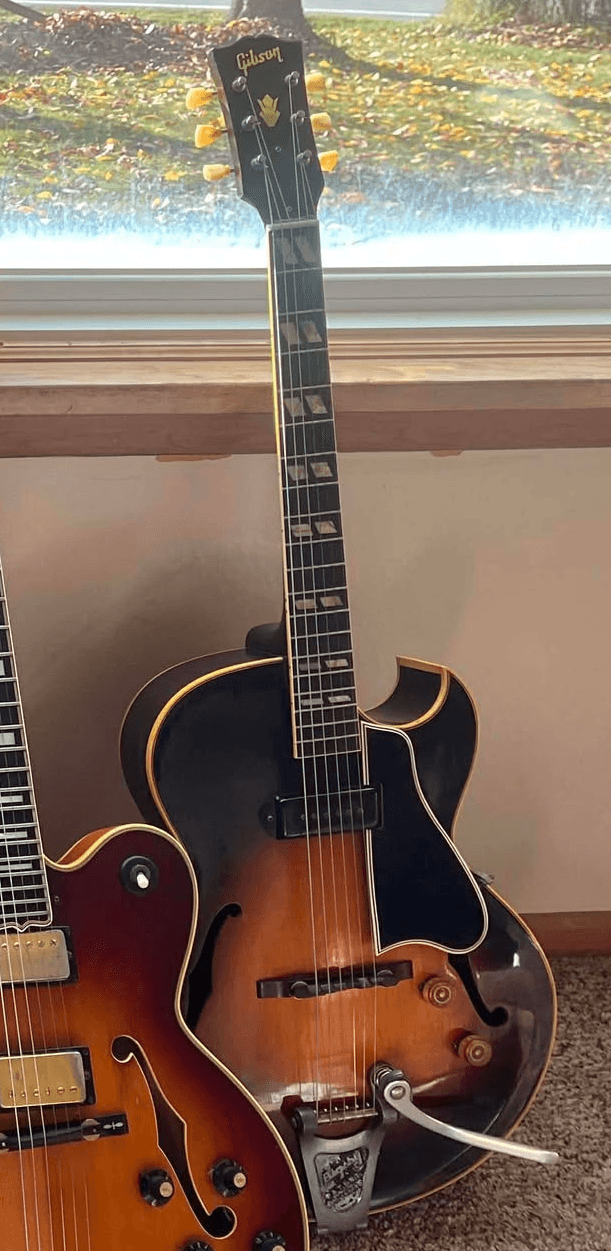
Learning how to date a vintage Gibson ES-175 accurately is essential for authentication, proper valuation, insurance documentation, and understanding your instrument's place in jazz guitar history. The Gibson ES-175 represents one of the most iconic and influential jazz guitars ever created—an elegant hollow-body instrument with a single Florentine cutaway that became the standard choice for bebop, cool jazz, and modern jazz guitarists worldwide.
Whether you own a rare first-year 1949 ES-175 with original P-90 pickups, a coveted 1950s PAF humbucker example, a mid-1960s patent number model, or any vintage ES-175 from the pre-1970 era, determining its exact manufacturing year affects everything from market value to restoration approaches. Certain years and specifications command premium prices, particularly early examples with specific features and original appointments.
This comprehensive guide teaches you how to date your vintage Gibson ES-175 using multiple authentication methods, ensuring accuracy for guitars made between 1949 and 1970.
Understanding the Gibson ES-175 History
Before diving into dating methods, understanding the ES-175's evolution provides crucial context:
The Birth of the ES-175 (1949)
Gibson introduced the ES-175 in 1949 as an affordable, professional jazz guitar:
Revolutionary Design Features:
Single Florentine cutaway (pointed)
Laminated maple body construction
16.25" body width
P-90 single-coil pickup (1949-1956)
Two P-90 pickups on the ES-175D from 1953
Alnico V pickups available
Trapeze tailpiece initially
Affordable professional instrument
Strategic Purpose:
Offer affordable alternative to L-5 and Super 400
Appeal to working jazz musicians
Single cutaway for upper fret access
Quality construction at moderate price
Establish Gibson jazz guitar line
The "ES-175" Designation Explained
"ES" = Electric Spanish:
Gibson's designation for electric arch-top guitars
"Spanish" refers to standard guitar (not lap steel)
Electric pickups standard
"175" = Model Number:
Price point designation ($175 original price)
Mid-level Gibson hollow-body
Professional quality at affordable price
Entry point to premium Gibson jazz guitars
Musical Significance
Famous Players:
Joe Pass (signature ES-175 player)
Herb Ellis (legendary jazz guitarist)
Pat Metheny (early career)
Jim Hall (some periods)
Countless bebop and jazz guitarists
Studio session standard
Jazz club workhorse
Sonic Character:
Warm, focused tone
Excellent for single-note lines
Clear articulation
Balanced frequency response
Jazz voicing excellence
Recording studio favorite
Major 1949-1970 Evolution Periods
1949: First Year (Single Cutaway)
ES-175 introduced
Single P-90 pickup
Single Florentine cutaway
Natural or sunburst finish
Most valuable year
1950-1956: Early P-90 Era
One P-90 (ES-175) or, from 1953, two P-90s (ES-175D)
Single cutaway
Natural or sunburst finish
Excellent construction
1957-1960: PAF Humbucker Era
PAF humbuckers introduced (1957)
Single cutaway continues
Natural or sunburst finish
Highly collectible
1961-1970: Patent Number Era
Patent number humbuckers
One-pickup ES-175 discontinued (1971)
One-pickup ES-175 and two-pickup ES-175D both available
Various finishes
How to Date Your Vintage Gibson ES-175: Serial Number Systems
Understanding Gibson's serial number systems is foundational for dating:
Important Resource: For quick serial number reference, use our Gibson Serial Number Lookup Tool to find your guitar's approximate year based on serial number ranges.
Serial Number Location
Where to Find Serial Number:
Inside guitar through f-hole
Stamped on label (orange or white)
Back of headstock (some later examples)
Label visible through f-hole
Use flashlight for visibility
Format: Various formats depending on year
1949-1961 Serial Number System
Format: Letter prefix (A) followed by numbers
Approximate Ranges:
1949: A-1500 to A-2000 range (first year)
1950: A-2000 to A-5000 range
1951: A-5000 to A-8000 range
1952: A-8000 to A-10000 range
1953: A-10000 to A-12000 range
1954: A-12000 to A-14000 range
1955: A-14000 to A-16000 range
1956: A-16000 to A-18000 range
1957: A-18000 to A-21000 range
1958: A-21000 to A-23000 range
1959: A-23000 to A-25000 range
1960: A-25000 to A-29000 range
1961: A-29000 to A-32000 range
Location: Inside guitar on label
Pro Tip: Use our Gibson Serial Number Lookup Tool for instant reference.
1961-1970 Serial Number System
Format: 5-6 digits with varying overlap
Approximate Ranges:
1961: 1xxxx-2xxxx range
1962: 2xxxx-3xxxx range
1963: 3xxxx-4xxxx range
1964: 4xxxx-7xxxx range
1965: 7xxxx-9xxxx range
1966: 0xxxx-1xxxx range (restarted)
1967: 1xxxx-8xxxx range
1968: 8xxxx-0xxxx range (restarted again)
1969: 0xxxx-9xxxx range
1970: 0xxxxx range (six digits)
Critical Challenge: Significant overlap between years
Location: Inside guitar on label
Why Serial Numbers Are Problematic:
Extreme overlap in 1960s
Numbering restarted multiple times
Must use Factory Order Numbers and physical features
Factory Order Numbers (FON): The Most Reliable Dating Method
For vintage ES-175s, Factory Order Numbers provide the most accurate dating:
What FON Tells You: Production batch and year of manufacture
Location: Inside guitar
Stamped on internal bracing or blocking
Visible through f-hole
Orange label (1950s-early 1960s)
White label (mid-1960s onward)
May require mirror and flashlight
Format: Letter followed by 3-4 digits
Letter indicates year
Numbers indicate production batch
FON Letter Codes (1949-1970):
V = 1949
U = 1950
T = 1951
S = 1952
R = 1953
Q = 1954
P = 1955
O = 1956
N = 1957
M = 1958
L = 1959
K = 1960
J = 1961
I = 1962
H = 1963
G = 1964
F = 1965
E = 1966
D = 1967
C = 1968
B = 1969
A = 1970
Example: FON "L 2847" = 1959 production, batch 2847
How to Find FON:
Look through f-hole
Check orange or white label
FON stamped on internal wood
Use mirror and flashlight
Photograph for documentation
Why FON Is Critical:
Most reliable Gibson dating method
Minimal overlap between years
Essential for accurate dating
Industry standard
Dating Vintage ES-175 by Physical Features: Era-by-Era Guide
Physical characteristics provide crucial dating evidence:
1949 ES-175 (First Year - Most Valuable)
The Original Single-Cutaway Jazz Guitar:
Body Construction:
Hollow-body construction
Laminated maple body
Pressed arch (not hand-carved)
Single Florentine cutaway (pointed)
16.25" body width
3.25" body depth
Pickups - First Year:
One P-90 pickup (the two-pickup ES-175D arrived in 1953)
Neck position
Alnico V magnet
Black or cream cover
Soap bar style
Neck:
Mahogany neck
Rosewood fingerboard
Dot inlays (single parallelogram at 12th fret)
24.75" scale length
Bound fingerboard
Headstock:
Gibson script logo
Crown inlay
Bound headstock
"ES-175" designation
Bridge and Tailpiece:
Trapeze tailpiece
Floating bridge (adjustable)
Rosewood bridge
Traditional jazz setup
Hardware:
Nickel-plated hardware
Kluson tuners
Simple appointments
Finish:
Natural finish option
Sunburst finish option
Nitrocellulose lacquer
Hand-sprayed
Binding:
Single-ply binding on body
Simple appointments
Bound f-holes
Bound fingerboard
F-Holes:
Traditional f-hole placement
Bound f-holes
Hand-cut
Controls:
Single volume control
Single tone control
Simple electronics
Label:
Orange label inside
Gibson logo
"ES-175" designation
Kalamazoo, Michigan
Serial Numbers/FON: A-1500 to A-2000 range, FON "V"
Why 1949 Is Most Valuable:
First year production
Single pickup only
Historical significance
Limited production
Extremely rare
Premium pricing
1950-1956 ES-175 (Early P-90 Era)
One or Two P-90 Pickups:
Body Construction:
Hollow-body laminated maple
Single Florentine cutaway
16.25" body width
Pressed arch construction
Pickups - Critical Change:
One P-90, or two on the ES-175D from 1953
Neck and bridge positions
Alnico V magnets
Black or cream covers
Soap bar style
Classic jazz tone
Neck:
Mahogany neck
Rosewood fingerboard
Trapezoid inlays (becomes standard)
Bound fingerboard
24.75" scale
Headstock:
Gibson script logo
Crown inlay
Bound headstock
Bridge and Tailpiece:
Trapeze tailpiece
Floating adjustable bridge
Rosewood bridge
Hardware:
Nickel-plated hardware
Kluson tuners
Simple appointments
Finish:
Natural finish (blonde)
Sunburst finish
Nitrocellulose lacquer
Binding:
Single-ply binding on body
Bound f-holes
Bound fingerboard
Controls:
Two volume controls
Two tone controls
3-way selector switch
Label:
Orange label inside
Gibson designation
Serial Numbers/FON:
1950: A-2000 to A-5000, FON "U"
1951: A-5000 to A-8000, FON "T"
1952: A-8000 to A-10000, FON "S"
1953: A-10000 to A-12000, FON "R"
1954: A-12000 to A-14000, FON "Q"
1955: A-14000 to A-16000, FON "P"
1956: A-16000 to A-18000, FON "O"
Significance: Classic two-pickup P-90 configuration, peak early ES-175 era
1957-1960 ES-175 (PAF Humbucker Era - Highly Collectible)
The Holy Grail PAF ES-175:
Body Construction:
Hollow-body laminated maple
Single Florentine cutaway
16.25" body width
Pressed arch
Pickups - Revolutionary Change:
PAF humbucker pickups (1957 onward)
Patent Applied For
Two humbuckers (neck and bridge)
Sticker on pickup (early)
No sticker (later)
Gold or nickel covers
Most collectible pickup era
Neck:
Mahogany neck
Rosewood fingerboard
Trapezoid inlays
Bound fingerboard
24.75" scale
Headstock:
Gibson script logo
Crown inlay
Bound headstock
Bridge and Tailpiece:
Trapeze tailpiece (early)
Tune-o-matic bridge introduced (late 1950s)
ABR-1 bridge
Separate tailpiece option
Hardware:
Nickel or gold-plated hardware
Kluson tuners
Premium appointments
Finish:
Natural finish (blonde)
Sunburst finish
Nitrocellulose lacquer
Binding:
Single-ply binding on body
Bound f-holes
Bound fingerboard
Controls:
Two volume controls
Two tone controls
3-way selector switch
Label:
Orange label inside
Gibson designation
Serial Numbers/FON:
1957: A-18000 to A-21000, FON "N"
1958: A-21000 to A-23000, FON "M"
1959: A-23000 to A-25000, FON "L"
1960: A-25000 to A-29000, FON "K"
Why PAF Era Is Holy Grail:
Original PAF humbuckers
Peak Gibson quality
Single cutaway
Investment grade
Most collectible ES-175s
Five-figure values common
1961-1962 ES-175 (Transition to Patent Number Pickups)
Body Construction Options:
Single Florentine cutaway (every ES-175)
One-pickup ES-175 or two-pickup ES-175D
Hollow-body laminated maple
16.25" body width
Pickups:
Patent number humbuckers
Replace PAF pickups (1961+)
"Patent No." embossed on cover
Gold or nickel covers
Two pickups on the ES-175D, one on the ES-175
Neck:
Mahogany neck
Rosewood fingerboard
Trapezoid inlays
Bound fingerboard
Headstock:
Gibson script logo
Crown inlay
Bound headstock
Bridge and Tailpiece:
Tune-o-matic bridge
Separate tailpiece
Nickel or gold hardware
Hardware:
Nickel-plated standard
Kluson tuners
Finish:
Natural finish
Sunburst finish
Nitrocellulose lacquer
Binding:
Single-ply binding
Bound f-holes
Bound fingerboard
Controls:
Two volume controls
Two tone controls
3-way selector switch
Label:
Orange label (early)
White label (transition)
Serial Numbers/FON:
1961: A-29000 to A-32000 or 1xxxx, FON "J"
1962: 2xxxx range, FON "I"
Significance: Patent number pickups begin
1963-1970 ES-175D (Two Pickups) and ES-175 (One Pickup)
Two Versions Available:
ES-175D (Two Pickups):
"D" stands for double pickup
Single pointed Florentine cutaway, the same body as the ES-175
16.25" body width
ES-175 (One Pickup):
Built alongside the ES-175D
Traditional single Florentine cutaway
Classic appearance
Discontinued 1971
Body Construction:
Hollow-body laminated maple
Pressed arch
16.25" body width
Pickups:
Patent number humbuckers
Gold or nickel covers
Two pickups (ES-175D) or one (ES-175)
Excellent tone
Neck:
Mahogany neck
Rosewood fingerboard
Trapezoid inlays
Bound fingerboard
Headstock:
Gibson script logo
Crown inlay
Bound headstock
Bridge and Tailpiece:
Tune-o-matic bridge
Separate tailpiece
Nickel hardware standard
Hardware:
Nickel-plated standard
Various tuners
Kluson or replacements
Finish:
Natural finish
Sunburst finish
Various options
Binding:
Single-ply binding
Bound f-holes
Bound fingerboard
Controls:
Two volume controls
Two tone controls
3-way selector switch
Label:
White label standard (mid-1960s onward)
Gibson designation
Serial Numbers/FON:
1963: 3xxxx range, FON "H"
1964: 4xxxx range, FON "G"
1965: 7xxxx range, FON "F"
1966: 0xxxx range, FON "E"
1967: 1xxxx range, FON "D"
1968: 8xxxx range, FON "C"
1969: 0xxxx range, FON "B"
1970: 0xxxxx range, FON "A"
Significance: One-pickup and two-pickup versions available, patent number pickups
Potentiometer Date Codes: Essential Verification
Potentiometer codes provide crucial verification:
Understanding Pot Codes
Standard Format: XXYYZZ
XX = Manufacturer code
YY = Year of manufacture
ZZ = Week of manufacture
Common Manufacturers:
137 = CTS
134 = Centralab
140 = Clarostat
How to Check Pot Codes on ES-175
Access:
Look through f-hole with mirror
Remove control plate cover (back)
Locate four potentiometers
Look for stamped codes
May require dental mirror
Use flashlight
Photograph codes
Pot Count: Four pots (two volume, two tone)
Example Codes:
137 5728 = CTS pot, 1957, 28th week
134 6015 = Centralab pot, 1960, 15th week
Interpreting Pot Dates
Dating Rules:
Pots date component manufacture
Guitar assembled weeks/months after
All four pots should date similarly
1958 guitar might have late 1957 pots
Red Flags:
Pots dated after guitar year
Mixed dates from different years
Modern pots on vintage ES-175
Identifying Key ES-175 Features
Understanding distinctive characteristics:
One Pickup vs. Two (ES-175 vs. ES-175D)
Cutaway: every ES-175 has a single pointed Florentine cutaway. Gibson never made a double-cutaway ES-175.
ES-175 (one pickup, 1949 to 1971): the original model. Gibson discontinued the one-pickup version in 1971.
ES-175D (two pickups, from 1953): the D stands for double pickup. Same body, with a second pickup.
Dating Significance: pickup count alone does not date an ES-175, because the one-pickup model was built until 1971. Use the pickup type, the Factory Order Number and the label.
P-90 vs. PAF vs. Patent Number Pickups
P-90 Pickups (1949-1956):
Single-coil "soap bar" design
One pickup, or two on the ES-175D from 1953
Black or cream covers
Classic jazz tone
Collectible
PAF Humbuckers (1957-1960):
Patent Applied For
Revolutionary humbucking design
Most collectible era
Investment grade
Five-figure values
Patent Number Humbuckers (1961-1970):
"Patent No." on cover
Replace PAF pickups
Excellent tone
Still collectible
Dating Significance:
P-90s = 1956 or earlier
PAF = 1957-1960
Patent number = 1961 onward
Value Impact: PAF era most valuable, P-90 era also collectible
Trapezoid Inlays
Standard ES-175 Inlays:
Trapezoid position markers
Pearl inlays
Classic Gibson design
Professional appointments
1949 Only: Dot inlays with single parallelogram at 12th fret
Natural vs. Sunburst Finish
Natural Finish (blonde):
Shows wood grain
Traditional choice
Slightly more valuable
Classic appearance
Sunburst Finish:
Cherry or tobacco sunburst
Shaded appearance
Common option
Beautiful finish
Orange Label vs. White Label
Orange Label (1950s-early 1960s):
Orange oval label inside
Gibson logo
Early production indicator
More collectible
White Label (mid-1960s onward):
White label
Gibson designation
Later production
Dating Significance:
Orange label = 1950s to early 1960s
White label = mid-1960s onward
When You're Ready to Sell Your Vintage Gibson ES-175
How Dating Affects ES-175 Value
Era-Specific Premiums:
1949 (first year, single pickup): Highest values
1950-1956 (P-90 era): Excellent values
1957-1960 (PAF era): Premium values (most collectible)
1961-1970 (patent number): Good to strong values
Feature-Specific Value:
PAF humbuckers (1957-1960): Major premium
P-90 pickups (1949-1956): Strong collector value
Natural finish: Slight premium over sunburst
All-original condition: Essential
Orange label: Premium indicator
Why Choose Edgewater Guitars
Our Gibson ES-175 Expertise:
Vintage Gibson hollow-body specialists
PAF pickup authentication
P-90 era identification
ES-175 vs. ES-175D identification
FON analysis for accurate dating
Orange vs. white label evaluation
Comprehensive authentication
Contact: (440) 219-3607
Service Area: Ohio, Michigan, Pennsylvania, Indiana, West Virginia
Frequently Asked Questions
What years had PAF pickups on the ES-175?
ES-175s had PAF (Patent Applied For) humbucker pickups from 1957 through 1960. These are the most collectible ES-175 examples and command premium prices. Patent number humbuckers replaced PAFs in 1961. Use our Gibson Serial Number Lookup Tool to check your serial range.
Was there a double-cutaway ES-175?
No. Every ES-175 has a single pointed Florentine cutaway. The D in ES-175D stands for double pickup, not double cutaway.
When was the ES-175D introduced?
Gibson introduced the two-pickup ES-175D in 1953. The one-pickup ES-175 stayed in production until 1971, so both versions were built side by side for most of the 1950s and 1960s.
Are P-90 ES-175s valuable?
Yes, P-90 ES-175s (1949-1956) are highly collectible and valuable, especially early examples. The 1949 first-year model with single P-90 is extremely rare and commands premium prices.
Can I date my ES-175 just by serial number?
For 1960s production, serial numbers are unreliable due to extreme overlap. Use our Gibson Serial Number Lookup Tool for approximate range, then verify with FON, pickup type, and label color for accurate dating.
What's more valuable: natural or sunburst finish?
Natural finish ES-175s are generally slightly more valuable than sunburst, though both are collectible. Natural finish shows the wood grain and is traditional for jazz guitars.
Learning how to date your vintage Gibson ES-175 accurately requires understanding serial numbers, Factory Order Numbers, and physical features. The ES-175 evolved from 1949 through 1970, with PAF era examples (1957-1960) commanding the highest values, followed by early P-90 examples.
Use our Gibson Serial Number Lookup Tool as a starting point, then verify with FON, pickup type, and construction details.
For current values by era, including a real $10,000 example we purchased, see our Vintage Gibson ES-175 Value Guide.
Edgewater Guitars specializes in vintage Gibson ES-175 authentication and purchasing throughout the Midwest.
Contact us today at (440) 219-3607 for expert ES-175 authentication or professional valuation.
Gavin Coe, Vintage Guitar Specialist
Edgewater Guitars - Ohio's Premier Guitar Buyer