DATE :
Monday, May 25, 2026
Harmony Guitar Serial Number Lookup: Complete Dating & Identification Guide
Harmony Guitar Serial Number Lookup: Complete Dating & Identification Guide
Last Updated: May 2026
Harmony Guitars holds a unique position in American guitar history: at its peak in the 1960s, Harmony was the largest guitar manufacturer in the world, producing more than 1,000 instruments per day at its Chicago factory and supplying not only the Harmony brand but also Silvertone (for Sears, Roebuck), Airline (for Montgomery Ward), Stella, and dozens of other department store brand names. Original Harmony production ran from 1892 until the company's closure in 1975. The brand was revived in 2018 by BandLab Technologies, which now produces premium Harmony reissues in Kalamazoo, Michigan.
This guide is provided as a free resource for Harmony owners and collectors researching their instruments. It explains Harmony's history, why the date stamp inside the body is more reliable than the serial number, the brand's massive role in supplying department store guitars, which vintage Harmony models carry collector interest today, and how the modern Kalamazoo-made Harmony instruments relate to the original brand.
Quick Answer: How to Date a Harmony Guitar
For vintage Harmony instruments (1892–1975), the most reliable dating method is the date stamp inside the body, not the serial number. Harmony stamped most of its guitars with a date code consisting of a letter prefix followed by two digits indicating the year:
F-65 indicates 1965
S-67 indicates 1967
F-71 indicates 1971
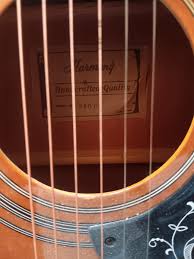
The date stamp is typically found inside the body — visible through the soundhole on acoustics, or stamped inside the f-hole or interior cavity on archtops and hollow-body electrics.
For modern Harmony instruments (2018–present), production is at the BandLab-owned facility in Kalamazoo, Michigan, with serial numbering systems distinct from vintage Harmony conventions.
About Harmony Guitars: A Brief History
Harmony's story spans more than 130 years and includes one of the most remarkable production scales in American guitar manufacturing history.
The Founding and Early Years (1892–1916)
Harmony was founded in 1892 by Wilhelm Schultz, a German immigrant, in Chicago, Illinois. The company initially produced small numbers of guitars and other fretted instruments, building reputation through quality construction at accessible price points.
The Sears Era and Industrial Scale (1916–1975)
In 1916, Sears, Roebuck and Company acquired Harmony, transforming it from a moderate-sized manufacturer into an industrial-scale operation. Under Sears ownership, Harmony became the primary supplier for Sears' Silvertone-branded musical instruments while also producing guitars for the Harmony brand itself, Montgomery Ward's Airline brand, Stella (a brand Harmony controlled), and dozens of other department store and catalog brand names.
At its 1960s peak, Harmony produced more than 1,000 guitars per day — making it the largest guitar manufacturer in the world by volume. Harmony's Chicago factory supplied accessible-priced instruments that introduced millions of Americans to the guitar, particularly during the folk revival of the late 1950s and early 1960s and the rock explosion that followed.
Notable Harmony and Harmony-made guitar players:
Jimmy Page (Led Zeppelin): Used a Harmony Sovereign acoustic on early Led Zeppelin recordings, most famously on "Stairway to Heaven"
Leadbelly: Played a Stella 12-string (Stella was a Harmony-controlled brand)
Mississippi John Hurt: Played various Harmony-produced instruments
Elizabeth Cotten: Used a Stella for her influential fingerstyle playing
John Lennon (The Beatles): Briefly used a Harmony Stratotone early in his career
Keith Richards (Rolling Stones): Has spoken about owning Stella guitars
Roy Smeck: Stella signature association in the 1920s and 1930s
Many blues, folk, and early rock musicians who needed affordable but playable instruments
The Decline and Closure (Late 1960s–1975)
The wave of high-quality Japanese guitar imports beginning in the late 1960s — including Harmony-style copies at competitive prices — eroded Harmony's market position. Combined with changing American manufacturing economics, Harmony was unable to sustain its production model. The original Harmony Company closed in 1975, ending more than 80 years of continuous Chicago production.
Brand Dormancy and Trademark Revivals (1975–2018)
The Harmony trademark passed through various ownership arrangements during the decades following the original company's closure. Several short-lived attempts to revive the brand occurred, typically involving overseas-produced instruments using the Harmony name, but none established sustained presence.
The BandLab Revival (2018–Present)
In 2018, BandLab Technologies acquired the Harmony trademark and undertook a serious revival of the brand as a premium American-made guitar maker. Modern Harmony instruments are produced in Kalamazoo, Michigan, in the historic former Gibson factory building (now also home to Heritage Guitars). Modern Harmony focuses on premium reissues of classic Harmony designs — including the Juno, Jupiter, Comet, and Standard series — built with American materials and craftsmanship at significantly higher quality and price tiers than original Harmony production occupied.
The Kalamazoo location is historically significant: this is where Gibson produced its instruments throughout the brand's golden era, giving modern Harmony production a meaningful American guitar heritage location.
Why Harmony Dating Is Different from Other Brands
Three factors make Harmony identification distinct from most other guitar brands:
The date stamp system is more reliable than serial numbers. Harmony's date stamps inside the body provide direct year information, while Harmony's serial number conventions varied across models and production years without consistent date encoding.
Brand-name complexity. A Harmony-produced guitar from the 1960s might carry the Harmony brand name, the Silvertone brand name (for Sears), the Airline brand name (for Montgomery Ward), the Stella brand name, or various other store-brand names. The same instrument could appear under multiple brands depending on which retailer ordered the production run.
Massive production volume. With more than 1,000 guitars produced per day at peak, Harmony's serial number ranges extended into very large numbers without the year-by-year tracking that smaller manufacturers maintained.
The Harmony Date Stamp System
For vintage Harmony instruments (1892–1975), the date stamp is the primary dating tool. The standard format is:
[Letter] - [Two-digit year]
Examples:
F-65 = 1965
S-67 = 1967
F-58 = 1958
S-71 = 1971
About the letter prefix: The letter (most commonly F or S, occasionally other letters) appears to relate to production batches, seasonal codes, or model lines, with different interpretations circulating in collector communities. The most reliable interpretation is that the two-digit year is the meaningful dating information, while the letter prefix is a production code whose precise meaning varies by era and model line.
Date stamp locations:
Acoustic flat-tops (Sovereign, Stella, and similar): Stamped inside the body, visible through the soundhole. Often on the underside of the top, the back interior, or the neck block.
Archtops and hollow-body electrics (Meteor, Rocket, Jupiter, H-series): Stamped inside the body, visible through the f-hole. Often on the underside of the top or on an interior brace.
Solid-body electrics (Stratotone, Bobkat): Stamped inside the body cavity, requiring removal of the pickguard or back plate in some cases.
For instruments where the date stamp is illegible, missing, or inaccessible, dating must rely on cross-referencing construction features, hardware specifications, headstock logo style, and catalog appearance.
Harmony Serial Number Conventions
Harmony serial numbers existed but were used less consistently than the date stamps. Conventions varied by era and model line:
1940s–1950s Harmony serials:
Often 4 to 5 digit numbers
Sometimes stamped on the back of the headstock
Sometimes stamped inside the body alongside the date code
Not consistently tied to year of production
1960s–1970s Harmony serials:
Various conventions across model lines
Higher-end electric models (H-72, H-77, H-78) sometimes had more systematic serial conventions
Department store brand instruments (Silvertone, Airline) used the parent brand's serial conventions, not Harmony's
Modern Harmony (2018–present):
BandLab-era Harmony uses contemporary serial number systems
Production documentation supports accurate dating
Modern instruments carry "Made in U.S.A." and Kalamazoo location markings
The Department Store Brand Connection
A defining piece of Harmony's history is the extensive department store brand production. Understanding which other brand names indicate Harmony manufacturing is essential for accurate identification:
Major store-brand names produced by Harmony at various times:
Silvertone (Sears, Roebuck and Company): Harmony was the primary supplier of Silvertone-branded guitars throughout the 1950s and 1960s, though Silvertone instruments were also produced by other manufacturers including Danelectro and Kay. Determining whether a specific Silvertone is Harmony-made requires identification of construction features and date stamps.
Airline (Montgomery Ward): Many Airline-branded guitars from the 1950s and 1960s were Harmony-produced, though Airline also sourced from Valco and other manufacturers.
Stella: A brand controlled by Harmony for entry-level instruments. Stella was historically a separate company that Harmony acquired the name from.
Various other store brands and private-label instruments were produced by Harmony for retailers, distributors, and music schools throughout the 1950s–1970s.
When evaluating an unmarked or partially-marked instrument that may have been Harmony-produced, look for the distinctive Harmony date stamp inside the body — the date stamp typically carried over even when the instrument was sold under a different brand name.
Most Collected Vintage Harmony Models
These Harmony and Harmony-made models carry the strongest current collector interest:
Acoustic flat-tops:
Sovereign series (H-1260, H-1265): Mid-tier acoustics with sustained collector interest, particularly examples from the 1960s. The Jimmy Page association with the Sovereign has built sustained demand for clean original examples.
H-165, H-162, H-1203, H-1213, H-1215: Various smaller-body acoustics with collector following
Stella 12-string instruments: Particularly examples from the 1920s–1940s associated with country blues artists
Archtops and hollow-body electrics:
H-77, H-78 (Meteor): Premium hollow-body thinline electrics with collector demand
H-72: Mid-tier hollow-body electric
Rocket series (H-53, H-54, H-56, H-59): Distinctive hollow-body electrics with growing collector interest
Jupiter: Mid-tier hollow-body electric
Solid-body electrics:
Stratotone (H-44, H-45, H-46, H-47): Early Harmony solid-body electrics with distinctive aesthetic and sustained collector interest
Bobkat (H-14, H-15): Solid-body electrics with growing collector following, particularly in indie and alternative music circles
Silvertone-branded Harmony-made instruments:
Silvertone 1448, 1449, 1457 (amp-in-case models): The famous "Sears amp-in-case" guitars with built-in amplifiers in the case. Strong sustained collector demand.
Silvertone "Stratotone"-style instruments: Harmony-produced Silvertones with collector interest
Various other Silvertone models with documented Harmony origin
Red Flags: Authentication and Identification Issues
Common issues to watch for when researching a Harmony:
Misidentified store-brand instruments. Silvertone, Airline, and other store-brand guitars require careful verification to determine actual manufacturer. Not every Silvertone is a Harmony, and identifying the maker affects collector value and authentication approach.
Modern Harmony confusion. BandLab-era Harmony instruments (2018-present) are premium American-made guitars distinct from vintage Harmony. Sellers occasionally confuse vintage and modern Harmony, or attempt to leverage the original brand reputation for non-Harmony import instruments using the Harmony name from intermediate trademark revival periods.
Refinishes. Aged nitrocellulose finishes on vintage Harmony instruments should show natural amber tinting and wear patterns consistent with the era. Refinished examples reduce collector value. Faded, naturally aged finishes are correct and desirable.
Replaced tuners or hardware. Original Harmony hardware contributes to collector value when intact and period-correct.
Top crack repairs. Harmony acoustics, like all flat-top guitars, are vulnerable to humidity-related cracks. Well-executed repairs are acceptable but should be documented.
Neck reset needs. Many vintage Harmony acoustics now benefit from professional neck resets due to age. Documentation of professional restoration work supports value.
Missing or illegible date stamps. Without the date stamp, vintage Harmony dating becomes significantly more difficult and depends on construction feature cross-referencing.
What Affects a Harmony's Collector Value
Era and model tier: Mid-tier and higher-end Harmony models (Sovereign series, H-72/H-77/H-78 electrics, Stratotone series) command stronger collector demand than entry-tier instruments. The 1950s and 1960s production years generally hold the strongest collector interest within vintage Harmony.
Player association: The Jimmy Page Sovereign association drives demand for Sovereign-series acoustics. Stella instruments associated with early country blues artists command interest among blues collectors. Silvertone amp-in-case models have built strong collector demand independent of player association.
Originality: All-original examples with original tuners, original electronics (on electrics), original hardware, and original finish command meaningful premiums over modified examples.
Condition: Crack-free finishes, intact original date stamps and labels, clean fingerboards, original neck angle, and original cases all contribute to upper-tier valuations within the Harmony catalog.
Modern Harmony (2018-present) considerations: Modern Kalamazoo-made Harmony instruments occupy a separate market tier as premium American-made guitars. These instruments are evaluated within the modern boutique guitar market rather than the vintage Harmony collector market.
Documentation: Original case, paperwork, and provenance documentation add collector confidence and value.
Further Research Resources
For deeper Harmony research, the following community resources are valuable:
Harmony Database (harmony.demont.net and similar archives) maintains catalog scans, model information, and historical documentation from the original Harmony Company.
Modern Harmony's official website (harmony.co) documents current production and provides context about the BandLab-era revival.
Vintage guitar publications including Vintage Guitar magazine have published features on Harmony's industrial scale, the Silvertone connection, and specific model histories.
The Silvertone World website and related collector communities maintain documentation specifically about Silvertone-branded instruments, including identification of which models were Harmony-made versus produced by other manufacturers (Danelectro, Kay, etc.).
Various Facebook groups and Reddit communities dedicated to vintage Harmony and department store guitars maintain catalog archives and member-contributed identification resources.
Frequently Asked Questions About Harmony Serial Numbers
How do I tell what year my Harmony guitar was made? For vintage Harmony instruments (1892–1975), the most reliable dating method is the date stamp inside the body, not the serial number. The format is a letter followed by a two-digit year, such as F-65 (1965) or S-67 (1967). The date stamp is visible through the soundhole on acoustics or through the f-hole on hollow-body electrics. Modern Harmony instruments (2018–present) use contemporary serial number systems with build documentation supporting accurate dating.
Are Harmony guitars valuable? Mid-tier and higher-end vintage Harmony models carry sustained collector interest, particularly the Sovereign acoustics (driven by Jimmy Page association), H-72/H-77/H-78 hollow-body electrics, Stratotone solid bodies, and Silvertone amp-in-case models made by Harmony for Sears. Entry-tier vintage Harmony instruments occupy lower price points but remain popular as accessible vintage guitars. Modern Kalamazoo-made Harmony instruments (2018-present) are premium American-made guitars in a separate market tier.
Where were Harmony guitars made? Original Harmony Company guitars were made in Chicago, Illinois from 1892 until the company's closure in 1975. At peak production, Harmony's Chicago factory produced more than 1,000 guitars per day, making it the largest guitar manufacturer in the world. Modern Harmony instruments (2018-present, under BandLab Technologies ownership) are made in Kalamazoo, Michigan in the historic former Gibson factory building.
What is the difference between Harmony and Silvertone? Silvertone was the brand name Sears, Roebuck and Company used for musical instruments sold through its catalog and stores from 1916 through approximately 1972. Harmony was the primary manufacturer of Silvertone-branded guitars throughout much of this period, but Silvertone also sourced from other manufacturers including Danelectro and Kay. A Silvertone guitar may or may not be a Harmony-made instrument depending on the specific model and production year — identification requires examining construction features and date stamps.
Where is the serial number or date stamp on a Harmony guitar? The Harmony date stamp (the primary dating method for vintage Harmony) is typically located inside the body. On acoustic flat-tops, it's visible through the soundhole on the underside of the top or interior braces. On archtops and hollow-body electrics, it's visible through the f-hole. On solid-body electrics, it's stamped inside the body cavity, sometimes requiring removal of the pickguard or back plate. Serial numbers, when present, are typically on the back of the headstock or inside the body alongside the date stamp.
Are new Harmony guitars the same as vintage ones? No. Modern Harmony instruments (produced since 2018 by BandLab Technologies) are entirely separate from original Harmony Company production (1892–1975). Modern Harmony is a premium American-made guitar brand built in Kalamazoo, Michigan with significantly higher quality and price tiers than original Harmony production occupied. Vintage Harmony was largely an affordable, accessible instrument brand; modern Harmony is a boutique-tier reissue brand that uses the historic name and produces reissues of classic Harmony designs.
Related Resources
This Harmony Guitar serial number guide is part of Edgewater Guitars' collection of vintage guitar identification resources:
Gibson Serial Number Lookup Tool — edgewaterguitars.com/guitar-serial-number-lookup/gibson
Fender Serial Number Lookup Tool — edgewaterguitars.com/guitar-serial-number-lookup/fender
Gretsch Serial Number Lookup Guide
Rickenbacker Serial Number Lookup Guide
Yamaha Serial Number Lookup Guide
Aria Serial Number Lookup Guide
Guild Serial Number Lookup Guide
Ibanez Serial Number Lookup Guide
Takamine Serial Number Lookup Guide
Schecter Serial Number Lookup Guide
Squier Serial Number Lookup Guide
Dean Guitar Serial Number Lookup Guide
Edgewater Guitars publishes free identification resources for guitar owners and collectors. This Harmony guide is provided as a research reference. Edgewater Guitars specializes in purchasing premium vintage American-made guitars throughout Ohio, Michigan, Pennsylvania, Indiana, and West Virginia — including Gibson, Fender, Martin, Gretsch, and Epiphone instruments.