DATE :
How to Date Your Vintage Fender Jaguar: Complete Pre-1975 Authentication Guide
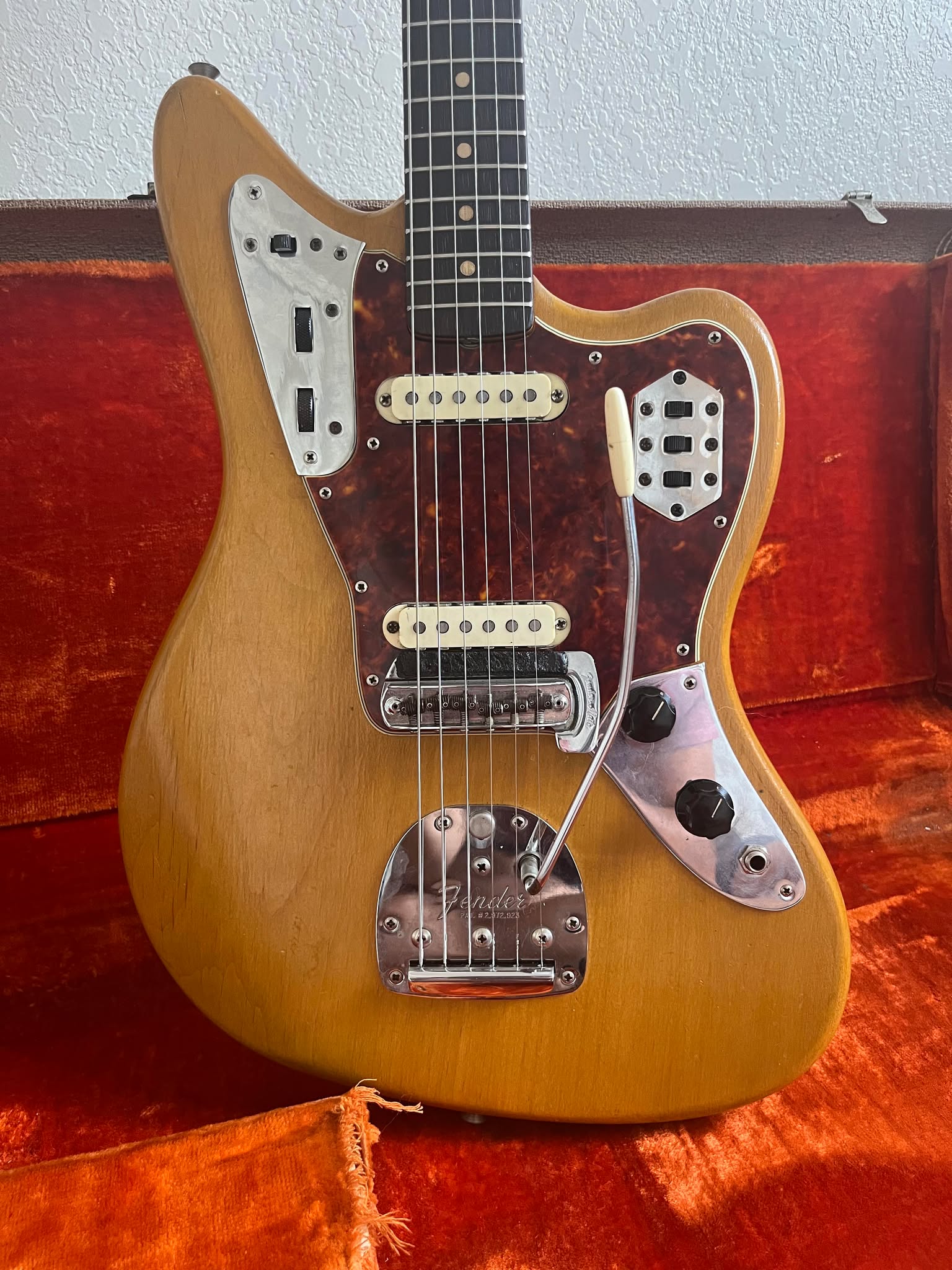
How to Date Your Vintage Fender Jaguar: Complete Pre-1975 Authentication Guide
Why Dating Your Vintage Fender Jaguar Matters
Learning how to date a vintage Fender Jaguar accurately is essential for authentication, proper valuation, insurance documentation, and understanding your instrument’s place in rock history. The Fender Jaguar represents one of the most distinctive and innovative electric guitars ever designed—a premium offset-body guitar with complex switching, unique features, and a devoted cult following.
Whether you own a rare 1962 first-year Jaguar, a mid-1960s pre-CBS example with bound fingerboard, a custom color model, or an early CBS-era guitar, determining its exact manufacturing year affects everything from market value to restoration approaches. Certain years and specifications command premium prices, particularly early 1960s examples with original features, custom colors, and specific appointments.
This comprehensive guide teaches you how to date your vintage Fender Jaguar using multiple authentication methods, ensuring accuracy for guitars made before 1975.
Understanding the Fender Jaguar History
Before diving into dating methods, understanding the Jaguar’s evolution provides crucial context:
The Birth of the Jaguar (1962)
Fender introduced the Jaguar in 1962 as their top-of-the-line guitar:
Revolutionary Features:
Offset waist body design
24” short scale length
Complex switching system
Floating tremolo with lock
Rhythm/lead circuit switching
String mute mechanism
Chrome control plates
Premium appointments throughout
Strategic Purpose:
Compete with Gibson’s premium guitars
Offer features beyond Jazzmaster
Appeal to surf and rock guitarists
Establish Fender’s premium lineup
24” scale for easier playability
Production Era: 1962-1975 (discontinued), 1986+ (reissued)
Major Pre-1975 Evolution Periods
1962: First Year
First production models
All original specifications
Most valuable Jaguars
Bound fingerboard standard
Block inlays standard
1963-1964: Early Pre-CBS
Refined specifications
Bound fingerboard
Block inlays
Premium features
Peak pre-CBS quality
1965: Transition Year
CBS acquisition (January 1965)
Pre-CBS early, CBS late
Transitional features
F-stamped neck plates appear
1966-1969: CBS Era
CBS ownership changes
Specification variations
Bound fingerboard continues
Block inlays standard
1970-1975: Late CBS Era
Declining popularity
Various changes
Production reduced
Discontinued 1975
How to Date Your Vintage Jaguar: Serial Number Systems
Understanding Fender’s serial number systems is foundational for dating. However, serial numbers alone cannot definitively date these guitars—always use multiple verification methods.
Important Resource: For quick serial number reference, use our Fender Serial Number Lookup Tool to find your guitar’s approximate year based on serial number ranges.
1962-1976: Neck Plate Serial Numbers
Vintage Jaguars use neck plate serial numbers:
Location: Metal neck plate (4 bolts attaching neck to body)
Format: 5-6 digits with occasional prefix letters
Approximate Serial Number Ranges:
1962: 80000-90000 range
1963: L00001-L20000 range (L prefix introduced late 1963)
1964: L20000-L50000 range
1965: L50000-L90000, then 100000+ range (CBS transition)
1966: 100000-200000 range
1967: 200000-300000 range
1968: 300000-400000 range
1969: 400000-500000 range
1970: 500000-600000 range
1971: 600000-700000 range
1972: 700000-800000 range
1973: 800000-900000 range
1974: 900000-1000000 range
1975: 1000000+ range
Critical Notes:
Significant overlap between years
Serial numbers not strictly chronological
Same number may indicate multiple possible years
Must verify with other dating methods
How to Find Neck Plate Serial:
Look at neck plate on back of guitar
Four bolts hold neck plate (three bolts on 1971+ some models)
Serial number stamped on plate
Record complete number including any prefix
Pro Tip: Use our Fender Serial Number Lookup Tool for instant reference once you’ve found your serial number.
Neck Date Stamps: The Most Reliable Dating Method
For vintage Jaguars, neck date stamps provide the most accurate dating:
What Neck Dates Tell You: Month and year neck was made
Location: Neck heel (bottom of neck where it joins body)
Format: Pencil marking with month and year
Example: “3-62” = March 1962
Example: “12-64” = December 1964
How to Check Neck Date:
Remove neck plate screws (4 screws typically)
Gently pull neck back slightly (don’t remove completely)
Look at neck heel with flashlight
Pencil date usually visible
May also see other markings (body dates, inspector initials)
Record date exactly as written
Carefully reattach neck
Why Neck Dates Are Most Reliable:
Hand-written by factory workers
Direct indication of production date
More accurate than serial numbers
Shows actual month and year
Industry standard for Fender dating
Important Notes:
Neck typically made weeks/months before final assembly
Body may have different date
Neck and body dates should be close (within months)
Significantly different dates suggest parts guitar
Dating Vintage Jaguar by Physical Features: Era-by-Era Guide
Physical characteristics provide crucial dating evidence:
1962 Jaguar (First Year - Most Valuable)
The Original Premium Offset:
Body Construction:
Offset waist body design
Alder body standard
Contoured for comfort
Forearm contour
Belly cut on back
Scale Length:
24” short scale (unique to Jaguar)
22 frets
Designed for easier playability
Different feel from 25.5” Strat/Tele
Pickups:
Two single-coil pickups
“Jaguar” pickups (unique design)
Metal-tooth pole pieces (distinctive)
Chrome covers
Surrounded by metal shielding
Different from Strat/Jazzmaster pickups
Pickup Characteristics:
Bright, cutting tone
Metal “claw” pole pieces
Shielded construction
Unique Jaguar sound
Switching System:
Complex switching (most complex Fender)
Lead circuit (lower bout controls)
Rhythm circuit (upper bout controls)
Slider switches
Three-way pickup selector (lead circuit)
On/off switches for each pickup (lead)
Rhythm Circuit:
Separate volume and tone controls
Located on upper horn
Activates with slide switch
Neck pickup only in rhythm mode
Bass-heavy preset tone
Lead Circuit:
Two volume controls (one per pickup)
Master tone control
Three-way selector switch
Individual pickup on/off switches
Lower bout control plate
String Mute:
Foam mute mechanism
Mounted near bridge
Adjustable
Can be raised or lowered
Unique Jaguar feature
Tremolo System:
Floating tremolo
Lock button (engages tremolo lock)
Spring tension adjustment
Cover plate
Different from Stratocaster tremolo
Neck and Fingerboard:
Rosewood fingerboard (bound)
Block inlays (pearloid blocks)
Bound fingerboard edges
22 frets
24” scale length
7.25” radius
Headstock:
Standard Fender headstock shape
“Fender” spaghetti logo
“Jaguar” model name
Matching headstock on custom colors
Pickguard:
Tortoiseshell celluloid pickguard
Multiple layers
Complex shape (accommodates controls)
Ages to different colors
Hardware:
Chrome control plates (multiple)
Chrome pickup surrounds
Chrome bridge cover
Kluson tuners
Chrome hardware throughout
Finish Options:
Three-tone sunburst standard
Custom colors available
Olympic White
Lake Placid Blue
Candy Apple Red
Sonic Blue
Fiesta Red
Others available
Serial Numbers: 80000-90000 range
Why 1962 Is Most Valuable:
First year production
All original specifications
Historical significance
Limited production
Peak pre-CBS quality
Bound fingerboard
Block inlays
Original complex features
1963-1964 Jaguar (Pre-CBS Peak)
Refined Specifications:
Body:
Offset waist design
Alder body
Contoured
Scale Length:
24” short scale
22 frets
Pickups:
Two Jaguar single-coils
Metal-tooth pole pieces
Chrome covers
Shielded construction
Switching:
Complex lead/rhythm circuits
All original switching
Slider switches
Multiple control plates
Features:
String mute mechanism
Floating tremolo with lock
All premium appointments
Neck:
Bound rosewood fingerboard
Block inlays (pearloid)
22 frets
24” scale
Pickguard:
Tortoiseshell celluloid
Ages to various colors
Complex shape
Hardware:
Chrome control plates
Chrome pickup surrounds
Kluson tuners
Chrome hardware
Finish Options:
Three-tone sunburst
Custom colors increasingly common
Matching headstock on custom colors
Serial Numbers:
1963: L00001-L20000 range
1964: L20000-L50000 range
Significance: Peak pre-CBS quality, all original features, highly collectible
1965 Jaguar (Transition Year - Critical)
CBS Acquisition: January 1965
Transition Period:
Pre-CBS features (early 1965)
Transitional features (mid-1965)
CBS features (late 1965)
Early 1965 (Pre-CBS):
Bound rosewood fingerboard
Block inlays
No F-stamp on neck plate
Nitrocellulose finish
L-series serial numbers
All original features
Mid-1965 (Transition):
F-stamp appears on neck plates
Specifications begin changing
Mixed features possible
Late 1965 (CBS):
F-stamped neck plates
Serial numbers transition to 100000+
Polyurethane finishes on some
Specification variations
Body:
Offset waist
Alder body
Contoured
Pickups:
Two Jaguar single-coils
Metal-tooth pole pieces
Chrome covers
Switching:
Complex lead/rhythm circuits
All switching features
Multiple control plates
Features:
String mute
Floating tremolo with lock
Bound fingerboard
Block inlays
Hardware:
Chrome control plates
Chrome hardware
Kluson tuners (early) to F-stamped (late)
Finish Options:
Three-tone sunburst
Custom colors
Nitrocellulose (early) to polyurethane (some late)
Serial Numbers: L50000-L90000, then 100000-200000
Why 1965 Is Complex:
CBS transition creates variations
Early 1965 = pre-CBS
Late 1965 = CBS
F-stamp dating indicator
Mixed specifications possible
1966-1969 Jaguar (CBS Era)
CBS Ownership Changes:
Body:
Offset waist
Alder body
Contoured
Scale Length:
24” short scale
22 frets
Pickups:
Two Jaguar single-coils
Metal-tooth pole pieces
Chrome covers
Switching:
Complex circuits continue
Lead/rhythm switching
Multiple control plates
Features:
String mute mechanism
Floating tremolo with lock
Bound fingerboard
Block inlays
Neck:
Bound rosewood fingerboard
Block inlays
22 frets
24” scale
Pickguard:
Tortoiseshell celluloid
Complex shape
Hardware:
F-stamped neck plates
Chrome control plates
Chrome hardware
F-stamped tuners (some)
Finish Options:
Three-tone sunburst
Custom colors
Polyurethane finishes more common
Thicker finish application
Serial Numbers:
1966: 100000-200000 range
1967: 200000-300000 range
1968: 300000-400000 range
1969: 400000-500000 range
Significance: CBS era specifications, declining popularity begins
1970-1975 Jaguar (Late CBS Era - Discontinued)
Declining Production:
Body:
Offset waist
Alder body
Contoured
Scale Length:
24” short scale
22 frets
Pickups:
Two Jaguar single-coils
Metal-tooth pole pieces
Switching:
Complex circuits continue
Some simplification (varies)
Features:
String mute (some models)
Floating tremolo
Bound fingerboard (early)
Block inlays
Changes:
Popularity declining
Production reduced
Various specification changes
Discontinued 1975
Hardware:
F-stamped parts
Chrome hardware
Various changes
Finish Options:
Various colors
Polyurethane standard
Thicker finishes
Serial Numbers:
1970: 500000-600000 range
1971: 600000-700000 range
1972: 700000-800000 range
1973: 800000-900000 range
1974: 900000-1000000 range
1975: 1000000+ range
Significance: Final years of original production, discontinued 1975
Potentiometer Date Codes: Essential Verification
Potentiometer codes provide crucial verification:
Understanding Pot Codes
Standard Format: XXYYZZ
XX = Manufacturer code
YY = Year of manufacture
ZZ = Week of manufacture
Common Manufacturers:
304 = Stackpole (pre-CBS primarily)
137 = CTS (CBS era)
134 = Centralab (some examples)
How to Check Pot Codes on Jaguar
Access Challenge: Complex control layout makes access more difficult
Process:
Remove pickguard and control plates
Locate potentiometers (multiple - varies by circuit)
Look for stamped codes on pot casings
Complex wiring may obscure some pots
Use flashlight and mirrors
Record codes from all accessible pots
Pot Count:
Lead circuit: 3 pots (2 volume, 1 tone)
Rhythm circuit: 2 pots (volume, tone)
Total: 5 potentiometers
Example Codes:
304 6228 = Stackpole pot, 1962, 28th week
137 6715 = CTS pot, 1967, 15th week
Interpreting Pot Dates
Dating Rules:
Pots date component manufacture
Guitar assembled weeks/months after pots made
All pots should date similarly
1963 Jaguar might have late 1962 or early 1963 pots
Critical for Pre-CBS Verification:
Stackpole pots typical pre-CBS
CTS pots more common CBS era
Essential for 1965 transitional dating
Red Flags:
Pots dated after supposed guitar year
Mixed pot dates from different years
Modern pots on supposedly vintage Jaguar
Identifying Key Jaguar Features
Understanding distinctive Jaguar characteristics:
24” Short Scale
Unique Feature:
24” scale length (vs. 25.5” Strat/Tele)
22 frets
Easier playability
Different feel and tone
More “slinky” string tension
What It Means:
Distinctive Jaguar characteristic
Aimed at surf guitarists
Easier bending and playing
Metal-Tooth Pickups
Jaguar-Specific Pickups:
Metal “claw” pole pieces
Not standard Strat-style poles
Shielded construction
Chrome covers
Bright, cutting tone
Unique appearance
Identification:
Look under pickup covers
Metal teeth visible
Different from all other Fender pickups
Complex Switching System
Lead Circuit (lower bout):
Two volume controls
One master tone control
Three-way pickup selector
Two on/off switches (one per pickup)
Rhythm Circuit (upper horn):
Separate volume control
Separate tone control
Activates with slide switch
Neck pickup only
Bass-heavy preset
Complexity: Most complex switching of any Fender guitar
String Mute Mechanism
Unique Feature:
Foam mute pads
Mounted near bridge
Adjustable height
Can be raised or lowered
Creates muted, palm-muted sound
Functionality:
Engages/disengages with lever
Surf music feature
Unique to Jaguar
Floating Tremolo with Lock
Jaguar Tremolo:
Floating tremolo system
Lock button engages tremolo lock
Spring cavity routing
Cover plate
Different from Stratocaster tremolo
Lock Feature:
Button locks tremolo in place
Prevents detuning
Unique Jaguar feature
Bound Fingerboard and Block Inlays
Premium appointment features:
Bound Fingerboard
Standard Jaguar Feature (1962-early 1970s):
White binding on fingerboard edges
Rosewood fingerboard
Bound on both sides
Premium appearance
Dating: Standard on vintage Jaguars
Block Inlays
Standard Jaguar Inlays:
Pearloid block inlays
Larger than dots
Premium appearance
Position markers
Material: Pearloid (plastic mother-of-pearl imitation)
Custom Color Jaguars: Identification and Authentication
Custom colors significantly affect values:
Pre-CBS Custom Colors (1962-1964)
Available Colors:
Lake Placid Blue: Metallic light blue
Sonic Blue: Light blue (non-metallic)
Daphne Blue: Medium blue
Foam Green: Light seafoam green
Surf Green: Bright green
Sherwood Green: Dark green
Olympic White: White
Burgundy Mist: Metallic burgundy
Shoreline Gold: Metallic gold
Fiesta Red: Bright red
Dakota Red: Darker red
Candy Apple Red: Metallic red
Shell Pink: Rare pink (very rare on Jaguar)
Authentication:
Yellow stain under custom colors (sealer)
Matching headstock on custom colors
Check neck pocket for original color
Nitrocellulose finish (pre-CBS)
Proper aging characteristics
Rarity and Value:
Custom colors command 2-3x sunburst values
Rare colors (Shell Pink, Surf Green, Foam Green) bring highest premiums
Matching headstock essential
Original finish critical
CBS Era Custom Colors (1965-1975)
Changes:
Polyurethane finishes more common
Thicker application
Different aging
Color availability changes
Pre-CBS vs. CBS: Critical Distinction
Understanding the difference:
Pre-CBS Features (1962-January 1965)
Defining Characteristics:
Serial numbers through L99999
Neck dates through 1964
Bound rosewood fingerboard
Block inlays
Stackpole pots typical
Nitrocellulose finishes
Thin finishes
No F-stamp on neck plate
Complex switching intact
String mute mechanism
Premium appointments
Why Pre-CBS Is More Valuable:
Leo Fender’s oversight
Superior quality control
Original specifications
Thinner, better finishes
Collector demand
Historical significance
Peak Jaguar production
CBS Era Features (January 1965-1975)
Identifying Characteristics:
F-stamped neck plates (mid-1965+)
Serial numbers 100000+
Bound fingerboard continues (early)
Block inlays
CTS pots more common
Polyurethane finishes (many)
Thicker finishes
Complex switching continues
Declining popularity
Value Impact: CBS era Jaguars worth 30-50% less than comparable pre-CBS
Red Flags: Identifying Non-Original or Modified Jaguars
Recognizing modifications:
Refinished Vintage Jaguar
Indicators:
Overspray in tremolo cavity
Paint on neck pocket wood
Overspray on control plates
Wrong finish thickness
Modern paint types
Lack of proper checking
Impact: Refinished pre-CBS Jaguars lose 50-70% of value
Replaced Neck
Common Issue: Necks replaced or swapped
Original Neck Verification:
Neck date matches serial era
24” scale length (critical)
Bound fingerboard (vintage)
Block inlays
22 frets
Correct headstock logo
Impact: Wrong neck dramatically reduces value
Replaced Pickups
Original Pickup Importance:
Jaguar pickups with metal-tooth pole pieces essential
Strat or other pickup replacements destroy value
Verification:
Check for metal “claw” pole pieces
Chrome covers with shielding
Correct Jaguar pickup construction
Common Modification: Strat pickups installed (incorrect)
Impact: Replacement pickups reduce value 40-60%
Simplified Switching
Common Modification:
Complex switching removed
Simplified to standard controls
Control plates removed or modified
Rhythm circuit eliminated
Originality: All original switching essential for maximum value
Impact: Modified switching reduces value significantly
Removed String Mute
Common Issue:
String mute mechanism removed
Mounting holes remain
Affects originality
Assessment: Original mute important for authenticity
When You’re Ready to Sell Your Vintage Jaguar
How Dating Affects Jaguar Value
Era-Specific Premiums:
1962 first year: Highest values
1963-1964 pre-CBS: Excellent values
1965 early pre-CBS: Strong premiums
1965 late CBS: Good values
1966-1969 CBS: Moderate values
1970-1975 late CBS: Lower values
Feature-Specific Value:
Custom colors: 2-3x sunburst premiums
All original switching: Essential
Original string mute: Premium
Bound fingerboard: Standard (should have)
Block inlays: Standard (should have)
Original pickups: Critical (metal-tooth)
Pre-CBS: 2-3x CBS era values
Why Choose Edgewater Guitars
Our Jaguar Expertise:
Pre-CBS authentication specialists
24” scale verification
Metal-tooth pickup identification
Complex switching evaluation
Custom color authentication
String mute assessment
Bound fingerboard verification
F-stamp recognition
Transitional 1965 evaluation
Premium Offers: 30-40% higher than guitar shops
Streamlined Process:
Expert authentication
Immediate fair offers
No fees or commissions
Professional service
Contact: (440) 219-3607
Service Area: Ohio, Michigan, Pennsylvania, Indiana, West Virginia
Frequently Asked Questions
What makes the Jaguar different from a Jazzmaster?
The Jaguar has a 24” short scale (vs. Jazzmaster’s 25.5”), metal-tooth pickups (vs. Jazzmaster’s wide single-coils), more complex switching with lead/rhythm circuits, string mute mechanism, and floating tremolo with lock. Use our Fender Serial Number Lookup Tool to check your serial number.
Are 1962 Jaguars more valuable than later years?
Yes, significantly. 1962 first-year Jaguars are the most valuable due to historical significance, limited production, and all-original specifications. Pre-CBS examples (1962-1964) command the highest prices.
What are metal-tooth pickups?
Jaguar pickups have distinctive metal “claw” pole pieces instead of standard magnetic poles. These create a bright, cutting tone unique to the Jaguar. Original metal-tooth pickups are essential to authenticity and value.
Why is the Jaguar 24” scale instead of 25.5”?
The 24” short scale was designed for easier playability, targeting surf guitarists and players who wanted less string tension. It creates a different feel and tone from standard Fender guitars.
Should a vintage Jaguar have a string mute?
Yes, the string mute mechanism is an original Jaguar feature. While often removed by players, original mutes are important for authenticity and collector value.
Are custom color Jaguars more valuable?
Yes, custom color Jaguars command 2-3x the value of sunburst examples. Rare colors like Shell Pink, Surf Green, and Foam Green bring the highest premiums, especially with matching headstocks.
How can I tell if my Jaguar is pre-CBS?
Pre-CBS Jaguars have serial numbers through L99999, neck dates through 1964, Stackpole pots, no F-stamp on neck plate, and thin nitrocellulose finishes. CBS acquisition occurred January 1965.
Can I date my Jaguar just by serial number?
Not reliably. Serial numbers overlap significantly between years. Use our Fender Serial Number Lookup Tool for the range, then verify with neck dates, pot codes, and physical features.
Additional Resources
Fender Serial Number Lookup Tool - Quick reference for your Jaguar
Complete Fender Guitar Dating Guide
How to Date Fender Guitars - All Models
Sell Your Fender Guitar
Vintage Fender Authentication Guide
Learning how to date your vintage Fender Jaguar accurately requires understanding serial numbers, neck dates, pot codes, and physical features specific to each era. The Jaguar evolved from 1962 through 1975, with pre-CBS examples (1962-1964) commanding the highest values due to superior quality, all-original complex features, and historical significance.
Whether you own a rare 1962 first-year Jaguar, a pre-CBS example with original switching, a custom color model, or any vintage Jaguar, proper authentication ensures you understand your instrument’s history and value. Use our Fender Serial Number Lookup Tool as a starting point, then verify with neck dates, pot codes, metal-tooth pickup verification, and switching system completeness for definitive dating.
Edgewater Guitars specializes in vintage Fender Jaguar authentication and purchasing throughout the Midwest. Our comprehensive knowledge of Jaguar dating—from metal-tooth pickup identification to complex switching evaluation—ensures accurate assessments that reflect your guitar’s true age and value.
Contact us today at (440) 219-3607 for expert Jaguar authentication or professional valuation.
By Stephen Pedone, co-owner of Edgewater Guitars. Edgewater is a vintage guitar shop in Valley City, Ohio that buys pre-1970 Fender, Gibson, Martin and Gretsch guitars across Ohio and nationwide. Call or text (440) 219-3607 for a free appraisal.