DATE :
How to Date Your Gibson Firebird: Complete Vintage Authentication Guide
How to Date Your Gibson Firebird: Complete Vintage Authentication Guide
Why Dating Your Gibson Firebird Matters
Learning how to date a Gibson Firebird accurately is essential for authentication, proper valuation, insurance documentation, and understanding your instrument’s place in rock history. The Gibson Firebird represents one of the most distinctive and revolutionary guitar designs ever created—a radical departure from traditional Gibson aesthetics that has become iconic in its own right.
Whether you own a vintage Firebird from the highly collectible “reverse body” era (1963-1965) or a later model, determining its exact manufacturing year affects everything from market value to restoration approaches. Certain years and specifications command premium prices, particularly the original reverse body models with neck-through construction, mini-humbuckers, and banjo tuners.
This comprehensive guide teaches you how to date your Gibson Firebird using multiple authentication methods, ensuring accuracy regardless of which era your instrument represents.
Understanding the Gibson Firebird History
Before diving into dating methods, understanding the Firebird’s evolution provides crucial context:
The Birth of the Firebird (1963)
Gibson introduced the Firebird in 1963 as part of their “modernistic” guitar line designed by automotive designer Ray Dietrich:
Revolutionary Design:
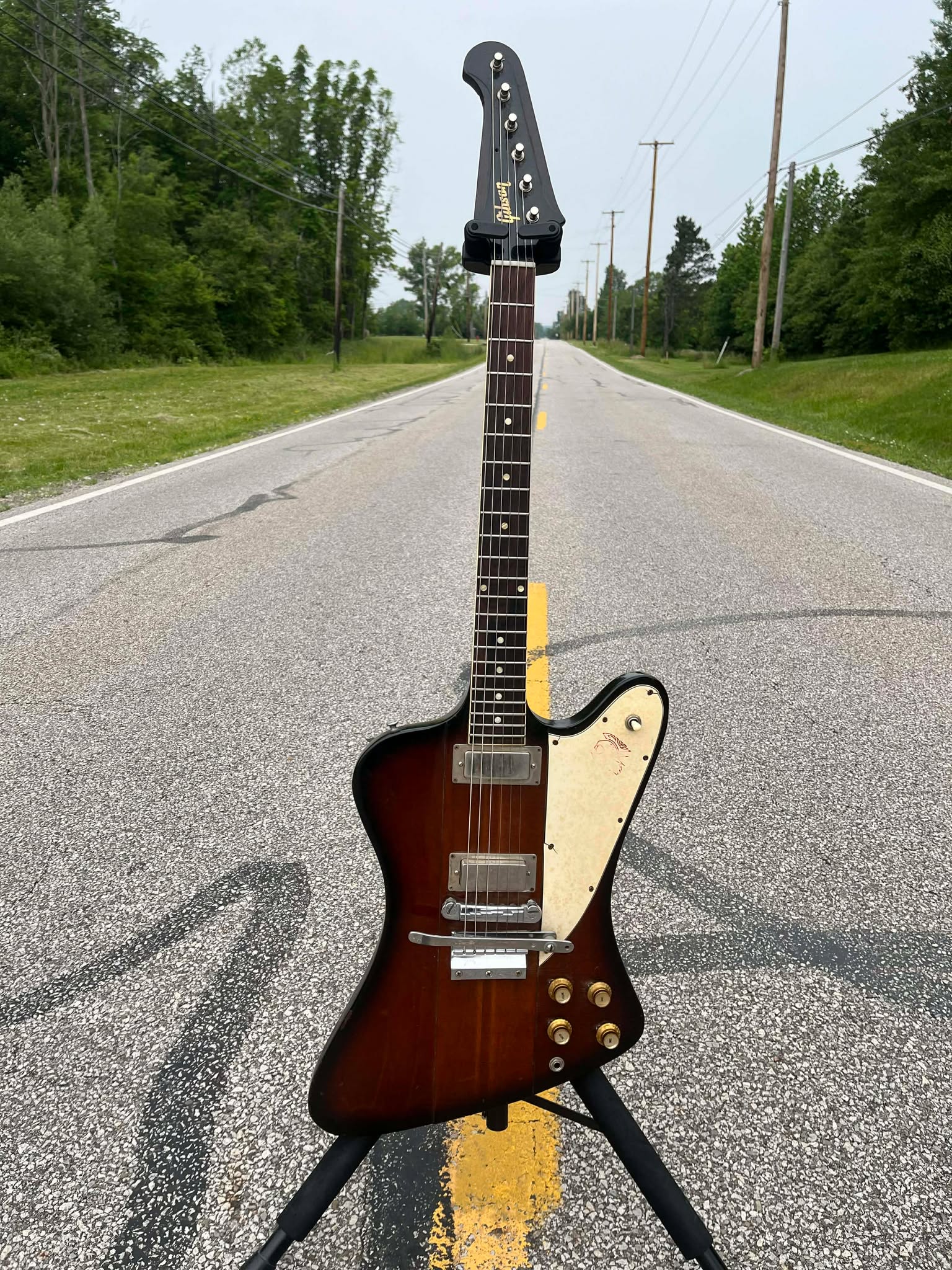
Reverse body shape (bass horn longer than treble horn)
Neck-through construction (neck and center body one piece)
“Reverse” headstock (tuners on bass side longer)
Banjo tuners (unique to Firebirds)
Radical departure from Gibson traditions
Futuristic automotive-inspired aesthetics
Target Market: Progressive players seeking modern designs and features, competing with Fender’s offset models like Jazzmaster and Jaguar.
Major Firebird Evolution Periods
1963-1965: “Reverse Body” Era
Original reverse body design
Neck-through construction
Banjo tuners
Mini-humbuckers (I and III) or full-size humbuckers (V and VII)
Most collectible and valuable period
Four models: Firebird I, III, V, and VII
1965-1969: “Non-Reverse” Era
Body design reversed (treble horn longer)
Set neck construction (not neck-through)
Standard tuners
P-90 pickups or mini-humbuckers depending on model
Less collectible than reverse models
Significant aesthetic changes
1970s-1980s: Various Production Periods
Discontinued and reintroduced multiple times
Various specifications
Different models and features
1990s-Present: Reissues and Modern Production
Historic reissues of reverse body models
Various Firebird variations
Continued production
How to Date Your Gibson Firebird: Serial Number Systems
Understanding Gibson’s serial number systems is the foundation for dating your Firebird. However, serial numbers alone cannot definitively date these guitars—always use multiple verification methods.
Important Resource: For quick serial number reference, use our Gibson Serial Number Lookup Tool to find your guitar’s approximate year based on serial number ranges.
1963-1970: Impressed Serial Numbers
Vintage Firebird guitars used Gibson’s impressed serial number system:
Location: Back of headstock (stamped into wood)
Format: 5-6 digits
Approximate Serial Number Ranges:
1963: 3xxxx - 4xxxx range
1964: 4xxxx - 7xxxx range
1965: 7xxxx - 9xxxx range
1966: 0xxxx - 1xxxx range (numbering restarted)
1967: 1xxxx - 8xxxx range
1968: 8xxxx - 0xxxx range (restarted again)
1969: 0xxxx - 9xxxx range
1970: 0xxxxx range (six digits)
Critical Notes:
Significant overlap between years
Same serial numbers used across multiple years
Extremely unreliable for precise dating
Factory Order Numbers essential for accuracy
How to Find Your Serial Number:
Look at back of headstock
Serial number impressed (stamped) into wood
May be difficult to read if worn
Photograph in good lighting
Record complete number exactly
Pro Tip: Use our Gibson Serial Number Lookup Tool for instant reference once you’ve found your serial number.
1970-1975: Six-Digit Serial Numbers
Format: Six digits
First digit indicates year (0=1970, 1=1971, etc.)
More reliable than 1960s system
“MADE IN USA” stamp appears
1977-Present: Modern Serial Number Systems
1977-2013: Eight-digit formats with letter prefixes
More consistent than earlier systems
2014-Present: YYMMXXXX format
First two digits = year
Second two digits = month
Most reliable system
Factory Order Numbers (FON): The Most Reliable Vintage Firebird Dating Method
For vintage Firebird guitars, Factory Order Numbers provide the most accurate dating:
What FON Tells You: Production batch and year of manufacture
Location: Inside control cavity (solid body) or neck pocket area
Visible when removing control plate cover
Stamped on wood or written in pencil
Sometimes on routing edges
Format: Letter followed by 3-4 digits
Letter indicates year
Numbers indicate production batch
FON Letter Codes for Vintage Firebird Era (1963-1969):
O = 1963
N = 1964
M = 1965
L = 1966
K = 1967
J = 1968
I = 1969
Example: FON “O 2847” = 1963 production, batch 2847
How to Find FON:
Remove control plate cover (typically located on back)
Inspect control cavity carefully
Look for stamped or written letter + numbers
Check all visible wood surfaces
May be on neck pocket routing edges
Use flashlight for better visibility
Photograph for documentation
Why FON Is Critical for Firebird:
Most reliable dating method for 1960s Firebirds
Minimal overlap between years
Essential for reverse vs. non-reverse identification
Crucial for determining first-year 1963 models
Dating Vintage Firebird by Physical Features: Era-by-Era Guide
Physical characteristics changed dramatically between Firebird eras, providing crucial dating evidence:
1963 Firebird I, III, V, VII (First Year Reverse Body)
The Original Revolutionary Design: First year of radical new aesthetics
Body Design:
“Reverse” body (bass horn longer than treble horn)
Asymmetrical design
Mahogany body
Neck-through construction (neck and center body one piece)
Through-body design visible on back
Sunburst standard, custom colors available
Headstock:
“Reverse” headstock (tuners on bass side are longer)
Distinctive asymmetrical design
Gibson logo
“Firebird” designation on truss rod cover
Banjo-style tuners (Kluson or Grover)
Neck Construction:
Neck-through design (revolutionary for Gibson)
Nine-piece laminated mahogany/walnut construction
Rosewood fingerboard
25 1/2” scale length (longer than standard Gibson)
Bound fingerboard
Model Distinctions:
Firebird I:
One mini-humbucker pickup (bridge position)
Wraparound bridge/tailpiece combination
Dot inlays
Nickel hardware
Most basic model
Firebird III:
Two mini-humbucker pickups
Maestro vibrola tailpiece
Dot inlays
Nickel hardware
Most popular reverse model
Firebird V:
Two mini-humbucker pickups
Maestro vibrola
Trapezoid inlays (more elaborate)
Nickel hardware
Upgraded appointments
Firebird VII:
Three mini-humbucker pickups
Maestro vibrola
Block inlays
Gold-plated hardware
Top-of-line model
Most elaborate appointments
Pickups (I and III):
Mini-humbucker pickups
Smaller than regular humbuckers
Distinctive sound (brighter than PAF)
Chrome covers
Through-body mounting
Pickups (V and VII):
Full-size humbucker pickups (1963 only)
Patent number pickups
Chrome or gold covers
Through-body mounting
Hardware:
Banjo tuners (Kluson or Grover)
Six individual tuners (not on plate)
Distinctive look
Maestro vibrola or wraparound bridge
Finish Options:
Sunburst standard
Custom colors available (rare and valuable)
Pelham Blue
Cardinal Red
Frost Blue
Golden Mist
Polaris White
Ember Red
Serial Numbers: 3xxxx - 4xxxx range
FON: O prefix
Why 1963 Is Most Valuable:
First year production
Original reverse design
Neck-through construction
Banjo tuners
Full-size humbuckers on V and VII models (changed 1964)
Limited production
Rarest and most collectible
1964 Firebird I, III, V, VII (Reverse Body Second Year)
Continuing Reverse Design:
Key Change from 1963:
Firebird V and VII now have mini-humbuckers instead of full-size humbuckers
All models now use mini-humbuckers
Simplified pickup configuration
Body and Construction:
Reverse body continues
Neck-through construction
Nine-piece neck
All 1963 features maintained except pickup change
Model Features:
Firebird I: One mini-humbucker, wraparound bridge
Firebird III: Two mini-humbuckers, vibrola
Firebird V: Two mini-humbuckers, vibrola, trapezoid inlays
Firebird VII: Three mini-humbuckers, vibrola, block inlays, gold hardware
Pickups:
All models now use mini-humbuckers
Through-body mounting
Distinctive mini-humbucker tone
Chrome or gold covers depending on model
Hardware:
Banjo tuners continue
Maestro vibrola or wraparound bridge
Nickel or gold hardware depending on model
Finish Options:
Sunburst standard
Custom colors available
Same color palette as 1963
Serial Numbers: 4xxxx - 7xxxx range
FON: N prefix
Significance: All mini-humbucker pickup configuration standardized
1965 Firebird I, III, V, VII (Final Reverse Body Year)
Last Year of Original Design:
Features:
All 1964 features continue
Reverse body
Neck-through construction
Banjo tuners
Mini-humbuckers all models
Transition Notes:
Production ending for reverse body design
Non-reverse models introduced mid-year
Both reverse and non-reverse models exist in 1965
Reverse models becoming scarce
Model Features:
Same as 1964
Firebird I, III, V, and VII configurations
Mini-humbuckers
Trapezoid or block inlays depending on model
Serial Numbers: 7xxxx - 9xxxx range
FON: M prefix
Why 1965 Reverse Is Significant:
Last year of reverse body production
Transitional year (reverse and non-reverse)
Reverse models from 1965 highly collectible
Final year of neck-through construction
1965-1969 “Non-Reverse” Firebird I, III, V, VII
Radical Redesign (mid-1965):
Body Changes:
“Non-reverse” body (treble horn longer than bass horn)
Complete body reversal
Set neck construction (not neck-through)
Traditional Gibson neck joint
Different aesthetics entirely
Headstock:
Non-reverse headstock (standard orientation)
Regular tuners (not banjo tuners)
Kluson Deluxe tuners
Lost distinctive reverse asymmetry
Construction:
Set neck (glued) instead of neck-through
Traditional Gibson construction
Mahogany body and neck
24 3/4” scale length (standard Gibson)
Different feel and balance
Pickup Changes:
Firebird I: One P-90 pickup
Firebird III: Two P-90 pickups
Firebird V: Two mini-humbuckers
Firebird VII: Three mini-humbuckers
Why Non-Reverse Models Less Valuable:
Lost distinctive reverse design
No neck-through construction
Standard tuners (not banjo tuners)
P-90 pickups on some models (not mini-humbuckers)
Less radical aesthetics
Collector preference for reverse models
Serial Numbers:
1965: 7xxxx - 9xxxx range
1966: 0xxxx - 1xxxx range
1967: 1xxxx - 8xxxx range
1968: 8xxxx - 0xxxx range
1969: 0xxxx - 9xxxx range
FON:
1965: M prefix
1966: L prefix
1967: K prefix
1968: J prefix
1969: I prefix
Potentiometer Date Codes: Essential Firebird Verification
Potentiometer codes provide crucial verification for dating vintage Firebird guitars:
Understanding Pot Codes
Standard Format: XXYYZZ
XX = Manufacturer code
YY = Year of manufacture
ZZ = Week of manufacture
Common Manufacturers in Vintage Firebirds:
137 = CTS
134 = Centralab
How to Check Pot Codes on Firebird
Process:
Remove control plate cover (back of guitar)
Locate potentiometers (number depends on model)
Look for stamped codes on pot casings
May require gently moving wiring
Use flashlight and magnifying glass
Record codes from all pots
Pot Count by Model:
Firebird I: Two pots (volume and tone)
Firebird III: Four pots (two volume, two tone)
Firebird V: Four pots
Firebird VII: Six pots (three volume, three tone)
Example Codes:
137 6328 = CTS pot, 1963, 28th week
134 6415 = Centralab pot, 1964, 15th week
Interpreting Pot Dates for Firebird
Dating Rules:
Pots date component manufacture
Guitar assembled weeks/months after pots made
All pots should date similarly
1963 Firebird might have late 1962 or early 1963 pots
Critical for Vintage Firebird:
Helps verify 1963 first-year models
Confirms reverse vs. non-reverse era
Essential for authentication
Red Flags:
Pots dated after supposed guitar year
Mixed pot dates from different years
Modern pots on supposedly vintage Firebird
How to Date Vintage Firebird: Pickup Identification
Pickup types provide crucial dating evidence:
Mini-Humbucker Pickups (Reverse Body Era)
Identification:
Smaller than regular humbuckers
Distinctive size (between single-coil and humbucker)
Chrome covers (gold on Firebird VII)
Through-body mounting
Unique sound (brighter than PAF, fuller than P-90)
What Mini-Humbuckers Indicate:
Reverse body era (1963-1965)
All models 1964-1965
Firebird I and III models 1963
Most collectible Firebird period
Authentication:
Verify size (smaller than regular humbucker)
Check mounting (through-body on reverse models)
Examine covers (chrome or gold)
Period-correct construction
Full-Size Humbuckers (1963 V and VII Only)
Identification:
Regular-size humbuckers
Patent number pickups
Chrome or gold covers
Through-body mounting
Only on 1963 Firebird V and VII
What They Indicate:
1963 production only
Firebird V or VII model
First-year feature
Changed to mini-humbuckers in 1964
Significance: Rarest pickup configuration on Firebirds
P-90 Pickups (Non-Reverse Era)
Identification:
Single-coil “soap bar” design
Black covers typically
Standard Gibson P-90
Only on non-reverse Firebird I and III
What They Indicate:
Non-reverse body (1965-1969)
Firebird I or III model
Less collectible era
Reverse vs. Non-Reverse: Critical Identification
Understanding the differences is essential:
Reverse Body Features (1963-1965)
Body:
Bass horn longer than treble horn
Asymmetrical design pointing “forward”
Distinctive reverse appearance
Neck-through construction
Headstock:
Reverse orientation
Bass side longer
Banjo tuners
Asymmetrical
Value: Significantly more valuable than non-reverse
Non-Reverse Body Features (1965-1969)
Body:
Treble horn longer than bass horn
Body reversed from original design
Set neck construction
Different aesthetics
Headstock:
Standard orientation
Regular tuners (not banjo tuners)
Symmetrical appearance
Value: Less collectible than reverse models
Neck-Through vs. Set Neck Construction
Critical construction difference:
Neck-Through Construction (Reverse Body)
Identification:
Neck and center body are one continuous piece
Nine-piece laminated construction visible on back
Wood grain runs continuously through center
Distinctive stripe pattern on back
What It Indicates:
Reverse body Firebird (1963-1965)
Original design
Most collectible
Superior sustain and tone transfer
Verification:
Look at back of guitar
See continuous wood grain through center
Lamination stripes visible
No neck joint visible in traditional location
Set Neck Construction (Non-Reverse)
Identification:
Traditional Gibson glued-in neck
Neck joint visible
Separate neck and body pieces
Standard construction
What It Indicates:
Non-reverse body (1965-1969)
Redesigned Firebird
Less collectible
Banjo Tuners: Distinctive Firebird Feature
Tuner identification helps dating:
Banjo-Style Tuners (Reverse Body)
Characteristics:
Six individual tuners (not on plate)
Grover or Kluson manufacture
Distinctive banjo-style appearance
Separate from headstock
Unique to reverse Firebirds
What They Indicate:
Reverse body Firebird (1963-1965)
Original design feature
Most collectible era
Authentication:
Verify individual mounting (not plate)
Check for Grover or Kluson markings
Period-correct style
Standard Tuners (Non-Reverse)
Characteristics:
Kluson Deluxe tuners
Standard Gibson-style
Three-on-a-plate each side
Regular appearance
What They Indicate:
Non-reverse body (1965-1969)
Redesigned Firebird
Custom Color Firebirds: Rarity and Value
Custom colors significantly affect Firebird values:
Standard Finishes
Sunburst:
Most common finish
Cherry or tobacco sunburst
Standard on all models
Custom Colors (Rare and Valuable)
Available Custom Colors (1963-1965):
Pelham Blue: Light metallic blue
Cardinal Red: Bright red
Frost Blue: Light blue
Golden Mist: Gold metallic
Polaris White: White
Ember Red: Dark red
Inverness Green: Green (very rare)
Kerry Green: Green (very rare)
Custom Color Premium:
Custom colors command 2-3x standard finish values
Rarer colors (greens) bring highest premiums
Matching headstock on custom colors
Original custom colors highly sought
Authentication:
Check for matching headstock
Examine finish characteristics
Look for original paint in cavities
Verify period-correct colors
Firebird Model Hierarchy and Features
Understanding model differences:
Firebird I (Entry Model)
Features:
One pickup (mini-humbucker or P-90 depending on era)
Dot inlays
Wraparound bridge
Nickel hardware
Most basic appointments
Firebird III (Popular Model)
Features:
Two pickups (mini-humbuckers or P-90s)
Dot inlays
Maestro vibrola
Nickel hardware
Most common configuration
Firebird V (Upscale Model)
Features:
Two pickups
Trapezoid inlays (more elaborate)
Maestro vibrola
Nickel hardware
Upgraded appointments
Firebird VII (Top Model)
Features:
Three pickups
Block inlays (most elaborate)
Maestro vibrola
Gold hardware
Top-of-line appointments
Most elaborate and valuable
Red Flags: Identifying Non-Original or Modified Firebirds
Recognizing modifications helps accurate assessment:
Refinished Vintage Firebird
Indicators:
Overspray in control cavity
Paint on hardware
Wrong finish characteristics
Overspray on serial numbers or FON
Modern paint types
Impact: Refinished reverse Firebirds lose 40-60% of value
Replaced Pickups
Original Pickup Importance:
Mini-humbuckers essential to reverse Firebird value
Full-size humbuckers on 1963 V and VII rare and valuable
Wrong pickups reduce value significantly
Replacement Indicators:
Modern pickups in vintage guitar
Wrong pickup type for model
Incorrect mounting style
Neck Repairs
Concerns:
Headstock breaks (reverse headstock vulnerable)
Neck-through construction makes repairs complex
Neck joint issues on non-reverse models
Impact: Repairs reduce value 30-50% depending on quality
Hardware Changes
Original Hardware:
Banjo tuners (reverse models)
Maestro vibrola or wraparound bridge
Period-correct knobs
Common Replacements:
Modern tuners replacing banjo tuners
Different vibrola types
Modern bridges
Converted Non-Reverse to “Reverse”
Warning: Some non-reverse Firebirds modified to appear reverse
Check for neck-through construction (can’t be faked)
Verify banjo tuners are original mounting
Check body construction
Authenticate all features
Dating Transitional Firebird Models
1965 Reverse to Non-Reverse Transition
Early 1965:
Reverse body continues
Neck-through construction
Banjo tuners
Mini-humbuckers
Mid-1965:
Transition begins
Both reverse and non-reverse exist
Late 1965:
Non-reverse becomes standard
Reverse production ends
Authentication:
FON “M” confirms 1965
Check body style (reverse or non-reverse)
Verify construction method
Pot codes help narrow timeframe
When You’re Ready to Sell Your Vintage Firebird
Accurate dating affects value significantly:
How Dating Affects Firebird Value
Era-Specific Premiums:
1963 reverse body: Highest values (especially with full-size humbuckers on V/VII)
1964 reverse body: Strong premiums
1965 reverse body: Excellent values
1965-1969 non-reverse: Moderate values
All-original examples command highest prices
Feature-Specific Value:
Reverse body significantly more valuable than non-reverse
Neck-through construction essential to value
Banjo tuners important feature
Custom colors add substantial premiums (2-3x)
Firebird VII most valuable model
Full-size humbuckers on 1963 V/VII exceptionally rare
Preparing Your Firebird for Sale
Documentation:
Serial number photographed on headstock
FON documented from control cavity
Pot codes recorded from all pots
Body style documented (reverse or non-reverse)
Neck construction verified (through or set)
Tuner type documented
Overall condition photographed
Photography:
Front and back overall views
Headstock detail (reverse or non-reverse)
Back showing neck-through construction (if applicable)
Control cavity (FON, pot codes)
Tuners (banjo-style or standard)
Pickup details
Hardware details
Any wear or damage
Why Choose Edgewater Guitars
When selling your vintage Firebird:
Our Firebird Expertise:
Reverse vs. non-reverse authentication
Neck-through construction verification
FON and pot code analysis
Custom color authentication
Pickup identification (mini-humbucker, full-size, P-90)
Model hierarchy understanding (I, III, V, VII)
Banjo tuner verification
Premium Offers:
30-40% higher than guitar shops
Reverse body premiums properly recognized
Custom color values properly compensated
1963 first-year features valued appropriately
Understanding of Firebird’s unique position in market
Streamlined Process:
Expert authentication
Immediate fair offers
No fees or commissions
Professional service throughout
Frequently Asked Questions
What’s the difference between reverse and non-reverse Firebird?
Reverse body Firebirds (1963-1965) have the bass horn longer than treble horn, neck-through construction, and banjo tuners. Non-reverse (1965-1969) have treble horn longer, set neck, and standard tuners. Reverse models are significantly more valuable. Use our Gibson Serial Number Lookup Tool to check your model’s approximate year.
Are reverse body Firebirds more valuable than non-reverse?
Yes, significantly. Reverse body Firebirds (1963-1965) with neck-through construction and banjo tuners are much more collectible and valuable than non-reverse models (1965-1969).
What’s neck-through construction on a Firebird?
Neck-through means the neck and center body are one continuous piece of wood (nine-piece laminated construction). This is visible on the back of reverse Firebirds as continuous wood grain running through the center. Only reverse models have this.
Did Firebirds ever have full-size humbuckers?
Yes, but only 1963 Firebird V and VII models had full-size humbuckers. These are exceptionally rare and valuable. All other Firebirds had mini-humbuckers (reverse models) or P-90s (some non-reverse models).
What are banjo tuners on a Firebird?
Banjo tuners are individual tuning machines (not mounted on a plate) used on reverse body Firebirds. They’re distinctive to the reverse models and replaced by standard tuners on non-reverse models.
Are custom color Firebirds more valuable?
Yes, custom color Firebirds command 2-3x the value of standard sunburst finishes. Rare colors like greens bring highest premiums. Custom colors with matching headstocks are highly sought after.
Can I tell if my Firebird is reverse or non-reverse just by looking?
Yes. If the bass horn (bottom when playing) is longer than the treble horn, it’s reverse. If treble horn is longer, it’s non-reverse. Also check the back—reverse models show continuous wood grain through center (neck-through construction).
What’s the most valuable Firebird model?
1963 Firebird VII in a rare custom color with all original features is the most valuable configuration. The three-pickup, gold hardware, block inlay combination from the first year commands premium prices.
Contact Edgewater Guitars
For expert Firebird authentication or to sell your vintage Firebird:
Phone: (440) 219-3607
Service Area: Ohio, Michigan, Pennsylvania, Indiana, West Virginia
Our Services:
Expert Firebird authentication
Reverse vs. non-reverse verification
Neck-through construction identification
FON and pot code analysis
Pickup verification (mini-humbucker, full-size, P-90)
Custom color authentication
Banjo tuner verification
Fair market valuations
Immediate offers
Why Sellers Choose Us
✓ Firebird Specialists: Deep knowledge of all Firebird variations
✓ Reverse Body Experts: Recognition of valuable 1963-1965 models
✓ Construction Authentication: Neck-through verification
✓ Premium Offers: 30-40% higher than guitar shops
✓ Professional Service: Transparent, respectful evaluation
✓ Zero Fees: No commissions or hidden charges
✓ Immediate Payment: No waiting periods
Additional Resources
Gibson Serial Number Lookup Tool - Quick reference for your Firebird
Complete Gibson Dating Guide
How to Date Gibson Guitars - All Models
Sell Your Gibson Guitar
Vintage Gibson Authentication Guide
Learning how to date your Gibson Firebird accurately requires understanding serial numbers, Factory Order Numbers, pot codes, and physical features specific to each era. The Firebird evolved dramatically from 1963 through the decades, with the reverse body era (1963-1965) commanding the highest values, particularly models with neck-through construction, banjo tuners, and original mini-humbuckers.
Whether you own a rare 1963 first-year reverse body Firebird with full-size humbuckers, a classic 1964-1965 reverse model with mini-humbuckers, or any other vintage Firebird variation, proper authentication ensures you understand your instrument’s history and value. Use our Gibson Serial Number Lookup Tool as a starting point, then verify with Factory Order Numbers, pot codes, body style, and construction method for definitive dating.
Edgewater Guitars specializes in vintage Gibson authentication and purchasing throughout the Midwest. Our comprehensive knowledge of Firebird dating—from reverse vs. non-reverse identification to neck-through construction verification—ensures accurate assessments that reflect your guitar’s true age and value.
Contact us today at (440) 219-3607 for expert Firebird authentication or professional valuation.
By Stephen Pedone, co-owner of Edgewater Guitars. Edgewater is a vintage guitar shop in Valley City, Ohio that buys pre-1970 Fender, Gibson, Martin and Gretsch guitars across Ohio and nationwide. Call or text (440) 219-3607 for a free appraisal.