DATE :
Monday, May 25, 2026
Dean Guitar Serial Number Lookup: Complete Dating & Identification Guide
Dean Guitar Serial Number Lookup: Complete Dating & Identification Guide
Last Updated: May 2026
Dean Guitars has produced electric guitars under three distinct corporate eras since the brand's founding in Chicago, Illinois in 1977. The original Chicago-era Deans (1977-1990) — hand-built instruments that helped define the look of 1980s heavy metal — represent a genuinely distinct collector category from the modern Dean production established under Armadillo Enterprises ownership beginning in 1997. The Dimebag Darrell signature relationship cemented Dean's modern identity within the metal community and continues to drive sustained demand for ML and Razorback signature models.
This guide is provided as a free resource for Dean owners and collectors researching their instruments. It explains the brand's complex era-by-era history, the serial number conventions used across original Chicago production and modern multi-factory production, the meaningful distinction between USA Custom Shop and import-tier Deans, and which Dean models carry the strongest sustained collector interest.
Quick Answer: How to Date a Dean Guitar by Serial Number
Dean dating depends on which corporate era and production tier produced your instrument:
1977–1990 (Original Chicago Era): Hand-applied serials, generally without consistent date encoding. Dating requires cross-referencing with construction features and catalog appearance.
1990–1997 (Hiatus and Tropical Music period): Limited production with variable conventions.
1997–Present (Armadillo Enterprises and subsequent ownership): Multiple serial systems across USA Custom Shop and import production tiers.
The single most important data point on any Dean guitar is identifying the production tier: original Chicago-era hand-built, USA Custom Shop (Tampa, Florida), or import production (Korea, China, Indonesia, or Czech Republic depending on era and model). Production tier affects collector value, authentication approach, and identification more than any other single factor.
About Dean Guitars: A Brief History
Dean Guitars was founded in 1977 by Dean Zelinsky in Chicago, Illinois. Zelinsky, a young guitar enthusiast and luthier, set out to build the high-end V- and Explorer-style guitars he wanted to play himself, with elevated craftsmanship and distinctive aesthetic choices. The Chicago-era Dean shop produced instruments that quickly developed reputations among professional players in the late 1970s and 1980s.
Era 1: Original Chicago Era (1977–1990)
The original Dean factory produced hand-built guitars in limited quantities. Notable instruments from this era include the V, Z (Explorer-style), ML, Cadillac (Les Paul-style), Hollywood (Strat-style), Bel Aire (Tele-style), and various Baby smaller-bodied variants. The ML model, with its distinctive cross between a Flying V and Explorer body shape, was named after Matthew Lupo — a friend of Dean Zelinsky who died young, and to whose memory the model is dedicated.
Notable Chicago-era Dean players:
Rik Emmett (Triumph): Used Dean V instruments throughout the band's peak era
Dave Mustaine: Played Dean V models in early Megadeth
Billy Gibbons (ZZ Top): Used Dean instruments during certain periods
Sammy Hagar: Dean signature association
Pete Townshend: Used Dean instruments during certain Who-era tours
Various 1980s rock and metal players who shaped the era's visual and sonic aesthetic
Chicago-era Dean production ended in 1990 due to financial difficulties, leaving the brand dormant for several years.
Era 2: Hiatus and Tropical Music (1990–1997)
Following the closure of the original Chicago operation, the Dean brand changed hands. Tropical Music acquired and operated the brand during this period with limited production. Deans from this era are uncommon and not particularly collected as a category.
Era 3: Armadillo Enterprises and Modern Dean (1997–Present)
In 1997, Elliott Rubinson and Armadillo Enterprises acquired the Dean brand and reinvigorated production, establishing operations in Tampa, Florida. Dean Zelinsky briefly returned as a designer during the early Armadillo years but eventually departed in 2008 to start his own separate company (Dean Zelinsky Guitars). The Armadillo era expanded Dean production substantially across multiple price tiers:
USA Custom Shop in Tampa, Florida (top tier)
Import production in Korean, Chinese, Indonesian, and at times Czech Republic factories (mid and entry tiers)
The defining cultural moment of the modern Dean era was the brand's relationship with Dimebag Darrell (Pantera, Damageplan), whose signature ML, From Hell, and Razorback models became some of the most recognized instruments in modern metal. Following Dimebag's death in 2004, his Dean signature legacy has continued to drive sustained collector demand and ongoing memorial signature releases.
Other modern Dean signature artists include Michael Schenker (UFO/MSG), Leslie West (Mountain), Vinnie Vincent (KISS), Rusty Cooley, Karl Sanders (Nile), Eric Peterson (Testament), and various other metal and rock players.
Dean has continued through additional ownership transitions in recent years, with production continuing across the established tier structure.
Why Dean Serial Numbers Are Complex
Three factors make Dean dating more challenging than dating many other brands:
Multiple corporate eras with different ownership, different factories, and different serial conventions
Multiple modern production tiers with USA Custom Shop and various import facilities operating simultaneously
Limited public documentation of historical serial number conventions, particularly for original Chicago-era production
The result: Dean serial numbers alone rarely provide a complete date and origin picture. Production tier identification, country-of-origin stamping, and construction feature cross-referencing are essential.
Dean Serial Number Systems by Era
1977–1990: Original Chicago Era
Original Chicago-era Dean instruments were hand-built in limited quantities with hand-applied serial numbers. These serials don't follow a consistent date-encoding system across the production run.
Dating Chicago-era Deans typically requires:
Cross-referencing the serial with construction features and catalog appearance
Identifying the headstock logo style (the Dean logo evolved subtly during the Chicago years)
Matching hardware specifications to known catalog releases
Consulting with collector communities that have built informal databases of Chicago-era instruments
Examining body wood, neck construction, and finish characteristics consistent with specific production years
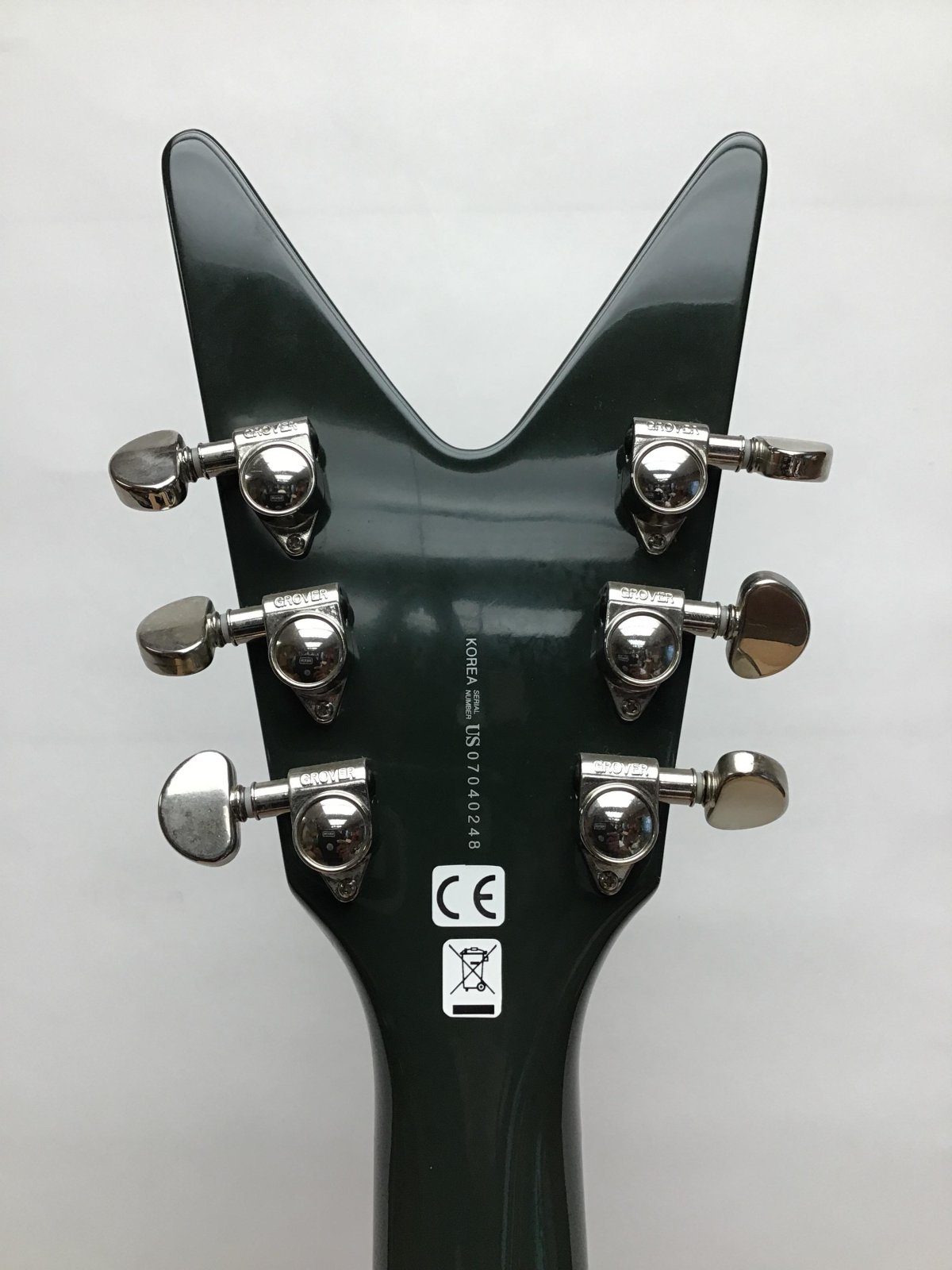
Chicago-era Deans typically carry serial numbers stamped or impressed on the back of the headstock, with 4 to 5 digits common on standard production examples.
1990–1997: Hiatus Period
Limited production during this period used variable conventions. These instruments require hands-on inspection and feature cross-referencing for accurate identification.
1997–Present: Modern Dean Era
Modern Dean uses different serial number conventions across production tiers:
Dean USA Custom Shop (Tampa, Florida):
Hand-numbered with documented build records on premium instruments
Lower serial number ranges reflecting limited production
Often include "USA" or "Custom Shop" markings on the neck plate, headstock, or interior
Build documentation typically available for original-owner purchases
Dean Import Production (Korean, Chinese, Indonesian, Czech):
Various serial conventions across factories and years
Country-of-origin stamping confirms the production location
Modern import serials often combine year and production sequence digits, with conventions varying by factory and model line
Import production has used several factories over the years. Korean production has typically represented the upper-import tier, with Chinese production occupying mid and entry tiers. Czech Republic production was used for certain mid-tier models during specific periods.
Where to Find Your Dean Serial Number
The serial number location varies by model and era:
Bolt-On Neck Models (Various Modern Imports)
Back of headstock — most common location for stamped or printed serials
Neck plate — some models carry the serial on the metal neck plate
Set-Neck and Neck-Through Models (Original Chicago-Era, USA Custom Shop, Various Modern High-End)
Back of headstock — primary location
Some examples carry additional stamps or labels on the truss rod cover or interior
USA Custom Shop Instruments
Neck plate — typically with USA designation
Sometimes additional documentation on the truss rod cover or interior cavity
Build sheets retained by original owners for documented instruments
Original Chicago-Era Deans
Back of headstock — primary location
4 to 5 digit serials common
Hand-applied in many cases, with variation in stamping style across the production run
The Original Chicago-Era Significance
Among Deans, the original Chicago-era instruments (1977–1990) occupy a special collector category that's genuinely distinct from modern production:
Hand-built construction in limited quantities by Dean Zelinsky and his shop
Distinctive aesthetic choices including elaborate inlays, flame maple tops, and premium hardware on top-tier examples
Period-correct 1980s metal credentials through documented association with the era's notable players
Limited production windows that create finite collector supply
Chicago-era Deans are sometimes referred to as "Chicago Deans" or "USA Deans" by collectors to distinguish them from modern production at the various Dean factories. Clean original-condition Chicago Deans command top-tier valuations within the Dean catalog, particularly the V, Z, ML, and high-spec Cadillac variants.
The Dimebag Darrell Connection
No single artist relationship has more defined modern Dean than the brand's connection with Dimebag Darrell of Pantera and Damageplan. Dimebag's Dean ML, his lightning-bolt-graphic From Hell signature, and the Razorback series collectively built modern Dean's identity within the metal community.
Dimebag signature model categories include:
Original Dean ML Dimebag instruments from his playing career
Dean From Hell signature models featuring the iconic lightning-bolt graphic
Razorback series in various configurations and graphic treatments
Dimebag tribute models released following his death in 2004, including various memorial editions and limited runs
Following Dimebag's death, Dean has continued releasing Dimebag signature and tribute models across multiple production tiers (USA Custom Shop and import). Authentication of specific Dimebag signature production runs requires reference to Dean documentation and collector community resources.
Most Collected Dean Models
These Dean models carry the strongest current collector and player interest across the brand's history:
Original Chicago era (1977–1990):
V (Flying V-style): Top collector demand among Chicago-era Deans, particularly examples with high-spec appointments and original hardware
Z (Explorer-style): Strong collector interest, particularly elaborately appointed examples
ML: The signature Dean body shape; sustained collector demand
Cadillac: Les Paul-style Chicago Deans with flame maple tops and premium specifications
Hollywood and Bel Aire: Less common Chicago Deans with growing collector recognition
Baby V and Baby ML: Smaller-bodied variants with specific collector following
Modern USA Custom Shop:
USA Custom Shop ML, V, and Razorback instruments: Premium modern collectibility, particularly limited-edition runs and artist-affiliated models
Custom Shop Cadillac reissues: High-end recreations of the original Chicago-era design
Modern Dimebag Darrell signature models:
ML Dimebag signature variants: Strong sustained demand within the Pantera/Dimebag fan community
From Hell signature with lightning-bolt graphics: Iconic modern Dean signature
Razorback series Dimebag variants: Multiple configurations across import and USA production tiers
Limited Dimebag tribute models: Specific memorial releases command premium collector valuations
Other modern signature and limited production:
Michael Schenker signature V models
Leslie West signature instruments
Vinnie Vincent signature
Rusty Cooley signature
Limited-edition Cadillac and ML variants across production tiers
Red Flags: Authentication and Identification Issues
Common issues to watch for when researching a Dean:
Chicago-era misrepresentation. Modern import Deans are sometimes represented as original Chicago-era instruments. Verify with construction features, hardware specifications, headstock logo style, and serial number conventions consistent with the 1977–1990 era. "Made in USA" stamping alone does not guarantee Chicago-era origin (modern USA Custom Shop instruments also carry USA designations).
USA Custom Shop misrepresentation. Import-tier Deans are sometimes represented as USA Custom Shop production. Verify country-of-origin stamping and look for explicit "USA" or "Custom Shop" markings, along with build documentation when available.
Refinishes. Aged finishes on vintage Chicago-era instruments should show natural wear and finish character consistent with the build period. Refinished examples significantly reduce collector value. Faded, naturally aged finishes are correct and desirable.
Modified electronics. Many Dean instruments came with specific pickup configurations (DiMarzio, EMG, Dean-branded, or other proprietary options depending on era and model). Replacements with aftermarket pickups reduce originality value, particularly on collectible signature and Chicago-era examples.
Floyd Rose modifications. Many Dean rock/metal models came with specific Floyd Rose configurations. Modifications or replacements affect value, particularly on guitars where the original tremolo was upgraded or downgraded.
Counterfeit Dimebag signature models. The popularity of Dimebag Dean instruments has resulted in occasional counterfeit production appearing in online marketplaces. Verify serial number conventions, country-of-origin stamps, and construction details against documented authentic examples.
Cross-era confusion. The substantial difference between Chicago-era and modern Dean means that descriptions of "vintage Dean" can be misleading. Verify the specific era and production tier before assuming value or characteristics.
What Affects a Dean's Collector Value
Era and production tier: Original Chicago-era Deans (1977–1990) sit at the top tier of Dean collector valuations, particularly V, Z, ML, and Cadillac variants with high-spec appointments. Modern USA Custom Shop instruments command premium modern valuations. Import production occupies mid and entry tiers, with specific signature and limited-edition models commanding higher prices within their respective tiers.
Player association: Documented provenance from Chicago-era Dean players (Rik Emmett, Dave Mustaine, Sammy Hagar, and others) produces significant value multipliers. For modern Deans, the Dimebag Darrell association drives the strongest collector demand across multiple model categories.
Originality: All-original examples with original pickups, original hardware, original tremolo systems, and original finish command meaningful premiums over modified examples.
Limited edition designation: Dean has produced numerous limited-edition runs across both USA Custom Shop and import production. Documented limited editions, particularly Dimebag memorial models and signature runs, command premium valuations relative to standard production equivalents.
Condition: Crack-free finishes, intact original electronics, clean fingerboards, functional original tremolo systems, and original cases all contribute to upper-tier valuations.
Documentation: Original case, paperwork, factory documentation (particularly on USA Custom Shop instruments), and provenance documentation add collector confidence and value.
Further Research Resources
For deeper Dean research, the following community resources are valuable:
Dean Guitars' official website maintains documentation on current model lines and limited edition runs.
Dean Guitars forum communities and dedicated subreddits maintain catalog archives and member-contributed serial number observation databases.
Chicago-era collector communities track pre-1990 Dean instruments specifically, with significant member-contributed knowledge about Chicago production variations and authentication details.
Dimebag Darrell tribute and signature model documentation from collector communities provides production specifications and run information for the various Dimebag-related releases.
Vintage guitar publications including Vintage Guitar magazine have published occasional features on Dean history and Chicago-era collectibility.
Frequently Asked Questions About Dean Serial Numbers
How do I tell what year my Dean guitar was made? Dean dating requires identifying which corporate era and production tier produced the instrument. Original Chicago-era Deans (1977–1990) used hand-applied serials without clear date encoding and require feature-based dating. Modern Dean serials vary across USA Custom Shop and import production tiers, with each factory using different conventions. Country-of-origin stamping confirms the production location and narrows the era.
Are old Dean guitars valuable? Yes, particularly original Chicago-era Deans from 1977–1990. The V, Z, ML, and Cadillac models from the Chicago factory are highly collected, especially examples with high-spec appointments, original hardware, and documented provenance. Modern USA Custom Shop Deans command premium valuations within the modern market. Dimebag Darrell signature and tribute models also carry sustained collector demand across various production tiers.
Where are Dean guitars made? Dean has used multiple production locations across its history. Original Dean production was in Chicago, Illinois from 1977 through 1990. Modern Dean operates a USA Custom Shop in Tampa, Florida (the brand's headquarters), alongside import production in Korean, Chinese, Indonesian, and at times Czech Republic factories.
What is the difference between Dean USA Custom Shop and import Deans? USA Custom Shop Deans are built in Tampa, Florida with hand-selected materials, premium components, and build documentation, commanding premium tier valuations. Import Deans are built in various Asian factories (Korean, Chinese, Indonesian) and the Czech Republic depending on era and model, occupying mid and entry tiers in terms of price and collector value. Country-of-origin stamping and explicit USA Custom Shop markings distinguish the two categories.
Where is the serial number on a Dean guitar? On most Dean guitars, the serial number is stamped or printed on the back of the headstock. Some models, particularly USA Custom Shop instruments, carry the serial on the metal neck plate. Original Chicago-era Deans typically have hand-applied serials on the back of the headstock with 4 to 5 digits common.
What is a Dimebag Darrell Dean? A Dimebag Darrell Dean is one of the signature or tribute models associated with Dimebag Darrell of Pantera and Damageplan, who played Dean instruments throughout his career and developed close signature relationships with the brand. Dimebag signature categories include original ML Dimebag variants from his playing career, the From Hell signature with lightning-bolt graphics, the Razorback series, and various memorial tribute models released following his death in 2004. These instruments are produced across multiple tiers including USA Custom Shop and import production.
Related Resources
This Dean Guitars serial number guide is part of Edgewater Guitars' collection of vintage guitar identification resources:
Gibson Serial Number Lookup Tool — edgewaterguitars.com/guitar-serial-number-lookup/gibson
Fender Serial Number Lookup Tool — edgewaterguitars.com/guitar-serial-number-lookup/fender
Gretsch Serial Number Lookup Guide
Rickenbacker Serial Number Lookup Guide
Yamaha Serial Number Lookup Guide
Aria Serial Number Lookup Guide
Guild Serial Number Lookup Guide
Ibanez Serial Number Lookup Guide
Takamine Serial Number Lookup Guide
Schecter Serial Number Lookup Guide
Squier Serial Number Lookup Guide
Edgewater Guitars publishes free identification resources for guitar owners and collectors. This Dean Guitars guide is provided as a research reference. Edgewater Guitars specializes in purchasing premium vintage American-made guitars throughout Ohio, Michigan, Pennsylvania, Indiana, and West Virginia — including Gibson, Fender, Martin, Gretsch, and Epiphone instruments.