DATE :
1969 Gibson Les Paul Custom: Complete Identification, Authentication, and Value Guide
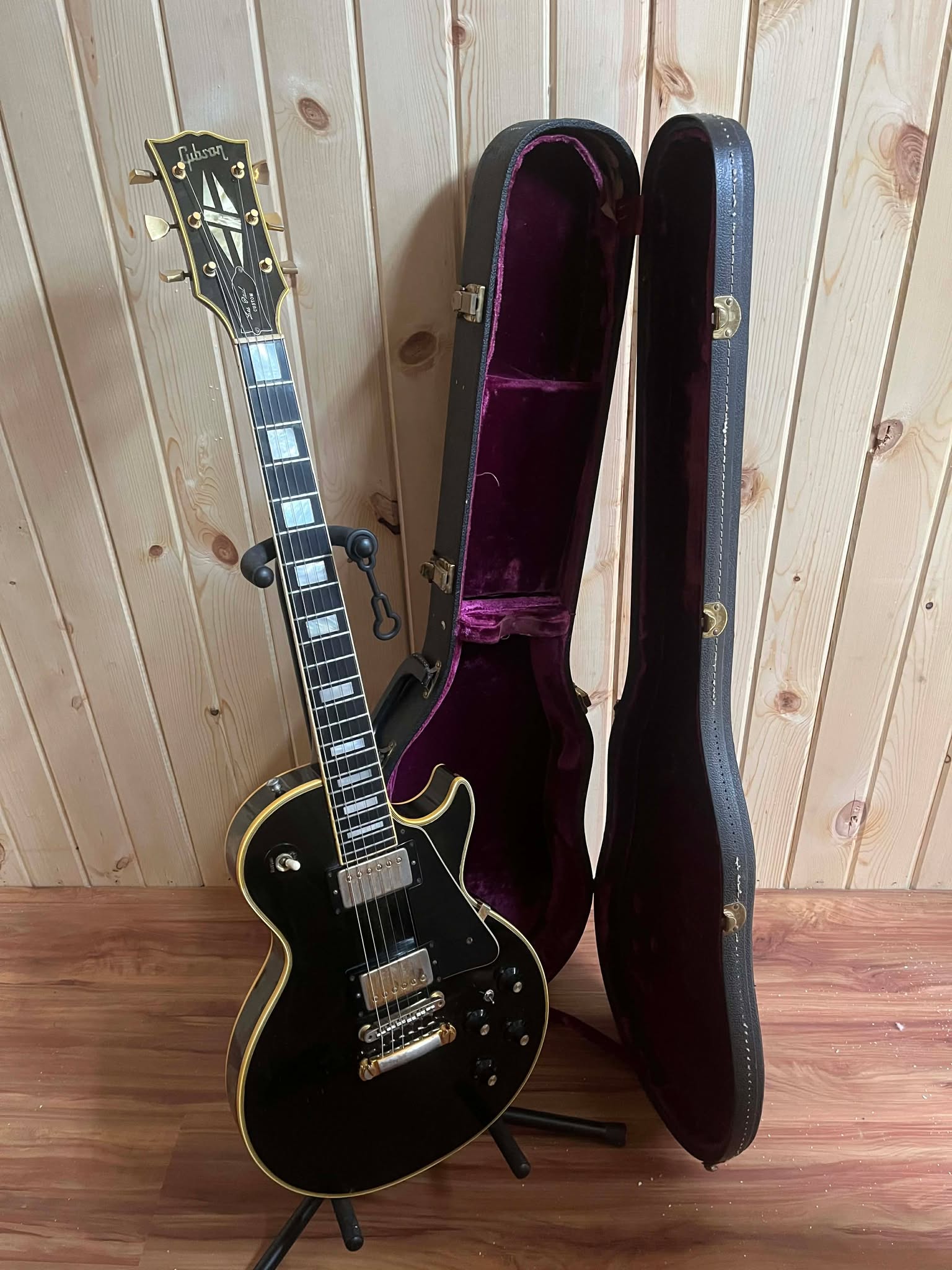
1969 Gibson Les Paul Custom: Complete Identification, Authentication, and Value Guide
The 1969 Gibson Les Paul Custom is the final pre-Norlin year of the Black Beauty, with patent-number humbuckers, a multi-bound ebony fingerboard, gold hardware, and the deep gloss-black finish that defines the model. Originality, finish, and the absence of a neck volute help drive value. Edgewater Guitars buys vintage Gibson Les Pauls nationwide with free expert appraisals and same-day cash offers. Call or text (440) 219-3607.
Last Updated: February 2026
What Makes the 1969 Gibson Les Paul Custom Significant?
Direct Answer: The 1969 Les Paul Custom represents the final year of pre-1970s construction before significant design changes appeared in the 1970 model year. While Gibson was acquired by Norlin Corporation (ECL) in 1969, construction methods and quality remained largely consistent with 1968 production throughout most of the year. This makes 1969 Les Paul Customs particularly interesting—they’re the last examples built before the volute (neck reinforcement) was added in 1970, and they represent a bridge between the reissue era’s beginning and the 1970s Norlin period.
Why 1969 Les Paul Customs Matter:
The 1969 Les Paul Custom occupies a unique transitional position. It’s simultaneously the second year of the Les Paul reintroduction (following 1968’s first full production year) and the final year before notable construction changes. The Norlin acquisition occurred during 1969, creating a technical distinction between “pre-Norlin” (early 1969) and “Norlin-era” (late 1969 onward), though actual construction differences within the year are minimal.
Key Significance Factors:
Final Pre-Volute Year: 1969 is the last production year without the neck volute that would become standard in 1970
Norlin Transition Year: ECL (later renamed Norlin) acquired Gibson in 1969, though construction quality remained strong throughout the year
Established Reissue Production: Second full year of Les Paul Custom production allowed Gibson to refine manufacturing processes from 1968’s reintroduction
Pancake Body Standard: Multi-piece mahogany body construction with maple center layer became increasingly standard in 1969
Two and Three-Pickup Configurations: Both versions available, with three-pickup commanding collector premium
Black Beauty Heritage Maintained: Continued the iconic ebony finish, gold hardware, and premium appointments
Last Year Before “Made in USA” Stamp: The “Made in USA” stamp appears on 1970+ models; 1969 truss rod covers typically read “Les Paul Custom” only
Market Position Today:
1969 Les Paul Customs occupy virtually the same market tier as 1968 examples. The market treats these two years as equivalent—both representing early Les Paul reissue production with pre-1970s construction. In excellent all-original condition, 1969 and 1968 examples command similar respect from collectors and players. Some collectors show slight preference for 1968 as “first full year,” but the difference is minimal and condition/originality matters far more.
Who Searches for 1969 Les Paul Custom Information:
Owners trying to identify: “How do I know if my Les Paul Custom is from 1969?”
Potential sellers: “What’s a 1969 Les Paul Custom worth? Where should I sell?”
Buyers researching: “Is 1969 Les Paul Custom good quality? How does it compare to 1968?”
Enthusiasts authenticating: “How to authenticate 1969 Gibson Les Paul Custom?”
Investors evaluating: “Are 1969 Les Paul Customs good investments?”
Feature researchers: “Does 1969 Les Paul have volute? Pancake body?”
If you own a 1969 Les Paul Custom and want expert authentication and valuation, Edgewater Guitars provides free evaluation for vintage Gibson instruments throughout Ohio, Michigan, Pennsylvania, Indiana, and West Virginia. We specialize in late 1960s Gibson authentication and understand the specific features that distinguish 1969 production. Call (440) 219-3607.
What Affects the Value of a 1969 Gibson Les Paul Custom?
Value Position Within Gibson Les Paul History
Understanding where 1969 Les Paul Customs fit in the broader market hierarchy is essential to realistic expectations.
Market Tier Hierarchy (High to Low):
Top Tier: 1950s Les Paul Standards (bursts), 1950s Les Paul Customs
High Tier: Early 1960s Les Paul/SG transitional models with PAF pickups
Upper-Mid Tier: Late 1960s Les Paul reissues in excellent original condition (1968-1969)
Mid Tier: Early 1970s Les Pauls in excellent original condition
Lower Tiers: Modified, refinished, or heavily worn examples from any era
Where 1969 Customs Sit:
1969 Les Paul Customs occupy the upper-mid tier alongside 1968 examples—significantly more valuable than typical 1970s production but substantially below 1950s vintage instruments. They represent peak quality for the reissue era before 1970s design changes.
Two-Pickup vs. Three-Pickup Configuration
The most significant value differentiator within 1969 Les Paul Custom production is pickup configuration.
Three-Pickup Les Paul Custom:
Substantially higher collectibility and value
More distinctive and rare appearance
Direct visual connection to 1950s three-pickup Custom heritage
Lower production numbers compared to two-pickup
Commands premium over two-pickup equivalent (typically 20-35% higher in same condition)
Two-Pickup Les Paul Custom:
More common configuration
Still highly collectible and valuable
Preferred by some players for simplicity and reduced weight
Strong market demand but below three-pickup tier
Why Three-Pickup Commands Premium:
Production favored two-pickup models, making three-pickup examples less common. The three-pickup configuration creates distinctive appearance and tonal versatility. Visual impact and rarity combine to drive collector preference and market premium.
Pre-Norlin vs. Norlin Era Within 1969
Critical Nuance: ECL acquired Gibson in 1969, later renamed to Norlin Corporation. This creates technical distinction between pre-Norlin and Norlin-era within the same model year.
Early 1969 (Pre-Norlin Acquisition):
Built under previous ownership
Some collectors perceive as slightly more desirable
Construction essentially identical to 1968
Very slight premium in some markets (5-10% at most)
Late 1969 (Post-Norlin Acquisition):
Built under ECL/Norlin ownership
Construction quality remained consistent
Features unchanged from early 1969
Minimal market impact—construction matters more than ownership
Reality: The Norlin acquisition had minimal immediate impact on construction. Quality remained strong throughout 1969. Market perception of “pre-Norlin premium” exists but actual construction differences are negligible. A late 1969 Les Paul Custom in excellent original condition is worth nearly the same as early 1969 equivalent—condition and originality vastly more important than acquisition timing.
Finish Condition and Originality
All-Original Finish (Excellent Condition):
Maximum value tier
Ebony (black) nitrocellulose finish with age-appropriate checking
Original gold hardware with natural patina
No refinishing, touch-ups, or color modifications
Represents highest collectibility
All-Original Finish (Honest Play Wear):
Strong value tier
Finish checking, buckle rash, playing wear on original finish
Hardware wear consistent with 55+ years of age
No refinishing but shows decades of use
Many collectors prefer this “earned patina” aesthetic
Partial Refinish (Touch-Ups, Repairs):
Moderate value reduction (typically 15-30% below all-original excellent)
Localized finish work (repaired dings, small refinish areas)
Affects value proportionally to scope
Complete Body Refinish:
Substantial value reduction (typically 35-55% below all-original excellent)
Destroys original finish authenticity and patina
Even professional refinish in correct ebony significantly impacts collectibility
Market treats refinished examples as player-grade rather than collector-grade
Non-Original Finish Color:
Major value reduction (40-60% below all-original excellent)
Changing from ebony to sunburst, natural, or other color
Eliminates “Black Beauty” designation
Particularly problematic if represented as original color
Hardware and Component Originality
Critical Original Components:
Pickups:
Original late 1960s humbuckers essential for maximum value
Patent number pickups or T-Top pickups (T-Tops more common in 1969 than 1968)
Replaced pickups reduce value by 20-35%
Aftermarket pickups (Seymour Duncan, DiMarzio, etc.) reduce value by 25-40%
T-Top Pickups (Increasingly Common in 1969):
Named for T-shaped bobbin visible when cover removed
Chrome covers with “Patent No.” embossing (early T-Tops)
Later T-Tops may not have “Patent No.” stamped
Clear, articulate tone with good treble response
Correct and desirable for 1969 production
Gold Hardware:
Original gold-plated tuners, bridge, tailpiece, pickup covers critical
Natural gold plating wear acceptable and expected after 55+ years
Replaced hardware (even gold-plated reproductions) reduces value by 15-25%
Chrome or nickel replacement hardware reduces value by 20-30%
Electronics:
Original pots, capacitors, wiring harness preferred
Pot codes should show 1968 or 1969 manufacture dates
Complete electronics replacement reduces value by 15-25%
Modified wiring (coil-splits, phase switches) reduces value by 10-20%
Binding:
Multi-ply binding on body should be intact
Binding shrinkage, separation, or deterioration reduces value by 10-20%
Replaced binding reduces value by 15-25%
Structural Issues and Repairs
Headstock Repairs:
Most significant structural concern on Les Pauls due to angled headstock design.
No Repair (Original Intact): Maximum value preserved
Professional Invisible Repair: Reduces value by 25-40% even when repair invisible to casual inspection
Visible Repair: Reduces value by 35-50%
Poor Quality Repair: Reduces value by 45-60%
Neck Issues:
Neck cracks (even if repaired): Reduce value by 20-35%
Neck reset (rarely needed on solid-body): Reduces value by 15-25%
Neck replaced entirely: Reduces value by 40-60%
Body Cracks:
Professional repair of body crack: Reduces value by 15-30%
Multiple cracks or poor repairs: Reduce value by 25-40%
Modifications That Reduce Value
Routing Modifications:
Added pickup routes (converting 2-pickup to 3-pickup): Reduces value by 35-50%
Filled pickup route (removing middle position): Reduces value by 30-45%
Tremolo route added: Reduces value by 40-55%
Hardware Modifications:
Bigsby added (not factory): Reduces value by 15-30%
Locking tuners installed: Reduces value by 10-20%
Modern bridge replacing ABR-1: Reduces value by 15-25%
Electronics Modifications:
Active electronics installed: Reduces value by 25-40%
Coil-tap switches added (requires drilling): Reduces value by 15-25%
Modern wiring harness: Reduces value by 15-25%
Binding Modifications:
Removed binding (extremely rare): Reduces value by 30-45%
Added binding where inappropriate: Reduces value by 15-25%
Provenance and Documentation
Original Case:
Correct Gibson black hardshell case from era adds appeal (typically 8-15% premium)
Later case minimal impact
No case doesn’t reduce value if guitar otherwise excellent
Documentation:
Original sales receipt: Adds authentication confidence and provenance
Period photographs with original owner: Adds historical value
Professional maintenance records: Adds transparency
Gibson shipping records or factory documentation: Substantial authentication value
Celebrity Provenance:
Verifiable ownership by notable musician: Can add substantial premium
Requires thorough authentication and documentation
Unverifiable claims: No value impact
Pancake Body Construction
Pancake body construction (multi-piece mahogany with maple center layer) became increasingly standard during 1969 production. More 1969 examples have pancake bodies than 1968 examples.
Market Perception:
Pancake body somewhat controversial among collectors
Some purists prefer traditional solid mahogany construction
Others view pancake as acceptable period construction method
Generally neutral to slight negative impact on value (5-15% reduction in some markets)
Far less impact than refinishing, headstock repairs, or replaced pickups
How to Identify: Remove control cavity cover, examine body wood through cavity opening. Pancake construction shows maple layer (light-colored wood) between mahogany pieces, visible as stripe running through cavity.
Important Note: Pancake body is factory construction, not a modification or defect. Presence indicates 1969 production era but doesn’t indicate damage or inferior quality—simply different construction method Gibson employed during this period.
How 1969 Compares to Adjacent Years
Year | Key Differences | Relative Value | Why |
|---|---|---|---|
1968 | First full reissue year, pancake body less common, pre-Norlin entire year | Essentially equivalent to 1969 | First-year status appeals to some collectors, but market treats as equivalent tier |
1969 (this guide) | Norlin acquisition during year, pancake body more common, still no volute, 2 or 3 pickups | Baseline for comparison | Final pre-volute year, essentially equivalent to 1968 |
1970 | Volute added to headstock back, “Made in USA” on truss rod cover, pancake standard | Slightly lower than 1969 | Volute divisive among collectors, marks 1970s design transition |
1971-1975 | Full 1970s features, pancake standard, some quality inconsistency, mini-humbucker period (Deluxe) | Lower than 1968-1970 | 1970s stigma despite quality examples existing |
1968 vs. 1969 Comparison:
These years are virtually identical in construction, features, and market positioning. Both represent early Les Paul reissue production with pre-volute construction and similar quality. 1968 commands very slight premium in some collector circles (5-10% at most) as “true first full year” of reissue, but difference is minimal and often non-existent. In practice: condition, originality, and configuration (2 vs. 3 pickup) matter infinitely more than 1968 vs. 1969 distinction.
Key Takeaway: Don’t overpay for 1968 vs. 1969 or vice versa—they’re the same tier. Focus on condition and originality.
How to Date Your 1969 Gibson Les Paul Custom
Dating a 1969 Les Paul Custom requires examining serial number, Factory Order Number (FON), potentiometer codes, and construction features. No single element definitively proves 1969—authentication requires cross-referencing all factors.
Serial Numbers: Location and Format
Serial Number Location:
1969 Les Paul Customs have serial number impressed (stamped) into back of headstock.
Serial Number Format and Ranges:
1969 production spans multiple serial number formats due to Gibson’s transitional numbering systems.
Expected Serial Number Ranges for 1969:
Serial Number Format | Approximate Year Range | Notes |
|---|---|---|
6-digit starting with “5” | 1968-1969 | Example: 512345, 589999 |
6-digit starting with “6” | 1969-early 1970 | Example: 612345, 689432 |
8-digit format “69XXXXXX” | 1969 | Example: 69012345, 69098765 (69 = 1969, followed by 6-digit sequence) |
Serial Number Caveats:
Gibson serial numbers from late 1960s are notoriously imprecise and overlapping. Serial number provides approximate year only—must cross-reference with FON, pot codes, and features for accurate dating. Production was not strictly sequential, and overlap between years is common.
Examples of Expected 1969 Serials:
554321 (six-digit starting with “5”)
623456 (six-digit starting with “6”)
69012345 (eight-digit format with “69” prefix)
Red Flags:
Serial number significantly outside expected ranges
Serial number format impossible for 1969 (e.g., 1990s format)
No serial number (indicates refinished headstock or counterfeit)
Serial clearly from different decade (e.g., 012345 is 1967-1968 range)
Factory Order Number (FON)
Location: Stamped inside body, visible through pickup routes or control cavity
How to Access:
Remove pickup rings (four screws per pickup)
Shine bright flashlight into pickup cavities
Look for stamped numbers on interior mahogany or maple (if pancake body)
Alternatively, remove control cavity cover and examine through that opening
FON Format: Sequential production number, typically 6 digits
What FON Tells You:
FON represents Gibson’s internal production sequence. Cross-referencing FON with known production records helps narrow dating. FON should align with serial number year within reasonable tolerance.
Approximate FON Range for 1969:
FONs in 900,000-1,000,000+ range typical for 1969 production, though overlap with 1968 and 1970 common.
Using FON for Authentication:
FON presence confirms Gibson factory production (counterfeits typically lack proper FON). FON alignment with serial number and pot codes confirms dating accuracy. Misalignment suggests misdating or married parts.
Potentiometer Code Dating
Location: Inside control cavity (remove cover plate on back of guitar)
How to Access:
Remove two screws holding control cavity cover
Carefully lift cover (pots mounted to cover, wiring attached)
Use flashlight and magnification to read codes stamped on potentiometer bodies
Pot Code Format: XXXYYXX
First three digits: Manufacturer code
137 = CTS (Chicago Telephone Supply) — most common
134 = Centralab
304 = Stackpole
Next two digits: Year (68 = 1968, 69 = 1969)
Last two digits: Week of manufacture (01-52)
Example Pot Codes:
137 6845 = CTS manufacturer, 1968, week 45 (early November 1968)
137 6915 = CTS manufacturer, 1969, week 15 (mid-April 1969)
Expected Pot Codes for 1969 Guitars:
All pots should show 1968 or 1969 manufacture dates:
137 68XX (CTS 1968) — common in early 1969 production
137 69XX (CTS 1969) — common throughout 1969
134 68XX or 134 69XX (Centralab)
304 68XX or 304 69XX (Stackpole)
Pot Code Dating Logic:
Pots manufactured before guitar assembly due to parts inventory. Seeing 1968-dated pots in 1969 guitar is completely normal—pots manufactured late 1968, guitar assembled early/mid 1969. Even seeing late 1968 pots in late 1969 guitar possible if old inventory used.
What’s Normal:
All four pots (or six on three-pickup) from 1968: Normal for early 1969 guitar
Mix of 1968 and 1969 pots: Normal for mid-1969 guitar
All pots from 1969: Normal for mid-to-late 1969 guitar
Red Flags:
Pot codes from 1970s+ in claimed 1969 guitar (indicates replaced electronics)
One pot from 1969, another from 1977 (partial electronics replacement)
Modern pot manufacturer codes (modern CTS, Alpha pots from 2000s)
No manufacturer codes visible (generic pots, likely replacements)
Pot codes predate guitar by multiple years (1965 pots in claimed 1969 guitar suggests earlier guitar misdated)
Dating by Construction Features
Visual and construction features confirm year and detect misrepresentations.
1969-Specific Features:
Feature | 1969 Specification | How to Verify |
|---|---|---|
Headstock Back | No volute (smooth transition from neck to headstock) | Examine back of headstock—volute appears 1970, 1969 should have smooth profile |
Truss Rod Cover | “Les Paul Custom” in script, typically no “Made in USA” | “Made in USA” stamp appears 1970; some very late 1969 may have it transitionally |
Logo | Gold Gibson script logo on headstock face | Verify logo style and color |
Inlays | Block inlays (split-block style) in ebony fingerboard | Rectangular pearloid blocks with center split line |
Binding | Multi-ply body binding (white/black/white), white neck binding | Count binding layers on body edge |
Pickups | 2 or 3 humbuckers, patent number or T-Top style | T-Tops more common in 1969 than 1968 |
Bridge | ABR-1 Tune-o-matic | Verify correct bridge style |
Tailpiece | Stop-bar tailpiece, gold-plated | Verify gold plating |
Tuners | Kluson or Kluson-style, gold-plated, single-ring | Examine tuner construction |
Knobs | Gold “top hat” knobs with silver inserts | Four knobs (2-pickup) or six knobs (3-pickup) |
Pancake Body | Increasingly common (more than 1968) | Remove cavity cover, look for maple stripe through mahogany |
Volute Check (Critical for 1969 vs. 1970 Distinction):
The volute is a reinforcement bump on the back of the headstock where the neck meets the headstock.
How to Check:
Examine back of headstock at neck transition point
Run finger along transition area
1969 should be smooth with no raised reinforcement
1970+ has distinct bump/reinforcement visible and palpable
If Volute Present: Guitar is 1970 or later, NOT 1969. Either misdated or headstock/neck replaced with 1970+ part.
Pickup Identification:
T-Top Pickups (Common in 1969):
Remove pickup ring to examine
Look for T-shaped bobbin visible under chrome cover
Chrome cover may or may not have “Patent No.” embossed
DC resistance typically 7.5k-8.5k ohms
Patent Number Pickups (Early 1969):
Chrome covers with “Patent No.” embossed
Slightly earlier style than T-Tops
Also correct for 1969 production
Pancake Body Identification:
Remove control cavity cover (two screws)
Examine wood visible through cavity opening
Pancake construction shows maple layer (light wood) sandwiched between mahogany (dark wood)
Appears as horizontal stripe through cavity
Not present on all 1969 examples but increasingly common
Complete 1969 Authentication Checklist
To confirm 1969 production, verify:
✓ Serial Number: Six-digit starting with “5” or “6”, or eight-digit “69XXXXXX” format
✓ FON Present: Stamped inside body cavity
✓ Pot Codes: Showing 1968-1969 manufacture dates (137 68XX/69XX, etc.)
✓ No Volute: Back of headstock smooth, no reinforcement bump
✓ Truss Rod Cover: “Les Paul Custom” script (typically no “Made in USA”)
✓ Block Inlays: Split-block style in ebony fingerboard
✓ Multi-ply Binding: White/black/white on body
✓ Gold Hardware: Tuners, tailpiece, pickup covers
✓ Period Pickups: Patent number or T-Top humbuckers
✓ Ebony Finish: Black nitrocellulose (unless rare special order)
If all factors align, guitar is authentically 1969. If factors conflict (serial says 1969 but volute present, or pot codes say 1975 but serial says 1969), suspect replaced parts, misdating, or misrepresentation.
Not sure if your Les Paul Custom is actually from 1969? Edgewater provides free authentication including serial verification, FON examination, pot code analysis, volute check, and feature cross-referencing. Call (440) 219-3607.
How to Identify an Authentic 1969 Gibson Les Paul Custom
Key Authentication Points
1. Serial Number and FON Alignment
Serial number and Factory Order Number should both align with 1969 production ranges. Misalignment indicates misdating or married parts.
Verify:
Serial impressed into headstock back (not decal, not absent)
Serial format consistent with 1969 (six-digit starting with “5”/“6” or eight-digit “69XXXXXX”)
FON stamped inside body
Both consistent with 1969 production
2. Potentiometer Code Verification
Critical authentication element. All pots should show 1968-1969 manufacture unless electronics replaced.
Process:
Remove control cavity cover
Photograph all pot codes
Decode each pot: Should read 137 68XX, 137 69XX, or similar
Verify all pots from same general era (within 12-18 months)
What’s Acceptable:
All pots 1968 (early 1969 guitar using inventory)
Mix of 1968 and 1969 pots (mid-1969 guitar)
All pots 1969 (mid-to-late 1969 guitar)
Red Flags:
Mix of 1969 and 1975 pots (partial replacement)
All pots from 1970s+ (complete replacement)
Modern pot codes
No codes visible
3. Volute Absence Verification (Critical)
1970 introduced volute—1969 must NOT have volute.
Process:
Examine back of headstock where neck transitions to headstock
Run finger along transition—should be completely smooth
No raised bump, reinforcement, or volute profile
If Volute Present:
Guitar is 1970 or later, NOT 1969
Either misdated or neck/headstock replaced with 1970+ part
Cannot be authentic 1969 with volute
4. Pickup Authentication
Original Late 1960s Pickups:
T-Top Style (Most Common in 1969):
Remove pickup ring to examine
T-shaped bobbin visible under chrome cover
Chrome cover may have “Patent No.” or may be blank
DC resistance 7.5k-8.5k ohms
Patent Number Style (Early 1969):
Chrome covers with “Patent No.” embossed
Slightly earlier than T-Tops
Also correct for 1969
Replaced Pickup Indicators:
Modern pickup brands visible (Seymour Duncan, DiMarzio, Bare Knuckle, etc.)
No period-correct construction visible
Routing enlarged (modern pickups required cutting)
DC resistance significantly outside 7.5k-8.5k range
Active pickups (battery compartment added)
5. Hardware Originality Verification
Original Gold Hardware:
Gold plating on tuners, bridge (or nickel bridge), tailpiece, pickup covers
Natural wear patterns (plating worn on high-contact areas)
Period-correct Kluson or Kluson-style tuners with single ring
Replaced Hardware Indicators:
Chrome or nickel finish where gold should be (wrong for Custom)
Modern tuner brands (Grover Rotomatics, Gotoh, Schaller, Hipshot)
Locking tuners (not period correct)
Modern bridge replacing ABR-1 (Nashville Tune-o-matic, etc.)
6. Binding Verification
Correct 1969 Binding:
Multi-ply body binding: white/black/white layers visible on body edge
Single-ply white neck binding
Binding nibs at fret ends (small protrusions where binding meets frets)
Binding Issues to Check:
Shrinkage (binding pulling away from body wood)
Cracks or deterioration in binding material
Wrong binding style (single-ply on body = wrong)
Replaced binding (too perfect, wrong material, wrong installation method)
Missing nibs (indicates refret that removed binding nibs)
7. Finish Authentication
Original Ebony (Black) Finish:
Black nitrocellulose lacquer
Age-appropriate checking (fine crack patterns from 55+ years)
Natural aging and patina
Consistent aging across all surfaces
Slight yellowing or ambering possible in clear coat over black
Refinish Indicators:
Overspray in pickup routes (black paint beyond normal factory spray)
Overspray in control cavity
Paint buildup in neck pocket creating loose fit
Finish thickness exceeding period nitrocellulose (thick, plasticky feel)
Lack of checking (55-year-old nitro should show checking)
UV light examination reveals refinish (different fluorescence)
Color inconsistency under removed hardware
Red Flags: Spotting Fakes and Misrepresentations
Major Authentication Red Flags:
1. Volute Present on Claimed 1969
Instant disqualification
If volute visible, guitar is 1970+ regardless of other factors
Cannot be 1969 with volute
Either misdated or replaced neck
2. Wrong Serial Number Format
Serial number decal instead of impressed stamp
Format impossible for 1969
No serial number (refinished headstock or fake)
Serial clearly from different era (e.g., 1990s six-digit format)
3. Pot Codes Significantly Wrong
All pots from 1970s or later in claimed 1969 guitar
No pot codes visible (modern pots)
Pot codes from mid-1960s (suggests earlier guitar misdated as 1969)
4. Modern Components Represented as Original
Modern pickups (Seymour Duncan, DiMarzio, etc.) claimed as original
Active electronics
Locking tuners claimed as factory
Modern bridge
5. Headstock Repair Concealment
Seller claims “all original” but headstock shows repair evidence
Paint irregularities on headstock back
Filler visible or palpable when pressed
Flexing when gentle pressure applied to headstock tip
UV light reveals glue lines
6. Refinished Represented as Original
Overspray evidence in routes/cavity
Wrong finish thickness for period
No age-appropriate checking
Seller insists “all original” despite obvious refinish signs
7. Replaced Neck
Neck pocket fit extremely loose (wrong neck for this body)
Neck features wrong for 1969 (volute, wrong inlays, wrong binding)
Neck date stamps wildly inconsistent with body dates
Neck appears from different era than body
8. Counterfeit
Poor quality Gibson logo
Wrong headstock shape/angle
Incorrect inlay style, spacing, or material
No FON stamped inside body
Construction inconsistent with Gibson methods
Wrong binding configuration
Common 1969 Les Paul Custom Issues
Issue 1: Headstock Repairs
Most common major structural concern. Angled headstock makes Les Pauls prone to breaks.
How to Check:
Examine headstock back for paint color variations
Feel entire headstock back for filler or repair material
UV light examination reveals glue lines invisible to naked eye
Gentle pressure test (slight flexing indicates structural compromise)
Check for cracks radiating from tuner holes
Value Impact: Professional invisible repair substantially reduces value. Visible repair reduces value more. Disclosed repair affects value less than concealed repair discovered during inspection.
Issue 2: Binding Deterioration
Multi-ply binding naturally shrinks and deteriorates over 55+ years.
How to Check:
Examine all body binding for shrinkage, separation, gaps
Check for cracks running through binding material
Verify binding hasn’t been completely replaced
Value Impact: Minor shrinkage acceptable and expected. Severe deterioration or complete binding replacement reduces value moderately.
Issue 3: Pickup Replacement
Very common modification. Players frequently replaced patent number/T-Top pickups with hotter modern pickups.
How to Check:
Remove pickup rings, visually examine pickups
Look for “Patent No.” embossing or T-Top construction
Check routing for enlargement indicating different pickups installed
Test DC resistance with multimeter (should be 7.5k-8.5k)
Value Impact: Replaced pickups significantly reduce collector value even if replaced with quality aftermarket pickups.
Issue 4: Complete Electronics Replacement
Entire wiring harness often replaced during service or attempted tone upgrades.
How to Check:
Pot codes (should all be 1968-1969)
Modern components visible (modern capacitors, shielded wire, etc.)
Wiring style inconsistent with period methods
Value Impact: Complete electronics replacement moderately reduces value. Using period-appropriate replacement parts reduces impact vs. obvious modern components.
Issue 5: Refinishing
Less common on black guitars (black hides wear well) but occurs when owners want “fresh” appearance or change colors.
How to Check:
Overspray evidence in routes, cavity, neck pocket
Finish thickness (nitro should be thin, not thick/plasticky)
Checking patterns (should show fine cracks throughout)
UV light examination
Look under hardware for finish inconsistencies
Value Impact: Refinishing substantially reduces value regardless of quality. Refinished 1969 Les Paul Custom worth significantly less than all-original equivalent.
Issue 6: Fret Work
After 55+ years, refretting often necessary or already completed.
How to Check:
Examine fret ends at binding for nibs (original frets have nibs where they meet binding)
Check crown shape (vintage filing vs. modern compression)
Verify fret wire size (vintage smaller than modern jumbo wire)
Look for binding damage during refret work
Value Impact: Professional refret with correct vintage wire and preserved nibs has minimal impact. Poor refret or damaged binding reduces value more substantially.
Issue 7: Tuner Replacement
Original Kluson-style tuners commonly replaced with modern tuners for better tuning stability.
How to Check:
Examine tuner backs for period stampings
Check screw hole alignment (modern tuners have different footprint)
Verify single-ring Kluson style correct for 1969
Look for locking mechanisms (not period correct)
Value Impact: Replaced tuners moderately reduce value. Original Klusons preferred but not as critical as pickup originality.
Issue 8: Bridge and Tailpiece Replacement
Original hardware sometimes replaced with modern alternatives.
How to Check:
Verify ABR-1 bridge (not modern Nashville Tune-o-matic)
Check stop-bar tailpiece for gold plating
Examine screw holes for enlargement or filled/redrilled holes
Value Impact: Replaced bridge/tailpiece reduces value. Original hardware preservation important for collector appeal.
Issue 9: Pancake Body Controversy
Not an issue per se, but market factor to understand.
Identification: Remove control cavity cover, look for maple layer stripe between mahogany pieces
Market Perception: Some collectors view pancake as inferior to solid mahogany. Others recognize it as acceptable period construction. Generally neutral to slight negative impact (5-15% in some markets) but far less significant than actual modifications or repairs.
Reality: Pancake is factory construction method, not defect or modification. Common in 1969 production and doesn’t indicate quality issues.
1969 Gibson Les Paul Custom Specifications
Two-Pickup Configuration Specifications
Specification | Detail |
|---|---|
Body Wood | Mahogany (one-piece, two-piece, or pancake construction with maple center) |
Body Top | Mahogany (no maple top on Les Paul Custom) |
Body Finish | Ebony (black) nitrocellulose lacquer |
Neck Wood | Mahogany, one-piece |
Neck Profile | Medium-thick C-shape, approximately .82”-.87” at 1st fret, .95”-1.0” at 12th fret |
Scale Length | 24.75” (Gibson standard) |
Fingerboard | Ebony, bound with white binding |
Fingerboard Radius | Approximately 12” |
Nut Width | Approximately 1-11/16” (1.695”) |
Inlays | Block inlays, split-block style, pearloid material |
Frets | 22 frets, medium vintage wire |
Headstock | 17-degree angle, no volute (smooth profile) |
Truss Rod Cover | Black with “Les Paul Custom” in script gold lettering (typically no “Made in USA”) |
Logo | Gold Gibson script logo on headstock face |
Tuners | Kluson or Kluson-style, gold-plated, single-ring, 3-per-side configuration |
Pickups | Two humbuckers, patent number or T-Top style |
Pickup Covers | Gold-plated chrome covers |
Bridge | ABR-1 Tune-o-matic, typically nickel-plated (some gold-plated) |
Tailpiece | Stop-bar tailpiece, gold-plated |
Controls | Two volume controls (one per pickup), two tone controls (one per pickup) |
Control Knobs | Four gold “top hat” style knobs with silver inserts |
Switch | Three-way toggle switch (neck/both/bridge positions) |
Binding | Multi-ply body binding (white/black/white), single-ply white neck binding |
Hardware Finish | Gold-plated throughout (tuners, tailpiece, pickup covers) |
Weight | Typically 9-11 lbs (varies with wood density and pancake vs. solid construction) |
Case | Black hardshell case with pink plush interior (Gibson standard late 1960s) |
Three-Pickup Configuration Specifications
Same as two-pickup specifications above with following differences:
Specification | Three-Pickup Configuration Detail |
|---|---|
Pickups | Three humbuckers (neck, middle, bridge positions) |
Pickup Covers | Three gold-plated chrome covers |
Controls | Three volume controls, two tone controls (middle pickup shares tone with neck or bridge depending on wiring) |
Control Knobs | Six gold “top hat” style knobs with silver inserts |
Switch | Three-way toggle; some three-pickup models have additional switching for middle pickup activation |
Weight | Slightly heavier than two-pickup due to additional pickup and hardware (typically 9.5-11.5 lbs) |
Pickup Specifications and Tonal Profile
Pickup Types in 1969 Production:
T-Top Humbuckers (Most Common in 1969):
Named for T-shaped bobbin visible when cover removed
Chrome covers with or without “Patent No.” embossing
Hand-wound coils
Alnico magnet (typically Alnico II or IV)
DC resistance: 7.5k-8.5k ohms typical
Output: Moderate vintage output
Patent Number Humbuckers (Early 1969):
Chrome covers with “Patent No.” embossed
Earlier style than T-Tops
Similar DC resistance range
Hand-wound construction
Tonal Characteristics:
T-Top Pickups:
Clear, articulate humbucker tone
Good treble response and clarity
Slightly brighter than earlier PAF pickups
Warm but not muddy
Excellent for blues, rock, and classic tones
Patent Number Pickups:
Warm, smooth humbucker character
Balanced frequency response
Classic vintage Gibson tone
Similar to late-era PAF sound
Tonal Profile by Configuration:
Two-Pickup Configuration:
Neck Pickup Alone: Warm, smooth jazz and blues tones, full bass response, excellent for rhythm work
Bridge Pickup Alone: Brighter, cutting tone, excellent for lead work and clarity
Both Pickups Together: Balanced classic Les Paul tone, increased output, full frequency range
Three-Pickup Configuration:
Neck Pickup: Warmest, smoothest position
Middle Pickup: Balanced tone between neck warmth and bridge brightness, unique chimey character
Bridge Pickup: Brightest, most cutting, excellent treble response
Combinations: Multiple switching options provide wide tonal palette
How 1969 Tone Compares:
vs. 1950s PAFs: T-Top pickups slightly clearer and brighter than vintage PAFs, less “organic” quality but still excellent vintage tone
vs. 1970s Pickups: 1969 T-Tops typically clearer and more articulate than mid-1970s pickups which can be muddier
vs. Modern Pickups: 1969 pickups have lower output, more vintage character, less compression than modern high-output pickups
Common Issues and Modifications That Affect Value
1. Replaced Pickups
Most Common Issue: Original T-Top or patent number pickups replaced with modern aftermarket pickups.
Why It Happens: Players seeking higher output for heavier rock/metal styles, or replacing failed pickups without understanding collector impact.
Value Impact:
Both pickups replaced: Reduces value by 20-35%
One pickup replaced: Reduces value by 15-25%
Routing enlarged for different pickups: Reduces value by additional 10-15%
How to Verify: Remove pickup rings, examine construction, check for “Patent No.” or T-Top characteristics, test DC resistance, check routing for modifications.
2. Body Refinish
Value Impact: Reduces value by 35-55% even if professional refinish in correct ebony color.
Why It Happens: Finish damage, wear, desire to “restore” or change appearance, cigarette burns or other damage concealment.
Refinish Evidence: Overspray in routes/cavity beyond factory spray pattern, wrong finish thickness, no checking, paint buildup in neck pocket, UV fluorescence differences.
3. Headstock Repair
Value Impact:
Professional invisible repair: Reduces value by 25-40%
Visible repair: Reduces value by 35-50%
Poor quality repair: Reduces value by 45-60%
Why It Happens: Headstock breaks from falls, impact, storage accidents. Angled headstock design makes Les Pauls prone to this specific failure.
How to Detect: Paint irregularities on headstock back, filler palpable under finger pressure, UV light reveals glue lines, flexing under gentle pressure, finish inconsistency.
4. Neck Refinish
Value Impact: Reduces value by 20-30% even with original body finish intact.
Why It Happens: Neck wear from decades of play, desire for “faster” feeling finish, concealing finish damage.
How to Detect: Finish thickness on neck inconsistent with body, non-original finish type, overspray visible in fingerboard binding, wrong sheen/texture.
5. Electronics Replaced
Value Impact:
Complete harness with period parts: Reduces value by 15-25%
Modern components obvious: Reduces value by 20-30%
Why It Happens: Pot failure after decades, wiring deterioration, tone modification attempts, incorrect repairs.
How to Verify: Pot codes showing wrong years, modern shielded wire visible, modern capacitors (orange drop, modern ceramics), modern pots without manufacturer codes.
6. Tuners Replaced
Value Impact: Reduces value by 10-18% depending on replacement type.
Why It Happens: Kluson tuners have less precision than modern locking tuners. Players upgrade for better tuning stability.
How to Verify: Modern brands (Grover, Schaller, Gotoh, Hipshot), screw hole misalignment indicating different footprint, locking mechanisms, modern sealed-gear design.
7. Bridge/Tailpiece Replaced
Value Impact: Reduces value by 12-20%.
Why It Happens: Upgrading to modern bridge for better intonation, sustain improvement attempts, lost or damaged original hardware.
How to Verify: Modern Nashville Tune-o-matic instead of ABR-1, non-gold tailpiece finish, wrong mounting hardware, screw holes enlarged or filled/redrilled.
8. Binding Deterioration or Replacement
Value Impact:
Severe deterioration: Reduces value by 10-20%
Replaced binding: Reduces value by 15-25%
Why It Happens: Binding ages naturally, shrinks, cracks over decades. Replacement during restoration attempts.
How to Verify: Examine for shrinkage, gaps between binding and wood, cracks in binding material. Replaced binding looks too perfect, wrong material properties, incorrect installation method.
9. Refret
Value Impact:
Professional refret with correct wire and preserved nibs: Reduces value by 8-12%
Poor refret or damaged binding: Reduces value by 15-25%
Why It Happens: Fret wear after 55 years of playing requires replacement for playability.
How to Verify: Examine fret ends for binding nibs (should be present if original), check wire size (vintage vs. jumbo), crown shape (filing vs. compression), binding damage at fret ends.
10. Pancake Body (Not Modification—Market Perception Factor)
Market Impact: Some collectors perceive pancake as inferior construction. May reduce value by 5-15% in collector markets. Less impact among players who focus on sound and playability.
How to Identify: Remove control cavity cover, look for maple layer (light wood) between mahogany pieces appearing as horizontal stripe through cavity.
Important Note: Pancake body is factory construction method, not modification or defect. Increasingly common in 1969 production. Doesn’t indicate damage or quality issues—simply different construction approach Gibson used during period.
Selling Your 1969 Gibson Les Paul Custom: Your Options Compared
Selling Option | Typical Position | Timeline | Fees/Costs | Risk Level | Best For |
|---|---|---|---|---|---|
Edgewater Guitars | Premium pricing significantly above typical shop offers, expert late 1960s Gibson authentication | 1-3 days (immediate evaluation, same-day or next-day payment) | None | Very Low—expert authentication, immediate cash, professional process | Owners wanting fair value with authentic 1969 verification, particularly three-pickup examples or those requiring volute check and condition assessment |
Local Guitar Shop | Lowest offers—wholesale pricing without late 1960s expertise | Same day | None direct, but substantial undervaluation | Low | Absolute convenience only, not concerned about accurate valuation or fair pricing |
Online Marketplace (Reverb, eBay) | Variable—potentially strong if authenticated | 2-8 weeks (Les Paul market active but competitive) | 5-15% platform fees, shipping insurance, packaging costs | High—authentication questions common, return risk, headstock damage during shipping exposure | Experienced sellers with complete documentation, professional photos, comfortable with marketplace complexity and authentication defense |
Vintage Guitar Store Consignment | Moderate-to-strong pricing after commission | Weeks to months (highly variable) | 20-30% commission | Medium—guitar unavailable during consignment, timeline unpredictable, shop expertise variable | Patient sellers wanting shop’s sales process and Gibson expertise |
Auction House | Variable depending on condition and configuration | 3-6 months (consignment, catalog, auction, payment) | 15-25% seller premium, insurance, shipping | Medium—reserve requirements, unsold risk, timeline commitment | Exceptional three-pickup examples in museum condition only—most 1969 Customs better sold through other channels |
Private Sale | Highest potential but authentication burden extreme | Unpredictable | None | Very High—must defend authenticity claims, payment fraud exposure, buyer knowledge variable | Experienced sellers with direct Gibson collector connections, ability to authenticate all claims professionally |
Why Edgewater Guitars Offers Superior Value for 1969 Les Paul Custom Sellers
The Late 1960s Authentication Expertise Gap:
Most guitar shops cannot accurately authenticate late 1960s Gibson Les Pauls. The specific knowledge required—volute absence verification, pot code cross-referencing, T-Top vs. patent number pickup identification, pancake body market impact assessment—exceeds typical shop expertise. This knowledge gap creates systematic undervaluation.
Example: 1969 vs. 1970 Misidentification
General shop sees “late 1960s Les Paul Custom” and groups 1969 with 1970 without checking volute. A 1969 (no volute, pre-1970s construction) is worth more than a 1970 (volute, 1970s design changes). Edgewater checks volute presence/absence and offers accordingly.
Example: Three-Pickup Premium Recognition
Shop sees “1969 Les Paul Custom” and offers standard pricing without recognizing three-pickup configuration commands substantial premium. Edgewater identifies three-pickup setup, understands market positioning, offers appropriately higher amount.
Example: T-Top Pickup Originality Verification
Shop doesn’t remove pickup rings to verify originality, assumes replacements due to modern appearance when examined through pickup selector opening. Edgewater removes rings, verifies original T-Top construction, confirms originality, adjusts offer upward to reflect authentic pickups.
Example: Pancake Body Market Nuance
Shop sees pancake body through control cavity, treats as negative without understanding market nuance. Edgewater explains pancake is period-correct factory construction (not modification), assesses actual market impact (minimal compared to refinish), offers fair pricing reflecting reality rather than misconception.
The Business Model Difference:
Traditional retail guitar shops must purchase at wholesale pricing (40-50% of market value) to allow retail markup when reselling. Edgewater’s direct-to-collector business model eliminates retail overhead, warehouse costs, and retail margin requirements—allowing offers typically 30-40% higher than shop offers for the same guitar.
Specific Edgewater Authentication Services for 1969 Les Paul Customs:
Serial Number and FON Verification: Cross-reference serial, FON, and production records to confirm 1969
Volute Verification: Confirm volute absence (critical 1969 vs. 1970 distinction)
Pot Code Analysis: Verify all pots show 1968-1969 dates or identify electronics replacements
Pickup Authentication: Remove pickup rings, examine construction, test DC resistance, verify T-Top or patent number originality
Headstock Repair Detection: Professional examination using multiple methods including UV light for concealed repairs
Finish Authentication: Determine original vs. refinish through overspray examination, UV testing, checking pattern analysis
Configuration Assessment: Two vs. three pickup identification, market positioning evaluation
Pancake Body Identification: Verify presence/absence and explain market impact accurately
Complete Condition Documentation: Professional photography, detailed notes, authentication report
The Edgewater Process for 1969 Les Paul Customs
Step 1: Initial Contact
Call (440) 219-3607 or submit photos online. For 1969 Les Paul Customs, provide:
Clear photos of entire guitar (front, back, headstock back showing no volute)
Serial number photo (back of headstock)
Pickup configuration (two or three pickups)
Overall condition description
Any known history or documentation
Step 2: Preliminary Assessment
Based on photos and information, we provide:
1969 feature verification from photos
Volute absence confirmation (critical for year verification)
Configuration identification (2 vs. 3 pickup)
Preliminary authentication notes
Value range estimate
Recommendation for in-person evaluation if warranted
Step 3: In-Person Evaluation (Recommended for Valuable Examples)
For three-pickup configurations, excellent condition examples, or guitars requiring detailed authentication:
We travel throughout Ohio, Michigan, Pennsylvania, Indiana, West Virginia
Beyond standard service area for exceptional instruments
Professional evaluation at your location
Complete authentication performed
Step 4: Complete Authentication
In-person evaluation includes:
Serial number and FON verification and dating
Pot code examination (control cavity access required)
Volute absence confirmation (tactile and visual examination)
Pickup ring removal and pickup examination
Hardware originality assessment
Finish authentication (overspray examination, UV testing if needed)
Headstock repair detection (multiple examination methods)
Pancake body identification if present
Condition documentation with professional photos
Step 5: Transparent Explanation
We explain findings in detail:
Authentication results (confirmed 1969 or issues identified)
Pickup configuration impact on value (two vs. three)
Any modifications, repairs, or replacements identified
Pancake body presence and actual market impact
Condition assessment
How findings affect market positioning and value
Step 6: Fair Market-Based Offer
Based on complete authentication:
Reflects true 1969 status (not grouped with 1970)
Accounts for configuration (three-pickup premium if applicable)
Considers originality and condition honestly
Recognizes quality examples fairly
Immediate decision—accept or decline, no pressure
Step 7: Payment
If you accept offer:
Immediate payment method of your choice (cash for appropriate amounts, cashier’s check, or wire transfer)
Same-day or next-day depending on your preference
Transaction complete
Professional, respectful process throughout
Geographic Coverage
Standard Service Area: Ohio, Michigan, Pennsylvania, Indiana, West Virginia
Extended Travel: Exceptional three-pickup examples in excellent original condition, or high-quality two-pickup examples with complete originality may warrant extended travel beyond standard service area. Contact us with details.
Ready to find out what your 1969 Les Paul Custom is worth? Get your free authentication and valuation: (440) 219-3607.
Frequently Asked Questions About 1969 Gibson Les Paul Custom
Q: How do I know if my Les Paul Custom is really from 1969 and not 1970?
A: Check for volute on back of headstock where neck meets headstock. Run your finger along the transition—1969 should be completely smooth with no raised bump. 1970 introduced volute (reinforcement bump) that’s visible and palpable. Additionally verify: (1) Serial number (six-digit starting with “5” or “6”, or eight-digit “69XXXXXX” format). (2) Pot codes showing 1968-1969 manufacture dates (remove control cavity cover: 137 68XX/69XX, etc.). (3) FON present inside body. If volute is present, guitar is 1970+ regardless of other factors—cannot be 1969 with volute.
Q: Is a three-pickup 1969 Les Paul Custom worth more than a two-pickup?
A: Yes, substantially. Three-pickup configuration commands significant premium over two-pickup equivalent in same condition—typically 20-35% higher value. Three-pickup is rarer, more visually distinctive, and more directly connected to 1950s Les Paul Custom heritage. Strong collector preference for three-pickup configuration if condition and originality are equal. Two-pickup still valuable and collectible, but three-pickup occupies higher market tier.
Q: What are T-Top pickups and are they original to 1969?
A: T-Top pickups are humbuckers named for T-shaped bobbin visible when chrome cover removed. They became standard during late 1960s production and are completely correct and original for 1969. T-Tops have chrome covers (sometimes with “Patent No.” embossed, sometimes blank), hand-wound coils, and typically measure 7.5k-8.5k ohms DC resistance. They provide clear, articulate vintage humbucker tone. Earlier patent number pickups also correct for early 1969 production. Both T-Top and patent number pickups are period-correct original equipment.
Q: What is a pancake body and does it mean my 1969 Les Paul is inferior?
A: Pancake body is multi-piece mahogany construction with maple center layer visible through control cavity (appears as light-colored horizontal stripe). This is factory construction method Gibson used during period—NOT a modification, defect, or sign of inferior quality. Pancake bodies became increasingly common in 1969 production. Some collectors perceive it slightly negatively (may reduce value 5-15% in some collector markets), but impact is minimal compared to actual modifications like refinishing or replaced pickups. Many excellent 1969 Les Pauls have pancake bodies. Sound quality difference vs. solid mahogany is debatable and subjective.
Q: How can I tell if my 1969 Les Paul Custom has been refinished?
A: Check for these refinish indicators: (1) Remove control cavity cover and pickup rings—look for overspray (black paint beyond normal factory spray pattern). (2) Examine finish thickness—original nitrocellulose is thin; thick plasticky feel indicates polyurethane refinish. (3) Check for age-appropriate checking—55-year-old original nitro finish should show fine crack patterns throughout. No checking suggests refinish. (4) UV light examination reveals refinish through different fluorescence. (5) Remove tuners or other hardware—look for finish color inconsistency or overspray underneath. Professional authentication recommended if significant value at stake or refinish suspected.
Q: Is 1969 considered pre-Norlin or Norlin era?
A: Both, depending on production timing. ECL (later renamed Norlin Corporation) acquired Gibson in 1969. Guitars built early 1969 (before acquisition) are technically “pre-Norlin.” Guitars built late 1969 (after acquisition) are technically “Norlin-era.” However, construction quality and methods remained essentially identical throughout 1969—the acquisition didn’t immediately change manufacturing. Some collectors perceive “pre-Norlin” as slightly more desirable, creating small premium (5-10% at most) for early 1969. In practice, this distinction matters little compared to condition and originality. Market generally treats all 1969 as equivalent tier.
Q: How does 1969 Les Paul Custom compare to 1968?
A: Nearly identical. Both years represent early Les Paul reissue production with similar construction quality and features. Main differences: (1) Pancake body slightly more common in 1969 than 1968. (2) T-Top pickups more prevalent in 1969. (3) 1969 includes Norlin acquisition mid-year (minimal practical impact). Market treats 1968 and 1969 as equivalent tier, with 1968 commanding very slight premium in some circles (5-10%) as “first full reissue year.” For practical buying/selling purposes, focus on condition and originality rather than 1968 vs. 1969 distinction—difference is minimal.
Q: Does headstock repair destroy my 1969 Les Paul Custom’s value?
A: Headstock repair substantially reduces value but doesn’t destroy it. Professional invisible repair typically reduces value by 25-40% from all-original excellent condition. Visible repair reduces by 35-50%. Poor quality repair reduces by 45-60%. Important point: repaired 1969 Les Paul Custom still retains significant value—worth considerably more than most other guitars even with repair. Disclosed repair affects value less than concealed repair discovered during authentication. If selling guitar with headstock repair, honesty and transparency preserve maximum remaining value.
Q: Should I buy a 1969 or 1970 Les Paul Custom?
A: Depends on priorities and budget. 1969 advantages: (1) No volute (cleaner aesthetic). (2) Pre-1970s construction. (3) Slight collector premium. (4) Last year before design changes. 1970 advantages: (1) Volute provides structural reinforcement. (2) Typically less expensive than equivalent 1969. (3) Similar sound and playability. If budget allows and you prefer pre-1970s aesthetics, choose 1969. If you want volute’s added protection and slightly lower pricing, choose 1970. Both are quality instruments—difference is primarily aesthetic and collector perception rather than functional.
Q: What should I look for when buying a 1969 Les Paul Custom?
A: Priority authentication and condition checklist: (1) Verify 1969 authenticity—no volute, correct serial format, pot codes 1968-1969. (2) Check pickup originality—T-Top or patent number pickups critical for value. (3) Examine for headstock repair—most common major issue. (4) Verify finish originality—refinishing dramatically reduces value. (5) Test functionality—pickups work, pots not scratchy, switch functions properly. (6) Assess overall condition—fret wear, binding condition, hardware wear. (7) Determine configuration preference—two vs. three pickup. (8) Get multiple expert opinions before purchase, especially for significant investment.
Q: Does Edgewater Guitars buy all vintage Les Pauls?
A: We focus primarily on pre-1980 Gibson Les Pauls including all 1969 examples. We particularly seek: three-pickup Les Paul Customs, all-original examples in excellent condition, quality two-pickup examples with original components. We purchase modified or refinished examples when significant original components are intact (original neck, original pickups preferred). Contact us with details of any vintage Les Paul—we’ll evaluate honestly and let you know if it fits our purchase focus. Even guitars with issues may have value we recognize. Call (440) 219-3607 with details.
Q: Can I tell what year my Les Paul is from just the serial number?
A: Serial number provides approximate year only—not definitive for 1969. Gibson serial numbers from late 1960s overlap between years significantly. Six-digit starting with “5” could be 1968 or 1969. Six-digit starting with “6” could be 1969 or early 1970. Eight-digit “69XXXXXX” format suggests 1969 but must verify other factors. For accurate 1969 authentication, cross-reference: serial number, FON inside body, pot codes (1968-1969), volute absence, features consistent with 1969. All factors together confirm year—serial alone insufficient.
Q: Are 1969 Les Paul Customs good investments?
A: 1969 Les Paul Customs occupy stable market position with moderate appreciation potential. They’re not “investment grade” like 1950s bursts (which command exceptional pricing) but maintain solid values with steady demand from both collectors and players. Best approach for investment: purchase quality all-original example in excellent condition, maintain condition carefully, avoid any modifications. Three-pickup configuration preferred for investment purposes due to rarity and collector appeal. However, guitars should primarily be evaluated as musical instruments—investment potential is secondary consideration. If you must sell quickly, liquidity may be limited compared to stocks/bonds.
Related Resources
Gibson Serial Number Lookup Tool — Decode your serial number and identify approximate production year
1968 Gibson Les Paul Custom Complete Guide — Nearly identical year comparison
Complete Guide to Les Paul Identification — Year-by-year Les Paul authentication across all eras
What Is My Vintage Gibson Worth? — Comprehensive value guide for all Gibson models
Gibson Potentiometer Dating Guide — How to decode pot codes for accurate dating
How to Spot Refinished Gibson Guitars — Complete refinish identification techniques
1970s Gibson Les Paul Guide — Understanding Norlin-era Les Paul production and volute introduction
The Best Way to Sell Vintage Gibson — Complete selling options comparison
Sell Your Guitar to Edgewater — Start your free valuation process
Edgewater Guitars specializes in purchasing late 1960s Gibson Les Pauls including all 1969 Les Paul Customs throughout Ohio, Michigan, Pennsylvania, Indiana, and West Virginia. For exceptional three-pickup examples in excellent original condition or quality two-pickup examples with complete originality, we travel beyond our standard service area. Our late 1960s Gibson authentication expertise—including volute verification, T-Top pickup identification, and pancake body assessment—combined with our direct-to-collector business model means we consistently offer significantly more than traditional guitar shops (typically 30-40% higher). Contact us today for your free, no-obligation valuation and expert authentication: [valuation page link] or call (440) 219-3607.
Sell your 1969 Gibson Les Paul Custom
Edgewater Guitars buys vintage Gibson Les Pauls and other vintage Gibsons nationwide. We give free, honest appraisals and fair same-day cash offers, with local pickup or insured nationwide shipping. Call or text (440) 219-3607 or request a free estimate.
How much is a 1969 Gibson Les Paul Custom worth?
Value depends on originality, condition, finish, and whether the pickups and hardware are original. The most accurate way to find out is a free appraisal. Send a few photos and the serial number and we will give you an honest market assessment.
Where can I sell a 1969 Gibson Les Paul Custom?
Edgewater Guitars buys them directly, nationwide, with same-day cash offers and no obligation. You can also date yours with our Gibson serial number lookup.
See also: Vintage Gibson Les Paul Custom Value Guide (1954-1960)