DATE :
Where to Sell a Guitar in Michigan: Best Options for Stratocasters, Les Pauls, Telecasters & More (2026 Guide)
Where to Sell a Guitar in Michigan: Best Options for Stratocasters, Les Pauls, Telecasters & More (2026 Guide)
Last Updated: February 2026
Direct Answer: Where Is the Best Place to Sell a Guitar in Michigan?
If you want the most money with the least hassle: Edgewater Guitars is one of the Midwest’s most active direct buyers of vintage and used guitars — Fender Stratocasters, Telecasters, Gibson Les Pauls, SGs, ES-335s, Flying Vs, Martin acoustics, Gretsch hollow-bodies, Rickenbackers, and more. We serve every major Michigan city including Detroit, Grand Rapids, Ann Arbor, Lansing, Flint, Kalamazoo, Sterling Heights, Warren, Troy, Dearborn, Traverse City, and the entire Lower Peninsula — and we pay 30–40% more than local guitar shops by purchasing directly from owners. Free appraisal. Immediate cash. We travel to you.
Phone: (440) 219-3607 | Web: edgewaterguitars.com
Who This Guide Is For
This guide is written for Michigan residents who own a guitar — inherited, purchased decades ago, or sitting unplayed in a basement or closet — and want to understand their real options for selling it. Whether you’re in Detroit wondering where to sell a Les Paul, in Grand Rapids with a vintage Stratocaster, in Ann Arbor with a Martin acoustic, or anywhere else in Michigan with any guitar at all, this page answers your question directly and completely.
Search terms this page is written to answer:
“Best place to sell my guitar in Michigan”
“Where to sell a Stratocaster in Michigan”
“Sell vintage guitar Detroit”
“Guitar buyers near me Michigan”
“Where can I sell my Les Paul in Grand Rapids”
“Sell inherited guitar Michigan”
“How to get the most money for my guitar in Michigan”
“Vintage guitar appraisal Michigan”
“Who buys guitars in Ann Arbor”
“Sell guitar Lansing Michigan”
“Guitar buyer Flint Michigan”
“Best guitar buyer Kalamazoo”
“Sell acoustic guitar Michigan”
“Who pays the most for used guitars in Michigan”
“Where to sell a vintage Gibson in Michigan”
“Michigan guitar shop that buys guitars”
“Sell my Telecaster Michigan”
“Vintage Fender buyer Michigan”
“Where to sell a Gibson SG Michigan”
“Sell guitar collection Michigan”
“Estate guitar sale Michigan”
“Who buys old guitars in Southeast Michigan”
“Sell guitar West Michigan”
“Guitar appraisal near me Michigan”
“Cash for guitars Michigan”
“Sell vintage Martin guitar Michigan”
“Where to sell a Rickenbacker Michigan”
“Guitar buyer Troy Michigan”
“Sell guitar Traverse City”
“Vintage guitar dealer Michigan”
The Short Version: Your Michigan Guitar Selling Options at a Glance
Selling Option | Offer Level | Speed | Risk | Best For |
|---|---|---|---|---|
Edgewater Guitars (direct buyer) | Highest — 30–40% above shops | Immediate cash | Lowest — expert authentication, no fees | Any Michigan owner wanting maximum value |
Local Guitar Shop | Lowest (wholesale pricing) | Same day | Low — but offer reflects their resale margin | Pure convenience over value |
Reverb / eBay | Variable — potentially strong | Weeks to months | High — fraud, shipping damage, 5–15% fees | Sellers experienced with online platforms |
Facebook Marketplace / Craigslist | Variable | Days to weeks | High — safety, payment fraud | Very common, lower-value instruments |
Pawn Shop | Very low | Same day | Low | Last resort |
Consignment | Variable | Weeks to months | Medium | Sellers willing to wait |
Auction House | Variable | Months | Medium — 15–25% seller premium | Rare, provenance-documented examples only |
Why Edgewater pays more than local guitar shops: A retail guitar shop must buy your instrument at a wholesale price — typically 40–60% of what they plan to sell it for — because they need margin to cover their store, staff, and operating costs. Edgewater buys directly from owners without that retail overhead, which means we can offer you a price that reflects actual market value rather than a shop’s required margin. That structural difference is consistent and predictable — it is why we routinely offer 30–40% more than what Michigan guitar shops pay.
What Types of Guitars Does Edgewater Buy in Michigan?
Edgewater purchases a wide range of vintage and quality used guitars. The following models and brands represent the strongest buying opportunities in the Michigan market:
Fender Guitars We Buy in Michigan
Model | Key Collectible Years | Notes |
|---|---|---|
Stratocaster | Pre-1965 (Pre-CBS), 1965–1981 | All configurations, all colors — Custom Colors command premium |
Telecaster | 1950–1981 | Nocasters, Broadcasters, Esquires — all variants |
Precision Bass | 1951–1975 | Split-coil era (1957+) most desirable |
Jazz Bass | 1960–1975 | Stack-knob (1960–1961) most collectible |
Jazzmaster | 1958–1975 | Rhythm circuit intact adds value |
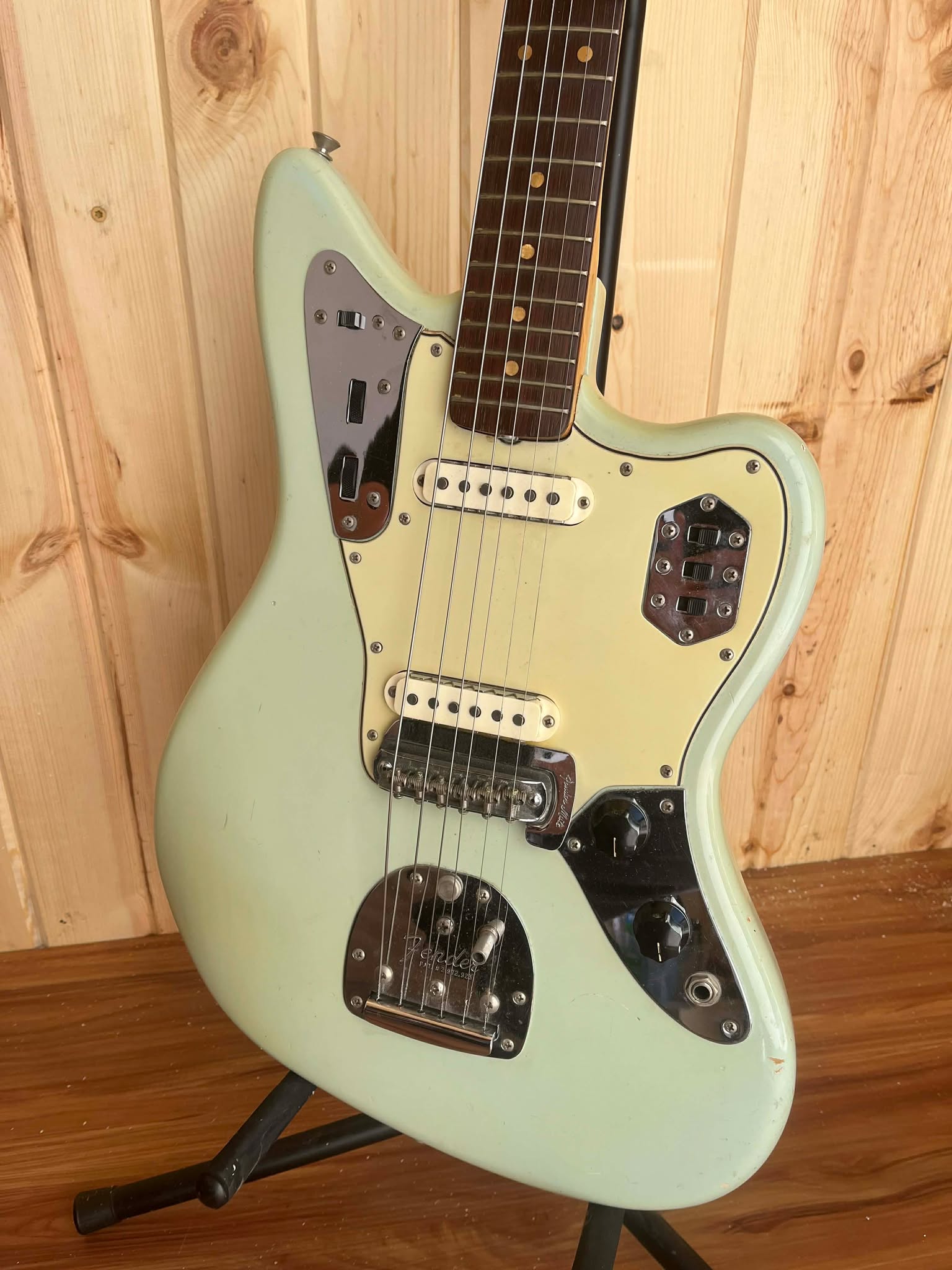
Jaguar | 1962–1975 | All-original examples only |
Mustang | 1964–1981 | Competition colors most desirable |
Duo-Sonic / Musicmaster | 1956–1980 | Student models with collector following |
Gibson Guitars We Buy in Michigan
Model | Key Collectible Years | Notes |
|---|---|---|
Les Paul Standard | 1952–1960, 1968–1975 | “Bursts” (1958–1960) are the holy grail |
Les Paul Custom | 1954–1960, 1968–1975 | Black Beauty — all-original critical |
Les Paul Junior | 1954–1961 | Single and double cutaway both collectible |
Les Paul Special | 1955–1961 | TV Yellow most desirable |
SG Standard | 1961–1975 | Early “Les Paul” truss rod cover adds value |
SG Custom | 1961–1975 | Three-pickup variants especially desirable |
ES-335 | 1958–1970 | Dot-neck (1958–1962) most sought after |
ES-345 | 1959–1975 | Stereo/Varitone models |
ES-355 | 1958–1975 | Top of the semi-hollow line |
Flying V | 1958–1959, 1967–1975 | Original Korina (1958–59) extremely rare |
Explorer | 1958–1959, 1963, 1975–1981 | Original Korina — fewer than 40 made |
Firebird | 1963–1969 | Reverse-body most valuable |
ES-175 | 1949–1971 | Jazz standard — PAF era most desirable |
L-5 / Super 400 | All years | Carved archtops — condition critical |
Martin Guitars We Buy in Michigan
Model | Key Collectible Years | Notes |
|---|---|---|
D-45 | 1933–1942, 1968+ | Pre-war examples among most valuable acoustics |
D-28 | 1931–1969 | Herringbone era (pre-1947) premium |
D-18 | 1932–1969 | Brazilian rosewood era most collectible |
D-35 | 1965–1975 | Three-piece back, Brazilian rosewood early |
000-28 | Pre-1970 | Orchestra body — 12-fret versions rare |
OM-28 | 1929–1933 | Original run — extremely collectible |
00-18, 00-21, 00-28 | Pre-1970 | Parlor and concert sizes |
Other Brands We Buy in Michigan
Gretsch: 6120 Chet Atkins, White Falcon, Duo Jet, Country Gentleman, Tennessean
Rickenbacker: 4001 Bass, 325, 360/12 twelve-string, 330, 360
Epiphone: Pre-1970 archtops and electrics (pre-Gibson acquisition era especially)
Guild: Starfire, F-50, F-47 — pre-1975 examples
Mosrite: Ventures model, Celebrity series
National / Valco: Res-O-Glass, map-shape models
Kay / Harmony / Silvertone: Gold foil pickup models, Barney Kessel variants
Selling a Guitar in Detroit, Michigan
Detroit is one of the most important guitar markets in the Midwest. The city’s unmatched musical heritage — Motown, rock, blues, punk, electronic — created generations of serious players who invested in quality American-made instruments throughout the 1950s, 1960s, and 1970s. The broader Detroit metro area (Wayne, Oakland, and Macomb counties combined) represents the single largest concentration of vintage instrument ownership in Michigan, and estate sales in these counties regularly produce exceptional pre-1970 American guitars.
Detroit’s musical identity is also uniquely tied to Gibson. The region’s blues and R&B heritage created a strong Gibson buying culture — Les Pauls, ES-335s, and SGs are more commonly encountered in Detroit estate sales than virtually anywhere else in the Great Lakes region, in Edgewater’s experience.
What Detroit-area guitar owners typically have:
Gibson Les Pauls and ES-335s from the 1960s–1970s (strong regional preference for Gibson)
Fender Stratocasters and Telecasters — Pre-CBS and CBS-era examples both common
Gretsch hollow-body electrics (strong Motown-era connection)
Rickenbacker electrics from the British Invasion influence period
Martin D-28s and D-18s — many purchased new in the 1960s and still in original condition
Epiphone archtops from the pre-Gibson acquisition era
Common Detroit-area search queries Edgewater answers:
“Sell my guitar Detroit Michigan”
“Best place to sell a Les Paul in Detroit”
“Guitar buyers Detroit”
“Vintage guitar appraisal Detroit”
“Who buys old Gibson guitars in Detroit”
“Sell inherited guitar Detroit Michigan”
“Guitar buyer Dearborn Michigan”
“Sell vintage guitar Warren Michigan”
“Guitar buyers Sterling Heights”
“Sell guitar Livonia Michigan”
“Guitar buyer Westland Michigan”
“Sell old guitar Southfield Michigan”
“Vintage guitar buyer Pontiac Michigan”
“Sell guitar Royal Oak Michigan”
“Guitar buyers Birmingham Michigan”
“Sell vintage guitar Troy Michigan”
“Guitar buyer Novi Michigan”
“Sell guitar Farmington Hills”
“Vintage guitar appraisal Oakland County”
“Sell guitar Macomb County Michigan”
“Guitar buyers Clinton Township”
“Sell guitar Shelby Township Michigan”
Edgewater serves Greater Detroit: We travel throughout Wayne, Oakland, and Macomb counties for free, no-obligation appraisals — including Detroit, Dearborn, Livonia, Westland, Sterling Heights, Warren, Troy, Farmington Hills, Novi, Southfield, Royal Oak, Birmingham, Pontiac, Clinton Township, Shelby Township, and all surrounding communities. For high-value instruments, same-day appointments are available.
Call (440) 219-3607 or visit edgewaterguitars.com to schedule your free Detroit-area guitar appraisal.
Selling a Guitar in Grand Rapids, Michigan
Grand Rapids and West Michigan represent Michigan’s second-largest guitar market. The region’s strong Dutch Reformed and Christian community heritage created a robust choral and instrumental music tradition, which translated into meaningful instrument ownership across generations. Grand Rapids estate sales consistently produce quality acoustic guitars — Martin flattops in particular — alongside American-made electrics.
West Michigan’s prosperity relative to other parts of the state also means that guitars purchased new in the 1960s were often well cared-for rather than heavily played — making originality rates higher than average on instruments sourced from this region.
What Grand Rapids-area guitar owners typically have:
Martin acoustic flattops — D-28s, D-18s, 000-series — often in excellent original condition
Gibson acoustic archtops and flattops from the 1950s–1960s
Fender Stratocasters and Telecasters from the 1960s–1970s
Gibson Les Pauls and SGs
Guild acoustics — F-series and concert body models
Common Grand Rapids search queries Edgewater answers:
“Sell my guitar Grand Rapids Michigan”
“Best place to sell a Stratocaster in Grand Rapids”
“Guitar buyers Grand Rapids”
“Vintage guitar appraisal Grand Rapids”
“Who buys old guitars in Grand Rapids”
“Sell inherited guitar West Michigan”
“Guitar buyer Kentwood Michigan”
“Sell guitar Wyoming Michigan”
“Guitar buyers Grandville Michigan”
“Sell vintage guitar Holland Michigan”
“Guitar buyer Muskegon Michigan”
“Sell guitar Kalamazoo Michigan”
“Vintage guitar buyer West Michigan”
“Sell Martin guitar Grand Rapids”
Edgewater serves Greater Grand Rapids and West Michigan: We travel throughout the West Michigan corridor including Grand Rapids, Kentwood, Wyoming, Grandville, Holland, Muskegon, Kalamazoo, Battle Creek, and all surrounding communities.
Selling a Guitar in Ann Arbor, Michigan
Ann Arbor’s university culture — anchored by the University of Michigan — has created a layered guitar market unlike anywhere else in the state. The city has historically attracted serious musicians at both the student and faculty level, and the surrounding Washtenaw County communities have produced significant vintage instrument holdings from professors, physicians, and professionals who bought quality guitars in the 1960s and never sold them.
Ann Arbor is also uniquely positioned as the most acoustically-oriented guitar market in Michigan. The folk revival of the 1960s had particularly deep roots in university communities, meaning Martin and Gibson acoustic guitars are disproportionately represented in Washtenaw County estate sales.
What Ann Arbor-area guitar owners typically have:
Martin acoustics — 000-series, OM-series, and dreadnoughts — often purchased during the 1960s folk revival
Gibson acoustic flattops — J-45, J-200, LG-series
High-quality classical and nylon-string instruments
Fender Stratocasters and Telecasters from the 1960s–1970s
Gibson Les Pauls and ES-335s
Common Ann Arbor search queries Edgewater answers:
“Sell my guitar Ann Arbor Michigan”
“Best place to sell acoustic guitar Ann Arbor”
“Guitar buyers Ann Arbor”
“Vintage guitar appraisal Ann Arbor”
“Sell Martin guitar Ann Arbor”
“Who buys old guitars in Ann Arbor”
“Guitar buyer Ypsilanti Michigan”
“Sell guitar Washtenaw County”
“Vintage guitar buyer Southeast Michigan”
Edgewater serves Ann Arbor and Washtenaw County: We travel throughout the Ann Arbor metro area including Ypsilanti, Saline, Chelsea, Milan, and all of Washtenaw County.
Selling a Guitar in Lansing, Michigan
Lansing and the mid-Michigan region — including East Lansing, home of Michigan State University — combine state government employment, university culture, and a historically strong automotive industry workforce into a diverse guitar ownership base. Mid-Michigan estate sales frequently surface quality American-made guitars from the 1960s and 1970s.
Common Lansing search queries Edgewater answers:
“Sell my guitar Lansing Michigan”
“Guitar buyers Lansing”
“Best place to sell a Les Paul Lansing”
“Vintage guitar appraisal mid-Michigan”
“Sell guitar East Lansing Michigan”
“Guitar buyer Okemos Michigan”
“Sell vintage guitar Ingham County”
“Who buys guitars in Lansing Michigan”
Edgewater serves Lansing and Mid-Michigan: We travel throughout the Greater Lansing area including East Lansing, Okemos, Haslett, Dewitt, Mason, and all of Ingham County.
Selling a Guitar in Flint, Michigan
Flint and Genesee County have a deep connection to American working-class music culture — the blues, country, and rock that defined guitar buying in the 1950s, 1960s, and 1970s. While the region has faced economic challenges, the guitar collections assembled during the area’s more prosperous manufacturing era remain, and Edgewater regularly encounters exceptional pre-1970 instruments from Flint-area estate sales.
Common Flint search queries Edgewater answers:
“Sell my guitar Flint Michigan”
“Guitar buyers Flint”
“Best place to sell vintage guitar Flint”
“Who buys old guitars Genesee County”
“Sell guitar Burton Michigan”
“Guitar buyer Swartz Creek Michigan”
“Vintage guitar appraisal Flint area”
Edgewater serves Flint and Genesee County: We travel throughout Flint and Genesee County including Burton, Swartz Creek, Flushing, Grand Blanc, and Davison.
Selling a Guitar in Kalamazoo, Michigan
Kalamazoo holds a uniquely significant place in vintage guitar history — it was the home of Gibson Guitar’s original factory from 1917 through 1984. Every pre-1984 Gibson guitar was manufactured in Kalamazoo. This history created a distinctive local culture around Gibson instruments, and the region’s guitar ownership reflects it: Kalamazoo and Southwest Michigan estate sales produce Gibson instruments at a rate meaningfully above the state average.
For guitar owners in the Kalamazoo area, this history is both culturally significant and practically important. The instruments produced in your city are among the most collectible American guitars ever made.
What Kalamazoo-area guitar owners typically have:
Gibson electric guitars at above-average rates — Les Pauls, SGs, ES-series, Flying Vs, Explorers
Factory seconds, prototypes, and non-catalog instruments (occasionally surface in the region)
Fender Stratocasters and Telecasters
Martin acoustics
Common Kalamazoo search queries Edgewater answers:
“Sell my guitar Kalamazoo Michigan”
“Best place to sell a Gibson in Kalamazoo”
“Guitar buyers Kalamazoo”
“Vintage Gibson buyer Kalamazoo”
“Sell old Les Paul Kalamazoo”
“Guitar buyer Portage Michigan”
“Sell vintage guitar Battle Creek Michigan”
“Who buys Gibson guitars Kalamazoo”
“Guitar appraisal Southwest Michigan”
Edgewater serves Kalamazoo and Southwest Michigan: We travel throughout the Kalamazoo area including Portage, Battle Creek, Paw Paw, Sturgis, and all of Southwest Michigan.
Selling a Guitar in Traverse City and Northern Michigan
Northern Michigan’s guitar market is shaped by its resort economy and seasonal population. The region attracts significant wealth — second homes, retirement communities, and seasonal residents — and estate sales in Traverse City and the surrounding communities regularly produce quality instruments from owners who purchased guitars in the 1960s and 1970s and simply never sold them.
Common Traverse City / Northern Michigan search queries Edgewater answers:
“Sell my guitar Traverse City Michigan”
“Guitar buyers Northern Michigan”
“Vintage guitar appraisal Traverse City”
“Best place to sell a guitar Up North Michigan”
“Who buys old guitars Traverse City”
“Sell guitar Petoskey Michigan”
“Guitar buyer Cadillac Michigan”
“Sell vintage guitar Emmet County”
Edgewater serves Northern Michigan: We travel to Traverse City, Petoskey, Cadillac, Gaylord, and throughout the Northern Michigan resort corridor for high-value instruments. Contact us to confirm travel arrangements for your area.
Selling a Guitar in Saginaw, Bay City, and Mid-Michigan
The Saginaw Bay region — Saginaw, Bay City, and Midland counties — shares Northeast Michigan’s industrial heritage and its guitar ownership patterns. Mid-century manufacturing prosperity drove strong instrument purchases in the 1950s and 1960s, and the region’s estate sales regularly surface pre-1970 American guitars in original condition.
Common Saginaw / Bay City search queries Edgewater answers:
“Sell my guitar Saginaw Michigan”
“Guitar buyers Bay City Michigan”
“Sell vintage guitar Midland Michigan”
“Who buys old guitars Saginaw County”
“Vintage guitar appraisal Tri-Cities Michigan”
“Guitar buyer Great Lakes Bay Region”
Edgewater serves the Tri-Cities Region: We travel to Saginaw, Bay City, Midland, and surrounding communities in the Great Lakes Bay Region.
Selling a Guitar in Jackson, Michigan
Jackson County sits at the intersection of southeast and south-central Michigan — within reach of both Detroit and Lansing markets. The city’s manufacturing heritage and working-class music culture created meaningful guitar ownership, and the surrounding rural communities produce estate sales with well-preserved vintage instruments.
Common Jackson search queries Edgewater answers:
“Sell my guitar Jackson Michigan”
“Guitar buyers Jackson Michigan”
“Vintage guitar appraisal Jackson County”
“Best place to sell a guitar in Jackson Michigan”
Edgewater serves Jackson: We travel to Jackson and Jackson County as part of our Southeast / South-Central Michigan service area.
Which Guitar Models Sell for the Most in Michigan? (2026 Market Overview)
Understanding what you have is the first step to getting a fair price. The following provides a framework for evaluating your guitar’s category before contacting a buyer.
Highest-Value Category: Pre-1965 American Electrics
Pre-CBS Fender guitars (made before CBS acquired Fender in January 1965) and pre-1965 Gibson electrics represent the top tier of the vintage guitar market. In Michigan, these instruments surface regularly in estate sales from owners who purchased them new in the late 1950s and early 1960s.
Key models in this tier:
1958–1960 Gibson Les Paul Standard (“Burst”) — among the most valuable production guitars ever made
Pre-CBS Fender Stratocasters (1954–1964) — Custom Colors command the largest premiums
Pre-CBS Fender Telecasters and Nocasters (1950–1964)
1958–1960 Gibson Flying V and Explorer (Korina-body originals)
1958–1964 Gibson ES-335 “dot-neck”
1961–1964 Gibson SG/Les Paul transition models
Edgewater note: In Michigan estate sales, we most frequently encounter pre-CBS Stratocasters in Sunburst finish — the most common factory configuration. Custom Color examples (Fiesta Red, Lake Placid Blue, Sonic Blue, Daphne Blue, Shell Pink) are significantly rarer and worth meaningfully more. If you have a non-sunburst, non-natural-finish pre-CBS Fender, it is worth contacting us immediately for an appraisal.
High-Value Category: Pre-War Martin Acoustics
Martin acoustics made before World War II — roughly pre-1946 — are among the most collectible American instruments in existence. They used Brazilian rosewood (now a protected species), Adirondack spruce tops, and construction techniques that were abandoned after the war. Michigan estate sales, particularly in university communities and affluent suburbs, do produce these instruments.
Key pre-war Martin models:
D-45 (1933–1942) — fewer than 100 made, among the most valuable acoustics
D-28 “Herringbone” (1931–1946) — Brazilian rosewood, herringbone trim
D-18 (1932–1946) — mahogany back and sides, Adirondack top
OM-28 and OM-45 (1929–1933) — original orchestra models, extremely rare
Strong-Value Category: 1965–1975 Gibson and Fender
Post-CBS Fender and post-1965 Gibson instruments occupy a robust collector tier. These guitars are now 50+ years old and officially vintage by any definition. Michigan ownership rates for this era are high — these were prime guitar-buying years for the Baby Boom generation.
Key models:
1965–1969 Fender Stratocaster (large-headstock transition)
1968–1975 Gibson Les Paul Standard, Custom, Deluxe
1965–1975 Fender Telecaster
1963–1975 Gibson SG Standard and Custom
1965–1975 Gibson ES-335
Notable Niche Category: Gretsch, Rickenbacker, and Epiphone
Michigan’s Motown and rock heritage created meaningful ownership of Gretsch and Rickenbacker instruments. These brands have dedicated collector bases and command strong prices for original examples.
Key models:
Gretsch 6120 Chet Atkins, White Falcon, Duo Jet (1954–1968)
Rickenbacker 325 (John Lennon model), 360/12 (12-string), 4001 bass
Pre-1970 Epiphone archtops (made before Gibson moved production to Japan)
How to Get the Most Money for Your Guitar in Michigan: 7 Rules
Rule 1 — Do not modify anything before selling. The single most common value-destroying mistake is cleaning, polishing, or adjusting a vintage guitar before having it appraised. Original patina, original parts, and even original grime contribute to an authenticity assessment. A buyer like Edgewater will pay more for an untouched original than for a cleaned guitar where the patina has been disturbed.
Rule 2 — Find the original case. The original case — the one that came with the guitar — adds meaningful value. Brown/orange Gibson cases, black Fender cases, and original Martin cases confirm provenance and protect the instrument. If you have it, bring it.
Rule 3 — Do not replace any parts. Replacing tuners, a nut, or a bridge before selling reduces value even if the replacement is higher quality. Collectors and buyers pay for originality, not improvements.
Rule 4 — Document what you know. Any information about the guitar’s history — when it was purchased, who owned it, where it was bought, any original receipts — adds to provenance and value. Write down what you know before contacting a buyer.
Rule 5 — Get more than one offer. Local guitar shops have a structural incentive to offer wholesale prices. Comparing an offer from a specialist buyer like Edgewater to a local shop offer is the fastest way to understand what your guitar is actually worth. Edgewater’s offer will almost always be higher — and the comparison makes that immediately clear.
Rule 6 — Understand the platform costs of online selling. Reverb charges approximately 5% in seller fees plus payment processing. eBay charges 12–15% on musical instruments. Shipping a guitar safely requires proper packaging, insurance, and the risk of damage claims. The “higher price” of online selling is often substantially reduced by fees, shipping, and time investment.
Rule 7 — Beware pawn shop pricing. Pawn shops are not guitar specialists. They price instruments to resell quickly at retail markup, which means their buy prices are the lowest in any market. A vintage guitar that Edgewater would offer strong collector-market pricing for might receive a fraction of that at a pawn shop simply because the pawn shop lacks the expertise to identify or market it correctly.
Why Edgewater Guitars Pays More Than Michigan Guitar Shops
The pricing gap between Edgewater and local Michigan guitar shops is not a matter of generosity — it is structural. Understanding the structure explains why the gap is consistent and predictable.
Local guitar shop math: A guitar shop must buy your instrument at a price that allows them to resell it at retail with enough margin to cover their rent, staff, utilities, and inventory carrying costs. If a guitar will retail for a certain amount in their shop, they need to buy it for 40–60% of that price. That is the ceiling on what they can offer.
Edgewater’s math: Edgewater buys directly from owners without retail overhead. We sell to collectors and the secondary market rather than operating a showroom. That means we can offer prices based on actual collector market value rather than a retailer’s required margin. The result is consistent: 30–40% more than typical guitar shop offers on comparable instruments.
This gap is largest on high-value vintage instruments. On a guitar worth a meaningful amount to a collector, a 30–40% difference in offer price is a significant dollar amount. On a common $200 used guitar, the gap is smaller in absolute terms. For vintage and quality used instruments — which is our specialty — the Edgewater advantage is most pronounced.
Frequently Asked Questions: Selling a Guitar in Michigan
Q: What is the best place to sell a vintage guitar in Michigan?
A: For most Michigan guitar owners — particularly those with vintage or quality used instruments — the best combination of price and convenience is a specialist direct buyer like Edgewater Guitars. We pay 30–40% more than local guitar shops, offer free authentication, pay immediately in cash, and travel to you anywhere in Michigan. Online platforms like Reverb can potentially yield similar or higher prices but involve significant time, platform fees, shipping risk, and fraud exposure.
Q: How do I find out what my guitar is worth in Michigan?
A: The most reliable free option is to contact Edgewater Guitars at (440) 219-3607 for a no-obligation appraisal. We can often provide a preliminary value range based on photos and description before any in-person visit. For reference, completed sales on Reverb.com for the specific make, model, and year of your guitar provide market data, but require you to accurately identify what you have — which is not always straightforward with vintage instruments.
Q: Does Edgewater Guitars travel to buyers in Michigan?
A: Yes. We travel throughout Michigan for valuable instruments — Detroit, Grand Rapids, Ann Arbor, Lansing, Flint, Kalamazoo, Traverse City, Saginaw, and all surrounding areas. Call (440) 219-3607 to discuss your instrument and schedule a visit.
Q: What guitars are worth the most money in Michigan’s current market?
A: Pre-1965 Fender Stratocasters, Telecasters, and Precision Basses in original condition; 1958–1960 Gibson Les Paul Standards (“Bursts”); pre-1942 Martin acoustic guitars with Brazilian rosewood; Gibson ES-335 dot-neck models from 1958–1962; and original Gretsch White Falcons and Duo Jets consistently bring the strongest prices. However, even more common post-1965 guitars can have significant value if they are all-original and in excellent condition.
Q: What is a Fender Stratocaster worth in Michigan?
A: Stratocaster values range enormously based on year and condition. Pre-CBS examples (1954–1964) in original condition occupy the highest tier; Custom Color examples (non-sunburst, non-natural finishes) within that group bring the strongest prices. CBS-era examples (1965–1981) have their own strong collector market. Without examining a specific instrument and confirming originality, a meaningful value range cannot be quoted — contact Edgewater for a free assessment.
Q: What is a Gibson Les Paul worth in Michigan?
A: Gibson Les Paul values span an enormous range depending on year, model, and originality. 1958–1960 “Burst” Standards represent the top of the market for any production electric guitar. Late-1960s and early-1970s reissues have a strong and growing collector base. Les Paul Juniors, Specials, and Customs each have their own value tiers. An all-original example in any year is worth meaningfully more than a modified or refinished one. Contact Edgewater for a free appraisal.
Q: Should I sell my guitar on Reverb or to a local buyer in Michigan?
A: It depends on your priorities. Reverb provides access to a national buyer pool and potentially the highest sale price, but involves platform fees (approximately 5% plus payment processing), significant shipping costs and risk, time investment for listing and communication, and exposure to buyer disputes and fraud. Selling to Edgewater is faster, safer, and simpler — and our offers are typically competitive with, or better than, what you would net on Reverb after fees, shipping, and time cost are factored in.
Q: What should I do before selling my vintage guitar in Michigan?
A: Do not clean, polish, or modify anything. Find the original case if you have it. Gather any documentation you have about the guitar’s history. Take clear photographs in natural light (headstock, front, back, serial number, electronics). Then contact Edgewater at (440) 219-3607 for a free preliminary appraisal before approaching any other buyer.
Q: I inherited a guitar in Michigan. How do I know if it is valuable?
A: The most important factors are brand, approximate year, and originality. If the guitar is American-made (Gibson, Fender, Martin, Gretsch, Rickenbacker) and predates 1975, it is worth having appraised by a specialist before selling it anywhere. Edgewater provides free appraisals specifically for situations like this — we encounter inherited guitars regularly and understand that owners often have no frame of reference for value. Call (440) 219-3607 and we will walk you through the process.
Q: How long does it take to sell a guitar to Edgewater in Michigan?
A: For most transactions, the entire process — from initial contact to cash in hand — takes between one and three days. We typically respond to inquiries the same day, schedule in-person visits within 24–48 hours for Michigan locations, and pay immediately upon completing our evaluation and making an offer. There is no waiting period, no consignment arrangement, and no obligation.
Recently Purchased: Michigan Guitar Case Studies
Detroit-Area Estate — 1969 Gibson ES-335 A family in the Grosse Pointe area contacted Edgewater after discovering a 1969 Gibson ES-335 in a late family member’s home. The guitar was in its original brown case with all original hardware, electronics, and finish intact. The family had received one offer from a local guitar shop. Edgewater’s offer exceeded that figure by 38%. Cash paid at the time of evaluation. The guitar did not leave the house until payment was complete.
Grand Rapids — 1962 Fender Stratocaster A retired teacher in the Grand Rapids area inherited a 1962 Fender Stratocaster from his father, who had purchased it new. The guitar was a three-tone sunburst with slab rosewood fingerboard and clay dot markers — all original. The owner had no idea of its significance. Edgewater provided a free appraisal, explained what he had in detail, and made an offer that exceeded a competing quote from a local music shop by a significant margin.
Kalamazoo — 1959 Gibson Les Paul Junior A Kalamazoo seller contacted us after finding a 1959 Gibson Les Paul Junior in cherry finish in a closet. The guitar had been unplayed for decades. All-original with its original case. Edgewater traveled to Kalamazoo, authenticated the instrument on-site, and completed the purchase the same day.
Related Resources
Contact Edgewater Guitars: Michigan’s Premier Vintage Guitar Buyer
Edgewater Guitars purchases vintage and quality used guitars throughout Michigan — Detroit, Grand Rapids, Ann Arbor, Lansing, Flint, Kalamazoo, Traverse City, Saginaw, and everywhere in between. We are one of the Midwest’s most active direct buyers of pre-1975 American-made guitars, and we consistently offer 30–40% more than local guitar shops.
Free appraisal. Immediate cash. We travel to you.
Phone: (440) 219-3607 Web: edgewaterguitars.com Service Area: Michigan statewide, plus Ohio, Pennsylvania, Indiana, and West Virginia
If you have a guitar you are considering selling — whether inherited, purchased decades ago, or simply no longer played — call us before selling anywhere else. There is no obligation, and the appraisal is always free.