DATE :
What Guitar Do I Have? Complete Beginner's Identification Guide
What Guitar Do I Have? Complete Beginner’s Identification Guide
Quick Answer: To identify your guitar, start by checking the headstock (top of the neck) for a brand logo, then look inside acoustic guitars for a label, check the back of the headstock for stamps or serial numbers, and examine body shape and hardware. The five most valuable brands to look for are Gibson, Fender, Martin, Gretsch, and Rickenbacker—especially instruments made before 1970. If you can’t find any branding, look for serial numbers, manufacturer codes on electronics, and distinctive construction features that indicate the maker. Professional identification services can authenticate unmarked or unclear instruments.
If you’re holding a guitar and have no idea what it is, you’re not alone. Thousands of people inherit guitars, find them in storage, or receive them as gifts without any information about the manufacturer, model, or value. Maybe the logo has worn off, perhaps there was never an obvious brand name, or you simply don’t know enough about guitars to recognize what you’re looking at.
This comprehensive guide will walk you through the exact process of identifying any guitar, from obvious brand-name instruments to mysterious unmarked examples. Whether you’ve inherited a guitar from a relative, discovered one in an estate sale, or simply want to know what’s been sitting in your closet for decades, this guide provides everything you need to identify what you have.
At Edgewater Guitars, we’ve identified thousands of guitars throughout Ohio and the Midwest—from obvious Gibson Les Pauls to obscure instruments with no visible branding. We’ve compiled our 20+ years of identification expertise into this step-by-step guide that anyone can follow, regardless of guitar knowledge.
What you’ll learn:
Where to look for brand names and logos on any guitar
How to identify guitars by body shape and features
Step-by-step identification process from headstock to hardware
Visual guide to major manufacturer logos and styles
How to identify completely unmarked guitars
Serial number locations by manufacturer
Which guitars are valuable enough to warrant professional appraisal
Real examples of identified guitars and their values
Let’s start with the most obvious place—the headstock.
Step 1: Check the Headstock for Brand Logos
The headstock is the first and most common place for brand identification. This is the section at the top of the neck where the tuning pegs are located. Approximately 90% of guitars display their manufacturer’s name prominently on the headstock.
Where to Look on the Headstock
Front of headstock (most common):
Large brand name or logo
Usually clearly visible above the nut
May be painted, transferred as a decal, or inlaid in pearl/abalone
Position typically centered between tuning pegs
Back of headstock (secondary location):
Some brands stamp information on the back
Serial numbers frequently located here
Model names sometimes appear here
Manufacturing location stamps
Tips for finding worn logos:
Look at different angles under good lighting
Slight shadows can reveal worn imprints
Use a flashlight at a low angle across the surface
Check for outline shapes even if lettering is gone
Look for adhesive residue where decals may have been
Common Brand Logo Styles by Era
Understanding logo styles helps you not only identify the brand but also date the instrument.
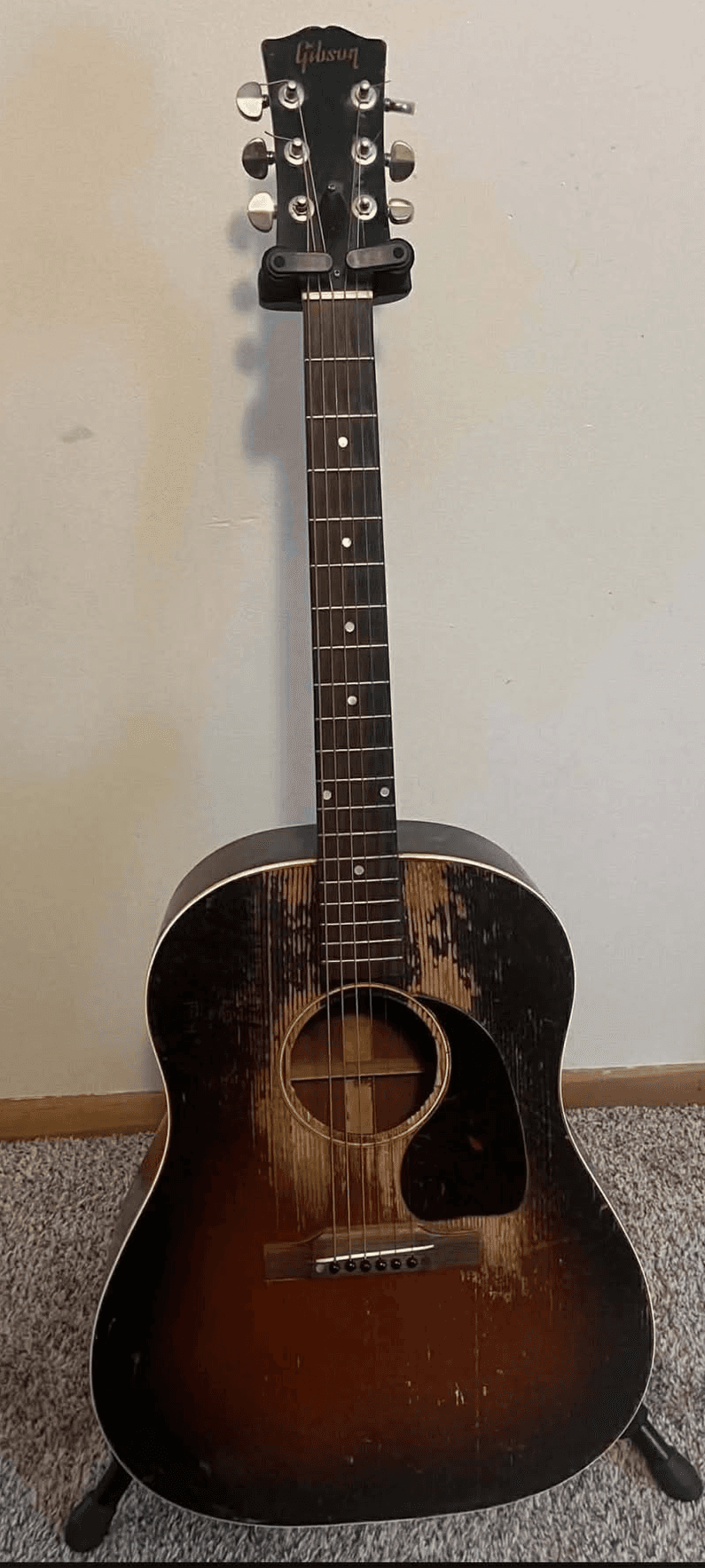
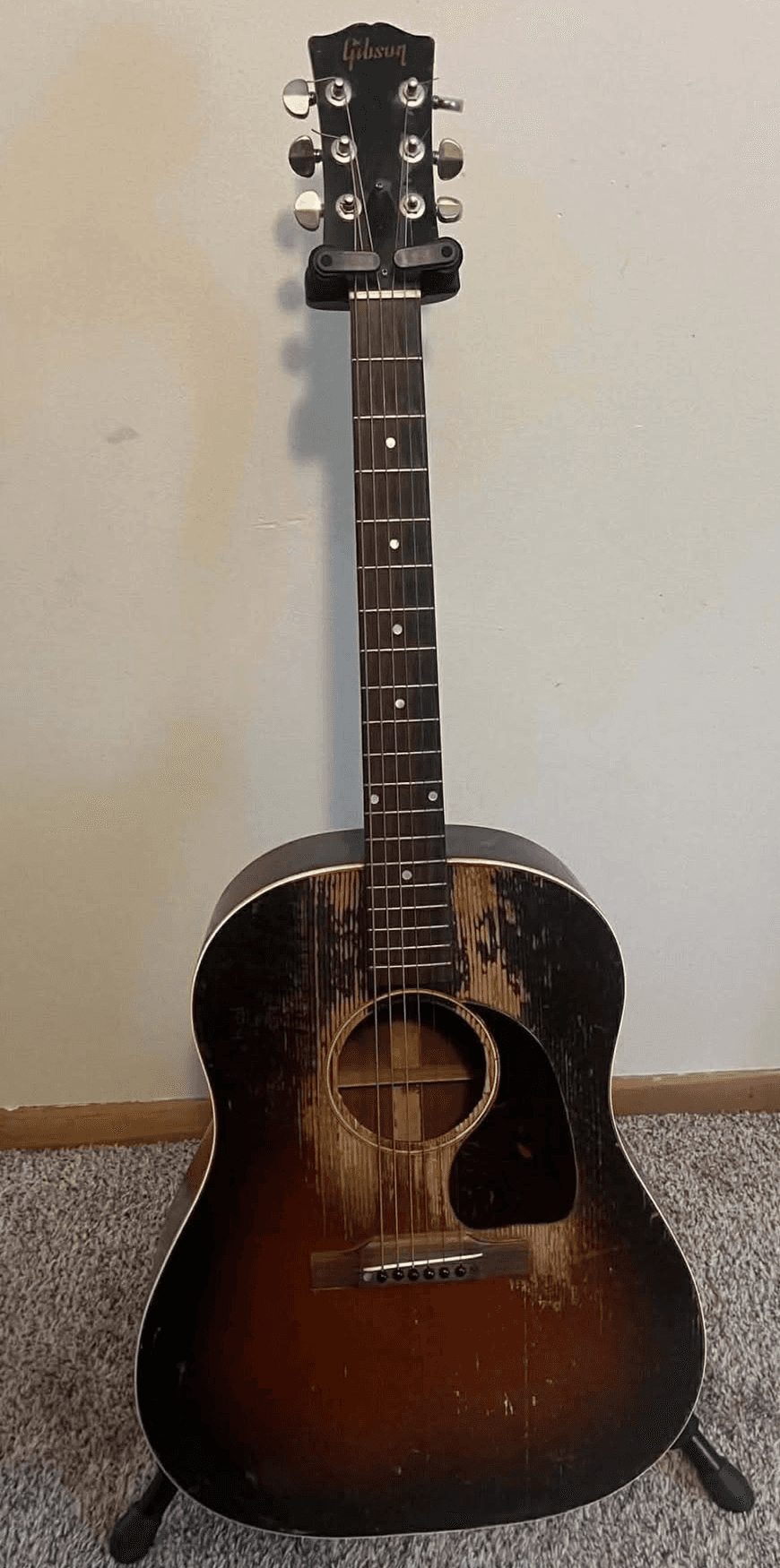
Gibson Logos Through the Years
1950s-early 1960s (Pre-CBS Era):
Script “Gibson” in elegant cursive
Often with crown inlay above on higher-end models
Pearl or mother-of-pearl inlay on premium guitars
Painted logo on budget models
“Only a Gibson Is Good Enough” slogan on some
Mid-1960s-1970s:
Thicker, bolder script
“Made in USA” stamp appears
Some models have block letter logos
1980s-present:
Various logo styles depending on model line
Generally bolder and more modern
“Gibson USA” common designation
Key identification points:
Crown inlay above logo = higher-end Gibson
Script style = authentic vintage (pre-1970)
Block letters = usually newer or budget line
Fender Logos Through the Years
1950-mid 1960s (“Spaghetti” Logo Era):
Thin, elongated script letters
Looks delicate and hand-drawn
Two patent numbers below logo
Gold or black color
This style alone indicates valuable pre-CBS era
Mid-1960s-1970s (Transition Logo):
Thicker, bolder letters
Still script but more substantial
CBS acquisition changed font slightly
Black logo becomes standard
Late 1970s-1980s (CBS Era):
Very thick, bold script
“Stratocaster” or “Telecaster” often below in block letters
Black logo standard
1980s-present (Modern Era):
Various styles depending on model
“Fender” sometimes accompanied by “Corona, CA” or “Ensenada, Mexico”
“Squier by Fender” on budget line
Key identification points:
“Spaghetti” thin logo = pre-1965 = extremely valuable
Two patent numbers under logo = vintage
“Made in USA” stamp location helps date
Martin Logos and Labels
Martin acoustic guitars primarily use labels inside the guitar (visible through the soundhole) rather than headstock logos.
Early Martin (Pre-1930s):
Stamped “C.F. Martin” on back of headstock
“New York” designation (made in New York before moving to Pennsylvania)
Simple block letter stamps
1930s-1960s:
Oval paper label inside guitar
“C.F. Martin & Co., Nazareth, PA”
Model and serial number on label
Some higher-end models have pearl “Martin” inlay on headstock
1970s-present:
More elaborate labels
Model designation included
Serial number clearly marked
Key identification points:
“New York” stamp = extremely early and valuable
Pre-war oval labels = high value
No headstock logo doesn’t mean it’s not a Martin
Gretsch Logos
1950s-1960s (Golden Era):
“Gretsch” in distinctive script
Often with model name below
“Made in USA” designation
Some models have “G” brand on body top
1970s-present:
Logo styles vary by ownership changes
Baldwin era (1967-1982) has distinctive features
Modern Gretsch follows vintage styling
Key identification points:
Horseshoe or “G” brand on top = authentic vintage Gretsch
Model name often very visible (6120, White Falcon, etc.)
Epiphone Logos
Pre-Gibson Ownership (Before 1957):
“Epiphone” in script
“New York” designation (very valuable)
Elaborate vine inlays on headstock (high-end models)
These pre-Gibson Epiphones are valuable vintage guitars
Gibson Era (1957-present):
Similar script to Gibson
“Epiphone” clearly marked
Often made overseas (Korea, China)
Budget alternatives to Gibson models
Key identification points:
“New York” Epiphone = valuable vintage American guitar
Modern Epiphone = Korean/Chinese-made Gibson designs
Guild Logos
1950s-1980s (American-Made Era):
“Guild” in distinctive script with flourishes
“Guaranteed” Chesterfield logo (looks like shield)
Model designation often below
“Made in USA” stamp
Key identification points:
Chesterfield logo = vintage American Guild
Script style helps date the instrument
What If There’s No Logo on the Headstock?
Don’t panic. Several scenarios explain missing logos:
Logo worn off from decades of handling
Budget or store-brand guitars never had prominent logos
Refinished headstock removed original logo
Guitar was made under contract for retailers (Sears, Montgomery Ward, etc.)
Some manufacturers marked guitars elsewhere
Next steps if no headstock logo:
Check inside acoustic guitars for labels
Look for serial numbers (location indicates manufacturer)
Examine body shape and construction (see Step 3)
Check hardware and electronics for manufacturer codes
Look for stamps or pencil marks in hidden areas
Step 2: Look Inside Acoustic Guitars for Labels
Acoustic guitars almost always have internal labels visible through the soundhole when you look inside the guitar. This is often more reliable than headstock markings.
How to View Internal Labels
Proper viewing technique:
Hold guitar so soundhole faces a light source
Look inside at an angle to see the neck block (where neck joins body)
Use a flashlight or phone light if needed
May need to tilt guitar to see label clearly
Take a photo with flash for clearer view
What you’re looking for:
Paper label glued to internal surface
Usually on neck block (where neck joins body)
Sometimes on back brace
Contains brand name, model, serial number, and often year
Major Acoustic Guitar Label Styles
Martin Label Evolution
Pre-War Martin Labels (Before 1946):
Oval paper label
“C.F. Martin & Co.”
“Nazareth, PA” designation
Serial number and sometimes model
Ornate Victorian-style graphics
Post-War Martin Labels (1946-1969):
Simpler oval label
Still contains full company name
Model clearly marked (D-28, D-45, etc.)
Serial number for dating
Modern Martin Labels (1970-present):
More contemporary graphics
Clear model designation
Serial number
“Made in USA” or country of origin
Value indicators:
Pre-war labels = extremely valuable
“Nazareth, PA” confirms authentic American Martin
Serial numbers on neck block for dating
Gibson Acoustic Labels
1950s-1960s:
Orange oval label (early 1950s-early 1960s)
White rectangular label (1960s)
“Gibson, Inc.” or “Gibson Guitar Corporation”
Kalamazoo, Michigan address
1970s-1980s:
Various label styles as company changed
Montana facility labels appear (1974+)
Model designation included
Key identification:
“Kalamazoo, Michigan” = vintage Gibson
Orange label = 1950s, highly collectible
Any Gibson acoustic from 1960s or earlier has significant value
Guild Acoustic Labels
1950s-1980s:
“Guild Guitars” clearly marked
Various styles throughout decades
“Westerly, Rhode Island” or “Hoboken, New Jersey” locations
Model and serial number
Key points:
American-made Guild acoustics from 1950s-1980s are quality instruments
Not as valuable as Martin or Gibson but collectible
Harmony and Kay Labels
1930s-1970s:
Budget manufacturers but some valuable models exist
“Harmony Company, Chicago, IL”
“Kay Musical Instruments, Chicago, IL”
Often sold under store brands (Silvertone, etc.)
Value considerations:
Most Harmony/Kay guitars are modest value
Certain high-end models (Barney Kessel, Upbeat) are collectible
Pre-war examples have some value
Store Brand Labels
Many guitars were manufactured by major companies but sold under store brands:
Silvertone (Sears):
Made by Harmony, Kay, Danelectro, or others
“Silvertone” prominently marked
Some models surprisingly valuable
Airline (Montgomery Ward):
Usually made by Valco/National
Distinctive art deco designs on some models
Certain models collectible
Recording King (Montgomery Ward):
High-quality guitars made by Gibson
Pre-war Recording Kings very valuable
Gibson-made examples command premium
Key point: Just because it says “Silvertone” doesn’t mean it’s worthless. Some store-brand guitars were manufactured by major companies and have significant value.
What the Label Tells You
Once you find the label, record:
Manufacturer name (C.F. Martin, Gibson, Guild, etc.)
Model designation (D-28, J-45, F-50, etc.)
Serial number (for dating)
Manufacturing location (helps authenticate and date)
Any other markings (inspection stamps, dates, model codes)
Next step: Cross-reference serial number with manufacturer databases to determine year of manufacture.
Step 3: Identify by Body Shape and Style
If you still haven’t identified the brand, body shape provides major clues. Different manufacturers favored specific body designs, and certain shapes are strongly associated with particular brands.
Electric Guitar Body Shapes
Single Cutaway Solid Body
The “Les Paul” Shape:
Carved top with arched appearance
Single cutaway on bass side (left side when facing guitar)
Relatively thick body (1.5-2 inches)
Two pickups standard
Set neck (neck glued into body)
Likely manufacturers:
Gibson (Les Paul models)
Epiphone (Les Paul copies or vintage Epiphone models)
Various import brands copying Les Paul design
Value indicator: If it looks like a Les Paul and is American-made from the 1950s-1960s, get it appraised immediately—potentially very valuable.
The “Telecaster” Shape:
Single cutaway on treble side (right side when facing guitar)
Slab body (no carving or contouring)
Squared-off edges
Two single-coil pickups
Bridge pickup mounted in metal plate
Bolt-on neck
Likely manufacturers:
Fender (Telecaster, Esquire)
Various Fender copies and imports
Value indicator: American-made examples from 1950s-1960s extremely valuable ($15,000-$100,000+).
Double Cutaway Solid Body
The “Stratocaster” Shape:
Two cutaways (horns) extending from body
Contoured body (beveled edges for comfort)
Three single-coil pickups
Tremolo system (whammy bar)
Distinctive rounded curves
Bolt-on neck
Likely manufacturers:
Fender (Stratocaster)
Numerous copies and inspired designs
Value indicator: Pre-1965 American Fender Stratocasters worth $20,000-$100,000+.
The “SG” Shape:
Thin, flat body
Two pointed cutaway horns
Symmetrical design
Two humbucker pickups typically
Set neck with deep neck joint
Often in cherry red finish
Likely manufacturers:
Gibson (SG models)
Epiphone (SG copies)
Value indicator: Early 1960s Gibson SGs (especially those marked “Les Paul” on truss rod cover) worth $8,000-$30,000+.
The “Flying V” or “Explorer” Shape:
Extremely distinctive radical shapes
V-shaped (Flying V) or angular/geometric (Explorer)
If authentic Gibson, extremely rare and valuable
Value indicator: Original 1958-1959 Korina Flying V or Explorer worth $200,000-$500,000+. Even reissues from 1960s valuable.
Offset Waist Body Shapes
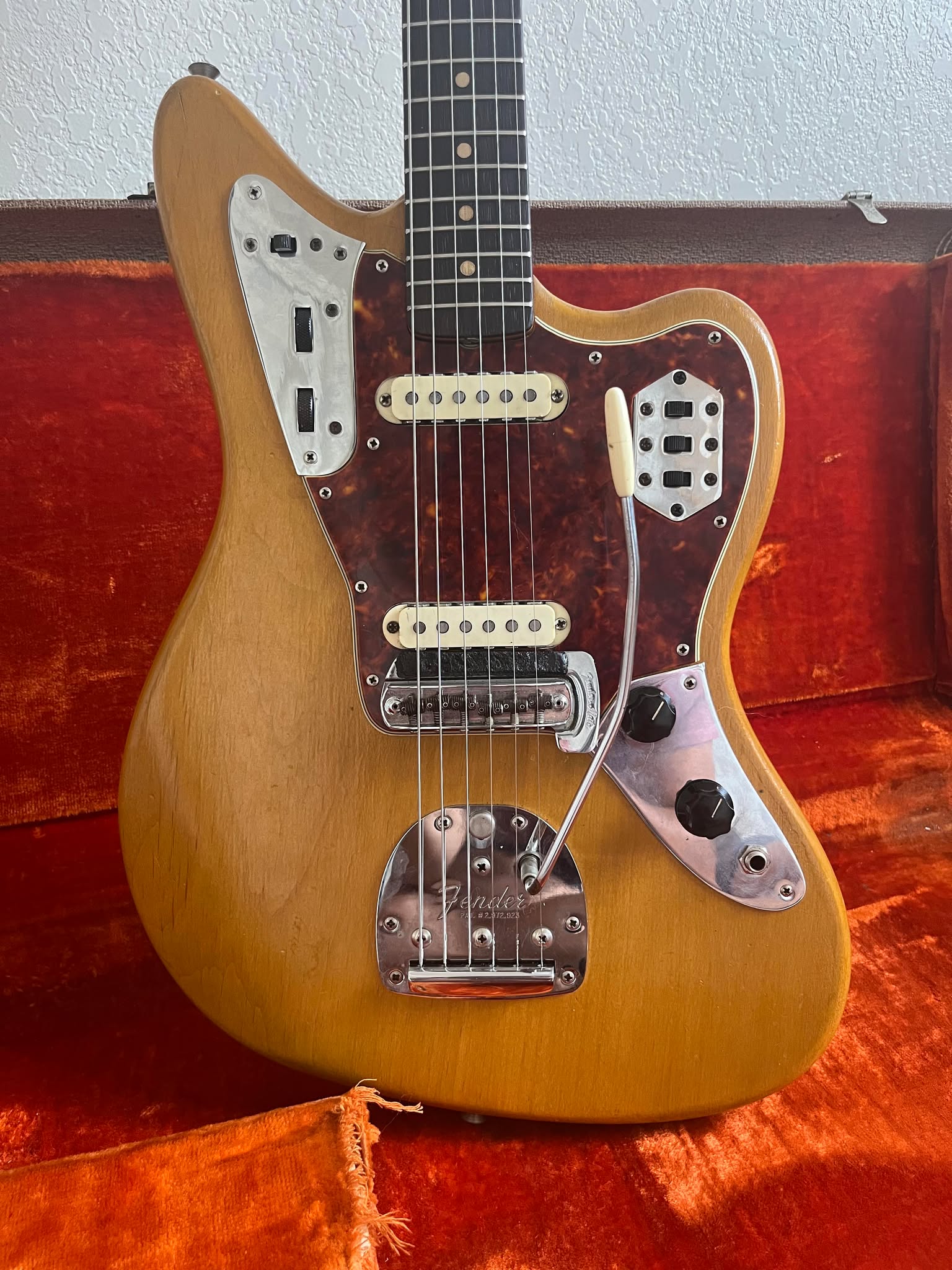
Jazzmaster/Jaguar Shape:
Offset waist (upper and lower body curves don’t align)
Rounded horns
Chrome plate controls
Floating tremolo
Distinctive Fender style from 1958-1965
Likely manufacturers:
Fender (Jazzmaster, Jaguar)
Japanese copies
Value indicator: Pre-1965 Jazzmaster/Jaguar worth $12,000-$45,000.
Mustang Shape:
Smaller offset body
Shorter scale length (24” vs. standard 25.5”)
Often in competition stripe colors (red, blue stripes)
Student model appearance
Likely manufacturers:
Fender (Mustang)
Japanese manufacturers
Semi-Hollow and Hollow Body Shapes
The “ES-335” Shape:
Double cutaway with f-holes
Semi-hollow construction (center block visible through f-holes)
Thin body (not full jazz box depth)
Two humbucker pickups
Binding on body and neck
Likely manufacturers:
Gibson (ES-335, ES-345, ES-355)
Epiphone (various semi-hollow models)
Guild (various models)
Value indicator: 1958-1965 Gibson ES-335 worth $12,000-$45,000+.
Full Hollow Body Jazz Box:
Large, deep body (3-4 inches thick)
F-holes prominent
Floating or mounted pickups
Often blonde or sunburst finish
Elegant arched top
Likely manufacturers:
Gibson (L-5, Super 400, ES-175)
Gretsch (6120, White Falcon, Country Gentleman)
Guild (various models)
D’Angelico and D’Aquisto (high-end jazz guitars)
Value indicator: Pre-1965 high-end jazz guitars can be extremely valuable ($10,000-$100,000+).
Acoustic Guitar Body Shapes
Dreadnought (Large, Square-Shouldered)
Distinctive features:
Large body with squared-off shoulders
Deep, boxy shape
Wide waist
Powerful bass response
Most common acoustic shape
Likely manufacturers:
Martin (D-18, D-28, D-45)
Gibson (J-45, J-50, Hummingbird, Dove)
Guild (D-series)
Many others
Value indicator: Pre-war Martin dreadnoughts worth $20,000-$350,000. Pre-1969 examples still very valuable.
Orchestra Model (Smaller, Round-Shouldered)
Distinctive features:
Smaller than dreadnought
Rounded shoulders instead of square
Slimmer waist
Often 14-fret neck
Balanced tone
Likely manufacturers:
Martin (OM-28, OM-45, 000 series)
Gibson (various models)
Value indicator: Pre-war Martin OM models worth $35,000-$100,000+.
Grand Concert and Parlor (Small-Bodied)
Distinctive features:
Small, compact body
Often 12-fret neck joining at body
Slotted headstock on vintage examples
Delicate appearance
Higher-pitched tone
Likely manufacturers:
Martin (0, 00 series)
Gibson (various models)
Vintage manufacturers (Washburn, Regal, etc.)
Value indicator: Pre-war examples from quality manufacturers valuable.
Jumbo (Large, Round-Shouldered)
Distinctive features:
Very large body
Round shoulders
Deep sides
Powerful projection
Associated with Gibson
Likely manufacturers:
Gibson (J-200, SJ-200)
Guild (F-series)
Value indicator: Pre-1969 Gibson J-200 worth $8,000-$25,000+.
Step 4: Locate and Decode Serial Numbers
Serial numbers are your most reliable tool for dating guitars, but location varies dramatically by manufacturer. Even if you can’t find a brand logo, serial number location itself indicates the manufacturer.
Gibson Serial Number Locations
Where to look:
1952-1960 (Ink Stamp Era):
Back of headstock
Handwritten or stamped in ink
Often faint or worn
5-digit numbers typically
1961-1975 (Impressed Numbers):
Back of headstock
Pressed/stamped into wood (not ink)
6-8 digits typically
Sometimes with letter prefix
1977-present:
Back of headstock (standard)
“Made in USA” stamp nearby
8 digits in most cases
Additional Gibson Dating Tool (FON):
Factory Order Number inside body cavity
Remove control cavity cover (back of guitar)
Look for stamped or written numbers
Format often includes year code
How to decode Gibson serial numbers: The system changed multiple times. Use Edgewater’s Gibson Serial Number Lookup Tool for accurate dating.
Quick reference:
5-digit numbers = 1950s
6-digit starting with “0” = 1960
6-digit starting with “1” through “9” = 1961-1969
8-digit with letter prefix = later
Fender Serial Number Locations
Where to look:
1950-1954:
Bridge plate on Telecasters
No serial numbers on earliest Stratocasters (used neck dates only)
1954-1976:
4-bolt neck plate on back of guitar
Metal plate where neck attaches to body
4-6 digit numbers stamped into plate
1976-present:
Front or back of headstock
Usually with “Made in USA” or country designation
Letter prefix common
Additional Fender Dating Tools:
Neck Date Stamps:
Stamped or pencil-written on neck heel (where neck joins body)
Visible only when neck removed
Format typically “MM-YY” (month-year)
Most reliable Fender dating method
Body Dates:
Penciled in tremolo cavity (Stratocasters)
Various locations in control cavities
Often shows who routed or shaped body
How to decode Fender serial numbers: Complex system with overlaps. Use Edgewater’s Fender Serial Number Lookup Tool for accurate dating.
Quick reference:
4-digit numbers on neck plate = 1954-1963
5-digit with “L” prefix = 1963-1965
6-digit starting “100,000+” = 1965-1976
Letter prefixes = various later systems
Martin Serial Number Locations
Where to look:
All years:
Neck block inside guitar (visible through soundhole)
Stamped into wood of neck block
Look straight in through soundhole toward neck
May be quite small
What you’ll see:
Number only (serial number)
Often with model stamp nearby
Size stamp (0, 00, 000, D, etc.)
How to decode Martin serial numbers: Martin serial numbers are sequential and relatively straightforward.
Quick reference:
Numbers under 8,000 = pre-1898
8,000-15,000 = 1898-1906
45,000-58,000 = 1930s
83,000-90,000 = 1940s
145,000-150,000 = 1950s
200,000-250,000 = 1960s
Full dating: Use online Martin serial number databases for specific years.
Other Manufacturer Serial Numbers
Gretsch:
Various locations (back of headstock, inside hollow bodies)
Dating system changed multiple times
Often includes model number in format
Professional authentication recommended for valuable models
Guild:
Label inside acoustic guitars
Back of headstock on electrics
Generally straightforward dating
Sequential numbering by era
Rickenbacker:
Various locations depending on model
Letter prefix indicates year (A=1961, B=1962, etc. early on)
System changed multiple times
Key point: If you find a serial number but don’t recognize the format, photograph it clearly and research the format pattern online or contact identification specialists.
Step 5: Examine Hardware and Construction Details
When logos, labels, and serial numbers fail to identify a guitar, hardware and construction details provide crucial clues.
Tuning Machines (Tuners) as Identification Clues
Tuners often have manufacturer stamps:
Kluson Tuners:
“Kluson Deluxe” stamped on
Single or double-ring buttons
Commonly used by Gibson and Fender 1950s-1960s
Pearl or plastic buttons
Presence indicates American-made vintage guitar
Grover Tuners:
“Grover” stamped on base
Rotomatic style (enclosed gears)
“Sta-tite” or “Imperial” designations
Used by Gibson, Guild, and others
Metal or plastic buttons
Waverly Tuners:
Open-back style
Often gold-plated
Common on high-end acoustics
Vintage Martin association
Gotoh, Schaller (Modern):
Japanese and German manufacturers
Generally indicate more modern guitar
High quality but not vintage
What tuners tell you:
Kluson = likely American vintage
Grover = American, various eras
Modern brands = recent manufacture
Gold plating = higher-end model
Pickup Types and Styles
For electric guitars, pickups are major identification factors:
Gibson PAF Humbuckers:
Dual-coil pickups (two bobbins side-by-side)
“Patent Applied For” sticker on bottom (very valuable)
Cream or zebra colored bobbins
Chrome or nickel covers
Presence indicates 1957-1962 Gibson
Gibson Patent Number Humbuckers:
Similar to PAF but with patent number sticker
Indicates 1960s Gibson
Still valuable but not PAF-level
P-90 Pickups (Gibson):
Single-coil soapbar design
Cream or black dog-ear or soapbar mounting
Used 1946-1957 on Les Pauls, continues on other models
Distinctive rectangular shape
Fender Single-Coil Pickups:
Three pickups typical on Stratocasters
Two pickups on Telecasters
Black, gray, or white fiber bottom plates
Staggered pole pieces (different heights)
Alnico magnets
Humbucker vs. Single-Coil Quick ID:
Humbuckers: two rows of pole pieces = Gibson style
Single-coils: one row of pole pieces = Fender style
Exceptions exist (some Fenders have humbuckers, some Gibsons have P-90s)
Bridge and Tailpiece Styles
Gibson Stop Tailpiece:
Cylindrical bar wrapping over top of body
Strings anchor to bar
Separate Tune-o-matic bridge
Classic Gibson design
Fender Tremolo (Stratocaster):
Complex spring-loaded system
Tremolo arm (whammy bar)
Six individual saddles
6-screw or 2-screw mounting
Fender Fixed Bridge (Telecaster):
Bridge pickup mounted in metal plate
Three brass saddles (vintage) or six saddles (modern)
Strings anchor through body
Bigsby Vibrato:
Large chrome mechanism
Distinctive “B” logo
Common on Gibson, Gretsch
Vintage examples indicate 1950s-1960s
Trapeze Tailpiece:
Arched metal bar
Strings attach to moveable bar
Common on Gibson Les Pauls (1952-1953)
Also on many hollow body guitars
Neck Construction Types
Set Neck:
Neck glued into body
Typical Gibson construction
Smooth heel where neck joins body
Generally higher-end guitars
Bolt-On Neck:
Neck attached with screws
Visible neck plate on back
Typical Fender construction
Not inferior, just different approach
Neck-Through Construction:
Neck and center of body are one continuous piece
Body “wings” attached to sides
High-end construction
Rickenbacker and some boutique brands
What this tells you:
Set neck = likely Gibson-style guitar
Bolt-on with 4 screws = likely Fender-style
Neck-through = high-end or specialized construction
Wood Types and Finishes
Body Woods:
Mahogany (dark, open grain):
Common on Gibson Les Pauls (back)
Used on many solid bodies and acoustics
Warm, thick tone
Maple (light, tight grain):
Used for Les Paul tops (carved)
Fender necks (most models)
Can be highly figured (flame, quilt)
Alder (light, subtle grain):
Common Fender body wood
Used on sunburst Stratocasters and Telecasters
Lightweight
Ash (visible open grain):
Fender body wood (especially blonde/natural finishes)
Heavier than alder
Prominent grain lines
Rosewood (dark brown, oily):
Fretboards on most guitars
Brazilian vs. Indian identification helps date
Brazilian = pre-1969, very valuable
Indian = 1970+, still good quality
Spruce (acoustic tops):
Light colored softwood
Straight, tight grain
Adirondack (red) spruce = pre-war, very valuable
Sitka spruce = modern standard
Finish Types:
Nitrocellulose Lacquer (vintage standard):
Thin, breathing finish
Develops checking/crackling over time
Ages to amber tint on blonde finishes
Used pre-1968 typically
Presence indicates vintage guitar
Polyurethane (modern standard):
Thick, plastic-like finish
Doesn’t check or craze
Stays consistent color
Chips rather than wears
Indicates post-1968 typically
French Polish (classical acoustics):
Traditional shellac finish
Very thin application
High gloss when new
Indicates hand-crafted guitar
Step 6: Identify Completely Unmarked Guitars
Some guitars have absolutely no visible branding. This doesn’t mean they’re worthless—some unmarked guitars are quite valuable.
Why Guitars Lack Obvious Branding
Store-brand guitars made by major manufacturers
Budget or student models never branded prominently
Logos worn off from decades of use
Refinished guitars (original branding removed)
Contract-manufactured guitars (made for retailers)
Very early guitars pre-dating modern branding
Identification Strategies for Unmarked Guitars
Strategy 1: Search for Hidden Markings
Where to look:
Control cavity (electric guitars):
Remove back plate (typically 1-6 screws)
Look for pencil marks, stamps, or codes
Manufacturer names sometimes appear
Model codes or inspector marks
Neck pocket (bolt-on necks):
Where neck fits into body
Often has dates, codes, or marks
May require loosening strings and removing neck (advanced)
Professional help recommended
Inside acoustic guitars:
Braces may have pencil marks
Model stamps in unexpected locations
Manufacturing codes on internal surfaces
Under pickguard:
Body routes may have information
Original color visible (helps authenticate custom colors)
Shielding paint or routing patterns specific to manufacturers
Strategy 2: Match Construction Features to Known Manufacturers
Distinctive construction patterns:
Fender construction markers:
Bolt-on neck with 4-screw plate
3 or 4 spring tremolo cavity (Stratocaster)
Swimming pool route or specific route patterns
Specific screw patterns on pickguard
Gibson construction markers:
Set neck with long tenon
Specific control cavity layouts
Pickup mounting patterns
Carved tops with specific angle
Martin construction markers:
Scalloped X-bracing (pre-war)
Specific neck dovetail joint
Brazilian rosewood (pre-1970)
T-bar neck reinforcement (specific eras)
Strategy 3: Use Potentiometer Codes
Electronics components have date codes:
How to check:
Remove control cavity cover (back plate)
Look at potentiometers (round components with wires)
Find stamped codes: XXXXYYZZ format
XXXX = manufacturer (137=CTS, 134=Centralab, 304=Stackpole)
YY = year, ZZ = week
What pot codes reveal:
Dating of electronics (helps narrow manufacture window)
American vs. import indicators
Premium components vs. budget parts
Whether electronics are original to guitar
Example: Code 1376420 = CTS manufacturer, 1964, week 20
Why this matters: If guitar has 1964 pots and appears to be American-made solid body with certain features, you can narrow identification significantly.
Strategy 4: Research Historical Catalogs and Advertisements
Many unmarked guitars appear in period catalogs:
Resources:
Vintage guitar books with model photos
Online vintage catalog archives
Manufacturer histories
Guitar forums with identification specialists
How to use:
Document your guitar thoroughly (photos, measurements)
Note distinctive features (inlays, pickguard shape, hardware)
Search period catalogs from suspected era
Match features to catalog images
This method works especially well for:
Store brand guitars (Silvertone, Airline, Kay, Harmony)
Japanese imports from 1960s-1980s
Budget American brands
When Professional Identification Is Worth the Cost
Consider professional help when:
Guitar appears well-made but has no markings
Construction quality suggests potential value
Features seem unusual or unique
Family history suggests guitar might be valuable
You’re considering selling and want accurate valuation
What professionals offer:
Physical inspection of construction details
UV light testing of finishes
Electronics analysis
Comparison to known examples
Historical research
Written authentication
At Edgewater Guitars, we offer free preliminary identification for guitars in our service area (Ohio, Michigan, Pennsylvania, Indiana, West Virginia). Even if we don’t end up purchasing the guitar, we’re happy to help you understand what you have.
Most Valuable Brands to Watch For
If your identification reveals any of these brands (especially from the 1950s-1960s), professional appraisal is strongly recommended:
Tier 1: Extremely High Value Potential
Gibson
Les Paul models (especially 1958-1960 “Burst”)
ES-335, ES-345, ES-355 (especially 1958-1965)
Flying V and Explorer (especially 1958-1959)
SG models (especially 1961-1963 with “Les Paul” designation)
Acoustic models (J-45, J-200, etc. pre-1969)
Value range: $5,000-$750,000+ depending on model, year, condition
Fender
Stratocaster (especially pre-1965)
Telecaster (especially 1950-1965, “Broadcaster” and “Nocaster”)
Precision Bass (especially pre-1965)
Jazz Bass (especially 1960-1965 with stack knobs)
Jazzmaster and Jaguar (1958-1965)
Value range: $4,000-$100,000+ depending on model, year, condition
Martin
Pre-war dreadnoughts (D-28, D-45, D-18)
Orchestra Models (OM-28, OM-45)
Any model pre-1946
Post-war models pre-1969 (Brazilian rosewood era)
Value range: $3,000-$350,000+ depending on model, year, condition
Tier 2: Very High Value Potential
Gretsch
6120 Chet Atkins models
White Falcon
Country Gentleman
Duo Jet
Tennessean
Value range: $3,000-$50,000+ for vintage examples
Rickenbacker
4001 Bass (1960s)
360/12 twelve-string
325 (John Lennon model)
330 and 360 models
Value range: $2,000-$40,000+ for vintage examples
Epiphone (Pre-Gibson, New York Era)
Emperor
Deluxe
Broadway
Triumph
Any model marked “New York”
Value range: $3,000-$30,000+ for pre-1957 examples
Tier 3: Significant Value Potential
Guild
Acoustic models (F-series, D-series)
Starfire semi-hollow electrics
American-made from 1950s-1980s
Value range: $800-$15,000+ depending on model and era
D’Angelico / D’Aquisto
Hand-crafted jazz guitars
Extremely rare
All models highly collectible
Value range: $15,000-$150,000+
National / Dobro
Resonator guitars
Metal or wood body
Pre-war examples most valuable
Value range: $1,500-$25,000+ depending on model and condition
Store Brands with Surprising Value
Silvertone (Sears)
Certain models made by quality manufacturers
Amp-in-case models (1448, 1449)
Some 1960s solid bodies
Value range: $200-$3,000 for collectible models
Airline (Montgomery Ward)
Made by Valco/National
Distinctive retro designs
Res-o-glas fiberglass models
Value range: $500-$5,000 for desirable models
Recording King
Gibson-made pre-war guitars extremely valuable
Ward-made post-war less valuable but still nice
Value range: $500-$15,000+ depending on maker and era
What to Do Once You’ve Identified Your Guitar
Step 1: Determine Approximate Value Range
Once you know brand, model, and year, research comparable sales:
Good research sources:
Reverb.com completed listings (actual sales, not asking prices)
Heritage Auctions past results
Vintage guitar price guides (annual publications)
Dealer listings from established vintage shops
Avoid: Random forum posts, manufacturer’s list prices, insurance appraisals
Important: Online research gives ranges, not specific values. Your guitar’s condition, originality, and specific features create value variance of 50-200% within model/year categories.
Step 2: Assess Originality and Condition
Value depends heavily on:
Originality factors:
All original parts vs. modifications
Original finish vs. refinished
Original electronics vs. replaced
Original case and accessories
Condition factors:
Structural integrity (no cracks, breaks)
Finish condition (checking vs. damage)
Fret life remaining
Hardware condition
Playability
Quick self-assessment:
All original, excellent condition = Top of value range
All original, played condition = Middle of value range
Modified or refinished = Bottom of value range or below
Step 3: Decide Your Next Steps
You have several options:
Option A: Get Professional Appraisal Best for:
Potentially valuable guitars ($5,000+)
When online research is unclear
Insurance documentation needed
Estate planning purposes
Option B: Sell to Vintage Guitar Specialist Best for:
Quick, certain transaction
No hassle with private sales
Fair market pricing without waiting
Professional expertise in authentication
Option C: Private Sale Best for:
Lower value guitars ($1,000-5,000)
When you have time and patience
If you enjoy the sales process
Option D: Keep and Preserve Best for:
Sentimental value
Family heirloom status
Potential future appreciation
If you or family member plays
Step 4: Contact Edgewater Guitars
We specialize in identification and purchasing of vintage guitars:
Free services we provide:
Preliminary identification from photos
Brand and model verification
Approximate dating
Honest assessment of value potential
No obligation or pressure
Why contact us:
20+ years authentication expertise
We actually purchase guitars (not just appraise)
Serve Ohio, Michigan, Pennsylvania, Indiana, West Virginia
Pay 30-40% more than typical guitar shops
Professional, respectful service
How to reach us:
📧 Email: Contact form with photos
📞 Phone: (440) 219-3607
🏢 In-person: Schedule evaluation appointment
Frequently Asked Questions
What if I still can’t identify my guitar after following this guide?
Some guitars remain mysterious even after thorough investigation. Options include:
Contact vintage guitar specialists (like Edgewater) for hands-on evaluation
Post in guitar identification forums with detailed photos
Consult local luthiers who have seen thousands of guitars
Check vintage guitar books at libraries
Accept it may be obscure brand — doesn’t mean it’s not valuable
We’re happy to help with difficult identifications even if the guitar isn’t one we’d purchase.
My guitar has a logo I recognize, but the serial number doesn’t match online databases. Is it fake?
Not necessarily. Several legitimate explanations exist:
Transitional periods between numbering systems create gaps
Special runs sometimes used non-standard numbering
Inconsistent record-keeping in early years
Multiple factories using different systems
Prototypes or special orders had unique numbers
However, be cautious if:
Serial number font doesn’t match known examples
Location is wrong for brand
Other features seem wrong
Too good to be true (1959 Les Paul found for $200)
Best approach: Cross-reference multiple dating methods (pot codes, neck stamps, construction features) rather than relying on serial number alone.
The guitar has modern tuners but vintage serial number. Does this mean it’s fake?
Probably not. Replaced tuners are extremely common:
Original tuners wear out or break
Players upgrade tuners for better function
Vintage tuners were often replaced with “better” modern ones
What this means:
Guitar likely authentic but modified
Reduces value 10-20% typically
Look for filled holes indicating tuner change
Original tuners sometimes included in case
Not a deal-breaker for most guitars, just affects value somewhat.
How much does condition affect value?
Dramatically. Two identical guitars in different condition can vary 200-300% in value:
Example: 1963 Fender Stratocaster, sunburst
Mint, all original, no play wear: $45,000
Excellent, original, light wear: $32,000
Very good, original, moderate wear: $25,000
Good, original, heavy wear: $18,000
Fair, original but issues: $12,000
Modified or refinished: $8,000-15,000
Key factors:
Originality trumps cosmetic condition
Structural integrity essential
Honest wear beats restoration
Minor issues don’t kill value
Should I restore my guitar before getting it appraised?
Absolutely not. Restoration before appraisal often:
Destroys original value
Changes authentication markers
Creates suspicion of fakery
Costs more than value increase
Get it appraised as-is, then decide whether any work makes sense after understanding true value.
What if my guitar is valuable but I don’t want to sell right now?
That’s completely fine. Knowing what you have helps regardless:
Steps to take:
Get professional appraisal for insurance
Store in climate-controlled environment
Don’t modify or “improve” it
Document with photos and details
Add to homeowner’s insurance (schedule valuable items)
Keep in secure location
Re-evaluate value every few years
Insurance recommendations:
Guitars over $10,000: Schedule specifically
Guitars over $25,000: Get specialized collectibles coverage
Document condition with professional photos
Update appraisals every 3-5 years
Can you identify guitars from photos alone?
Usually, yes — with good photos. We can typically identify:
Brand and model
Approximate year
Evidence of modifications
General condition assessment
Preliminary value range
What we need:
Clear, well-lit photos of all angles
Close-ups of any markings, serial numbers
Photos of hardware, pickups, controls
Any visible damage or repairs
Photos of inside (acoustics)
What we can’t determine from photos:
Finish originality with certainty (UV light needed)
Exact playability condition
Hidden repairs or issues
Subtle authentication details
For potentially valuable guitars, in-person evaluation always recommended.
Don’t Let Your Guitar Remain a Mystery
You’ve taken the first step by searching “what guitar do I have” — now take the next step toward understanding your instrument’s identity and value.
Whether your guitar turns out to be:
A valuable vintage treasure worth thousands
A quality player’s guitar worth hundreds
A sentimental family heirloom regardless of monetary value
Or anything in between
You deserve to know what you have.
Get Your Free Identification Today
Contact Edgewater Guitars:
📧 Email: Submit photos through our online identification form
Include all angles and any visible markings
Describe where you got the guitar
Note any history you know
Response within 24-48 hours
📞 Phone: (440) 219-3607
Speak directly with guitar identification specialists
Describe what you see and we’ll help identify
Get immediate preliminary guidance
Available Monday-Saturday, 9am-6pm EST
🏢 In-Person: Schedule evaluation appointment
Hands-on inspection and authentication
We travel to you in Ohio, Michigan, Pennsylvania, Indiana, West Virginia
Complete identification and documentation
No-pressure consultation
Additional Free Resources
Learn more about vintage guitars:
Gibson Serial Number Lookup Tool - Date any Gibson from 1902-present
Fender Serial Number Lookup Tool - Complete Fender dating guide with neck date decoder
How to Tell If a Guitar is Valuable - Comprehensive value assessment guide
Found Old Guitar in Attic? Here’s What to Do - Estate and inheritance situations
Guitar Authentication Guide - Spot refinishes, modifications, and fakes
Why Choose Edgewater Guitars for Identification
20+ Years of Identification Expertise
Our team has identified and authenticated thousands of guitars:
Vintage Gibson specialists
Fender authentication experts
American acoustic guitar knowledge
Rare and unusual instrument experience
We Actually Buy Guitars
Unlike appraisal-only services:
We back our identifications with purchase offers
No incentive to inflate or deflate values
Real market knowledge from actual transactions
30-40% higher offers than typical guitar shops
No-Pressure Professional Service
Our approach:
Free preliminary identification
Honest assessment even if not buying
Referrals to other specialists if needed
Educational approach — we want you informed
No obligation whatsoever
Midwest’s Trusted Vintage Guitar Buyers
Serving five states with:
In-person evaluation and authentication
Immediate cash offers for quality instruments
Professional transaction documentation
Respectful, family-friendly service
500+ successful guitar purchases from estates and individuals
About Edgewater Guitars:
Edgewater Guitars specializes in identifying, authenticating, and purchasing vintage American guitars throughout the Midwest. Our team has over 20 years of combined experience in vintage guitar authentication, with particular expertise in pre-1970 Gibson, Fender, and Martin instruments. Based in Ohio, we serve guitar owners throughout Ohio, Michigan, Pennsylvania, Indiana, and West Virginia with professional identification services and fair market purchase offers. We’ve helped hundreds of families understand mysterious, unmarked, or inherited guitars, providing honest evaluations regardless of whether we ultimately purchase the instrument.
📧 Contact: Identification Form
📞 Phone: (440) 219-3607
📍 Service Area: OH, MI, PA, IN, WV
Last Updated: January 2025
Edgewater Guitars is an independent vintage guitar buyer. We are not affiliated with Gibson, Fender, Martin, Gretsch, or any guitar manufacturer. All brand names and trademarks are used for identification purposes only.