DATE :
The Best Way to Sell Your Vintage Fender Guitar: Complete Guide to Getting Fair Value
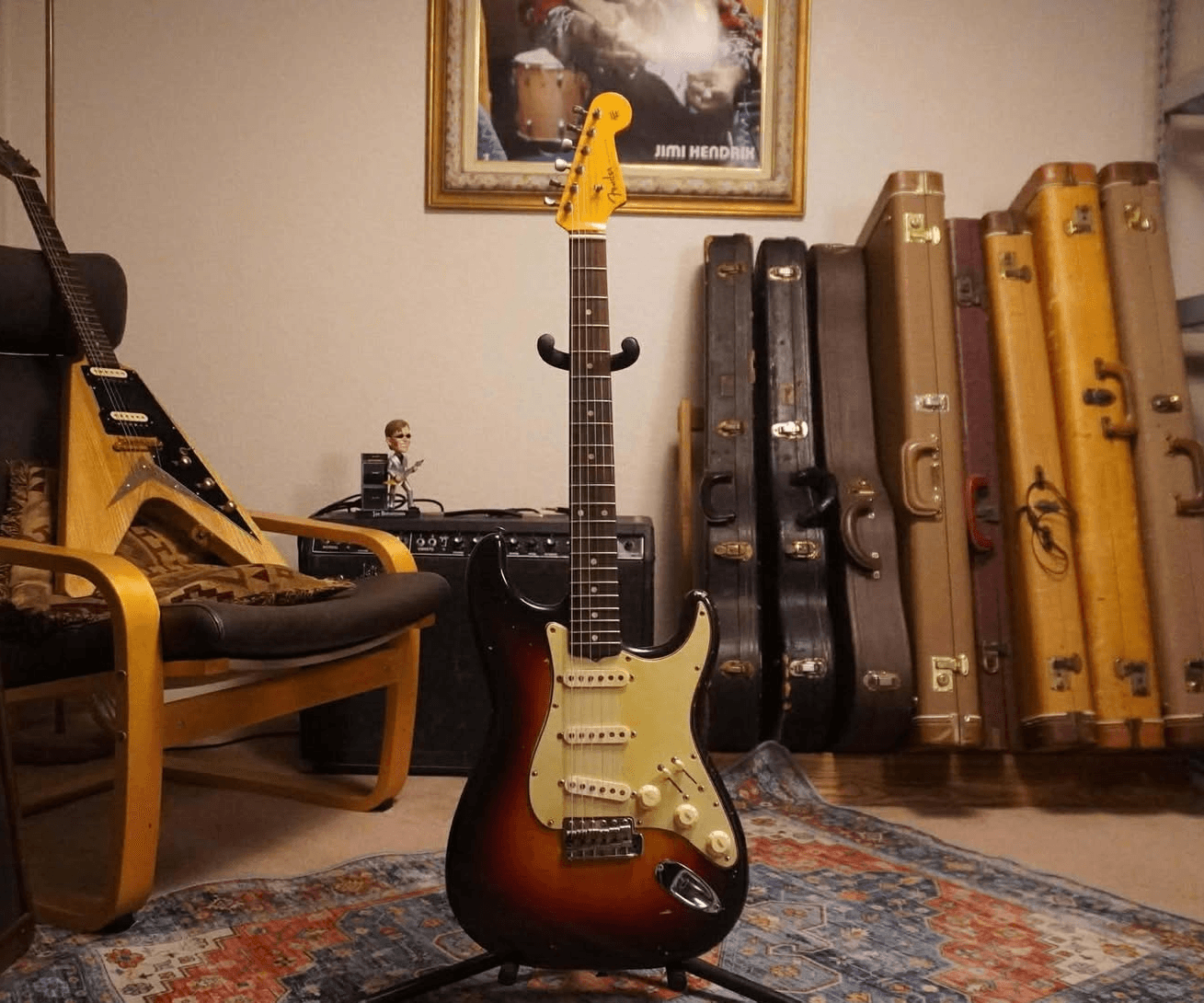
The Best Way to Sell Your Vintage Fender Guitar: Complete Guide to Getting Fair Value
Last Updated: February 2026
What Is the Best Way to Sell a Vintage Fender Guitar?
Direct Answer: The best way to sell your vintage Fender guitar depends on three factors: (1) how quickly you need payment, (2) how much time and risk you’re willing to accept, and (3) whether you want maximum gross proceeds or maximum net proceeds after fees and effort.
For most vintage Fender owners, specialized guitar buyers like Edgewater Guitars offer the optimal combination: immediate cash payment, expert authentication that maximizes value, no fees or commissions, and fair pricing that reflects genuine market value—typically 30-40% more than local guitar shops pay.
Why This Matters:
Vintage Fender guitars—particularly pre-CBS Stratocasters, Telecasters, Precision Basses, and Jazz Basses from 1954-1965—represent significant value. The difference between selling methods can be substantial. A 1962 Stratocaster owner choosing the wrong selling method might receive 40-60% less than the guitar’s true value. Even transitional CBS-era Fenders (1965-1970) can see pricing differences of 30-50% between selling approaches.
This comprehensive guide examines every realistic option for selling vintage Fender guitars, with honest assessment of pros, cons, timelines, and expected outcomes for each method. You’ll learn which selling approach works best for your specific situation, how to prepare your Fender to maximize value, common mistakes that cost sellers money, and how to identify buyers who offer fair pricing versus those taking advantage of uninformed sellers.
Who This Guide Helps:
Inherited Fender owners: You’ve inherited a vintage Fender and need to understand what you have and how to sell it fairly
Downsizing collectors: You’re reducing your collection and want to maximize return while avoiding hassle
Estate administrators: You’re handling an estate that includes vintage Fender guitars and need trustworthy selling guidance
Original owners: You purchased your Fender decades ago and are ready to sell
Anyone who Googled “best way to sell my vintage Fender”: You’re here because you want the truth about selling options
If you own a vintage Fender guitar and want a free, no-obligation valuation from experts who understand the market, Edgewater Guitars provides honest assessments and fair offers. Call (440) 219-3607 or visit our valuation page.
Every Way to Sell a Vintage Fender: Comprehensive Comparison
Option 1: Sell to Specialized Vintage Guitar Buyer (Like Edgewater Guitars)
How It Works:
Specialized vintage guitar buyers operate direct-purchase business models. They evaluate your guitar, provide immediate cash offers based on current market values, and purchase outright if you accept. Unlike retail guitar shops, these businesses focus on buying vintage instruments rather than selling to consumers.
The Process:
Contact buyer with photos and details
Receive preliminary value assessment
Schedule in-person evaluation (buyer often travels to you)
Complete authentication and condition assessment
Receive immediate cash offer
Accept offer and receive payment same-day or next-day
Transaction complete
Timeline: 1-3 days from initial contact to payment
Typical Proceeds (Compared to Market Value):
Specialized buyers: 60-70% of retail market value
Local guitar shops: 40-50% of retail market value
Net difference: Specialized buyers typically pay 30-40% more than shops
Advantages:
Immediate payment: Cash, check, or wire transfer same-day or next-day
Expert authentication: Professional evaluation maximizes accurate pricing, particularly critical for pre-CBS Fender authentication
No fees or commissions: Full offered amount is what you receive
No selling hassle: No listings, no buyer interactions, no negotiations
Professional process: Experienced buyers handle transaction smoothly
Travel to you: Reputable buyers travel for valuable instruments
Fair pricing: Direct business model allows higher offers than retail shops
Pre-CBS expertise: Specialized knowledge of transitional years, custom colors, and neck date/pot code authentication
Disadvantages:
Not absolute maximum price: Private sale to collector might bring 5-15% more (but with significant time, risk, and effort)
Must find reputable buyer: Not all “we buy guitars” services are equal—research essential
Best For:
Owners wanting fair value without selling hassle
Inherited Fenders where you lack expertise to sell privately
Need for quick, reliable payment
Situations where time and certainty matter more than absolute maximum price
Anyone uncomfortable with authentication complexity or buyer negotiations
Pre-CBS Fenders requiring expert authentication
Red Flags to Avoid:
Buyers who won’t travel for valuable pre-CBS instruments
Offers made without in-person evaluation for high-value guitars
Pressure tactics or “limited time” offers
Buyers unwilling to explain valuation reasoning
No verifiable business presence or reputation
Lack of specific pre-CBS Fender knowledge
Option 2: Local Guitar Shop (Retail Store)
How It Works:
Local guitar shops purchase vintage guitars at wholesale prices to resell at retail markup. They need profit margin to cover storefront rent, employee salaries, inventory holding costs, and business overhead.
The Process:
Bring guitar to shop
Shop employee evaluates (expertise varies widely)
Receive immediate offer
Accept or decline
Payment if accepted (usually check or cash)
Timeline: Same day
Typical Proceeds: 40-50% of retail market value
Advantages:
Immediate payment: Same-day transaction
Local and convenient: No shipping or travel
Simple process: Walk in, get offer, decide
Low risk: Established business, straightforward transaction
Disadvantages:
Lowest offers: Wholesale pricing to allow retail markup
Variable expertise: Shop employees may lack vintage Fender authentication skills, particularly for pre-CBS examples
Undervaluation common: Shops may not recognize transitional year features, correct custom colors, or neck date significance
No negotiation room: Offers typically firm at wholesale levels
Retail overhead costs you money: Their business model requires low purchase prices
Pre-CBS authentication weakness: Most shops lack expertise to properly authenticate and value early Fenders
Best For:
Absolute convenience priority regardless of money loss
Low-value vintage guitars where price difference is minimal
Situations requiring instant cash with zero wait
Common 1970s-1980s Fenders where authentication is straightforward
What You’re Giving Up:
Choosing local shop over specialized buyer typically means accepting 30-40% less money. On a vintage Fender worth significant value in retail market, this difference can be substantial. For pre-CBS Fenders (1954-1965), the knowledge gap at typical shops makes undervaluation particularly likely.
Option 3: Online Marketplaces (Reverb, eBay)
How It Works:
You create listing with photos and description, wait for buyer, negotiate price, receive payment through platform, ship guitar, wait for payment to clear, hope buyer doesn’t dispute or return.
The Process:
Research comparable listings to price guitar
Photograph guitar extensively (15-25+ photos for vintage Fender)
Write detailed description including all authentication details
Create listing and pay listing fees
Answer buyer questions (ongoing, often extensive for pre-CBS Fenders)
Negotiate with interested buyers
Accept offer and arrange payment
Pack guitar professionally (or pay for packing)
Ship with insurance ($100-250 typical for valuable Fenders)
Wait for delivery confirmation
Wait for payment to clear (3-14 days)
Hope buyer accepts guitar and doesn’t file dispute
Hope guitar arrives undamaged
Timeline: 2-8 weeks typical, sometimes months, occasionally never sells
Typical Proceeds (If Successful):
List price: 85-100% of retail market value (if priced realistically)
Minus platform fees: 5-15% of sale price
Minus PayPal fees: 3-4% of sale price
Minus shipping/insurance: $100-250+
Minus packing materials: $50-100 if done properly
Net proceeds: 70-85% of retail value (before accounting for time investment)
Advantages:
Potentially highest gross proceeds: Can list at full retail market value
Access to national buyer pool: Wider market than local options
Control over listing: You set price, write description, choose photos
No pressure: Sell on your timeline
Vintage Fender collector market active online: Pre-CBS buyers often shop nationally
Disadvantages:
Significant time investment: Listing creation, photo editing, buyer questions, packing, shipping (15-25+ hours typical)
Platform fees: Reverb charges 5% standard, more for promoted listings
Payment processing fees: PayPal or similar takes 3-4%
Shipping costs: $100-250+ with proper insurance for valuable Fenders
Shipping risk: Damage in transit is your problem until delivery confirmed; Fender necks particularly vulnerable
Return risk: Buyers can return for many reasons; you pay return shipping
Authentication disputes: Pre-CBS Fender buyers scrutinize authenticity heavily
Scam exposure: Payment fraud, false damage claims, return scams
No guarantee of sale: Guitar may sit for months without serious buyers
Pricing complexity: Must understand pre-CBS authentication to price correctly
Communication burden: Answering buyer questions about neck dates, pot codes, refinishes
Fees eat into proceeds: 10-20% in total fees and costs
Best For:
Sellers with time and patience
Experience selling online successfully
Guitars with complete documentation and clear provenance
Sellers comfortable with authentication complexity
Ability to handle returns, disputes, and potential scams
Rare custom color pre-CBS Fenders where specialized collector market is online
Common Mistakes:
Underestimating shipping risk (neck breaks during shipping common on Fenders)
Inadequate insurance coverage for pre-CBS instruments
Poor photographs reducing buyer confidence
Inaccurate descriptions of refinishes or modifications
Not understanding pre-CBS authentication leading to disputes
Overpricing based on optimistic valuations
Option 4: Auction Houses (Heritage Auctions, Christie’s, Regional Auction Houses)
How It Works:
Auction houses accept vintage guitars on consignment, photograph and catalog them, include in specialized guitar auctions, take commission when sold.
The Process:
Submit photos and details to auction house
Receive consignment offer (if accepted—many guitars rejected)
Ship guitar to auction house (at your expense and risk)
Wait for next appropriate auction (1-6 months typically)
Guitar appears in auction catalog
Auction occurs (bidding can be live, online, or both)
If sold, receive payment minus commission (2-6 weeks after auction)
If unsold, guitar returned to you (or relist with lower reserve)
Timeline: 3-6 months from consignment to payment (if sold)
Typical Proceeds (If Sold):
Hammer price: Variable, potentially 85-110% of retail market value for exceptional guitars
Minus seller premium: 15-25% of hammer price
Minus insurance during consignment: Variable
Minus shipping to auction house: $100-250
Net proceeds: 65-85% of hammer price (before subtracting shipping costs)
Advantages:
Potentially strong results for exceptional guitars: Rare custom color pre-CBS Fenders, celebrity-owned, or pristine examples can exceed retail estimates
Professional presentation: High-quality photography and catalog descriptions
Serious buyer access: Auction houses attract serious collectors with capital
Authentication included: Reputable auction houses verify authenticity
Marketing reach: Auction catalogs distributed to Fender collector base
Disadvantages:
Long timeline: 3-6 months typical from consignment to payment
High commissions: 15-25% seller premiums standard
No guarantee of sale: Reserve prices may not be met; unsold guitars common
Shipping risk and cost: You ship to auction house at your expense
Selective acceptance: Most auction houses only accept exceptional Fenders
Waiting period: Your guitar is unavailable while consigned
Reserve price pressure: Auction houses may pressure low reserves to ensure sale
Variable results: Same guitar can bring different prices at different auctions
Best For:
Exceptionally rare pre-CBS Fenders (1954-1956 Strats, custom color examples, stack-knob Jazz Basses)
Museum-quality condition with complete documentation
Sellers who can wait months for payment
Guitars too valuable for typical dealers to purchase outright
Celebrity-owned instruments with provenance
Not Suitable For:
Common vintage Fenders (1970s Stratocasters, standard Telecasters, etc.)
Guitars needing quick sale
Instruments without exceptional provenance
Sellers needing reliable payment timeline
Refinished or modified examples
Option 5: Consignment at Vintage Guitar Shop
How It Works:
Specialized vintage guitar shops accept guitars on consignment, display in store and online, handle sales process, take commission when sold.
The Process:
Contact consignment shop
Bring guitar for evaluation
Negotiate consignment terms (asking price, commission, duration)
Sign consignment agreement
Guitar displayed in shop
Wait for sale (timeline highly variable)
Receive payment minus commission after sale
If unsold after agreed period, retrieve guitar or renegotiate
Timeline: Weeks to months (highly variable, can be 6+ months)
Typical Proceeds (If Sold):
Sale price: 80-100% of retail market value (depends on shop pricing strategy)
Minus commission: 20-30% of sale price
Net proceeds: 70-80% of sale price
Advantages:
Professional sales environment: Shop handles buyer interactions
Expert pricing: Shop understands vintage Fender market
No listing hassle: Shop creates listings, takes photos, writes descriptions
Shop’s reputation: Established vintage shops bring buyer confidence
Higher net than auction: Lower commissions than major auction houses
Fender expertise: Vintage-focused shops understand pre-CBS authentication
Disadvantages:
Unpredictable timeline: Could sell quickly or sit for months
Commission reduces proceeds: 20-30% typical
Your guitar unavailable: Can’t use or sell elsewhere during consignment
Shop’s interests may not align with yours: Shop may prefer quick sale over maximum price
No guarantee of sale: Guitar may not sell at all
Pressure to reduce price: If unsold, shop may pressure price reductions
Risk if shop closes: Business changes could complicate consignment
Best For:
Sellers willing to wait for right buyer
Pre-CBS Fenders with strong collector interest
Situations where professional presentation adds value
Sellers who want shop expertise without keeping guitar at home
What to Watch:
Consignment agreement terms (duration, commission, insurance, price change authority)
Shop’s reputation and financial stability
Insurance coverage while consigned
Your rights to retrieve guitar or change terms
Shop’s specific Fender expertise and collector network
Option 6: Private Sale (Craigslist, Facebook Marketplace, Local Classifieds)
How It Works:
You list guitar locally, meet potential buyers, negotiate in person, accept payment, complete transaction.
The Process:
Create listing with photos
Field inquiries (many will be tire-kickers or scammers)
Screen serious buyers
Arrange safe meeting location
Meet buyer, show guitar
Negotiate price
Verify payment (cash or verified funds)
Complete transaction
Timeline: Days to months, highly unpredictable
Typical Proceeds (If Successful):
Asking price: 80-100% of retail market value
Minus zero fees (direct transaction)
Net proceeds: Whatever price you negotiate
Advantages:
No fees or commissions: Keep entire sale price
Local transaction: No shipping risk
Negotiation control: Direct discussion with buyer
Potentially highest net proceeds: If you find knowledgeable buyer willing to pay fair price
Disadvantages:
Extreme authentication burden: Buyer may question pre-CBS authenticity extensively
Safety concerns: Meeting strangers with valuable items
Payment fraud risk: Counterfeit cash, fake cashier’s checks, payment scams
Time wasters: Many inquiries from non-serious buyers
Pricing challenges: Must know true market value and authentication points
No recourse: If something goes wrong post-sale, no platform protection
Local market limited: Fewer potential buyers than national platforms
Scammer exposure: Common targets for various scams
Pre-CBS expertise required: Must defend authenticity claims yourself
Best For:
Experienced sellers comfortable with Fender authentication discussions
Guitars with clear documentation
Sellers with vintage guitar community connections
Situations where you have verifiable provenance and buyer knowledge
Common 1970s-1980s Fenders where authentication straightforward
Safety Protocols If Choosing This Option:
Meet only in public places (police station parking lots ideal)
Bring knowledgeable friend
Accept only cash or verified bank checks (verify at bank before releasing guitar)
Never accept “cashier’s checks” without bank verification
Trust your instincts—if buyer seems off, walk away
Never invite strangers to your home
Don’t disclose you have other valuable items
Comprehensive Comparison Table
Selling Method | Timeline | Typical Net Proceeds (% of Market Value) | Effort Required | Risk Level | Fees/Costs | Best For |
|---|---|---|---|---|---|---|
Specialized Buyer (Edgewater) | 1-3 days | 60-70% | Minimal | Very Low | None | Fair value, quick payment, no hassle, pre-CBS authentication |
Local Guitar Shop | Same day | 40-50% | Minimal | Low | None direct | Absolute convenience over value |
Online Marketplace | 2-8 weeks | 70-85% | High | High | 10-20% | Time/patience, experience selling online |
Auction House | 3-6 months | 65-85% | Moderate | Medium | 15-25% + shipping | Exceptional/rare pre-CBS only |
Consignment Shop | Weeks-months | 70-80% | Low-Moderate | Medium | 20-30% | Willing to wait, want shop expertise |
Private Sale | Days-months | 80-100% | Very High | Very High | None | Experienced, community connections |
How to Prepare Your Vintage Fender to Maximize Value
Authentication Documentation
What You Need:
The single most valuable thing you can provide is authentication documentation. Pre-CBS Fender buyers pay premium for confidence in authenticity.
Essential Documentation:
Serial number clearly visible: Photograph serial number location (neck plate for most, headstock for 1970s+)
Neck date stamp: Visible when neck removed (critical for pre-CBS authentication)
Body date stamp: In neck pocket (often penciled)
Potentiometer codes: Date codes on pots visible when removing pickguard/control plate
Clear photos of all components: Pickups, bridge, tuners, wiring, tremolo assembly
Supporting Documentation (If Available):
Original purchase receipt
Period photographs of guitar
Provenance (who owned it, when purchased, where used)
Original case, hang tags, warranty cards
Service/repair receipts (professional work can be value-positive if documented)
Creating Documentation Package:
Take comprehensive photographs:
Entire guitar front, back, sides (well-lit, in focus)
Headstock front and back (showing logo and serial number if present)
Serial number close-up on neck plate (pre-1976) or headstock (1976+)
Neck heel area (neck date visible if accessible)
Neck pocket showing body date stamp
Control cavity with pickguard removed (pot codes visible)
Tremolo cavity on Stratocasters
Bridge assembly on all models
Any repairs, modifications, or condition issues
Original case interior and exterior (if present)
Organize photos in folder with clear file names. Create simple document listing:
Model name (Stratocaster, Telecaster, Precision Bass, etc.)
Serial number
Neck date (if visible)
Body date (if visible)
Pot codes (format: manufacturer-year-week)
Approximate year based on serial/codes/features
Purchase history if known
Any repairs or modifications
Original vs. replacement parts if known
Pre-CBS vs. CBS Era Authentication
Pre-CBS Fenders (1954-1965):
Pre-CBS authentication more complex and more valuable. Critical points:
Serial Number Location and Format:
1950-1954: Serial on bridge plate (Telecaster/Precision Bass)
1954-1963: Serial on neck plate (4 or 5 digits)
1963-1965: Serial on neck plate (L-series)
Neck Date Stamps:
Format: Pencil written on neck heel
Examples: “3-62” (March 1962), “8 65” (August 1965)
Critical authentication point—serial numbers alone insufficient
Body Date Stamps:
Location: Neck pocket
Usually penciled month and year
Should align within months of neck date
Pot Codes:
Stackpole (304), CTS (137), Centralab (134)
Format: XXX YYWW (manufacturer, year, week)
Example: 304 6218 = Stackpole, 1962, week 18
Pre-CBS Feature Checklist:
Small headstock (large headstock = 1965-1966 transition or later)
Nitrocellulose finish (thin, ages with checking)
Clay dot markers (pearl = late 1964-1965 or later on Strats)
Slab rosewood board (1959-1962 on Strats, thick flat-bottom)
Veneer rosewood board (mid-1962-1965 on Strats, curved bottom)
Original-style logo (spaghetti script or transition gold)
CBS Era Fenders (1965-1980):
Easier to authenticate but still valuable. Key points:
Serial Number Location:
1965-1976: Neck plate (F-series, then 6-digit numbers)
1976+: Headstock (begins with letter denoting decade)
CBS Feature Indicators:
Large headstock (1965-1966 transition onward)
Pearl dot markers
Bound fingerboards (later 1960s)
Polyurethane finish (thicker, plastic feel)
Maple neck returns (1968-1969 on Strats)
3-bolt neck plate (some 1970s)
Bullet truss rod (1970s)
Condition Assessment
Be Honest About Condition:
Accurate condition disclosure builds buyer confidence and prevents disputes. This is particularly critical for pre-CBS Fenders where buyers scrutinize authenticity.
Key Condition Factors:
Finish Condition:
Original finish vs. refinished (see refinishing section below)
Finish checking (fine cracks in finish—normal and expected on pre-CBS)
Buckle rash (back wear from belt buckle—extremely common)
Playing wear (forearm wear, neck wear)
Dings, scratches, dents (photograph all)
Finish fading or color shift (common on certain Fender colors)
Custom color verification (yellow sealer under custom colors)
Structural Condition:
Headstock repairs (common on Fender, significant value impact)
Neck cracks or issues
Body cracks
Neck pocket condition (tight fit = good, loose = problem)
Fret wear (describe as minimal, moderate, heavy, or needs refret)
Neck joint integrity (4-bolt solid, 3-bolt sometimes loose)
Hardware Condition:
Tuner function (Kluson Deluxe should turn smoothly)
Bridge condition (original, replaced, worn, corroded?)
Tremolo function on Stratocasters (smooth operation?)
Saddle condition (original brass on Teles wears quickly)
Pickup covers, knobs, switch tips (original or replaced?)
Truss rod function (adjusts properly?)
Electronics Condition:
All pickups working?
Controls function properly (no scratchy pots, dead switches)?
Output jack solid or loose?
Any modifications to wiring?
Shielding paint intact (copper color in cavities)?
Modifications and Repairs:
Refrets (note if done, quality of work)
Replaced pickups (specify what’s installed)
Replaced electronics (pots, capacitors, switches)
Replaced hardware (tuners, bridge, tremolo, saddles)
Pickup routing changes (humbucker routes in Strat, etc.)
Control cavity modifications
Any professional repairs (document with receipts if available)
Refinish Detection and Documentation
Why This Matters:
Refinishing reduces value 40-60% typically. Honest disclosure essential. Buyers will discover refinishes during inspection.
Refinish Indicators:
Visual Inspection:
Finish thickness: Remove pickguard/control plate. Original nitro thin in routes. Refinish shows buildup, rounded edges.
Overspray in cavities: Original finish has clean cavity edges. Refinish shows paint in pickup routes beyond normal spray reach, paint on spring claw, paint deeper in tremolo cavity than original.
Wrong undercoat: Custom colors should have yellow sealer underneath (visible in routes). Sunburst should show natural wood or slight amber tint. White primer, no sealer, or other colors indicate refinish.
Neck pocket evidence: Remove neck (four screws). Original finish has clean pocket edges, tight fit. Refinish shows paint buildup creating loose fit, color in areas that should be bare wood.
Lack of age-appropriate checking: 60-70 year old nitrocellulose shows spider-web checking. Absence on old guitar suggests refinish or polyurethane.
Document Refinish Status:
If refinished:
Photograph overspray evidence
Document which parts refinished (body only vs. body + neck)
Note refinish quality (professional nitro vs. amateur poly)
Estimate when refinished if possible (recent vs. vintage refinish)
If original:
Photograph checking patterns
Show clean cavity edges
Document correct undercoat colors
Photograph age-appropriate wear
Common Preparation Mistakes That Cost Money
Mistake 1: “Restoring” Before Selling
Wrong: Paying for refinishing, replaced parts “upgrade,” or cosmetic restoration before selling
Why It’s Wrong: Restoration costs typically exceed value increase. Collectors want original condition, even with wear. “Improvements” often reduce value, especially on pre-CBS Fenders.
Right Approach: Sell as-is to knowledgeable buyer who understands original value
Exception: Basic setup (strings, adjustment) makes guitar playable for evaluation but don’t invest in major work
Mistake 2: Polishing or “Restoring” Anodized Pickguards
Wrong: Attempting to clean or restore gold anodized pickguards (1957 Strats), green-tinted guards (1959-1964), or white guards showing age
Why It’s Wrong: Anodized finishes on guards are fragile. Aggressive cleaning damages them. Age-appropriate discoloration is expected and correct. “Cleaning” can destroy valuable original guards.
Right Approach: Leave pickguards untouched. Slight discoloration and aging is correct.
Mistake 3: Installing Reproduction Parts “To Complete” Guitar
Wrong: Installing reproduction pickups, pickguard, knobs, or other parts to replace missing components
Why It’s Wrong: Reproduction parts don’t add equivalent value to cost. Buyers pay premium for original parts, not reproductions. Better to sell as-is and disclose missing parts.
Right Approach: Sell with honest disclosure of replaced or missing parts. Keep any original parts you’ve removed to transfer with guitar.
Mistake 4: Attempting to “Fix” Finish Checking
Wrong: Filling checking, polishing out dings, or otherwise “improving” aged finish
Why It’s Wrong: Finish checking is expected and correct on 50-70 year old Fenders. “Fixing” it destroys originality. Collectors want aged finish, not restored appearance.
Right Approach: Leave finish completely alone
Mistake 5: Removing Neck to Check Date Stamp
Wrong: Repeatedly removing and reinstalling neck to photograph date stamp, or removing neck if you’re not experienced
Why It’s Wrong: Repeated neck removal can damage neck pocket fit. Stripped screw holes reduce value. If you’re inexperienced, you might damage guitar or lose screws.
Right Approach: If neck easily accessible (loose fit), photograph once. If tight fit, leave for professional buyer to examine. Mention date is not photographed but visible when removed.
What Actually Helps Value
Do These Things:
Have original case: Original case adds value. Fender cases from different eras:
Tweed cases (1950s-early 1960s)
Black tolex with orange/red interior (1960s)
Black tolex with blue interior (1970s)
Original case adds more value than reproduction
Gather any documentation: Receipts, photos, provenance, service records all add buyer confidence, especially for pre-CBS Fenders.
Light cleaning only: Wipe down with soft microfiber cloth. That’s it. No polish, no oil, no chemicals.
String change (maybe): Fresh strings make guitar look better and play better for evaluation. But old strings aren’t deal-breaker.
Organize history: Write down what you know: when purchased, where, by whom, any history or stories. Even anecdotal history adds authenticity for vintage Fenders.
Keep removed original parts: If you replaced pickups, tuners, bridge, etc., keep the original parts. Transfer them with guitar or at minimum disclose you have them.
Model-by-Model Fender Selling Guidance
Pre-CBS Fender Stratocaster (1954-1965)
Market Position: Extremely valuable, high collector demand, authentication critical
What Affects Value Most:
Year (1954-1956 early years premium, 1959-1960 slab board era premium, all pre-CBS valuable)
Originality (all-original examples command massive premiums)
Finish (custom colors premium over sunburst, original vs. refinished)
Neck type (slab rosewood 1959-1962 most valuable, maple neck 1954-1959 also premium)
Condition (even player-grade originals valuable)
Key Variations:
1954: First year, two-tone sunburst, extremely rare
1955-1956: V-neck profile, two-tone sunburst
1957: Last two-tone year, gold anodized guards on some
1958: Three-tone sunburst introduced
1959: Rosewood board introduced mid-year, slab board
1960-1962: Slab rosewood board era
1962-1964: Veneer rosewood board, clay dots
1965: Transitional year, pearl dots late, large headstock very late
Best Selling Method:
Specialized vintage buyer for most situations (authentication expertise critical, immediate fair payment)
Auction house ONLY for museum-quality custom color examples or celebrity-owned
Avoid local shops (almost certain to undervalue pre-CBS Strats)
Common Undervaluation Traps:
Shops treating refinished pre-CBS Strat as “just player guitar” (even refinished, extremely valuable if parts original)
Failure to recognize slab vs. veneer board (slab worth more)
Missing original pickup value (hand-wound pickups worth substantial money even if guitar refinished)
Not understanding neck date vs. serial number dating
Missing custom color authentication (yellow sealer test)
What Sellers Need to Know:
Even refinished pre-CBS Stratocasters with original parts are extremely valuable. Original hand-wound pickups alone worth significant money. Do not accept casual local shop offer on any pre-CBS Stratocaster without getting multiple expert evaluations.
Pre-CBS Fender Telecaster (1950-1965)
Market Position: Very valuable, strong collector and player demand
Key Variations:
1950 Broadcaster (original name, extremely rare and valuable)
1951 “Nocaster” (transition period, no model name on headstock)
1951-1964 Telecaster (blonde standard, custom colors rare)
1950s examples particularly valuable
Custom Telecaster (bound body) premium
What Affects Value Most:
Era (1950-1953 bring highest premiums)
Broadcaster or Nocaster designation (extreme value)
Originality (bridge plate with serial number, original brass saddles, original pickups)
Condition
Custom colors (rare on Telecasters, very valuable)
Best Selling Method:
Specialized buyer for most examples
Auction for Broadcaster or exceptional early examples
DO NOT take Broadcaster or Nocaster to local shop
Authentication Critical:
Bridge plate serial number (1950-1954 on bridge, 1954+ on neck plate)
Broadcaster/Nocaster/Telecaster name verification
Original bridge assembly (brass saddles wear quickly, often replaced)
Pre-CBS Fender Precision Bass (1951-1965)
Market Position: Strong collector market, particularly early examples
Key Variations:
1951-1954 Slab body (no contours, extremely rare)
1954-1957 Contoured body, single-coil pickup
1957-1965 Split-coil pickup era (modern P-Bass design)
What Affects Value Most:
Year (1951-1957 most valuable, 1957-1965 strong)
Pickup type (slab body single-coil rarest, split-coil most recognizable)
Originality
Custom colors (premium)
Best Selling Method:
Specialized buyer for most
Auction for very early examples (1951-1955)
Common Issues:
Bridge covers often missing (reduces value slightly)
Tuners often replaced (original Kluson valuable)
Refinishes common (still valuable if parts original)
Pre-CBS Fender Jazz Bass (1960-1965)
Market Position: Very strong market, stack-knob examples especially collectible
Key Variations:
1960-1961 Stack-knob controls (concentric pots, extremely valuable)
1962-1965 Standard 3-knob layout
What Affects Value Most:
Stack-knob vs. 3-knob (stack-knob worth substantial premium)
Originality (stack-knob pots particularly valuable if original)
Finish (custom colors, bound neck with block inlays)
Condition
Best Selling Method:
Specialized buyer for most
Auction viable for stack-knob examples in excellent condition
Authentication Points:
Stack-knob controls extremely collectible
Bound neck with block inlays option
Custom colors with matching headstock
Pre-CBS Offset Models (Jazzmaster, Jaguar)
Market Position: Strong collector market, custom colors particularly desirable
Jazzmaster (1958-1965):
1958-1959 particularly valuable (first years)
Gold anodized guards (1958-1959) premium
Custom colors strong demand
Jaguar (1962-1965):
All pre-CBS examples valuable
Custom colors premium
Complex electronics originality critical to value
Best Selling Method:
Specialized buyer for most
Online marketplace viable for common finishes if experienced
Auction unnecessary unless exceptional custom color
Common Issues:
Bridge replacements common (original floating bridge valuable)
Electronics modifications common (rhythm circuit often disconnected)
Original parts critical to value
CBS-Era Fender Guitars (1965-1980)
Market Position: Moderate to good player market, less collector demand than pre-CBS
Key Models:
1965-1970 Stratocasters (transitional period, valued)
1970s Stratocasters (moderate player market)
1970s Telecasters (solid player market)
1970s Precision and Jazz Basses (good demand)
What Affects Value Most:
Large headstock vs. small (early 1965-1966 small headstock more valuable)
Playability and condition
Finish (natural, sunburst, colors)
Originality
Best Selling Method:
Specialized buyer fair for most
Online marketplace viable if you have time
Local shop acceptable for common models (price differences smaller than pre-CBS)
Reality Check:
CBS-era Fenders less valuable than pre-CBS examples, but still quality instruments with market demand. Don’t expect pre-CBS pricing, but solid values for good examples.
Common Seller Mistakes That Cost Money
Mistake 1: Taking First Offer Without Comparison
The Mistake: Accepting the first offer from local shop without getting other quotes
Why It Costs Money: Local shops typically offer lowest prices. One competing quote often reveals 30-40% higher offers available.
Solution: Get at least 2-3 quotes before selling. Contact specialized buyers like Edgewater in addition to local options.
Real Example: Seller brought 1962 Stratocaster to local shop, offered wholesale price. Contacted Edgewater, received 38% higher offer. Same guitar, different buyers, massive price difference.
Mistake 2: Believing “It’s Not Worth Much Because…”
The Mistake: Accepting statements like:
“It’s refinished so it’s not worth much”
“It’s CBS-era so it’s basically a modern guitar”
“Without the original pickups it’s worthless”
“The tremolo cover is missing so value is minimal”
Why It Costs Money: While these factors affect value, they don’t eliminate it. Uninformed sellers accept these statements and take lowball offers.
Reality: Refinished 1960 Stratocaster with original parts still very valuable. Early CBS-era (1965-1970) Fenders collectible. Replaced pickups don’t destroy pre-CBS Fender value if other parts original.
Solution: Get multiple expert opinions. Research comparable sales. Don’t accept dismissive value claims without verification.
Mistake 3: Not Understanding Pre-CBS Authentication
The Mistake: Inability to verify or explain authentication when selling privately or online
Why It Costs Money:
Savvy buyers skeptical without authentication
Pricing suffers when you can’t verify neck dates, pot codes
May not sell at all
Return disputes common
Solution: If selling online, understand authentication basics or sell to expert buyer who handles authentication. For pre-CBS Fenders, expert authentication essential.
Mistake 4: Assuming All Pre-CBS Fenders Are Extremely Valuable
The Mistake: Expecting 1950s Stratocaster pricing for all pre-CBS instruments
Why It Costs Money: Unrealistic expectations lead to overpricing, no sales, or disappointment.
Reality: Pre-CBS Fenders vary widely in value:
1954-1959 Stratocasters: Top tier
Early 1960s Stratocasters: Very valuable but less than 1950s
1963-1965 Stratocasters: Valuable but less than early 1960s
Refinished examples: 40-60% of original finish values
Replaced parts: Reduce value proportionally
Solution: Get professional evaluation. Understand specific year and condition affect value significantly.
Mistake 5: Shipping Valuable Fender Without Proper Packing
The Mistake: Shipping pre-CBS Fender in original case without additional protection, or with inadequate insurance
Why It Costs Money: Fender headstocks break easily in shipping due to headstock angle and straight-grain neck wood. Damage in transit is seller’s problem until delivery confirmed.
Solution:
If selling locally, avoid shipping entirely
If must ship, use professional packing service
Double-box with proper bracing
Insure for full value
Use signature-required delivery
Or sell to buyer who travels to you (like Edgewater)
Mistake 6: Not Checking Pot Codes Before Selling
The Mistake: Selling guitar without verifying pot codes match claimed year
Why It Costs Money: Replaced pots indicate modification. Buyer discovers this, disputes authenticity or demands return.
Solution: Remove pickguard, photograph pot codes, verify they match year range. Disclose any replaced electronics upfront.
Mistake 7: Accepting “Custom Color” Premium for Refinished Guitar
The Mistake: Believing refinished “custom color” guitar worth same as original custom color
Why It Costs Money: Original custom colors command premium. Refinished custom colors don’t get this premium regardless of color choice.
Reality: Refinished Sonic Blue Stratocaster worth approximately same as refinished sunburst—both are refinished, color doesn’t matter. Original Sonic Blue worth substantially more than original sunburst.
Solution: Understand refinish eliminates custom color premium. Don’t expect custom color pricing for refinished guitar.
Why Edgewater Guitars Offers Superior Value for Vintage Fender Sellers
The Business Model Difference
How Traditional Guitar Shops Work:
Traditional retail guitar shop business model:
Purchase guitar from seller at wholesale price (40-50% of retail value)
Display in store for days/weeks/months (carrying cost)
Pay rent, utilities, employee salaries (overhead cost)
Wait for retail customer (holding cost)
Sell at retail price (requiring significant markup to cover costs)
This model requires low purchase prices because shops must account for: retail overhead, holding time, employee costs, profit margin on eventual retail sale.
How Edgewater Guitars Works:
Direct purchase model:
Purchase guitar from owner at fair market price (60-70% of market value)
Place directly with collectors through established network
No retail storefront overhead
No extended holding periods
Direct placement allows fair pricing to sellers
This model allows higher purchase offers because we eliminate: retail storefront costs, extended inventory holding, employee overhead, retail markup requirements.
The Math:
Example: 1962 Fender Stratocaster (Market value: hypothetical)
Guitar Shop Approach:
Shop retail price: Market retail value
Shop overhead & margin needs: 50-60% of retail
Shop purchase offer: 40-50% of market value
Seller receives: 40-50% of market value
Edgewater Approach:
No retail overhead
Direct collector placement
Elimination of retail margin
Purchase offer: 60-70% of market value
Seller receives: 60-70% of market value
Difference: 30-40% more money to seller for same guitar
Pre-CBS Fender Authentication Expertise
Why This Matters for Sellers:
Pre-CBS Fender authentication requires specialized knowledge. Expert authentication maximizes your sale price. Here’s why:
Scenario 1: Non-Expert Evaluation
Shop employee examines 1964 Stratocaster. Sees: rosewood neck, three-tone sunburst, L-series serial. Makes offer based on “mid-1960s Strat.”
What They Missed:
Early 1964 production with clay dots (transitional feature, adds value vs. pearl dots)
Neck date shows January 1964 (early production within year)
Slab rosewood board (thick, flat-bottom—late slab examples valuable)
Pot codes show late 1963 production (consistent with early ‘64 assembly)
Original hand-wound gray-bottom pickups (valuable)
Green-tinted pickguard (correct celluloid aging)
Result: Undervalued by 20-35% due to missing nuanced features
Scenario 2: Expert Evaluation (Edgewater)
We examine same guitar. We identify:
Early 1964 production (L-series serial, January ‘64 neck date)
Clay dots confirm transitional period (last examples before pearl, premium)
Late slab rosewood board verified (thickness measurement, curved vs. flat bottom test)
Late 1963 pot codes (304 6352, 304 6348) consistent with early ‘64 assembly
Gray-bottom pickups original hand-wound (DC resistance tested, construction verified)
Green pickguard tint correct celluloid nitrate aging
Result: Accurate valuation reflecting all value factors. Seller receives fair price for all features including transitional specifications.
Expertise Difference in Your Pocket:
Expert authentication finds value that non-experts miss. This directly translates to higher offers reflecting true market value. For pre-CBS Fenders, expertise gap between general shops and specialists is substantial.
Why We Travel to You
For valuable vintage Fender guitars, Edgewater travels throughout Ohio, Michigan, Pennsylvania, Indiana, West Virginia—and beyond for exceptional instruments.
Why This Matters:
Complete in-person authentication: Pre-CBS Fender authentication requires hands-on examination. Photos can’t reveal neck pocket condition, pot codes, neck date stamps, or finish authentication details.
Seller convenience: You don’t ship valuable guitar with fragile headstock. We come to you.
Immediate evaluation and payment: In-person visit means same-day or next-day payment if you accept offer.
No shipping risk: Fender headstocks particularly vulnerable to shipping damage. In-person transaction eliminates this risk.
Professional process: Face-to-face transaction builds confidence and trust.
What This Tells You:
Buyers willing to travel for vintage guitars demonstrate:
Serious business operation
Confidence in purchase offers
Commitment to professional process
Understanding of high-value instrument market
Pre-CBS Fender expertise
Buyers who won’t travel for pre-CBS Fenders (“just ship it to us”) often either lack expertise to properly evaluate or operate volume-based low-price models.
The Edgewater Process for Vintage Fenders
Step 1: Initial Contact
Call (440) 219-3607 or submit details through valuation form.
Provide:
Model (Stratocaster, Telecaster, Precision Bass, etc.)
Approximate year if known
Serial number (and location—neck plate or headstock)
General condition
Photos (helpful but not required for initial conversation)
Step 2: Preliminary Assessment
Based on information provided, we give preliminary value range and assessment of:
Whether guitar fits our purchase focus (primarily pre-1970 Fenders)
Whether in-person evaluation recommended (pre-CBS always yes)
Approximate value expectations based on information provided
Process next steps
Step 3: Schedule Evaluation
For guitars warranting in-person evaluation:
We schedule convenient time
Travel to your location (within service area, or beyond for exceptional pre-CBS Fenders)
Bring authentication tools and expertise
Professional, respectful process
Step 4: Complete Authentication
In-person evaluation includes:
Serial number verification and location
Neck date stamp examination (neck removal if accessible)
Body date stamp verification (neck pocket)
Pot code verification (pickguard/control plate removal)
Pickup originality assessment (visual and ohm testing)
Hardware and component examination (tuners, bridge, tremolo, knobs)
Finish authentication (refinish detection, custom color verification)
Condition assessment (structural, finish, electronics)
Complete documentation with photos
Step 5: Transparent Explanation
We explain findings:
What’s original vs. replaced
Dating verification (neck date, pot codes, serial alignment)
Condition factors affecting value
Any transitional features or value-adding characteristics
Market positioning for this specific guitar
How we arrived at valuation
No hidden issues “discovered” after offer. Complete transparency upfront.
Step 6: Cash Offer
Based on complete authentication and current market, we make cash offer.
Offer reflects:
True market value assessment
All authentication findings
Pre-CBS premium if applicable
Current demand and market conditions
Fair pricing based on our direct business model
Step 7: Your Decision
You decide whether to accept offer. No pressure, no sales tactics, no “limited time” gimmicks.
If you accept:
Immediate payment (cash, cashier’s check, or wire transfer based on your preference)
Transaction complete
You have money, we have guitar
If you decline:
No problem
You keep guitar
No hard feelings
We’ve provided free expert authentication you can use for other selling decisions
Step 8: Payment
If you accept offer:
Cash (for appropriate amounts)
Cashier’s check (can verify at bank immediately)
Wire transfer (direct to your account)
Payment same-day or next-day. No waiting periods, no “check must clear” delays.
What Sets Edgewater Apart for Fender Sellers
1. Pre-CBS Fender Specialization
We focus on vintage Fender guitars, particularly pre-CBS examples. This specialization means:
Deep expertise in pre-CBS Fender authentication
Understanding of transitional years, neck dates, pot codes
Knowledge of which features and years command premium
Established collector network for vintage Fender specifically
Experience with custom color authentication
2. Fair Pricing Based on Real Market Knowledge
We track auction results, dealer pricing, private sales specific to Fender market. Our offers reflect genuine current market values for specific years and features, not arbitrary wholesale percentages.
3. Transparent Process
We explain our valuation reasoning including all Fender-specific factors: neck date significance, pot code verification, slab vs. veneer board, custom color authentication. We point out every factor affecting value—positive and negative. No surprises.
4. Immediate Payment
No consignment waiting. No “we’ll pay you when it sells.” Immediate cash payment upon acceptance.
5. Professional, Respectful Process
We understand vintage Fender guitars often have sentimental value or family history. We treat sellers and instruments with respect.
6. No Obligation
Evaluation and offer are free. You’re under no obligation to sell. Even if you decline, you’ve received expert authentication you can use for insurance or future selling decisions.
Frequently Asked Questions About Selling Vintage Fender Guitars
Q: What is the best way to sell my vintage Fender guitar?
A: For most sellers, specialized vintage guitar buyers like Edgewater offer optimal combination: immediate payment, expert authentication (critical for pre-CBS Fenders), fair pricing (typically 30-40% above guitar shop offers), and zero hassle. Online marketplaces can bring 5-15% higher gross proceeds but involve significant time, fees (10-20%), shipping risks (Fender headstock breaks common), and authentication challenges. Auction houses work only for exceptional guitars and require 3-6 month waits. Best choice depends on your priorities: if you want fair value quickly without hassle, specialized buyers are optimal.
Q: How much is my vintage Fender Stratocaster worth?
A: Value depends on: exact year (1954-1965 pre-CBS most valuable, 1965-1980 CBS-era moderate), condition and originality, finish (original vs. refinished, custom colors vs. sunburst), neck type (slab rosewood premium, maple neck premium), component originality (pickups, pots, bridge, tremolo), any repairs or modifications, and current market demand. Broad ranges: 1950s Stratocasters command premium pricing, early 1960s very valuable, late pre-CBS (1963-1965) valuable, CBS-era moderate values. Refinished examples 40-60% of original finish values. Edgewater provides free evaluation—call (440) 219-3607.
Q: How do I know if my Fender is pre-CBS?
A: CBS acquired Fender in January 1965. Pre-CBS indicators: small headstock (large = CBS), clay dot markers on Strats (pearl = late ‘64 or CBS), L-series or earlier serial numbers, neck dates 1965 or earlier, pot codes 1965 or earlier (304 65XX, 137 65XX), nitrocellulose finish, slab rosewood board (1959-1962), veneer board with clay dots (1962-1964). Authentication requires verifying multiple factors—serial number alone insufficient. Professional authentication recommended for valuable instruments.
Q: Is a refinished vintage Fender still valuable?
A: Yes, but less valuable than all-original. Refinishing typically reduces value 40-60% compared to all-original example. However, refinished 1962 Stratocaster with original parts still worth substantially more than all-original 1980s guitar. Original components (pickups, neck with original finish, pots, bridge) retain value regardless of body refinish. Refinished vintage Fenders have strong player market even if collector market reduced. Body-only refinish less damaging than complete refinish.
Q: Should I sell my Fender to a local guitar shop or specialized buyer?
A: Specialized buyers typically pay 30-40% more than local guitar shops for same guitar, especially for pre-CBS Fenders. Guitar shops operate retail model requiring low purchase prices (40-50% of market value). Specialized buyers’ direct-placement model allows fair pricing (60-70% of market value). For pre-CBS Fenders, authentication expertise gap makes specialized buyers even more advantageous. Unless absolute convenience is priority regardless of money, specialized buyer offers better value.
Q: What should I do before selling my vintage Fender?
A: Minimal preparation best: light dusting only (no aggressive cleaning or polishing), gather any documentation (receipts, photos, provenance), photograph serial number (neck plate or headstock), don’t remove neck to check date unless experienced (leave for buyer), keep original case if you have it, document any known history. DO NOT: refinish, install new parts, attempt repairs, aggressively clean, remove anodized pickguard, strip finish checking. Sell as-is to expert buyer who understands original condition value.
Q: How can I tell if my Fender has been refinished?
A: Refinish indicators: remove pickguard and examine cavities—refinish shows overspray beyond normal spray reach, paint buildup on hardware tabs, wrong undercoat color (custom colors need yellow sealer, sunburst needs natural wood). Check neck pocket for paint buildup creating loose fit. Use UV light to reveal finish inconsistencies. Look for absence of checking on old finish. Verify age-appropriate wear. Professional buyers can definitively determine refinish status during evaluation. Edgewater provides free refinish analysis as part of authentication.
Q: Does Edgewater Guitars buy all vintage Fender guitars?
A: We focus on pre-1970 Fender guitars (Stratocasters, Telecasters, Precision Basses, Jazz Basses, Jazzmasters, Jaguars, Mustangs) and selectively purchase quality later instruments. We actively seek pre-CBS Fenders (1954-1965) in any condition—even refinished or modified examples with original parts. We also purchase quality CBS-era examples (1965-1980). Contact us with details of any vintage Fender—we’ll let you know if it fits our purchase focus. Call (440) 219-3607.
Q: What if I inherited a Fender and don’t know the year?
A: This is common situation we handle regularly. Contact us with photos of serial number (neck plate or headstock), headstock logo, and overall guitar. We can typically identify year range from photos. For in-person evaluation, we verify year through neck date, pot codes, and features. Our expertise particularly valuable for inherited guitars where owner lacks knowledge. We educate throughout process so you understand what you’re selling and why.
Q: How do I avoid getting ripped off selling my vintage Fender?
A: Get multiple quotes before accepting any offer. Understand your guitar’s approximate value through research (check pre-CBS vs. CBS era, understand year significance). Require in-person evaluation for valuable pre-CBS instruments. Ask buyers to explain valuation reasoning including specific Fender authentication points. Trust your instincts—if offer seems too low for pre-CBS Fender, get other opinions. Work with established, reputable buyers with verifiable Fender expertise.
Q: Are custom color Fenders worth more than sunburst?
A: Original custom color Fenders worth substantially more than sunburst (often 30-60% premium depending on color and rarity). However, this applies ONLY to original finish custom colors. Refinished custom colors don’t get premium—refinished Sonic Blue worth approximately same as refinished sunburst. Custom color premium requires: original finish, yellow sealer verification in cavities, period-appropriate color for year, proper aging characteristics. Matching headstock face on custom colors adds value on original finish examples.
Q: What’s the difference between slab rosewood and veneer rosewood on Stratocasters?
A: Slab rosewood (1959-mid 1962): Thick rosewood slab (4-5mm), flat bottom, glued to maple neck. Veneer rosewood (mid 1962-present): Thin rosewood veneer (2-3mm), curved bottom matching neck radius. Slab board more collectible and valuable—typically brings 10-20% premium over veneer board for same year. Authentication: remove neck, measure fingerboard thickness, check bottom profile (flat vs. curved). Edgewater can verify slab vs. veneer during evaluation.
Q: Should I ship my vintage Fender or sell locally?
A: For valuable pre-CBS Fenders, avoid shipping if possible. Fender headstocks break easily in shipping due to headstock angle and straight grain in neck. If you must sell nationally, use professional packing and full insurance. Better option: sell to buyer who travels to you (like Edgewater for valuable instruments). For common CBS-era Fenders, shipping risk is moderate with proper packing. For any valuable guitar, in-person transaction eliminates shipping risk entirely.
Related Resources
Fender Serial Number Lookup Tool — Decode your Fender’s serial number and identify production year
Pre-CBS Fender Stratocaster Guide — Complete year-by-year pre-CBS Stratocaster authentication
Fender Slab Board vs. Veneer Board Guide — Understanding Stratocaster rosewood variations
How to Spot Refinished Fender Guitars — Complete refinish identification guide
Fender Custom Colors Authentication — Verify original vs. refinished custom colors
Fender Potentiometer Dating Guide — Date your Fender through pot codes
1962 Fender Stratocaster Guide — Detailed guide to slab/veneer transition year
Fender Telecaster Identification — Complete Telecaster authentication guide
Sell Your Guitar to Edgewater — Start your free valuation process
Edgewater Guitars specializes in purchasing vintage Fender guitars throughout Ohio, Michigan, Pennsylvania, Indiana, and West Virginia. Our expertise in pre-CBS Fender authentication, direct-to-collector business model, and commitment to fair pricing means we consistently offer 30-40% more than traditional guitar shops. We provide free authentication, immediate cash payment, professional evaluation, and transparent pricing. Whether you have a 1950s Stratocaster, pre-CBS Telecaster, stack-knob Jazz Bass, or any other vintage Fender, contact us today for your free, no-obligation valuation: [valuation page link] or call (440) 219-3607.