DATE :
Squier Guitar Serial Number Lookup: Complete Dating & Identification Guide
Squier Guitar Serial Number Lookup: Complete Dating & Identification Guide
Last Updated: May 2026
Squier has produced budget-friendly Fender-style guitars under Fender's ownership since 1982, with serial numbers that span more factories and countries than almost any other major guitar brand. From the celebrated 1982–1984 JV Squiers built at FujiGen in Japan — widely considered the highest-quality Squiers ever made — to modern Indonesian, Chinese, and occasional Mexican production, accurate Squier dating requires understanding the brand's prefix-code system and the factory each code represents.
This guide is provided as a free resource for Squier owners and collectors researching their instruments. It explains the complete Squier serial number prefix system, the brand's history under Fender ownership, what makes JV Squiers genuinely collectible, and which modern Squier lines (particularly Classic Vibe and Vista Series) have built sustained collector interest.
Quick Answer: How to Date a Squier Guitar by Serial Number
Squier serial numbers begin with a letter prefix that identifies the factory and country of production, followed by digits that encode the year and production sequence. The prefix is the single most important data point for Squier identification.
Common Squier prefix codes at a glance:
JV, SQ, E, MIJ: Japan (various FujiGen and Dyna Gakki production)
CIJ: Crafted in Japan (later Japan production)
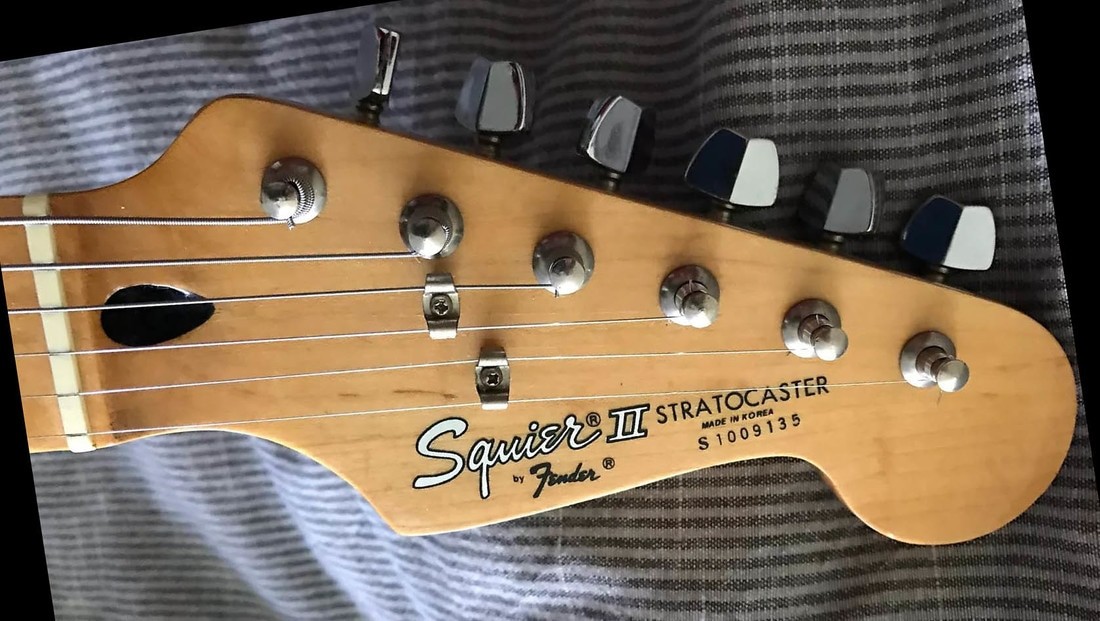
KC, KV, CN, S, VN, YN: Korea (Cor-Tek, Saehan, Samick, Young Chang)
IC, ICS, IS: Indonesia (Cor-Tek Indonesia, Samick)
CY, CGS, COS: China (various factories)
ICF: India (Sumitra, brief production)
MN, MZ: Mexico (Ensenada, when Squiers were made there)
The full decoder table appears later in this guide. The most collectible Squiers are the early Japanese production (JV and SQ prefixes), with growing modern collector interest in the Classic Vibe series and the Vista Series Japanese-made specialty models from 1996–1998.
About Squier: A Brief History
The Squier name predates its modern association with budget Fender guitars by nearly a century. V.C. Squier Company was founded in 1890 by Victor Carroll Squier in Battle Creek, Michigan, as a violin and instrument string manufacturer. Fender purchased V.C. Squier in 1965 — having been buying strings from the company for years — and the Squier name initially became Fender's string brand.
The modern Squier guitar brand launched in 1982 when Fender, facing pressure from high-quality Japanese copies, established a partnership with the FujiGen factory in Matsumoto, Japan, to produce budget-priced Fender-style guitars under the Squier name. This first generation — the JV Squiers — was intended to compete directly with the Japanese copy guitars that had been undercutting Fender's market position throughout the late 1970s.
The JV Squier strategy succeeded so well that the early Squiers developed reputations for quality matching or exceeding contemporary American Fender production, creating an enduring collector category for these specific instruments.
Squier production has shifted across factories and countries over the years:
1982–1996+: Japan (FujiGen primarily, Dyna Gakki for some models)
Late 1980s onward: Korea (Cor-Tek, Samick, Saehan, Young Chang)
1990s briefly: India (Sumitra)
1996–1998: Japan, including the specialty Vista Series
2000s–present: Indonesia (primarily Cor-Tek), China (various factories)
Various periods: Mexico (Ensenada Fender plant, for some Squier models)
Modern Squier production includes the Bullet and Affinity series (entry-tier), the Classic Vibe series (mid-tier with growing collector interest), and various specialty and signature models across multiple price points.
Why Squier Serial Numbers Are Complex
Three factors make Squier dating more challenging than dating mainline Fender guitars:
More factories across more countries than virtually any other major guitar brand
Multiple serial conventions used simultaneously during overlapping production periods at different facilities
Variable year encoding depending on the prefix and era
The result: knowing the prefix code is essential, but the digits following the prefix don't follow a single universal convention. Cross-referencing the prefix with construction features, hardware, and country-of-origin stamping is necessary for accurate dating.
The Complete Squier Prefix Code Decoder
The following table covers the most commonly encountered Squier prefix codes and their factory associations:
Japanese Production Prefixes
Prefix | Factory | Approximate Era | Notes |
|---|---|---|---|
JV | FujiGen, Japan | 1982–1984 | First-generation Squier; highly collectible |
SQ | FujiGen, Japan | 1984–1987 | High-quality early Japan production |
E | FujiGen/Dyna Gakki, Japan | 1984–1989 | Variable Japan production |
A through R-series MIJ | Various Japan | Mid-1980s onward | "Made in Japan" various conventions |
CIJ | Various Japan | 1997–2008+ | "Crafted in Japan" later production |
Korean Production Prefixes
Prefix | Factory | Approximate Era | Notes |
|---|---|---|---|
CN | Cor-Tek, Korea | Mid-1990s | Early Cor-Tek Korean production |
KC | Cor-Tek, Korea | Various | Korean Cor-Tek (Cort) production |
KV | Saehan/Sunghan, Korea | Various | Korean production |
VN | Saehan/Sunghan, Korea | Various | Korean production |
S | Samick, Korea | 1990s–2000s | Korean Samick production |
YN | Young Chang, Korea | Various | Korean Young Chang |
Indonesian Production Prefixes
Prefix | Factory | Approximate Era | Notes |
|---|---|---|---|
IC | Cor-Tek Indonesia (Cort) | 2000s–present | Most common modern Squier prefix |
ICS | Cor-Tek Indonesia | Various | Variant of IC |
IS | Samick Indonesia | Various | Indonesian Samick production |
Chinese Production Prefixes
Prefix | Factory | Approximate Era | Notes |
|---|---|---|---|
CY | Yako, China | Various | Chinese Yako production |
CGS | Axl, China | Various | Chinese Axl production |
COS | Various, China | Various | Chinese production |
CD | Various, China | Various | Chinese production |
Other Production Prefixes
Prefix | Factory | Approximate Era | Notes |
|---|---|---|---|
ICF | Sumitra, India | Late 1990s | Brief Indian production |
MN, MZ | Ensenada, Mexico | Various | Mexican Fender plant (some Squiers) |
Year encoding within the digits: After the prefix, the first one or two digits typically encode the year, though the specific convention varies by prefix and era. A two-digit year code (such as "IC05123456" potentially indicating 2005) is generally less ambiguous than a single-digit year code. Cross-referencing the year code with construction features and catalog appearance is essential.
Where to Find Your Squier Serial Number
Squier serial number locations follow Fender conventions with some variations:
Most Squier Strats, Teles, P-Basses, and Jazz Basses
Back of the headstock — most common location for modern Squier production
Neck plate — common on earlier Squier production, particularly JV and SQ era examples
Bottom of the neck heel — some Japanese-era Squiers carried serials here as well
Some Specialty and Vista Series Models
Back of the headstock primary location
Neck heel for some Japan-made Vista Series examples
Country of Origin Stamping
"Made in Japan" or "Crafted in Japan" — Japanese production
"Made in Korea" — Korean production
"Made in Indonesia" — Indonesian production (most common modern)
"Made in China" — Chinese production
"Made in India" — rare ICF Sumitra production
"Made in Mexico" — Ensenada production
The JV Squier Significance
Among Squiers, the JV-prefix instruments produced between 1982 and 1984 at the FujiGen factory in Japan occupy a special category. These first-generation Squiers were intended to compete head-on with the high-quality Japanese copy guitars that had been undercutting Fender's market position, and the result was an instrument that frequently matched or exceeded contemporary American Fender production quality.
Why JV Squiers are collected:
FujiGen build quality. The same factory that produced FujiGen Ibanez instruments and various other high-quality Japanese guitars built the JV Squiers with consistent attention to fit, finish, and electronics.
Specific reissue accuracy. Many JV Squiers were '57 and '62 Strat and Tele reissues, '57 and '62 Precision Bass reissues, and Jazz Bass reissues with construction details that closely matched the original vintage Fenders they replicated.
Build quality vs. price. JV Squiers were sold at budget prices but built with quality that frequently exceeded their price tier, creating sustained collector demand decades later.
Limited production window. The two-year JV production span (1982–1984) and the subsequent transitions to other prefix systems make these instruments specifically identifiable and finite in supply.
JV-prefix Strats, Teles, and basses command top-tier valuations within the Squier catalog. Clean original-condition JV examples with original electronics and finish can command prices comparable to mid-tier modern Fender instruments.
SQ-prefix Squiers (1984–1987) continued the FujiGen Japan production and are also collected, though typically at slightly lower valuations than JV examples.
The Vista Series Significance (1996–1998)
The Vista Series represents Squier's brief return to Japanese production in the mid-to-late 1990s. Produced between 1996 and 1998, the Vista Series included specialty models not found in the mainline Fender catalog:
Squier Jagmaster: A Jagmaster/Jaguar-Stratocaster hybrid design with humbucking pickups; sustained collector demand among indie and alternative players
Squier Vista Venus: Courtney Love signature model with offset body design
Squier Vista Super-Sonic: Distinctive reverse-headstock offset design
Squier Vista Musicmaster: Updated take on Fender's student-model classic
Vista Series instruments were Japan-made with build quality higher than typical Squier production of the era. The series ran only briefly and has built sustained collector interest, particularly the Jagmaster (which has been periodically reissued in other markets) and the Venus signature model.
Classic Vibe Series: Modern Collector Interest
Among modern Squier production, the Classic Vibe series has built the strongest collector following. Launched in 2008 and produced primarily in Indonesia and China, Classic Vibe instruments include period-style reissues of '50s, '60s, and '70s Fender designs at significantly lower prices than American or Japanese Fender equivalents.
Classic Vibe identification:
"Classic Vibe" series designation on the headstock decal
'50s, '60s, or '70s era designation indicating the reissue period
Generally upper-mid Squier price tier with build quality reflecting that positioning
Specific Classic Vibe models — particularly early Indonesian production examples and limited-run colors — have developed collector following, with growing recognition that the line represents a meaningful step above typical entry-level Squier production.
Most Collected Squier Models
These Squier models carry the strongest current collector interest:
JV-era Japanese Squiers (1982–1984):
JV '57 and '62 Stratocaster reissues
JV '52 Telecaster reissues
JV '57 and '62 Precision Bass reissues
JV Jazz Bass reissues
SQ-era Japanese Squiers (1984–1987):
SQ-prefix Strats, Teles, and basses; high-quality FujiGen continuation
Vista Series Japanese Squiers (1996–1998):
Jagmaster (original Vista version)
Vista Venus Courtney Love signature
Vista Super-Sonic
Vista Musicmaster
Classic Vibe series (2008–present):
Classic Vibe '50s Strat and Tele
Classic Vibe '60s Strat, Tele, and Jaguar
Classic Vibe '70s Strat and Tele
Classic Vibe Precision Bass and Jazz Bass variants
Pro Tone series (late 1990s): Limited Korean production with upgraded specifications
Various signature models: Including period-specific artist signatures across the line's history
Red Flags: Authentication and Identification Issues
Common issues to watch for when researching a Squier:
JV reissue claims. The JV designation specifically refers to 1982–1984 FujiGen production. Some sellers incorrectly use "JV-style" or "JV-quality" language for later Japanese Squiers that don't actually carry the JV prefix. Verify the actual serial number prefix.
Country-of-origin verification. "Made in Japan" stamping is required for genuine JV, SQ, E-series, MIJ, and CIJ Squiers. Korean or Indonesian production sold as "Made in Japan" is misrepresented.
Refinishes. Aged finishes on vintage JV and SQ Squiers should show natural wear and finish character consistent with the build period. Refinished examples reduce collector value significantly. Faded, naturally aged finishes are correct and desirable on vintage Japanese examples.
Replaced electronics. Original Squier pickups, while not premium-tier components, contribute to collector value when original to the instrument. Aftermarket pickup swaps on JV and SQ Squiers reduce originality value among collectors who specifically seek period-correct examples.
Replaced necks or bodies. Some Squiers have been "parts-mulled" with Fender necks or bodies. These hybrid instruments are not legitimate Squier examples and should not be priced as such.
Counterfeit Squier instruments. Counterfeit Fenders are common; counterfeit Squiers less so given the price point, but they do exist particularly for higher-value Classic Vibe and Vista Series models. Verify serial number conventions, country-of-origin stamps, and construction details.
What Affects a Squier's Collector Value
Era and factory: JV-prefix Japanese Squiers (1982–1984, FujiGen) sit at the top tier of Squier collector valuations. SQ and early E-prefix Japanese examples follow in upper-mid tier. Vista Series Japan-made specialty models occupy a specialty collector tier of their own. Classic Vibe series occupies an upper-mid tier within modern Squier production. Other modern Indonesian, Korean, and Chinese Squiers occupy mid-to-entry tiers.
Originality: All-original examples with original pickups, original hardware, original electronics, and original finish command meaningful premiums over modified examples. This is particularly important for JV and SQ-era examples.
Model and configuration: Within any era, period-accurate reissue models (such as '57 Stratocaster, '62 Stratocaster, '52 Telecaster reissues) typically command stronger demand than non-reissue designs.
Color rarity: Standard colors (sunburst, black, white) establish the baseline; less common factory colors can command premium pricing among collectors specifically seeking unusual examples.
Condition: Crack-free finishes, intact original electronics, clean fingerboards, original neck shape, and original cases all contribute to upper-tier valuations.
Documentation: Original case, paperwork, and provenance documentation increase collector confidence and value, particularly for JV-era examples.
Further Research Resources
For deeper Squier research, the following community resources are valuable:
The Squier Talk Forum maintains extensive serial number observation databases and member-contributed dating documentation.
Fender's official website includes Squier model documentation and limited serial number resources.
Vintage guitar publications including Vintage Guitar magazine and Premier Guitar have published features on the JV Squier story and Vista Series significance.
Various Squier collector groups on Facebook and Reddit maintain prefix code databases and authentication discussions.
JV Squier-specific collector communities have built detailed records of '82–'84 production including model variations, color rarities, and feature documentation.
Frequently Asked Questions About Squier Serial Numbers
How do I tell what year my Squier guitar was made? Squier dating begins with identifying the letter prefix on the serial number, which indicates the factory and country of production. Common prefixes include JV (Japan, 1982–1984), SQ (Japan, 1984–1987), CIJ (Crafted in Japan, 1997–2008), IC (Indonesia Cor-Tek, 2000s onward), and various Korean and Chinese prefixes. The digits following the prefix typically include year encoding, though the specific convention varies by prefix and era.
Are Squier guitars valuable? Most Squiers occupy entry-to-mid-tier valuations, but specific Squier categories carry sustained collector interest. JV-prefix Japanese Squiers from 1982–1984 (made at FujiGen) command top-tier valuations within the Squier catalog. The Vista Series Japan-made specialty models from 1996–1998 (Jagmaster, Venus, Super-Sonic, Musicmaster) carry collector interest. The Classic Vibe series has built growing modern collector following.
What is a JV Squier? A JV Squier is a Squier guitar with a "JV" prefix serial number, indicating production at the FujiGen factory in Japan between 1982 and 1984. JV Squiers were the first generation of Squier brand guitars under Fender ownership, intended to compete with high-quality Japanese copy guitars of the era. JV Squiers are widely considered the highest-quality Squiers ever produced and command top-tier collector valuations within the Squier catalog.
Where are Squier guitars made? Squier production has used factories in multiple countries across the brand's history. Japan (FujiGen and Dyna Gakki) produced early Squiers from 1982 through the 1990s and the Vista Series in 1996–1998. Korea (Cor-Tek, Samick, Saehan, Young Chang) produced many Squiers from the late 1980s onward. Modern Squier production primarily occurs in Indonesia (Cor-Tek/Cort) and China, with some production in Mexico at Fender's Ensenada plant.
What does the serial prefix mean on a Squier? The letter prefix on a Squier serial number identifies the factory and country of production. JV, SQ, E, MIJ, and CIJ prefixes indicate Japanese production. KC, KV, CN, S, VN, and YN prefixes indicate Korean production. IC, ICS, and IS prefixes indicate Indonesian production. CY, CGS, COS, and CD prefixes indicate Chinese production. ICF indicates brief Indian production at the Sumitra factory in the late 1990s.
Where is the serial number on a Squier guitar? On most modern Squier guitars, the serial number is stamped or printed on the back of the headstock. Earlier Squiers, particularly JV and SQ era Japanese production, often carried serials on the neck plate. Some Japanese-era Squiers also have serials stamped on the bottom of the neck heel.
Related Resources
This Squier serial number guide is part of Edgewater Guitars' collection of vintage guitar identification resources:
Fender Serial Number Lookup Tool — edgewaterguitars.com/guitar-serial-number-lookup/fender
Gibson Serial Number Lookup Tool — edgewaterguitars.com/guitar-serial-number-lookup/gibson
Gretsch Serial Number Lookup Guide
Rickenbacker Serial Number Lookup Guide
Yamaha Serial Number Lookup Guide
Aria Serial Number Lookup Guide
Guild Serial Number Lookup Guide
Ibanez Serial Number Lookup Guide
Takamine Serial Number Lookup Guide
Schecter Serial Number Lookup Guide
Edgewater Guitars publishes free identification resources for guitar owners and collectors. This Squier guide is provided as a research reference. Edgewater Guitars specializes in purchasing premium vintage American-made guitars throughout Ohio, Michigan, Pennsylvania, Indiana, and West Virginia — including Gibson, Fender, Martin, Gretsch, and Epiphone instruments.