DATE :
Should I Restore My Vintage Guitar Before Selling?
Quick Answer (30-Second Read)
Don't restore anything. Original condition is worth more than "improved" condition.
Most "improvements" destroy value:
Refinishing: -40-60% value loss
Replacing pickups: -20-40% value loss
Refretting: -15-30% value loss
Polishing hardware: Removes authentication markers
Simple rule: For guitars worth $1,500+, don't touch anything. Get expert evaluation first.
Value Impact Table (What NOT to Do)
Modification | Cost | Value Impact | Example | When Justified |
|---|---|---|---|---|
Refinishing | $1,000-1,500 | -40-60% | $6,000 guitar → $2,500 after | Never |
Refretting | $300-600 | -15-30% | Removes originality proof | Almost never |
Replace pickups | $200-500 | -20-40% | Original PAFs worth premium | Never before selling |
Replace tuners | $100-200 | -10-15% | Original = authentication | Never |
Polish hardware | DIY | Removes patina | Destroys aging markers | Never |
Remove finish checking | Impossible | N/A | It's proof of age | Can't fix without refinish |
Professional setup | $75-150 | 0% | Enables playability testing | Sometimes OK |
New strings | $10-30 | 0% | If decades old + broken | Rarely helpful |
Decision Framework: What Should I Do?
What NEVER to Do (Value Destroyers)
❌ Never Refinish
The math that destroys value:
Guitar | Original Condition Value | After Pro Refinish | Total Loss |
|---|---|---|---|
1965 Les Paul | $6,000 | $2,500-3,500 | -$4,700 + $1,200 cost = $5,900 destroyed |
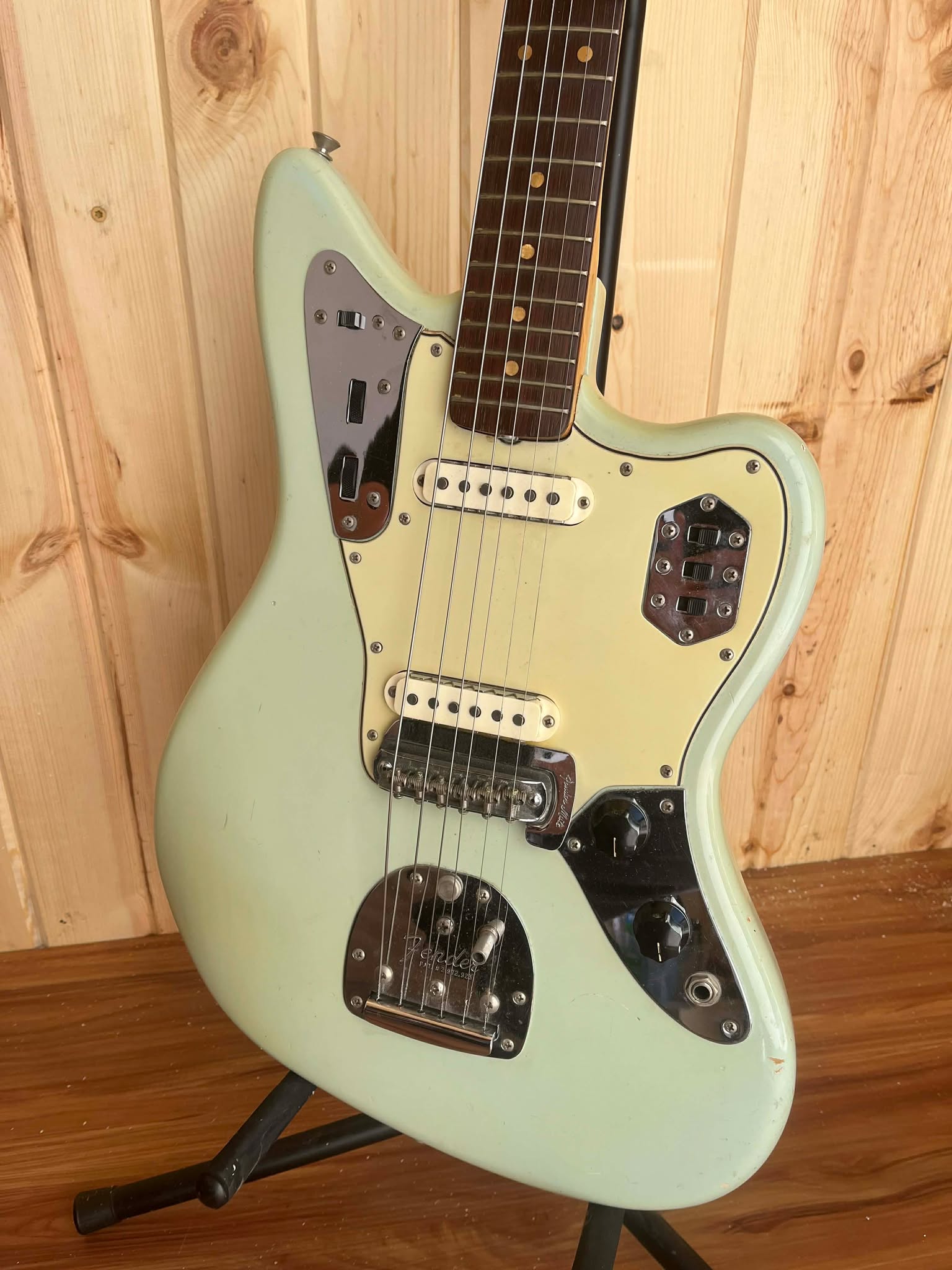
1965 Jaguar | $8,000 | $3,500-4,500 | -$4,700 + $1,200 cost = $5,900 destroyed |
1963 SG | $12,000 (original) | $5,000 (refinished) | -$7,000 + $1,200 cost = $8,200 destroyed |
Why refinishing destroys value:
Original finish = irreplaceable authentication
Sanding removes wood thickness
Collectors pay premium for worn original over perfect refinish
Even perfect refinish screams "modified"
Natural aging cannot be replicated
Exception: Guitar already poorly refinished (can't hurt it twice, won't help much either)
❌ Never Remove Patina or Polish Hardware
What sellers think: "I'll make it shiny!"
What actually happens: You destroy authentication markers
Hardware State | Collector Value | After Polishing |
|---|---|---|
Aged tarnished tuners | Proves originality | Looks "wrong" to experts |
Oxidized bridge saddles | Natural aging = authentic | Removes proof of age |
Verdigris on metal parts | Matches era patterns | Can't authenticate as well |
Worn nickel plating | Shows honest use | Over-polished = suspicious |
Leave alone:
Tarnished tuning machines
Aged bridge saddles
Oxidized pickup covers
Worn nickel plating
Green oxidation on metals
Any natural aging
❌ Never Replace Original Parts
Even worn original parts > new replacement parts
Modification | Why It Hurts | Value Impact |
|---|---|---|
Replace sloppy tuners with new Grovers | Collectors want 100% original | -10-15% |
Replace weak pickups with new PAFs | Original weak PAFs worth premium | -25-40% |
Replace worn frets | Original frets prove authenticity | -15-30% |
Replace cracked nut | Part manufacturers/dates help authenticate | -5-10% |
Replace corroded bridge | Corrosion shows age | -10-15% |
Critical: All-original guitar vs. partially modified = 40-60% value difference
Exception: If you kept original parts (even removed), include with sale - reduces but doesn't eliminate impact
❌ Never Refret Before Selling
The refretting trap:
Scenario | Cost | Value Added | Net Result |
|---|---|---|---|
Worn frets on $3,000 guitar | $500 refret | $0 | -$500 loss |
Original frets prove authenticity | N/A | Wear = story | Value maintained |
Buyer wants original | N/A | Can refret themselves | Their choice |
Why not:
Original fret wire proves authenticity
Wear patterns tell guitar's story
Shows it was played (not fake)
Period-correct fret size matters
Buyers want to control their repairs
Exception: Completely unplayable (frets missing) AND worth under $1,000 AND sold to players not collectors
❌ Never "Fix" Finish Checking
Finish checking = valuable, not a problem
What It Is | What Collectors See | What Sellers Think |
|---|---|---|
Fine cracks in nitro lacquer | Proof of age | "Damage to fix" |
Crazing patterns | Desirable authenticity | "Looks bad" |
Natural lacquer shrinkage | Matches guitar's era | "Needs repair" |
Can't fix without refinishing (which destroys value)
Don't try to:
Fill cracks
Apply finish over checking
Sand or level surface
Use furniture polish to hide
Any attempted "repair"
❌ Never Over-Clean
The cleaning disaster:
Cleaning Method | What It Destroys | Safe Alternative |
|---|---|---|
Aggressive polishing compounds | Thin original finish | Soft dry cloth only |
Acetone/harsh solvents | Removes finish entirely | Nothing |
Abrasive cloths/pads | Scratches finish | Microfiber only |
Furniture polish | Wrong chemistry for guitars | Guitar-specific if must clean |
Steam cleaning | Damages wood/finish | Don't |
Safe limit: Soft dry microfiber cloth, gentle dust removal, no pressure, that's it.
For $1,500+ guitars: Don't even dust it yourself
The Economics Nobody Explains
Example 1: Refinishing Disaster
Example 2: "Upgrading" Parts
Example 3: Setup (Sometimes OK)
What TO Do Instead
Step 1: Document Current Condition
Take comprehensive photos:
[ ] Front, back, sides (full guitar)
[ ] Headstock front & back (serial number)
[ ] Every angle of body
[ ] Close-ups of any issues (cracks, wear, checking)
[ ] Hardware details (tuners, bridge, pickups)
[ ] Inside (soundhole/f-holes)
[ ] Any labels, stamps, markings
Why:
Creates condition record
Helps remote appraisals
Documents originality
Insurance purposes
Step 2: Get Expert Evaluation
Free appraisal from specialist:
Learn exactly what you have
Current market value
Specific guidance: "Should I do anything?"
No obligation
What expert will tell you:
Whether cleaning/setup helps or hurts
Value impact of any issues
Best selling strategy
Honest originality assessment
Step 3: Ask Specific Questions
Don't assume. Ask:
"Should I change strings?"
"Should I clean this dirt?"
"Should I repair this crack?"
"Should I get setup?"
"Will refinishing help?" (Answer: NO)
Get guidance for YOUR specific guitar
Step 4: Be Honest About Condition
When listing:
[ ] Disclose all issues clearly
[ ] Let photos show reality
[ ] Describe modifications/repairs honestly
[ ] Mention non-original parts
Why honesty matters:
Buyers value transparency
Hidden issues = deal falls through
Returns/disputes cost time
Reputation matters
Rare Cases When Work Makes Sense
✅ Basic Setup ($75-150)
When justified:
Guitar completely unplayable (neck bowed, action at 1/2 inch)
Prevents proper testing
Guitar worth UNDER $1,000
Done by experienced professional (not Guitar Center)
What setup includes:
Truss rod adjustment
Bridge height adjustment
Intonation setting
Nut slot adjustment if needed
What it should NOT include:
Fret work
Part replacement
Finish work
Aggressive cleaning
Value equation:
Cost: $75-150
Value added: $0
Benefit: Buyers can test playability
Worth it? Sometimes for unplayable guitars
✅ New Strings (Rarely)
When to restring:
Strings decades old AND broken/missing
Guitar worth under $1,000
Use period-correct gauge/type
KEEP old strings (in case)
Why keep old strings:
Gauge tells historical setup
Aging/corrosion dates guitar
Brand indicates era
What strings:
Research period-correct gauge
Round core if pre-1970s
Pure nickel for vintage electrics
Heavier gauge if uncertain
✅ Gentle Cleaning (Only If Necessary)
When OK:
Heavy grime prevents evaluation
Guitar worth under $1,000
Test product in hidden area first
Use guitar-specific products only
How to clean safely:
Identify finish type
Test in hidden area (back of headstock)
Wait 24 hours
Light application only if test passes
For $1,500+: DON'T clean yourself
✅ Professional Restoration (Very Rare)
When it might make sense:
Guitar already damaged (broken headstock, major crack)
Damage prevents sale or dramatically reduces value
Guitar worth $5,000+
Done by reputable vintage-specialized luthier
Get detailed estimate FIRST
Even with perfect restoration:
Headstock repair: -30-50% value
Major crack repair: -20-40% value
Refinish (even perfect): -40-60% value
Math rarely works: Restoration cost + reduced value usually exceeds selling as-is
Structural Issues: Sell As-Is or Repair?
Cracks and Splits
Issue | Repair Cost | Value After Repair | As-Is Value | Best Choice |
|---|---|---|---|---|
Crack in $3,000 guitar | $600 | $2,200-2,400 | $2,000 | Sell as-is |
Major split in $8,000 guitar | $1,200 | $5,600-6,400 | $5,000 | Maybe repair |
Crack in $15,000+ guitar | $1,500 | $10,500-12,000 | $10,000 | Get expert advice |
Why as-is often better:
Many buyers PREFER to control repair
Specialist buyers buy guitars with issues
Repair cost + value reduction = net loss
Broken Headstock (Common on Gibsons)
Scenario | Unrepaired Value | Repair Cost | Repaired Value | Net Gain/Loss |
|---|---|---|---|---|
$5,000 guitar | $2,500-3,000 | $600 | $3,000-3,500 | Break even to slight gain |
$10,000 guitar | $5,000-6,000 | $800 | $6,000-7,000 | Slight gain |
Buyer preferences:
Professionally repaired > unrepaired (usable)
Unrepaired > amateur repair (can be done right)
Best approach:
Get quote from reputable luthier
Calculate: repair cost + post-repair value vs. as-is
Often: sell as-is, let buyer decide
Loose Frets
Don't re-glue or hammer:
Leave alone unless literally falling out
Buyer will address based on their plans
Amateur repair makes it worse
Special Cases
Modern Guitars (Post-1980)
Different rules apply:
For guitars made after 1980:
Setup often adds value (playability expected)
New strings recommended
Light cleaning appropriate (finishes more durable)
BUT: Still avoid major modifications, refinishing, part replacement
Why different:
Not vintage collectibles (yet)
Player market vs. collector market
Playability > originality
Finishes more durable
Guitars Already Modified
If guitar has been:
Already refinished
Parts already replaced
Modified for playability
Not all-original
Then:
Further modifications less damaging
Focus on playability vs. collectibility
Different market (players vs. collectors)
Setup, refret, upgrades make more sense
But still: Get value assessment BEFORE spending
Very High Value Guitars ($10,000+)
For investment-grade instruments:
Don't even dust yourself
Professional conservation only
Specialist luthier for any work
Insurance documentation first
Every detail affects substantial value
Even minor mistakes cost thousands:
Wrong cleaning product: -$2,000
Over-polishing hardware: -$1,500
Adjusting without expertise: -$3,000
The "Don't Touch Anything" Rule
For Guitars Worth $1,500+:
DO NOT:
Clean beyond gentle dry cloth dusting
Change strings (old strings date guitar)
Adjust truss rod, action, intonation
Apply any products anywhere
Remove parts to "check them out"
Touch up finish imperfections
Tighten or loosen anything
WHY this strict:
Old strings = authentication info
Setup tells how it was played
Changes remove valuable clues
Professionals extract more info from untouched
You might damage accidentally
WHAT TO DO:
Leave exactly as found
Take photos
Get expert evaluation FIRST
Let expert tell you if anything should be done
Decision Checklist
Ask These Questions:
1. What's the guitar worth?
Under $500 → Basic cleaning/setup probably OK
$500-$2,000 → Get advice first
Over $2,000 → Don't touch, expert evaluation immediately
2. Is it vintage (pre-1980)?
YES → Extreme caution, original = valuable
NO → More flexibility
3. Is it 100% original?
YES → Don't modify anything
NO → Damage already done
UNSURE → Assume yes until verified
4. Cost vs. potential value gain?
Simple math:
5. Why do I want to "fix" it?
Wrong reasons:
"Looks bad to me" (collectors want authentic wear)
"I want it perfect" (perfect ≠ valuable for vintage)
"It'll sell faster" (sells slower - collectors avoid refinished)
Right reasons:
"Unplayable, can't be evaluated" (setup makes sense)
"Expert said this specific repair helps" (trust expert)
Conclusion: When in Doubt, Don't
Safest approach: Leave exactly as found
Get free expert appraisal BEFORE touching anything
At Edgewater Guitars, we'll tell you honestly:
"Don't touch it - perfect as-is"
"Basic setup would help buyers test"
"That refinish would destroy $4,000 in value"
"This crack should be repaired, here's why"
We'd rather save you from expensive mistake than make quick buck
Most of the time: Don't do anything. Sell as-is.
Get Your Free Expert Appraisal
Before you clean, refinish, repair, or modify:
Call (440) 219-3607 or contact us online
We'll evaluate and give honest guidance:
What you have
Current value as-is
Whether any work helps or hurts
Best approach for YOUR guitar
No obligation. Just honest expert advice.
We've seen too many sellers destroy thousands trying to "help" their guitar. Don't be one of them.
FAQ
Should I refinish my vintage guitar before selling?
No. Refinishing destroys 40-60% of value even with professional work. A $6,000 Les Paul with original worn finish becomes worth $2,500-3,500 after refinishing. Collectors pay premium for original finish regardless of condition.
Should I replace worn parts before selling?
No. Original worn parts worth more than new replacements. Even sloppy tuners, weak pickups, worn frets should stay original. Replacing original parts reduces value 40-60% because collectors want 100% original.
Should I clean my vintage guitar before selling?
Only minimal cleaning with soft dry cloth. Don't use polishing compounds, harsh cleaners, or remove patina from hardware. Aggressive cleaning destroys original finish and aging that proves authenticity. For $1,500+ guitars: don't clean at all.
When does restoration make sense before selling?
Rarely. Exceptions: basic setup ($75-150) when completely unplayable and worth under $1,000, or professional structural repair when already damaged and worth $5,000+. Even then, repair cost plus value reduction often exceeds benefit.
Does finish checking reduce value?
No. Finish checking (fine cracks in nitro lacquer) is normal on vintage guitars and proves age/originality. Collectors specifically look for natural checking. Don't attempt to fix or hide - it adds value, not reduces it.
Should I refret before selling?
No. Original frets prove authenticity and shouldn't be replaced. Refretting costs $300-600 and adds zero value to collector guitars. Wear patterns on original frets tell the guitar's story.