DATE :
Sell Gibson Guitar: Complete 2026 Guide to Getting Top Dollar for Your Instrument
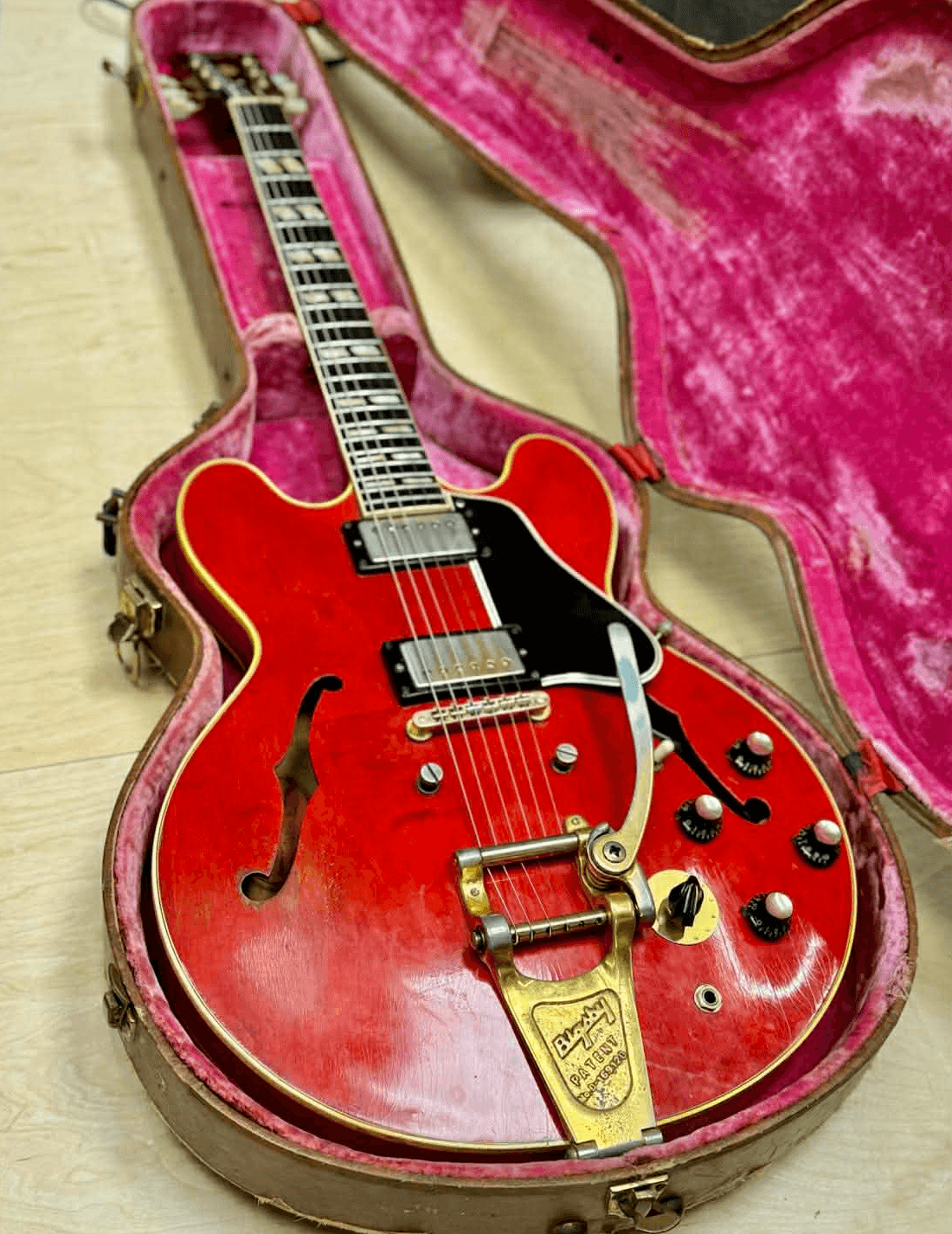
Sell Gibson Guitar: Complete 2026 Guide to Getting Top Dollar for Your Instrument
Last Updated: May 2026
Why Gibson Guitars Hold Their Value
Gibson guitars represent some of the most valuable and sought-after instruments in the vintage guitar market. Whether you own a Les Paul, SG, ES-335, or any other Gibson model, understanding how to properly sell your Gibson guitar ensures you receive fair market value—not the lowball offers typically presented by local music stores.
The Gibson brand carries extraordinary collector appeal for several key reasons:
Heritage and Craftsmanship: Founded in 1902, Gibson established itself as America’s premier guitar manufacturer, creating iconic instruments that defined modern music. Models from the 1950s and 1960s—particularly pre-1965 examples—represent the pinnacle of American guitar craftsmanship.
Artist Association: Gibson guitars have been played by legendary musicians including Jimmy Page, Eric Clapton, Slash, B.B. King, and countless others. This celebrity association drives collector demand and supports strong resale values.
Manufacturing Excellence: Vintage Gibson guitars were constructed with premium materials including Brazilian rosewood, Honduran mahogany, and Adirondack spruce—woods that are now restricted or unavailable, making original examples irreplaceable.
Understanding Gibson Guitar Market Values (2026 Update)
The vintage Gibson market has remained exceptionally strong, with certain models experiencing significant appreciation over the past decade. Understanding what drives value helps you recognize whether you’re receiving a fair offer when you sell your Gibson guitar.
Most Valuable Gibson Models
1958-1960 “Burst” Les Paul Standards
These instruments represent the absolute pinnacle of Gibson collectability. Original examples in excellent condition command six-figure prices, making them among the most valuable production guitars ever made. Even refinished or modified examples retain substantial value due to their legendary status and limited production numbers.
Pre-1965 Gibson Les Paul Standards and Customs
Gibson Les Pauls from the original 1950s-early 1960s production period are highly sought after. Goldtop Les Pauls from the 1950s, Black Beauty Customs, and early Sunburst models all command premium prices. The pre-CBS era Gibson instruments consistently appreciate in value.
Early SG Standards (1961-1965)
SG Standards from the early 1960s—particularly those still bearing the “Les Paul” designation on the headstock—represent significant collector value. These transitional instruments bridge the gap between the original Les Paul design and the modern SG format.
ES-335 “Dot Neck” Models (1958-1964)
Early ES-335 guitars with dot inlays and PAF pickups are among Gibson’s most valuable semi-hollow instruments. The combination of playability, tone, and collector appeal keeps demand consistently high.
Value Hierarchy
Within each model category, values generally follow this pattern:
All-original instruments in excellent condition command the highest prices
Original finish with minor wear represents strong value
Instruments with replaced parts but original finish maintain moderate value
Refinished examples, even with correct parts, experience significant value reduction
Heavily modified instruments retain the lowest values (though still valuable in many cases)
Important Note: When you sell your Gibson guitar to a reputable buyer like Edgewater Guitars, you receive fair market valuations that consistently exceed typical guitar shop offers by 30-40%. We recognize the true value of original features and period-correct specifications.
What Makes Your Gibson Valuable?
Before you sell your Gibson guitar, understanding the specific factors that affect value helps you properly represent your instrument and secure the best possible price.
Critical Value Factors
1. Originality
Originality is the single most important factor affecting Gibson guitar values. All-original instruments command significant premiums:
Original finish: Refinished Gibson guitars lose 40-60% of their value
Original hardware: Replaced tuners, bridges, or tailpieces reduce value by 10-30%
Original electronics: Non-original pickups, pots, or wiring decrease value by 15-40%
Original case: The correct period case adds 10-15% to value
2. Year and Model
Certain years command premium prices due to historical significance, transitional features, or limited production:
1958-1960 Les Paul Standards: The legendary “Burst” years represent peak collectability
1954-1957 Les Paul Goldtops: Early Les Paul production with P-90 or PAF pickups
1961-1963 SG Standards: Transitional models with “Les Paul” branding
1958-1964 ES-335s: First-generation semi-hollow designs with PAF pickups
1958-1959 Flying V and Explorer: Extremely limited “Modernistic” series production
3. Condition and Playability
Physical condition dramatically affects value when you sell your Gibson guitar:
Structural integrity: Check for neck breaks, cracks, or repairs
Fret condition: Original frets add value, but professional refrets are acceptable
Hardware function: All mechanical components should operate properly
Finish condition: Natural aging is acceptable; damage from neglect reduces value
Electronics: Original wiring and components command premiums
4. Documentation and Provenance
Supporting documentation increases buyer confidence and value:
Original case: Period-correct Gibson cases verify authenticity
Original paperwork: Warranty cards, receipts, or catalogs
Repair documentation: Professional work by reputable luthiers
Celebrity provenance: Verifiable famous ownership dramatically increases value
Photo documentation: Historical photos showing the guitar’s history
How to Identify Your Gibson Guitar
Proper identification is essential before you sell your Gibson guitar. Understanding your instrument’s specifications helps ensure accurate valuation.
Gibson Serial Number Systems
Gibson used multiple serial number systems throughout their history, making dating complex:
1952-1961: Ink-Stamped Serial Numbers
Stamped inside the guitar body, visible through f-holes or control cavities
Format: 5 digits (early) to 6 digits (later)
Numbers are not strictly chronological
1961-1975: Impressed Serial Numbers
Stamped into the back of the headstock
Format varies by era
Many inconsistencies and duplications exist
Factory Order Numbers (FON) The most reliable Gibson dating method uses Factory Order Numbers stamped inside instruments:
Format: Letter + 3-4 digits
Letter indicates manufacturing year
Numbers indicate production batch
Key Identification Features
Headstock Design
Open-book headstock: Standard on most models
Split-diamond inlay: Custom models
Crown inlay: Standard and Special models
“Les Paul” script: Appears on specific models/years
Pickup Types
P-90 Pickups: Single-coil pickups used 1946-1957 (some models longer)
PAF Humbuckers: “Patent Applied For” stickers, 1957-1962
Patent Number Pickups: Patent number embossed on cover, 1962-1975
T-Top Pickups: Double-line patent number, late 1960s-1970s
Neck Joint and Construction
Long tenon neck joint: Pre-1970s construction
Short tenon or volute: 1970s modifications
Glued-in neck: Standard Gibson construction
Neck angle: Approximately 17 degrees on Les Pauls
Hardware Specifications
Kluson tuners: Pre-1965 standard equipment
Grover tuners: Mid-1960s onwards
ABR-1 bridge: Lightweight aluminum, pre-1975
Nashville bridge: Heavier zinc, 1975+
Trapeze tailpiece: Early Les Paul models
Stop tailpiece: Standard from 1953 onwards
Your Selling Options: Finding the Best Path
When the time comes to sell your Gibson guitar, you face several options—each with distinct advantages and disadvantages.
Option 1: Local Guitar Shops
Advantages:
Immediate local access
Face-to-face transactions
Quick process
Disadvantages:
Lowest offers (typically 40-50% of market value)
Limited expertise in vintage authentication
Small customer base restricts what they can pay
High retail margins needed
May not recognize rare features or period-correct details
Typical Experience: Guitar shops need to resell your instrument at retail prices, requiring substantial markups. They also may lack specialized knowledge about vintage Gibson specifications, potentially undervaluing rare or transitional features.
Option 2: Online Marketplaces (Reverb, eBay, Craigslist)
Advantages:
Direct buyer access
Potential for retail prices
Wide audience reach
Disadvantages:
Lengthy selling process (often months)
Significant platform fees (10-15% or more)
Shipping risks for valuable instruments
Scam exposure and payment fraud
Time investment in photography, descriptions, and communication
Potential buyer returns or disputes
Typical Experience: Online selling requires substantial effort, involves significant fees, and exposes you to fraud risks. Shipping a valuable vintage Gibson carries insurance complications and damage risks.
Option 3: Auction Houses
Advantages:
Access to serious collectors
Professional authentication
High-end market exposure
Disadvantages:
High commission fees (15-25% typically)
Extended timelines (3-6 months often)
Minimum value thresholds
No guaranteed sale
Reserve price requirements
Typical Experience: Auction houses work well for extremely valuable or historically significant instruments but involve lengthy processes and substantial fees.
Option 4: Specialized Gibson Buyers (Like Edgewater Guitars)
Advantages:
Expert authentication and valuation
Premium offers (30-40% higher than guitar shops)
Immediate payment
No fees or commissions
Streamlined process
Security for high-value transactions
Professional evaluation that recognizes valuable features
Disadvantages:
Not quite retail pricing (but significantly better than shops)
Typical Experience: Specialized vintage guitar buyers offer the optimal balance of value, security, and convenience when you sell your Gibson guitar.
The Edgewater Guitars Difference: Why Sellers Choose Us
When you decide to sell your Gibson guitar through Edgewater Guitars, you benefit from a fundamentally different approach compared to traditional buying channels.
Expert Authentication and Valuation
Our team specializes in vintage Gibson identification, authentication, and valuation. We recognize valuable features that general music stores overlook:
Period-correct specifications: We identify original parts and transitional features
Factory Order Number analysis: We use FON dating for accurate year verification
Pickup authentication: We recognize genuine PAF pickups and their variations
Finish assessment: We distinguish original finishes from refinishes
Hardware verification: We identify correct period hardware and modifications
This expertise means you receive fair valuations that reflect your Gibson guitar’s true worth—not guesswork from inexperienced buyers.
Premium Offers That Reflect True Value
Because we specialize in vintage instruments and maintain relationships with serious collectors, we consistently offer 30-40% more than typical guitar shops. Our business model focuses on fair valuations rather than maximum margins.
Why We Pay More:
Direct relationships with collectors eliminate multiple middlemen
Expert knowledge allows us to recognize value others miss
Specialized focus on vintage instruments rather than general inventory
Understanding of the collector market and current demand
Efficient business model without retail storefront overhead
Streamlined, Secure Process
Selling your Gibson guitar through Edgewater involves a straightforward, secure process:
Initial Contact: Reach out via phone or our website form
Preliminary Assessment: Provide basic information and photos
Professional Evaluation: For valuable instruments, we offer in-person evaluation
Fair Offer: Receive a clear, fair offer based on expert assessment
Immediate Payment: Accept the offer and receive immediate payment
Complete Transaction: We handle all logistics and paperwork
For high-value Gibson guitars, we travel throughout Ohio, Michigan, Pennsylvania, Indiana, and West Virginia for in-person evaluations—ensuring security for both parties.
Confidential, Professional Service
We understand that selling a valuable Gibson guitar involves both financial and emotional considerations. Our service includes:
Discretion: Confidential transactions for valuable instruments
Respect: Understanding the personal connection to your instrument
Transparency: Clear explanations of valuation factors
Documentation: Professional assessment documentation
Zero pressure: No obligation to accept our offer
Preparing to Sell Your Gibson Guitar
Proper preparation helps ensure you receive the best possible offer when you sell your Gibson guitar.
Gather Documentation
Collect all available documentation:
Original purchase receipts or invoices
Previous appraisals or authentication certificates
Repair receipts from qualified luthiers
Original case and case candy
Historical photos showing the guitar
Provenance documentation if applicable
Document Current Condition
Take clear photographs showing:
Overall front and back views
Headstock (front and back, showing serial number)
Neck joint and heel
Control cavity and electronics
Any wear, damage, or repairs
Close-ups of hardware and pickups
Interior labels or stamps (visible through f-holes)
Note All Modifications
Be transparent about any changes to the instrument:
Replaced parts (even if period-correct)
Refinishing or touch-ups
Fret replacements
Electronic modifications
Structural repairs
Hardware changes
Honesty about modifications builds trust and ensures accurate valuations. Many modifications are acceptable if disclosed properly.
Understand Your Instrument’s Story
Prepare to discuss:
How you acquired the guitar
Length of ownership
Playing frequency and usage
Storage conditions
Any professional maintenance or repairs
Notable performances or recordings (if applicable)
Common Gibson Models We Purchase
Edgewater Guitars actively purchases Gibson guitars across all models and eras, with particular interest in vintage and collectible instruments.
Solid Body Electric Guitars
Les Paul Models
Les Paul Standards (all years)
Les Paul Customs (“Black Beauty”)
Les Paul Goldtops
Les Paul Juniors
Les Paul Specials
Les Paul Deluxes
SG Models
SG Standards (especially early Les Paul/SG models)
SG Customs
SG Specials
SG Juniors
Other Solid Bodies
Flying V (especially Korina originals)
Explorer (especially Korina originals)
Firebird (reverse and non-reverse models)
Moderne (extremely rare)
Semi-Hollow and Hollow Body Guitars
ES Series
ES-335 (all variants)
ES-345 (stereo/varitone models)
ES-355 (premium appointments)
ES-175 (jazz box classic)
ES-150 (Charlie Christian pickup models)
ES-295 (gold finish model)
Luxury Models
Super 400CES
L-5CES
Byrdland
Johnny Smith
Acoustic Guitars
Advanced Jumbo Models
J-45 (all years, especially pre-war)
J-50
Southern Jumbo
Advanced Jumbo (rare original model)
Small Body Models
LG-0, LG-1, LG-2, LG-3
B-25
Nick Lucas Special
High-End Models
Hummingbird
Dove
Everly Brothers
Super Jumbo (rare)
Red Flags: What Hurts Value When You Sell Your Gibson Guitar
Understanding common issues helps you accurately represent your instrument and sets realistic expectations.
Refinishing
Refinishing represents the most significant value reduction for vintage Gibson guitars. Even professional refinishes in correct colors reduce value substantially because:
Original finish preservation indicates careful ownership
Nitrocellulose aging patterns authenticate vintage guitars
Refinishing often indicates other undisclosed work
Collectors strongly prefer original finishes
Partial refinishes (such as back-of-neck work) also reduce value, though less dramatically than complete refinishes.
Structural Repairs
Headstock Breaks The most common and concerning repair on Gibson guitars due to the angled headstock design. Properly repaired headstock breaks affect value moderately, while poor repairs reduce value substantially.
Neck Resets Acoustic Gibson guitars often require neck resets due to body geometry changes. Professional resets by qualified luthiers minimally impact value, as this represents proper maintenance.
Top Cracks Cracks in acoustic guitar tops concern buyers due to structural implications. Professional repairs with proper cleating help preserve value.
Non-Original Parts
Replaced components reduce value, with impact depending on the part:
High Impact Replacements:
Pickups (especially PAFs replaced with modern pickups)
Tuners (especially Klusons replaced with modern alternatives)
Bridge and tailpiece on vintage models
Moderate Impact Replacements:
Pickup covers
Control knobs
Pickguard
Nut and saddle
Lower Impact Replacements:
Strap buttons
Switch tips
Pickup mounting rings
Modified Routes and Holes
Irreversible modifications significantly reduce value:
Additional pickup routes
Control cavity expansions
New mounting holes
Headstock tuner conversions
Frequently Asked Questions About Selling Gibson Guitars
When is the best time to sell my Gibson guitar?
The vintage guitar market remains stable with consistent collector demand. However, certain periods show increased activity:
Estate planning timing: Many sellers coordinate sales during estate planning or downsizing
Tax year considerations: Some sellers prefer timing transactions for tax purposes
Market conditions: While vintage Gibsons maintain value, specific models experience cycles
The most important factor is selling when you’re ready, to a knowledgeable buyer who recognizes your instrument’s value.
Should I repair or restore my Gibson before selling?
Generally, avoid significant restoration work before selling:
Acceptable maintenance:
Professional cleaning
Setup adjustments
String replacement
Minor electronic maintenance (if you’re qualified)
Avoid before selling:
Refinishing (even professional work)
Major repairs without expert consultation
Parts replacements
Modifications
Knowledgeable buyers like Edgewater Guitars prefer evaluating instruments in their current state. We can advise whether specific work would improve value or hurt it.
How long does the selling process take?
When you sell your Gibson guitar to Edgewater Guitars, the process typically takes days, not weeks or months:
Initial contact: Same day response to inquiries
Preliminary assessment: 1-2 days based on photos and information
In-person evaluation: Scheduled at your convenience (for valuable instruments)
Offer presentation: Immediate offer after evaluation
Payment: Immediate payment upon acceptance
This contrasts with online marketplaces (often taking months) or auction houses (typically 3-6 months).
Do you buy Gibson guitars that need repairs?
Yes. We purchase Gibson guitars in various conditions, including instruments requiring repairs. Our expertise allows us to properly value guitars with:
Structural repairs needed
Electronic issues
Refinishing needs
Missing parts
Playability issues
We provide fair offers that account for necessary repairs while recognizing the instrument’s core value.
How do you determine what to offer for my Gibson guitar?
Our valuation process considers multiple factors:
Model identification: Exact model, year, and specifications
Originality assessment: Original finish, parts, and components
Condition evaluation: Structural integrity, playability, cosmetic condition
Market research: Current collector demand and recent sales
Rarity factors: Production numbers, special features, or provenance
Completeness: Original case, documentation, accessories
This comprehensive evaluation ensures fair offers that reflect true market value.
What geographic areas do you serve?
Edgewater Guitars actively purchases Gibson guitars throughout:
Ohio (all regions)
Michigan (all regions)
Pennsylvania (all regions)
Indiana (all regions)
West Virginia (all regions)
For particularly valuable instruments, we travel to sellers for secure, in-person transactions. We also work with sellers nationwide through carefully arranged shipping for appropriate instruments.
What if I’m not ready to sell but want to know the value?
We provide complimentary valuations even if you’re not ready to sell. Understanding your Gibson guitar’s value helps with:
Insurance purposes
Estate planning
Collection management
Future selling decisions
Contact us for a no-obligation assessment. There’s no pressure to sell, and we’re happy to provide expert guidance.
Recent Gibson Guitar Purchases
1961 Gibson Les Paul/SG Standard - Cleveland, Ohio
We recently acquired this exceptional transitional Les Paul/SG from a long-time collector in Cleveland. This rare instrument featured the original “Les Paul” designation on the headstock along with early PAF pickups and original finish. The seller appreciated our expertise in recognizing the value of this transitional model—a feature local guitar shops didn’t understand.
After providing an in-person evaluation, we made an immediate offer that exceeded the seller’s expectations substantially. The transaction completed within 48 hours of our initial contact.
1959 Gibson ES-335 - Columbus, Ohio
This all-original ES-335 with dot inlays came to us from an estate sale situation. The family needed a quick, fair transaction during a difficult time. Our expertise in authentication and current market knowledge allowed us to provide a premium offer that properly valued this exceptional instrument.
The transaction handled sensitively and professionally, with immediate payment and all logistics managed by our team.
1974 Gibson Les Paul Standard - Pittsburgh, Pennsylvania
We traveled to Pittsburgh to evaluate this 1970s Les Paul Standard for a seller who wanted security during the transaction. While 1970s Les Pauls aren’t as valuable as 1950s examples, this guitar featured excellent condition and all-original components—factors we recognized and compensated for in our offer.
The seller expressed appreciation for our transparent valuation process and fair pricing compared to local shop offers.
Ready to Sell Your Gibson Guitar?
If you own a Gibson guitar and you’re considering selling, Edgewater Guitars offers the expertise, fair valuations, and professional service you deserve.
Get Your Free Valuation
Start the process today:
Phone: (440) 219-3607
Service Area: Ohio, Michigan, Pennsylvania, Indiana, West Virginia
What to Prepare:
Basic information about your Gibson (model, year if known)
Serial number
Photos (front, back, headstock, any damage or repairs)
Condition notes
Any available documentation
Why Choose Edgewater Guitars
When you sell your Gibson guitar to us, you benefit from:
✓ Expert Knowledge: Specialized Gibson authentication and valuation expertise
✓ Premium Offers: Consistently 30-40% higher than guitar shop offers
✓ Fast Process: Days, not months
✓ Secure Transactions: In-person evaluations for valuable instruments
✓ Zero Fees: No commissions, platform fees, or hidden charges
✓ Professional Service: Respectful, transparent, and confidential
✓ Immediate Payment: No waiting or payment concerns
Additional Resources
Learn more about your Gibson guitar:
Complete Gibson Serial Number Lookup Guide
Gibson Les Paul Identification Guide
Gibson SG Authentication Tutorial
Dating Gibson Guitars by Factory Order Number
How to Spot Refinished Gibson Guitars
Edgewater Guitars specializes in purchasing vintage and collectible guitars throughout the Midwest. Our expertise in Gibson authentication, combined with fair market valuations and professional service, makes us the preferred choice for Gibson owners looking to sell their instruments.
Contact us today at (440) 219-3607 or visit our website to begin the process. Whether you own a legendary 1959 Les Paul Burst or a 1980s Les Paul Standard, we provide expert valuations and premium offers for Gibson guitars of all eras.
By Stephen Pedone, co-owner of Edgewater Guitars. Edgewater is a vintage guitar shop in Valley City, Ohio that buys pre-1970 Fender, Gibson, Martin and Gretsch guitars across Ohio and nationwide. Call or text (440) 219-3607 for a free appraisal.