DATE :
Sell Fender Guitar: Complete 2026 Guide to Getting Top Dollar for Your Instrument
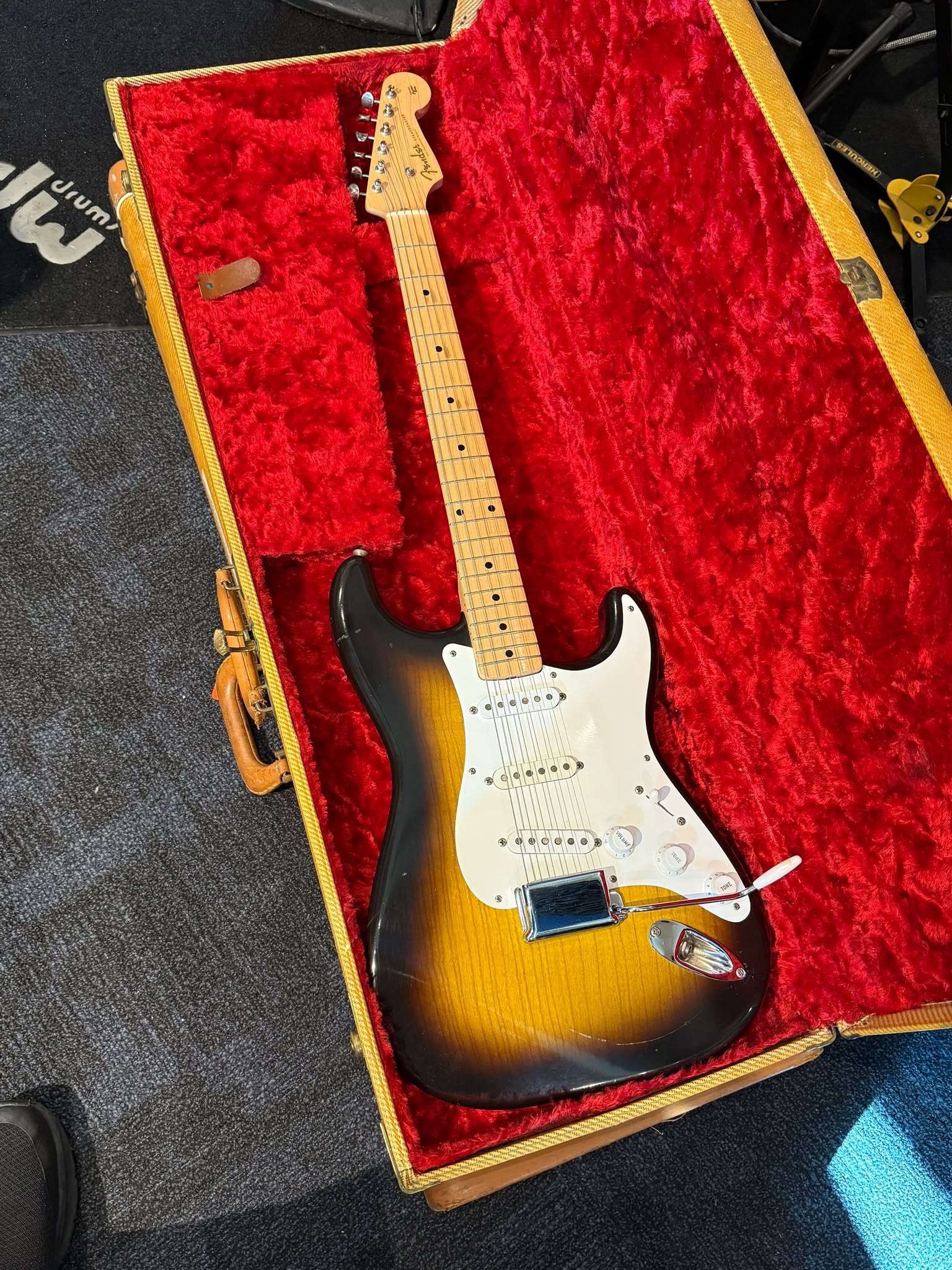
Sell Fender Guitar: Complete 2026 Guide to Getting Top Dollar for Your Instrument
Last Updated: May 2026
Why Fender Guitars Hold Exceptional Value
Fender guitars represent the foundation of American electric guitar manufacturing and continue to command strong values in the vintage market. Whether you own a Stratocaster, Telecaster, Precision Bass, Jazz Bass, or any other Fender model, understanding how to properly sell your Fender guitar ensures you receive fair market value—not the lowball offers typically presented by local music stores.
The Fender brand carries extraordinary appeal for several compelling reasons:
Innovation and Legacy: Founded by Leo Fender in 1946, Fender revolutionized music with the world’s first mass-produced solid-body electric guitar and the first electric bass guitar. These innovations fundamentally changed popular music and established Fender as an iconic American brand.
Artist Association: Fender guitars have been played by legendary musicians including Jimi Hendrix, Eric Clapton, Stevie Ray Vaughan, Jeff Beck, Buddy Holly, and countless others across every genre of music. This universal artist association drives consistent collector demand.
Pre-CBS Era Significance: Fender instruments manufactured before the 1965 CBS acquisition represent peak quality and craftsmanship. The “Pre-CBS” designation commands significant premiums due to superior materials, hand-wound pickups, and meticulous construction standards.
Playability and Versatility: Unlike many vintage instruments that serve primarily as collectibles, vintage Fender guitars remain highly playable professional instruments, supporting both collector and player demand.
Understanding Fender Guitar Market Values (2025 Update)
The vintage Fender market has remained exceptionally strong, with Pre-CBS instruments continuing to appreciate while later-era Fender guitars maintain solid values. Understanding what drives value helps you recognize whether you’re receiving a fair offer when you sell your Fender guitar.
Most Valuable Fender Models
Pre-CBS Stratocasters (1954-1965)
Pre-CBS Stratocasters represent the pinnacle of Fender collectability. Original examples from the 1950s with rare custom colors can command six-figure prices. Even standard sunburst finishes from this era maintain exceptional value. The 1954-1959 maple neck models and 1959-1964 rosewood fingerboard “slab board” models are particularly sought after.
Factors affecting Pre-CBS Stratocaster values:
Custom colors command significant premiums over standard finishes
All-original examples with matching headstock colors are especially valuable
Early 1954-1956 examples with transitional features bring premium prices
1959-1962 “slab board” rosewood models are highly collectible
Original finish and hardware dramatically affect value
Pre-CBS Telecasters (1950-1965)
Vintage Telecasters and their predecessor, the Broadcaster, represent some of Fender’s most valuable guitars. The ultra-rare 1951 “Nocaster” (with clipped Broadcaster decal) commands extraordinary prices. Blonde-finish Telecasters from the 1950s and custom color examples from the early 1960s are highly sought after.
Value hierarchy for vintage Telecasters:
1950 Broadcaster examples are extremely rare and valuable
1951 “Nocaster” models are among the most collectible Fenders
1950s blonde-finish Telecasters with black pickguards
Custom color Telecasters from the Pre-CBS era
Esquire models (single-pickup variants) also command premium prices
Pre-CBS Precision Bass (1951-1965)
The Precision Bass revolutionized music as the world’s first production electric bass. Early “slab body” models from 1951-1954 are extremely rare. The 1957 introduction of the split-coil pickup created the classic P-Bass sound. Pre-CBS Precision Basses with original finishes command strong values.
Pre-CBS Jazz Bass (1960-1965)
The Jazz Bass introduced sleek styling and versatile tonal options. Early examples with “stack knob” controls (1960-1961) are particularly collectible. Original custom color Jazz Basses from the Pre-CBS era bring premium prices.
Rare Models
Certain Fender models command exceptional values due to limited production:
Jazzmaster (1958-1965): Early examples with original custom colors
Jaguar (1962-1965): Especially with matching headstock custom colors
Duo-Sonic and Musicmaster: Student models with unique finishes
1950s lap steels and amplifiers
Value Hierarchy
Within each model category, values generally follow this pattern:
Pre-CBS instruments in all-original condition command the highest prices
Custom colors significantly increase value (2-3x standard finishes)
Transitional year models with unique features bring premiums
All-original examples with correct cases and documentation
CBS-era instruments (1965-1981) maintain moderate to strong values depending on year
Post-1981 vintage Fenders are now entering collectible status
Important Note: When you sell your Fender guitar to a reputable buyer like Edgewater Guitars, you receive fair market valuations that consistently exceed typical guitar shop offers by 30-40%. We understand Pre-CBS specifications, custom color authentication, and the nuances that affect Fender values.
What Makes Your Fender Valuable?
Before you sell your Fender guitar, understanding the specific factors that affect value helps you properly represent your instrument and secure the best possible price.
Critical Value Factors
1. Pre-CBS vs CBS Era
The 1965 CBS acquisition of Fender represents the single most significant dividing line in Fender collecting:
Pre-CBS (Before 1965):
Hand-wound pickups with superior tonal characteristics
Thinner nitrocellulose finishes that age beautifully
Old-growth wood selections
Individual craftsmanship and quality control
Superior hardware specifications
These instruments typically command 3-10x the value of similar CBS-era models
CBS Era (1965-1981):
Larger headstock design (mid-1965 onward)
Thicker polyurethane finishes
F-stamped tuners and neck plates
Varying quality control
Some excellent examples exist, particularly from 1965-1971
Values range from moderate to strong depending on specific year
2. Custom Colors
Original Fender custom colors dramatically increase value:
Premium Custom Colors (typically 2-3x standard finish values):
Candy Apple Red
Lake Placid Blue
Sonic Blue
Surf Green
Foam Green
Burgundy Mist
Shoreline Gold
Shell Pink (extremely rare and valuable)
Olympic White
Black (less common than perceived)
Custom Color Authentication: Fender custom colors must be verified through:
Inspection of body routes and cavities for original sealer
Neck pocket examination for color overspray patterns
Correct primer/sealer combinations for the period
Period-correct DuPont automotive finishes
Body date stamps and pencil markings
Matching Headstock: Custom color Fenders with matching painted headstocks command significant additional premiums.
3. Originality
Originality remains paramount when you sell your Fender guitar:
Original Finish:
All-original finish with natural wear patterns
Refinished Fenders lose 40-60% of value
Even professional refinishes in correct colors significantly reduce value
Original finish checking and aging verify authenticity
Original Hardware:
Original tuners (Kluson for Pre-CBS models)
Original bridge and tremolo assemblies
Original pickup covers and knobs
Original pickguard (some shrinkage acceptable)
Replaced hardware reduces value by 10-30%
Original Electronics:
Original pickups dramatically affect value
Original potentiometers with correct date codes
Original wiring and cloth-covered wire (Pre-CBS)
Original capacitors and switches
Replaced electronics reduce value by 20-40%
Original Case:
Period-correct Fender cases add 10-15% to value
“Alligator” cases (1950s) are particularly valuable
Brown Tolex cases (early 1960s)
Black Tolex cases (mid-1960s onward)
4. Neck Dates and Body Dates
Fender neck and body dates provide crucial authentication:
Neck Dates:
Pre-CBS necks have pencil dates on the heel (month/year format)
Neck dates should align with serial number periods
Some necks have no dates or unclear markings
Body Dates:
Body dates often appear in the tremolo cavity or neck pocket
Pencil markings showing month, day, and year
Body dates help verify originality and detect replaced bodies
5. Serial Numbers
Fender serial number systems vary by era:
Neck Plate Serial Numbers (1950-1971):
Located on the metal neck plate
Four to six-digit numbers
Some overlap and inconsistencies exist
Not always chronological
Headstock Serial Numbers (1976+):
Stamped or decaled on headstock
Various prefix systems indicating decades
More reliable for dating than neck plate numbers
Important: Serial numbers alone don’t authenticate Fender guitars. Always verify with neck dates, pot codes, and construction features.
How to Identify Your Fender Guitar
Proper identification is essential before you sell your Fender guitar. Understanding your instrument’s specifications ensures accurate valuation.
Stratocaster Identification
1954-1956 Stratocasters:
Single-layer white pickguard (8 screws)
Two-tone sunburst finish (no red)
Maple neck with skunk stripe
“Spaghetti” logo on headstock
Small headstock
Round string tree
V-shaped neck profile common
1957-1959 Maple Neck Stratocasters:
Introduction of three-tone sunburst (1958)
V or soft V neck profiles
Anodized gold pickguard option (1957-1959)
Butterfly string tree (1956+)
Single-layer pickguard continues
1959-1962 Slab Board Stratocasters:
Rosewood fingerboard introduced mid-1959
Thick “slab” rosewood (flat-bottom)
Clay dot inlays
Three-ply white pickguard (11 screws)
Celluloid pickguards turn mint green with age
1962-1965 Veneer Board Stratocasters:
Curved rosewood veneer (thinner than slab)
Clay dots continue through 1964
Pearl dots begin 1965
Pre-CBS transition features
L-serial numbers (1963-1965)
1965-1971 CBS Transition Stratocasters:
Large headstock appears late 1965
F-stamped neck plates and tuners
Transition logo (1965-1968)
Pearl dot inlays
Polyurethane finishes begin
Telecaster Identification
1950 Broadcaster:
“Broadcaster” decal on headstock
Blonde ash body
Black fiber pickguard
Brass bridge saddles
Extremely rare original version
1951 “Nocaster”:
No model name on headstock (clipped decals)
Otherwise identical to Broadcaster
Transition model for about 6 months
Among the rarest Fender guitars
1951-1954 Early Telecasters:
“Telecaster” appears on headstock
Black pickguard continues
Butterscotch blonde finish standard
Brass bridge saddles
Single-coil pickups
1954-1959 Telecasters:
White pickguard becomes standard (1954)
Some black pickguards continue
Blonde finish with dark edge binding
Round or butterfly string tree
V-neck profiles common
1959-1965 Pre-CBS Telecasters:
Rosewood fingerboard option (1959)
Custom colors available
Three-ply white pickguard
Transition to veneer fingerboard (1962)
Precision Bass Identification
1951-1954 “Slab Body” Precision Bass:
Uncontoured slab body design
Single-coil pickup
Two-saddle bridge
Blonde finish standard
Black pickguard (early) or white (late)
1954-1957 Contoured Precision Bass:
Body contouring added
Single-coil pickup continues
White pickguard
Butterscotch blonde standard
1957-1965 Split-Coil Precision Bass:
Split-coil humbucking pickup introduced
Anodized pickguard (1957-1959)
Tortoiseshell guard option
Rosewood fingerboard (1959+)
Custom colors available
Jazz Bass Identification
1960-1961 Stack Knob Jazz Bass:
Concentric “stack knob” controls
Two single-coil pickups
Offset body design
Sunburst or custom colors
Rosewood fingerboard
Highly collectible variant
1962-1965 Three-Knob Jazz Bass:
Standard three-knob layout
Bound fingerboard option
Block inlay option
Custom colors with matching headstocks
Classic Jazz Bass configuration
Your Selling Options: Finding the Best Path
When the time comes to sell your Fender guitar, you face several options—each with distinct advantages and disadvantages.
Option 1: Local Guitar Shops
Advantages:
Immediate local access
Face-to-face transactions
Quick process
Disadvantages:
Lowest offers (typically 40-50% of market value)
Limited expertise in vintage Fender authentication
May not recognize custom colors or Pre-CBS features
Small customer base restricts what they can pay
High retail margins required
Often lack specialized knowledge of Fender specifications
Typical Experience: Guitar shops need substantial markups to resell your instrument. They may fail to recognize a custom color refinish, incorrectly date your guitar, or miss valuable transitional features that significantly affect value.
Option 2: Online Marketplaces (Reverb, eBay, Craigslist)
Advantages:
Direct buyer access
Potential for retail prices
Wide audience reach
Disadvantages:
Lengthy selling process (often months)
Platform fees (10-15% or more)
Shipping risks for valuable instruments
Scam exposure and payment fraud
Time investment in photography and descriptions
Buyer returns or disputes
Authentication challenges for buyers
Typical Experience: Selling a valuable vintage Fender online requires extensive documentation, professional photos, and detailed descriptions. The process involves weeks or months of communication, and shipping a Pre-CBS Fender carries significant insurance costs and damage risks.
Option 3: Auction Houses
Advantages:
Access to serious collectors
Professional authentication
High-end market exposure
Good for extremely rare or valuable pieces
Disadvantages:
High commission fees (15-25% typically)
Extended timelines (3-6 months standard)
Minimum value thresholds
No guaranteed sale
Reserve price requirements
Buyer’s premiums added
Typical Experience: Auction houses work well for exceptionally valuable Fender guitars (custom color Pre-CBS models, celebrity-owned instruments) but involve lengthy processes and substantial fees that reduce your net proceeds.
Option 4: Specialized Vintage Fender Buyers (Like Edgewater Guitars)
Advantages:
Expert Fender authentication and valuation
Premium offers (30-40% higher than guitar shops)
Immediate payment
No fees, commissions, or hidden charges
Streamlined process
Security for high-value transactions
Recognition of subtle features affecting value
Understanding of Pre-CBS specifications
Disadvantages:
Not quite retail pricing (though significantly better than shops)
Typical Experience: Specialized vintage guitar buyers offer the optimal balance of value, security, and convenience when you sell your Fender guitar. Our expertise in Fender authentication means we recognize and compensate for features that general buyers might miss.
The Edgewater Guitars Difference: Why Sellers Choose Us
When you decide to sell your Fender guitar through Edgewater Guitars, you benefit from a fundamentally different approach compared to traditional buying channels.
Expert Fender Authentication and Valuation
Our team specializes in vintage Fender identification, authentication, and valuation. We recognize valuable features that general music stores overlook:
Pre-CBS Expertise:
Accurate dating through neck dates, pot codes, and body stamps
Custom color authentication and verification
Original finish assessment vs. refinish detection
Transitional feature identification (1954-1956, 1965 features)
Understanding of Fender manufacturing variations
Technical Knowledge:
Pickup winding specifications and resistance readings
Period-correct hardware identification
Original vs. replacement parts recognition
Neck profile and fingerboard variations by year
Factory stamping and marking interpretation
Market Understanding:
Current collector demand for specific models/years
Custom color premiums and rarity factors
Condition grading standards
How modifications affect value
Recent auction and private sale results
This expertise means you receive fair valuations reflecting your Fender guitar’s true worth—not guesswork from inexperienced buyers who might confuse a 1964 Pre-CBS Stratocaster with a 1966 CBS-era model (a difference of significant value).
Premium Offers That Reflect True Value
Because we specialize in vintage instruments and maintain direct relationships with serious collectors, we consistently offer 30-40% more than typical guitar shops. Our business model focuses on fair valuations rather than maximum margins.
Why We Pay More:
Direct collector relationships eliminate multiple middlemen
Expert knowledge allows us to recognize and pay for subtle value factors
Specialized focus on vintage Fender guitars
Understanding of the Pre-CBS market and collector demand
Efficient business model without retail storefront overhead
Volume purchasing power
Established reputation in the vintage guitar community
Example Value Recognition: A local guitar shop might offer the same price for a 1964 Pre-CBS Stratocaster and a 1966 CBS-era model because they don’t understand the significance. We recognize the Pre-CBS model’s superior value due to hand-wound pickups, thinner finish, and collector desirability—and our offer reflects this knowledge.
Streamlined, Secure Process
Selling your Fender guitar through Edgewater involves a straightforward, secure process:
Initial Contact: Reach out via phone (440) 219-3607 or website form
Preliminary Assessment: Provide basic information, photos, and serial number
Expert Evaluation: Review of photos and specifications; in-person evaluation for valuable instruments
Fair Offer: Clear, transparent offer based on expert assessment
Immediate Payment: Accept the offer and receive immediate payment
Complete Transaction: We handle all logistics and paperwork
For high-value Fender guitars (particularly Pre-CBS custom color examples), we travel throughout Ohio, Michigan, Pennsylvania, Indiana, and West Virginia for in-person evaluations—ensuring security for both parties and allowing hands-on inspection.
Confidential, Professional Service
We understand that selling a valuable Fender guitar involves both financial and emotional considerations. Our service includes:
Discretion: Confidential transactions for valuable instruments
Respect: Understanding the personal connection to your instrument
Transparency: Clear explanations of valuation factors and market conditions
Documentation: Professional assessment documentation
Zero Pressure: No obligation to accept our offer
Education: We explain what makes your guitar valuable (or affects its value)
Preparing to Sell Your Fender Guitar
Proper preparation helps ensure you receive the best possible offer when you sell your Fender guitar.
Gather Documentation
Collect all available documentation:
Original purchase receipts or invoices
Previous appraisals or authentication certificates
Repair receipts from qualified luthiers or Fender repair centers
Original case (crucial for Pre-CBS models)
Original case candy (wrenches, manuals, warranty cards)
Historical photos showing the guitar
Provenance documentation (celebrity ownership, studio use, etc.)
Document Current Condition
Take clear photographs showing:
Overall front and back views in good lighting
Headstock (front and back, showing serial number clearly)
Neck heel showing neck date stamp (if accessible)
Neck pocket showing body stamps and dates
Tremolo cavity or control cavity showing electronics and stamps
Any wear, damage, or repairs
Close-ups of hardware (tuners, bridge, pickups)
Pickguard (showing aging, shrinkage, or modifications)
Case interior and exterior
Pro Tip: For custom color Fenders, photograph any chips or wear that shows original color underneath, and any areas showing primer or sealer.
Note All Modifications
Be transparent about any changes to the instrument:
Replaced pickups (even if period-correct)
Replaced tuners or hardware
Refinishing or touch-ups (even small areas)
Fret replacements
Electronic modifications (pots, capacitors, wiring)
Nut or saddle replacements
Pickguard replacements
Added shielding or modifications to cavities
Honesty about modifications builds trust and ensures accurate valuations. Many modifications are acceptable if disclosed properly, and some (like professional refrets) are expected on heavily-played vintage instruments.
Understand Your Instrument’s Story
Prepare to discuss:
How you acquired the guitar
Length of ownership
Original purchase information (if you’re the original owner)
Playing frequency and usage
Storage conditions over the years
Any professional maintenance, repairs, or setup work
Notable performances or recordings (if applicable)
Any known history before your ownership
Common Fender Models We Purchase
Edgewater Guitars actively purchases Fender guitars across all models and eras, with particular expertise in vintage and Pre-CBS instruments.
Stratocaster Models
Pre-CBS Stratocasters (1954-1965)
All years and finishes
Standard sunburst finishes
Custom colors (especially rare colors)
Maple neck models (1954-1959)
Slab board rosewood models (1959-1962)
Veneer board models (1962-1965)
Transitional 1965 models
CBS-Era Stratocasters (1965-1981)
1965-1971 (transition era)
1970s models with desirable features
Hardtail models
Natural finish models
Later Vintage Stratocasters
1980s American Standards
Vintage reissues
Special editions
Telecaster Models
Pre-CBS Telecasters (1950-1965)
1950 Broadcaster
1951 “Nocaster”
1950s blonde Telecasters
Custom color Telecasters
Esquire models (single pickup)
Custom Telecaster models
CBS-Era Telecasters (1965-1981)
1965-1971 transition models
Telecaster Thinline (1968-1972)
1970s Telecasters
Telecaster Deluxe
Related Models
Telecaster Custom
Rosewood Telecaster
Paisley and Floral Telecasters
Bass Models
Precision Bass
1951-1954 slab body models
1954-1957 contoured body
1957+ split-coil models
Pre-CBS examples (especially custom colors)
CBS-era models
Jazz Bass
1960-1961 stack knob models
1962-1965 Pre-CBS models
CBS-era examples
Custom color models
Other Fender Models
Offset Models
Jazzmaster (1958-1965 especially)
Jaguar (1962-1965 especially)
Mustang
Duo-Sonic
Musicmaster
Acoustic Guitars
Fender acoustics (various models)
Kingman models
Malibu models
Red Flags: What Hurts Value When You Sell Your Fender Guitar
Understanding common issues helps you accurately represent your instrument and sets realistic expectations.
Refinishing
Refinishing represents the most significant value reduction for vintage Fender guitars. Even professional refinishes in correct colors substantially reduce value because:
Why Refinishing Hurts Value:
Original Fender finishes develop unique aging patterns that authenticate instruments
Nitrocellulose checking and amber toning verify age
Refinishing often indicates other undisclosed work or repairs
Collectors strongly prefer original finishes regardless of wear
Custom color refinishes cannot be definitively authenticated
Detecting Refinishes:
Overspray in cavities, neck pocket, or on hardware
Filled screw holes or nail holes
Inconsistent finish thickness
Modern paint types (acrylic, polyester)
Lack of proper checking or aging patterns
Wrong primer colors or applications
Value Impact: Refinished Pre-CBS Fenders typically lose 40-60% of their value compared to all-original examples. A refinished custom color Stratocaster might be valued similarly to an original sunburst model, eliminating the custom color premium entirely.
Replaced Pickups
Original Fender pickups are crucial to value:
Pre-CBS Pickup Importance:
Hand-wound pickups with specific resistance ranges
Alnico magnet types (III or V depending on year)
Cloth-covered wiring
Period-correct lead wire colors
Stagger patterns specific to eras
Bottom plates with specific characteristics
Impact of Replacement: Replaced pickups reduce Pre-CBS Fender values by 20-40%, even if replaced with quality aftermarket pickups. Original pickups that have been rewound also reduce value, though less dramatically than complete replacements.
Verification: We examine pickup wire colors, bottom plate construction, magnet types, and resistance readings to verify originality.
Headstock Repairs
Stratocasters and Telecasters occasionally suffer headstock breaks, particularly at the nut area:
Professional Repairs: Quality headstock repairs by reputable luthiers reduce value moderately. Properly repaired breaks with good structural integrity are generally acceptable to players and many collectors.
Poor Repairs: Amateur repairs, improper clamping, or incomplete repairs significantly reduce value and affect structural integrity.
Disclosure: Always disclose headstock repairs. Attempting to hide repairs damages trust and can void transactions.
Non-Original Hardware
Hardware replacements affect value based on the component:
High Impact Replacements:
Tuners (especially Kluson replacements on Pre-CBS models)
Bridge assemblies
Tremolo systems
Pickup covers and surrounds
Moderate Impact Replacements:
String trees
Neck plates
Strap buttons
Switch tips and knobs
Lower Impact Replacements:
Pickguards (if period-correct style)
Screws and springs
Pickup height adjustment springs
Best Practice: Keep all original parts even if you’ve upgraded. We pay premiums for instruments with original parts included, even if currently installed parts are replacements.
Modified Routes and Holes
Irreversible modifications significantly reduce value:
Common Modifications:
Enlarged tremolo cavities for modern tremolos
Additional pickup routes
Modified control cavities
New mounting holes for pickguards or hardware
Neck pocket modifications
Bridge mounting holes altered
Impact: Modified routes cannot be easily reversed and substantially affect collector appeal, often reducing value by 30-50%.
Incorrect Parts or Mismatched Components
Neck/Body Mismatches:
Non-original replacement necks
Refinished necks on original bodies
Neck dates that don’t align with body dates (within reason)
Different model necks installed
Part Period Mismatches:
1970s parts on 1960s guitars
Modern components on vintage instruments
Incorrect pickguard styles for the year
Wrong tuner types for the era
Frequently Asked Questions About Selling Fender Guitars
How do I know if my Fender is Pre-CBS?
Pre-CBS Fenders were manufactured before CBS purchased Fender in January 1965. Key indicators include:
Serial Numbers: Serial numbers under 100,000 are generally Pre-CBS (though overlap exists in the L-series from 1963-1965)
Neck Dates: Neck heel dates before 1965 confirm Pre-CBS construction
Small Headstock: Stratocasters with small headstocks are Pre-CBS (large headstock began mid-1965)
“Spaghetti” Logo: Thin, script-style logo indicates Pre-CBS era
Neck Plate: No “F” stamp on neck plate (F-stamps indicate Fender CBS era)
Tuners: Original Kluson tuners with “Kluson Deluxe” stamp
However, proper authentication requires examining multiple factors, including pot codes, construction methods, and finish characteristics. Contact us for a professional Pre-CBS authentication.
Is a refinished Fender still valuable?
Yes, refinished Fenders retain value, though significantly less than all-original examples. Value depends on:
Underlying Quality: A refinished Pre-CBS Stratocaster is still a Pre-CBS Stratocaster with the superior construction, pickups, and components
Refinish Quality: Professional refinishes in correct colors are more acceptable than amateur refinishes
Remaining Originality: Original electronics, hardware, and playability maintain value
Model and Year: Rare models or years retain value even when refinished
A refinished Pre-CBS Fender might be valued 40-60% less than an all-original example, but still commands respectable prices due to underlying quality. We purchase refinished Fenders regularly.
What if I don’t have the original case?
Missing original cases reduce value by approximately 10-15%, but don’t prevent a sale. Many vintage Fenders have lost their original cases over decades of ownership.
Impact by Era:
Pre-CBS cases: More valuable and harder to replace
CBS-era cases: Less critical but still desirable
Later cases: Minimal impact
We still purchase Fenders without original cases, adjusting our offer accordingly but fairly.
Should I have my Fender appraised before selling?
Professional appraisals can be helpful for insurance or estate purposes, but aren’t necessary when selling to knowledgeable buyers:
When Appraisals Help:
Estate planning or insurance documentation
Confirming suspicions about exceptional value
Legal or tax situations requiring documentation
When Not Necessary:
Selling to expert buyers like Edgewater Guitars
We provide free evaluations as part of our buying process
Our expertise often exceeds general appraisers’ Fender knowledge
How long does the selling process take?
When you sell your Fender guitar to Edgewater Guitars:
Timeline:
Same-day response to initial inquiries
1-2 days for preliminary photo assessment
In-person evaluations scheduled at your convenience
Immediate offers after evaluation
Immediate payment upon acceptance
Total Time: Most transactions complete within 3-5 days from initial contact to payment. This contrasts dramatically with online marketplaces (often months) or auction houses (typically 3-6 months).
Do you buy Fender guitars that need repairs?
Yes. We purchase Fender guitars in various conditions:
Condition Types We Purchase:
Instruments needing setup work
Guitars with electronic issues
Instruments requiring fret work
Examples with finish damage or wear
Guitars needing structural repairs
Incomplete instruments (missing parts)
Our expertise allows us to properly value guitars with issues while accounting for repair costs. We provide fair offers that recognize the instrument’s core value.
What about custom shop or reissue Fenders?
We purchase Fender Custom Shop instruments and vintage reissues. Values depend on:
Custom Shop Factors:
Master Built vs. Team Built designation
Builder reputation (some builders command premiums)
Model and specifications
Age and condition
Rarity and limited editions
Reissue Factors:
American Vintage Reissue series
Roadworn series
Limited editions
Age and condition
While these instruments don’t match vintage values, quality examples command respectable prices.
What geographic areas do you serve?
Edgewater Guitars actively purchases Fender guitars throughout:
Ohio (all regions)
Michigan (all regions)
Pennsylvania (all regions)
Indiana (all regions)
West Virginia (all regions)
For particularly valuable Pre-CBS Fenders or rare custom color examples, we travel to sellers for secure, in-person evaluations. We also work with sellers nationwide through carefully arranged shipping for appropriate instruments.
Recent Fender Guitar Purchases
1964 Fender Stratocaster - Akron, Ohio
We recently purchased this exceptional Pre-CBS Stratocaster in Lake Placid Blue from a long-time owner in Akron. This all-original example featured matching headstock, original finish with natural wear, and all-original electronics including pickups and pots with correct date codes.
The seller had received several local shop offers that didn’t recognize the custom color premium or Pre-CBS significance. Our expertise allowed us to immediately identify the original finish and period-correct specifications. Our offer substantially exceeded local shop offers, and the transaction completed within 48 hours.
1961 Fender Jazz Bass Stack Knob - Toledo, Ohio
This rare stack-knob Jazz Bass came to us from an estate situation. The family needed a fair valuation during a difficult time. Our knowledge of early Jazz Bass specifications and the collectability of stack-knob models allowed us to provide a premium offer that properly valued this exceptional instrument.
The transaction was handled sensitively and professionally, with immediate payment and all logistics managed by our team. The family appreciated our transparent process and fair valuation during a challenging period.
1966 Fender Telecaster Custom Color - Pittsburgh, Pennsylvania
We traveled to Pittsburgh to evaluate this early CBS-era Telecaster in Candy Apple Red with matching headstock. While technically a CBS-era instrument (produced months after the acquisition), this guitar featured many Pre-CBS characteristics and original finish.
The seller appreciated our nuanced understanding of the CBS transition period and recognition that 1965-1966 Fenders often maintain superior quality despite the “CBS” designation. Our offer reflected this knowledge and exceeded the seller’s expectations.
Ready to Sell Your Fender Guitar?
If you own a Fender guitar and you’re considering selling, Edgewater Guitars offers the expertise, fair valuations, and professional service you deserve.
Get Your Free Valuation
Start the process today:
Phone: (440) 219-3607
Service Area: Ohio, Michigan, Pennsylvania, Indiana, West Virginia
What to Prepare:
Basic information about your Fender (model, approximate year)
Serial number (from neck plate or headstock)
Neck date if visible (on neck heel)
Photos (front, back, headstock, neck pocket, tremolo cavity)
Information about condition, modifications, or repairs
Original case if available
Why Choose Edgewater Guitars
When you sell your Fender guitar to us, you benefit from:
✓ Pre-CBS Expertise: Specialized knowledge of 1954-1965 Fender specifications
✓ Custom Color Authentication: Ability to verify original custom colors vs. refinishes
✓ Premium Offers: Consistently 30-40% higher than guitar shop offers
✓ Fast Process: Days, not months
✓ Secure Transactions: In-person evaluations for valuable instruments
✓ Zero Fees: No commissions, platform fees, or hidden charges
✓ Professional Service: Respectful, transparent, and confidential
✓ Immediate Payment: No waiting or payment concerns
✓ Market Knowledge: Understanding of current collector demand and values
Additional Resources
Learn more about your Fender guitar:
Complete Fender Serial Number Lookup Guide
Pre-CBS Fender Authentication Tutorial
Fender Custom Color Identification Guide
Dating Fenders by Neck Stamps and Pot Codes
How to Spot Refinished Fender Guitars
Fender Stratocaster Year-by-Year Guide
Edgewater Guitars specializes in purchasing vintage and collectible guitars throughout the Midwest. Our expertise in Fender authentication—particularly Pre-CBS models, custom colors, and transitional features—combined with fair market valuations and professional service, makes us the preferred choice for Fender owners looking to sell their instruments.
Contact us today at (440) 219-3607 or visit our website to begin the process. Whether you own a legendary 1954 Stratocaster, a rare custom color Telecaster, or a CBS-era Fender in excellent condition, we provide expert valuations and premium offers for Fender guitars of all eras.
By Stephen Pedone, co-owner of Edgewater Guitars. Edgewater is a vintage guitar shop in Valley City, Ohio that buys pre-1970 Fender, Gibson, Martin and Gretsch guitars across Ohio and nationwide. Call or text (440) 219-3607 for a free appraisal.