DATE :
Ibanez Guitar Serial Number Lookup: Complete Dating & Identification Guide
Last Updated: May 2026
Ibanez has produced guitars under the Hoshino Gakki corporate umbrella since the 1930s, with the brand's reputation built primarily on instruments manufactured at the FujiGen factory in Matsumoto, Japan, from the late 1960s onward. The Ibanez serial number system is one of the more decodable conventions among Japanese manufacturers, particularly from 1987 onward, when a standardized factory-letter-plus-date format was adopted across most production lines.
This guide is provided as a free resource for Ibanez owners and collectors researching their instruments. It explains every major Ibanez serial number system, how to decode the factory-letter prefix codes, where to find your serial number, what the "lawsuit era" actually refers to, and which Ibanez models carry the strongest collector interest today.
Quick Answer: How to Date an Ibanez Guitar by Serial Number
Ibanez dating depends on which era and factory produced your instrument:
Pre-1972: Various early Hoshino systems, often without consistent date encoding
1972–1987 (early FujiGen era): Numeric serials with varying conventions; this includes the "lawsuit era" (pre-1977)
1987–present (standardized factory-letter system): Letter prefix encodes factory; following digits encode year and production number. This is the most decodable Ibanez serial format.
Specialty production: USA-made Custom Shop (LACS), J-Custom series, and Prestige models use additional or alternate conventions.
The single most important data point on a modern Ibanez serial number is the letter prefix indicating which factory produced the instrument. FujiGen-made (F prefix) instruments command the highest collector and player demand within the Ibanez catalog.
About Ibanez: A Brief History
Ibanez originated as a brand name used by Hoshino Gakki, a Japanese company founded in 1908 in Nagoya, originally as a sheet music publisher. In the 1920s, Hoshino began importing classical guitars made by Spanish luthier Salvador Ibáñez, and the company eventually adopted the Ibanez name (the tilde was dropped in transliteration) for its own guitar production starting in the 1930s.
Ibanez's modern factory history:
FujiGen Gakki (Matsumoto, Japan): Ibanez's primary factory from the late 1960s onward, producing the vast majority of Japan-made Ibanez instruments. FujiGen also produced guitars for many other brands including early Fender Japan instruments.
Terada (Japan): Some hollow-body and archtop Ibanez models (such as the George Benson GB-10 and Pat Metheny PM series) have been produced at Terada.
Cort (Korea and Indonesia): Lower-tier Ibanez production moved to Cort facilities beginning in the 1990s.
Various Chinese factories: Modern entry-level Ibanez production.
Los Angeles Custom Shop (LACS, USA): Custom instruments built for endorsed artists and limited runs.
Notable Ibanez players include Steve Vai (JEM and Universe signature models), Joe Satriani (JS signature series), Paul Stanley of KISS (Iceman), George Benson (GB-10 archtop), Pat Metheny (PM-100), John Scofield (AS-200), Allan Holdsworth (early Artist/Musician models), Andy Timmons (AT signature), Pat Martino, Lee Ritenour, and Bob Weir of the Grateful Dead (Bob Weir Professional and Custom Agent models).
Ibanez's reputation rests on three primary categories: the celebrated 1970s "lawsuit-era" copies, the original-design jazz archtops and signature artist models from the late 1970s onward, and the modern rock/metal-oriented RG, S, JEM, and Universe series that began in the mid-1980s.
Why Ibanez Serial Numbers Are More Decodable Than Most
Compared to brands like Aria or even Yamaha, Ibanez serial numbers from 1987 onward are notably transparent:
The factory-letter prefix is consistent across production lines after 1987
The year encoding follows predictable conventions within each factory's system
Ibanez has acknowledged its serial conventions publicly, unlike some Japanese manufacturers that have kept these private
The challenge with Ibanez dating sits primarily with pre-1987 instruments, where multiple serial systems were used during the 1970s and early 1980s. For these older Ibanezes, construction features, hardware specifications, and catalog cross-referencing are essential.
Ibanez Serial Number Systems by Era
Pre-1972: Early Hoshino Production
Ibanez instruments from before 1972 used various early serial systems without consistent date encoding. These early Ibanezes are uncommon in the U.S. market (most pre-1972 Ibanez production stayed in Japan or Europe) and require feature-based dating through catalog cross-referencing.
1972–1977: The Lawsuit Era (FujiGen, Japan)
This is the most famous and most collected Ibanez era. During the early-to-mid 1970s, FujiGen produced close copies of Gibson, Fender, Rickenbacker, Martin, and other American designs under the Ibanez name. These instruments were high-quality builds at significantly lower price points than the American originals, and they earned reputations among players who recognized the construction quality.
What "lawsuit era" actually means: The term refers specifically to a 1977 lawsuit filed by Norlin Industries (Gibson's parent company at the time) against Elger Guitars, Ibanez's U.S. distributor, over Ibanez's use of the Gibson "open book" headstock shape on its Les Paul copies. Ibanez settled the lawsuit and changed its headstock design in late 1977. Technically, "lawsuit-era" Ibanez guitars are pre-1977 examples with the Gibson-style open-book headstock — though the term has been broadly applied to all 1970s Japanese copy guitars in popular usage.
Serial numbers from this era use various FujiGen conventions and typically don't follow the cleaner post-1987 format. Dating requires cross-referencing the serial with catalog appearance, headstock shape, and hardware specifications.
1977–1987: Original Design Era
After the lawsuit settlement, Ibanez shifted decisively toward original designs. The Artist, Musician, Iceman, Roadster, Roadstar, and early signature models were introduced during this period. Serial number conventions remained inconsistent across this transitional period, with several different formats appearing.
1987–Present: The Standardized Factory-Letter System
Beginning in approximately 1987, Ibanez standardized a serial number format used consistently across most production lines. The format follows:
[Factory Letter] + [Year digits] + [Production sequence digits]
Factory letter codes:
Letter Prefix | Factory | Country |
|---|---|---|
F | FujiGen | Japan |
J | Terada (and some FujiGen) | Japan |
C | Cort | Korea (older) |
K or KW | Various Korean factories | Korea |
S | Samick | Korea (older) |
I | Cort PT (PT Cort Indonesia) | Indonesia |
W | World Musical Instruments | Indonesia |
Y | Yoojin | Indonesia |
PW | Cor-Tek Indonesia | Indonesia |
CH or GH | Various Chinese factories | China |
Year encoding within the serial:
After the factory letter, the first one or two digits typically indicate the year
A single-digit year (e.g., "F8") represents 1988 or 1998 — decade ambiguity requires feature cross-reference
Two-digit year codes (e.g., "F05") represent 2005, generally without ambiguity
The remaining digits are sequential production numbers
Example decodings:
F0512345 likely indicates FujiGen, 2005, production number 12345
K12345 likely indicates a Korean factory, with year requiring cross-reference
I0612345 likely indicates Indonesia, 2006, production number 12345
For Ibanez Prestige and J-Custom models (premium Japan-made instruments), additional documentation often appears on neck plates or interior labels confirming the production date and specifications.
Where to Find Your Ibanez Serial Number
Bolt-On Neck Models (RG Series, S Series, JEM, Most Modern Production)
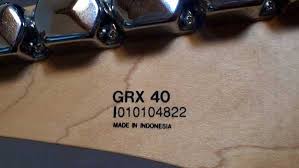
Back of headstock — most common location for stamped or printed serials
Neck plate — some models also carry the serial on the metal neck plate
Set-Neck and Neck-Through Models (Iceman, Some Artist/Musician)
Back of headstock — primary location
Some examples carry additional interior stamps
Hollow Body and Semi-Hollow Models (Artcore, AS-200, GB-10, PM-100)
Interior label — visible through the f-hole, particularly on Artcore Expressionist and premium archtops
Back of headstock — modern examples typically have the serial here as well
USA Custom Shop (LACS) Instruments
Neck plate — often with custom build documentation
Body interior or back of headstock
The FujiGen Factory Significance
Understanding the FujiGen factory is essential context for Ibanez collectors. Located in Matsumoto, Japan, FujiGen has been Ibanez's primary production partner since the late 1960s and produced the vast majority of Japan-made Ibanez instruments throughout the brand's golden era.
FujiGen-made instruments share several construction hallmarks:
Consistent neck construction with attention to fret work and finishing
Precise body construction that contributed to Ibanez's reputation for build quality at competitive price points
Distinctive hardware integration with proprietary bridge and tremolo systems
Strict quality control standards that have remained consistent across decades
FujiGen also produced guitars for many other brand names during the same period, including early Fender Japan instruments (1982 onward, as part of the Fender Japan operation), Greco, certain Yamaha models, and various other Japanese-market brands. This shared-factory heritage means FujiGen-made Ibanez instruments share construction DNA with other respected Japanese guitars of the era.
The continued operation of FujiGen distinguishes Ibanez from many vintage Japanese brands — while Matsumoku closed in 1987 (ending the Aria Pro II golden era), FujiGen has continued producing premium Ibanez instruments to the present day, including the Prestige and J-Custom lines.
Most Collected Vintage and Modern Ibanez Models
These Ibanez models carry the strongest current collector and player interest:
Lawsuit-era and 1970s copies (1972–1977, FujiGen):
2350, 2351, 2351CS Les Paul copies: High-quality FujiGen copies of Gibson Les Pauls.
2399 Les Paul Recording copy
2402 ES-335 copies
Various Strat and Tele copies with FujiGen build quality.
Bob Weir Custom Agent: Original Bob Weir-influenced design, highly collectible.
Late 1970s and 1980s original designs:
Iceman (Paul Stanley signature, 1975 onward): Distinctive body shape, sustained collector demand.
Artist series: Quality set-neck guitars associated with Allan Holdsworth and others.
Musician series: Premium neck-through instruments.
AR series: Carved-top set-neck guitars with collector following.
George Benson GB-10 and GB-20: Premier hollow-body jazz guitars; sustained collector and player demand.
1980s and beyond signature and series models:
JEM 777, JEM7V, JEM77 (Steve Vai signature): The instruments that defined modern shred and high-performance electric guitar. Premium tier valuations for early JEM 777s, particularly the original 1987 launch examples.
Universe 7-string (Steve Vai signature): The first widely-produced 7-string electric. Collector demand has grown significantly.
RG series: The flagship modern Ibanez line; JEM-derived designs at production prices. Prestige and J-Custom RGs command premium valuations.
S series: Thin-body sculpted alternatives to the RG.
JS series (Joe Satriani signature): Sustained demand across multiple variants.
PM-100 and PM-200 (Pat Metheny signature): Premium hollow-body jazz guitars.
AS-200 (John Scofield association): Semi-hollow ES-style guitar with sustained collector interest.
AT100/AT300 (Andy Timmons signature): Smaller production runs with collector following.
Premium production tiers:
Prestige series: Made at FujiGen, Japan; the standard Ibanez premium tier.
J-Custom series: Higher-end Japan production with elaborate appointments.
LACS (Los Angeles Custom Shop): USA-built custom instruments for endorsed artists and limited runs.
Red Flags: Authentication and Identification Issues
Common issues to watch for when researching an Ibanez:
Lawsuit-era misrepresentation. Many 1970s Japanese copy guitars are sold as "lawsuit Ibanez" instruments even when they're not Ibanez at all (Greco, Tokai, and others made similar-era copies). Verify the Ibanez logo, headstock shape, and serial number conventions.
Headstock authentication. Pre-1977 "lawsuit" Ibanez Les Paul copies feature the Gibson "open book" headstock; post-1977 examples have the modified Ibanez headstock shape. Examples claiming pre-1977 origin should carry the open-book headstock.
Refinished examples. Aged nitrocellulose lacquer on a 1970s FujiGen Ibanez should show natural amber tinting and consistent wear patterns. A uniformly glossy finish on a vintage example is a refinish red flag. Faded, naturally aged finishes are correct and desirable on vintage examples.
Replaced pickups. Original pickups on vintage Ibanez instruments — including original Super 70 humbuckers on 1970s examples and original DiMarzio collaborations on later models — command better collector valuations than aftermarket replacements.
Floyd Rose modifications. Many late-1980s and 1990s Ibanez guitars came with proprietary Edge or Lo-Pro Edge tremolo systems. Replacements with aftermarket Floyd Rose units reduce originality value, particularly on collectible JEM and Universe examples.
Misrepresented factory. "Made in Japan" or "Made in Korea" stamping is the definitive factory indicator. Some sellers misrepresent Korean or Indonesian Ibanezes as Japanese; verify with the serial number letter prefix and country-of-origin stamp.
What Affects an Ibanez's Collector Value
Era and factory: Lawsuit-era FujiGen copies (1972–1977) and FujiGen-made original designs sit at the top tier of Ibanez collector valuations. Other Japan-made examples (Terada, modern Prestige and J-Custom) command upper-tier modern valuations. Korean and Indonesian production occupies mid-to-entry tiers regardless of model.
Model and signature association: Steve Vai-associated models (JEM 777, Universe), Joe Satriani-associated models (JS series), and Paul Stanley's Iceman command premium valuations. George Benson GB-10s and Pat Metheny PM-series jazz guitars maintain sustained collector demand. Early production examples of signature models — particularly first-year JEMs and original Universe 7-strings — command top-tier prices.
Originality: All-original examples with original pickups, original Edge or Lo-Pro Edge tremolos (where applicable), original hardware, and original finish command meaningful premiums over modified examples.
Lawsuit-era authentication: For lawsuit-era instruments specifically, the combination of pre-1977 production date, FujiGen origin, original "open book" Gibson-style headstock, and original hardware determines top-tier valuations.
Condition: Crack-free finishes, intact original electronics, clean fingerboards, and original cases all contribute to upper-tier valuations.
Documentation: Original case, paperwork, factory documentation (particularly on Prestige and J-Custom models), and provenance from endorsed artists add collector confidence and value.
Further Research Resources
For deeper Ibanez research, the following community resources are valuable:
Ibanez.fandom.com (Ibanez Wiki) and Ibanez Collectors World maintain extensive catalog archives, serial number reference databases, and production-history documentation drawn from years of collector research.
Ibanez.com's own serial number lookup tool provides limited but useful date confirmation for modern instruments.
Vintage guitar publications including Vintage Guitar magazine and Premier Guitar have published Ibanez-focused features on lawsuit-era collecting, FujiGen history, and signature-model identification.
Original Ibanez catalogs (available through collector communities and the Ibanez Wiki) provide year-specific feature documentation that helps narrow serial-number ambiguity.
Frequently Asked Questions About Ibanez Serial Numbers
How do I tell what year my Ibanez guitar was made? For Ibanez instruments from 1987 onward, the serial number begins with a letter indicating the factory (F=FujiGen Japan, K=Korea, I=Indonesia, C=China), followed by year and production digits. For pre-1987 Ibanezes, multiple serial systems were used and dating requires cross-referencing with construction features, headstock shape, hardware, and catalog appearance.
Are old Ibanez guitars valuable? Lawsuit-era Ibanez copies from 1972–1977 carry strong collector interest, particularly Les Paul, ES-335, and Strat-style examples with the original Gibson-style headstock. Late 1970s and 1980s original designs including the Iceman, Artist, Musician, and George Benson GB-10 also command sustained demand. Modern Prestige and J-Custom Ibanez instruments hold premium tier valuations within the modern market.
What is a lawsuit-era Ibanez? A lawsuit-era Ibanez is a guitar produced before late 1977 that features the Gibson-style "open book" headstock shape on copy models. The term derives from a 1977 lawsuit filed by Norlin (Gibson's parent company) against Elger Guitars (Ibanez's U.S. distributor) over the headstock design. Ibanez settled the lawsuit and changed its headstock shape in late 1977.
Where were Ibanez guitars made? Ibanez has produced guitars at multiple factories. The most celebrated production has come from FujiGen in Matsumoto, Japan, which has manufactured Ibanez instruments from the late 1960s to the present day. Terada in Japan produces certain hollow-body and archtop models. Korean (various factories including Cort), Indonesian, and Chinese facilities produce mid-tier and entry-tier instruments. USA-made LACS (Los Angeles Custom Shop) instruments are built for endorsed artists.
What does the F prefix mean on an Ibanez serial number? The F prefix on a modern Ibanez serial number indicates the instrument was produced at the FujiGen factory in Matsumoto, Japan. FujiGen-made Ibanez instruments include the Prestige and J-Custom series and command the highest collector and player demand among modern Ibanez production.
Where is the serial number on an Ibanez guitar? On most Ibanez guitars, the serial number is stamped or printed on the back of the headstock. Some bolt-on neck models also carry the serial on the metal neck plate. Hollow-body and semi-hollow Ibanez models (such as the Artcore series, AS-200, GB-10, and PM-100) typically carry an interior label visible through the f-hole.
Related Resources
This Ibanez serial number guide is part of Edgewater Guitars' collection of vintage guitar identification resources:
Gibson Serial Number Lookup Tool — edgewaterguitars.com/guitar-serial-number-lookup/gibson
Fender Serial Number Lookup Tool — edgewaterguitars.com/guitar-serial-number-lookup/fender
Gretsch Serial Number Lookup Guide
Rickenbacker Serial Number Lookup Guide
Yamaha Serial Number Lookup Guide
Aria Serial Number Lookup Guide
Guild Serial Number Lookup Guide
Edgewater Guitars publishes free identification resources for guitar owners and collectors. This Ibanez guide is provided as a research reference. Edgewater Guitars specializes in purchasing premium vintage American-made guitars throughout Ohio, Michigan, Pennsylvania, Indiana, and West Virginia — including Gibson, Fender, Martin, Gretsch, and Epiphone instruments.