DATE :
How to Identify an Old Guitar: Complete Brand, Model, and Year Guide

How to Identify an Old Guitar: Complete Brand, Model, and Year Guide
When You Have No Idea What Guitar You’re Looking At
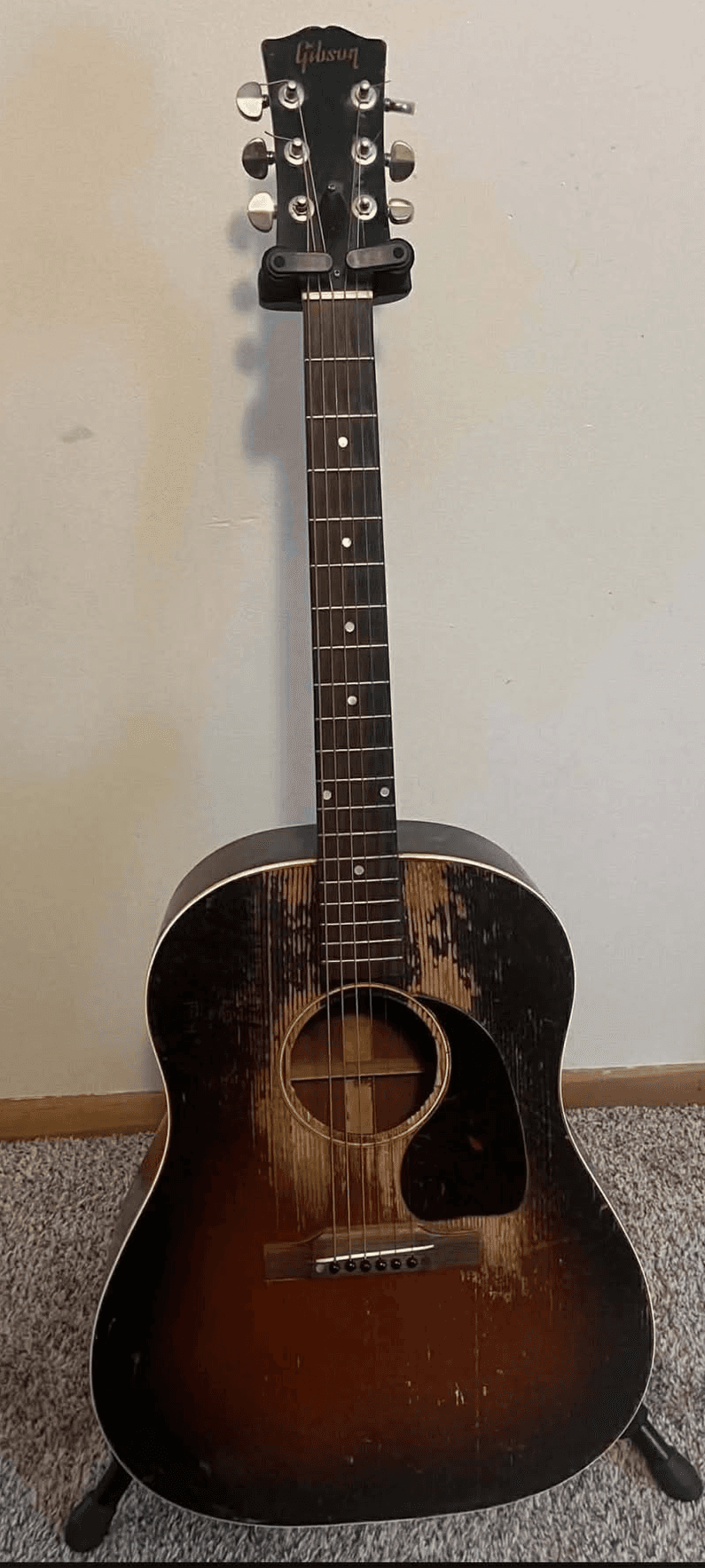
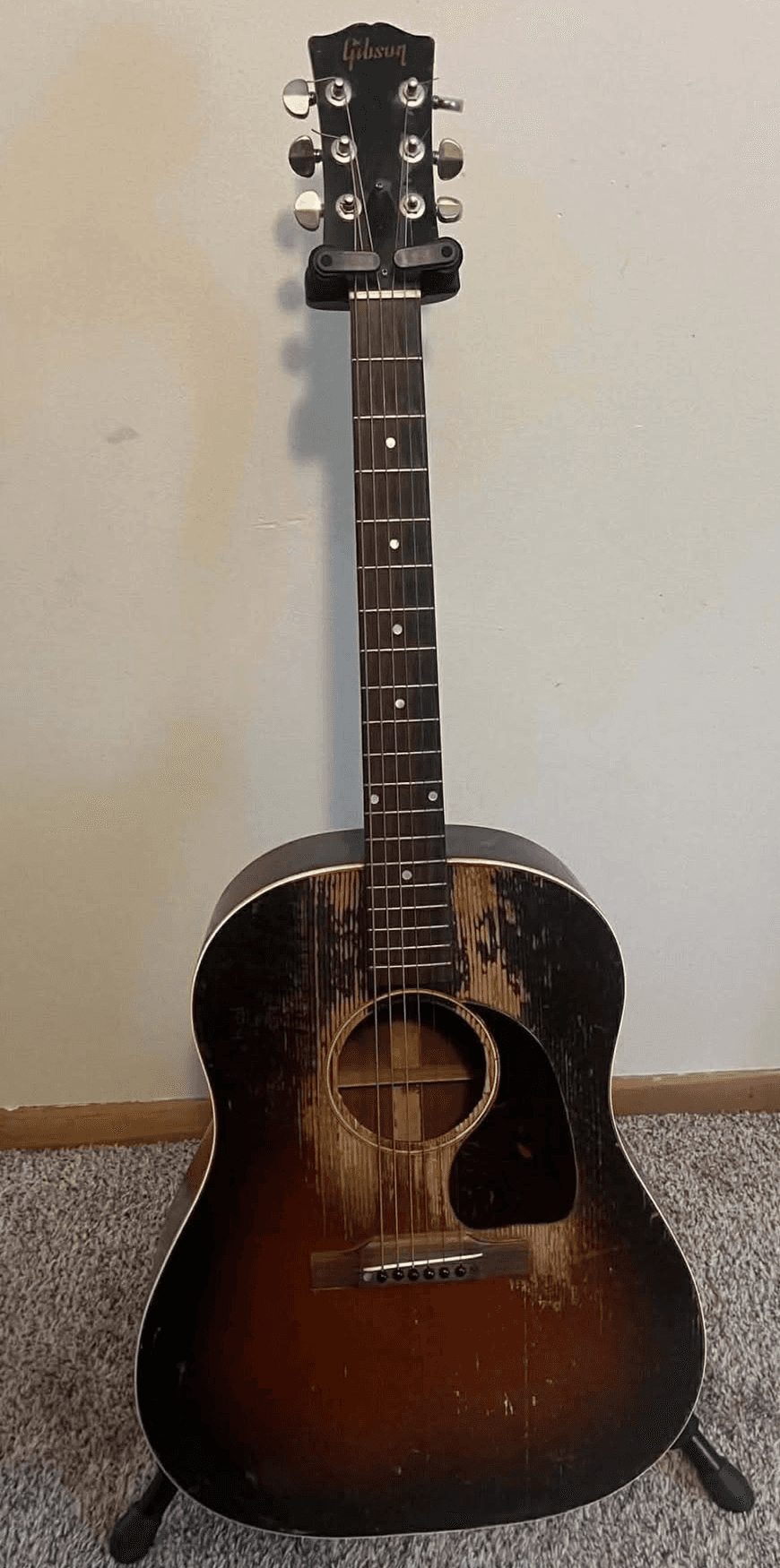
You’re staring at a guitar. Maybe you found it in a family member’s attic, inherited it from an estate, discovered it at a garage sale, or received it as a gift. You don’t play guitar, don’t know guitar brands, and have absolutely no idea what you’re looking at—but you suspect it might be old, possibly valuable, and you need to figure out what it is.
This situation is remarkably common. Every week, people across Ohio, Michigan, Pennsylvania, and neighboring states contact Edgewater Guitars with the same basic question: “I have this old guitar. Can you tell me what it is?”
The good news: identifying most guitars doesn’t require expert knowledge. If you know where to look and what to look for, you can determine the brand, model, and approximate age of your guitar in 15-20 minutes. This guide shows you exactly how, with step-by-step instructions written for complete beginners.
Understanding what guitar you have is the essential first step before you can research value, decide whether to sell, or make any other decisions. A 1962 Fender Stratocaster and a 1982 Fender Stratocaster look nearly identical to non-experts but occupy completely different value categories. A Gibson J-45 and a Gibson J-50 appear almost interchangeable but have different collectibility. Knowing exactly what you have matters enormously.
This comprehensive guide walks you through the entire identification process, from finding the brand name to determining the model and dating the guitar. By the end, you’ll know exactly what guitar you have—or at least have the information needed to get expert help with identification.
Why Identification Matters Before Anything Else
Before you can understand value, make selling decisions, or even clean the guitar properly, you need to know what you have:
Research Requires Specifics: You can’t research “old brown guitar” effectively. You need to search for “1965 Gibson J-45” or “1973 Fender Telecaster” to find relevant information.
Value Depends on Exact Model and Year: A guitar from 1964 might be exceptionally valuable while the same model from 1974 has modest collectibility. Precision in identification directly affects understanding of value.
Authentication Requires Known Specifications: To verify whether a guitar is original or has been modified, you need to know what it should look like. This requires knowing the exact model and production year.
Selling or Appraising Needs Details: Whether you’re selling, insuring, or getting professional appraisal, you’ll be asked: “What is it?” Having accurate information prevents misidentification that could cost you money.
Proper Care Depends on What It Is: Vintage guitars from different eras require different care approaches. Knowing what you have helps you research proper storage and maintenance.
What You’ll Need for Identification
Gather these items before starting:
Good Lighting: Natural daylight near a window works best. LED flashlight for looking inside acoustic guitars.
Reading Glasses (if needed): Serial numbers and small print can be tiny. Reading glasses or a magnifying glass help.
Camera or Smartphone: To photograph serial numbers, labels, and identifying features for later reference or expert consultation.
Paper and Pen: To write down serial numbers, model names, and observations.
Internet Access (helpful but not required): To use online serial number lookup tools and cross-reference findings.
Patience: Take your time. Rushing leads to misreading serial numbers or missing important details.
Step 1: Determine If It’s Electric or Acoustic
This fundamental distinction affects where you’ll look for identifying information:
Electric Guitars
Characteristics:
Solid wood body (or hollow with pickups)
Electronic pickups (magnetic devices under the strings)
Volume and tone control knobs
Output jack for cable connection to amplifier
Usually heavier and thicker-bodied than acoustics
No soundhole (though some hollow-body electrics have f-holes)
Common Electric Guitar Types:
Solid-body (Fender Stratocaster, Telecaster, Gibson Les Paul, SG)
Hollow-body (Gibson ES-335, Gretsch models)
Semi-hollow (various jazz and blues guitars)
Acoustic Guitars
Characteristics:
Hollow body with soundhole (round opening in the top)
No electronics or pickups (unless added later)
Sound projects naturally through soundhole
Lighter overall construction
Wider, rounder body typically
No volume knobs or output jacks
Common Acoustic Guitar Types:
Dreadnought (large, square-shouldered body)
000/OM (smaller, curvy body)
Jumbo (very large rounded body)
Parlor (small vintage body shape)
Why This Matters: Electric and acoustic guitars have identifying information in different places. Knowing which type you have tells you where to look.
Step 2: Find the Brand Name
The brand (manufacturer) is your starting point. Here’s where to look:
On Electric Guitars
Headstock Front (most common location):
[Image description: Photo showing the headstock of a Fender Stratocaster with the “Fender” logo clearly visible. Arrow pointing to logo location.]
The headstock is the top portion of the neck where the tuning pegs attach. Look at the front face:
Fender guitars: “Fender” appears in script lettering, with model name below (Stratocaster, Telecaster, etc.)
Gibson guitars: “Gibson” appears in script or block letters, often with a distinctive swooping “G”
Gretsch guitars: “Gretsch” in stylized lettering
Rickenbacker guitars: “Rickenbacker” across the headstock
Logo Variations by Era:
1950s-1960s Fender: Thin “spaghetti” script logo
Late 1960s-1970s Fender: Larger black logo with gold outline
1950s Gibson: “Gibson” in gold script on dark headstocks
1960s-1970s Gibson: Various logo styles depending on model
Headstock Back:
[Image description: Back of a Gibson headstock showing “Gibson” stamp and serial number]
Some guitars have stamps or decals on the headstock back:
Brand name stamped into wood
Serial numbers (covered in detail later)
“Made in USA” or other manufacturing location
Body or Pickguard: Less common, but some guitars have brand names on:
Metal plates on the body
Engraved pickguards
Control plates
On Acoustic Guitars
Inside the Body Through the Soundhole:
[Image description: Looking through soundhole showing Martin label on neck block]
For acoustic guitars, look inside through the soundhole with good lighting:
Paper Label Location:
Most acoustics have paper labels glued inside
Look on the back (opposite the soundhole)
Or on the neck block (wooden piece where neck joins body)
May also appear on sides inside
Common Label Styles:
Martin Guitars:
Label on the neck block visible through soundhole
Reads “C.F. Martin & Co. / Nazareth, Pa.”
Model information stamped on neck block
Serial number stamped on neck block
Gibson Acoustic Guitars:
Label on back inside body
Oval or rectangular shape
“Gibson” prominently displayed
Model name on label
May have elaborate graphics
Guild Guitars:
Label inside back
“Guild Guitars” text
Manufacturing location
Other Brands:
Similar label placement inside body
Look for manufacturer name and location
Headstock (Acoustic Guitars):
[Image description: Acoustic guitar headstock showing brand inlay]
Many acoustic guitars also display brand names on the headstock:
Inlaid in pearl or other material
Script or block letters
May be very ornate on high-end guitars
Some vintage Martins have no headstock logo
If You Can’t Find a Brand Name
Check These Additional Locations:
Neck heel (where neck meets body)
Inside control cavities (electric guitars)
On the bridge or tailpiece
Under the pickguard (don’t remove without expertise)
Metal plates or badges anywhere on the guitar
Possible Reasons for Missing Names:
Very old guitars may have worn labels
Some manufacturers didn’t always use logos
Labels can fall off over decades
Refinished guitars may have removed/replaced logos
Budget or student models sometimes lack prominent branding
What to Do If Brand Isn’t Visible:
Photograph all identifying features
Note construction details
Contact experts (more on this later)
Look for characteristics that suggest manufacturer
Step 3: Identify the Model
Once you know the brand, identifying the specific model determines the guitar’s place in the manufacturer’s lineup:
Fender Electric Guitar Models
Fender made numerous models, but several dominate the vintage market:
Stratocaster: [Image description: Full front view of Fender Stratocaster showing distinctive body shape]
Three pickups (three black rectangles under the strings)
Contoured double-cutaway body
Tremolo bridge (whammy bar, may be missing)
“Stratocaster” usually on headstock
Distinctive curvy body shape
Three knobs and a switch
Telecaster: [Image description: Full front view of Fender Telecaster showing body shape]
Two pickups
Single-cutaway body (one “horn”)
Slab body with sharp edges (no contouring)
“Telecaster” usually on headstock
Bridge pickup mounted in metal plate
Two knobs and a switch
Jazzmaster: [Image description: Full front view of Fender Jazzmaster showing offset body]
Two large pickups (wider than Stratocaster pickups)
Offset waist body (asymmetrical curves)
Floating tremolo with unique bridge
Multiple switches and controls
Larger body than Stratocaster
Jaguar: [Image description: Full front view of Fender Jaguar showing body shape and controls]
Two pickups with chrome covers
Offset waist body (similar to Jazzmaster)
Shorter scale length (22 frets vs. 21 on Jazzmaster)
Complex control layout with multiple switches
Metal plate near controls
Precision Bass: [Image description: Full front view of Fender Precision Bass]
Four strings (not six)
Longer neck and body
Split pickup (looks like two halves)
“Precision Bass” or “P Bass” designation
Jazz Bass: [Image description: Full front view of Fender Jazz Bass]
Four strings
Two separate pickups
Offset waist body
Multiple control knobs
Other Fender Models:
Mustang (student model, shorter scale)
Duo-Sonic/Musicmaster (student models)
Various custom and special models
Gibson Electric Guitar Models
Les Paul: [Image description: Gibson Les Paul showing classic single-cutaway shape]
Single cutaway (one horn)
Arched top (curved, not flat)
Two humbucking pickups (larger, two-coil pickups)
Four knobs (two volume, two tone)
Three-way switch
“Les Paul” on headstock or truss rod cover
Heavier, solid-body construction
Sunburst, goldtop, or custom color finish
Les Paul Variants:
Les Paul Standard (flagship model)
Les Paul Custom (black beauty, fancier appointments)
Les Paul Junior (simpler, one pickup)
Les Paul Special (two pickups, simpler than Standard)
SG (Solid Guitar): [Image description: Gibson SG showing double-cutaway pointed horns]
Double cutaway with pointed horns
Thin, flat body
Two humbucking pickups
Long pointed pickguard
“SG” on truss rod cover or headstock
Very light weight
Easier upper fret access than Les Paul
ES-335: [Image description: Gibson ES-335 showing semi-hollow body with f-holes]
Semi-hollow body (not solid)
Two f-holes (violin-style sound openings)
Double cutaway
Two humbucking pickups
Arched top
Bound (edged) body
Center block construction (partially hollow)
Other ES Models:
ES-175 (jazz guitar, full hollow)
ES-345 (like ES-335 with added features)
ES-355 (fanciest ES model)
ES-330 (fully hollow, different pickup type)
Other Gibson Models:
Firebird (reverse body shape, distinctive appearance)
Flying V (V-shaped body, very distinctive)
Explorer (angular, futuristic body)
Melody Maker (student model)
Martin Acoustic Guitar Models
Martin uses letter-number combinations for models:
Model Naming System:
First part = body size
Second part = appointment level (wood and decoration)
Example: D-28 = Dreadnought size, Style 28 appointments
Body Sizes:
D = Dreadnought (large, square-shouldered)
000 (triple-oh) = Mid-size, rounded shoulders
00 (double-oh) = Smaller concert size
OM = Orchestra Model (like 000 with longer scale)
0 (single-oh) = Even smaller parlor size
Style Numbers (higher = fancier):
18 = Mahogany back and sides, simple appointments
28 = Rosewood back and sides, herringbone trim (vintage)
35 = Three-piece rosewood back
42 = Fancier inlays and binding
45 = Top-of-the-line, extensive inlay and appointments
Common Martin Models:
D-28 (dreadnought, rosewood, very popular)
D-18 (dreadnought, mahogany)
D-45 (dreadnought, most ornate)
000-28 (smaller body, rosewood)
000-18 (smaller body, mahogany)
OM-45 (Orchestra Model, top-line)
Where to Find Martin Model Information:
Stamped on neck block (visible through soundhole)
Paper label may include model
Look for letter-number combination
Gibson Acoustic Guitar Models
Model Name Location:
On label inside body
May also appear on pickguard
Headstock inlay sometimes shows model
Common Gibson Acoustic Models:
J-45: [Image description: Gibson J-45 showing round-shouldered dreadnought body]
Round-shouldered dreadnought
Sunburst finish typical
Simple pickguard
Mahogany back and sides
Very popular model
J-50:
Like J-45 but natural finish instead of sunburst
Hummingbird:
Distinctive pickguard with hummingbird graphic
Square-shouldered dreadnought
Fancy appointments
Dove:
Distinctive dove graphic on pickguard
Highly decorated
Square-shouldered body
Southern Jumbo:
Large jumbo body
Round shoulders
Often sunburst
J-200/SJ-200:
Very large jumbo body
Elaborate mustache bridge
Highly ornate
Premier Gibson acoustic
L-00, L-1, etc.:
Smaller-bodied vintage models
Simple appointments
Depression-era guitars
Other Notable Brands and Models
Gretsch:
6120 Chet Atkins (orange, western styling)
White Falcon (white with gold hardware)
Country Gentleman (dark finish, painted f-holes)
Tennessean
Duo Jet
Rickenbacker:
325 (small body, John Lennon model)
330/360 series (semi-hollow bodies)
4001 Bass (distinctive bass guitar)
Guild:
Starfire series (semi-hollow electrics)
D-40, D-50 (dreadnought acoustics)
F-series (archtop acoustics)
Epiphone:
Casino (hollow-body electric)
Riviera (semi-hollow)
Various acoustic models
Step 4: Find and Record Serial Numbers
Serial numbers help date guitars and verify authenticity. Here’s where to look for each major brand:
Fender Serial Numbers
Location Changes by Year:
1950-1976: Neck Plate [Image description: Back of Fender body showing metal neck plate with serial number]
Metal plate where neck attaches to body
Look on the back of the guitar
Four-screw or three-screw plate
Serial number stamped into plate
Numbers range from four to seven digits
1976-Present: Headstock [Image description: Fender headstock showing serial number on face or back]
Front or back of headstock
Stamped or decal serial number
Often begins with a letter prefix
Additional Fender Dating Methods:
Neck Date Stamp:
Written in pencil on neck heel (where neck meets body)
Must remove neck to see (requires expertise)
Format: Month-Year (e.g., “3-62” = March 1962)
Body Date Stamp:
Penciled in tremolo cavity (under back cover)
In pickup cavities (under pickguard)
Format varies by year
Potentiometer (Pot) Codes:
Date codes on electronic parts
Visible by removing pickguard or control plate
Format: 137-YY-WW (manufacturer-year-week)
Example: 137-6416 = CTS manufacturer, 1964, week 16
Gibson Serial Numbers
Location Changes by Era:
1952-1960: Ink Stamp [Image description: Back of Gibson headstock showing ink-stamped serial number]
Stamped on back of headstock
Ink stamp that may be faint
Numbers can be difficult to read
1961-1975: Impressed Numbers [Image description: Gibson headstock showing impressed serial number]
Impressed (stamped into wood) on back of headstock
More visible than ink stamps
Six to eight digits typically
Acoustic Guitars:
Label inside body includes serial number
May also have Factory Order Number (FON)
Gibson Serial Number Complexities:
Gibson’s serial number systems changed multiple times
Same number can appear on guitars from different years
Often need to cross-reference with other features
FON (Factory Order Number) inside guitar provides additional dating info
Martin Serial Numbers
Location: [Image description: Looking through soundhole at Martin neck block showing serial number stamp]
Stamped on neck block (visible through soundhole)
Look inside, on the wooden block where neck joins body
Sequential numbering system
Martin Model Stamp:
Model designation also stamped on neck block
“D-28,” “000-18,” etc.
Size stamp may appear separately
Martin Serial Number System:
Sequential from 1898 onward
Reliable for dating when number is clear
Reference charts needed to match number to year
Other Brands
Gretsch:
Varies by era
Often on label inside hollow-body guitars
May be stamped on back of headstock
Can be on metal plate
Guild:
Label inside acoustic guitars
Headstock back on electrics
Sequential numbering
Rickenbacker:
Varies significantly by year
Often on metal plate (jackplate)
Headstock location on some models
Recording Serial Numbers
How to Record Accurately:
Write down the complete number exactly as it appears
Note any letters, dashes, or punctuation
Photograph the serial number clearly
Note the location where you found it
Be aware: O (letter) vs 0 (zero), I (letter) vs 1 (number), S vs 5
Common Serial Number Issues:
Worn or faint numbers (use raking light to read)
Missing serial numbers (not all guitars were numbered)
Restamped numbers (sign of fakery)
Numbers that don’t match known ranges
Using Serial Numbers for Dating
Online Serial Number Lookup Tools:
Use Edgewater Guitars’ free serial number lookup tools:
Fender Serial Number Lookup [link to tool]
Gibson Serial Number Lookup [link to tool]
Martin Serial Number Lookup [link to tool]
These databases cross-reference your serial number against known production ranges to estimate manufacturing year.
Serial Number Limitations:
Provide approximate dates, not exact dates
Some manufacturers reused numbers
Numbers can be missing or unclear
Counterfeit guitars may have fake serial numbers
Serial number alone doesn’t determine value
Cross-Referencing: Always verify serial number dating against:
Features that changed over time
Hardware specifications
Construction details
Label or stamp information
Step 5: Examine Construction and Hardware Details
Physical features help identify guitar models and production eras:
Pickup Types (Electric Guitars)
[Image description: Comparison photos showing single-coil vs. humbucker pickups]
Single-Coil Pickups:
Long, narrow rectangular shape
Six individual pole pieces (dots or screws)
Common on Fender guitars
Examples: Stratocaster, Telecaster pickups
Humbucking Pickups:
Wider, usually two rows of pole pieces
Larger than single-coils
Common on Gibson guitars
Examples: Les Paul, SG pickups
P-90 Pickups:
“Soap bar” shaped single-coils
Wider than Fender single-coils
Common on vintage Gibson guitars
Les Paul Junior, Les Paul Special
Other Pickup Types:
Mini-humbuckers (smaller humbuckers)
Wide-range humbuckers
Filter’Tron pickups (Gretsch)
Tuning Machines (Tuners)
[Image description: Various tuner types - Kluson, Grover, open-back, sealed]
Vintage Tuner Types:
Kluson Deluxe:
Common on 1950s-1960s Fender
“Kluson Deluxe” stamped on housing
Plastic buttons (often yellowed with age)
Open-back design
Grover:
Common on Gibson and Martin
“Grover” stamping
Various styles (Sta-Tite, Rotomatic, etc.)
Enclosed or open-back
Banjo Tuners:
Large planetary-style tuners
Common on early Martin guitars
Distinctive large gear design
Modern Sealed Tuners:
Fully enclosed mechanisms
Appeared on guitars from 1970s onward
May indicate replacement on vintage guitars
Bridge Types
[Image description: Various bridge types - Stratocaster tremolo, Tune-o-matic, Martin pyramid bridge]
Fender Bridges:
Synchronized tremolo (Stratocaster)
Three-saddle brass bridge (Telecaster)
Fixed bridges on some models
Jazzmaster/Jaguar floating tremolo
Gibson Bridges:
Tune-o-matic (arched bridge, separate tailpiece)
ABR-1 (vintage Tune-o-matic version)
Wraparound bridge (Les Paul Junior, some Special)
Various jazz guitar bridges
Martin Bridges:
Pyramid bridge (vintage guitars, distinctive pointed ends)
Belly bridge (some vintage models)
Modern pin bridge (straight design)
Body Binding
[Image description: Close-up of guitar body binding showing edge treatment]
Binding Types:
Single-ply (one layer of plastic/material)
Multi-ply (multiple layers, often white-black-white)
No binding (many Fender models)
Elaborate multi-layer binding (high-end guitars)
Where Binding Appears:
Body edges
Neck edges
Headstock (some models)
F-holes on hollow guitars
Binding Significance:
More binding often indicates higher-grade model
Binding style helps date guitars
Binding color changes over time (yellowing)
Fingerboard Inlays
[Image description: Various inlay patterns - dots, blocks, trapezoids, split-block]
Common Inlay Patterns:
Dot Inlays:
Simple dots at fret positions
Most common pattern
Standard on many models
Block Inlays:
Rectangular blocks
Gibson ES models, some Les Pauls
Indicates higher-grade model typically
Trapezoid Inlays:
Trapezoid shapes
Gibson Les Paul Standard
Various Gibson models
Split-Block/Split-Diamond:
Fancy divided blocks
High-end Gibson models
ES-355, Les Paul Custom
Snowflake Inlays:
Decorative snowflake pattern
Various custom models
No Inlays:
Some vintage models
Side dots only
Finish Colors and Types
Common Vintage Finishes:
Sunburst:
Dark edges fading to lighter center
Three-color (red/yellow/brown) or two-color
Most common vintage finish
Natural:
Clear finish showing wood grain
Common on acoustic guitars
Some electric models
Custom Colors (Fender):
Lake Placid Blue, Candy Apple Red, Olympic White, etc.
Special-order colors
More collectible than sunburst
Solid Colors:
Black, white, red, etc.
Various manufacturers
Finish Types:
Nitrocellulose lacquer (vintage guitars, thin finish)
Polyester/polyurethane (modern guitars, thick finish)
Aging characteristics differ significantly
Step 6: Assess Condition and Originality
Understanding condition helps determine whether the guitar is all-original or has been modified:
Originality Checks
All-Original Guitars Are Most Collectible:
Factory finish intact
Original hardware
Original pickups and electronics
No modifications or repairs
Period-correct everything
Common Modifications to Look For:
Refinishing:
Overspray on binding or hardware
Modern paint texture
Wrong color for era
Lack of natural wear
Paint in screw holes
Replaced Parts:
Modern tuners on vintage guitar
Wrong style bridge or tailpiece
Replaced pickups
Non-original pickguard
Modern electronics
Added Routes or Holes:
Extra holes drilled for hardware
Routing for different pickups
Modifications to body
Condition Assessment
Excellent Condition:
Minimal wear
Original finish showing natural aging
All parts original
Fully functional
Minor cosmetic issues only
Good Condition:
Moderate play wear
Original finish with checking or light scratches
All major parts original
Functional with possible minor issues
Age-appropriate wear
Fair Condition:
Heavy wear
Some replaced parts
Finish damage or checking
May need repair work
Structural integrity intact
Poor Condition:
Significant damage
Multiple repairs or replaced parts
Heavy modification
Structural issues
Major functionality problems
Red Flags for Valuable Guitars
Signs You May Have Something Special:
Pre-1965 Fender: Thin “spaghetti” logo, neck plate serial number
1950s Gibson: Specific models from this era are highly collectible
Pre-War Martin (before 1946): Especially D-45, D-28, 000-28
Custom Colors: Fender guitars in colors other than sunburst
All-Original Condition: Unmodified vintage guitars
Rare Models: Flying V, Explorer, Jazzmaster, Jaguar
Original Case: Vintage guitars with period-correct cases
When to Seek Expert Help:
Guitar appears very old
Unusual or rare features
Custom color electric guitar
Gibson from 1950s
Fender from pre-1965
Martin from pre-war era
You’re uncertain about originality
Step 7: Document Your Findings
Once you’ve identified the guitar, document everything:
Create an Identification Report
Record This Information:
Brand name
Model name/number
Serial number and location
Approximate age (from serial lookup)
Finish color
Condition notes
Original or modified (if determinable)
Hardware types
Any special features
Photograph the Guitar
Essential Photos:
Full front view
Full back view
Headstock front (showing brand and model)
Headstock back (showing serial number)
Close-up of serial number
Label inside acoustic guitar (if applicable)
Any damage or repairs
Unique features
Hardware details
Pickups and electronics
Photography Tips:
Good lighting (natural light ideal)
Clean background
Focus on details
Multiple angles
Clear, sharp images
Compile Documentation
Gather Any Related Materials:
Original case
Purchase receipts or paperwork
Previous appraisals
Repair receipts
Owner’s manual
Warranty cards
Photos of previous owner with guitar
Any provenance information
Common Identification Challenges and Solutions
Challenge: No Visible Brand Name
Solutions:
Check all possible locations methodically
Look for construction details that suggest manufacturer
Examine hardware for identifying characteristics
Consult expert with photos
Some guitars were made by manufacturers for other brands
Challenge: Serial Number Missing or Unclear
Solutions:
Use alternative dating methods (pot codes, neck stamps)
Date by features and specifications
Some very early guitars weren’t numbered
Expert examination can often date by construction details
Absence doesn’t mean the guitar lacks value
Challenge: Conflicting Dating Information
Solutions:
Serial number may not match other dates (parts from different years)
Necks sometimes dated differently than bodies
Pot codes show component dates, not assembly dates
Cross-reference multiple dating methods
Expert consultation resolves conflicts
Challenge: Possible Counterfeit or Fake
Warning Signs:
Serial number that doesn’t match era features
Wrong logo style for claimed year
Suspiciously “perfect” vintage condition
Hardware that doesn’t match period
Price seems too good to be true
What to Do:
Don’t make assumptions without expert verification
Photograph extensively
Seek professional authentication
Legitimate vintage guitars exist, but so do fakes
Challenge: Modified or Refinished Guitar
Determining Original Specifications:
Research what the model should look like originally
Compare to authenticated examples
Look for evidence of original features
Some modifications reduce collectibility significantly
Expert authentication determines originality
What to Do Once You’ve Identified Your Guitar
Research the Model
Learn More About What You Have:
Search online for the specific model
Read reviews and historical information
Look at images of similar guitars
Understand the model’s place in guitar history
Learn about collectibility and desirability
Understand Value
Next Steps for Valuation:
Read our comprehensive guide: “How Much Is My Old Guitar Worth?” [link to article 3]
Use online resources to research similar sales
Check vintage guitar price guides
Consider professional appraisal
Don’t rely solely on online asking prices (check completed sales)
Factors Affecting Value:
Exact model and year
Condition and originality
Rare features or colors
Current market demand
Provenance and history
Decide on Next Steps
Your Options:
If You Want to Sell:
Get professional valuation
Consider selling options (private, consignment, direct sale)
Read our guide: “Selling a Guitar from an Estate” [link to article 4]
Contact specialized buyers for expert evaluation
If You Want to Keep:
Research proper care and storage
Consider professional setup if you’ll play it
Obtain insurance if valuable
Document its history
If You’re Unsure:
Get professional evaluation to understand what you have
Take time to make informed decision
Don’t rush into selling without understanding value
Get Professional Identification Help
If you’re still uncertain about your guitar’s identity, Edgewater Guitars provides free identification services:
What We Offer:
Expert identification of brand, model, and year
Authentication and originality assessment
Condition evaluation
Market valuation
Guidance on next steps
How to Contact Us:
Call: (440) 219-3607 to speak with vintage guitar specialists
Submit Photos: Use our website contact form to send identification photos
In-Person: We travel throughout Ohio, Michigan, Pennsylvania, Indiana, and West Virginia for valuable guitars
What to Send or Tell Us:
Clear photos (all angles, serial numbers, labels)
What you’ve learned so far
Any history you know
Questions you have
Your location
Brand-Specific Identification Guides
For detailed information on specific brands, see our comprehensive guides:
Fender Identification:
Complete Fender Serial Number Guide [link to serial number tool/article]
Fender Stratocaster Identification
Fender Telecaster Identification
Pre-CBS Fender Features
Gibson Identification:
Complete Gibson Serial Number Guide [link to serial number tool/article]
Gibson Les Paul Identification
Gibson SG Identification
Gibson ES Series Identification
Martin Identification:
Complete Martin Serial Number Guide [link to serial number tool/article]
Martin Dreadnought Models
Pre-War Martin Features
Not sure what you have? Upload a few photos to Edgewater's free What's My Guitar Worth tool. It identifies the make, model and approximate year and gives a realistic value range. It is a starting point, not a binding appraisal.
Frequently Asked Questions
“What if I can’t find any brand name or serial number?”
This is uncommon but happens. Focus on construction details, hardware, and body shape. Take clear photos and contact experts—we can often identify guitars even without visible branding. Some budget brands or very old guitars had minimal markings.
“The serial number I found doesn’t match anything in online databases. Is it fake?”
Not necessarily. Some serial numbers fall outside standard ranges due to:
Manufacturing inconsistencies
Special runs or custom orders
Export models with different numbering
Transitional periods between systems
Data gaps in online resources
Contact experts for verification rather than assuming problems.
“How can I tell if my guitar has been refinished?”
Look for:
Overspray on hardware, binding, or in crevices
Modern paint texture (too smooth or thick)
Wrong undercoat color in chips
Lack of natural wear patterns
Paint in screw holes or neck pocket
Color that doesn’t match known factory colors
Professional authentication provides certainty.
“Is an electric guitar with a paper label inside valuable?”
Some hollow-body and semi-hollow electric guitars (Gibson ES models, Gretsch models, etc.) have labels inside like acoustic guitars. These can be quite valuable, especially 1950s-1960s examples. The label helps with model identification and dating.
“What if the model name has worn off or I can’t read it?”
Body shape, pickup configuration, hardware, and construction details all help identify the model even without visible model names. Dating the guitar narrows possibilities. Expert examination identifies models from physical characteristics.
“Does a guitar need to have a serial number to be valuable?”
No. Many very valuable vintage guitars lack serial numbers:
Some manufacturers didn’t consistently number guitars
Very early guitars (1930s-1940s) often weren’t numbered
Numbers can wear off over decades
Dating by features still possible
Serial numbers help but aren’t essential for identification or value.
“I found multiple serial numbers. Which one is correct?”
Some guitars have:
Body serial number
Neck serial number (sometimes different)
Pot codes (component dates)
Multiple stamps from different eras
All provide dating information. The numbers might indicate parts from slightly different years, which is normal. Note all numbers found for complete documentation.
“The guitar says ‘Made in Japan’ or ‘Made in Korea.’ Is it worthless?”
No. While American-made guitars from major brands (Fender, Gibson, Martin) are typically most collectible, some Japanese-made guitars have developed collectibility:
Vintage Japanese guitars (1960s-1970s)
High-quality Japanese Fender replicas
Certain brands made exclusively in Japan
Korean-made guitars are generally newer and less collectible, but quality varies.
“How do I know if I should get professional identification?”
Seek professional help if:
The guitar appears old (pre-1970)
It’s a major brand (Fender, Gibson, Martin)
It has unusual features or colors
You’re considering selling
Serial numbers or features don’t match
You suspect it might be valuable
You want certainty before making decisions
Professional identification from Edgewater is free and without obligation.
Take the Next Step: Get Expert Identification
You’ve learned how to identify your guitar’s brand, model, and approximate age. Whether you’ve successfully identified everything or still have questions, professional verification ensures you understand exactly what you have.
Free Professional Identification from Edgewater Guitars
Our vintage guitar specialists provide complimentary identification services:
What’s Included:
Brand and model verification
Production year determination
Authentication (original vs. modified)
Condition assessment
Market positioning
Value consultation
Guidance on your options
How It Works:
Step 1: Contact Us
Call (440) 219-3607
Submit photos through our website
Provide the information you’ve gathered
Step 2: Expert Review
Our specialists examine your information
We identify any questions or concerns
We may request additional photos if needed
Step 3: Detailed Response
Complete identification of your guitar
Explanation of significant features
Context about the model and era
Discussion of value factors
Recommendations for next steps
Step 4: In-Person Evaluation (if appropriate)
For potentially valuable guitars, we travel to you
Hands-on examination and authentication
Throughout Ohio, Michigan, Pennsylvania, Indiana, West Virginia
No obligation to sell
Why Choose Edgewater for Identification
Specialized Expertise:
Over 20 years combined experience with vintage guitars
Deep knowledge of Fender, Gibson, and Martin
Authenticated thousands of guitars
Recognition of subtle details that determine value
Honest Assessment:
We tell you exactly what you have
No inflating value or creating false excitement
Clear explanation of strengths and weaknesses
Realistic market positioning
No Pressure:
Free identification with no obligation
Help you even if you’re not ready to sell
Educational approach
Your decision, your timeline
Complete Service:
Identification leads to valuation if desired
Selling options if you choose
Professional guidance throughout
Single point of contact
Contact Information
Phone: (440) 219-3607
Speak directly with vintage guitar specialists
Immediate preliminary guidance
Schedule evaluation
Ask questions
Website: [Contact Form Link]
Upload identification photos
Submit detailed information
Receive expert response
Begin the process
Email: [Contact Email]
Written inquiries
Photo submissions
Detailed questions
Service Area: Ohio, Michigan, Pennsylvania, Indiana, West Virginia
In-person evaluation available throughout the region
We travel to you for valuable guitars
Final Thoughts: Knowledge Is Power
Identifying an old guitar transforms it from “that mysterious guitar” to a specific instrument with history, characteristics, and market position. You now have the tools to:
Locate brand names and model information
Find and interpret serial numbers
Date your guitar by features and specifications
Assess originality and condition
Understand what makes certain guitars collectible
Know when to seek expert help
Whether your guitar is a valuable vintage instrument or a modest player, knowing what you have empowers you to make informed decisions about its care, use, or potential sale.
If you’ve followed this guide and still have questions, don’t hesitate to reach out. Guitar identification can be complex, and professional verification protects your interests and ensures you understand the full story of your instrument.
Call Edgewater Guitars today at (440) 219-3607 or submit photos through our website. Let’s identify exactly what guitar you have and help you understand its place in guitar history.
About Edgewater Guitars
Edgewater Guitars specializes in vintage guitar authentication, appraisal, and acquisition throughout the Midwest. Our team includes specialists with decades of combined experience in vintage Fender, Gibson, and Martin guitars, helping hundreds of guitar owners understand and properly value their instruments.
About the authors
Edgewater Guitars is owned by Stephen Pedone and Gavin Coe. Stephen handles appraisal and authentication and is best known for authenticating pre-CBS Fender guitars and original custom-color finishes. Gavin has bought, sold and appraised vintage guitars for 16 years and does the in-person buying across Ohio and the surrounding states. Together they have bought and appraised more than 1,250 vintage guitars since 2015. Every value question on this site routes to a free appraisal: call or text (440) 219-3607.
Pre-CBS Fender guitar identification (1950s-1965)
Vintage Gibson guitar authentication (1950s-1960s)
Pre-war and vintage Martin guitar dating
Serial number interpretation across manufacturers
Original vs. refinished finish determination
Custom color identification and authentication
John has identified and authenticated thousands of guitars, helping owners throughout Ohio, Michigan, Pennsylvania, Indiana, and West Virginia understand exactly what they have.
This guide provides general information for guitar identification purposes. Individual guitars vary significantly in features and specifications. For definitive identification and authentication of your specific guitar, professional examination is recommended. Contact Edgewater Guitars for expert identification services.