DATE :
How Much Does Refinishing Reduce Vintage Guitar Value?
Quick Answer (30-Second Read)
Refinishing destroys 40-60% of value, even with professional work.
Guitar | Original Value | After Refinish | Loss |
|---|---|---|---|
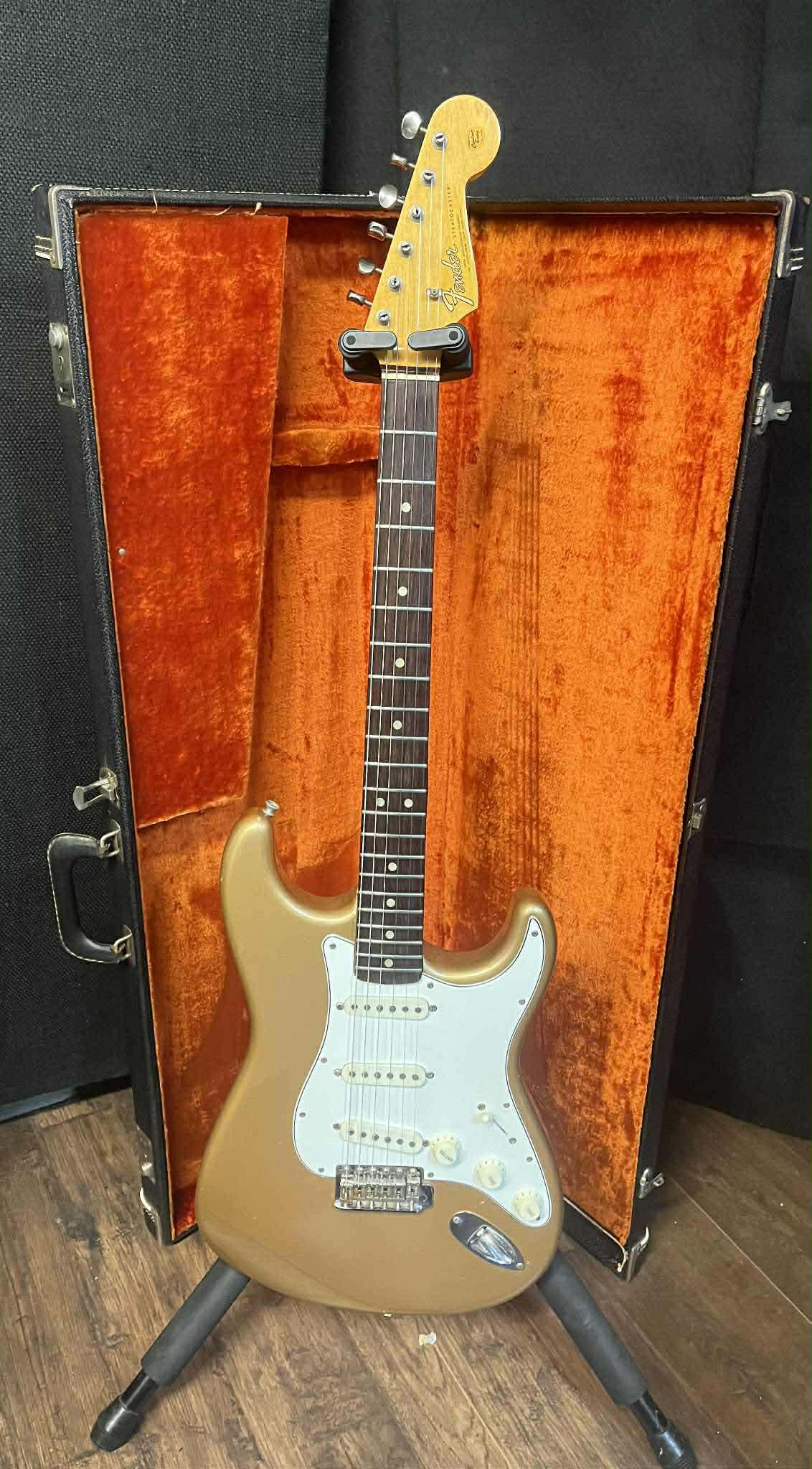
1964 Strat (worn original) | $12,000 | $5,000-6,000 | $6,000-7,000 (50-58%) |
1959 Les Paul Standard | $400,000 | $150,000-200,000 | $200,000-250,000 (50-62%) |
1968 ES-335 | $8,000 | $3,500-4,500 | $3,500-4,500 (44-56%) |
1972 Telecaster | $3,500 | $1,800-2,200 | $1,300-1,700 (37-49%) |
Why collectors value original over refinished:
Original finish proves authenticity
50+ years of aging can't be replicated
Worn original tells guitar's story
Refinishing removes authentication evidence
The math NEVER works: Spend $1,500-3,500 to destroy $3,000-10,000+ in value.
Value Destruction Table
Real Examples from Our Experience
Guitar | Original Condition | Original Value | Refinish Cost | After Refinish | Total Loss |
|---|---|---|---|---|---|
1963 Strat (Lake Placid Blue) | Heavy checking, worn | $10,500-12,000 | $1,800 | $4,500-5,500 | $6,800-8,300 |
1974 Les Paul Standard | Checking, buckle rash | $4,000 | $1,500 | $1,800-2,200 | $3,300-3,700 |
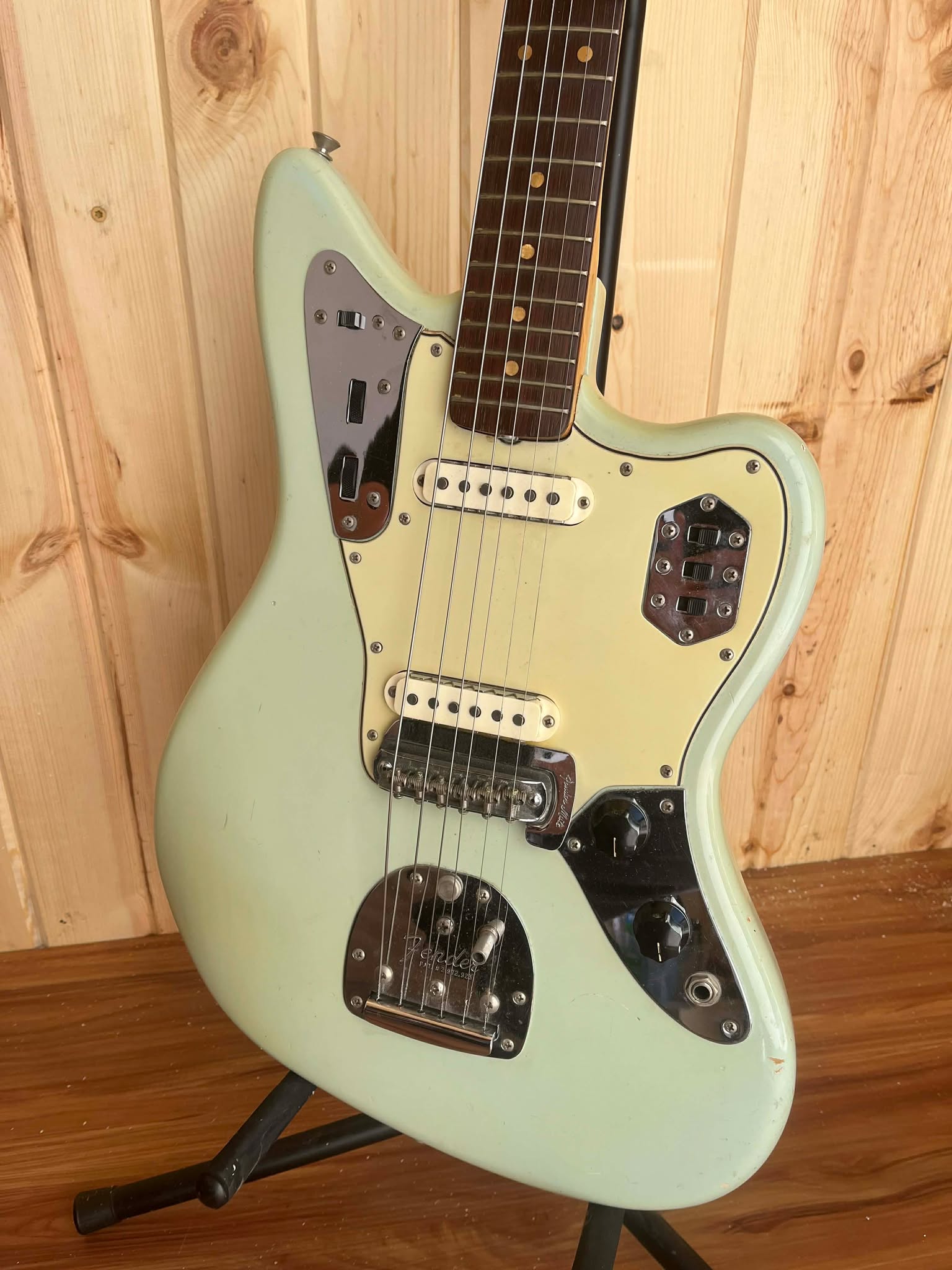
1965 Jazzmaster | Player wear, honest | $8,500 | $2,500 | $3,500-4,500 | $6,500-7,500 |
1966 Jazz Bass | Heavy wear | $9,000-11,000 (if original) | N/A | $4,000-5,000 (already refinished) | $5,000-7,000 (previous owner's loss) |
Pattern: Refinishing cuts value nearly in half, every time.
Why Collectors Prefer Worn Original to Perfect Refinish
Original Finish = Authentication Evidence
What original finish proves:
Evidence Type | What It Shows | Lost After Refinish |
|---|---|---|
Factory markings | Manufacturing date, inspector stamps | Removed by sanding |
Aging patterns | How nitro naturally checks over 50+ years | Can't be replicated authentically |
Wear patterns | Where player's arm rested, buckle marks | Guitar's story erased |
UV fading | Natural sunlight exposure over decades | Artificial fading looks wrong |
Hardware shadows | Original screw holes, mounting evidence | Destroyed in refinish |
After refinishing: Can't verify it's really a 1964, can't prove parts are original, could be anything underneath.
Result: Collector assumes worst case, values accordingly.
The Sunburst Example
Original 1964 Fender sunburst:
Center: Faded to light amber/white (UV exposure)
Edges: Faded red (was dark red-brown originally)
Natural transition pattern
Checking throughout (natural)
Honest wear through to wood
Modern refinish "sunburst":
Center: Fresh yellow/amber (no fading)
Edges: Dark vibrant red-brown (looks new)
Perfect transition (too perfect)
No checking or artificial checking (wrong pattern)
Side by side: Obvious which is original.
Collector value:
Original worn: $12,000
Perfect refinish: $5,000
Worn original worth 2.4× the perfect refinish.
The Math That Never Works
Professional Refinishing Costs
Refinish Quality | Cost | Timeline | Result |
|---|---|---|---|
Budget shop | $800-1,200 | 4-8 weeks | Poor-fair quality, still destroys value |
Competent luthier | $1,200-2,000 | 8-12 weeks | Good quality, still destroys value |
Specialist vintage | $2,000-3,500 | 12-20 weeks | Excellent quality, STILL destroys value |
Master restoration | $3,500-6,000+ | 20+ weeks | Museum quality, STILL destroys 40-60% |
Even $6,000 museum-quality refinishing destroys 40-60% of collector value.
Cost-Benefit Analysis (Never Makes Sense)
Example 1: "Improving" Worn Vintage
Example 2: "Restoring" Rough Guitar
When Refinishing Might Be OK (Rare)
Exception 1: Player Guitar (Not Investment)
ALL these must be true:
Guitar is for YOU to play (not selling)
You'll keep it forever
Personal preference > financial value
You understand and accept loss
Cost doesn't strain finances
Example: "My dad's 1974 Les Paul already has terrible 1985 refinish. I want to refinish in his favorite color. Never selling. Don't care about value. This is for me."
Emotionally valid, just not financially smart.
Exception 2: Already Destroyed Value
Guitar already:
Previously refinished (badly)
Fire/smoke/water damaged
Paint-over on original
Heavily modified (non-original anyway)
Value already gone. Refinishing doesn't hurt much more.
Example:
Exception 3: Unplayable Without Refinish
Structural repairs requiring refinish:
Neck reset (some finishes can't be preserved)
Severe crack repairs
Water damage remediation
If unplayable, some value > zero value.
But: Even here, collectors often prefer "honestly worn and repaired" to "refinished to hide repairs."
What To Do Instead
Option 1: Sell As-Is to Collector
Collectors WANT original worn guitars:
Checking, fading, wear = desirable, not flaws
Option 2: Gentle Cleaning Only
Safe cleaning:
Method | Risk | Result |
|---|---|---|
Soft microfiber cloth | None | Removes surface dirt |
Light guitar polish (test first) | Low | Shines original finish |
No abrasives | N/A | Preserves patina |
No solvents | N/A | Doesn't damage |
This is FREE and makes guitar more presentable while preserving value.
Option 3: Accept As-Is
The collector approach:
Worn vintage guitar characteristics:
Checking: Normal, expected, desirable
Worn edges: Proves authenticity
Faded color: UV exposure over decades
Buckle rash: Honest player wear
Oxidized hardware: Age-appropriate
Every "flaw" adds to story and proves originality.
This condition = MAXIMUM value.
Decision Framework
Ask These Questions:
1. What's guitar worth original?
Under $500: Refinish won't hurt much
$500-2,000: Refinish cuts to $300-1,000
$2,000-10,000: Refinish cuts to $1,000-5,000
Over $10,000: Refinish destroys $5,000-20,000+
2. Is it all-original?
Check with expert BEFORE refinishing
Many "tired" guitars valuable as-is
Collectors pay premium for originality
3. Why refinish?
Bad reasons:
"Looks old" (that's the point!)
"Finish is checking" (normal, valuable)
"Hardware tarnished" (leave it!)
"To increase value" (does opposite)
Potentially valid:
"Keep forever, want it my way" (personal choice)
"Already refinished/damaged" (can't hurt more)
4. Have you gotten expert opinion?
What looks "bad" might be valuable
Free appraisal reveals actual value
One call could save $5,000-10,000
Red Flags (Don't Refinish):
✗ Guitar is pre-1980 vintage
✗ All-original condition
✗ Considering selling ever
✗ Worth over $1,000
✗ Haven't gotten expert opinion
✗ Doing it "to increase value"
✗ Finish is just checking (this is normal!)
When Might Be OK:
✓ Already refinished/modified
✓ Keeping forever
✓ Personal enjoyment > value
✓ Understand and accept loss
✓ Cost won't strain finances
✓ Expert confirmed it makes sense
Real Stories
Story 1: The $5,500 Mistake
"Inherited uncle's 1965 Strat. Heavy checking, worn finish. Thought I'd 'restore' it. Spent $2,200 on professional refinish. Years later tried selling—learned original was worth $11,000. Refinished, got $5,500. Destroyed $5,500 trying to 'improve' it."
Lesson: Get appraisal BEFORE irreversible decisions.
Story 2: The Smart Call
"Almost refinished dad's 1972 Tele. Wear, checking, faded. Called Edgewater first. They explained collectors WANT this. Sold as-is for $3,400. If I'd refinished ($1,400), would've been worth $1,800-2,000. One call saved $3,000 mistake."
Lesson: Free consultation prevents expensive mistakes.
Story 3: The Personal Choice
"1978 SG already poorly refinished in 1990s. Value shot ($1,400 vs $2,800 original). Refinished in my favorite color for $900. Now worth maybe $1,500. Lost $200 value but gained guitar I love. Knew numbers going in."
Lesson: Informed personal choice valid, even if not financially optimal.
Conclusion
The data is overwhelming:
Refinishing destroys 40-60% of value
Professional work costs $1,500-3,500
Total loss: $3,000-10,000+ on valuable guitars
Collectors prefer worn original to perfect refinish
Math never works out
ONLY refinish when:
Already refinished/damaged (can't hurt more)
Keeping forever (not selling)
Personal enjoyment > financial value
Understand and accept loss
For everything else: Leave original, sell to collector, get maximum value.
Before any irreversible decision:
Free professional appraisal
Understand what you have
Learn what collectors value
Calculate real cost
One call saves $5,000-10,000.
Get free evaluation: (440) 219-3607
We'll tell you:
What your guitar is worth original
What it would be worth refinished
Whether any work makes sense
Your best options
Don't destroy value trying to create it.
FAQ
How much does refinishing reduce vintage guitar value?
Refinishing reduces vintage guitar value by 40-60% even with professional work. Example: 1964 Fender Stratocaster worth $12,000 original drops to $5,000-6,000 refinished. 1959 Les Paul worth $400,000 original drops to $150,000-200,000. Pattern holds across all vintage guitars because refinishing destroys authentication evidence and collector appeal.
Why do collectors prefer worn original finish over perfect refinish?
Collectors value original finish because it: proves authenticity (manufacturing date, factory markings, aging patterns), tells guitar's story (player wear, UV fading, natural checking), cannot be replicated (nitro aging over 50+ years is unique). Refinishing removes authentication evidence, making verification impossible. Worn original tells provable story; refinished could be anything.
Does refinishing ever make financial sense?
Refinishing almost never makes financial sense. Professional refinishing costs $1,500-3,500 and destroys $3,000-10,000+ in value. Exception: guitar already refinished or severely damaged (can't hurt originality already gone). Even then, many collectors prefer leaving damaged guitars as-is. For personal enjoyment when keeping forever, might be acceptable emotionally but not financially.
What should I do instead of refinishing vintage guitar?
Instead of refinishing: 1) Sell as-is to collector (they want original worn finish, pay premium), 2) Gentle cleaning only (soft cloth, light polish—removes grime, preserves patina), 3) Professional conservation (stabilize finish, don't replace), 4) Accept as-is (checking, fading, wear desirable to collectors, prove authenticity). Original worn is worth 2-3× more than perfect refinish.
Is finish checking bad for vintage guitar value?
No. Finish checking INCREASES value for vintage guitars. Fine checking throughout finish is normal for 50+ year old nitrocellulose finishes and proves age/authenticity. Collectors specifically look for natural checking patterns as authentication evidence. Trying to repair or hide checking destroys value. Worn, checked original worth 2-3× more than perfect refinish.
How much does professional guitar refinishing cost?
Professional refinishing costs: Budget shop $800-1,200 (poor-fair quality), competent luthier $1,200-2,000 (good quality), specialist vintage refinisher $2,000-3,500 (excellent), master restoration $3,500-6,000+ (museum quality). Even best refinishing still destroys 40-60% of collector value. Math never works: spend $2,500 to destroy $6,000-9,000 in value.
Related: Case study: authenticating a refinished 1954 Stratocaster.
Related: Do replaced or rewound pickups hurt a vintage guitar's value? The same question for electronics.