DATE :
Gibson Southern Jumbo: Complete Identification, Dating & Authentication Guide (1942-Present)
Gibson Southern Jumbo: Complete Identification, Dating & Authentication Guide (1942-Present)
What is a Gibson Southern Jumbo?
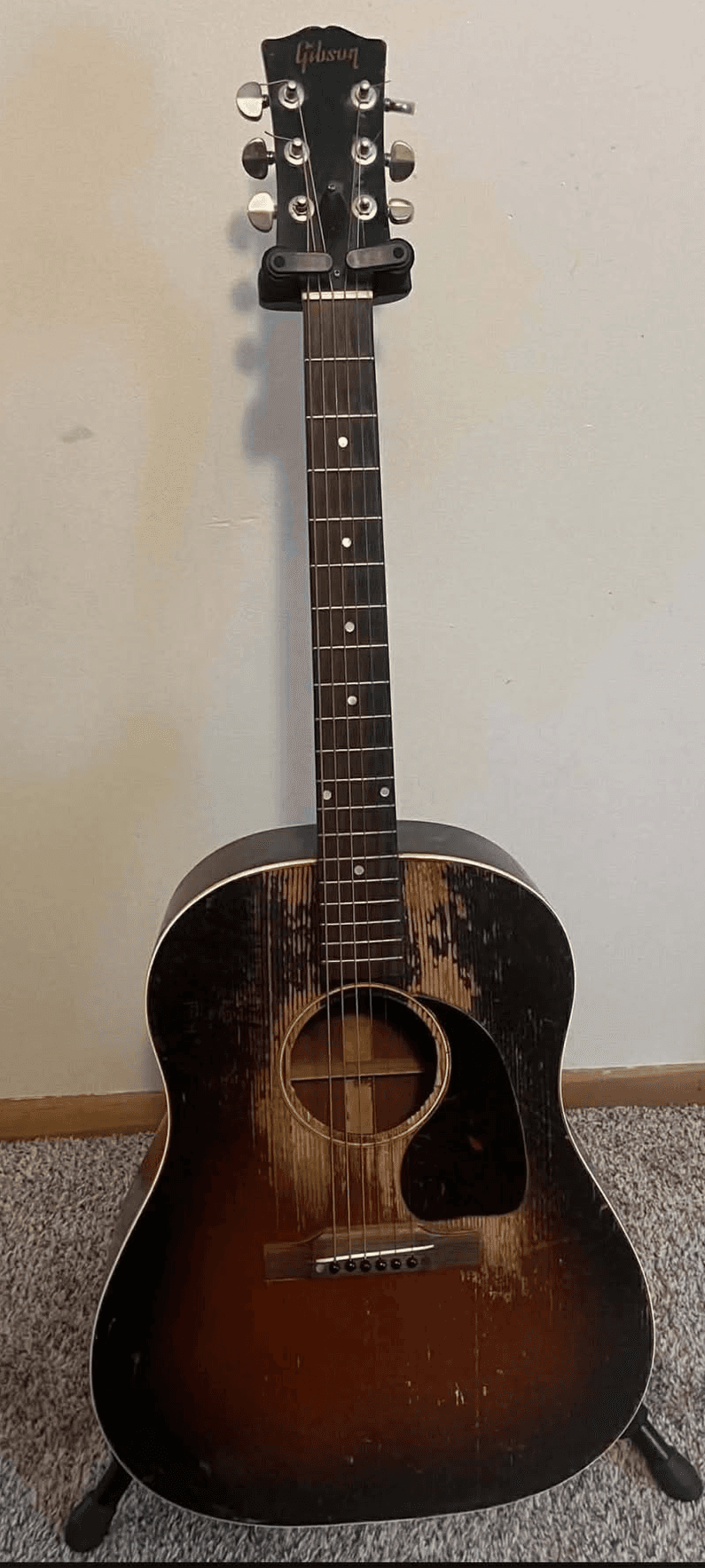
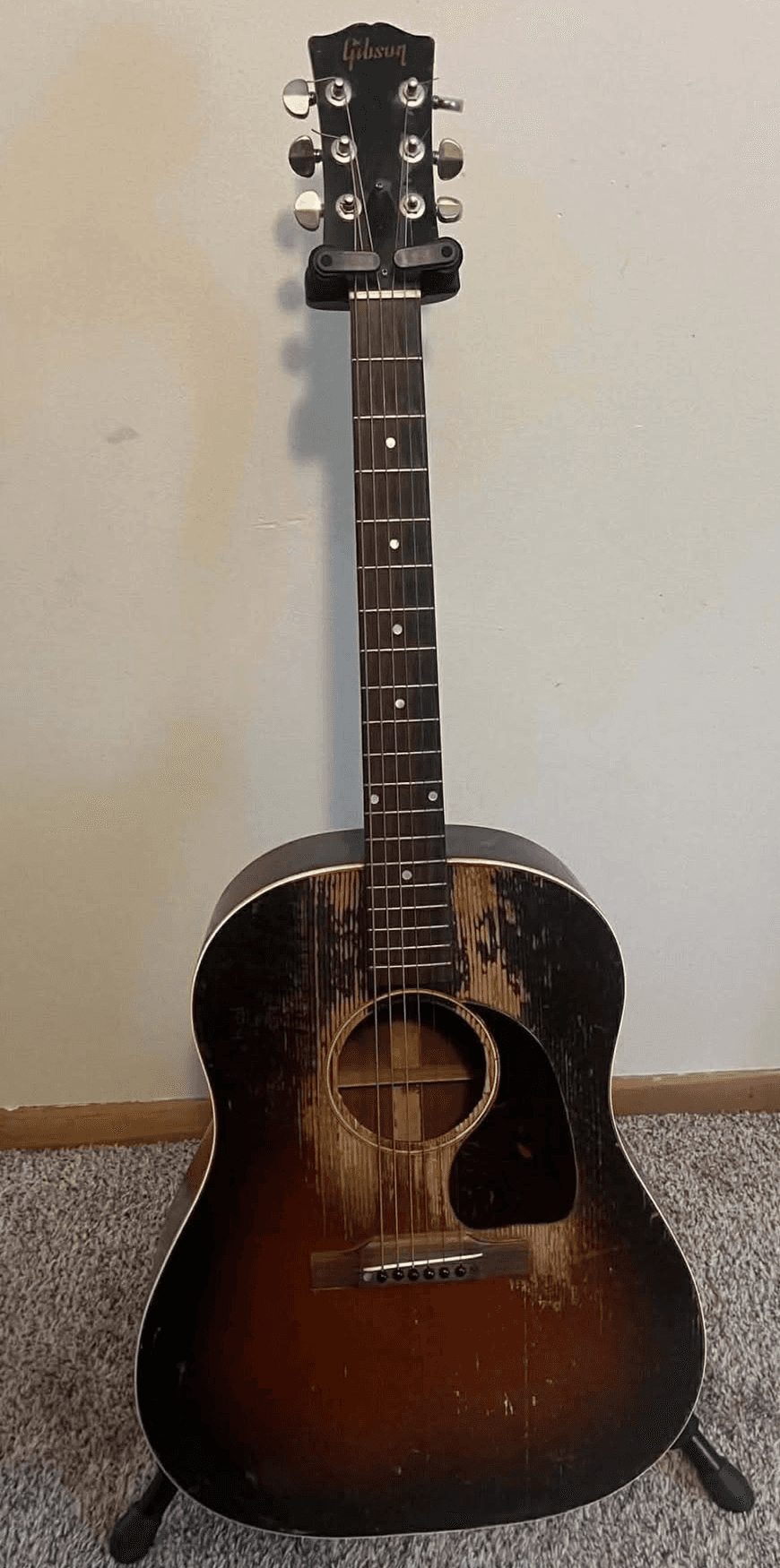
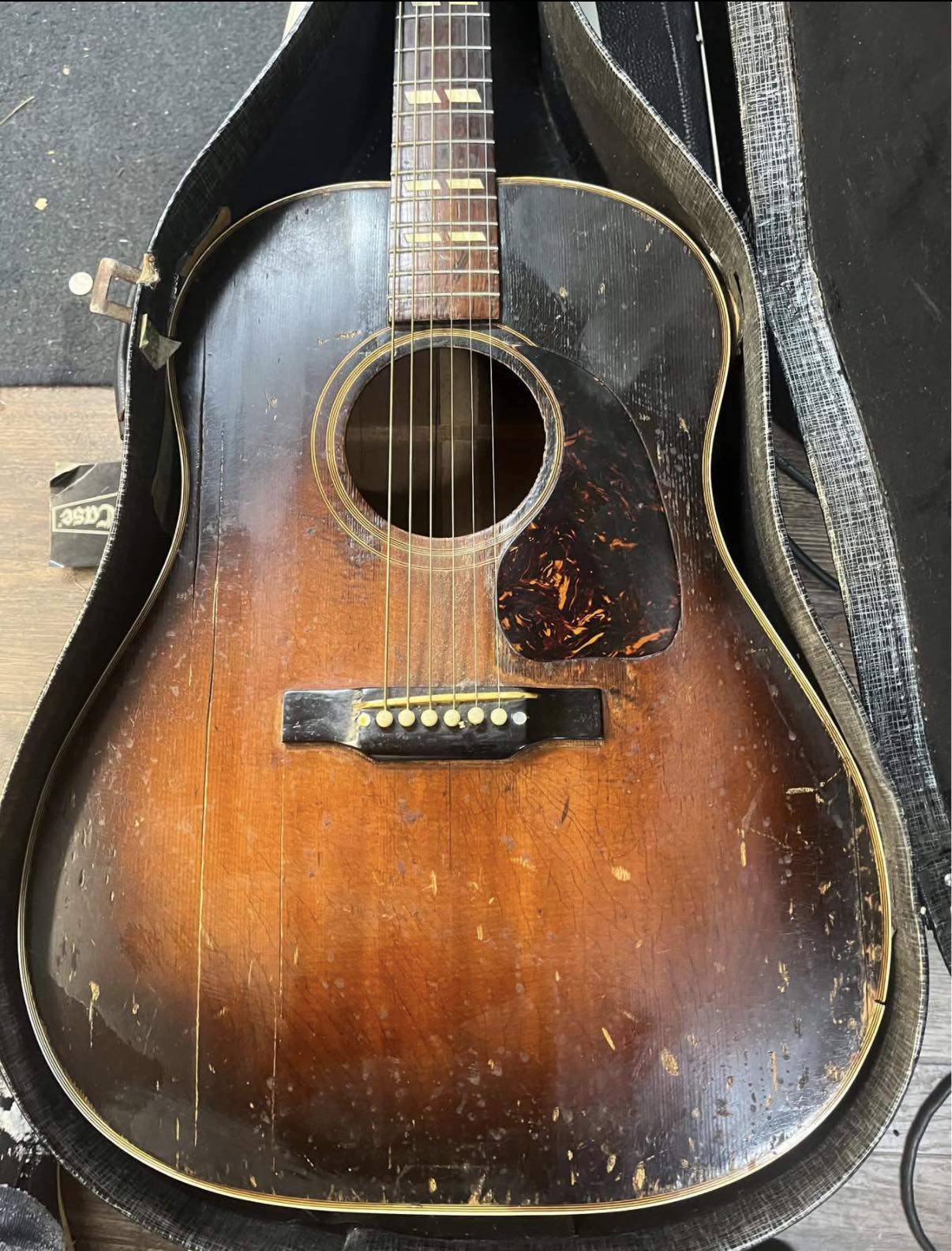
The Gibson Southern Jumbo is a slope-shouldered dreadnought acoustic guitar introduced by Gibson in 1942 as a direct competitor to Martin’s popular dreadnought models. Featuring rosewood back and sides, a spruce top, and Gibson’s distinctive slope-shouldered body design, the Southern Jumbo (often abbreviated as SJ) represents Gibson’s premium flat-top offering throughout most of its production history. The model was produced from 1942-1979 in its original run, briefly reissued in 1985-1989, and returned to the Gibson catalog in 2003 as part of their Historic Collection.
Quick Identification: Look for a 16-inch wide slope-shouldered body, rosewood back and sides, sunburst finish (standard), and the “Southern Jumbo” designation on the label inside the soundhole. Serial numbers and Factory Order Numbers (FON) visible through the soundhole provide precise dating information.
Complete Production History: 1942-Present
The Pre-War Era: 1942 Only
1942 Southern Jumbo (First Production Year)
The Southern Jumbo debuted in 1942 during one of the most challenging periods in American manufacturing history. World War II had already begun affecting guitar production, with material restrictions and labor shortages impacting Gibson’s Kalamazoo factory.
Historical Context: The Southern Jumbo was Gibson’s answer to the increasing popularity of Martin’s D-28. While Martin’s dreadnought featured square shoulders, Gibson designed their competitor with slope shoulders—a design element that would become a signature of Gibson’s flat-top guitars.
1942 Specifications:
Serial Numbers: 96xxx-96xxx (extremely limited production)
Brazilian rosewood back and sides
Adirondack spruce top
Scalloped Adirondack spruce X-bracing
Rosewood belly bridge
Bound top and back
Multi-ring rosette
Individual Kluson Deluxe tuners
Sunburst finish standard
Natural finish available (extremely rare)
Identification Markers:
Pre-war style script logo
“Only a Gibson is Good Enough” slogan on headstock
Orange interior label
Factory Order Number on neck block
Hand-scribed logo variations
Tortoiseshell celluloid pickguard
Production Numbers: Fewer than 100 Southern Jumbos were produced in 1942 before wartime restrictions severely curtailed civilian guitar production. This makes 1942 examples among the rarest and most collectible vintage Gibson acoustics.
Why 1942 Matters: These instruments represent the pure pre-war vision of the Southern Jumbo, built with the finest available materials and incorporating all the craftsmanship techniques Gibson had perfected during the 1930s. They serve as the benchmark against which all later Southern Jumbos are compared.
The War Years: 1943-1945
During World War II, Gibson’s production of civilian guitars was severely restricted. The factory diverted much of its capacity to war production, manufacturing wooden parts for military aircraft and other defense materials.
Limited Production Characteristics:
Extremely limited Southern Jumbo production (estimated fewer than 50 total across all three years)
Serial numbers: 97xxx-99xxx range
Use of available materials (some substitutions may occur)
Simplified appointments in some cases
Variable finish quality due to material shortages
Some examples lack pickguards due to celluloid restrictions
Authentication Challenges: The scarcity and variability of wartime Southern Jumbos make authentication particularly challenging. Documentation, provenance, and expert examination are essential for verifying genuine wartime examples.
Post-War Renaissance: 1946-1949
1946 Southern Jumbo
The first full year of post-war production marked a return to Gibson’s pre-war standards, though with some transitional characteristics as the factory adjusted to civilian manufacturing.
Serial Numbers: 96000-99000 range (overlapping with late war production)
Key Features:
Brazilian rosewood back and sides
Adirondack spruce tops
Scalloped X-bracing
Hand-shaped elements throughout
Transitional labels (some hand-modified)
Mix of pre-war and post-war appointments
Original brown thermoplastic cases
Notable Characteristics: Early 1946 examples often feature remaining pre-war material stocks, making them particularly desirable. Some show hand-modifications to labels and other transitional features as Gibson standardized their post-war specifications.
1947 Southern Jumbo
Serial Numbers: A100-A600 range (new “A” prefix system begins)
Standardization Year:
Post-war specifications now standardized
Consistent label format
Uniform finish application
Brazilian rosewood continues
Adirondack spruce tops
Standardized binding treatments
Changes from 1946:
More consistent finish quality
Standardized pickguard shape
Improved quality control
Factory Order Numbers become more systematic
1948 Southern Jumbo
Serial Numbers: A600-A1600 range
Continued Refinement:
Slight neck profile variations appear
Some examples with experimental bracing patterns
Brazilian rosewood with beautiful figure
Premium Adirondack spruce selections
Consistent sunburst finish application
1949 Southern Jumbo
Serial Numbers: A1600-A2700 range
Late 1940s Peak:
Refined manufacturing processes
Consistent high quality
Beautiful wood selections
Hand-crafted details throughout
Some of the finest Southern Jumbos ever produced
Why Late 1940s Matter: The 1946-1949 period represents what many consider the “golden age” of the Southern Jumbo. These instruments feature the finest available tonewoods, hand-scalloped bracing, and meticulous craftsmanship. The combination of old-growth materials and skilled hand-work creates instruments with exceptional tonal characteristics.
The 1950s: Golden Era Continued
1950-1952 Southern Jumbo
Serial Numbers:
1950: A2700-A5000
1951: A5000-A7000
1952: A7000-A9000
Characteristics:
Brazilian rosewood continues
Adirondack spruce tops
Slight narrowing of neck profile begins
Binding styles may vary slightly
Kluson Deluxe tuners standard
Belly bridge continues
Tonal Development: By 1950, the first post-war Southern Jumbos were 4-5 years old and beginning to “open up” tonally. Combined with new production continuing the tradition, this era produced instruments with both immediate playability and long-term sonic potential.
1953-1954 Southern Jumbo
Serial Numbers:
1953: A9000-A13000
1954: A13000-A16000
Transitional Period:
Some examples begin showing early signs of modern production methods
Brazilian rosewood quality remains high
Spruce top quality begins showing slight variation
Bridge designs may show subtle changes
Pickguard materials evolve
1955-1957 Southern Jumbo
Serial Numbers:
1955: A16000-A20000
1956: A20000-A24000
1957: A24000-A27000
Mid-1950s Characteristics:
Brazilian rosewood continues but quality shows more variation
Sitka spruce begins replacing Adirondack on some examples
Bracing patterns remain hand-scalloped
Tuner styles may vary
Some examples with improved adjustable saddles
Notable Features: The mid-1950s Southern Jumbos represent a sweet spot for many players—still featuring premium materials but with slightly slimmer neck profiles that some players prefer.
1958-1959 Southern Jumbo
Serial Numbers:
1958: A27000-A30000
1959: A30000-A32000
Late 1950s Evolution:
Brazilian rosewood becoming more variable in figure and color
Sitka spruce more common than Adirondack
Some examples with non-scalloped bracing
Finish thickness begins increasing slightly
Electronics options available on special order
Historical Note: By the late 1950s, Gibson was producing far more electric guitars than acoustics, and the Southern Jumbo was becoming a specialty item rather than a mainstream model.
The 1960s: Transition and Change
1960-1962 Southern Jumbo
Serial Numbers:
1960: A32000-A35000
1961: A35000-A37000 (some overlap with new system)
1962: 00100-04500 (new serial number system begins mid-1961)
Early 1960s Features:
Brazilian rosewood continues but quality variable
Sitka spruce tops standard
Bracing no longer hand-scalloped on most examples
Adjustable saddle bridge becomes more common
Pickguard designs evolve
Case styles change to newer designs
Transitional Serial Numbers: The 1961-1962 period is complex due to Gibson’s serial number system changes. Some instruments from this period may have “A” prefix numbers, while others have the new numbering system. Cross-reference with Factory Order Numbers for accurate dating.
1963-1965 Pre-CBS Southern Jumbo
Serial Numbers: 04500-99999 range
Important Context: While CBS purchased Fender in 1965 (a watershed moment for vintage guitars), Gibson remained independent during this period. However, the guitar industry was changing rapidly, and production methods were evolving.
1963-1965 Characteristics:
Brazilian rosewood becoming scarce (CITES restrictions approaching)
Quality of rosewood more variable
Sitka spruce tops standard
Non-scalloped bracing standard
Adjustable saddles common
Finish application becoming thicker
Some cost-cutting measures appear
Why These Years Matter: The 1963-1965 Southern Jumbos represent the end of the “classic” era before major construction changes. While not identical to earlier examples, they still retain many desirable vintage characteristics.
1966-1969 Late 1960s Southern Jumbo
Serial Numbers: 100000-600000 range (new system beginning in 1967)
Major Changes:
Indian rosewood replaces Brazilian (CITES protection of Brazilian rosewood)
Square saddle bridge replaces belly bridge on many examples
Bound fingerboards become less common
Finish thickness increases
Production methods become more standardized
Quality control becomes more variable
The Indian Rosewood Transition: Brazilian rosewood was essentially unavailable for commercial guitar production after 1969 due to CITES restrictions. Indian rosewood became the standard material. While different in appearance and tonal characteristics, quality Indian rosewood can still produce excellent instruments.
Identification Note: Distinguishing late 1960s Brazilian from early Indian rosewood requires expertise. Brazilian typically shows more color variation with chocolate browns and orange/red streaking, while Indian rosewood is more uniformly brown.
The 1970s: Modern Production Era
1970-1973 Southern Jumbo
Serial Numbers: 600000-900000 range
1970s Construction:
Indian rosewood standard
Sitka spruce tops
Non-scalloped bracing
Square bridge with adjustable saddle
Thicker polyurethane finishes on some examples
Bound fingerboard no longer standard
Grover Rotomatic tuners replace Klusons on many examples
Quality Variations: The early 1970s Southern Jumbos show significant variation in quality. Some examples maintain high standards, while others show cost-cutting measures and less attention to detail.
1974-1976 Mid-1970s Southern Jumbo
Serial Numbers: Continue in 900000+ range, then transition to new system
Characteristics:
“Made in USA” stamp on headstock back
Decal logo replaces inlaid logo on some examples
Volute added to back of headstock (1970-1972, then removed)
Three-piece backs common (cost-saving measure)
Laminated braces on some examples
Finish quality variable
Market Position: By the mid-1970s, the Southern Jumbo was competing against Japanese imports and new American makers. Gibson’s response included both cost-cutting and quality improvements, resulting in variable results.
1977-1979 Late 1970s Southern Jumbo (Final Original Run)
Serial Numbers: Various (Gibson’s serial number system was inconsistent during this period)
End of an Era:
Production declining significantly
Quality variable but some excellent examples
Indian rosewood
Some innovative features attempted
Limited production numbers
1979 Final Production: The Southern Jumbo was discontinued in 1979 after 37 years of production. Total production across all years is estimated at fewer than 15,000 instruments, making even common years relatively scarce compared to models like the J-45.
The Hiatus Years: 1980-1984
No Southern Jumbo production during this period. Gibson focused on other models and was experiencing corporate challenges. The absence of the Southern Jumbo from the catalog would last five years.
The First Reissue: 1985-1989
1985-1989 Southern Jumbo Reissue
Serial Numbers: Various 1980s Gibson formats
Reissue Characteristics:
Indian rosewood back and sides
Sitka spruce tops
Attempt to recreate vintage specifications
Modern bracing patterns
Adjustable saddle bridges
Sunburst or natural finish options
Modern Grover tuners
Thicker finish application than vintage
Quality Assessment: These reissues were well-made instruments but differed significantly from original Southern Jumbos. They represent Gibson’s 1980s production capabilities rather than true recreations of the vintage models.
Market Position: The 1985-1989 reissues never gained significant traction with players or collectors. Production numbers were limited, and the model was discontinued again after only five years.
Second Hiatus: 1990-2002
No Southern Jumbo production during this twelve-year period. Gibson’s acoustic division was reorganizing and focusing on Historic Collection instruments and modern designs.
The Modern Era: 2003-Present
2003-2008 Southern Jumbo Historic Collection
Serial Numbers: Various modern Gibson formats with “Historic Collection” designation
Authentic Reissue Features:
Hide glue construction
Scalloped Adirondack spruce bracing
Aged finishes available
Vintage-style appointments
Hand-voiced tops
Premium wood selections
Vintage-correct hardware
Historically accurate neck profiles
Target Year: Most Historic Collection Southern Jumbos are based on 1940s specifications, particularly 1947-1950 models.
Quality Level: The Historic Collection represents Gibson’s premium acoustic offerings, with attention to detail and materials approaching vintage standards.
2009-2015 Southern Jumbo Variations
Gibson introduced several Southern Jumbo variations:
SJ-200 Standard:
More affordable than Historic models
Indian rosewood or mahogany options
Sitka spruce tops
Modern appointments
Satin or gloss finish options
True Vintage Southern Jumbo:
Premium line attempting vintage specifications
Better wood selections
Vintage-style bracing
Hot hide glue construction
Custom Shop Southern Jumbos:
Made-to-order specifications
Premium wood selections
Aging options
Custom inlays and appointments
2016-Present Modern Southern Jumbo Production
Current Lineup:
Southern Jumbo Original: Faithful recreation of 1940s models with premium features
Southern Jumbo Standard: More affordable version with modern appointments
Southern Jumbo Custom: High-end custom shop offerings
Southern Jumbo Vintage: Aged and distressed finishes replicating decades of play wear
Modern Features:
LR Baggs electronics options
Carbon fiber reinforcement available
Modern truss rod systems
Plek machine setup available
Wider variety of finish options
Complete Identification Guide
Serial Number Dating Systems
Understanding Gibson’s various serial number systems is crucial for dating Southern Jumbos accurately.
1942-1947 Serial Number System
Format: 5-digit numbers
1942: 96xxx
1943-1945: 97xxx-99xxx (limited production)
1946: 96xxx-99xxx (overlapping with war years)
1947: A100-A600 (new “A” prefix begins)
Location: Stamped on back of headstock in orange ink
Important Notes:
Serial numbers from this era are not perfectly sequential
War years show significant gaps
Always cross-reference with Factory Order Number
1947-1961 “A” Prefix System
Format: “A” followed by 1-5 digits
1947: A100-A600
1948: A600-A1600
1949: A1600-A2700
1950: A2700-A5000
1951: A5000-A7000
1952: A7000-A9000
1953: A9000-A13000
1954: A13000-A16000
1955: A16000-A20000
1956: A20000-A24000
1957: A24000-A27000
1958: A27000-A30000
1959: A30000-A32000
1960: A32000-A35000
1961: A35000-A37000
Location: Back of headstock, orange ink stamp
1961-1975 New Number System
Format: 5-6 digit numbers
1961: 100-42xxx
1962: 42xxx-61xxx
1963: 61xxx-64xxx
1964: 64xxx-71xxx
1965: 71xxx-96xxx
1966: 96xxx-99xxx
1967-1969: 000001-999999 (6 digits)
1970-1975: 100000-900000+
Location: Back of headstock, ink stamped
Challenge: Gibson’s numbering during this period is notoriously unreliable with significant overlap between years. Factory Order Numbers provide more accurate dating.
1975-1977 Transfer System
Format: 8-digit number
Stamped on back of headstock
First two digits often indicate year
Middle digits indicate day of year
Last digits indicate production number
Example: 99072086 = Year 99, Day 072, Guitar 086
Problem: This system was short-lived and inconsistently applied
1977-Present Various Systems
Gibson employed multiple serial number systems from 1977 forward:
Made in USA ink stamp
Impressed 8-digit numbers
Letter-number combinations
YDDDYPPP format (Year, Day, Year, Production)
Modern Guitars: 2003-present Historic Collection and modern Southern Jumbos use current Gibson serialization, which can be decoded using Gibson’s official serial number database.
Factory Order Number (FON) System
The Factory Order Number, stamped inside the guitar on the neck block, is often MORE reliable than the serial number for dating vintage Southern Jumbos.
Location: Visible through soundhole on the maple neck block
Format: Various formats across years, typically:
Letter indicating year
Numbers indicating batch and sequence
FON Dating Guide:
1942-1943: No letter prefix, or “Z” prefix
1944-1945: “A” prefix (different from serial “A”)
1946: “F” prefix
1947: “G” prefix
1948: “H” prefix
1949: “I” prefix (letter “I” skipped in some years)
1950: “J” prefix
1951: “K” prefix
1952: “L” prefix
1953: “M” prefix
1954: “N” prefix
1955: “O” prefix
1956: “P” prefix
1957: “Q” prefix
1958: “R” prefix
1959: “S” prefix
1960: “T” prefix
After 1960: FON system becomes more complex and less consistently applied
Using FON for Dating: If serial number and FON don’t align, trust the FON. It was applied during assembly and is less likely to have been tampered with.
Pot Code Dating
Potentiometers (volume and tone controls) carry date codes that can verify or narrow dating:
Format: Six or seven digits
First three digits: Manufacturer code (137 = CTS, 134 = Centralab)
Next two digits: Year (last two digits)
Last two digits: Week of manufacture
Example: 1376542 = CTS, 1965, Week 42
Important: Pots should date to the same year as the guitar or slightly earlier (Gibson used parts in stock). Pots dating significantly later than the guitar indicate replacement.
Limitations:
Many vintage Southern Jumbos have had electronics replaced
Pot codes are less helpful for acoustic guitars than electrics
Not all Southern Jumbos had potentiometers (some acoustic-only models)
Label Identification
The interior label visible through the soundhole provides crucial information:
1942-1945 Labels
Orange/tan color
Black printing
“Southern Jumbo” model designation
Gibson’s Kalamazoo, Michigan address
Serial number may or may not appear on label
1946-1960s Labels
Orange label format continues
Model designation clearly printed
Serial number may be handwritten
Factory Order Number not on label
Ink color varies (black most common)
1960s-1970s Labels
Label design changes multiple times
Some periods use white labels
Made in USA appears
Model and serial numbers printed
Modern Labels
Current Gibson branding
Model designation
Serial number reference
Historic Collection notation (if applicable)
Authentication: Photocopied labels, wrong fonts, incorrect addresses, or missing information all indicate possible forgery or replacement.
Hardware Identification
Tuners Through the Years
1942-1955: Individual Kluson Deluxe tuners
Single-ring design (early years)
Double-ring design (later years)
Metal or plastic buttons
Three-on-a-plate configuration
“Kluson Deluxe” stamped on back
1955-1965: Kluson Deluxe (evolution)
Double-ring becoming standard
Plastic buttons more common
Gold or nickel plating
Patent numbers appear
1965-1975: Kluson and Grover mixed
Grover Rotomatic tuners appear
Kluson still used on some examples
Quality variations increase
1975-1979: Primarily Grover
Grover Rotomatic standard
Some Schaller tuners
Variable quality
Modern Era: Various manufacturers
Grover reproductions
Waverly tuners (high-end models)
Gotoh reproductions
Vintage-correct reproductions on Historic models
Bridges Through the Years
1942-1960s: Belly Bridge (curved underside)
Rosewood construction
Long saddle slot
Pearl dot inlays at pin holes
Hand-shaped underside
Rectangular pin holes
1960s-1970s: Transition Period
Belly bridges continue
Square saddle bridges appear
Adjustable saddles become common
Bridge styles vary
1970s-1979: Modern Bridges
Square bridges standard
Fully adjustable saddles
Less hand-shaping
Pin holes may be round
Modern Era: Various
Vintage-style belly bridges (Historic models)
Modern adjustable bridges (Standard models)
Hand-scalloped reproductions
Custom shop variations
Finish Identification
Sunburst Finishes (Standard)
1942-1950s: Classic Vintage Sunburst
Deep cherry red to dark brown gradation
Very thin nitrocellulose lacquer
Yellow/amber undertones
Hand-applied shading
Natural aging creates checking
Red fades to orange/pink over decades
1960s: Transitioning Sunburst
Slightly thicker application
More uniform shading
Less hand-applied variation
Some polyurethane experiments
1970s: Modern Sunburst
Thicker finishes
More uniform application
Some polyurethane over nitrocellulose
Less vintage character
Modern Era: Various Sunburst Options
Vintage-style thin lacquer (Historic)
Aged finishes with simulated wear
Modern thick finishes (Standard)
Custom color options
Natural Finishes
Natural finish Southern Jumbos are rare in vintage examples but were available throughout production:
Pre-1960: Extremely rare 1960s-1970s: Special order Modern Era: Regular catalog option
Natural finishes showcase the rosewood back/sides and allow full appreciation of wood figure.
Custom Colors
While rare, Southern Jumbos were occasionally produced in custom colors:
Walnut (1960s-1970s)
Cherry (uncommon)
Ebony/Black (very rare)
Blonde (rare, but documented)
Wood Identification
Top Woods
1942-1950s: Adirondack (Red) Spruce
Tight, straight grain
Cream to light tan color when new
Ages to deep amber
Visible grain structure
Superior tonal properties
1950s-Present: Sitka Spruce
Wider grain patterns
White to cream color
Less pronounced grain
Standard modern choice
Modern High-End: European Spruce
Available on custom shop models
Fine, even grain
Excellent tonal properties
Back and Side Woods
1942-1969: Brazilian Rosewood (Dalbergia nigra)
Chocolate brown with orange/red/purple streaking
Highly figured with varying grain patterns
Strong color variation
Spider webbing appearance common
Distinctive scent
Dense and heavy
CITES protected after 1969
1969-Present: Indian Rosewood (Dalbergia latifolia)
More uniform brown color
Less color variation than Brazilian
Straight grain more common
Less dense than Brazilian
Different tonal characteristics
Still excellent tonewood
Modern Options:
Madagascar rosewood (high-end models)
Cocobolo (rare)
Figured koa (custom shop)
Identifying Brazilian vs Indian Rosewood
This is crucial for authentication and affects collectibility significantly:
Brazilian Indicators:
Extreme color variation in single piece
Orange, red, purple, or golden streaking
“Spider web” grain patterns
Stronger smell
Heavier weight
More figured/flamed appearance
Indian Indicators:
Uniform brown color
Less dramatic grain
Straighter grain lines
Lighter weight
More consistent appearance
UV Light Test: Brazilian rosewood fluoresces under UV light while Indian does not, but this test requires proper equipment and expertise.
Fingerboard Woods
1942-Present: Rosewood fingerboards throughout production
Brazilian rosewood on early examples
Indian rosewood on later examples
Ebony on some high-end custom models
Neck Woods
All Years: Mahogany
Honduras mahogany (vintage)
African mahogany (modern)
Straight grain preferred
Minimal figure
Detailed Specifications by Era
1942-1949 Specifications (Pre-War and Immediate Post-War)
Body Dimensions:
Body Length: 20 inches
Lower Bout Width: 16 inches
Upper Bout Width: 11.5 inches
Depth at Neck Block: 4.25 inches
Depth at Tail Block: 4.875 inches
Scale Length: 24.75 inches
Construction:
Top: Adirondack spruce
Back/Sides: Brazilian rosewood
Neck: One-piece mahogany
Fingerboard: Brazilian rosewood
Bridge: Rosewood belly bridge
Bracing: Hand-scalloped X-bracing
Neck Joint: Dovetail (hide glue)
Appointments:
Binding: Multi-ply top, single-ply back
Fingerboard Inlays: Pearl dots at 3, 5, 7, 9, 12, 15
Rosette: Multi-ring concentric circles
Tuners: Kluson Deluxe individual
Nut Width: 1.725 inches
Pickguard: Tortoiseshell celluloid
Finishes:
Sunburst standard
Natural finish (rare)
Weight Range: 4.5-5.5 pounds
1950-1959 Specifications (Golden Era)
Body Dimensions: Same as 1940s
Construction Changes:
Top: Primarily Adirondack, transitioning to Sitka
Back/Sides: Brazilian rosewood (quality variable)
Bracing: Hand-scalloped continues, begins transitioning
Other woods remain consistent
Appointments:
Tuners: Kluson Deluxe (double-ring more common)
Neck profile: Slightly slimmer than 1940s
Bridge: Belly bridge continues
Binding: Consistent with 1940s
Notable Changes:
Adjustable saddle bridges appear late in decade
Pickguard materials evolve
Some construction streamlining
1960-1969 Specifications (Transition Decade)
Body Dimensions: Largely unchanged
Major Construction Changes:
Top: Sitka spruce standard
Back/Sides: Brazilian to Indian rosewood transition (1969)
Bracing: Non-scalloped becomes standard
Bridge: Square adjustable bridges more common
Appointments:
Tuners: Kluson and Grover mixed
Neck profile: Variable
Finish: Thicker applications
Pickguard: Plastic materials
Quality: Variable, with some excellent examples and some cost-cutting evident
1970-1979 Specifications (Modern Production)
Body Dimensions: Standardized at traditional measurements
Construction:
Top: Sitka spruce
Back/Sides: Indian rosewood
Bracing: Non-scalloped
Bridge: Square with adjustable saddle
Neck: Variable profiles
Appointments:
Tuners: Primarily Grover Rotomatic
Finishes: Thicker polyurethane common
Binding: Simplified on some models
Three-piece backs appear (cost-cutting)
Quality: Highly variable
2003-Present Historic Collection Specifications
Authentic Vintage Recreation:
Top: Premium Adirondack spruce
Back/Sides: Premium Indian rosewood (or Madagascar)
Bracing: Hand-scalloped Adirondack
Construction: Hide glue
Bridge: Vintage-style belly bridge
Modern Improvements:
Adjustable truss rod
Quality control
Consistent neck profiles
Options for electronics
Tonal Characteristics and Sound Profile
What Makes a Southern Jumbo Sound Unique?
The Gibson Southern Jumbo has a distinctive voice that sets it apart from both Martin dreadnoughts and Gibson’s J-45:
Slope-Shoulder Design Impact:
Slightly less low-end “boom” than square-shouldered dreadnoughts
More focused midrange presence
Enhanced clarity and note separation
Better balanced frequency response
Excellent for recording and ensemble playing
Rosewood Tonality:
Complex overtone structure
Extended sustain
Rich harmonic content
Shimmering high-end response
Strong fundamental notes
Three-dimensional projection
X-Bracing Characteristics (hand-scalloped vintage examples):
Greater top movement and resonance
Enhanced bass response
Fuller midrange
Longer sustain
More dynamic range
Vintage vs Modern Tonal Differences
1940s-1950s Southern Jumbos:
Old-growth Adirondack spruce provides immediate response
Brazilian rosewood adds complexity and shimmer
Hand-scalloped bracing allows maximum top movement
Thin finishes permit wood resonance
Decades of aging have “opened up” the instruments
Piano-like clarity with strong note definition
1960s-1970s Southern Jumbos:
Sitka spruce provides solid fundamental tone
Indian rosewood (late 1960s+) offers different character
Non-scalloped bracing reduces some overtone complexity
Thicker finishes dampen resonance slightly
Still excellent instruments but different voice
Modern Southern Jumbos:
Historic Collection closely approximates vintage tone
Standard models have modern, consistent sound
Better than vintage in some technical aspects (intonation, consistency)
Lack decades of aging vintage examples possess
Playing Style Suitability
Fingerstyle: Excellent
Clear note separation
Balanced frequency response
Individual notes remain distinct in complex passages
Flatpicking: Very Good
Strong fundamental notes
Good projection
Clear articulation for lead lines
Strumming: Excellent
Full, rich chord voicings
Balanced across frequency spectrum
Doesn’t overwhelm with excessive bass
Recording: Outstanding
Sits well in mixes
Minimal EQ needed
Captures well with simple microphone placement
Balanced frequency response translates well
Singer-Songwriter: Ideal
Doesn’t overwhelm vocals
Rich accompaniment without muddiness
Excellent tonal palette for various musical styles
Musical Genre Applications
Folk: Traditional home of the Southern Jumbo - ideal
Blues: Excellent, especially fingerstyle blues - rosewood adds complexity
Country: Very good - clear articulation for chicken-picking and country leads
Bluegrass: Good for rhythm, though J-45 more traditional for this genre
Rock: Adequate - can handle moderate volume but not designed for heavy rock
Jazz: Good - warmth and clarity work well for chord melody
Classical: Adequate - not traditional choice but capable
Common Issues, Repairs, and Modifications
Age-Related Issues in Vintage Southern Jumbos
Neck Resets
Why Needed: String tension over decades causes the neck angle to decrease, raising action and reducing playability.
Frequency: Most Southern Jumbos over 40 years old will eventually need a neck reset.
Impact on Value:
Professionally executed neck reset: Minimal impact (expected maintenance)
Poor quality neck reset: Significant negative impact
Never-reset original: Premium for collectors IF still playable
Signs You Need One:
Action cannot be lowered to comfortable playing height
Saddle is below the bridge top
Severe fret buzzing when properly intonated
What’s Involved:
Heating and separating the glued neck joint
Resetting the angle
Regluing the joint
Often includes bridge work and fret dressing
Should be performed by qualified luthier experienced with vintage Gibsons
Top Cracks
Common Locations:
Around soundhole
Along grain lines in lower bout
Between bridge and tail
Along centerline seam
Causes:
Humidity fluctuations
Age-related wood shrinkage
Impact damage
Excessive dryness
Repair Impact:
Professional crack repair: Minimal value impact if structural integrity maintained
Multiple cracks: More significant value reduction
Poor repairs: Major value impact
Original cracks properly stabilized: Generally acceptable
Prevention: Maintain 45-55% relative humidity year-round
Bridge Issues
Common Problems:
Original belly bridges lifting due to decades of string tension
Cracks developing in bridge
Saddle slot wear
Pin holes enlarging or cracking
Solutions:
Bridge reglue (if plate intact and flat)
Bridge replacement (if damaged)
Saddle slot repair
Pin hole bushings
Value Impact:
Retained original bridge: Premium
Professional bridge replacement with period-correct bridge: Moderate impact
Modern replacement bridge: More significant value reduction
Finish Issues
Natural Aging (desirable):
Checking (fine crackle pattern)
Ambering of clear lacquer
Natural wear on high-contact areas
Color fading in sunbursts
Problems (value-reducing):
Refinishing (major value reduction: 40-60%)
Touch-up that doesn’t match original
Polyurethane over original nitrocellulose
Removed original finish
Finish Conservation: Preserving original finish is critical. Even damaged original finish is preferable to refinishing for collectors.
Structural Repairs
Brace Repairs
Common Issues:
Loose or detached X-braces
Cracked braces
Previous repair failures
Repair Approaches:
Regluing loose braces
Sister bracing (adding support alongside original)
Complete brace replacement (last resort)
Value Impact: Properly executed brace repairs have minimal impact. Complete rebracing significantly reduces collectible value.
Back and Side Cracks
Frequency: Less common than top cracks but occur
Repair:
Cleating from inside
Grain fill and finish touch-up
Structural stabilization
Value Impact: Back and side cracks generally impact value less than top cracks if properly repaired
Modifications and Reversibility
Acceptable Modifications (Minimal Value Impact)
Refrets:
Expected on playable vintage instruments
Should use period-appropriate wire size
Proper technique preserves binding nibs
Professional installation critical
Nut and Saddle Replacement:
Normal wear items
Bone replacements standard
Should maintain proper dimensions
Save original parts if available
Strap Buttons:
Common addition
Small holes easily filled if removed
Minimal impact if discreetly placed
Pickup Installation (if reversible):
Soundhole pickups: completely reversible, no impact
Under-saddle pickups: requires bridge modification, some impact
Built-in preamps: drilling required, moderate impact
Value-Reducing Modifications
Irreversible Electronics Installation:
Endpin jack drilling
Battery box routing
Preamp installation requiring permanent changes
Added Cutaways:
Major modification
Severe value reduction (60-80%)
Alters original instrument fundamentally
Binding Replacement:
Difficult to match original
Often affects finish
Moderate to significant value impact
Tuner Upgrade Requiring Reaming:
Enlarged peg holes
Difficult to reverse
Moderate value impact
Save original tuners
Parts Replacement Considerations
When Original Parts Matter Most
High-Impact Original Parts:
Tuners (Kluson originals highly valued)
Bridge (original belly bridges premium)
Pickguard (if original tortoiseshell celluloid)
Nut and saddle (bone originals less critical but valued)
Lower-Impact Original Parts:
Strings (no one expects original strings)
End pin (easily replaced)
Strap buttons (often added)
Documentation of Changes
When selling a Southern Jumbo with modifications or repairs:
Document all work with receipts and luthier information
Save all original parts removed
Photograph repairs and modifications
Maintain service records
Disclose all changes honestly
At Edgewater Guitars, we value honesty and complete disclosure. Well-documented repairs by qualified luthiers are far preferable to undisclosed issues.
Authentication Guide: Real vs Fake
Why Southern Jumbo Forgeries Exist
While not as commonly forged as Les Paul Bursts or pre-CBS Stratocasters, Southern Jumbos do face authentication challenges:
Valuable vintage models (especially 1940s Brazilian rosewood examples)
Possible label swaps from lower-value J-45s
Parts guitars assembled from multiple instruments
Serial number alterations
Complete forgeries (rare but documented)
Red Flags for Potential Forgeries
Serial Number Issues
Warning Signs:
Serial number doesn’t match year-appropriate range
Number appears re-stamped or altered
Ink color wrong for period
Number placement inconsistent with era
FON and serial number drastically mismatched
Verification: Cross-reference serial number, FON, pot codes, and construction features. They should all align to same approximate period.
Label Concerns
Red Flags:
Photocopied label (under magnification)
Wrong font or spacing
Incorrect address for period
Label too pristine for claimed age
Label doesn’t match claimed model
Handwriting inconsistent with period
Common Scam: J-45 relabeled as Southern Jumbo (rosewood vs mahogany)
Wood Species Verification
Critical Check: Verify rosewood back/sides are correct species
J-45 Conversion Scam:
Mahogany J-45 with painted/stained finish to imitate rosewood
UV light reveals paint vs natural wood
Grain pattern doesn’t match rosewood
Weight lighter than rosewood version
Indian Represented as Brazilian:
Stained to imitate Brazilian coloring
Lacks characteristic Brazilian figure
More uniform color than authentic Brazilian
Different weight and resonance
Verification Methods:
UV light examination
Wood grain analysis
Weight comparison
Expert examination
Dendrochronology (for highest-value examples)
Hardware Authenticity
Tuner Red Flags:
Modern tuners on claimed vintage guitar
Wrong style for period
Peg holes enlarged (indicates replacement)
Tuners don’t match wear pattern of rest of guitar
Bridge Concerns:
Wrong style for claimed year
Modern adjustable bridge on claimed pre-1960 guitar
Bridge doesn’t show appropriate age wear
Different wood species than body
Construction Inconsistencies
Warning Signs:
Wrong bracing pattern for period
Modern adhesives visible
Router marks in cavities (vintage guitars hand-carved)
Polyurethane finish on claimed pre-1970 guitar
Wrong neck profile for era
Incorrect binding materials
Finish Analysis
Suspicious Indicators:
Refinished guitar represented as original
Finish style wrong for period
Checking pattern artificial
Overspray on hardware/binding
Thick modern finish on vintage guitar
UV light reveals multiple finish layers
Professional Authentication
For high-value Southern Jumbos, professional authentication is worth the investment:
Who Can Authenticate:
Gruhn Guitars (Nashville)
Carter Vintage Guitars (Nashville)
Major auction houses (Heritage Auctions, etc.)
Experienced vintage guitar dealers
Specialized luthiers with Gibson expertise
What They Examine:
Serial numbers and FON
Wood species identification
Construction methods
Hardware originality
Finish analysis
Overall consistency
Documentation Value: Professional authentication certificate significantly enhances resale value and buyer confidence.
Market Trends and Collectibility
What Makes Certain Southern Jumbos More Collectible?
Year and Era Desirability
Most Collectible Periods:
1942 (First Production Year): Extreme rarity, pre-war specifications
1946-1949 (Post-War Peak): Premium materials, exceptional craftsmanship
1950-1955 (Golden Era Continued): Still featuring best materials and construction
1956-1960 (Late Golden Era): Quality still high, increasingly valuable
Moderately Collectible:
1960-1965: Transitional period, variable quality
1966-1969: Last Brazilian rosewood years
Player Grade Collectible:
1970-1979: Valuable as players, less as pure collectibles
1985-1989 Reissue: Moderate collector interest
Modern Collectible Potential:
Historic Collection models: Appreciation expected
Custom Shop limited editions: Potential future collectibles
Condition Premium Factors
All-Original Examples: Command significant premiums
No finish work
All original parts
No structural repairs
Original case
Documentation
Excellent Player Condition: Strong market
Professional neck reset acceptable
All original parts
Minor finish checking
Fully playable
Original case
Good Player Grade: Steady demand
Some repairs acceptable
May have some replaced parts
Finish wear acceptable
Plays well
Affordable entry to vintage market
Finish and Color Rarity
Sunburst (Standard): Most common, strong demand
Natural Finish:
Rare in vintage examples
Premium of 10-20% over sunburst
Showcases wood figure
Custom Colors (Vintage):
Very rare
Walnut finish (moderate premium)
Black/Ebony (significant premium)
Other colors (evaluate individually)
Special Features Adding Value
High-Figure Brazilian Rosewood: Significant premium over plain grain
Matching Numbered Parts: Original matching components valued
Celebrity Provenance: Documented ownership by notable musicians can double or triple value
Original Case: Adds 5-10% to value, especially vintage brown thermoplastic
Documentation: Original sales receipts, warranty cards, photographs add value
Unplayed “New Old Stock”: Extreme rarity, maximum premium
Investment Considerations
Long-Term Appreciation Trends
Vintage Southern Jumbos (1942-1960):
Steady appreciation over past 30 years
1940s Brazilian rosewood examples strongest performers
Acceleration in recent years as baby boomers liquidate collections
Expected to continue appreciating as supply diminishes
1960s-1970s Southern Jumbos:
Moderate appreciation
Player market driving prices
Less dramatic gains than earlier examples
Good entry point for vintage market
Historic Collection Modern:
Appreciating moderately
Better than standard modern Gibson acoustics
10-15 year holding period recommended
Market Dynamics
Supply Factors:
Aging baby boomer collectors downsizing
Estate sales releasing vintage instruments
Overall supply limited (low production numbers)
Increasing recognition of model’s quality
Demand Factors:
Younger players discovering vintage acoustics
Recording musicians seeking superior tone
Collectors completing Gibson acoustic collections
International buyers entering market
Price Trends:
1940s examples: Strong, steady appreciation
Brazilian rosewood models generally: Increasing
Player-grade vintage: Growing market
Modern Historic: Gradual appreciation
Regional Market Variations
Strongest Markets:
Nashville, Tennessee (music industry hub)
New York/Northeast (collector concentration)
Los Angeles/California (studio musicians)
Texas (strong vintage guitar culture)
International: Japan, Europe (premium prices)
Edgewater’s Market: Ohio and surrounding states offer excellent opportunities for both buyers and sellers. Regional pricing often below coastal markets, creating value for sellers through specialized dealers like Edgewater who access national and international buyers.
Care, Maintenance, and Preservation
Environmental Control
Humidity Management (Critical)
Ideal Range: 45-55% relative humidity
Too Dry (below 40%):
Top cracks develop
Binding shrinks and separates
Frets protrude from fingerboard edges
Action lowers excessively
Finish checking accelerates
Bridge may crack or lift
Too Humid (above 60%):
Top swells and bulges
Action rises
Intonation problems
Finish clouding
Mold/mildew risk
Glue joint failure possible
Humidity Solutions:
In-case humidifiers: D’Addario, Planet Waves, Oasis (for storage)
Room humidifiers: For playing/display environments
Dehumidifiers: For humid climates or summer months
Hygrometer: Essential for monitoring (digital recommended)
Seasonal Adjustments:
Winter (heating season): Usually needs humidification
Summer: May need dehumidification depending on climate
Monitor and adjust year-round
Gradual changes better than sudden shifts
Temperature Control
Ideal Range: 65-75°F
Avoid:
Extreme heat (attics, cars in summer)
Extreme cold (unheated storage)
Rapid temperature changes
Direct sunlight exposure
Proximity to heating/cooling vents
Why Temperature Matters:
Affects relative humidity
Impacts wood stability
Influences glue integrity
Affects finish condition
Storage Best Practices
Case Selection
Vintage Instruments:
Original case adds value (don’t discard)
Modern hard case for actual protection
TKL, Calton, or other premium cases recommended
Avoid deteriorating foam (check annually)
Case Considerations:
Hard shell essential for valuable instruments
Proper fit (generic cases may allow movement)
Good latches and handle
Hygrometer inside case helpful
Humidification system compatible
Long-Term Storage
If Not Playing Regularly:
Loosen strings slightly (not completely)
Maintain proper humidity in case
Check quarterly minimum
Store in stable environment
Keep away from exterior walls
Annual Maintenance Tasks:
Full inspection by qualified luthier
Replace case humidifier sponges
Check for developing cracks
Verify neck angle and playability
Clean and condition as needed
Cleaning and Care
Regular Cleaning (After Each Playing Session)
Strings: Wipe down with microfiber cloth Fingerboard: Remove finger oils and grime Body: Gentle wipe with clean, soft cloth Hardware: Wipe metal parts to remove oils and acids
Deep Cleaning (Quarterly to Annually)
Fingerboard:
Remove strings completely
Clean with appropriate fingerboard conditioner
Rosewood: light oil acceptable (lemon oil, bore oil)
Remove built-up grime
Don’t over-oil
Body Finish:
Vintage-safe guitar polish only
Avoid silicone-based products
Microfiber cloths
Gentle application
Buff to shine
Preserve patina and checking (don’t try to “fix”)
Hardware:
Gentle cleaning of tuners
Polish (appropriate for plating type)
Avoid abrasives
Preserve original patina on vintage parts
What NOT to Do
Avoid:
Household cleaners or furniture polish
Silicone products (gums up finish)
Abrasive cloths or compounds
Excessive moisture
Removing original patina
Over-oiling fingerboard
Cleaning inside guitar body (unless luthier)
String Maintenance
String Change Frequency
Regular Players: Every 1-3 months Occasional Players: Every 6 months minimum Display/Storage: Annually minimum
String Selection Considerations
Vintage Instruments:
Lower tension strings recommended
Phosphor bronze standard
80/20 bronze for vintage-style tone
Light or custom light gauge typically best
Avoid heavy gauge (excessive tension)
String Change Process:
Change one or two at a time (maintains neck tension)
Tune to pitch
Stretch strings thoroughly
Monitor humidity during string changes
Historical Strings
Vintage Strings: If you own a Southern Jumbo with original strings:
DO NOT remove them without considering historical value
Original 1940s-1950s strings extremely rare
Consult expert before changing
Document thoroughly if removal necessary
Save original strings if removed
Setup and Adjustments
When to Seek Professional Setup
Regular Setup Needs:
Action adjustment
Intonation setting
Truss rod adjustment
Nut and saddle work
Choose Qualified Luthier:
Experience with vintage Gibson acoustics
References and reputation
Proper tools and knowledge
Conservative approach
Documentation of work
Player Adjustments (Proceed with Caution)
Safe Adjustments:
String height at saddle (if adjustable)
String gauge selection
Playing style adaptation
Never Attempt Without Expertise:
Truss rod adjustment (can damage neck)
Nut modification
Bridge work
Neck angle changes
Preservation Philosophy for Vintage Southern Jumbos
Conservative Approach:
Preserve originality wherever possible
Minimum intervention
Reversible modifications only
Document all work
Save all original parts
Respect historical integrity
Playability vs Collectibility Balance:
Some players prioritize playability
Collectors prioritize originality
Consider long-term plans for instrument
Make informed decisions
Consult experts for valuable instruments
At Edgewater Guitars, we appreciate both players and collectors. When evaluating Southern Jumbos for purchase, we recognize that different owners have different priorities, and we assess each instrument’s unique history and condition fairly.
Selling Your Gibson Southern Jumbo
Why Choose Edgewater Guitars?
Expert Knowledge and Fair Valuation
Unlike general music stores that may not recognize the specific features and value factors of vintage Southern Jumbos, Edgewater Guitars specializes in vintage Gibson acoustics. We understand:
Year-specific features and their impact on value
Brazilian vs Indian rosewood identification
Originality verification
Appropriate condition grading
Current market trends
Regional and national pricing
Our Expertise Means: You receive accurate valuation based on your specific instrument’s characteristics, not generic pricing.
Premium Purchase Offers
We consistently offer 30-40% more than typical guitar shops for quality Southern Jumbos. Our business model allows better pricing:
Why We Pay More:
Direct purchase (no consignment waiting periods)
Access to national and international buyers
Specialized market knowledge
No retail overhead for resale
Efficient transaction processes
Fair profit margins
Regional Advantage: Ohio and Midwest pricing often undervalues vintage instruments compared to coastal markets. We access premium markets while providing local convenience.
Streamlined, Hassle-Free Process
Avoid These Common Selling Challenges:
Listing and photographing for online marketplaces
Dealing with unqualified buyers who don’t understand value
Lowball offers from tire-kickers
Complex shipping arrangements and insurance
Payment processing delays or disputes
Commission fees eating into your proceeds
Waiting months for consignment sales
Security concerns meeting unknown buyers
Our Process:
Initial Contact: Phone or online submission
Preliminary Assessment: Review photos and information you provide
In-Person Evaluation: We travel to you for qualifying instruments
Expert Authentication: Thorough examination of all features
Fair Written Offer: Detailed explanation of our valuation
Immediate Payment: Cash, wire, or certified check same day
Free Valuation Services
Even if you’re not ready to sell, we provide:
Complimentary authentication assistance
Valuation for insurance purposes
Estate planning information
Market trend insights
Identification verification
No Obligation: Knowledge of your instrument’s value is valuable information regardless of whether you ultimately sell.
What Affects Your Southern Jumbo’s Value?
Year and Era (Highest Impact)
Premium Years (significant value):
1942 (first year, extreme rarity)
1946-1949 (post-war peak quality)
1950-1955 (continued premium materials)
Strong Value Years:
1956-1960 (late golden era)
1961-1965 (transitional quality)
Good Player Value:
1966-1969 (last Brazilian rosewood)
1970-1979 (solid players)
Condition and Originality
Premium Factors:
All-original finish
All-original parts
No structural repairs
Minimal play wear
Original case
Documentation
Acceptable Maintenance:
Professional neck reset
Properly repaired cracks
Professional refret
Nut and saddle replacement
Value-Reducing Issues:
Refinishing (major impact)
Replaced parts (moderate impact)
Poor quality repairs (significant impact)
Added electronics requiring routing
Structural modifications
Wood Quality and Figure
Premium Features:
Highly figured Brazilian rosewood
Exceptional Adirondack spruce top
Matched grain patterns
Beautiful natural coloring
Standard Features:
Plain Brazilian rosewood
Standard Adirondack or Sitka spruce
Indian rosewood (post-1969)
Typical wood selections
Provenance and Documentation
Value Additions:
Original sales receipts
Warranty cards
Period photographs
Celebrity ownership (documented)
Original case
Service history from reputable luthiers
Preparing Your Southern Jumbo for Sale
Gather Documentation
Collect:
Original case
Any paperwork (receipts, appraisals, etc.)
Service records and repair documentation
Photographs showing instrument’s history
Provenance information
Don’t Discard: Even items that seem insignificant may add value (hang tags, catalogs, original strings packaging, etc.)
Document Condition
Photograph:
Front and back of entire instrument
Headstock (front and back showing serial number)
Inside (label and FON visible through soundhole)
Any repairs, cracks, or condition issues
Case interior and exterior
All hardware close-ups
Note:
Any repairs or modifications
Approximate date of last setup or work
Known issues or concerns
Playing condition and action height
What NOT to Do Before Selling
Avoid:
Any restoration attempts
Cleaning beyond gentle dusting
Removing patina or “freshening” finish
Replacing strings (vintage strings may have value)
Any modifications or “improvements”
Amateur repair attempts
Why: Original condition, even with wear, is preferable to amateur restoration. Let expert buyers evaluate in current state.
Geographic Service Area
Primary Service Region:
Ohio (all regions)
Michigan
Pennsylvania
Indiana
West Virginia
Mobile Evaluation Service: For high-value Southern Jumbos, we travel to your location for in-person evaluation and immediate purchase. This eliminates:
Shipping risks
Insurance concerns
Transportation hassles
Meeting unknown buyers
Security issues
Beyond Service Area: Even if you’re located outside our primary region, contact us for exceptional instruments. We may be able to accommodate special arrangements.
What to Expect: The Edgewater Process
Step 1: Initial Contact
Phone: (440) 219-3607
Online: Submit information through our website
Information to Provide:
Serial number (back of headstock)
Factory Order Number (if visible through soundhole)
Approximate year (if known)
General condition
Photos (if available)
Any known history or repairs
Step 2: Preliminary Assessment
We provide initial feedback:
Confirmation of model and approximate year
Preliminary value range
Interest in proceeding with formal evaluation
Next steps if you wish to continue
No Pressure: We provide information even if you’re just exploring options.
Step 3: Detailed Evaluation
For qualifying instruments:
Schedule in-person evaluation at your location
Expert examination of all features
Authentication verification
Condition assessment
Market comparison
Time Required: Typically 30-60 minutes for thorough evaluation
Step 4: Written Offer
We provide:
Detailed written offer
Explanation of valuation factors
Market context and comparables
Time to consider (no pressure tactics)
Answer any questions
Transparency: We explain exactly how we arrived at our offer.
Step 5: Transaction (If You Accept)
Payment Options:
Cash (for appropriate amounts)
Wire transfer
Certified bank check
Timing: Immediate payment upon acceptance
Paperwork:
Bill of sale
Transfer documentation
Receipts for your records
Step 6: After Sale
We Provide:
All agreed documentation
Recommendations for other instruments if applicable
Ongoing relationship for future transactions
Why Timing Matters
Market Conditions
Current Market (2025):
Strong demand for vintage Gibson acoustics
Brazilian rosewood examples particularly sought
Player-grade vintage market growing
International buyers active
Estate sales increasing supply
Looking Forward:
Long-term appreciation expected for premium examples
Steady demand projected
Supply decreasing as instruments age
Baby boomer liquidation creating opportunities
Personal Timing Considerations
Good Times to Sell:
Estate settlement needs
Collection downsizing
Financial needs or opportunities
Instrument not being played
Desire to upgrade or change collection focus
Health or mobility changes affecting playing
Consider Waiting If:
Still playing and enjoying the instrument
Market conditions depressed (rare currently)
No immediate need
Hoping for appreciation (though not guaranteed)
We’re Here When You’re Ready: Whether you’re considering selling now or planning for the future, Edgewater provides valuation information to inform your decision.
Frequently Asked Questions
Identification and Dating Questions
Q: How do I determine what year my Southern Jumbo was made?
A: Check three primary sources:
Serial number on back of headstock - cross-reference with Gibson’s year ranges
Factory Order Number (FON) inside on neck block - often more accurate than serial number
Construction features, hardware, and appointments - verify consistency with claimed year
For precise dating, all three should align. If they conflict, the FON is typically most reliable.
Q: What’s the difference between a Southern Jumbo and a J-45?
A: Primary difference is tonewood:
Southern Jumbo: Rosewood back and sides (Brazilian until 1969, then Indian)
J-45: Mahogany back and sides
Both share the same slope-shouldered body design and similar dimensions, but rosewood provides different tonal characteristics - more complex overtones, longer sustain, and brighter highs compared to mahogany’s warmer, focused midrange.
Q: How can I tell if my Southern Jumbo has Brazilian or Indian rosewood?
A: Brazilian rosewood typically shows:
Extreme color variation (chocolate brown with orange, red, or purple streaking)
“Spider web” grain patterns
More figured appearance
Stronger scent
Heavier weight
Indian rosewood is:
More uniform brown color
Straighter grain
More consistent appearance
Lighter weight
For valuable instruments, professional authentication recommended.
Q: Is the serial number always accurate for dating?
A: No. Gibson’s serial number systems have inconsistencies, especially:
1942-1947: War years created irregularities
1961-1969: Overlapping and batch application issues
1970s: Multiple system changes and inconsistencies
Always cross-reference serial number with FON and construction features.
Q: Where do I find the Factory Order Number?
A: Look through the soundhole at the neck block (the wooden block where the neck joins the body). The FON is typically stamped in ink - you may need a flashlight to see it clearly.
Value and Selling Questions
Q: How much is my Southern Jumbo worth?
A: Value depends on multiple factors:
Year of manufacture
Condition and originality
Wood quality and figure
Brazilian vs Indian rosewood
Presence of repairs or modifications
Original case and documentation
Current market conditions
Contact Edgewater for specific valuation based on your instrument’s characteristics.
Q: Does refinishing really reduce value that much?
A: Yes. Refinishing typically reduces collector value by 40-60% or more. Even poor original finish is generally preferable to refinishing for collectors. Exception: instruments being sold purely as players may be less affected.
Q: Will a neck reset hurt my guitar’s value?
A: A professional neck reset by a qualified luthier has minimal impact on value - it’s expected maintenance on instruments over 40 years old. Poor quality neck resets or those performed by unqualified technicians can significantly impact value.
Q: Should I have my Southern Jumbo restored before selling?
A: Generally no. Sell in current condition and let the buyer determine what work, if any, they want performed. Amateur or inappropriate restoration can reduce value. Exception: professional setup to make it playable may be worthwhile.
Q: What if I don’t have the original case?
A: Original cases add value (5-10%), but absence doesn’t prevent selling. More important factors are the instrument’s condition and originality. Modern hard case recommended for protection regardless.
Condition and Repair Questions
Q: My Southern Jumbo has cracks in the top. Is it ruined?
A: Not necessarily. Many vintage guitars have cracks that have been professionally repaired. Small cracks properly stabilized by a qualified luthier don’t prevent playability and have moderate impact on value. Multiple or major cracks affect value more significantly.
Q: How do I know if my guitar needs a neck reset?
A: Signs include:
Action can’t be lowered to playable height
Saddle is below the bridge top surface
Severe fret buzzing when properly intonated
Neck angle visibly decreased
A qualified luthier can assess whether neck reset is needed.
Q: Can I adjust the truss rod myself?
A: On valuable vintage instruments, we strongly recommend leaving truss rod adjustments to qualified professionals. Improper adjustment can cause serious damage.
Q: What humidity level should I maintain?
A: Ideal range is 45-55% relative humidity year-round. Below 40% risks cracks and damage; above 60% risks swelling and potential glue failure. Use a hygrometer to monitor and adjust accordingly.
Q: Is checking in the finish bad?
A: No. Fine checking (crackle pattern) in nitrocellulose finish is a natural aging characteristic and actually desirable to many collectors as proof of originality. It doesn’t affect sound or structure.
Authentication Questions
Q: How can I tell if my Southern Jumbo is authentic?
A: Verify multiple factors:
Serial number and FON consistency
Construction appropriate for claimed year
Correct wood species
Period-correct hardware
Finish type and application
Label authenticity
For high-value instruments, professional authentication recommended.
Q: Could my guitar be a J-45 that was relabeled as a Southern Jumbo?
A: This scam exists. Verify:
Back and sides are actually rosewood, not stained mahogany
Label is authentic (not photocopied)
Wood grain and weight consistent with rosewood
UV light can reveal stain vs natural wood
Q: Are there fake Gibson labels?
A: Yes, reproductions exist. Under magnification, photocopied labels show dot patterns. Authentic labels have crisp printing and correct fonts, spacing, and information for the period.
Playing and Maintenance Questions
Q: What strings should I use on my vintage Southern Jumbo?
A: Light or custom light gauge strings recommended to minimize stress on vintage instruments. Phosphor bronze or 80/20 bronze both appropriate. Avoid heavy gauge strings.
Q: How often should my Southern Jumbo be professionally serviced?
A: Annual inspection recommended for valuable vintage instruments, even if just stored. More frequent if played regularly or exposed to humidity fluctuations.
Q: Can I install a pickup in my vintage Southern Jumbo?
A: Soundhole pickups are completely reversible with no impact. Under-saddle systems require bridge modification. Built-in systems requiring routing significantly affect collector value. Consider your priorities (playability vs collectibility) carefully.
Q: Should I loosen the strings when storing long-term?
A: Slightly reduce tension but don’t remove strings completely. Complete string removal can affect neck angle and humidity response. Maintain proper humidity in case during storage.
Edgewater-Specific Questions
Q: Do you buy Southern Jumbos in any condition?
A: We purchase Southern Jumbos in various conditions from excellent all-original examples to player-grade instruments needing work. Each evaluation is individual. Contact us regardless of condition.
Q: How far will you travel for in-person evaluation?
A: Within Ohio, Michigan, Pennsylvania, Indiana, and West Virginia. For exceptional instruments, we may accommodate special arrangements beyond our primary service area.
Q: Do you charge for valuation?
A: No. We provide free authentication assistance and valuation services without obligation.
Q: What if I’m not ready to sell but want to know what my guitar is worth?
A: Contact us anyway. Valuation information is useful for insurance, estate planning, or future decisions even if you’re not currently selling.
Q: How quickly can you provide an offer?
A: Preliminary assessment within 24-48 hours of receiving your information. In-person evaluations scheduled at your convenience, with immediate written offer following examination.
Q: What payment methods do you offer?
A: Cash, wire transfer, or certified bank check - your preference. Payment immediate upon acceptance of offer.
Q: Can I get a second opinion on your offer?
A: Absolutely. We encourage informed decisions. Our offers reflect fair market value, and we’re confident they’ll compare favorably with alternatives.
Q: Do you buy modern Southern Jumbos or only vintage?
A: We purchase vintage, reissue, and modern Southern Jumbos. Historic Collection models particularly of interest. Contact us with specific details.
Related Resources
Serial Number Guides and Dating Tools
Need help identifying your Southern Jumbo’s year? Our comprehensive tools include:
Complete Gibson Serial Number Lookup Tool
Free database covering Gibson serial number systems from 1902-present. Input your serial number for immediate year range identification.
Gibson Factory Order Number Decoder
Detailed guide to understanding FON stamps inside Gibson acoustics. Often more accurate than serial numbers for precise dating.
Gibson Pot Code Dating Guide
Learn to read potentiometer codes to verify year of manufacture and identify replacement electronics.
Gibson Acoustic Dating Comprehensive Guide
Complete resource covering all methods for dating vintage Gibson flat-top guitars including neck stamps, labels, and construction features.
Authentication and Identification Guides
Authenticating Vintage Gibson Acoustics
Red flags, verification methods, and expert techniques for confirming authenticity of vintage Gibson guitars.
Brazilian vs Indian Rosewood Identification
Detailed guide to distinguishing these critically different tonewoods with photos, descriptions, and testing methods.
Gibson Vintage Finish Guide
Understanding original finishes, natural aging, and identifying refinished guitars.
Reading Gibson Labels Through the Years
Complete visual guide to Gibson interior labels from 1940s-present, including authentication tips.
Related Model Guides
Interested in other vintage Gibson acoustics? Explore our comprehensive guides:
Complete Gibson J-45 Guide
The Southern Jumbo’s mahogany-bodied sibling - identification, dating, and valuation across all production years.
Gibson J-200/SJ-200 Complete Guide
Gibson’s flagship jumbo model with distinctive features and rich history.
Gibson Hummingbird Identification Guide
Another premium rosewood Gibson acoustic with unique appointments.
Gibson Dove Complete Guide
The Hummingbird’s sister model with different aesthetics.
Pre-War Gibson Acoustics Overview
Understanding Gibson’s Depression-era and pre-WWII acoustic production.
Maintenance and Care Resources
Vintage Guitar Humidity Management
Essential information on protecting valuable instruments from humidity damage.
When Your Vintage Guitar Needs a Neck Reset
Understanding this common repair, what’s involved, and when it’s necessary.
Finding a Qualified Vintage Guitar Luthier
What to look for in repair professionals for valuable instruments.
Vintage Guitar Storage Best Practices
Long-term preservation strategies for collectible instruments.
Vintage Guitar Finish Care
How to clean and maintain original nitrocellulose finishes without causing damage.
Market and Selling Guides
Selling Vintage Guitars: Complete Guide
Options comparison, market timing, preparation, and maximizing return.
Estate Guitar Sales Guide
Information for heirs and executors dealing with inherited instrument collections.
Vintage Guitar Market Trends 2025
Current market analysis, pricing trends, and investment considerations.
Vintage Guitar Appraisal Guide
Understanding professional appraisals for insurance, estate, and resale purposes.
Gibson History and Context
Gibson Kalamazoo Factory History
The birthplace of Southern Jumbos and context for vintage production.
Gibson Acoustic Production 1940s
Understanding post-war Gibson manufacturing and the Southern Jumbo’s place in the lineup.
The Golden Era of Gibson Acoustics
Why the 1940s-1950s represent the peak of Gibson flat-top production.
Brazilian Rosewood and CITES
Understanding the protection and scarcity of this premium tonewood.
Expert Consultation Available
Schedule Your Free Evaluation
Whether you’re an owner considering selling, a collector seeking authentication, or an heir evaluating an estate instrument, Edgewater Guitars provides expert consultation on Gibson Southern Jumbos.
Our Services:
Free preliminary valuation
Authentication assistance
Market trend consultation
Selling option analysis
Condition assessment
Repair recommendations (when appropriate)
No Obligation: We provide expert information regardless of whether you ultimately sell to us.
Contact Edgewater Guitars
Phone: (440) 219-3607
Available during business hours for immediate consultation
Service Area: Ohio, Michigan, Pennsylvania, Indiana, West Virginia
Mobile evaluation service available for qualifying instruments
Specialization: Pre-1970 American guitars with particular expertise in vintage Gibson acoustics
Why Edgewater?
Decades of Combined Experience: Our team includes specialists with deep knowledge of Gibson acoustic production, authentication, and valuation.
Fair, Transparent Pricing: We explain our valuation methodology and provide detailed reasoning for our offers.
Respect for Instruments and Owners: We understand that selling a Southern Jumbo often involves family history, musical memories, and emotional attachment. We treat both instruments and their owners with appropriate respect.
Regional Expertise: Operating in the Midwest gives us unique market insights and allows us to provide local convenience with access to national and international buyer networks.
Track Record: Hundreds of successful vintage guitar transactions with satisfied sellers throughout our service area.
Conclusion: The Southern Jumbo Legacy
The Gibson Southern Jumbo represents over 80 years of American guitar craftsmanship, from its 1942 introduction through modern production. Whether you own a precious 1940s Brazilian rosewood example, a solid 1970s player, or a modern Historic Collection recreation, your Southern Jumbo connects you to this rich legacy.
These slope-shouldered dreadnoughts have accompanied countless musicians through decades of performances, recordings, and private musical moments. They’ve survived wars, economic challenges, and dramatic changes in the music industry. The finest examples continue to appreciate in value while providing exceptional playing experiences that modern production struggles to replicate.
At Edgewater Guitars, we’re passionate about preserving and honoring this legacy. When you contact us about your Southern Jumbo, you’re not just reaching out to buyers - you’re connecting with fellow enthusiasts who understand and appreciate these exceptional instruments.
Whether you’re ready to sell today or simply want to learn more about your Southern Jumbo, we’re here to help. Contact us for expert guidance, fair valuation, and respectful service.
Your Southern Jumbo has a story. Let us help you write its next chapter.
This comprehensive guide was prepared by the vintage guitar specialists at Edgewater Guitars, combining decades of hands-on experience with Gibson acoustic guitars, extensive market research, and passion for preserving American guitar heritage. We serve collectors, players, and estates throughout Ohio, Michigan, Pennsylvania, Indiana, and West Virginia.
Contact us today: (440) 219-3607
Related: Gibson Country Western value guide, the natural-top Southern Jumbo from 1956 to 1978.