DATE :
Gibson ES-335, ES-345, and ES-355: Complete Year-by-Year Guide (1958-1966)
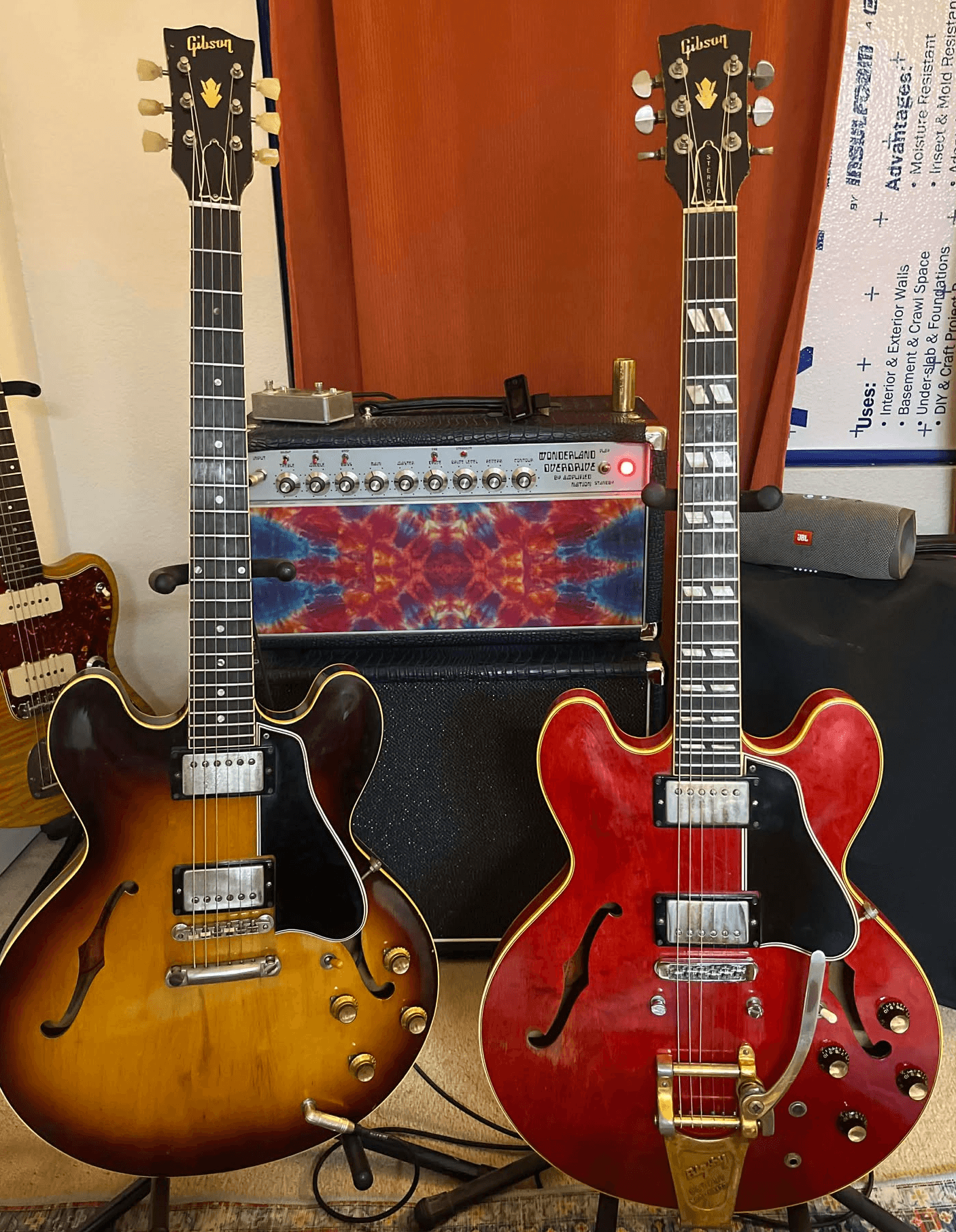
Gibson ES-335, ES-345, and ES-355: Complete Year-by-Year Guide (1958-1966)
Understanding Gibson’s Revolutionary Semi-Hollow Trio
In 1958, Gibson introduced a revolutionary concept that would change electric guitar design forever: the semi-hollow body with center block construction. The ES-335, ES-345, and ES-355 represented three distinct price points and feature sets, all built around the same innovative design that combined the warmth of a hollow body with the feedback resistance of a solid body.
This comprehensive guide explores the differences between these three iconic models and provides year-by-year specifications from 1958-1966, covering the most collectible period of production. Whether you’re looking to buy, sell, or authenticate a vintage Gibson semi-hollow, understanding these yearly variations is crucial for proper identification and valuation.
Why This Era Matters:
1958-1966 represents the “golden era” of Gibson semi-hollow production
Pre-CBS Gibson quality at its peak (1958-1965)
PAF pickups (1958-1962) are among the most sought-after in guitar history
Early patent number pickups (1962-1965) also highly collectible
Transitional features throughout this period make authentication complex
Understanding yearly variations critical for avoiding counterfeits and reproductions
The Basic Differences: ES-335 vs. ES-345 vs. ES-355
Before diving into year-by-year details, let’s establish the fundamental differences between these three models:
ES-335TD (Thinline Double Pickup)
Position: Entry-level model in the semi-hollow line
Price Point: Most affordable of the three
Key Features:
Dot inlays (1958-1962) or block inlays (1962-1966)
Standard nickel hardware
Single output jack (mono)
No Varitone switch
Unbound f-holes (most years)
Crown headstock inlay
Sunburst, natural, or cherry finish
ES-345TD (Stereo/Varitone)
Position: Mid-level model with advanced electronics
Price Point: Middle pricing tier
Key Features:
Split-parallelogram inlays (distinctive identifier)
Stereo output with two output jacks (can run in mono)
6-position Varitone switch (tone filter/choke)
Gold hardware
Bound f-holes (most years)
Split-diamond headstock inlay
Sunburst, natural, or cherry finish
ES-355TD (Top of the Line)
Position: Premium flagship model
Price Point: Highest tier
Key Features:
Block inlays (early) or split-block inlays
Ebony fingerboard (vs. rosewood on 335/345)
Multi-ply binding throughout (body, neck, headstock, f-holes)
Gold hardware
Stereo output (most examples)
Varitone switch (most examples, but not all)
Split-diamond headstock inlay
Bigsby vibrato common
Cherry, natural, or walnut finish
Year-by-Year Specifications (1958-1966)
1958: The Revolutionary First Year
1958 ES-335TD - The Original
Serial Numbers: A-28xxx to A-32xxx range
Production: Introduced mid-1958 (April-May)
Estimated Production: Approximately 200 units (very rare first year)
Distinctive 1958 Features:
Dot inlays in rosewood fingerboard
PAF humbucking pickups (Patent Applied For stickers)
Long pickguard extending below bridge pickup
Mickey Mouse ear cutaways (rounded, symmetrical)
Thin body: 1-5/8” depth
Kluson Deluxe tuners with single-line, single-ring design
ABR-1 bridge with nylon saddles (early) or metal saddles (later)
Stop tailpiece (early) or stud tailpiece (standard)
Unbound f-holes
Natural or sunburst finish (cherry not yet available)
Orange label inside body
Reflector knobs (black reflector caps)
1958-Specific Details:
Very early examples may have longer neck tenon
Neck profile: chunky late-‘50s profile
Fingerboard radius: approximately 12”
Nut width: 1-11/16”
Body wood: Laminated maple top, back, and sides with solid maple center block
Neck: Mahogany with rosewood fingerboard
Weight: Typically 8-9 lbs
Why 1958 ES-335s Are So Collectible:
First year production (extreme rarity)
PAF pickups in prime condition
Longest neck tenon for best tone transfer
Natural finish examples especially rare
Long pickguard highly distinctive
Purest expression of the original design
1958 ES-355TD - The Fancy First Year
Serial Numbers: A-28xxx to A-32xxx range
Production: Introduced late 1958 (approximately September-December)
Estimated Production: Approximately 50-75 units (extremely rare)
Distinctive 1958 ES-355 Features:
Block inlays in ebony fingerboard (not split-block yet)
PAF humbucking pickups
Multi-ply binding: white/black/white on body, neck, and f-holes
Gold hardware throughout
Split-diamond headstock inlay in pearl
Bigsby vibrato very common (factory option)
Stop tailpiece on non-Bigsby examples
Stereo wiring (two output jacks) on most examples
Mono wiring on some early examples (extremely rare and valuable)
No Varitone in 1958 (Varitone introduced 1959)
Cherry finish most common
Natural finish rare and valuable
Ebony fingerboard (vs. rosewood on 335)
1958 ES-355 Specific Details:
Some very early examples may have same long pickguard as 335
Most have standard shorter pickguard
Extremely ornate binding work
Higher-grade maple for laminated top/back
Hand-selected woods for premium appearance
Why 1958 ES-355s Are Highly Sought:
Extremely rare first year production
No Varitone (cleaner electronics, preferred by many)
PAF pickups
Finest Gibson craftsmanship
Mono versions especially rare
Note: The ES-345 was NOT produced in 1958. It debuted in 1959.
1959: Refinement and Expansion
1959 ES-335TD
Serial Numbers: A-32xxx to A-36xxx range
Production: Full production year
Estimated Production: Approximately 500-700 units
1959 ES-335 Features:
Dot inlays continue
PAF pickups (prime year for PAF tone)
Long pickguard still standard
Mickey Mouse ears continue
Cherry finish introduced and becomes very popular
Natural finish continues
Sunburst finish continues
Reflector knobs or early bonnet knobs (transitional)
Single-line Kluson tuners with single ring
ABR-1 bridge with retaining wire now standard
Orange label inside
1959 Changes:
Pickguard begins transition to shorter version (mid-1959)
Some examples with short pickguard (above bridge only)
Binding quality improves over 1958
Manufacturing consistency improves
Neck profile remains chunky but varies by individual guitar
Why 1959 335s Are Highly Collectible:
Still rare (low production numbers)
Prime PAF year
Transition features (pickguard changes)
Introduction of cherry finish
Excellent build quality
Natural finish examples command premium
1959 ES-345TD - The Introduction
Serial Numbers: A-32xxx to A-36xxx range
Production: Introduced early 1959
Estimated Production: Approximately 150-250 units (first year)
1959 ES-345 Debut Features:
Split-parallelogram inlays (distinctive identifier that sets it apart from 335/355)
PAF pickups
Stereo output with two jacks (TRS configuration)
6-position Varitone switch (revolutionary tone filtering system)
Gold hardware
Bound f-holes (double-bound)
Split-diamond headstock inlay
Short pickguard (above bridge) from introduction
Cherry, natural, or sunburst finish
Rosewood fingerboard (not ebony like 355)
Varitone Explanation:
6-position rotary switch on upper bass bout
Positions 1-5: Various capacitor/choke combinations filter frequencies
Position 6: Bypass (normal tone)
Controversial feature: loved by some, bypassed by many
Affects collector value (original, working Varitone preferred)
Stereo Wiring:
Each pickup routed to separate output jack
Allows two amps or true stereo setup
Can be run in mono using either jack
Complex wiring harness
Why 1959 ES-345s Are Collectible:
First production year (rarity)
PAF pickups
Unique split-parallelogram inlays
Stereo/Varitone electronics
Natural finish examples especially desirable
1959 ES-355TD
Serial Numbers: A-32xxx to A-36xxx range
Production: Full production year (second year)
Estimated Production: Approximately 200-300 units
1959 ES-355 Features:
Block inlays continue (still single blocks, not split-blocks)
PAF pickups
Ebony fingerboard
Multi-ply binding everywhere
Gold hardware
Stereo/Varitone now standard on most examples
Mono versions still available (rare, valuable)
Bigsby vibrato very common
Stop tailpiece on some examples
Cherry finish most common
Natural finish rare
Sunburst finish available
1959 ES-355 Changes:
Varitone now standard equipment (introduced on 355 in late 1958/early 1959)
Binding work reaches peak quality
Pickguard standardizes to short version
Some examples with custom features (PAF Bigsby, special inlays)
Why 1959 ES-355s Are Highly Valued:
Second year production (still rare)
Prime PAF year
Mono versions without Varitone command premium
Stop tailpiece versions preferred by many over Bigsby
Natural finish most desirable
Ebony fingerboard and premium binding
1960: The Peak Year
1960 ES-335TD
Serial Numbers: A-36xxx to A-40xxx range (transitional to new system)
Production: Peak production year
Estimated Production: Approximately 800-1,000 units
1960 ES-335 Features:
Dot inlays continue through entire year
PAF pickups (late PAF era—some of the finest)
Short pickguard now standard
Mickey Mouse ears continue
Cherry finish very popular
Natural and sunburst continue
Bonnet knobs (witch hat style) becoming standard
Double-line Kluson tuners (double-ring) on some examples
ABR-1 bridge with retaining wire
1960 Specifications:
Neck profile: Slight taper beginning (still substantial)
Some examples with slimmer profiles
Nut width: 1-11/16” standard
Body construction refined
Quality control excellent
Individual variation in neck carving
Why 1960 335s Are Special:
Last full year of dots with PAFs
Production quality peaked
Still handmade character
Pre-block inlay change
Excellent PAF pickups
Cherry and natural finish examples particularly desirable
1960 ES-345TD
Serial Numbers: A-36xxx to A-40xxx range
Production: Full production year
Estimated Production: Approximately 300-400 units
1960 ES-345 Features:
Split-parallelogram inlays
PAF pickups (excellent examples)
Stereo/Varitone standard
Gold hardware
Bound f-holes
Short pickguard
Mickey Mouse ears
Cherry, natural, or sunburst finish
Bonnet knobs
1960 ES-345 Characteristics:
Full production year with refined manufacturing
Consistent quality across production
Natural finish examples rare and desirable
Stereo electronics fully refined
1960 ES-355TD
Serial Numbers: A-36xxx to A-40xxx range
Production: Full production year
Estimated Production: Approximately 250-350 units
1960 ES-355 Features:
Block inlays continue
PAF pickups
Ebony fingerboard
Multi-ply binding
Gold hardware
Stereo/Varitone standard on most
Mono versions available (rare)
Bigsby or stop tailpiece
Cherry, natural, or sunburst finish
Why 1960 ES-355s Command Premium:
Peak production quality
Last full year of PAFs with blocks
Exceptional build quality
Stop tailpiece versions especially desirable
Mono versions without Varitone rare
1961: The Transition Year
1961 ES-335TD
Serial Numbers: Transitioning from A-4xxxx to new system (1xxxx without prefix)
Production: Full production year
Estimated Production: Approximately 1,000-1,200 units
1961 ES-335 Critical Changes:
Dot inlays through mid-1961
Block inlays introduced mid-1961 (major change)
PAF pickups early 1961
Patent number pickups appearing mid-1961 (transitional)
Short pickguard standard
Mickey Mouse ears continue
Cherry finish most common
Natural and sunburst available
Bonnet knobs standard
1961 Transition Details:
Serial number system changes mid-year
Dot to block inlay transition approximately May-July 1961
PAF to patent number transition overlaps with inlay change
Some “transitional” guitars with dots and patent numbers
Some with blocks and PAFs (rare and valuable)
White label replacing orange label inside body
Authentication Challenges:
Transition year makes authentication complex
Dots with patent numbers less common than blocks with patent numbers
Blocks with PAFs extremely rare and valuable
Serial numbers inconsistent during changeover
Why 1961 335s Are Complex:
Multiple major transitions in single year
Dot-neck PAF 335s ending (highly collectible)
Block-neck introduction
Patent number pickup introduction
Collectors seek early 1961 dot-neck PAF examples
1961 ES-345TD
Serial Numbers: Transitioning systems
Production: Full production year
Estimated Production: Approximately 400-500 units
1961 ES-345 Features:
Split-parallelogram inlays continue (no change)
PAF pickups early 1961
Patent number pickups mid-1961 onward
Stereo/Varitone standard
Gold hardware
Bound f-holes
Mickey Mouse ears
Cherry, natural, or sunburst
1961 ES-345 Transition:
Less dramatic than 335 (no inlay change)
PAF to patent number transition main change
Early 1961 PAF examples most desirable
Mid-1961 transitional examples exist
1961 ES-355TD
Serial Numbers: Transitioning systems
Production: Full production year
Estimated Production: Approximately 300-400 units
1961 ES-355 Features:
Block inlays continue (no split-blocks yet)
PAF pickups early 1961
Patent number pickups mid-1961 onward
Ebony fingerboard
Multi-ply binding
Gold hardware
Stereo/Varitone most common
Bigsby or stop tailpiece
1961 ES-355 Collectibility:
Early 1961 PAF examples highly desirable
Stop tailpiece versions preferred
Mono versions rare
Natural finish rare
1962: Standardization Begins
1962 ES-335TD
Serial Numbers: 1xxxx to 3xxxx range (new system without A prefix)
Production: Full production year
Estimated Production: Approximately 1,500+ units
1962 ES-335 Features:
Block inlays standard (dots discontinued)
Patent number pickups standard (PAFs gone)
Short pickguard
Mickey Mouse ears continue
Cherry finish most common
Natural and sunburst available
Bonnet knobs
ABR-1 bridge
Stop tailpiece or trapeze tailpiece option
1962 ES-335 Characteristics:
First full year of block inlays
Patent number pickups (still excellent tone)
Production increasing
Quality still excellent
Neck profile: medium/slim taper
White label inside body standard
Collector Considerations:
Block-neck patent number combination standard
Less valuable than dot-neck PAF examples but still collectible
Cherry finish most common
Natural finish commands premium
Early 1962 may have late PAF pickups (rare, verify carefully)
1962 ES-345TD
Serial Numbers: 1xxxx to 3xxxx range
Production: Full production year
Estimated Production: Approximately 500-600 units
1962 ES-345 Features:
Split-parallelogram inlays
Patent number pickups standard
Stereo/Varitone
Gold hardware
Bound f-holes
Mickey Mouse ears
Cherry, natural, or sunburst
1962 ES-345 Notes:
Consistent production with patent number pickups
Varitone electronics fully refined
Natural finish examples rare
1962 ES-355TD
Serial Numbers: 1xxxx to 3xxxx range
Production: Full production year
Estimated Production: Approximately 400-500 units
1962 ES-355 Features:
Block inlays (still single blocks)
Patent number pickups standard
Ebony fingerboard
Multi-ply binding
Gold hardware
Stereo/Varitone standard
Bigsby or stop tailpiece
Cherry, natural, or walnut finish
1962 ES-355 Characteristics:
Consistent high-quality production
Walnut finish introduced (rare)
Stop tailpiece versions desirable
Mono versions extremely rare
1963: The Pointy Ear Revolution
1963 ES-335TD
Serial Numbers: 3xxxx to 5xxxx range
Production: Full production year
Estimated Production: Approximately 1,500-2,000 units
1963 ES-335 Major Change:
Pointed cutaways introduced mid-1963 (replacing Mickey Mouse ears)
Block inlays standard
Patent number pickups
Smaller pickguard introduced with pointed cutaways
Cherry finish most common
Natural and sunburst available
Bonnet knobs
Trapeze tailpiece more common than stop tailpiece
1963 Transition Timeline:
Early 1963: Mickey Mouse ears continue
Mid-1963 (approximately May-August): Transition to pointed cutaways
Late 1963: Pointed cutaways standard
Why the Cutaway Change Matters:
Mickey Mouse ear examples from early 1963 more desirable to some collectors
Pointed cutaway examples preferred by others
Transition represents significant design evolution
Affects player ergonomics and aesthetics
Collector preferences vary
1963 ES-335 Specifications:
Neck profile: slim taper standard
Body depth: 1-5/8” continues
Nut width: 1-11/16”
Weight: 8-9 lbs typical
1963 ES-345TD
Serial Numbers: 3xxxx to 5xxxx range
Production: Full production year
Estimated Production: Approximately 600-700 units
1963 ES-345 Features:
Pointed cutaways introduced mid-1963
Split-parallelogram inlays
Patent number pickups
Stereo/Varitone
Gold hardware
Bound f-holes
Cherry, natural, or sunburst
Smaller pickguard with pointed cutaways
1963 ES-345 Notes:
Follows same cutaway transition as 335
Early 1963 round cutaways
Late 1963 pointed cutaways
Natural finish rare and desirable
1963 ES-355TD
Serial Numbers: 3xxxx to 5xxxx range
Production: Full production year
Estimated Production: Approximately 500-600 units
1963 ES-355 Features:
Pointed cutaways introduced mid-1963
Block inlays (single blocks continue)
Patent number pickups
Ebony fingerboard
Multi-ply binding
Gold hardware
Stereo/Varitone standard
Bigsby or trapeze tailpiece
Cherry, natural, or walnut
1963 ES-355 Characteristics:
Follows cutaway transition
Trapeze tailpiece becoming more common
Stop tailpiece and Bigsby less common
Binding work remains exceptional
1964: Refinement of the Pointed Era
1964 ES-335TD
Serial Numbers: 5xxxx to 8xxxx range
Production: Full production year
Estimated Production: Approximately 2,000-2,500 units
1964 ES-335 Features:
Pointed cutaways standard
Block inlays
Patent number pickups
Small pickguard
Cherry finish most common
Natural and sunburst available
Bonnet knobs
Trapeze tailpiece standard
Stop tailpiece available but less common
1964 ES-335 Characteristics:
Consistent pointed cutaway production
Quality remains high
Production increasing
Neck profile: slim taper
Some with wider neck profile (variation exists)
White label inside
Collector Notes:
Fully into pointed cutaway era
Patent number pickups well-established
Still pre-CBS (Gibson not acquired until late 1969)
Cherry finish most common and popular
Natural finish commands premium
1964 ES-345TD
Serial Numbers: 5xxxx to 8xxxx range
Production: Full production year
Estimated Production: Approximately 800-900 units
1964 ES-345 Features:
Pointed cutaways standard
Split-parallelogram inlays
Patent number pickups
Stereo/Varitone
Gold hardware
Bound f-holes
Small pickguard
Cherry, natural, or sunburst
Trapeze tailpiece common
1964 ES-345 Notes:
Production increasing
Varitone electronics fully mature
Natural finish rare
Consistent quality throughout year
1964 ES-355TD
Serial Numbers: 5xxxx to 8xxxx range
Production: Full production year
Estimated Production: Approximately 600-700 units
1964 ES-355 Features:
Pointed cutaways standard
Block inlays (single blocks)
Patent number pickups
Ebony fingerboard
Multi-ply binding
Gold hardware
Stereo/Varitone standard
Trapeze tailpiece most common
Bigsby still available
Cherry, natural, or walnut
1964 ES-355 Characteristics:
Consistent pointed cutaway production
Trapeze tailpiece now predominant
Walnut finish more available
Natural finish rare
1965: The Last Great Year
1965 ES-335TD
Serial Numbers: 8xxxx to 2xxxxx range (system changes to 6-digit)
Production: Full production year
Estimated Production: Approximately 2,500-3,000 units
1965 ES-335 Features:
Pointed cutaways
Block inlays
Patent number pickups early 1965
T-Top pickups appearing late 1965
Small pickguard
Cherry finish most common
Natural and sunburst available
Trapeze tailpiece standard
Bonnet knobs early, speed knobs appearing late
1965 ES-335 Transitions:
Serial number system changes to 6-digit format mid-year
Patent number to T-Top pickup transition begins
Some hardware changes beginning
Last year before significant quality changes
Still considered “golden era” by collectors
Why 1965 Is Important:
Last full year of patent number pickups
Last year before 1966 changes
Pre-CBS acquisition (happened 1969, but planning began earlier)
Quality still excellent
Production increasing but craftsmanship maintained
1965 ES-345TD
Serial Numbers: 8xxxx to 2xxxxx range
Production: Full production year
Estimated Production: Approximately 900-1,000 units
1965 ES-345 Features:
Pointed cutaways
Split-parallelogram inlays
Patent number pickups early
T-Top pickups late
Stereo/Varitone
Gold hardware
Bound f-holes
Cherry, natural, or sunburst
Trapeze tailpiece
1965 ES-345 Notes:
Consistent production
Patent to T-Top transition
Natural finish rare
Quality remains high
1965 ES-355TD
Serial Numbers: 8xxxx to 2xxxxx range
Production: Full production year
Estimated Production: Approximately 700-800 units
1965 ES-355 Features:
Pointed cutaways
Block inlays (single blocks)
Patent number pickups early
T-Top pickups late
Ebony fingerboard
Multi-ply binding
Gold hardware
Stereo/Varitone standard
Trapeze tailpiece most common
Cherry, natural, or walnut
1965 ES-355 Characteristics:
High-quality production continues
Patent to T-Top transition
Trapeze tailpiece predominant
Walnut finish available
1966: Changes and Evolution
1966 ES-335TD
Serial Numbers: 2xxxxx to 5xxxxx range (6-digit system)
Production: Full production year
Estimated Production: Approximately 3,000+ units
1966 ES-335 Changes:
Pointed cutaways
Block inlays
T-Top pickups standard (patent numbers gone)
Larger bevels on body edges
Cherry finish most common
Natural and sunburst available
Speed knobs becoming standard
Trapeze tailpiece standard
1966 ES-335 Specifications:
Neck profile: slim taper continues
Some examples with slightly wider necks
Body construction: some changes in bracing
Hardware: transitioning specifications
White label inside
Why 1966 Represents a Shift:
T-Top pickups now standard (patent numbers gone)
Production increasing significantly
Some cost-cutting measures beginning
Quality still good but beginning to change
Last year many collectors consider “vintage era”
Some collectors end their interest at 1965
Collector Perspective on 1966:
Still collectible but less desirable than 1958-1965
T-Top pickups excellent but not PAFs or early patent numbers
Production numbers higher
Quality beginning to shift
Cherry finish most common
1966 ES-345TD
Serial Numbers: 2xxxxx to 5xxxxx range
Production: Full production year
Estimated Production: Approximately 1,000-1,200 units
1966 ES-345 Features:
Pointed cutaways
Split-parallelogram inlays
T-Top pickups standard
Stereo/Varitone
Gold hardware
Bound f-holes
Larger bevels
Cherry, natural, or sunburst
Trapeze tailpiece
Speed knobs
1966 ES-345 Notes:
T-Top pickups standard
Production increasing
Varitone electronics unchanged
Natural finish becoming rarer
1966 ES-355TD
Serial Numbers: 2xxxxx to 5xxxxx range
Production: Full production year
Estimated Production: Approximately 800-900 units
1966 ES-355 Features:
Pointed cutaways
Block inlays transitioning to split-block inlays
T-Top pickups standard
Ebony fingerboard
Multi-ply binding
Gold hardware
Stereo/Varitone standard
Trapeze tailpiece predominant
Cherry, natural, or walnut
Larger bevels
1966 ES-355 Transition:
Split-block inlays appearing (transition from single blocks)
Some examples with single blocks
Some with split-blocks
Transition timing varies
T-Top pickups standard
Common Issues and Modifications (All Models, All Years)
Structural Issues to Watch For
Headstock Cracks:
Semi-hollow Gibsons less prone than solid bodies
Check for cracks behind nut
Cracks at tuner holes from over-tightening
Headstock breaks rare but devastating to value
Body Cracks:
Top cracks along grain lines
F-hole cracks (check carefully)
Back cracks less common
Binding cracks from shrinkage
Check for repaired cracks (reduces value significantly)
Neck Issues:
Neck reset rarely needed (bolt-on neck plate)
Fret wear common on played examples
Fingerboard wear
Truss rod function critical
Some necks may have twisted or warped
Binding Issues:
Binding shrinkage common on 335 (single-ply)
345/355 multi-ply binding more stable
Yellowing normal and expected
Cracks in binding common
Missing binding sections reduce value
Electronics Issues
Pickup Problems:
PAF pickups: Check for originality (many replaced or rewound)
Patent number pickups: Verify correct date codes
T-Tops: Generally reliable
Rewound pickups significantly reduce value
Replaced pickups reduce value substantially
Wiring Modifications:
Many ES-345s have Varitone bypassed or removed
Original stereo wiring often converted to mono
Check for modern wiring and components
Original wiring harness critical to value
Pot codes should match year (verify authenticity)
Varitone Issues (ES-345/ES-355):
Varitone switches often fail or are bypassed
Working original Varitone adds significant value
Replacement Varitones available but hurt collectibility
Some players prefer Varitone removed (controversial)
Switch and Jack Problems:
Toggle switches wear out and are often replaced
Output jacks frequently replaced
Stereo jacks on 345/355 often replaced with mono
Original components preferred
Hardware Modifications
Tuner Replacements:
Original Kluson tuners frequently replaced with Grovers or Schallers
Replacement tuners reduce value
Check for additional screw holes
Original tuners critical to collector value
Bridge Replacements:
ABR-1 bridges often replaced with modern Nashville bridges
Nylon vs. metal saddles (early vs. late)
Aftermarket bridges reduce value
Original bridge important
Tailpiece Changes:
Stop tailpieces sometimes replaced with trapeze (or vice versa)
Bigsby additions or removals
Check for filled holes indicating tailpiece change
Original tailpiece configuration preferred
Pickguard Issues:
Shrinkage common (especially on 335)
Cracking normal
Missing pickguards acceptable if ghost outline visible
Reproduction guards reduce value slightly
Original guards with shrinkage more valuable than reproductions
Finish Issues
Refinishing:
Complete refinishes reduce value dramatically (40-70%)
Check for overspray in f-holes
Examine binding for finish buildup
UV light reveals refinishes
Original finish with checking more valuable than refinish
Finish Checking:
Natural checking and crazing expected and desirable
Indicates original finish
Heavy checking on sunburst finishes normal
Cherry finish often fades (desirable aging)
Sunburst Fading:
Cherry sunburst fades to orange or brownish hues
Natural fading desirable
“Refreshed” sunburst reduces value
Check consistency of fading patterns
Touch-ups and Overspray:
Minor touch-ups common and acceptable if well done
Heavy touch-up work reduces value
Overspray indicates refinish or heavy touch-up
Authentication Red Flags
Serial Number Issues:
Verify serial number matches year specifications
Check for re-stamped or altered numbers
Cross-reference with factory order numbers when visible
Incorrect serial number font indicates fake
Pickup Authentication:
PAF stickers often faked or added to patent number pickups
Verify pickup construction matches era
Check resistance readings
Compare to known authentic examples
Incorrect Features:
Wrong inlay patterns for year
Anachronistic hardware
Incorrect cutaway style for year
Wrong finish options for model/year
“Partscasters”:
Bodies and necks from different years
Mismatched serial numbers and features
Inconsistent aging across components
Relative Value and Collectibility Rankings
While specific dollar values fluctuate with market conditions, the relative desirability and ranking among these instruments remains fairly consistent:
Most Valuable Configurations (Highest to Lower):
ES-335:
1958 dot-neck, PAF, natural finish
1958 dot-neck, PAF, sunburst
1959 dot-neck, PAF, natural finish
1959 dot-neck, PAF, cherry
1960 dot-neck, PAF, natural finish
1960 dot-neck, PAF, cherry
1961 early dot-neck, PAF
1961 late block-neck, PAF (rare transitional)
1962-1963 block-neck, patent number, round cutaways
1963-1965 block-neck, patent number, pointed cutaways
ES-345:
1959 first-year, PAF, natural finish
1960 PAF, natural finish
1961 early PAF
1959-1961 PAF cherry or sunburst
1962-1963 patent number, round cutaways
1963-1965 patent number, pointed cutaways
ES-355:
1958 mono (no Varitone), PAF, stop tailpiece, natural
1959 mono (no Varitone), PAF, stop tailpiece, natural
1960 PAF, stop tailpiece, natural
1958-1960 PAF, Bigsby, cherry
1961 early PAF, stop tailpiece
1962-1965 patent number, stop tailpiece
1962-1965 patent number, Bigsby or trapeze
Value Factors (Impact from Highest to Lowest):
Pickup Type: PAF > Early Patent Number > Late Patent Number > T-Top
Originality: All original > Minor mods > Significant mods > Refinished
Condition: Excellent > Very Good > Good > Fair
Year: 1958-1960 > 1961-1962 > 1963-1964 > 1965-1966
Finish (335): Natural > Cherry > Sunburst
Finish (345/355): Natural > Cherry > Sunburst > Walnut
Inlays (335 only): Dots > Blocks (among collectors, though players may prefer blocks)
Cutaways (slight preference): Round (“Mickey Mouse”) > Pointed
Tailpiece (355 only): Stop > Bigsby > Trapeze
Electronics (345/355): Original stereo/Varitone > Modified
Model Ranking (Relative Collectibility):
For comparable year and condition:
ES-335 dot-neck (1958-1961) - Most sought after overall
ES-355 mono (1958-1959) - Rarest configuration
ES-355 stereo (1958-1962) - Premium flagship
ES-345 (1959-1962) - Unique features, solid collectibility
ES-335 block-neck (1961-1965) - Still very collectible
ES-345 (1963-1966) - Good collectibility
ES-355 (1963-1966) - Premium model, steady demand
Selling Your Vintage Gibson ES-335, ES-345, or ES-355
If you own a 1958-1966 Gibson semi-hollow or have inherited one, you possess an instrument from one of the most important eras in electric guitar history. At Edgewater Guitars, we specialize in evaluating and purchasing these complex instruments, understanding the subtle year-to-year variations that significantly impact value.
Why Sell to Edgewater Guitars?
Expert Authentication and Valuation:
Deep knowledge of year-specific features and transitions
Understanding of PAF vs. patent number vs. T-Top pickups
Recognition of dot vs. block inlay transitions
Expertise in Mickey Mouse vs. pointed cutaway changeover
Ability to identify refinishes, modifications, and replaced parts
Verification of serial numbers and factory specifications
Pot code dating and electronics authentication
We Pay 30-40% More Than Typical Guitar Shops Because:
We understand the complexity of 1958-1966 semi-hollows
We recognize transitional features that others miss
We properly value original PAF pickups
We appreciate original finish even with checking
We understand stereo/Varitone electronics
We know which modifications hurt value vs. acceptable repairs
Comprehensive Evaluation Process:
Pickup authentication (PAF verification critical)
Electronics inspection (original wiring, pots, caps)
Finish examination (original vs. refinish)
Structural assessment (cracks, repairs, stability)
Hardware originality (tuners, bridge, tailpiece, knobs)
Serial number and date code verification
Playability and tonal evaluation
Streamlined Selling Process:
Immediate cash offers for qualified instruments
No consignment fees or waiting periods
No dealing with unqualified buyers
Secure shipping with full insurance
In-person evaluation throughout Ohio and surrounding states
Travel available for exceptional instruments
What We Look For in ES-335/345/355 Guitars
High-Value Indicators:
PAF pickups (1958-1962, verify authenticity)
Dot neck ES-335s (1958-1961)
Early production years (1958-1960)
Natural finish (rare and premium)
All-original condition
Original case and documentation
Stop tailpiece on ES-355 (vs. Bigsby or trapeze)
Mono ES-355 without Varitone (1958-1959)
Round “Mickey Mouse” cutaways (1958-early 1963)
Critical Authenticity Checks:
PAF pickups: We verify construction, resistance, bobbin color, wire type
Pot codes: Must match year of guitar
Serial numbers: Correct format and range for claimed year
Inlays: Correct pattern for year (dots vs. blocks critical on 335)
Cutaways: Round vs. pointed must match year
Hardware: Period-correct tuners, bridge, tailpiece
Finish: Original nitrocellulose with proper aging vs. refinish
Common Issues We Assess Fairly:
Professional fret work (acceptable if well done)
Pickup rewinds or replacements (significantly affect value)
Varitone bypassed or removed (common on 345/355)
Stereo to mono conversions (reduces value but understood)
Refinishing (major value impact but we still buy)
Headstock repairs (significant value reduction)
Replaced tuners (common, reduces value moderately)
Our Service Area
Primary Region:
Ohio (Cleveland, Columbus, Cincinnati, Toledo, Akron, Dayton)
Michigan (Detroit, Grand Rapids, Ann Arbor)
Pennsylvania (Pittsburgh, Erie)
Indiana (Fort Wayne, South Bend, Indianapolis)
West Virginia (Wheeling, Morgantown, Charleston)
Kentucky (Northern Kentucky, Louisville)
Extended Service:
For exceptional instruments (1958-1960 PAF examples, rare configurations), we travel nationally
Climate-controlled transportation
Full insurance coverage
Get Your Free Expert Valuation
Contact the vintage Gibson semi-hollow experts who understand what makes your guitar valuable:
Phone: (440) 219-3607
Email: info@edgewaterguitars.com
Online: Get Your Free Valuation
Information to Provide:
Model (335, 345, or 355)
Serial number (located on back of headstock or inside f-hole)
Clear photos:
Front and back of guitar
Headstock front and back (showing serial number)
Pickup close-ups (to verify PAF, patent number, or T-Top)
Close-up of inlays
Cutaway style detail
Label inside f-hole
Any areas of damage or modification
Original case if available
Any known history, modifications, or repairs
Pot codes if accessible (remove control plate cover)
We respond within 24 hours and can often provide preliminary valuations with good photos, followed by in-person evaluation for serious instruments.
Related Resources
Explore these resources for additional information on vintage Gibson semi-hollow guitars:
Complete Gibson Serial Number Lookup Tool
Gibson ES-335 Dot Neck vs. Block Neck Guide
PAF Pickup Authentication Guide
Gibson Patent Number Pickup Dating
How to Spot Refinished Gibson ES Guitars
Gibson Pot Code Dating Guide
Varitone Switch: How It Works and Values
Gibson ES-345 Complete Specifications
Gibson ES-355 Identification Guide
Selling Vintage Gibson Guitars: Complete Guide
Recent Purchase Example
1960 ES-335 Dot-Neck Acquisition - Akron, Ohio
We recently purchased an exceptional 1960 ES-335 dot-neck from an estate in Akron. The family discovered it in their uncle’s closet, who had purchased it new in 1960 and played it in local jazz clubs through the 1960s before it was retired.
Guitar Details:
All-original 1960 ES-335
Dot inlays in rosewood fingerboard
Original PAF pickups (verified authentic through multiple methods)
Cherry finish with beautiful natural aging
Original Kluson tuners
Original ABR-1 bridge with retaining wire
Original stop tailpiece
Mickey Mouse ear cutaways
Short pickguard
Original bonnet knobs
Professional refret in 1985 (well-documented, excellent work)
Original brown hardshell case
Original purchase receipt from Akron music store
Uncle’s band photographs from 1960s showing the guitar
Competing Offers:
Local guitar shop #1: Didn’t recognize PAFs, offered based on “block neck” value
Local shop #2: Questioned PAF authenticity without verification
Online buyer: Low-ball offer contingent on in-person renegotiation
Pawn shop: Insulting offer
Our Process: We conducted a thorough in-home appraisal:
Verified original PAF pickups (resistance readings, construction, wire type, bobbin color)
Confirmed 1960 dating through serial number and pot codes
Assessed original finish (UV light examination confirmed authenticity)
Evaluated professional refret as expertly done with period-correct wire
Reviewed documentation and provenance
Played the instrument extensively (exceptional tone)
Educated family about the significance of dot-neck PAF 335s
Our Approach: We made an immediate cash offer that exceeded the highest competing offer by a substantial margin. The family was shocked by the difference and accepted immediately.
Why Our Offer Was Higher:
We properly identified and valued original PAF pickups
We recognized the significance of 1960 dot-neck configuration
We appreciated the original cherry finish
We valued the documentation and provenance
We understood professional fret work doesn’t kill value
We paid for quality and originality
Client Testimonial: “The local shops made us feel like we were trying to sell a department store guitar. One didn’t even know what PAFs were. Another said they ‘might be real’ but offered a price like they weren’t. Edgewater knew exactly what they were looking at, educated us about why the guitar was special, and paid us fairly. The difference was incredible. We’re so grateful we found them before selling it for a fraction of its value.”
The guitar is now in the hands of a serious collector who will preserve this exceptional example of Gibson’s golden era.
Trust the ES-Series Experts
When it’s time to sell your 1958-1966 Gibson ES-335, ES-345, or ES-355, trust the team that understands the complex year-by-year variations, transition features, and authentication details that determine true value.
Don’t settle for:
Shops that can’t differentiate PAFs from patent numbers
Buyers who don’t understand dot vs. block significance
Dealers who can’t identify refinishes
Online buyers who renegotiate after seeing the guitar
Generic music stores without vintage expertise
Get the expert evaluation your Gibson semi-hollow deserves.
Contact Edgewater Guitars Today
Phone: (440) 219-3607
Email: info@edgewaterguitars.com
Website: www.edgewaterguitars.com
Service Area: Ohio and surrounding Midwest states
Special Service: National travel for exceptional vintage instruments
Stephen Pedone, Vintage Guitar Specialist at Edgewater Guitars, has over 7 years of experience evaluating and purchasing vintage Gibson electric guitars. His expertise in ES-series semi-hollows from the 1958-1966 golden era, including pickup authentication, finish verification, and transition feature identification, ensures you receive accurate, fair valuations based on your guitar’s specific characteristics and current market conditions.
Edgewater Guitars: Where Expert Knowledge Meets Fair Value
Related Vintage Gibson Value Guides
For year-by-year values on each model in this comparison: