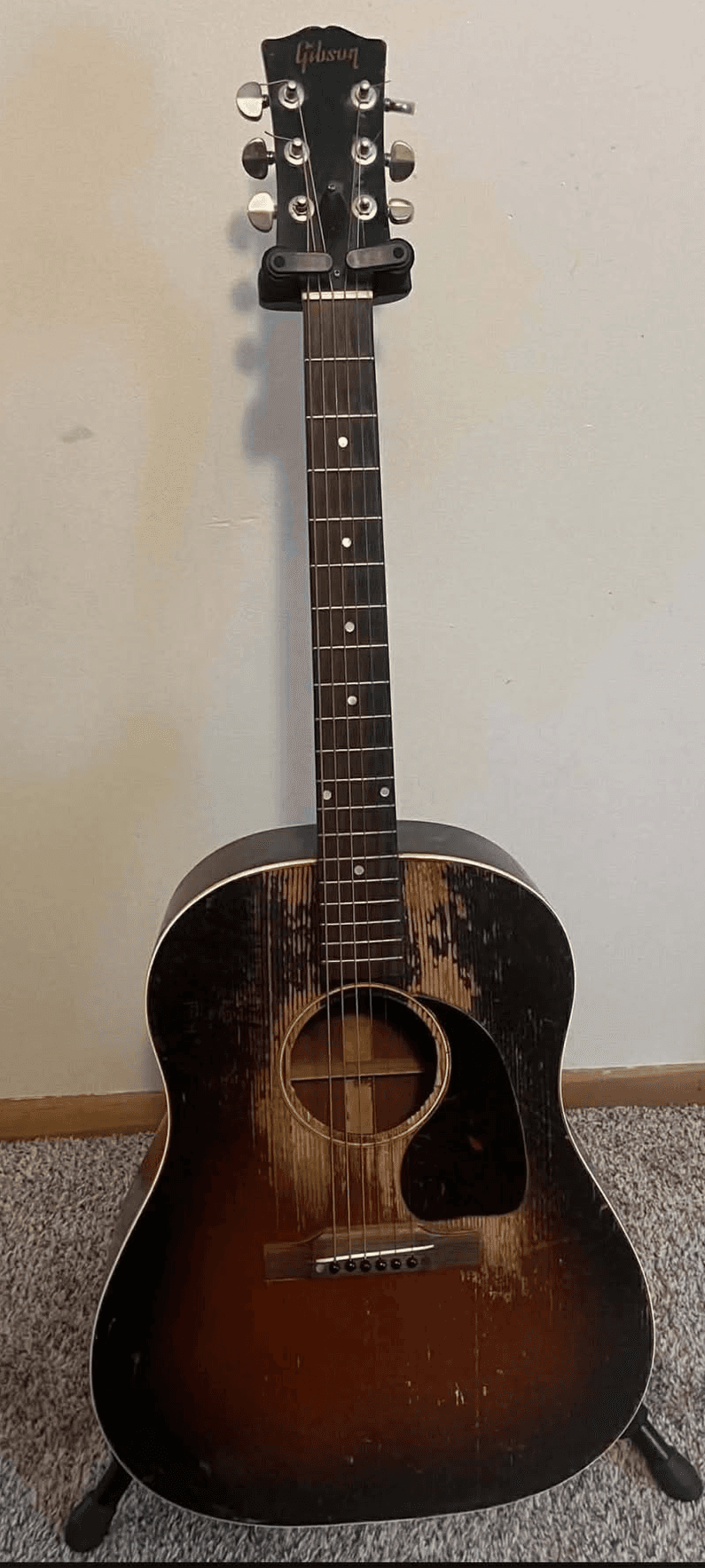
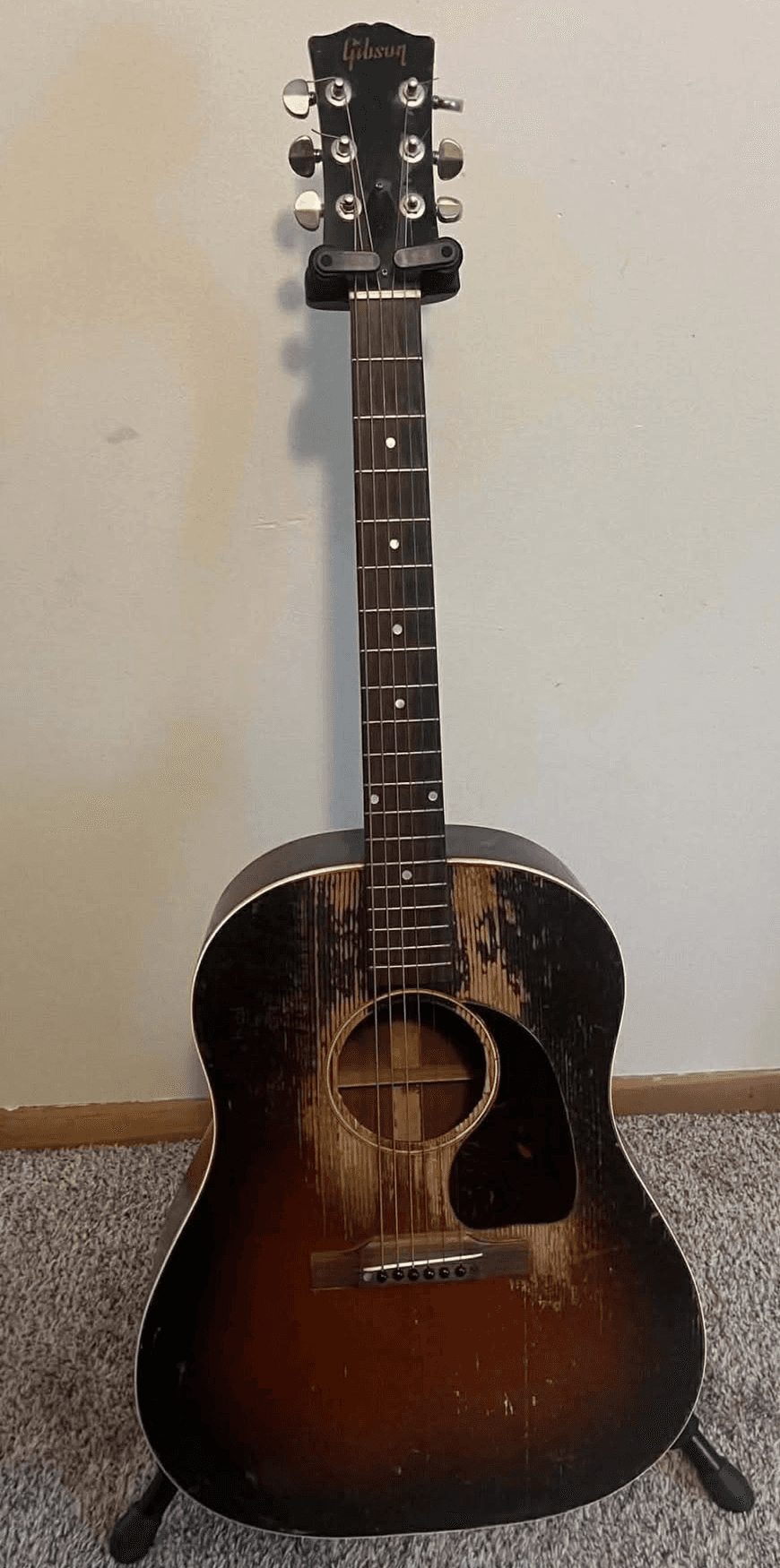
DATE :
Gibson Century of Progress: The World's Fair Guitar That Became a Legendary Collectible
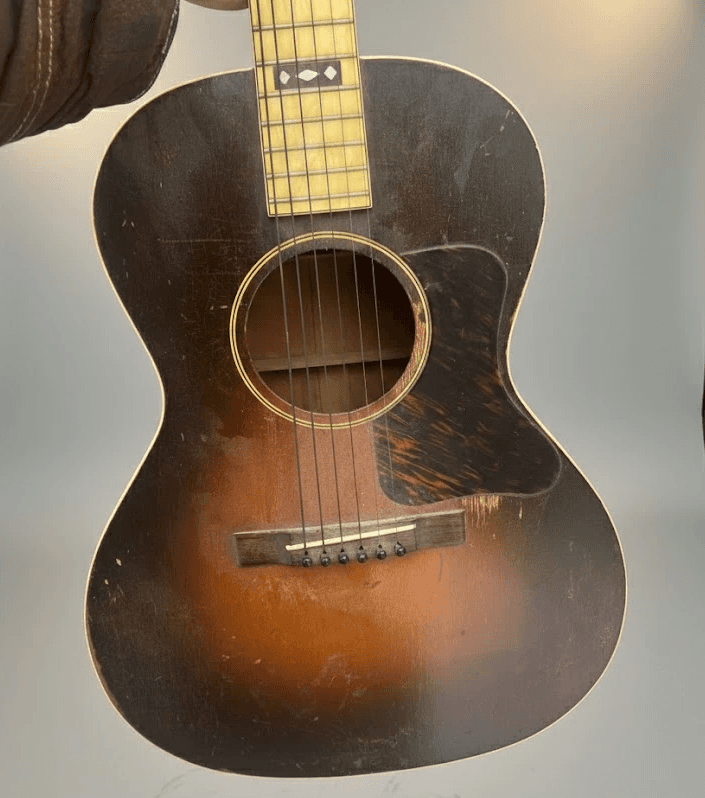
What is a Gibson Century of Progress Guitar?
The Gibson Century of Progress is one of the rarest and most historically significant acoustic guitars ever produced by Gibson. Created specifically for the 1934 Chicago World's Fair (officially called "A Century of Progress International Exposition"), these guitars represent a unique moment when Gibson created a commemorative instrument celebrating American innovation and the Art Deco era.
Quick Identification: A genuine Gibson Century of Progress features distinctive pearl inlay artwork depicting the 1934 Chicago World's Fair, Art Deco design elements throughout, a flat-top acoustic construction, and typically a sunburst or natural finish. These guitars were produced in extremely limited numbers between 1933-1934, making them exceptionally rare today.
If you own one of these guitars: You possess an extraordinarily rare piece of American musical and cultural history. Even if you know very little about guitars, this instrument is significant enough to warrant expert evaluation.
Historical Context: The 1934 Chicago World's Fair
A Century of Progress International Exposition
The 1934 Chicago World's Fair was a major international event celebrating the city's centennial and showcasing technological progress during the depths of the Great Depression. The fair ran from 1933-1934 and attracted over 48 million visitors who came to see exhibits representing human achievement and optimism for the future.
The Fair's Cultural Impact:
Showcased innovations in science, technology, and industry
Featured the iconic "Sky Ride" and futuristic architecture
Celebrated American ingenuity during economic hardship
Created lasting cultural artifacts, including Gibson's commemorative guitar
Represented Art Deco aesthetic at its peak
Drew international attention to Chicago
Why Gibson Created This Special Guitar
During the Great Depression, guitar manufacturers struggled to maintain sales. The World's Fair presented Gibson with a unique marketing opportunity: to create a limited-edition commemorative instrument that would appeal to fairgoers and collectors alike.
Gibson's World's Fair Strategy:
Created an exclusive, attention-grabbing instrument
Marketed guitar as collectible souvenir of historic event
Showcased Gibson's craftsmanship and artistic capability
Attempted to generate publicity during difficult economic times
Positioned guitar as both functional instrument and art piece
The Century of Progress guitar was sold at the Gibson exhibit during the World's Fair and through select dealers. The limited production run and high original price meant few were sold, contributing to today's extreme rarity.
How to Identify a Gibson Century of Progress
Distinctive Pearl Inlay Artwork
The most recognizable feature of a Century of Progress guitar is the elaborate pearl inlay work depicting scenes from the 1934 Chicago World's Fair:
Headstock Inlay:
"Century of Progress" text in pearl inlay
"1934" date prominently featured
"Chicago" designation
Gibson logo
Art Deco design elements
Elaborate pearl work covering much of headstock face
Fingerboard Inlay:
Intricate pearl inlay depicting World's Fair buildings
Art Deco architectural representations
Fair pavilions and structures
"Fort Dearborn" imagery (Chicago's original fort)
Sky Ride representation
Hall of Science building depiction
The quality and detail of this inlay work is exceptional even by Gibson's high standards. The pearl depicts recognizable World's Fair buildings and monuments that visitors would have seen at the exposition.
Body Construction and Specifications
Body Details:
Flat-top acoustic guitar (not archtop)
14-fret neck joint
Spruce top (typically)
Mahogany back and sides (most common)
Rosewood back and sides (some examples)
Sunburst finish (most common)
Natural finish (rare variants)
Size and Dimensions:
Similar to Gibson's Nick Lucas model in body size
Smaller than dreadnought size
Approximately 13.5-14 inches wide at lower bout
Comfortable parlor/auditorium size
Depth approximately 4 inches
Construction Quality:
Top-tier Gibson craftsmanship
Hand-carved top bracing
Premium wood selection
Meticulous attention to detail throughout
Bound top and back
Multi-ply binding (typically)
Hardware and Appointments
Tuning Machines:
Gold-plated tuners
Grover or equivalent high-end tuners
Ornate design matching guitar's Art Deco aesthetic
Often feature decorative elements
Bridge:
Rosewood bridge (typical)
Ornate design
Pearl inlay on bridge (some examples)
Pyramid-style bridge ends (common)
Pickguard:
Elaborate pickguard with decorative elements
Pearl or celluloid with Art Deco patterns
May feature additional World's Fair imagery
Other Details:
Ornate rosette around soundhole
Premium fret markers (even on non-inlaid frets)
Gold-plated hardware throughout
Elaborate binding patterns
Serial Numbers and Dating
Factory Order Numbers
Gibson Century of Progress guitars used Gibson's Factory Order Number (FON) system rather than standard serial numbers:
FON Location:
Stamped inside guitar body
Visible through soundhole on back or side
Sometimes on neck block
May be faint or difficult to read after 90 years
FON Format for 1933-1934:
Four-digit number followed by letter-number combination
First digit indicates year (3 for 1933, 4 for 1934)
Pattern varies but typically: XXXX-YZ format
Not all Century of Progress guitars have clear FONs
Dating Challenges:
Limited production creates small data sample
Some guitars may have been produced in 1933 but sold in 1934
Factory records incomplete for this special model
Serial number databases have limited information
Expert evaluation often required for precise dating
Label Information
Interior Label: Most Century of Progress guitars have a label visible through the soundhole:
Label Details:
"Gibson" brand name
"Kalamazoo, Michigan" location
May include model designation
Style number (if present)
Hand-written notations (sometimes)
Important Note: Labels can be forged or replaced, so never rely solely on a label for authentication. The elaborate pearl inlay work is much harder to fake convincingly.
How to Authenticate a Century of Progress Guitar
Primary Authentication Features
The Pearl Inlay Work is Key: The elaborate, detailed pearl inlay depicting the 1934 World's Fair is the most important authentication feature. This level of intricate work is extremely difficult and expensive to replicate.
What to Examine:
Quality of pearl cutting and setting
Accuracy of World's Fair building depictions
Consistency of Art Deco design elements
Precision of lettering ("Century of Progress," "1934," "Chicago")
Overall craftsmanship quality
Signs of age-appropriate wear on inlay
Red Flags for Fake or Modified Guitars:
Crude or simplified inlay work
Inaccurate building representations
Modern-looking pearl material
Inconsistent aging between inlay and guitar
Wrong Gibson construction details
Added inlay to standard Gibson model
Construction Details to Verify
Gibson Construction Standards: A genuine Century of Progress should exhibit Gibson's 1933-1934 construction characteristics:
Neck Construction:
Dovetail neck joint (traditional Gibson method)
One-piece mahogany neck
Rosewood fingerboard (bound or unbound)
14 frets clear of body
Appropriate neck angle (approximately 3-4 degrees)
Interior Construction:
Hand-scalloped top bracing (X-bracing pattern)
Hide glue construction (not modern adhesives)
Gibson-style neck block
Proper kerfing (lining strips)
Hand-fitted components
Finish Characteristics:
Nitrocellulose lacquer finish (if original)
Age-appropriate checking and crazing
Natural wear patterns from 90 years
Sunburst or natural finishes only (no other colors documented)
Common Issues and Warning Signs
Modifications to Watch For:
Neck reset (common repair on 90-year-old guitars, acceptable if disclosed)
Bridge replacement or modification
Replaced tuners (reduces originality)
Finish touch-up or over-spray
Added or modified pearl inlay
Structural repairs
Potential Counterfeits: Due to the extreme rarity and historical significance, there is incentive to create fake Century of Progress guitars:
Standard Gibson guitars with added inlay
Reproduction instruments with fake labels
Composite guitars using parts from multiple sources
Modern builds attempting to replicate the model
Professional Authentication Recommended: Given the rarity and significance, expert evaluation is essential. A qualified vintage Gibson expert can verify authenticity through multiple indicators beyond just the obvious features.
Production Numbers and Rarity
Extremely Limited Production
Estimated Production: Exact production figures for Century of Progress guitars are not definitively documented, but research suggests:
Fewer than 100 instruments produced (some estimates suggest as few as 25-35)
Production limited to 1933-1934 window
Some may have been produced in late 1933 for 1934 Fair
Original high price limited sales during Depression
Survival Rate: Of the already tiny production number, survival rate is affected by:
Nearly 90 years of age
Quality construction means many survived structurally
Some lost to fire, flood, damage over decades
Some modified or altered
Unknown number still in attics or estates
Fewer than 50 believed to exist today in any condition
Condition Rarity:
All-original examples extremely rare
Most show repairs or modifications from 90 years of life
Professional restoration sometimes necessary for structural integrity
Even heavily worn examples have significant historical value
What Makes Them So Rare
Original Limited Production:
Created only for specific event (1933-1934 World's Fair)
High original price during Depression limited buyers
Marketed as commemorative/collectible rather than professional instrument
Short production window
Historical Attrition:
General wear and damage over 90 years
Some destroyed in various disasters
Some modified beyond recognition
Some lost or discarded before value was recognized
Why Century of Progress Guitars Are Highly Collectible
Historical Significance
Multiple Layers of Importance:
Gibson History: Represents unusual special commission from one of America's premier guitar makers
World's Fair Connection: Tangible artifact from major cultural event
Art Deco Era: Exemplifies Art Deco design aesthetic at its peak
Depression-Era Craftsmanship: Shows Gibson's commitment to quality despite economic hardship
American Cultural History: Links music, industry, and optimism of 1930s
Artistic and Craftsmanship Value
Exceptional Inlay Work: The pearl inlay on Century of Progress guitars represents some of Gibson's most elaborate and artistic work:
Intricate architectural depictions
Skilled pearl cutting and fitting
Artistic interpretation of World's Fair buildings
Level of detail rarely seen even on high-end Gibsons
Represents pinnacle of luthier artistry
Overall Construction Quality: Despite being commemorative instruments, these guitars were built to Gibson's highest standards:
Premium materials throughout
Hand-craftsmanship in every detail
Structural integrity designed to last
Musical functionality not sacrificed for decoration
Musical Characteristics
Tonal Qualities: While primarily valued for historical significance and artistry, Century of Progress guitars are functional instruments:
Sound Character:
Warm, balanced tone typical of quality Gibson acoustics
Smaller body size creates focused, articulate sound
Responsive to light touch
Good projection for parlor-sized guitar
Vintage wood maturation enhances tone after 90 years
Playability:
Comfortable neck profile for 1930s Gibson
Smaller body accessible to various players
14-fret neck allows good upper fret access
May require professional setup after 90 years
Important Note: Most collectors and museums treat these as artifacts rather than playing instruments, given their extreme rarity and historical importance.
Common Questions About Century of Progress Guitars
"How do I know if my guitar is really a Century of Progress?"
The distinctive pearl inlay depicting the 1934 Chicago World's Fair is the primary identifier. If your guitar has elaborate inlay showing "Century of Progress," "1934," "Chicago," and World's Fair buildings on the headstock and fingerboard, it may be authentic. However, professional authentication is essential given the rarity and potential for modifications or reproductions.
"Where can I find the serial number?"
Century of Progress guitars typically use Gibson's Factory Order Number (FON) system rather than standard serial numbers. Look inside the guitar through the soundhole; the FON is usually stamped on the neck block or back/side interior. It may be faint or difficult to read. Not all examples have clearly visible numbers.
"What if my guitar has damage or repairs?"
Given that these guitars are approximately 90 years old, some wear, damage, or professional repairs are expected and acceptable. Common issues include:
Neck resets (normal maintenance for vintage guitars)
Crack repairs in top or back
Bridge replacement or work
Finish wear or checking
Replaced tuners or hardware
Even guitars with significant wear or professional repairs have substantial historical and collector value. Structural integrity and originality of the distinctive inlay work are most important.
"Could this be a reproduction or fake?"
While reproductions exist, the elaborate pearl inlay work is extremely difficult and expensive to replicate convincingly. Red flags include:
Crude or simplified inlay compared to authentic examples
Modern materials or construction techniques
Inconsistent aging between inlay and guitar body
Wrong Gibson construction details for the 1933-1934 period
Professional examination by a Gibson expert is highly recommended given the stakes involved.
"What does 'Century of Progress' refer to?"
"A Century of Progress International Exposition" was the official name of the 1933-1934 Chicago World's Fair, celebrating Chicago's centennial (100th anniversary) and showcasing scientific and industrial progress. The guitar was created as a commemorative instrument for this specific event.
"Are there different models or variations?"
While all Century of Progress guitars share the distinctive World's Fair inlay theme, minor variations exist:
Sunburst finish (most common)
Natural finish (rare)
Mahogany back/sides (typical)
Rosewood back/sides (some examples)
Slight inlay variations (hand-cut work varies)
Different interior labels or stamps
All authentic examples are extremely rare regardless of specific variation.
"Why haven't I heard of these guitars before?"
The Century of Progress is one of Gibson's rarest models due to:
Extremely limited original production (possibly fewer than 100)
Short production window (1933-1934 only)
Specific commemorative purpose
Most now in museums or serious private collections
Rarely appear on market or in public
Most guitar enthusiasts never see one in person during their entire lifetime.
Selling a Gibson Century of Progress Guitar
Why This Guitar Requires Expert Evaluation
If you believe you own a Gibson Century of Progress guitar, professional evaluation is essential:
Extreme Rarity Creates High Stakes:
Authentication requires specialized knowledge
Condition assessment impacts value significantly
Historical documentation adds value
Proper photography and documentation necessary
Market for these guitars is specialized
Few buyers have expertise to authenticate independently
Authentication Complexity:
Multiple features must align (inlay, construction, FON, materials)
Age-appropriate wear patterns must be consistent
Some reproductions or modified guitars exist
Expert can distinguish authentic from altered instruments
Provenance documentation valuable when available
Why Choose Edgewater Guitars
At Edgewater Guitars, we specialize in rare and historically significant Gibson instruments, including commemorative and limited-edition models:
Our Expertise:
Deep knowledge of 1930s Gibson construction and specifications
Understanding of Century of Progress specific features
Access to reference materials and expert network
Experience with rare commemorative instruments
Familiarity with appropriate authentication techniques
Our Approach to Exceptional Instruments:
Discrete Evaluation: Privacy and security for extremely valuable guitars
Expert Authentication: Comprehensive verification of all features
Fair Market Assessment: Understanding of specialized collector market
Museum-Quality Documentation: Professional photography and documentation
Network Access: Connections to serious collectors and institutions
Our Value Proposition:
Specialized Knowledge: Most guitar shops lack expertise in rare commemorative models
Fair Compensation: Understanding of true significance and rarity
Professional Handling: White-glove service for museum-quality instruments
No Pressure: Time to make informed decision about extraordinary instrument
Complete Documentation: Thorough record of authentication and condition
The Evaluation Process for Rare Instruments
Initial Contact:
Phone consultation: (440) 219-3607
Email with photos: edgewatergearvault@gmail.com
Preliminary discussion of guitar's features
Initial assessment of authentication needs
Documentation We'll Request:
Clear photos of entire guitar (multiple angles)
Close-up photos of pearl inlay (headstock and fingerboard)
Photos of interior (label, FON, construction details)
Photos of back, sides, neck, hardware
Any known history or provenance
Condition issues or repairs you're aware of
In-Person Evaluation: For an instrument of this significance:
We travel to your location (security and insurance concerns)
Comprehensive hands-on examination
Non-invasive authentication verification
Detailed condition assessment
Discussion of historical significance
Clear explanation of findings
Next Steps:
Complete authentication report
Market assessment based on condition and rarity
Discussion of selling options (private sale, auction, dealer)
Fair offer if you choose to sell to us
Referrals to auction houses or specialists if more appropriate
No obligation regardless of evaluation outcome
Understanding the Market for Century of Progress Guitars
A Specialized Collector Market
Who Collects These Guitars:
Gibson Historians and Collectors: Seeking rare, significant Gibson instruments
World's Fair Collectors: Interested in 1934 Chicago exposition memorabilia
Art Deco Collectors: Attracted to exceptional Art Deco design
Museum Curators: Seeking pieces representing American cultural history
Investment Collectors: Recognizing rarity and historical importance
Market Characteristics:
Very few buyers have expertise and resources
Sales typically private or through specialized auction
Authentication critical to any transaction
Provenance and condition heavily impact interest
Museum interest possible for exceptional examples
Factors Affecting Collector Interest
Originality:
All-original components most desirable
Period-appropriate repairs acceptable
Documentation of restoration work important
Original case adds value (extremely rare to survive)
Condition:
Structural integrity essential
Quality of pearl inlay preservation critical
Finish condition (original vs. refinished)
Playability (neck angle, frets, bridge)
Completeness of hardware
Provenance:
Original purchase documentation (extraordinarily rare)
Chain of ownership records
Photos or documentation from World's Fair era
Previous ownership by notable individuals
Exhibition or publication history
Rarity Factors:
Finish type (natural rarer than sunburst)
Wood combinations (rosewood rarer than mahogany)
Condition of specific inlay details
Completeness and originality
Preservation and Care
Environmental Control for 90-Year-Old Guitars
Critical Storage Conditions:
Temperature: 65-72°F stable
Humidity: 45-55% relative humidity (critical for vintage acoustics)
Avoid direct sunlight (UV damage to finish and wood)
Keep away from heat sources
Climate-controlled room essential
Monitor with quality hygrometer
Why Environment Matters for Vintage Acoustics:
Wood movement from humidity changes causes cracks
Extreme dryness causes top cracks, loose braces, shrinkage
High humidity causes swelling, loose joints, finish damage
Temperature fluctuations stress 90-year-old glue joints
Handling and Storage
Proper Storage:
Store in hardshell case (not original unless museum-quality preserved)
Include humidity control packet (D'Addario Humidipak or similar)
Loosen string tension for long-term storage
Store case flat (not on edge or stacked)
Check humidity and condition monthly
Handling Guidelines:
Clean, dry hands only
Minimal handling of pearl inlay areas
Support neck when moving guitar
Never hang by headstock (stress on 90-year-old neck joint)
Professional setup before any playing
What NOT to Do:
Don't use modern guitar polishes (damage nitrocellulose)
Don't attempt DIY repairs
Don't expose to temperature extremes
Don't hang on wall in sunlight
Don't play aggressively (structural stress)
Don't remove or alter any original components
When to Seek Professional Conservation
Requires Expert Attention:
Any cracks in top, back, or sides
Loose or lifting braces
Neck angle issues
Bridge problems
Finish deterioration
Loose pearl inlay
Any structural concerns
Finding Qualified Luthiers:
Seek vintage Gibson specialists
Require references from museums or serious collectors
Verify experience with 1930s instruments
Avoid general guitar repair shops
Consider conservation vs. playability goals
Get detailed written estimates before work
Documentation:
Photograph before any work
Obtain written description of all work performed
Keep replaced parts if any
Maintain complete service history
Consider appraisal before and after work
Related Gibson Commemorative and Special Models
Other Rare Gibson Special Editions
Understanding Gibson's Special Commissions: The Century of Progress represents Gibson's willingness to create unique commemorative instruments. Other extremely rare Gibson special editions include:
1930s Special Models:
Roy Smeck models (various configurations)
Nick Lucas Special (similar size to Century of Progress)
Various artist signature models
Custom shop special orders
What This Means for Collectors:
Gibson's tradition of special commissions
Each commemorative model has unique story
Limited production creates rarity
Historical context adds value beyond pure musical function
Historical Documentation and Research
Museums and Collections
Where to See Century of Progress Guitars: Due to extreme rarity, few museums display these instruments:
Musical instrument museums (occasional exhibitions)
Gibson factory collection (private)
Serious private collections (rarely public)
Occasional appearances in special exhibitions
World's Fair memorabilia collections
Research Resources
Learning More About Your Guitar:
Gibson historical reference books
Vintage guitar price guides (for context, not absolute values)
World's Fair historical societies
Online collector forums (approach with caution regarding values)
Professional appraisers and authenticators
Documentation to Preserve: If you own a Century of Progress:
Photograph comprehensively
Document all visible details
Research any known history
Preserve any original paperwork
Create detailed written description
Consider professional appraisal documentation
Take the Next Step with Your Century of Progress
Professional Evaluation Available
If you believe you own a Gibson Century of Progress guitar, or if you've inherited one and want to understand what you have, Edgewater Guitars provides expert evaluation services:
What We Offer:
Free initial consultation by phone or email
Authentication guidance based on photos
In-person evaluation for confirmed or likely authentic examples
Comprehensive documentation and photography
Market assessment and selling options
Connections to specialized collectors and auction houses
No-obligation evaluation regardless of outcome
Contact Edgewater Guitars:
Phone: (440) 219-3607
Email: edgewatergearvault@gmail.com
Service Area: Ohio, Michigan, Pennsylvania, Indiana, West Virginia
Travel: We come to you for instruments of this significance
Why Act Now
Time-Sensitive Considerations:
Condition Preservation: 90-year-old guitars require proper care; damage can worsen
Market Knowledge: Understanding what you have allows informed decisions
Insurance: Proper valuation essential for adequate coverage
Estate Planning: Significant assets should be documented
Expert Availability: Specialists in 1930s Gibson rarities are limited
Historical Documentation: Recording history before it's lost
No Pressure, Just Information: Our goal is to help you understand what you have, whether you choose to sell now, later, or keep the instrument in your family. The rarity and significance of a Century of Progress guitar warrants professional evaluation regardless of your ultimate decision.
About the authors
Edgewater Guitars is owned by Stephen Pedone and Gavin Coe. Stephen handles appraisal and authentication and is best known for authenticating pre-CBS Fender guitars and original custom-color finishes. Gavin has bought, sold and appraised vintage guitars for 16 years and does the in-person buying across Ohio and the surrounding states. Together they have bought and appraised more than 1,250 vintage guitars since 2015. Every value question on this site routes to a free appraisal: call or text (440) 219-3607.
Have a rare Gibson guitar? Contact us for expert evaluation: (440) 219-3607