DATE :
Complete Guide to Original Fender Guitar Tuners (1951-1968): Identification and Authentication
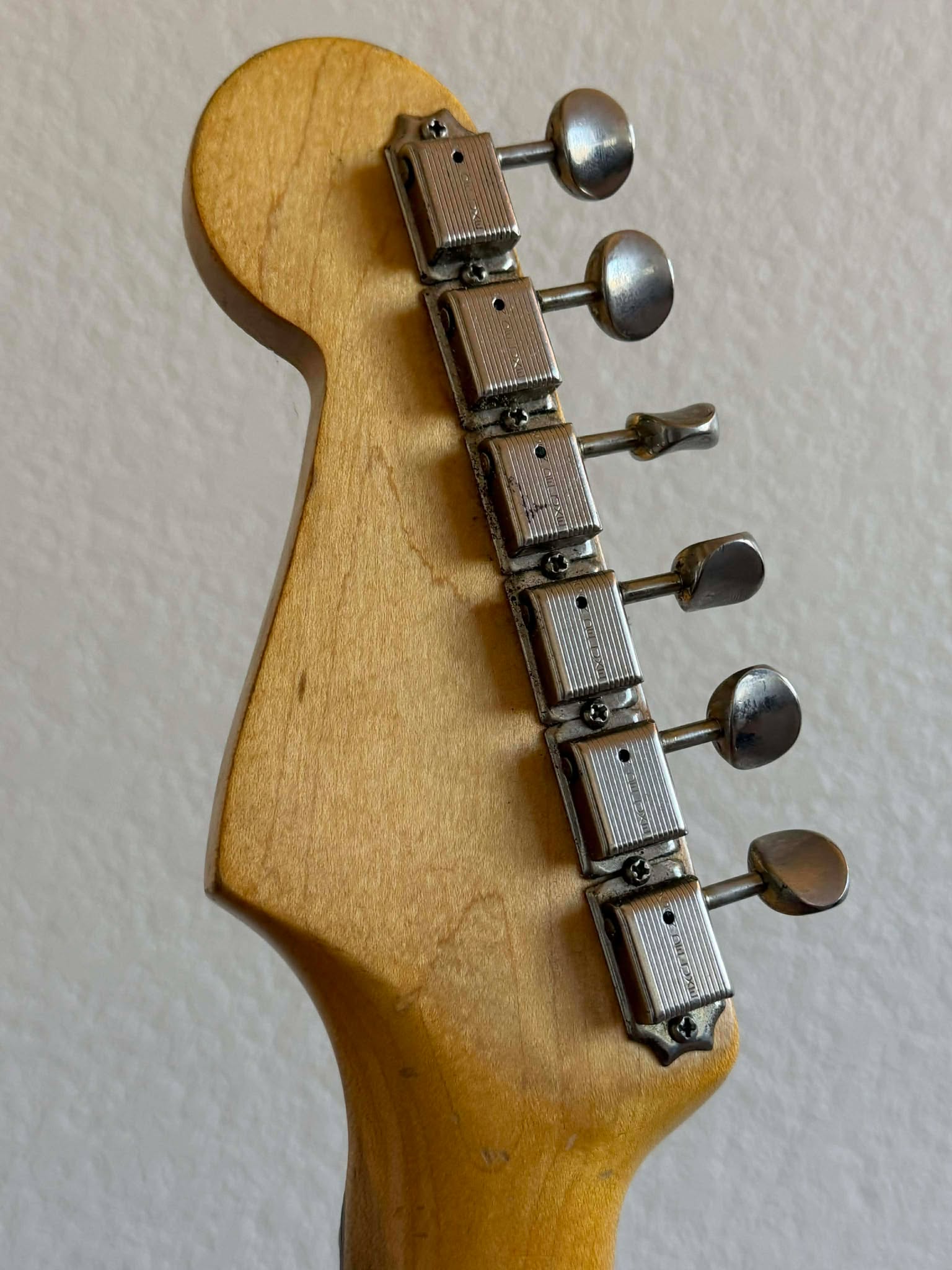
Complete Guide to Original Fender Guitar Tuners (1951-1968): Identification and Authentication
Why Identifying Original Fender Tuners Matters
Understanding original Fender guitar tuners is essential for authentication, accurate dating, and proper valuation of vintage instruments. Tuners (also called tuning machines or machine heads) were not just functional hardware—they evolved through specific manufacturers, designs, and features from 1951 through 1968 that serve as critical dating tools and authenticity markers for Telecasters, Stratocasters, Jazzmasters, Jaguars, Precision Basses, and Jazz Basses.
Whether you own a 1950s Telecaster with original Kluson tuners, a 1960s Stratocaster with double-line Klusons, a Jazzmaster with reverse tuners, or any vintage Fender guitar, understanding tuner evolution helps you accurately date your instrument, verify originality, detect replacements, and establish proper market value.
This comprehensive guide examines every aspect of Fender guitar tuner evolution from 1951 through 1968 (pre-CBS and early CBS eras), providing authentication guidance for collectors, dealers, and players across all major Fender models.
Overview: Major Fender Tuner Periods
1951-1956: Early Kluson Deluxe Era
Kluson Deluxe tuners standard
Single-line tuners (early)
Strip tuners on Telecaster (some)
Chrome finish
Individual enclosed tuners introduced
1956-1964: Classic Pre-CBS Kluson Era
Kluson Deluxe standard across all models
Single-line to double-line transition
Consistent quality
Peak pre-CBS era
1965-1968: CBS Transition and F-Stamp Era
Kluson continues (early)
F-stamped tuners introduced (1967+)
Quality variations
Transitional specifications
Various manufacturers
Kluson Deluxe Tuners: The Fender Standard
What Are Kluson Deluxe Tuners?
Manufacturer: Kluson Manufacturing Company (Kalamazoo, Michigan)
Primary Fender Supplier: 1951-1968 (and beyond)
Key Characteristics:
Enclosed gear design
Chrome-plated housing
Plastic buttons (white/cream)
Individual mounting (not strip)
15:1 gear ratio typically
Smooth tuning action
Premium quality
Fender Models Using Kluson Deluxe:
Telecaster (1951-1968)
Esquire (1951-1968)
Stratocaster (1954-1968)
Jazzmaster (1958-1968)
Jaguar (1962-1968)
Precision Bass (1951-1968)
Jazz Bass (1960-1968)
Virtually all Fender electrics
Kluson Single-Line vs. Double-Line Tuners
Single-Line Kluson Tuners (approximately early 1950s to 1964):
Identification:
Single line of text on housing
"KLUSON DELUXE" in single line
Earlier production
Less common
Collectible
Appearance:
Text runs horizontally
Single stamped line
Chrome housing
Plastic buttons
Models:
Early Telecasters (1951-1964)
Early Stratocasters (1954-1964)
Early Precision Basses (1951-1964)
Dating Significance: Single-line tuners indicate 1964 or earlier
Double-Line Kluson Tuners (approximately 1964 to 1967/68):
Identification:
Two lines of text on housing
"KLUSON" on top line
"DELUXE" on bottom line
Later production
More common
Standard pre-CBS and early CBS
Appearance:
Text in two horizontal lines
Stacked lettering
Chrome housing
Plastic buttons
Models:
Telecasters (1964-1967)
Stratocasters (1964-1967)
Jazzmasters (1964-1967)
Jaguars (1964-1967)
Basses (1964-1967)
Dating Significance: Double-line tuners indicate roughly 1964 to 1967/68
Transition Period (roughly 1964):
Both single-line and double-line exist
Exact transition date unclear
Factory used existing stock
Overlap between styles
Kluson Button Styles
Original Fender Kluson Buttons:
Material: Plastic (typically white or cream-colored)
Shape: Oval/tulip shape
Aging:
White buttons age to cream/yellowed
UV exposure affects color
Uniform aging expected
Shrinkage possible
Variations:
Early buttons slightly different shape
Later buttons more standardized
Consistent oval/tulip profile
Metal insert for mounting screw
Authentication:
Original buttons show age-appropriate wear
Color consistent across all six tuners
Proper mounting fit
Period-correct material and shape
Model-Specific Tuner Details
Fender Telecaster Tuners (1951-1968)
1951-1952 Telecaster/Broadcaster:
Kluson Deluxe tuners
Single-line tuners
Chrome finish
Plastic buttons
Individual enclosed design
1953-1958 Telecaster:
Kluson Deluxe tuners
Single-line tuners
Chrome housing
White/cream buttons
Standard mounting
1958-1964 Telecaster (Pre-CBS):
Kluson Deluxe tuners
Double-line tuners (most)
Chrome finish
Plastic buttons
Peak pre-CBS quality
1965 Telecaster (Transition):
Kluson Deluxe (early)
F-stamped tuners appear (late)
Transitional year
Quality variations
1966-1968 Telecaster (CBS):
F-stamped tuners standard
Various manufacturers
Chrome finish
Quality variations
Dating Telecasters by Tuners:
Single-line Kluson = 1964 or earlier
Double-line Kluson = roughly 1964-1967
F-stamped = 1967 onward
Important Resource: Use our Fender Serial Number Lookup Tool to verify your Telecaster's era.
Fender Stratocaster Tuners (1954-1968)
1954-1958 Stratocaster:
Kluson Deluxe tuners
Single-line tuners (early)
Double-line tuners (late 1950s)
Chrome housing
White/cream plastic buttons
Standard six-in-line configuration
1959-1964 Stratocaster (Pre-CBS):
Kluson Deluxe tuners
Double-line tuners standard
Chrome finish
Plastic buttons
Consistent quality
Peak era
1965 Stratocaster (Transition):
Kluson Deluxe (early)
F-stamped tuners appear (mid-late)
Transitional features
Quality begins varying
1966-1968 Stratocaster (CBS):
F-stamped tuners standard
Various manufacturers
Chrome finish
Quality variations
Dating Stratocasters by Tuners:
Single-line Kluson = 1964 or earlier
Double-line Kluson = roughly 1964-1967
F-stamped = 1967 onward
String Tree Interaction:
Butterfly string tree (1956+)
Affects high E and B strings
Tuners work with string tree
Fender Jazzmaster Tuners (1958-1968)
1958-1964 Jazzmaster (Pre-CBS):
Kluson Deluxe tuners
Standard six-in-line configuration
Double-line tuners standard
Chrome finish
Plastic buttons
Configuration:
All six tuners standard configuration
Six-in-line layout
Same as Stratocaster/Telecaster
Kluson Deluxe throughout
1965 Jazzmaster (Transition):
Kluson Deluxe (early)
F-stamped tuners (late)
Standard configuration
Transitional period
1966-1968 Jazzmaster (CBS):
F-stamped tuners
Standard configuration
Various manufacturers
Dating Jazzmasters by Tuners:
Double-line Kluson = Pre-CBS likely
F-stamped = CBS era
Standard six-in-line configuration
Fender Jaguar Tuners (1962-1968)
Jaguar Tuner Configuration: Same as other Fender guitars
1962-1964 Jaguar (Pre-CBS):
Kluson Deluxe tuners
Standard six-in-line configuration
Double-line tuners
Chrome finish
Plastic buttons
1965 Jaguar (Transition):
Kluson (early) to F-stamped (late)
Standard configuration
Transitional features
1966-1968 Jaguar (CBS):
F-stamped tuners standard
Standard configuration
Various manufacturers
Dating Jaguars by Tuners:
Double-line Kluson = Pre-CBS
F-stamped = CBS era
Fender Precision Bass Tuners (1951-1968)
1951-1957 Precision Bass:
Kluson Deluxe tuners
Single-line tuners (early)
Chrome finish
Plastic buttons
Four tuners (bass configuration)
1958-1964 Precision Bass (Pre-CBS):
Kluson Deluxe tuners
Double-line tuners standard
Chrome housing
Plastic buttons
Four-in-line configuration
1965 Precision Bass (Transition):
Kluson (early) to F-stamped (late)
Transitional period
Quality variations
1966-1968 Precision Bass (CBS):
F-stamped tuners standard
Various manufacturers
Chrome finish
Dating Precision Bass by Tuners:
Single-line Kluson = 1964 or earlier
Double-line Kluson = roughly 1964-1967
F-stamped = 1967 onward
Fender Jazz Bass Tuners (1960-1968)
1960-1964 Jazz Bass (Pre-CBS):
Kluson Deluxe tuners
Double-line tuners
Chrome finish
Plastic buttons
Four-in-line configuration
Same tuners as Precision Bass
1965 Jazz Bass (Transition):
Kluson (early) to F-stamped (late)
Transitional features
Quality variations
1966-1968 Jazz Bass (CBS):
F-stamped tuners standard
Various manufacturers
Chrome finish
Dating Jazz Bass by Tuners:
Double-line Kluson = Pre-CBS
F-stamped = CBS era
CBS Era: F-Stamped Tuners (1965-1968)
What Are F-Stamped Tuners?
Introduction: 1967, roughly two years into CBS ownership
"F" Stamp:
Letter "F" stamped on tuner housing
Indicates CBS ownership period
Quality control mark (theoretically)
Quick visual dating indicator
Appearance:
"F" stamped on back or side of housing
Various stamp locations
May be faint or clear
Chrome housing continues
Manufacturers:
Still primarily Kluson-made
Various other manufacturers possible
Quality more variable than pre-CBS
Models Affected:
All Fender guitars (1965 onward)
Telecaster, Stratocaster, Jazzmaster, Jaguar
Precision Bass, Jazz Bass
All CBS-era Fenders
Dating Significance of F-Stamp
F-Stamp Present: 1967 or later
No F-Stamp: 1966 or earlier
Critical for 1967:
Early 1967 = no F-stamp (double-line Kluson)
Mid-1967 = F-stamp appears
Late 1967 = F-stamp standard
Essential dating marker
F-Stamped vs. Non-F-Stamped Tuners
Pre-CBS (No F-Stamp):
Consistent Kluson quality
No F stamp on housing
More collectible
Higher value
CBS Era (F-Stamped):
"F" stamp present
Variable quality
Less collectible
Lower value (all else equal)
Value Impact:
F-stamp reduces collectibility
Indicates CBS era
Pre-CBS tuners more desirable
Significant market perception difference
Tuner Authentication and Verification
Original Kluson Characteristics
Housing:
Chrome plated
Smooth finish
"KLUSON DELUXE" stamped
Single-line or double-line
Consistent font
Period-correct stampings
Gears:
Metal gears inside
Smooth operation
15:1 ratio typical
Quality construction
Enclosed design
Buttons:
Plastic (white/cream)
Oval/tulip shape
Age-appropriate color
Metal insert for screw
Consistent across all tuners
Mounting:
Individual screw mounting
Chrome bushings
Specific mounting footprint
Proper fit on headstock
Reproduction vs. Original Tuners
Original Vintage Kluson Tuners:
Period-correct stampings
Appropriate wear and aging
Correct button color/aging
Proper font on housing
Smooth, quality operation
Age-appropriate patina
Modern Reproduction Tuners:
Often too shiny/new
Font details may differ
Button color too white
Gear operation may differ
Modern manufacturing marks
Perfect condition (suspicious on aged guitar)
Red Flags:
Brand new appearance on old guitar
Incorrect stamping font
Wrong button style or color
Modern mounting hardware
Inconsistent aging across six tuners
F-stamp on supposedly pre-CBS guitar
Common Tuner Issues
Replaced Tuners:
Most common modification
Reduces originality and value
Must be disclosed when selling
Value reduction: 10-30%
Mixed Tuner Sets:
Some original, some replaced
Different manufacturers mixed
Reduces value significantly
Authenticity compromised
Refinished Tuners:
Re-chromed housings
Affects originality
May look "too good"
Value reduction
Modified Mounting:
Enlarged holes for different tuners
Drilled headstock damage
Significant value reduction
Difficult to reverse
Tuner-Related Dating Indicators
Mounting Configuration
Six-In-Line (Telecaster, Stratocaster, Jazzmaster, Jaguar):
All six tuners on one side
Standard Fender configuration
Consistent 1951-1968
Four-In-Line (Precision Bass, Jazz Bass):
All four tuners on one side
Standard bass configuration
Consistent 1951-1968
String Post Variations
Standard Post:
Smooth post
String wraps around
Standard design
Post Height:
Consistent through era
Factory specifications
Proper string angle
Bushing Details
Chrome Bushings:
Chrome-plated ferrules
Press-fit into headstock
Consistent through era
Should match tuner age
Bushing Wear:
Age-appropriate wear
Consistent across all tuners
Corrosion patterns authentic
Valuation Impact of Original Tuners
Premium Features
Most Valuable:
Complete set of original pre-CBS Kluson tuners
Single-line Kluson tuners (1950s)
All six/four tuners matching
Original buttons intact
Proper aging and patina
No modifications
Value Reductions:
Replaced tuners: 10-30% reduction
Mixed tuner sets: 20-40% reduction
Modified mounting holes: 30-50% reduction
Modern replacements on vintage guitar: Significant reduction
Originality Importance
Complete Original Sets:
Essential for maximum value
Collector preference
Investment grade guitars
Show-quality examples
Partial Originality:
Some value retention
Must disclose replacements
Better than full replacement set
Non-Original Tuners:
Player-grade guitar
Reduced collector appeal
Lower market value
Model-Specific SEO Keywords Covered
This guide addresses identification for:
Fender Telecaster tuners (1951-1968)
Fender Broadcaster tuners (1951)
Fender Esquire tuners (1951-1968)
Fender Stratocaster tuners (1954-1968)
Fender Jazzmaster tuners (1958-1968)
Fender Jaguar tuners (1962-1968)
Fender Precision Bass tuners (1951-1968)
Fender Jazz Bass tuners (1960-1968)
Vintage Fender tuner identification
Kluson Deluxe tuners
Original Fender tuners
Pre-CBS Fender tuners
F-stamped Fender tuners
Single-line vs double-line Kluson
How to date Fender by tuners
Authentic Fender tuners
Fender tuner replacement value
Authentication Checklist
When examining vintage Fender tuners:
Kluson Stampings:
☐ "KLUSON DELUXE" stamped on housing
☐ Single-line (pre-1958) or double-line (1958+)
☐ Font and placement correct for era
☐ Stampings clear and period-appropriate
F-Stamp Verification:
☐ No F-stamp if claiming pre-CBS
☐ F-stamp present if claiming CBS era
☐ F-stamp consistent with other dating features
Button Condition:
☐ Plastic buttons (not metal)
☐ Oval/tulip shape correct
☐ Aging appropriate for guitar age
☐ Color consistent across all tuners
Configuration:
☐ Six-in-line (guitars) or four-in-line (basses)
☐ Standard configuration all models
☐ Proper mounting footprint
Housing and Finish:
☐ Chrome plating appropriate for age
☐ Wear patterns authentic
☐ No modern re-chroming evidence
☐ Consistent patina across all tuners
Operation:
☐ Smooth tuning action
☐ No excessive play
☐ Quality gear feel
☐ Consistent across all tuners
Cross-Reference Dating:
☐ Serial number (use our Fender Serial Number Lookup Tool)
☐ Neck date stamp
☐ Pot codes
☐ All features align
When You're Ready to Sell Your Vintage Fender
How Original Tuners Affect Value
Era-Specific Premiums:
1951-1958 single-line Kluson: Highest premiums
1958-1964 double-line Kluson: Major premiums
1965 early pre-CBS: Strong premiums
1965 late F-stamped: CBS values
1966-1968 F-stamped: CBS values
Originality Factors:
Complete original set: Essential for investment grade
All six/four matching: Critical for value
Original buttons: Important detail
No modifications: Maximum value
Why Choose Edgewater Guitars
Our Fender Tuner Expertise:
Pre-CBS Fender specialists
Kluson tuner authentication
Single-line vs. double-line identification
F-stamp verification
Reverse tuner configuration expertise
Complete originality assessment
Premium Offers: 30-40% higher than guitar shops
Contact: (440) 219-3607
Service Area: Ohio, Michigan, Pennsylvania, Indiana, West Virginia
Frequently Asked Questions
What is the difference between single-line and double-line Kluson tuners?
Single-line Kluson tuners (approximately the early 1950s to 1964) have "KLUSON DELUXE" stamped in one horizontal line, while double-line tuners (approximately 1964 to 1967/68) have "KLUSON" on top and "DELUXE" below. Single-line tuners indicate earlier production and are more collectible.
What does the F-stamp on Fender tuners mean?
The "F" stamped on tuner housings indicates production from 1967 onward, when Fender began phasing out Kluson tuners under CBS ownership. Guitars made before 1967 don't have F-stamps, making this a quick visual dating indicator.
Are replacement tuners a big problem for vintage Fender value?
Yes. Replaced tuners reduce value by 10-30% depending on the guitar's overall condition and collectibility. Original tuners are essential for investment-grade instruments and maximum value.
How can I tell if my Fender tuners are original Kluson?
Original Kluson tuners have proper "KLUSON DELUXE" stampings (single or double-line), age-appropriate chrome finish, correct plastic buttons, and consistent aging across all tuners. Check for period-correct details and compare to authenticated examples. Use our Fender Serial Number Lookup Tool to verify your guitar's era.
When did Fender start using F-stamped tuners?
F-stamped tuners appeared during 1967, about two years after CBS's acquisition of Fender in early 1965. Guitars made before 1967 have no F-stamp, while those from 1967 onward typically do.
Do original tuners matter more on some Fender models than others?
Original tuners are critical on all vintage Fenders, but particularly important on high-value instruments like pre-CBS Stratocasters, Telecasters, and Jazzmasters. On investment-grade examples, originality is essential.
What are the most valuable original Fender tuners?
Single-line Kluson tuners from the 1950s are most valuable due to rarity and early production. Complete original sets on pre-CBS guitars (1964 or earlier) command highest premiums, especially on Stratocasters and Telecasters.
Additional Resources
Fender Serial Number Lookup Tool - Quick reference for your Fender guitar
Complete Fender Guitar Dating Guide
How to Date Fender Guitars - All Models
Fender Headstock Decal Guide
Sell Your Fender Guitar
Vintage Fender Authentication Guide
Understanding original Fender guitar tuners from 1951-1968 is essential for accurate authentication, dating, and valuation across all major Fender models. The evolution from single-line Kluson tuners through double-line variations to F-stamped CBS-era tuners provides critical dating indicators for Telecasters, Stratocasters, Jazzmasters, Jaguars, and Fender basses.
Whether you own a 1950s Telecaster with rare single-line Klusons, a pre-CBS Stratocaster with double-line tuners, a Jazzmaster with original Kluson tuners, or any vintage Fender, understanding tuner details ensures proper authentication and maximum value. Use our Fender Serial Number Lookup Tool to verify your guitar's era, then confirm with tuner specifications for definitive dating.
Edgewater Guitars specializes in vintage Fender authentication and purchasing throughout the Midwest. Our comprehensive knowledge of Kluson tuner evolution and period-correct details ensures accurate assessments.
Contact us today at (440) 219-3607 for expert Fender tuner authentication or professional valuation.
Gavin Coe, Vintage Guitar Specialist
Edgewater Guitars - Ohio's Premier Guitar Buyer